Advanced Positioning Guide in RL
General Theory of Relativity
How can objects located so far apart exert a force on one another?
"That one body may act upon another at a distance through a vacuum without the mediation of anything else is to me, so great and absurdity that I believe no man who has a competent faculty of thinking could ever fall into it." (Source)
In Rocket League there is no force of gravity ranging within the car so no gravity will be applied to the ball. This means the positioning of the ball will only be affected by outside objects. This outside force could be you hitting the ball.
Masses are affected by the local curvature of spacetime, so no action at a distance is required.
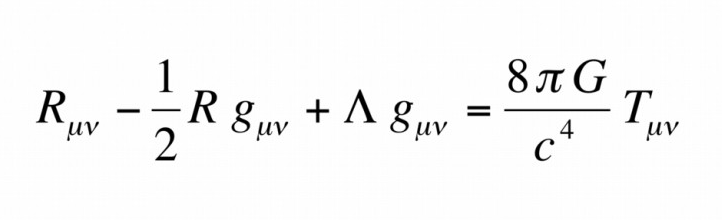
The right part discusses the arrangement of matter and energy. The opposite side explains the resulting curvature of spacetime caused by that arrangement of matter and energy, depicted as a single line.
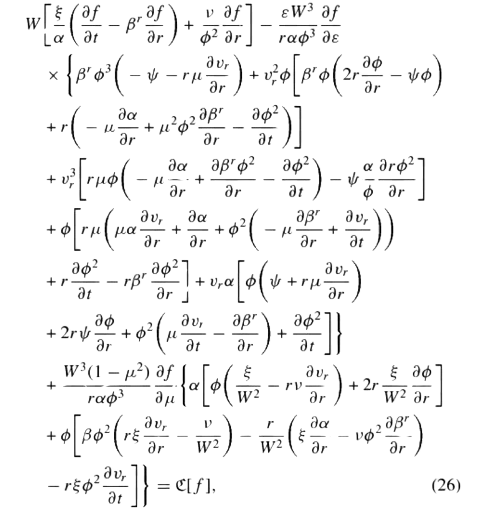
At first glance, it may seem like a straightforward equation. However, it's not just one equation; it's actually a set of equations that are interconnected, making them coupled equations. Moreover, these equations are differential, meaning they involve integrals and rely on each other, adding complexity.
Future Light Cone
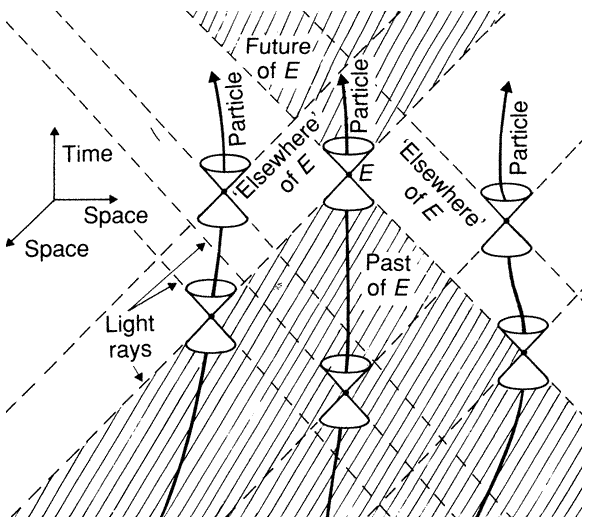
In order to visualize the outcome of these equations, we require a method to comprehend spacetime. Picture yourself suspended in empty space. Suddenly, a burst of light appears overhead and radiates in every direction. Within this expanding bubble, your entire future unfolds, encompassing every possible event that can and will happen to you. The only conceivable way to escape this bubble would be to travel faster than light.
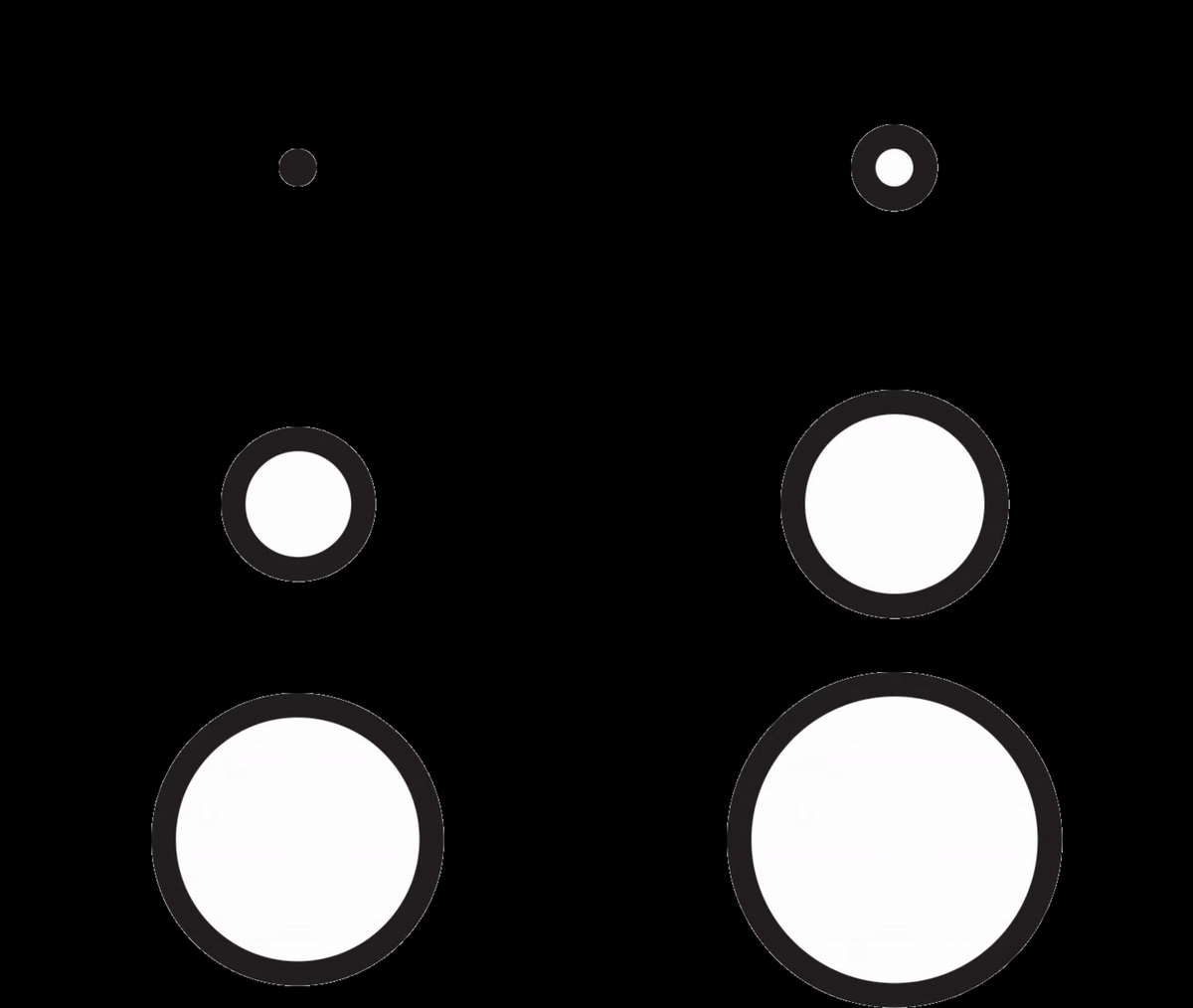
In a two-dimensional setting, this expanding bubble appears as a growing circle. If we visualize time progressing vertically on the screen and capture snapshots at consistent intervals, the expanding light bubble forms a cone shape. This cone represents your future light cone.

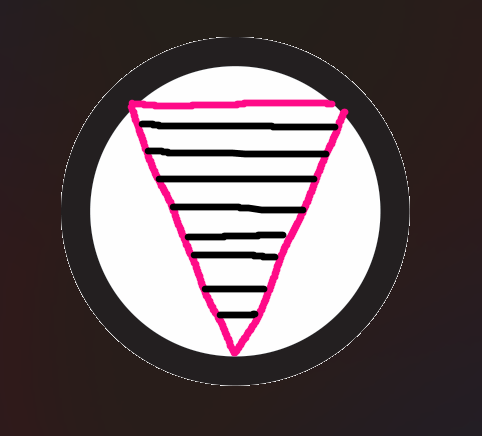
In Rocket League your car has a future light cone and objects that fall in the future light cone can be manipulated or shot at the net or passed to a teammate.
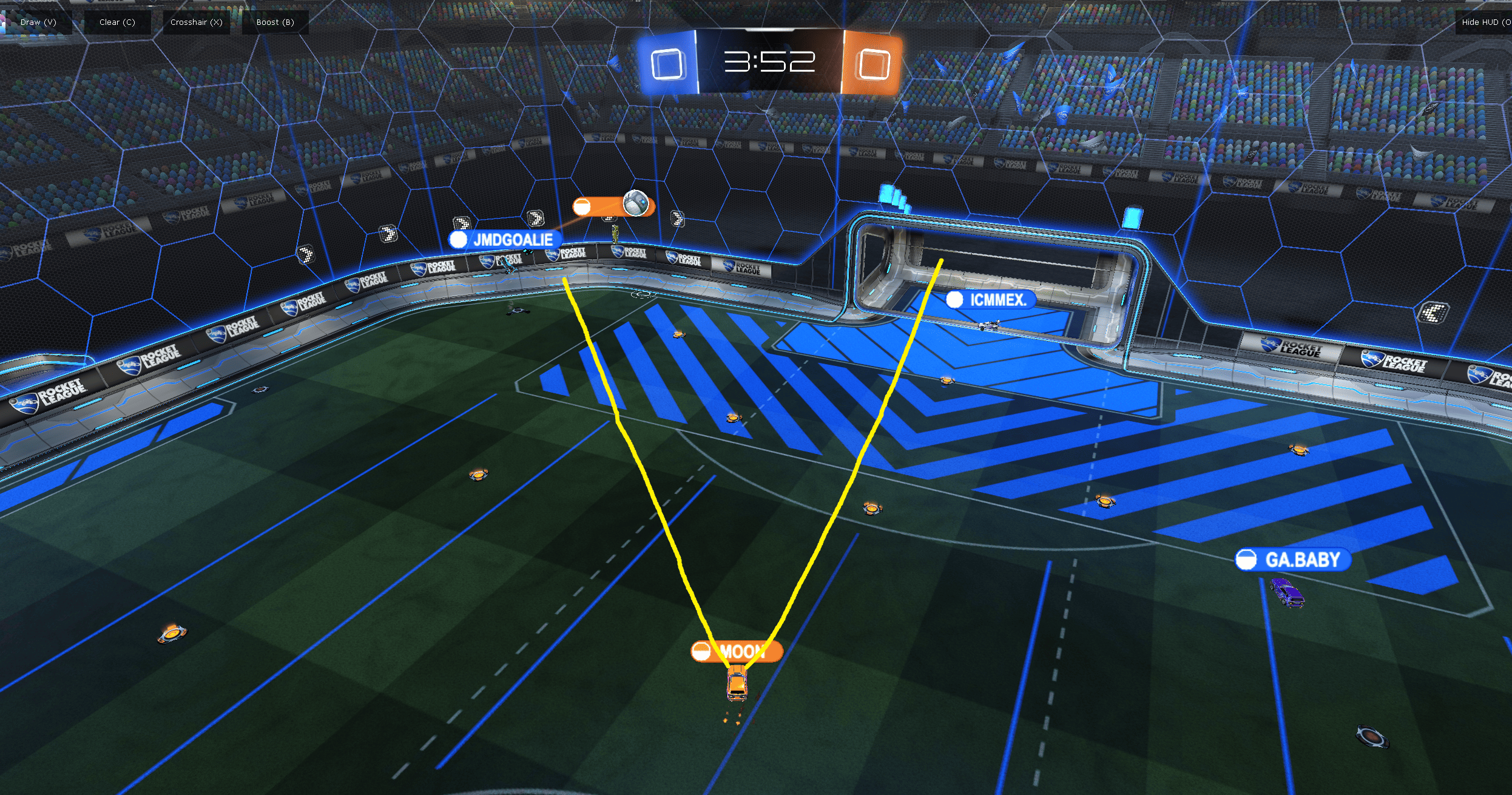
The convention is to scale the axis in a manner where light rays are always depicted traveling at 45-degree angles. This cone-shaped representation delineates the exclusive domain of spacetime that you can navigate and impact.
We have now solved the light cone portion of positioning! This cone will allow us to be at an advantage when objects within it can be manipulated. Objects that fall outside our future light cone will not be able to be manipulated and will not move due to our lack of gravitational pull. Objects outside our cones will be “awkward”.
Inside the Cone
When determining the separation between two events in spacetime, you employ a concept known as the spacetime interval.
This simplifies measuring the distance between any two events, but in the vicinity of a massive object, spacetime curves, necessitate adjustments to the equation to accommodate this geometric aspect.
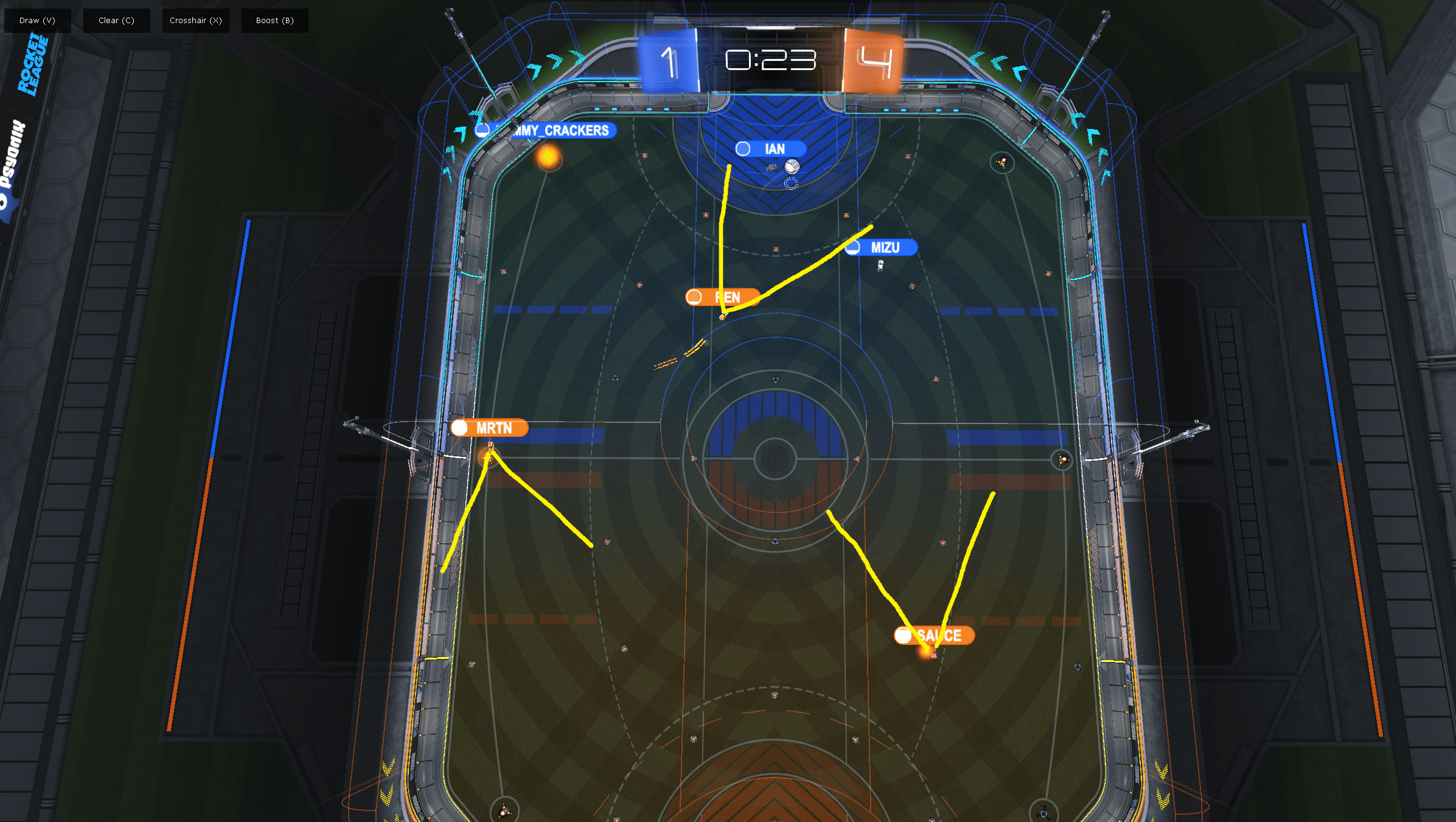
Let's imagine our Future Light Cone in Rocket League.
I began with a fundamental scenario: an eternal and motionless universe containing only a single spherically symmetric mass with no charge or rotation. To describe this, I used spherical coordinates centered on the mass, where 'r' represents distance, and 'theta' and 'phi' describe angles. For the time aspect, I adopted the perspective of an observer far from the mass, where spacetime appears nearly flat.
The concept is straightforward and intuitively understandable: when you are far from a massive object, spacetime appears almost flat. However, as one approaches the mass, spacetime increasingly curves, causing objects to be drawn inward and time to pass more slowly.
When you are far away from the ball in Rocket League the play appears flat or in front of you but when you are too close or under the ball/play the ball appears 3 Dimensional. This proves that your Future light cone has layers and each layer changes the perception of how we view the ball.
"You can't know the position and momentum of a particle with absolute certainty, so as the particles become more and more constrained in space, the uncertainty in their momentum, and hence their velocity must go up." (Source)
As a star becomes more compressed, electrons wiggle around at a quicker pace, generating an outward pressure.
We can't see this outward pressure directly in Rocket League but it's there! As we get closer to the ball or the ball gets closer to our car our precision has to hone in. This is reflective of the closing of particle potential meaning the area of our future light cone is coming to an end and heading behind us, over us, or in front of us after manipulating/hitting the ball.
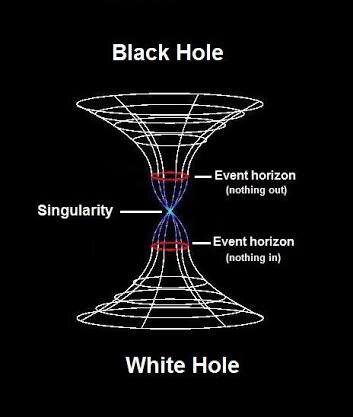
From the perspective of an outside observer, you appear to enter the event horizon. However, if you were traveling across this boundary, you wouldn't notice anything strange; you would pass through it without realizing it.
It's easy to see if your teammates are too close to a play because your plane is 2D. However, if you are within a future light cone that is too close to the objective ball you would not realize you got too close until it was too late.
Let's examine how light rays traveling inward and outward behave in this curved spacetime. From a great distance, the future light cones maintain the typical 45-degree angle. However, as you approach the horizon, these cones progressively narrow until, at the event horizon, they become so narrow that they point vertically upward.
This explains the camera movement when the ball goes over your car. The ball manipulates space and switches from a 2D to a 3D plane.
Another way to conceptualize this phenomenon is by likening space to a flowing stream heading towards the black hole, much like a waterfall's current. As you approach the black hole, this flow accelerates. The photons emitted by the spaceship must swim against this current, a task that becomes progressively more difficult as proximity to the black hole increases.
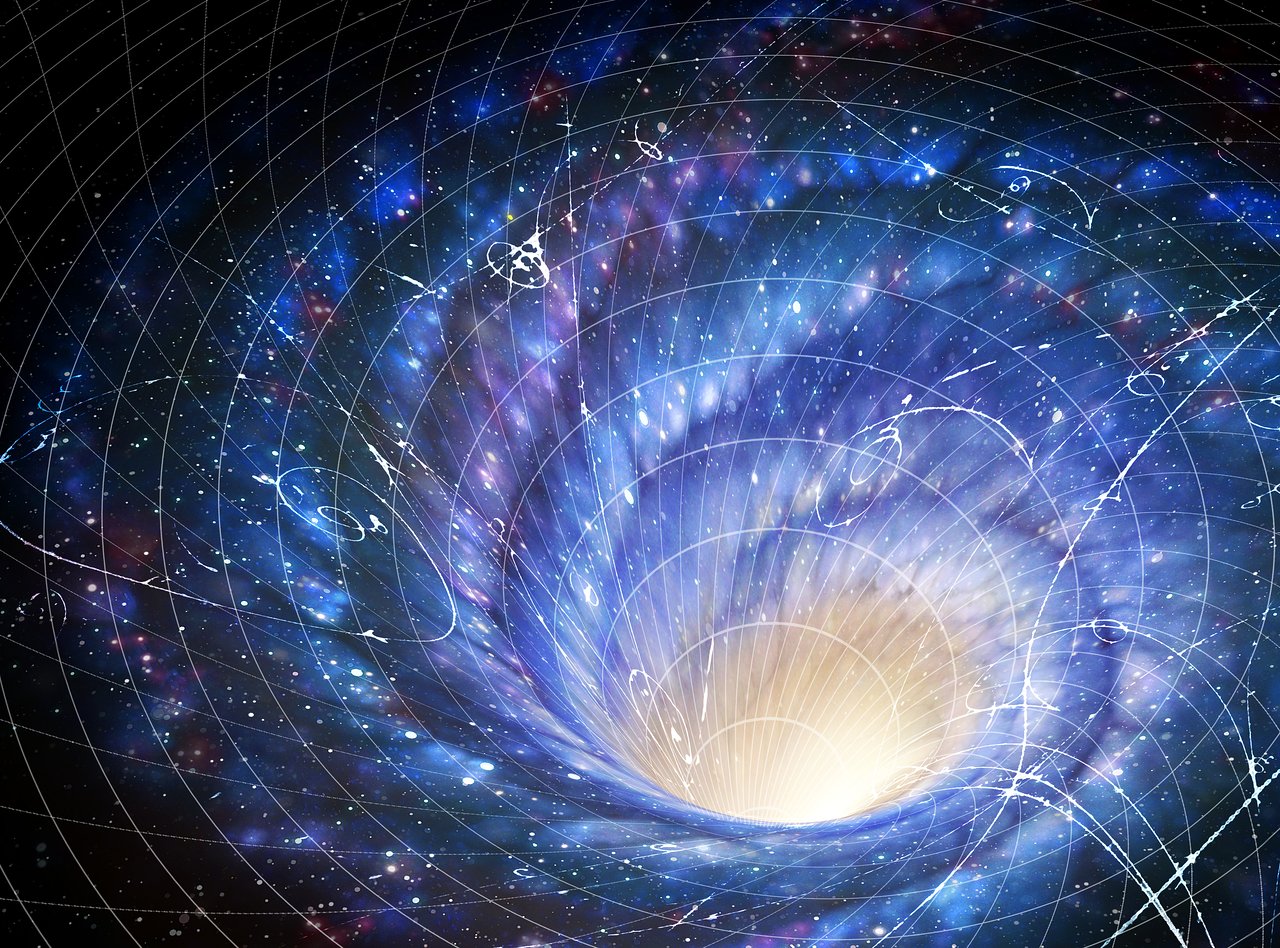
Within the horizon, space plunges faster than the speed of light, causing everything to ultimately fall into the singularity. an observer outside a black hole will never witness anything crossing the event horizon (2D to 3D) since the last visible photons always originate just outside it. However, if you venture inside, you will pass through the event horizon and into the singularity. Expanding on the waterfall analogy, we can envision space flowing into a static black hole across all three spatial dimensions, providing a realistic simulation of this gravitational phenomenon.
Past Light Cone
A past light cone is a graphical representation in spacetime that shows all the points in the past from a particular event that could have influenced that event. It's essentially a way to visualize the causal connections between events in spacetime, based on the fact that information can only travel at or below the speed of light.
You can sketch the past light cone, which exposes a fresh area. If you're within this area, you can transmit signals to the universe. However, regardless of your location in the universe, nothing can penetrate this area because it will never fall within your light cone.
This shows a Disadvantage zone any ball not within your Future Light Cone cannot be manipulated but what you do within your future light cone will be transmitted in your Past Light cone. When you boost you leave a trail. This trail is evidence of your past light cone. You cannot manipulate the boost trail after boosting into a future light cone. However, you can manipulate it when you boost in the future. This shows a direct correlation between awkwardness on the ball and past light cones.
Summation
Curvature of Space: In Rocket League, rotation is all about moving through space effectively.
In Rocket League, time can feel like it dilates or contracts based on gameplay intensity. During high-stakes moments or fast-paced plays, players often experience a sort of "time dilation" where their perception of time changes, similar to how time slows down near massive objects in relativity.
Frame dragging is a relativistic effect where the rotation of a massive object drags spacetime around it. In Rocket League, we could think of this as how the game mechanics "drag" players along with the ball's movements, influencing their rotations and strategies.
How do We Apply This?
Sources
- Pro's camera★ 5 (1.4k)101k views1.3k ♥1 minBulgarianUpdated 4 Feb, 2017
- Rocket League Workshop Maps Upload Guide★ 5 (606)64k views850 ♥3 min
- New Scamming Tactics★ 5 (760)62k views285 ♥2 minBulgarianUpdated 15 Oct, 2022
- Rocket League Trading★ 5 (2.4k)57k views1.7k ♥2 minUkrainianUpdated 4 Nov, 2024
- Rocket League Achievements★ 5 (565)36k views553 ♥24 minBulgarianUpdated 16 Oct, 2016
- In-depth Basic Aerial Guide [w/Gif illustrations]★ 5 (403)27k views476 ♥12 min




- Upgrading to PremiumTeam Fortress 2★ 5 (20k)1441k views11k ♥6 minUpdated May 11, 2022
- No More Room in Hell Official ManualNo More Room in Hell★ 5 (2.8k)569k views2.1k ♥29 minUpdated Apr 22, 2019
- NMRiH Community Hosting GuidesNo More Room in Hell★ 5 (526)351k views653 ♥1 minUpdated Aug 10, 2022
- ULTIMATE GUIDE FOR GAME DEV TYCOONGame Dev Tycoon★ 5 (5.8k)326k views10k ♥4 minUpdated 23 Jan, 2014
- How to 'Git Gud' Soon™MORDHAU★ 5 (2k)318k views3k ♥68 minUpdated Nov 16, 2024
- Лучшие кооперативные игры SteamPAYDAY 2★ 5 (1.5k)315k views2.1k ♥56 minRussianUpdated Apr 27, 2025






This guide was created by its original author on the Steam Community. Are you the author and want it removed? Request removal.