Introducing A.R.M.S. (Automated Rail Management System) — Modular Smart Train Network
Key Features
Dynamic Station Throttling: Stations automatically close or adjust their train limits based on storage capacity. If an outpost is dry, trains won't waste fuel going there.
Micro Percentage HUDs: Instead of messy progress bars, it uses compact, custom-font text displays directly on the stations to show exact load percentages (like [46%]) using dynamic color gradients.
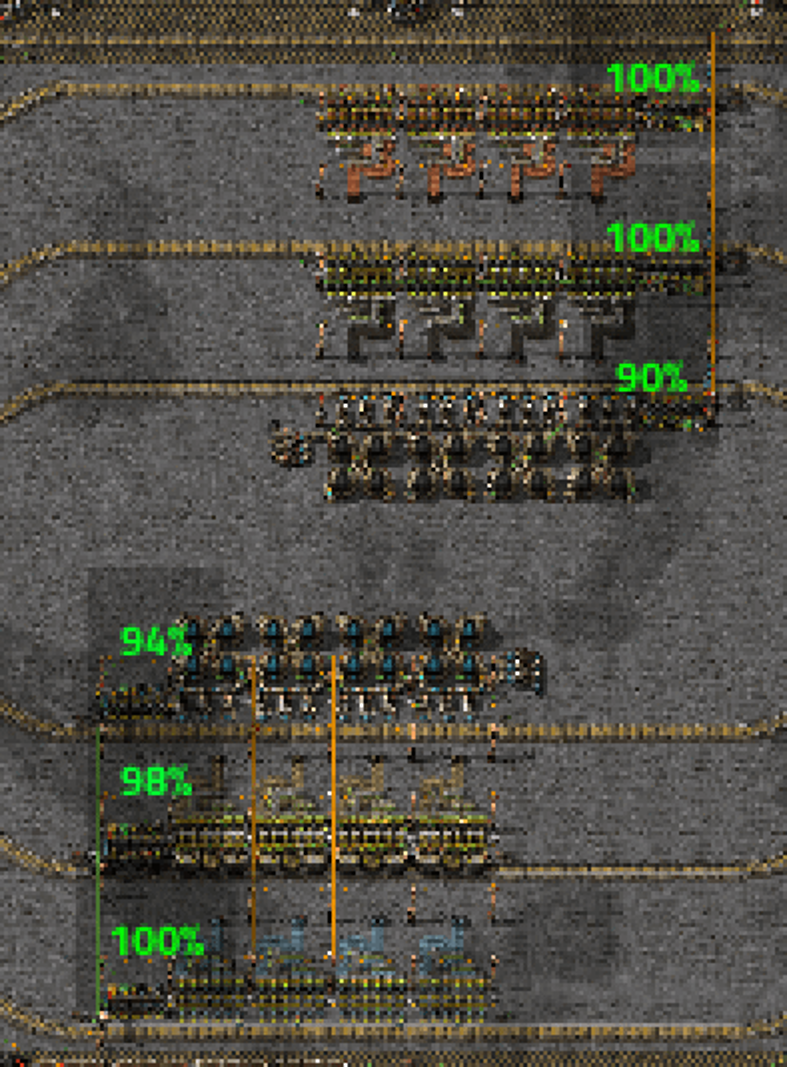
Station Indicators: I added some simple light indicators. Thanks to these, you can instantly see if a station is ready to take a train or if one is already on the way.
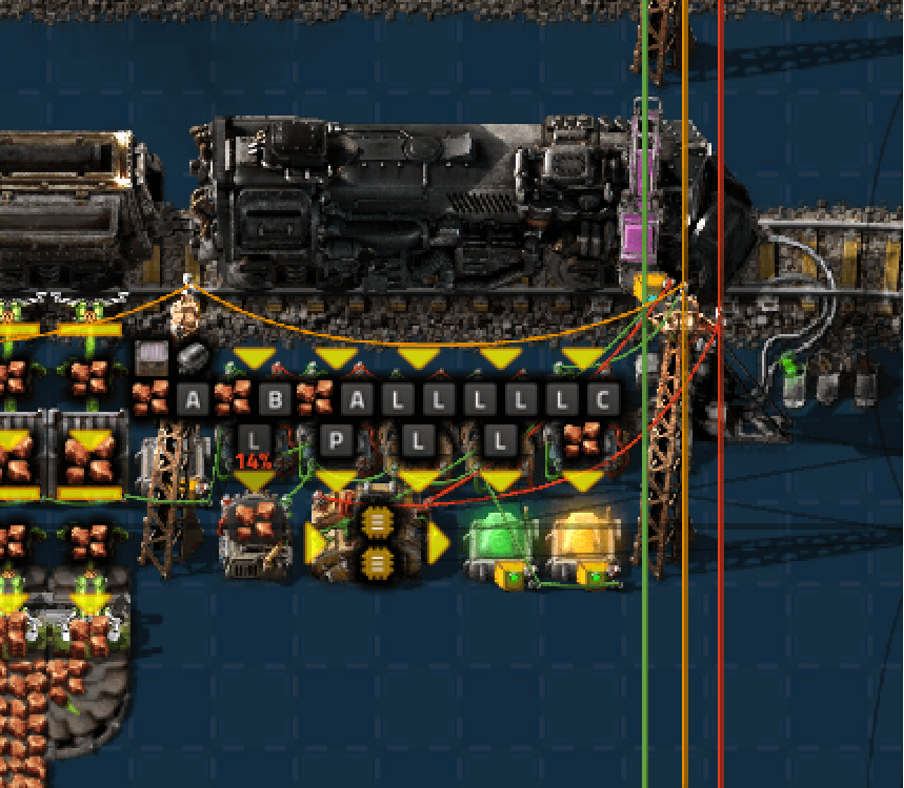
Monitoring System: The network constantly tracks available trains and station capacities. If something bottlenecks or there's a huge delay in resource delivery, a programmable speaker triggers an alarm to alert you before production completely stalls.
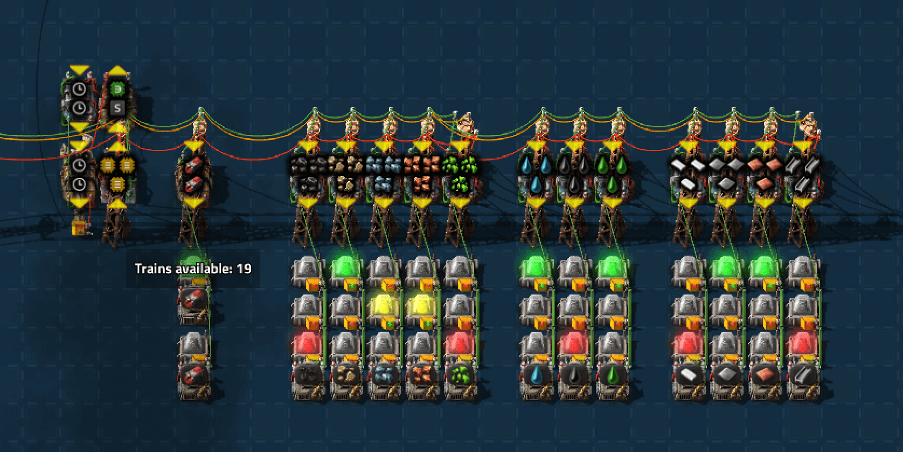
A live demonstration of the system:
How it Works Under the Hood
Instead of standard schedules where trains just mindlessly loop between stations, this setup operates on an On-Demand Dispatch System.
The Depot: Idle trains just chill in centralized depots, saving fuel and keeping the mainlines clear. It's a general-purpose staging area, so any train in the system can use it (except for specialized stuff like personal taxis or construction trains).
The "Order" Trigger: The circuit network constantly monitors supply and demand across the base. A train gets dispatched ONLY when two conditions are met at the same time:
- A Provider Station has a full load ready to go.
- A Requester Station has enough empty space to take a full load.
Zero Waste: If there’s plenty of iron ore but nowhere to unload it (or vice versa), trains simply stay in the depot. No empty runs, no wasted fuel, and zero station deadlocks.
Supported Train Layouts
The blueprints are fully modular, so you can easily scale them from a small outpost to a massive mega-factory. Here are the configurations I've included:
1-1-0 — Great for low-volume or expensive stuff (like Uranium or Science).
1-2-0 — Perfect for mid-tier sub-factories and fluids.
1-4-0 — The standard workhorse for Ore and Plates.
1-8-0 — Heavy-duty transit for high-throughput mainlines.
Honestly, it’s completely up to you how to mix and match them — you're the engineer running the show.
How to create stations and how to use the monitoring tool
Blueprint Strings
- Factorio: How to Build a Main Bus★ 5 (6k)231k views15k ♥15 minUpdated Aug 31, 2025
- Factorio: Observations, Tips, Tricks, & Efficiency★ 5 (3.2k)111k views7.1k ♥85 minUpdated Aug 4, 2020
- Blueprints for early, mid and lategame (updated)★ 5 (757)83k views2.4k ♥3 minUpdated Sep 3, 2022
- Factorio - Everything To Do With Smelting: Belt & Bot Based★ 5 (629)80k views1.6k ♥16 min
- Factorio Builds★ 5 (1.1k)63k views2.7k ♥5 minUpdated Jun 7, 2021
- High-Level Strategy for New Players★ 5 (880)62k views2.8k ♥43 minUpdated Oct 15, 2025

- Upgrading to PremiumTeam Fortress 2★ 5 (20k)1441k views11k ♥6 minUpdated May 11, 2022
- No More Room in Hell Official ManualNo More Room in Hell★ 5 (2.8k)569k views2.1k ♥29 minUpdated Apr 22, 2019
- NMRiH Community Hosting GuidesNo More Room in Hell★ 5 (526)351k views653 ♥1 minUpdated Aug 10, 2022
- ULTIMATE GUIDE FOR GAME DEV TYCOONGame Dev Tycoon★ 5 (5.8k)326k views10k ♥4 minUpdated 23 Jan, 2014
- How to 'Git Gud' Soon™MORDHAU★ 5 (2k)318k views3k ♥68 minUpdated Nov 16, 2024
- Лучшие кооперативные игры SteamPAYDAY 2★ 5 (1.5k)315k views2.1k ♥56 minRussianUpdated Apr 27, 2025




This guide was created by its original author on the Steam Community. Are you the author and want it removed? Request removal.