Medieval Kingdoms 1212 AD - Official Mechanics Guide
POPULATION
"People pretend not to like grapes when the vines are too high for them to reach."
- Marguerite de Navarre
As you recruit units, you’ll notice many of them require specific population classes. This often occurs when you try to recruit a unit for which your region lacks the right population, and the card appears greyed out. Also, do note that the higher the population density, the bigger the squalor produced.
How to view: hover your mouse over the leftmost green marker in the bottom-left of the settlement panel. Tip: You can actually click this icon and it will cycle through different sets of information about your population in that settlement.
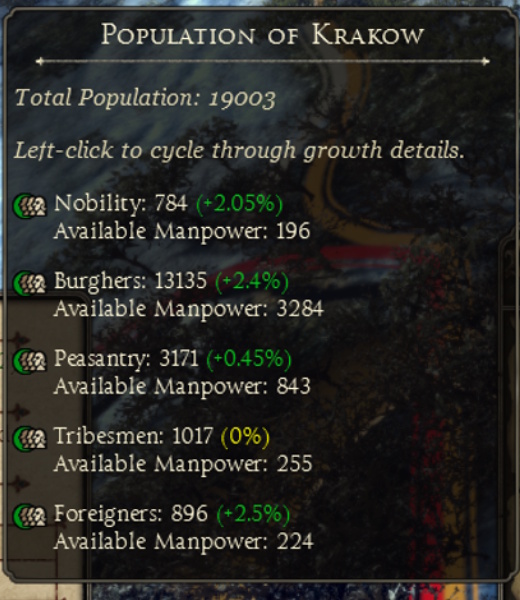
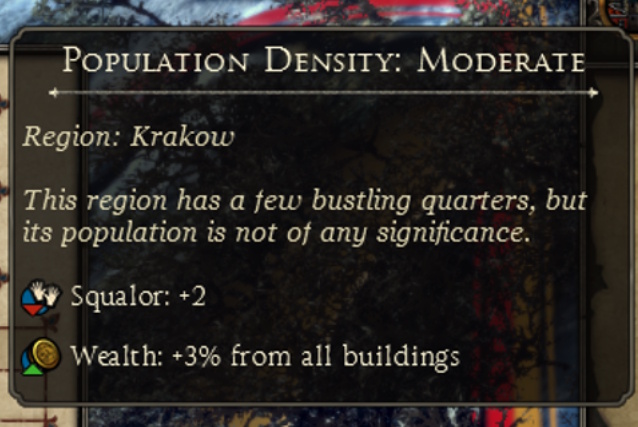
(The population of Krakow's numbers and its effects)
Manpower Eligibility: Only 25% of a region’s population can serve as manpower.
Manpower Flow: Below the threshold of the manpower cap, it can regenerate up to +75%. If it exceeds it, population regeneration is debuffed by –20%.
Soft-cap Buffer: A 25% soft cap is in place, slowing growth when it nears the limit.
Regional Caps: Once the regional cap is reached, overall growth (the thing that enables you to unlock building slots) is reduced to 50%. When it exceeds the hard cap, it changes to 10%.
Capital Bonus: Capitals gains +2% flat growth (+0.5% more from any imperial decree).
Population Attrition: Siege, food shortage, raiding, and rebellions each reduces –5% of the total population. Plagues inflict –12.5%.
IMPORTANT: If your armies and garrison is not replenishing, that means YOU DON'T HAVE ENOUGH MANPOWER POPULATION, go to a different region with enough manpower.
(Usually tribesmen and foreigner is the culprit)
- Marguerite de Navarre
As you recruit units, you’ll notice many of them require specific population classes. This often occurs when you try to recruit a unit for which your region lacks the right population, and the card appears greyed out. Also, do note that the higher the population density, the bigger the squalor produced.
How to view: hover your mouse over the leftmost green marker in the bottom-left of the settlement panel. Tip: You can actually click this icon and it will cycle through different sets of information about your population in that settlement.
Population Classes
- Peasants: Levies, archers, and light infantry.
- Burghers: Medium units, professional troops, crossbows and burgers.
- Nobles: Knights, dismounted knights, and usually elite units.
- Tribesmen: Light cavalry, horse archers, camelry, and steppe nomads.
- Foreigners: Foreign units that're are uncharacteristic of the natives.
i.e Anglovarangoi (Byzantine Successors), Jund al-Nasara (Andalusians), Garipler (Seljuks), and Wafidiyya (Ayyubids)
(The population of Krakow's numbers and its effects)
How Population Changes
Population dynamics hinges on eligibility, growth caps, bonuses, and attrition events:Manpower Eligibility: Only 25% of a region’s population can serve as manpower.
Manpower Flow: Below the threshold of the manpower cap, it can regenerate up to +75%. If it exceeds it, population regeneration is debuffed by –20%.
Soft-cap Buffer: A 25% soft cap is in place, slowing growth when it nears the limit.
Regional Caps: Once the regional cap is reached, overall growth (the thing that enables you to unlock building slots) is reduced to 50%. When it exceeds the hard cap, it changes to 10%.
Capital Bonus: Capitals gains +2% flat growth (+0.5% more from any imperial decree).
Population Attrition: Siege, food shortage, raiding, and rebellions each reduces –5% of the total population. Plagues inflict –12.5%.
Common Confusion
If you can't recruit a certain unit and it is not a slave type unit, then you do not have enough population to recruit them.IMPORTANT: If your armies and garrison is not replenishing, that means YOU DON'T HAVE ENOUGH MANPOWER POPULATION, go to a different region with enough manpower.
(Usually tribesmen and foreigner is the culprit)
UNITS & ROSTER
"The sinews of war are not gold, but good soldiers."
- Niccolo Machiavelli
MK1212AD is historically focused, so tiers, unlike in vanilla, reflect centuries rather than simple power creep. The mod uses a three-tier upgrade system tied to era progression:
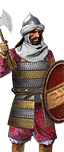

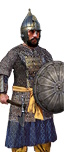
(Examples of unit Tier progression of the Mushat al-Jund, T1 > T2 > T3)
Later-tier units are unlocked by the tech-tree progression, aligning upgrades with historical development as closely as reasonably possible through research.
Though you can speedrun research by building tons of universities/madrasas at the cost of building upkeep and food.
Rule of Thumb:
Tighter Spacing = better melee cohesion, control, and staying power. Yet susceptible to ranged attacks.
Looser spacing = more dispersal and weaker sustained combat.
There are five variants:

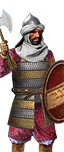

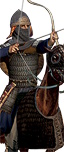
(Examples of Mob (Kharash), Trained (Mushat al-Jund), Well Trained (Dariyyah Ghulam), and Elite (Humat al-Khalifah)
If you’re super eager to uncover the units spacing categories they are defined in the compbuild packs land_units table.
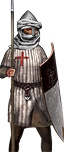
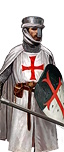
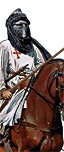
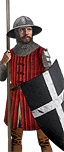
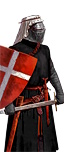
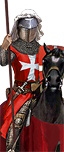
(T1 Knightly Orders Units)
Not a Catholic? But you still want them Order units eitherway? Worry not, either you capture a settlement that contains these buildings or you convert to Catholicism, build the Order buildings then reconvert, you can still recruit them!
The Abbasid Caliphate fielding a whole Knightly Orders army? It's a dream that you can achieve!
(There’s a soft cap on how many can be fielded this way; the cap increases with the number of religious priories, the Order buildings, you have in your settlements factionwide)

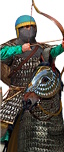
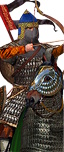
(T1 Ayyubid Ghulam Units)
To obtain Slaves you need either:
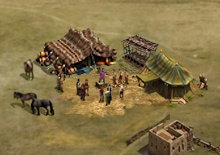
(Slave Market building)
IMPORTANT: Slaves are not a separate “slave population” tracked by the scripts. They’re a resource.
- Niccolo Machiavelli
MK1212AD is historically focused, so tiers, unlike in vanilla, reflect centuries rather than simple power creep. The mod uses a three-tier upgrade system tied to era progression:
- Tier 1 (Early): 1212–1299
- Tier 2 (High): 1300–1399
- Tier 3 (Late): 1400–1500
(Examples of unit Tier progression of the Mushat al-Jund, T1 > T2 > T3)
Later-tier units are unlocked by the tech-tree progression, aligning upgrades with historical development as closely as reasonably possible through research.
Though you can speedrun research by building tons of universities/madrasas at the cost of building upkeep and food.
Hidden Unit Types
A unit’s battlefield performance is also shaped by a hidden spacing category. More elite troops use tighter spacing, which improves cohesion and combat effectiveness; looser spacing reflects less-organized troops.Rule of Thumb:
Tighter Spacing = better melee cohesion, control, and staying power. Yet susceptible to ranged attacks.
Looser spacing = more dispersal and weaker sustained combat.
There are five variants:
- Mob: It's in the name.
- Poorly Trained: Baseline for most levy/militia units.
(i.e Landwehr, Hashar, Hushud, Harafisha, Parici, Vigla, Peones, and Cerniti) - Trained: Competent combatants (light or medium). Some factions start with light units at Trained rather than Poorly Trained.
(i.e Sergeants, Provisionati, Fussknechte, Sarawit, Jund, Tserig, Francomati, Megaloallagitai, and Voynici) - Well Trained: Typical of noble formations and upper-tier professional units.
(i.e Knights, Tawashiyya, Fursan, Askeri, Ghulaman, Mamalik, Yeniceri, Sipahi, Gendarmes, Landsknechte, Abid al-Makhzan, and Rajputs) - Elite: They have the tightest spacing and highest cohesion and depends on the roster of the said faction. Usually reserved for unique units.
(Examples of Mob (Kharash), Trained (Mushat al-Jund), Well Trained (Dariyyah Ghulam), and Elite (Humat al-Khalifah)
If you’re super eager to uncover the units spacing categories they are defined in the compbuild packs land_units table.
Crusader Units
These units are separate from the mercenaries recruitable during a live Crusade. They can be recruited via the Knightly Orders line of the Catholic church building chain, enabling you to recruit Templars, Hospitallers, and Teutonic Knights and Brothers-at-Arms.(T1 Knightly Orders Units)
Not a Catholic? But you still want them Order units eitherway? Worry not, either you capture a settlement that contains these buildings or you convert to Catholicism, build the Order buildings then reconvert, you can still recruit them!
The Abbasid Caliphate fielding a whole Knightly Orders army? It's a dream that you can achieve!
(There’s a soft cap on how many can be fielded this way; the cap increases with the number of religious priories, the Order buildings, you have in your settlements factionwide)
Common Confusion
Some factions field well-trained troops that consume the Burgher population and requires the Slave resource. (i.e Ghulam, Mamluk and 'Abid units)(T1 Ayyubid Ghulam Units)
To obtain Slaves you need either:
- Trade with slave-producing states.
- Build Slave Markets.
(Slave Market building)
IMPORTANT: Slaves are not a separate “slave population” tracked by the scripts. They’re a resource.
HRE MECHANICS
"This agglomeration which was called and which still calls itself the Holy Roman Empire was neither holy, nor Roman, nor an empire."
- Voltaire
The Holy Roman Empire isn’t just a faction; it’s a system. The HRE title and throne are not hereditary but elective (at least until the second last reform), and every time the emperor dies, an election is called. The faction may remain in power if it retains the majority of votes, but if a minor HRE state faction is elected, the HRE will return to being the County of Brunswick and the new member state will take over and command, mechanics and the name of: Holy Roman Empire.
Papal interventions can spark pretender wars by anointing an foreign Catholic leader as pretender-emperors. Each member state tracks a loyalty value that governs how it votes on Imperial Elections, decrees (temporary buffs) and sweeping reforms (permanent institutional changes). Every vote reshapes the Empire, diplomatic relations and internal cohesion, while periodic dilemmas demand hard choices that can realign loyalties, accelerate reforms, and forcing each ruler to balance military might with deft political manoeuvring.
Also worth noting: It will be a campaign defeat if the player faction is a part of the HRE when the final reform is enacted by an AI Emperor; you must destroy the HRE within or take over before that time comes.
HRE Faction States cannot be released as buffer states; instead, a rebellion must be formed for the states to re-emerge after their faction is destroyed. Alternatively as the Emperor you can revive HRE states when taking HRE territory from a non-HRE factions.
To optimise your Authority gain, it’s usually best to:
You can then spend your accrued Imperial Authority on enacting Reforms and Decrees.
When the elector states are limited to 7 after the first Reform is passed by the Emperor. Bohemia, Brandenburg, Saxony, and Trier will have an increased chance to stay as electors, as these were historical.
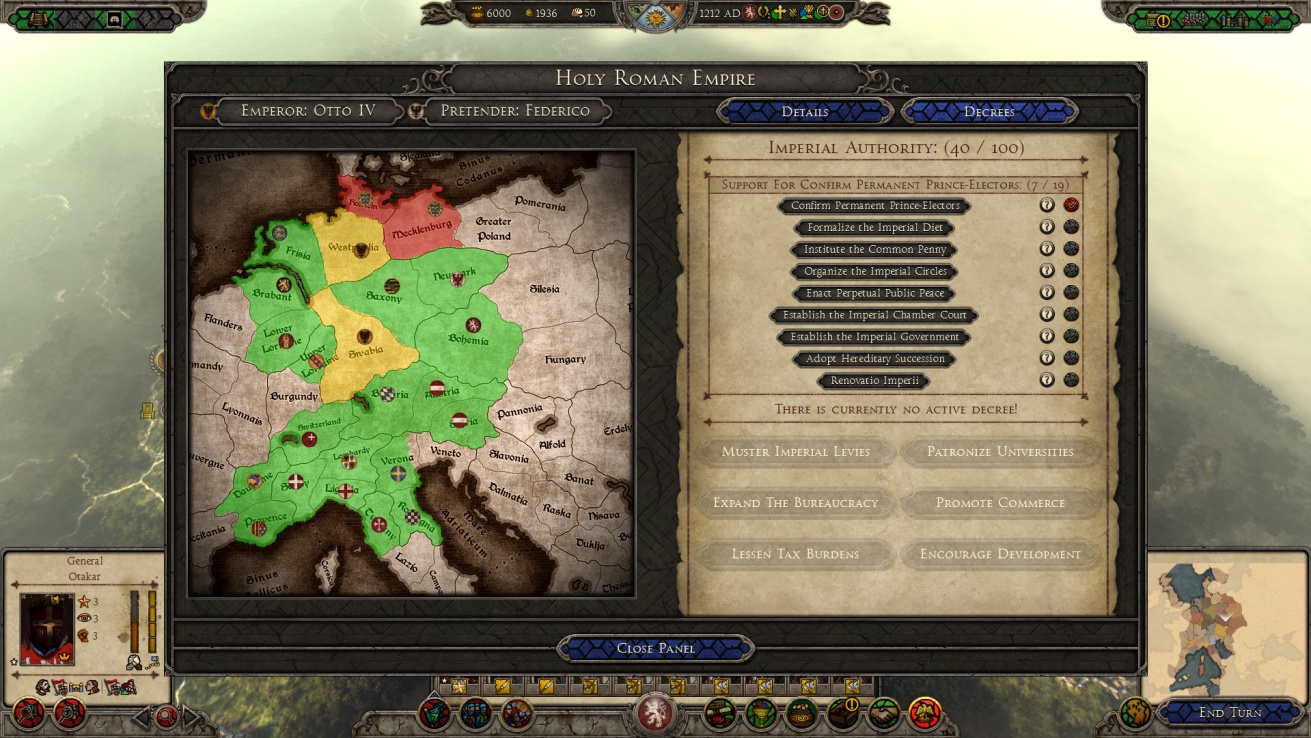
(HRE Reform and Decree screen)
The Pretender then has 10 turns to either seize Frankfurt or eliminate the current Emperor. If successful, they assume the Imperial throne and gain full access to HRE mechanics: decrees, reforms, and all associated privileges.
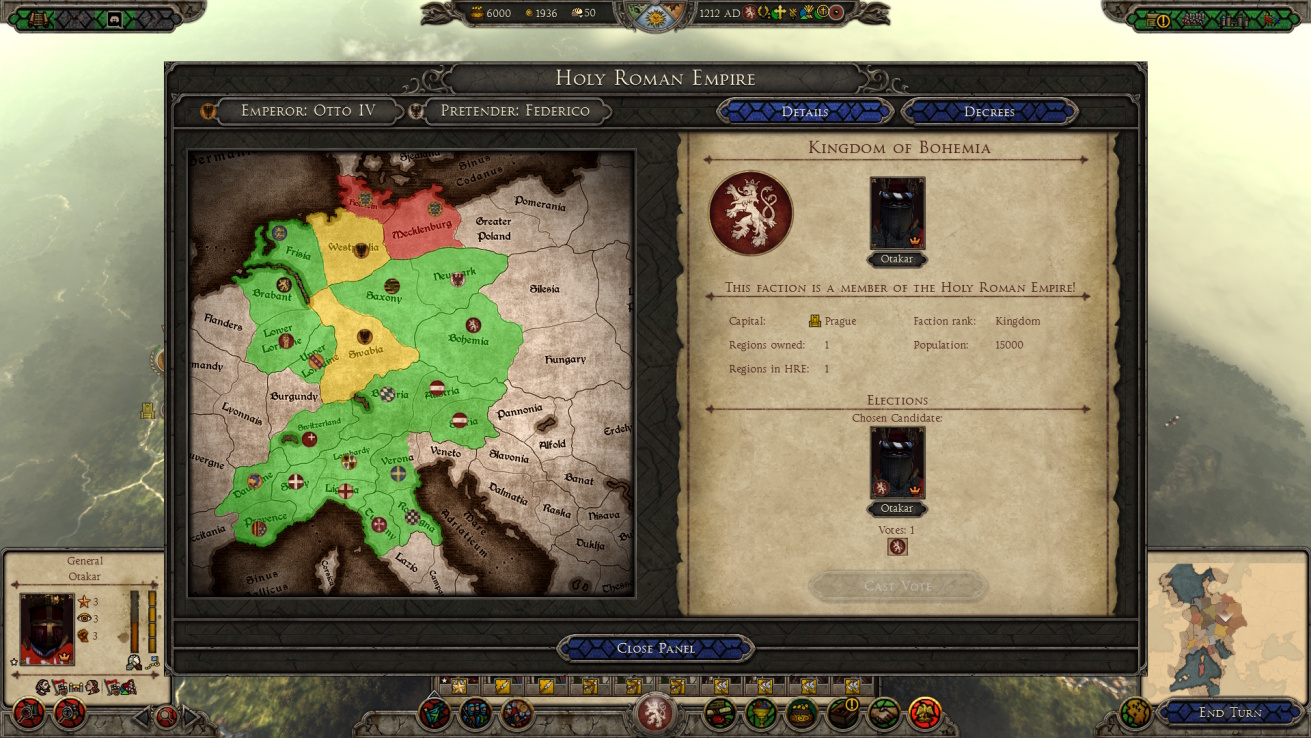
(HRE Voting and Pretender screen)
Neutral factions decide by pure chance, with a 25% likelihood each of voting for themselves, a random HRE faction, the Emperor, or the Pretender. If no Pretender is present, they instead support the strongest Malcontent/Discontent state, and if none exist, they default to voting for themselves.
Loyal, Puppet and the Emperor’s own faction always vote in favour of the current Emperor.
- Voltaire
The Holy Roman Empire isn’t just a faction; it’s a system. The HRE title and throne are not hereditary but elective (at least until the second last reform), and every time the emperor dies, an election is called. The faction may remain in power if it retains the majority of votes, but if a minor HRE state faction is elected, the HRE will return to being the County of Brunswick and the new member state will take over and command, mechanics and the name of: Holy Roman Empire.
Papal interventions can spark pretender wars by anointing an foreign Catholic leader as pretender-emperors. Each member state tracks a loyalty value that governs how it votes on Imperial Elections, decrees (temporary buffs) and sweeping reforms (permanent institutional changes). Every vote reshapes the Empire, diplomatic relations and internal cohesion, while periodic dilemmas demand hard choices that can realign loyalties, accelerate reforms, and forcing each ruler to balance military might with deft political manoeuvring.
Also worth noting: It will be a campaign defeat if the player faction is a part of the HRE when the final reform is enacted by an AI Emperor; you must destroy the HRE within or take over before that time comes.
Imperial Territories
There is a set number of HRE territories that make up the entire system. If these territories are lost to foreign factions, the Emperor’s Imperial Authority gain per turn will be hindered.HRE Faction States cannot be released as buffer states; instead, a rebellion must be formed for the states to re-emerge after their faction is destroyed. Alternatively as the Emperor you can revive HRE states when taking HRE territory from a non-HRE factions.
Imperial Authority
As Emperor, you accumulate Imperial Authority each turn (visible in the HRE panel), based primarily on how many regions within Imperial borders are controlled by HRE member states. Keeping those territories under member control maximises your Authority gain. However, if you personally conquer too many Imperial provinces, you’ll incur diplomatic penalties with your fellow Electors. To optimise your Authority gain, it’s usually best to:
- Directly hold only a few strategically important provinces within the HRE territories.
- Forge and maintain strong alliances with other member states.
- Expand beyond the HRE’s core lands.
- If war within the Empire is unavoidable, consider defeating and vassalizing unruly members to secure their electoral votes.
You can then spend your accrued Imperial Authority on enacting Reforms and Decrees.
Reforms
The HRE title holder (preferably you) can enact Reforms at the cost of Authority. They need support from the member states, even though the electors become limited to 7 at a certain point, every HRE faction state votes either for or against the next reform. Unlike how voting is chosen, through strength and papal favour, Reform support is garnered purely through diplomatic relationship, meaning even a powerful Emperor cannot pass reforms if the HRE states are all displeased with him. The reforms are game-changing.When the elector states are limited to 7 after the first Reform is passed by the Emperor. Bohemia, Brandenburg, Saxony, and Trier will have an increased chance to stay as electors, as these were historical.
Decrees
HRE Decrees are repeatable. It is a one-at-a-time buffs that cost Imperial Authority and grant passive bonuses to all member states, plus some extra perks for the Emperor’s own faction. Unlike Reforms, they require no votes, letting the Emperor to instantly deploy the targeted benefits (at the expense of slowing overall Reform progress).(HRE Reform and Decree screen)
(Opinion) States
HRE factions can occupy one of six states. If a faction changes state, it will take at least two turns before its state changes again. The states are as follows: - Pretender: Reserved for a foreign Catholic faction outside the Empire that has been given a mission to depose the current Emperor.
- Malcontent: HRE members that is actively at war with the Emperor’s faction or its allies and vassals.
- Discontent: HRE members that are within the Empire but harbour poor relations or low trust toward the Emperor.
- Neutral: HRE members that are generally content under Imperial rule and hold no strong preference.
- Loyal: HRE members that maintain a formal alliance with the Emperor.
- Puppet: HRE members that have been vassalized by the Emperor, pledging their electoral vote and full support in exchange for being allowed to continue ruling their lands.
Pretender Mechanics
Every 4–9 turns, if the reigning Imperial faction is excommunicated, the Pope issues a Pretender mission to a Catholic faction outside the Empire with the highest Papal Favour. In case of a tie, the faction with the greatest overall strength (wealth, territory, alliances and army size) is chosen. The Pretender then has 10 turns to either seize Frankfurt or eliminate the current Emperor. If successful, they assume the Imperial throne and gain full access to HRE mechanics: decrees, reforms, and all associated privileges.
Elections
All HRE States vote in elections until the Emperor manages to pass the first reform, limiting the elector votes to seven electors. An election occurs when the Emperor himself dies and there is no pretender. The faction with the highest votes becomes the new HRE, and its Faction Leader becomes the new Holy Roman Emperor.(HRE Voting and Pretender screen)
How Do They Vote
Malcontent and Discontent factions both follow the same rule: if a Pretender exists, they cast their vote for that Pretender; if not, they back the single strongest faction amongst all the Malcontent and Discontent states.Neutral factions decide by pure chance, with a 25% likelihood each of voting for themselves, a random HRE faction, the Emperor, or the Pretender. If no Pretender is present, they instead support the strongest Malcontent/Discontent state, and if none exist, they default to voting for themselves.
Loyal, Puppet and the Emperor’s own faction always vote in favour of the current Emperor.
CRUSADES
"Undertake this journey for the remission of your sins, with the assurance of the imperishable glory of the Kingdom of Heaven!"
- Pope Urban II
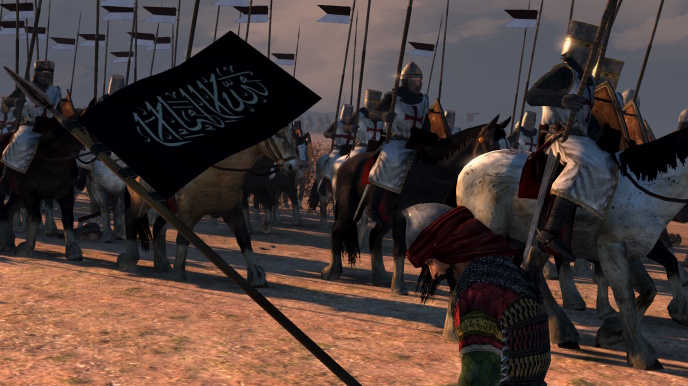
The Crusades is a scripted campaign system in the MK1212 Scripts component (required for the campaign, unless if you're playing multiplayer). It includes a missions and rewards with a designated target in the Holy Land or, in the rare cases of Muslim incursion to important Christian cities, in Spain and Europe. There's also custom cutscene (albeit an old one) for the first Crusade that's called in game, that being the 5th Crusade. Joining helps your standing with Catholic powers as well as increasing your Papal Favour if it is low or you're excommunicated. Ignoring or undermining the Crusades can hurt diplomatic relations with other Catholic factions.
IMPORTANT: If you attack a Catholic faction with a Crusading army, you will receive a massive morale debuff in battles and lose Papal Favour.
- Pope Urban II
The Crusades is a scripted campaign system in the MK1212 Scripts component (required for the campaign, unless if you're playing multiplayer). It includes a missions and rewards with a designated target in the Holy Land or, in the rare cases of Muslim incursion to important Christian cities, in Spain and Europe. There's also custom cutscene (albeit an old one) for the first Crusade that's called in game, that being the 5th Crusade. Joining helps your standing with Catholic powers as well as increasing your Papal Favour if it is low or you're excommunicated. Ignoring or undermining the Crusades can hurt diplomatic relations with other Catholic factions.
How It Works
- A Crusade is called and a notification window opens. (If its the 5th Crusade, you'll be greeted with a cutscene first)
- Select any army, on the bottom-left of the army panel, there's a “Join Crusade” (cross) button to take the vow and designate it as a Crusading army.
- You will be issued a mission, doubling as a timer for how long the Crusade remains active.
- On Crusade your army gains Crusading status, increased movement points, and access to special Crusader mercenaries.
- Succeed, and your Crusading generals gain a unique Crusader trait.
IMPORTANT: If you attack a Catholic faction with a Crusading army, you will receive a massive morale debuff in battles and lose Papal Favour.
PAPAL FAVOUR
“The Pope and God are the same, so he has all power in Heaven and earth.”
- Pope Pius V
The Papal Favour is a 0–10 numeric relationship between your faction and the Papacy. High favour unlocks buffs and good opinions, whilst low favour risks debuffs and ultimately excommunication.
If you play as the HRE in the Early Campaign, you might be wondering why everyone hates you. This might be the reason.
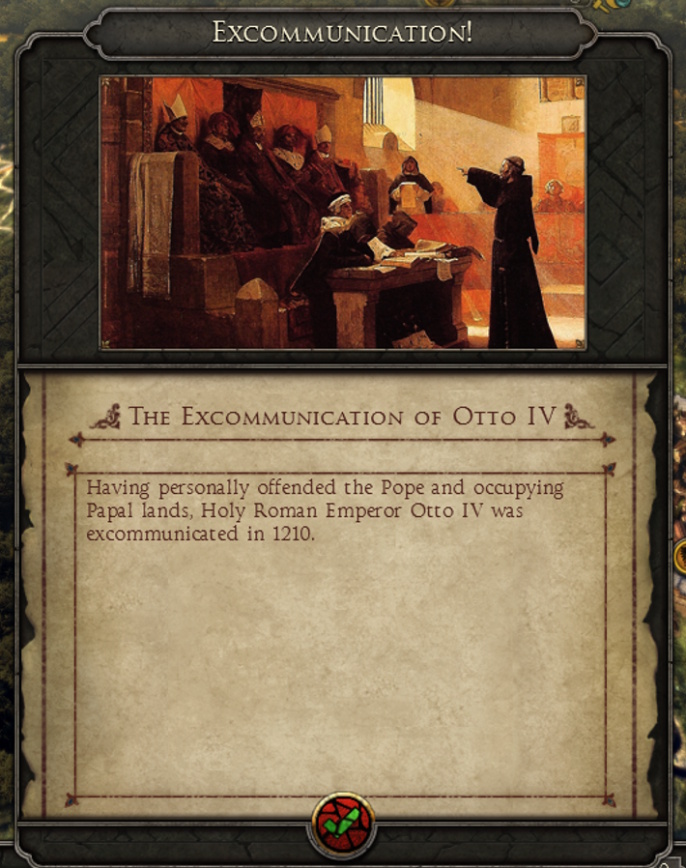
(Example of the Excommunication notification)
If the HRE Emperor is excommunicated, the Pope may anoint a Catholic Pretender outside the Empire, triggering a mission to seize Frankfurt or kill the Emperor.
IMPORTANT: Gold gifts to the Papal States only improves diplomacy opinions and play no part in Papal Favour mechanics.
- Pope Pius V
The Papal Favour is a 0–10 numeric relationship between your faction and the Papacy. High favour unlocks buffs and good opinions, whilst low favour risks debuffs and ultimately excommunication.
If you play as the HRE in the Early Campaign, you might be wondering why everyone hates you. This might be the reason.
(Example of the Excommunication notification)
Effects of High and Low Favour
High favour gives you an incremental minor public order bonuses and greater Papal tolerance. Low favour on the other hand gives you incremental public order negatives. And if you reach Papal Favour of 3 and below, there's a chance of excommunication. At 2–1 the chance is high, and at 0 Papal Favour, it’s excommunicado for you.If the HRE Emperor is excommunicated, the Pope may anoint a Catholic Pretender outside the Empire, triggering a mission to seize Frankfurt or kill the Emperor.
How to Gain Papal Favour
- Complete Papal missions, the most straightforward source.
- Join and succeed in Crusades, answering the call and winning can push you towards maximum favour.
- Release or ransom Catholic captives, DO NOT execute them (unless if you want to be excommunicated).
- Build Donated Fiefs, at the moment it is only a flavour building. Some mechanics will be incorporated in the future to tie it up with Papal Favour.
How to Lose Papal Favour
Why would you want to?- Fail Papal missions.
- Execute Catholic captives or sack Catholic cities.
- Low Catholic majority. Many players have observed a gradual favour bleed if there exists a provinces with less 50% Catholic following for extended periods of time.
IMPORTANT: Gold gifts to the Papal States only improves diplomacy opinions and play no part in Papal Favour mechanics.
CITIES & CASTLES
"Sedentary culture is the goal of civilization. It means the end of its lifespan and brings about its corruption."
- Ibn Khaldun
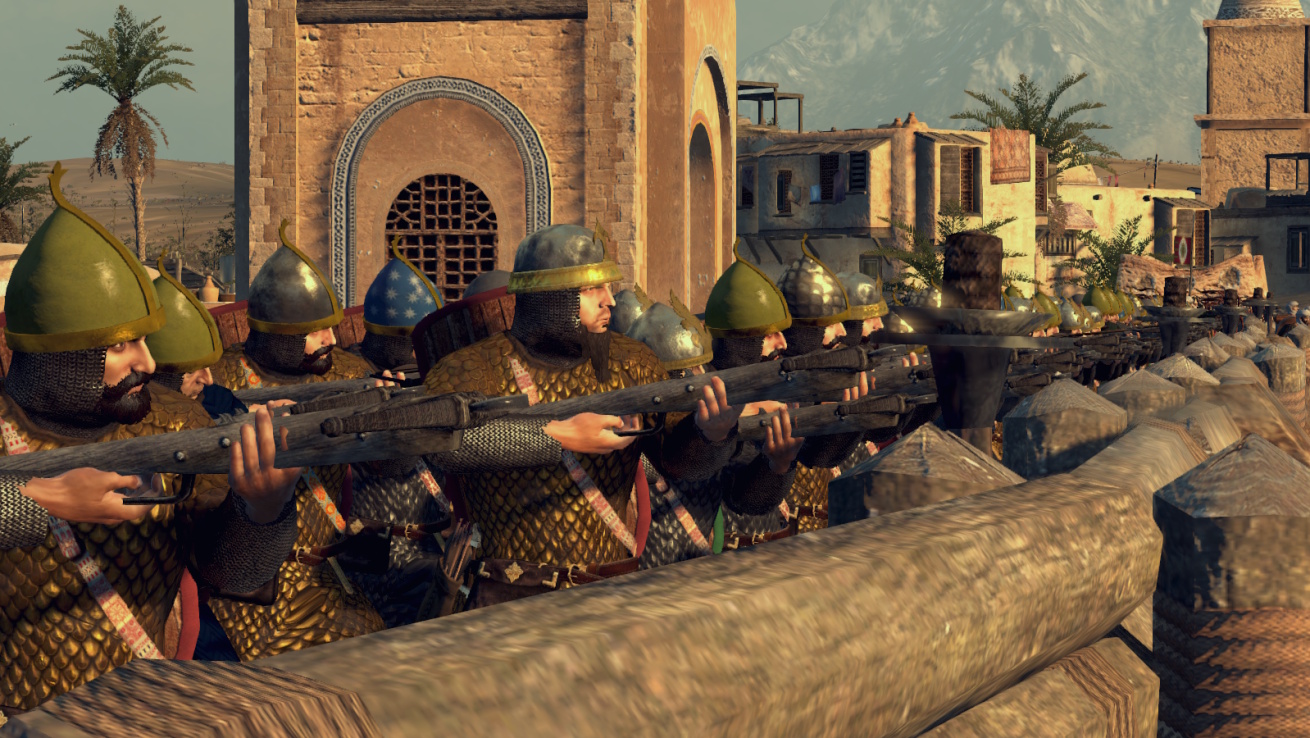
(Middle Eastern and European Castles buildings)
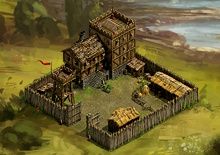
(Donated Fief building)
- Ibn Khaldun
Cities
It its one of the main way to generate higher income and support strong economic chains, but with the caveat of only able to recruit lower tier and militia units thus you'd need to spend a building slot for military buildings. Overall, it gives higher burgher population increase than castles and usually have weaker garrison.Castles
The main reason for castles is that it enables the recruitment of medium to heavy units without the need of barracks built, as well as an increase in sanitation and public order. This however comes at the cost of significantly less income. Overall, it gives higher peasant and noble population increase as well as having more solid garrison.(Middle Eastern and European Castles buildings)
Donated Fiefs
At the moment it is sort of a middle between a city and castle that is available for Catholic factions, but in essence it has a practical value of fixing public order problems with regions with high Non-Catholic religious local traditions. It might receive some proper mechanics in the future such as tying it to Papal Favours and what not. Ultimately it serves as a build and forget building for a settlement where you don't care for Funds income and Army recruitment but fixes religious related public order.(Donated Fief building)
GENERAL FACTION MECHANICS
"Knowledge without action is wastefulness and action without knowledge is foolishness."
- Imam al-Ghazali
The Lucky Nations are as follows:
(i.e Emirate of Granada appears as an emergent faction when there is a rebellion in the Andalusian region of the Almohads)
They are playable in custom battles and usually has similar roster to their "origin" factions with a few differing units.



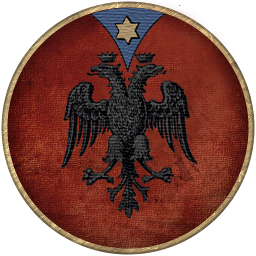
(Examples of a few Emergent Factions: Ottoman Sultanate, Principality of Moldavia, Emirate of Granada, and League of Lezhë)
You can't immediately annex a puppet state after you have just released them through the Buffer State option to avoid exploits.
IMPORTANT: There's no buying or selling settlements however, it is either complete barter (You give region A for region B) or just pure giving the AI settlements for free. The AI will almost always reject the trade if you are just demanding without giving any settlements in return. The AI would also sometimes reject an offer if the settlement is devoid of any buildings or wealth.
(i.e The County of Toulouse is a County rank, Kingdom of Jerusalem & Cyprus is a Kingdom, the Abbasid and Almohad Caliphate is an Empire.)
These upgrades are available through the decision buttons on the main UI bar in the middle-bottom of the screen. Through a click-to-confirm decisions you can:
(AI factions automatically changes their names the moment they conquered enough regions)
Some factions have an additional name change, with its own specific requirements, even after you have unlocked the Empire-rank decision. I'll let you discover these for yourselves.
Example : Ghurid Sultanate (Kingdom rank), changes to Ghurid Empire (Empire rank).
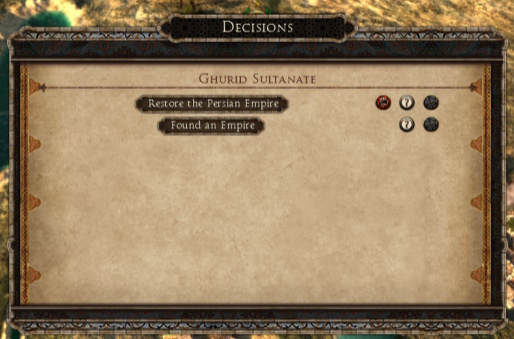
(Example of the faction name decision for the Ghurid Sultanate)
If you are playing as the Byzantine Successor States and want to regain the Byzantine Empire name YOU MUST be the first amongst the 3 to conquer Constantinople and fulfill its specific requirement. If another successor state beat you to it, you can't do anything about it.
IMPORTANT: It is known that the decisions sometimes disappear after x amounts of turns, it is a bug and as of now there's no fixes yet. You either rush, or be content being a County/Duchy/Kingdom-ranked faction.
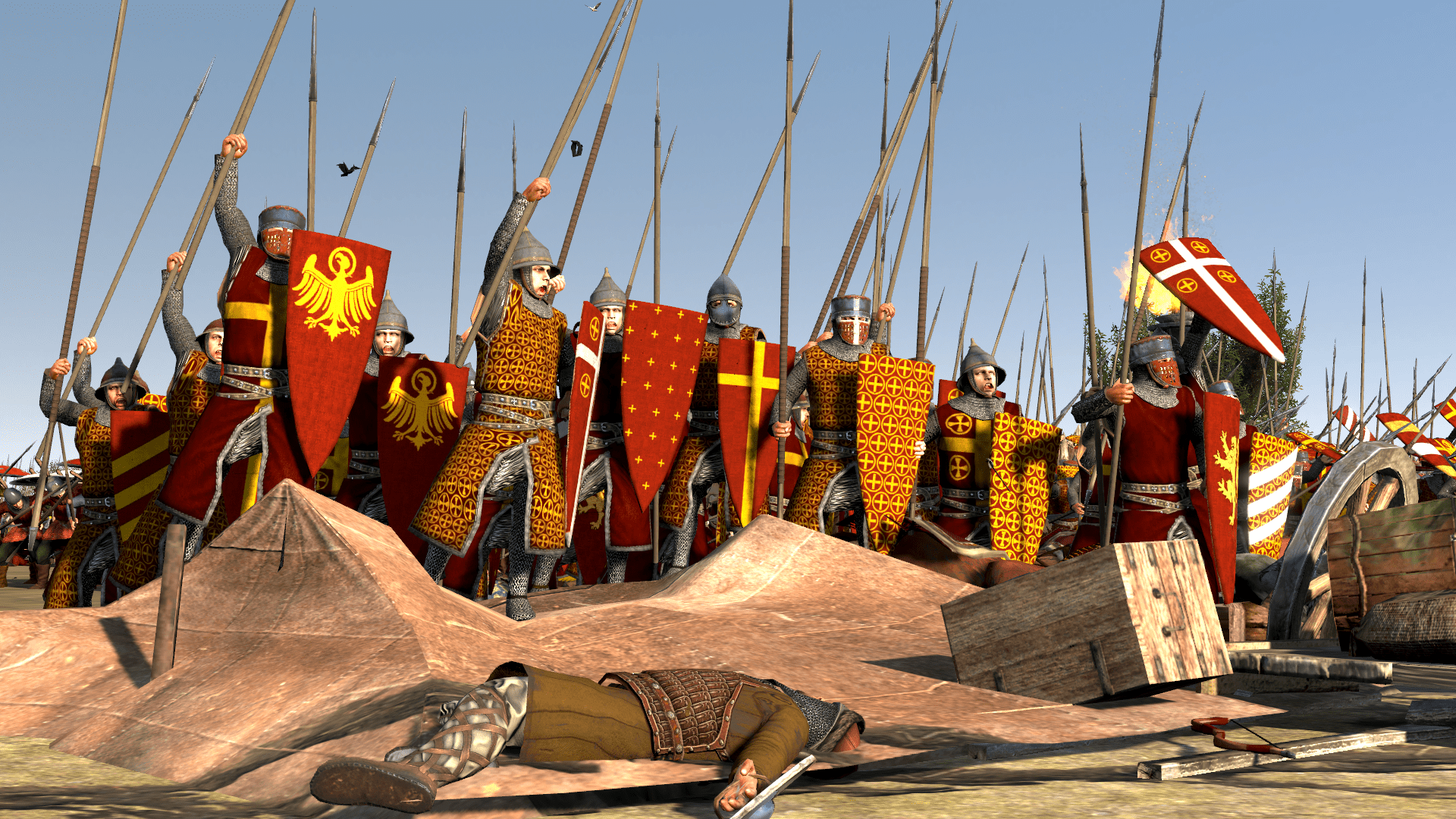
- Imam al-Ghazali
Lucky Nations
It is a built-in campaign mechanic initialized by Lucky_Nations_Initializer() at campaign start. On a new game, the script designates certain factions that tend to be eliminated early in sandbox play despite historical persistence. These factions receive an AI vs AI autoresolve bias to improve survivability.The Lucky Nations are as follows:
- Duchy of Austria
- Kingdom of Castille
- Kingdom of England
- Kingdom of France
- Ulus of Jochi (Golden Horde)
- Ulus of Tolui (Ilkhanate)
- Duchy of Lesser Poland
- Grand Duchy of Lithuania
- Mamluk Sultanate (Emergent)
- Ottoman Sultanate (Emergent)
- Teutonic Order
- Timurid Empire
- Republic of Venice
- Principality of Vladimir-Suzdal
Emergent Factions
Emergent factions are faction that does not exist at the start of the current Early Campaign of MK1212, but will appear when conditions are met. These conditions are usually based on regions, they are not locked behind certain years (can happen anytime by RNG) and happens through rebellions. (i.e Emirate of Granada appears as an emergent faction when there is a rebellion in the Andalusian region of the Almohads)
They are playable in custom battles and usually has similar roster to their "origin" factions with a few differing units.
(Examples of a few Emergent Factions: Ottoman Sultanate, Principality of Moldavia, Emirate of Granada, and League of Lezhë)
Buffer States
A campaign mechanic that allows you to release a conquered province of a faction as a puppet state through a button. Essentially restoring its existence while keeping it firmly under your suzerainty, without the hassle of bribing the faction with gazillion of money to be one.Annexation
This mechanic enables you to annex any puppet state that you own with a button in the diplomatic menu. It however, comes at a caveat of taking around 10-20 turns as well as reducing your income (depending on the faction's size).You can't immediately annex a puppet state after you have just released them through the Buffer State option to avoid exploits.
Settlement Trading
Do you hate when the bordergore are absolutely ridiculous? Your ally faction is conquering to and fro making nonsensical settlement grabs without care? Or perhaps you want to have your vassal states acquire their historical regions for roleplaying purposes? This mechanic allows that, simply go into the diplomatic menu and trade to your heart's content.IMPORTANT: There's no buying or selling settlements however, it is either complete barter (You give region A for region B) or just pure giving the AI settlements for free. The AI will almost always reject the trade if you are just demanding without giving any settlements in return. The AI would also sometimes reject an offer if the settlement is devoid of any buildings or wealth.
Dynamic Faction Names
Every faction is assigned the rank of County/Duchy, Kingdom, and Empire at game start. This usually ties in with their names. Be informed, however, that this is merely cosmetic (at the moment), and does not change anything ingame.(i.e The County of Toulouse is a County rank, Kingdom of Jerusalem & Cyprus is a Kingdom, the Abbasid and Almohad Caliphate is an Empire.)
These upgrades are available through the decision buttons on the main UI bar in the middle-bottom of the screen. Through a click-to-confirm decisions you can:
- Found a Kingdom: Unlocks after you have conquered 4 or more regions, and is not a member of the HRE.
- Found an Empire: Unlocks after you have conquered 18 regions, and is not a member of the HRE.
(AI factions automatically changes their names the moment they conquered enough regions)
Some factions have an additional name change, with its own specific requirements, even after you have unlocked the Empire-rank decision. I'll let you discover these for yourselves.
Example : Ghurid Sultanate (Kingdom rank), changes to Ghurid Empire (Empire rank).
(Example of the faction name decision for the Ghurid Sultanate)
If you are playing as the Byzantine Successor States and want to regain the Byzantine Empire name YOU MUST be the first amongst the 3 to conquer Constantinople and fulfill its specific requirement. If another successor state beat you to it, you can't do anything about it.
IMPORTANT: It is known that the decisions sometimes disappear after x amounts of turns, it is a bug and as of now there's no fixes yet. You either rush, or be content being a County/Duchy/Kingdom-ranked faction.
RELIGIONS & LOCAL TRADITIONS
"When the world pushes you to your knees, you're in the perfect position to pray."
- Rumi
Every religions comes with a specific effects that applies factionwide. Whether it makes sense or not is up to you. The effects are as follows:
Additional Notes:
- Rumi
Every religions comes with a specific effects that applies factionwide. Whether it makes sense or not is up to you. The effects are as follows:
- Baltic Paganism: +1 Army recruitment capacity.
- Bogomilism: +2 Priest capacity.
- Catholicism: −1 Non-Catholic religious influence.
- Cathar Christianity: +2 Public order.
- Eastern Christianity: −25% Religious building construction cost.
- Ibadi Islam: −25% Religious unrest.
- Judaism: +10% Civic development research rate.
- Orthodox Christianity: −25% Religious building maintenance.
- Shia Islam: +1 Religious influence.
- Sunni Islam: +2% Unit replenishment rate.
- Tengriism: +2 Army integrity.
Additional Notes:
- Catholic Heresies can't be converted to.
- Crusader States, HRE, and the Almohad Caliphate can't convert to other religions.
(The Abbasids should too, but at the moment is not restricted) - Converting to Catholicism currently does not transfer Papal Favour mechanics.
Local Traditions
Each province carries a permanent bias toward its starting religion. This slow, background pressure means you’ll rarely hit 100% conversion without heavy investment of priests, high-tier temples, and edicts.
EPITHETS
"He who seeks greatness, must endure sleepless nights"
- Imam al-Shafi'i
As you play, you will notice that leaders and generals will frequently appear with epithets. Some of these are common (in some cases, MUCH more common) than others. Yet however, it is not a universal happenstance. On several occasions statesmen recruited from outside the noble family will have epithets without no related trait or past.
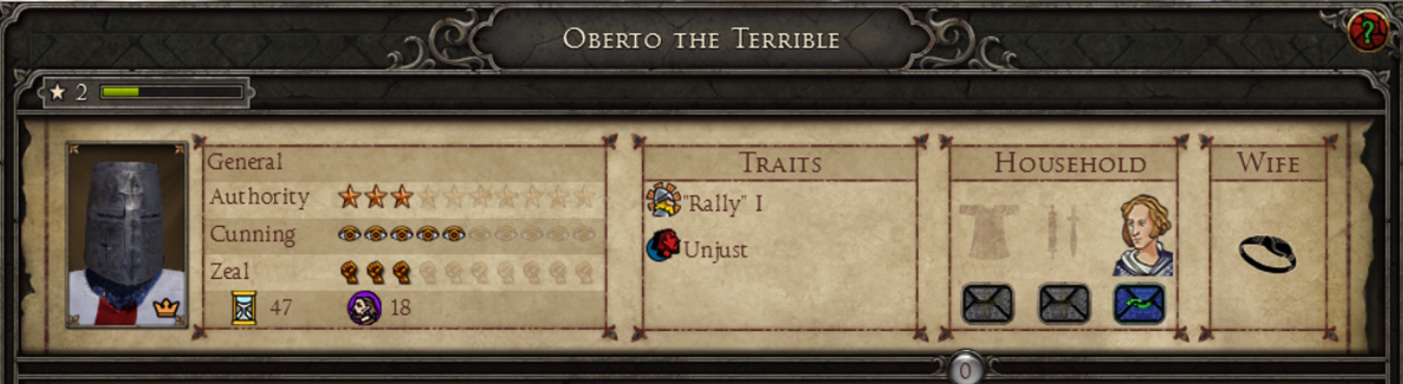
(Meet Oberto, he's really a terrible and unjust guy!)
As a note, nicknames and epithets that are related to traits, hence is contingent on RNG and is quite straightforward, has been left out. Below are epithets that are unlocked after a certain threshold are passed.
(i.e Otto the Cathar, Ahmad the Shi'ite, Tolui the Sunni, Vlad the Catholic)
- Imam al-Shafi'i
As you play, you will notice that leaders and generals will frequently appear with epithets. Some of these are common (in some cases, MUCH more common) than others. Yet however, it is not a universal happenstance. On several occasions statesmen recruited from outside the noble family will have epithets without no related trait or past.
(Meet Oberto, he's really a terrible and unjust guy!)
As a note, nicknames and epithets that are related to traits, hence is contingent on RNG and is quite straightforward, has been left out. Below are epithets that are unlocked after a certain threshold are passed.
Religious Conversion
These are acquired when you or the AI change your current religion to another, the religions are as outline under the Religion section of the guide. This epithet will only ever apply to the Faction Leadre(i.e Otto the Cathar, Ahmad the Shi'ite, Tolui the Sunni, Vlad the Catholic)
Negative Epithets
- the Bewitched: Has an innate deformity trait. (Misshapen)
- the Cruel: Executed captives 5 times.
- the Merciless: Executed captives 15 times.
Neutral Epithets
- the Old: Aged 65+
- the Undying: Aged 90+
- the Builder: Has the Architect trait.
Positive Epithets
- the Conqueror: Personally conquered 10 regions.
- the Crusader: Literally just go Crusading.
- the Crusader King: Being the one to ultimately succeed the Crusading mission.
Uncommon Epithets
- the Great/Undefeated/Victorious: Win more battles continuously, around 10 to 25 battles without any losses.
- the Survivor/Lame: Related to wounds, usually by an assassin.
- the Exile: Lose your capital.
- the Hero: Win 5 heroic victories.
- the Bold: Win 5 ambush battles.
- the Fair: Reigned for 20 years without a revolt, while having more than 4 regions.
- the Excommunicated: Its in the name.
- the Wicked: Excommunicated on more than one occasion.
IRONMAN MODE & CUSTOM ACHIEVEMENTS
Ironman mode is an optional toggle at campaign start, enabling the mod’s own non-Steam achievements and disables manual saving. All achievements are implemented in the mod scripts.
Not available in multiplayer, it is singleplayer only.
Examples: The Spice Must Flow, King of Kings, Basileia Rhomaion.
Objectives range from retaking Constantinople as a Byzantine successor (Trebizond, Nicaea, or Epirus) to completing HRE reforms, and much more.
Not available in multiplayer, it is singleplayer only.
Examples: The Spice Must Flow, King of Kings, Basileia Rhomaion.
Objectives range from retaking Constantinople as a Byzantine successor (Trebizond, Nicaea, or Epirus) to completing HRE reforms, and much more.
More Total War: ATTILA guides
- Western Roman Empire: Opening Moves★ 5 (1.2k)40k views1.6k ♥26 minUpdated Mar 5, 2015
- The Obscure mechanics of Attila.★ 5 (302)34k views408 ♥6 minUpdated Sep 27, 2020
- Total War: Attila - The Overall Guide★ 5 (582)33k views1.1k ♥30 minUpdated Mar 16, 2018
- Understanding politics in Attila★ 5 (275)32k views241 ♥3 min
- A Basic Religious Primer★ 5 (418)24k views513 ♥18 min
- Campaign Battles★ 5 (621)22k views1.1k ♥18 minUpdated Mar 31, 2015



This guide was created by its original author on the Steam Community. Are you the author and want it removed? Request removal.