Overview of All Military Units
Barracks Units
Barracks Units are able to to garrison and heal in Barracks, cities, towers, and forts. With the exception of Scouts, they add garrison power to the latter three, increasing the building's rate of fire. The only other units that can increase garrison power are Citizens and militias.
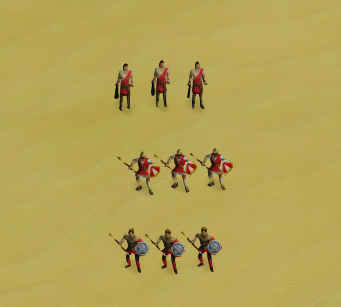
- Light Infantry (Ancient Age-Medieval Age)
- Cost: Food, Timber
- Matchups: strong vs. Foot Archers, horseback Ranged Cavalry, weak vs. Heavy Cavalry, Light Cavalry
- Bread-and-butter, lightly armored projectile infantry that usually wield slings or javelins. They move faster than other types of contemporary infantry. They're strong against archers but weak to melee cavalry.
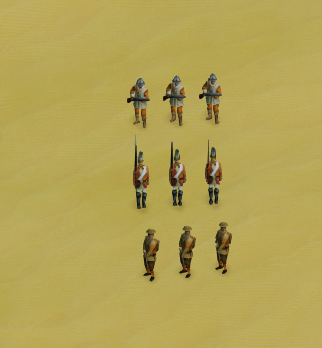
- Gunpowder Infantry (Gunpowder Age-Industrial Age)
- Cost: Food, Timber
- Matchups: strong vs. Heavy Infantry, Foot Archers, horseback Ranged Cavalry, weak vs. Heavy Cavalry, Light Cavalry, Tanks, Machine Guns, modern Ranged Cavalry
- Gunpowder Infantry replace Light Infantry in the Gunpowder Age, and in the Enlightenment Age, Archers as well. They are more powerful, longer ranged, and gain a distinct advantage against Heavy Infantry compared to their Light Infantry predecessors, but their firing rate is a bit lower. They are still weak against melee cavalry, as well as Tanks and Machine Guns.
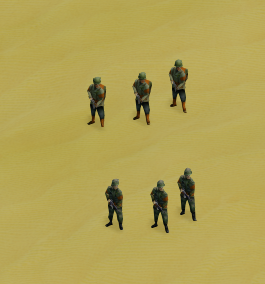
- Modern Infantry (Modern Age-Information Age)
- Cost: Food, Timber
- Matchups: strong vs. Heavy Infantry, weak vs. Tanks, Machine Guns, modern Ranged Cavalry
- Modern Infantry replace Gunpowder Infantry, now wielding automatic small arms. They move faster than Gunpower Infantry, and have the same kinds of matchups.
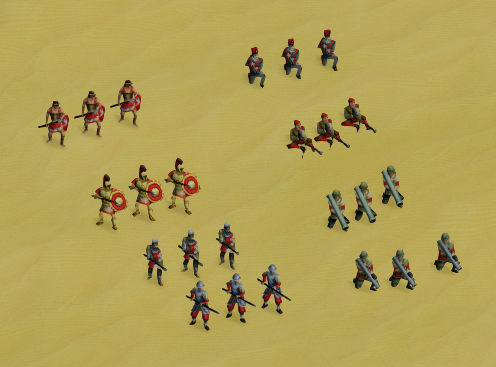
- Heavy Infantry (Ancient Age-Information Age)
- Cost: Food, Metal / Food, Timber (Ancient Age only)
- Matchups: strong vs. Heavy Cavalry, Light Cavalry, Tanks, modern Ranged Cavalry, weak vs. Foot Archers, horseback Ranged Cavalry, Gunpowder Infantry, Modern Infantry, Machine Guns
- Heavy Infantry have better armor and HP than most other kinds of Infantry, but move slowly. Heavy Infantry from the Ancient Age to the Gunpowder Age are melee units with the exception of a few unique units, and ranged units from the Enlightenment Age onward. Along with Helicopters, they are the best counter to the dangerous Heavy Cavalry and Tanks. Cavalry/Tanks also pair well with them because they can take out the gun-wielding infantry and archers Heavy Infantry are weak to. Heavy Infantry take heavy damage from Foot Archers, Gunpowder Infantry, Modern Infantry, Machine Guns, and horseback Ranged Cavalry, but actually have the advantage against modern Ranged Cavalry. Heavy Infantry contributes to garrison power less than most other ranged infantry.
- Foot Archers (Ancient Age-Gunpowder Age)
- Cost: Timber, Wealth
- Matchups: strong vs. Heavy Infantry, Ranged Cavalry, weak vs. Light Infantry, Gunpowder Infantry, Light Cavalry, Heavy Cavalry
- Archers are projectile infantry with good range, but little armor. Prior to the introduction of Gunpowder Infantry, they are the best counter to Heavy Infantry, and also have an advantage against Ranged Cavalry. Archers also shoot faster than Gunpowder Infantry. Like Light and Gunpowder Infantry, they are very weak to Light and Heavy Cavalry. Foot Archers (except a few unique units) lack a Gunpowder Age upgrade, and merge into Gunpowder Infantry in the Enlightenment Age. The five Native American nations use Heavy Archers instead of Crossbowmen. Note that the latter have better DPS because of their faster projectile speed despite otherwise being statistically identical to Heavy Archers. Foot Archers are good for boosting the garrison power of cities, towers, and forts, as are Gunpowder and Modern Infantry, and Machine Guns.
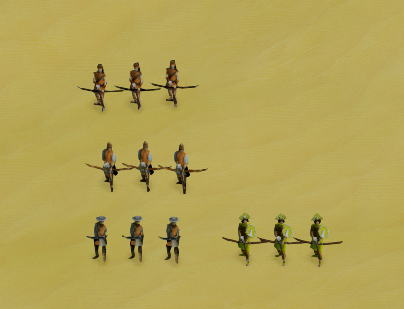
- Scouts (Ancient Age-Information Age)
- Cost: Wealth, Metal/ Wealth, Timber (Ancient Age only)
- Matchups: strong vs. Spies, Anti-Air*, weak vs. Archers, Gunpowder Infantry, Light Cavalry, everything else really
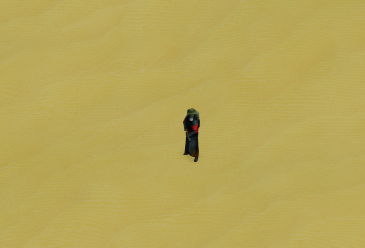
- Scouts mainly serve as exploration units for discovering the map and collecting Ruin bonuses, and as detector units. As detector units, they will reveal hidden enemy units nearby, such as Spies, other Scouts, and units under the effects of a General's Ambush ability. They are fast and have a long line of sight, but otherwise vulnerable. The basic Scout and Explorer units cannot attack anything except Spies, which they can kill in one hit using Counterintelligence. This ability can also be used to remove Informers from your units and buildings. Explorers onward are hidden when not moving. Industrial Age Scouts onward gain two new abilities, Sniper and Sabotage, while Modern and Information Age Scouts also have a jamming ability. Sniper instantly kills other military foot units (though only one individual at a time, not all three that usually make up a single unit), militia, horse-mounted units, and Generals. It cannot be used on civilian units, aircraft, Patriots, or otherwise valid targets in the radius of an enemy's CEO Patriot. Sabotage halves a building's current health (or a minimum of 200, 400, or 800 HP). Jamming is a passive ability and requires no craft, disabling AA buildings and cutting the firing rate of Light Ships and AA vehicles. It affects Light Ships even when they are shooting non-aerial targets, which is probably an oversight. While jamming, a white pulse emanates from the Scout; AA buildings are also surrounded by a yellow particle effect.
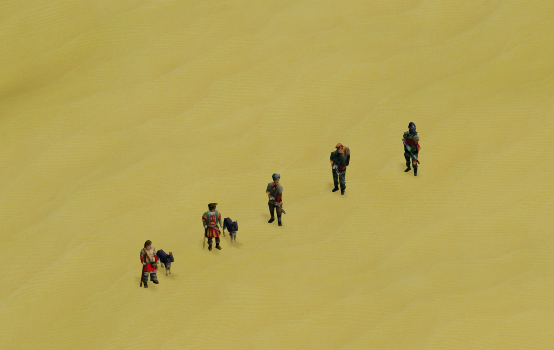
- Flamethrowers (Industrial Age-Information Age)
- Cost: Food, Metal
- Matchups: strong vs. Garrisons, Entrenchments, weak vs. Tanks, modern Ranged Cavalry, Machine Guns, infantry
- The Flamethrower is a solo Barracks unit that becomes available in the Industrial Age, and unlike all the others, has no upgrades. It is slow-moving, short-ranged, and squishy, but has the unique ability to force entrenched infantry out of their entrenchments, and garrisoned buildings (including Shipyards, but not Airbases and Missile Silos) to eject their occupants when they attack them. Despite what their attack animation might suggest, they can attack Helicopters like other ranged infantry. They deal little damage to Tanks and modern Ranged Cavalry, and are also weak to them as well as Machine Guns.
- Machine Guns (Industrial Age-Information Age)
- Cost: Wealth, Metal
- Matchups: strong vs. infantry, weak vs. vehicles
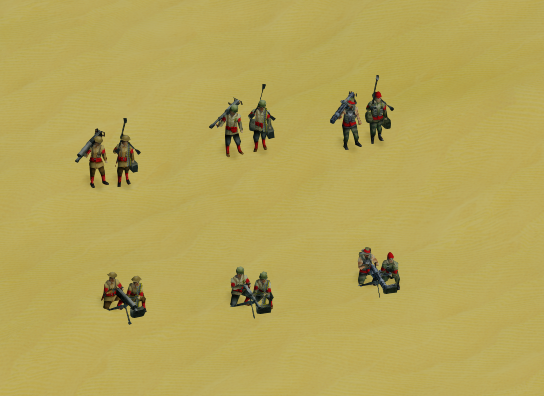
- Machine Guns are slow-moving units that must deploy to attack and pack up to move, like artillery. They can pivot but otherwise not move when deployed, and can't attack without being deployed. They have a high rate of fire and deal heavy damage to basically all kinds of foot units, including infantry and civilians, but fare poorly against both Tanks and modern Ranged Cavalry. They work well against enemy infantry and as garrison fodder.
Stable/Auto Plant Units
Stables automatically turn into Auto Plants in the Industrial Age. Stable units can garrison and heal in cities, forts, and towers, like foot units can, but Auto Plant units cannot. Stable and Auto units add no garrison power to a building. Both are able to garrison in Factories, but unlike Stables/Auto Plants, will not heal inside them.
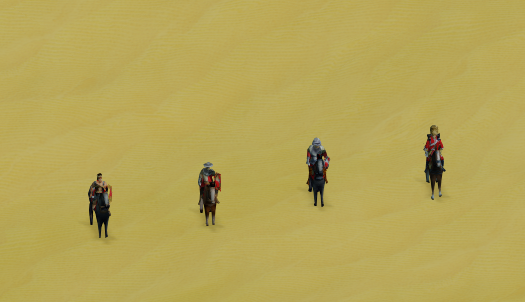
Light Cavalry (Classical Age-Enlightenment Age)
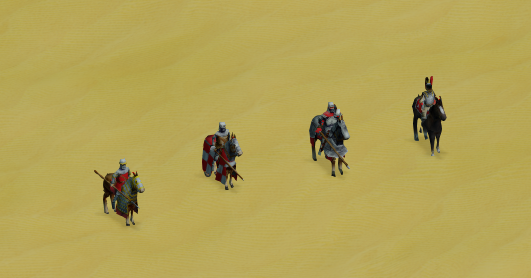
Heavy Cavalry (Classical Age-Enlightenment Age)
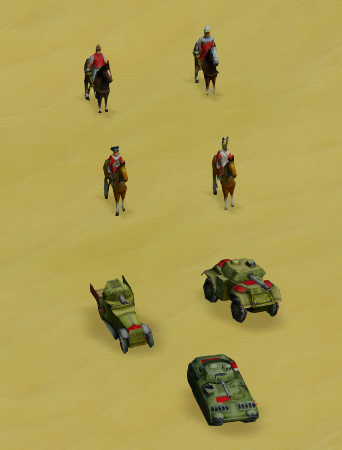
Ranged Cavalry (Classical Age-Information Age)
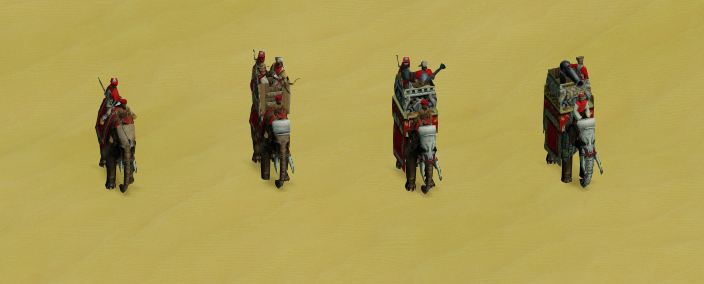
Elephants (Classical Age-Enlightenment Age)
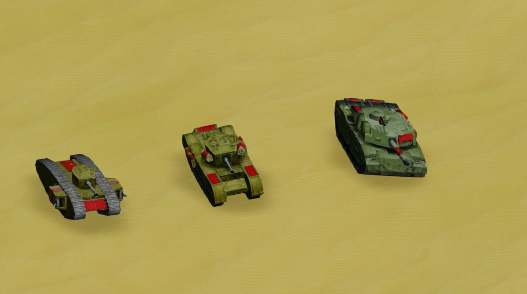
Tanks (Industrial Age-Information Age)
Light Cavalry (Classical Age-Enlightenment Age)
- Cost: Food, Timber
- Matchups: strong vs. Light Infantry, Gunpowder infantry, Foot Archers, Ranged Cavalry, Artillery Weapons, weak vs. Heavy Infantry, Buildings
- Light Cavalry are much faster than Heavy and Ranged Cavalry (which are around the same speed), as well as the majority of foot units. Both Light and Heavy Cavalry are melee units, though Light Cavalry sacrifice power and armor for better movement and production speed, and the two cost different resources. Light Cavalry do the most damage to Ranged Cavalry, but also have good matchups against Light Infantry, Gunpowder Infantry, Foot Archers, and artillery. They can also chase down Scouts because of their speed. Light Cavalry are very weak against Heavy Infantry and buildings that can attack (cities, forts, towers), and their attacks do pitiful damage to the latter. In the Industrial Age, Light Cavalry merges with Ranged Cavalry into modern Ranged Cavalry. Because they are only lightly armored, melee units, and usually the first to reach the enemy, Light Cavalry are usually the first to die in a battle.
Heavy Cavalry (Classical Age-Enlightenment Age)
- Cost: Metal, Wealth
- Matchups: strong vs. Light Infantry, Gunpowder Infantry, Foot Archers, Artillery Weapons, weak vs. Heavy Infantry
- Heavy Cavalry are the juggernauts of the pre-modern Ages. These horse-mounted melee units have a great deal of armor and health, and can easily kill most non-Heavy Infantry foot units. They also deal significant damage to artillery and Supply Wagons, and their power and durability give them a general advantage against Light and Ranged Cavalry too. Their one weakness is to Heavy Infantry, and they will lose one-on-one to Elephants because the latter simply have more health and armor. To balance their power, Heavy Cavalry are produced more slowly than most other units. They upgrade into Tanks starting in the Industrial Age.
Ranged Cavalry (Classical Age-Information Age)
- Cost: Timber, Wealth, (pre-Industrial), Food, Oil (Industrial onward)
- Matchups: pre-Industrial: strong vs. Heavy Infantry, Civilians, weak vs. Light Cavalry, Foot Archers, Gunpowder Infantry
post-Industrial: strong vs. Civilians, Machine Guns, Flamethrowers, Gunpowder Infantry, Modern Infantry, weak vs. Heavy Infantry, Tanks - Ranged Cavalry are equine units armed with bows and guns until the Industrial Age up, when they become armored vehicles. Though their matchups differ somewhat, both types deal heavy damage to civilian and support units (such as Citizens and Scouts) and have the ability to fire while moving, a trait only shared with Light Ships, Elephants, Armed Caravans, and technically planes. Pre-modern Ranged Cavalry also have a damage bonus against Heavy Infantry, like foot gunpowder and bow units do. Like other Cavalry, they are also effective against artillery. These Ranged Cavalry are somewhat frail and fare poorly against Light Cavalry, Foot Archers, and Gunpowder Infantry. They move at about the same speed as Heavy Cavalry. Both horseback Ranged Cavalry and Light Cavalry merge into small-m modern Ranged Cavalry in the Industrial Age. These Ranged Cavalry are somewhat like tanks-lite, gaining better armor than their equine predecessors and being most effective against Flamethrowers and Machine Guns (like Tanks are) as well as Gunpowder and Modern Infantry. They are faster than Tanks and take much less damage from Helicopters than Tanks do, and are able to shoot back at them, unlike Tanks. Modern Ranged Cavalry are weak to Tanks and Heavy Infantry.
Elephants (Classical Age-Enlightenment Age)
- Cost: Food, Wealth
- Matchups: strong vs. Heavy Infantry*, Artillery Weapons, weak vs. Foot Archers*, Gunpowder Infantry*
- Elephants are a standalone unique unit type exclusive to the Persians and Indians, who were added in the Thrones and Patriots expansion. They are large, slow units with a great deal of health and armor. Classical Age War Elephants are melee units, while its upgrades gain a ranged attack. They retain their melee attack animation and attempt to use it, but it deals no damage; only their ranged attack does. Like other cavalry, they are are quite effective against artillery. Elephants are strong against Heavy Infantry and weak against Foot Archers and Gunpowder Infantry. They can also beat other cavalry in general due to their sturdiness. They are, however, affected by a damage bug in Extended Edition that reduces their damage dealt to Heavy Infantry and increases it against other infantry, though the intended match-ups still seem to hold up. In the Industrial Age, Elephants upgrade into Tanks alongside Heavy Cavalry.
Tanks (Industrial Age-Information Age)
- Cost: Metal, Oil
- Matchups: strong vs. Gunpowder Infantry, Modern Infantry, modern Ranged Cavalry, Artillery Weapons, Machine Guns, Flamethrowers, weak vs. Heavy Infantry, Helicopters
- Tanks are the successors to Heavy Cavalry (and Elephants). They gain even more armor and power, as well as a ranged attack. Like Heavy Cavalry, Tanks easily kill Gunpowder and Modern Infantry, and dominate modern Ranged Cavalry, artillery, and other foot units apart from Heavy Infantry. Tanks have the most armor of any modern land unit, but are still weak to Heavy Infantry and especially Helicopters. Helicopters do massive damage to Tanks, who are unable to attack Helicopters, and thus require protection against them.
Factory Units
Siege Factories automatically upgrade into Factories in the Industrial Age, though this is only a cosmetic change. Supply Wagons and Vehicular AA can garrison and heal in towers, forts, and cities. Artillery Weapons can garrison and heal in forts and cities, but not towers. All three can garrison in Stables/Auto Plants, but will not heal in them. None of them add garrison power.
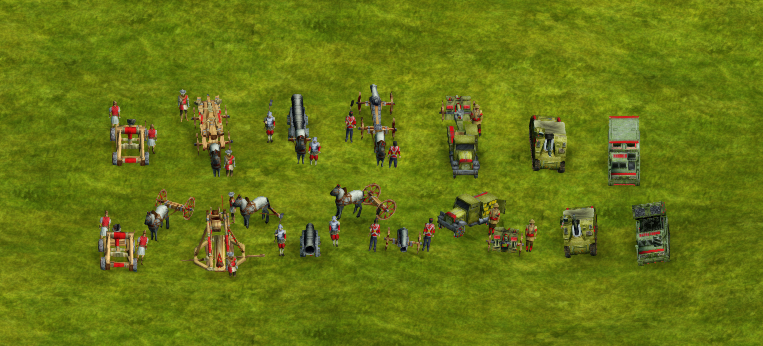
Artillery Weapons (Classical Age-Information Age)
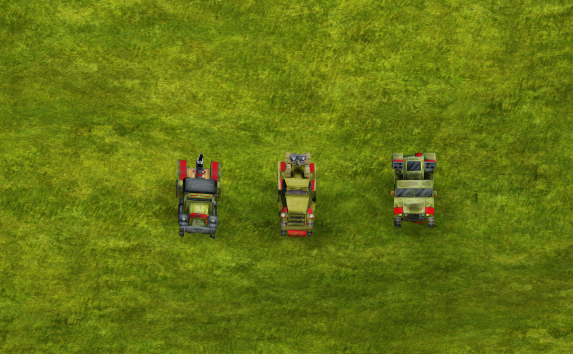
Anti-Aircraft (Industrial Age-Information Age)
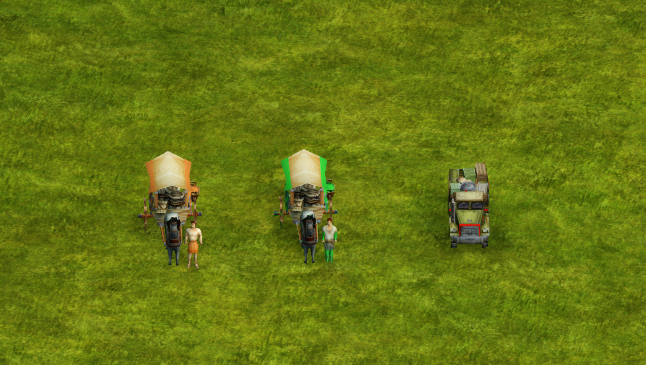
Supply Wagons (Medieval Age-Information Age)
Artillery Weapons (Classical Age-Information Age)
- Cost: Timber, Metal/ Oil, Metal (Modern-Information Ages)
- strong vs. Buildings, Ships, Infantry (modern artillery only), weak vs. Cavalry, Tanks, Helicopters
- Artillery Weapons are slow moving, long-ranged units that take up two population/garrison slots each. They have two stances, Packed and Deployed, like Machine Guns, and take a few seconds to switch between them. They must be Packed to move, and Deployed to attack, though they can still pivot around in a fixed position while Deployed. Artillery deals heavy damage to buildings; this and the fact that they comfortably outrage them makes them useful for taking down enemy fortifications and cities. Though not acknowledged by the game, artillery deals heavy damage to ships, though they have trouble hitting moving ships and most contemporary Bombardment/Heavy Bombardment Ships slightly out-range them. Because of their need to switch between being Packed and Deployed, and their relatively slow attack rate and projectile speed, Artillery Weapons struggle to hit any moving targets. They require protection against enemy units while dealing with buildings, and are most vulnerable to Cavalry, Tanks, and Helicopters; they are also unable to attack Helicopters. Artillery Weapons can be either in or out of supply, and being out of supply reduces their rate of fire. Artillery units are in supply if they are in your own territory (not allies') or in the radius of one of your Supply Wagons or authoritarian Patriots (Despot/Monarch/Comrade). Thus, it's a good idea to have Supply Wagons accompany them. When out of supply, there is a longer delay between their attacks; 1/3 slower for pre-Gunpowder Age artillery, and half speed for Gunpowder Age artillery and up.
Anti-Aircraft (Industrial Age-Information Age)
- Cost: Oil, Wealth
- Matchups: strong vs. Aircraft (except Stealth Bombers), weak vs. Tanks, Infantry, everything else really
- Vehicular Anti-Aircraft serve as mobile, land-based AA units. While not as powerful as AA buildings (Air Defense Gun/Radar Air Defense/SAM Installations), they aren't fixed to one position. Their mobility allows them to accompany armies and protect them from Helicopters and Fighters. Like other land- and sea-based AA, they are useless against Stealth Bombers, which are only vulnerable to Fighters. Vehicular AA is unable to attack anything but aircraft, and thus itself requires protection against enemy ground forces. Like other AA, Vehicular Anti-Aircraft are jammed by enemy Special Forces/Elite Special Forces. Jamming won’t disable them completely like AA buildings, but it cuts their firing rate by half until the Scouts are killed or out of range.
Supply Wagons (Medieval Age-Information Age)
- Cost: Food, Timber
- Supply Wagons are a type of support unit produced in Siege Factories and Factories. They are unarmed, expensive, and have high cost ramping, but are a vital addition to any attacking army. Supply Wagons prevent themselves and all units in their radius from taking attrition damage when in enemy territory. The one exception is the severe attrition units take from being in the territory of a nation at Peace with you, which even affects Supply Wagons. This particular attrition affects all units (even aircraft!) except for Scouts, Spies, Caravans, and ships. Supply Wagons do not prevent buildings stranded in a non-ally nation's territory from taking attrition either. Supply Wagons also allow Artillery Weapons to fire at their normal rate when outside of your own territory. The Supply Wagons of the French or any nation with the Versailles Wonder will slowly heal nearby land units except themselves and other Supply Wagons. This stacks with the healing provided by democratic Patriots. Supply Wagons turn from horse-drawn wagons to trucks in the Industrial Age up, but this is only a cosmetic change. Supply Wagons are "upgraded" by researching the Forage/Supply/Logistics technologies at Smelters, which increase their HP, radius, and speed.
Ships
Docks turn into Anchorages in the Gunpowder Age, and then Shipyards in the Industrial Age; these changes are cosmetic. They can only be built at the water's edge. Heavy Ships, Bombardment Ships, Heavy Bombardment Ships, Fireships, Submarines, and Aircraft Carriers all take up two Population/garrison slots each. Citrus and especially Copper deserve a mention as rare resources that are very valuable on water maps. Citrus makes all ships slowly heal, while Copper gives them 20% more HP.
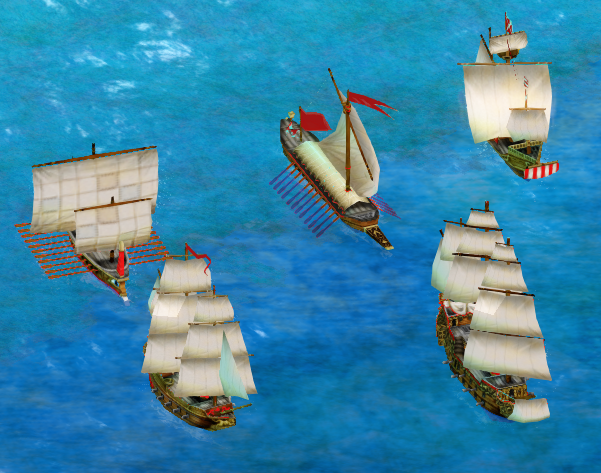
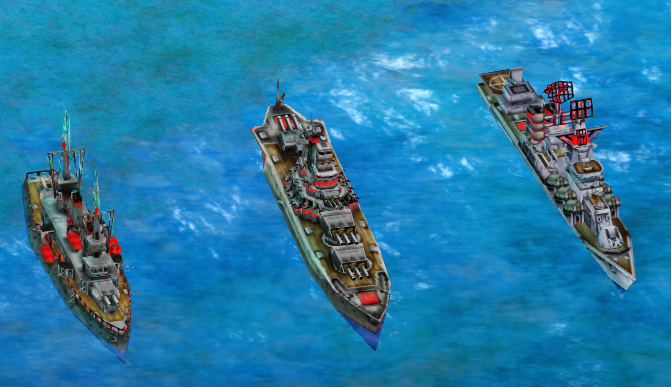
Heavy Ships (Ancient Age-Enlightenment Age)
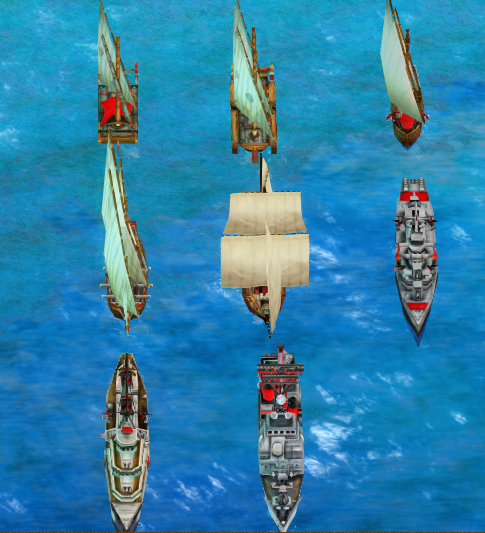
Light Ships (Ancient Age-Information Age)
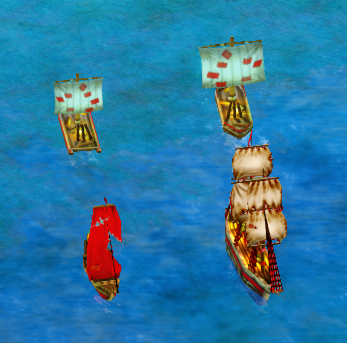
Fireships (Classical Age-Enlightenment Age)
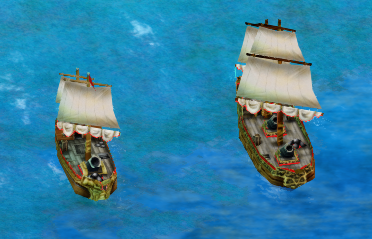
Bombardment Ships (Gunpowder Age-Enlightenment Age)
Heavy Bombardment Ships (Industrial Age-Information Age)
Submarines (Industrial Age-Information Age)
Aircraft Carriers & Fighter-Bombers
Transports
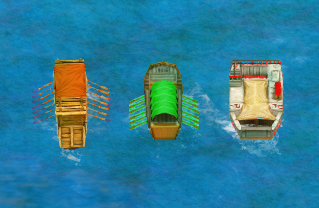 Transports are not created at Docks, but are a temporary transformation by land units that lets them traverse bodies of water. In order for land units to use transports, you must have at least one Dock and level 1 Science research. Transports are slow and defenseless, and particularly vulnerable to Light Ships, Fireships, and Subs, and so should ideally be accompanied by an escort. Using the Eject Garrison command on the unit inside the transport when it is very close to land will make it disembark prematurely. Transports receive automatic upgrades in the Gunpowder and Industrial Ages that increase their HP and change their appearance. Citizens in transports are still able to build/repair Docks and Oil Platforms.
Heavy Ships (Ancient Age-Enlightenment Age)
- Cost: Timber (Ancient Age)/Timber, Metal (Classical-Enlightenment Age)
- Matchups: strong vs Light Ships, Bombardment Ships, weak vs. Fireships, Submarines
- Heavy Ships are slower and more expensive than Light Ships, but with more health, armor, and firepower. Heavy Ships work well as the mainstay of a navy. They can easily beat Light Ships, but take heavy damage from Fireships. They upgrade into Heavy Bombardment Ships in the Industrial Age.
Light Ships (Ancient Age-Information Age)
- Cost: Food, Timber (Ancient-Enlightenment Age)/Metal, Oil (Industrial Age-Information Age)
- Matchups: strong vs. Fireships, Transports, Fishermen, Submarines, Aircraft Carriers, Aircraft* (modern Light Ships only), weak vs. Heavy Ships, Heavy Bombardment Ships
- Light Ships are cheaper and faster than Heavy Ships, and have the ability to fire while moving, which makes them ideal for exploration and patrol. They have an advantage against Fireships and Submarines, taking less damage from and dealing more damage to them than Heavy Ships do. Light Ships also do more damage to transports, making them useful for intercepting. Light Ships in the Industrial Age onward are also capable of attacking Aircraft, and can protect coastal areas and other ships from them. However, like land-based AA, they are incapable of attacking Stealth Bombers. Light Ships are negatively affected by a damage bug in Extended Edition that noticeably reduces their effectiveness against aircraft. It makes them do mediocre damage to planes, though they can still kill Helicopters fairly easily. Light Ships are weak to Heavy Ships and Heavy Bombardment Ships.
Fireships (Classical Age-Enlightenment Age)
- Cost: Timber, Wealth
- Matchups: strong vs. Heavy Ships, transports, Bombardment Ships, weak vs. Light Ships
- Fireships are kamikaze units that explode upon touching an enemy ship or losing all their health. The explosion has a large amount of splash that can damage nearby ships besides the main target. They are quite powerful, easily sinking transports and Bombardment Ships and dealing severe damage to Heavy Ships. However, they are less effective against Light Ships. Fireships upgrade into Submarines in the Industrial Age.
Bombardment Ships (Gunpowder Age-Enlightenment Age)
- Cost: Timber, Metal
- Matchups: strong vs. buildings, weak vs. ships
- Bombardment Ships are armed with long-ranged mortars that deal heavy damage to buildings, making them ideal for destroying enemy coastal bases and Anchorages. However, they are slow, vulnerable to all other types of ships, and weak in naval combat, so you should have your other ships protect them. Along with Heavy Ships, they upgrade into Heavy Bombardment Ships in the Industrial Age.
Heavy Bombardment Ships (Industrial Age-Information Age)
- Cost: Metal, Oil
- Matchups: strong vs. Light Ships, buildings, weak vs. Submarines, Fighters
- Heavy Bombardment Ships succeed both Heavy Ships and Bombardment Ships and have the combined strengths of both. Like the former, they are sturdy and powerful in naval combat, especially against Light Ships, and like the latter, they are long-ranged and very effective at destroying buildings and harassing ground units. They take heavy damage from Submarines and are also quite vulnerable to Fighters, though Bombers and Helicopters don't do that much to them. They are capable of shooting Helicopters.
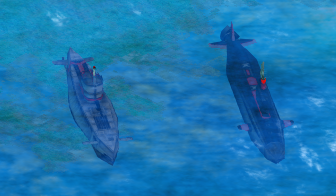
Submarines (Industrial Age-Information Age)
- Cost: Oil, Wealth
- Matchups: strong vs. Heavy Ships, Heavy Bombardment Ships, transports, Aircraft Carriers, Submarines, weak vs. Light Ships, Fighters, Helicopters, Submarines
- The Submarine replaces the Fireship in the Industrial Age. It has one upgrade, the Attack Submarine, in the Information Age. Subs are hidden units that are cloaked until they attack or are seen by detector units or buildings. They attack by firing torpedo volleys, and like Fireships, can only attack enemy ship units. Their attacks are powerful, but the Submarines themselves are quite frail, making them glass cannons. Submarine torpedoes deal major damage to Heavy Bombardment Ships, Aircraft Carriers, transports, and other Submarines, usually killing the latter two with one volley. Like Fireships, they deal less damage to and take more damage from Light Ships, and are also helpless against and weak to Fighters and Helicopters, the latter of which can also detect them.
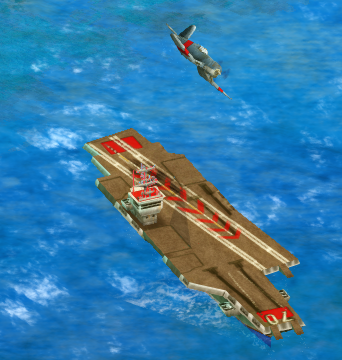
Aircraft Carriers & Fighter-Bombers
- Cost: Oil, Wealth (both)
- Matchups (Aircraft Carriers): weak vs. Submarines, Light Ships
- Aircraft Carriers are mobile airbases that can carry up to seven Fighter-Bombers each, which are a type of Fighter Aircraft. Fighter-Bombers do deal more damage to buildings than normal Fighters do, but it pales in comparison to Bombers. Fighter-Bombers cannot use land Airbases, land-based aircraft cannot use Aircraft Carriers, and Fighter-Bombers can't be transferred between living Carriers. Similar to land-based aircraft, though, if a Fighter-Bomber's Carrier is sunk while it's flying, it will automatically transfer to another Carrier with an open slot if there is one; otherwise, it crashes. Fighter-Bombers upgrade into Jet Fighter-Bombers when Jet Fighter is researched at an Airbase. If an Aircraft Carrier loses planes, it can be commanded to make more. Carriers themselves cannot attack or dock in Shipyards, though they have a large pool of HP and naturally regenerate health (which stacks with Citrus) to compensate. They are most vulnerable to Submarines and Light Ships.
Transports
Transports are not created at Docks, but are a temporary transformation by land units that lets them traverse bodies of water. In order for land units to use transports, you must have at least one Dock and level 1 Science research. Transports are slow and defenseless, and particularly vulnerable to Light Ships, Fireships, and Subs, and so should ideally be accompanied by an escort. Using the Eject Garrison command on the unit inside the transport when it is very close to land will make it disembark prematurely. Transports receive automatic upgrades in the Gunpowder and Industrial Ages that increase their HP and change their appearance. Citizens in transports are still able to build/repair Docks and Oil Platforms.Aircraft
There are three types of aircraft: Fighter Aircraft, Bomber Aircraft, and Helicopters. Fighters and Bombers (planes as opposed to Helicopters) are bound to Airbases, while Fighter-Bombers, which are really just Fighters, are instead bound to their Aircraft Carriers and are discussed more there. Planes have limited fuel, shown as a blue Craft meter, that determines how long their useful time per flight is. When it runs out, the plane immediately heads back to base and cannot take any other actions besides a transfer while doing so. If a plane runs out of fuel but has no Airbase to return to, it immediately dies. If a plane's Airbase is destroyed while it is in flight, it will automatically transfer to another Airbase with an open slot when it runs out of fuel or is told to return. Planes must spend time refueling in the Airbase before they can fly out out again. All three types of aircraft will heal while in Airbases. Planes can be manually transferred between existing Airbases as well, and each Airbase can support up to 10 aircraft, including garrisoned Helicopters. If an Airbase is destroyed, all the aircraft inside it at the time are also destroyed. With the exception of Anti-Aircraft vehicles, ground units can only occasionally shoot planes for chip damage and are largely defenseless against them. Besides Anti-Aircraft guns/SAM Installations and their wooden predecessors, buildings cannot attack planes either.
Fighter Aircraft (Industrial Age-Information Age)
Bomber Aircraft (Modern Age-Information Age)
Helicopters (Modern Age-Information Age)
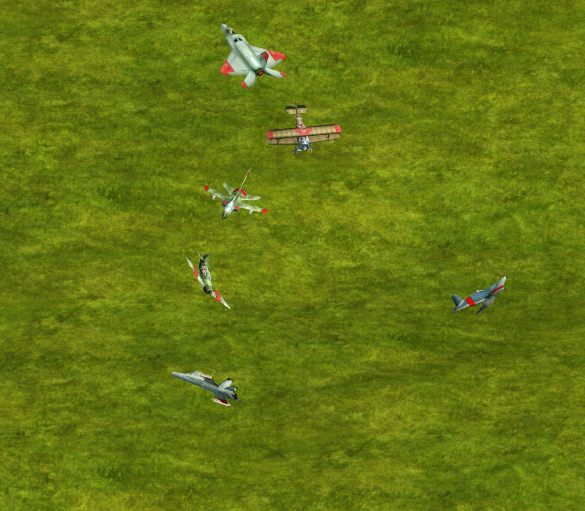
Fighter Aircraft (Industrial Age-Information Age)
- Cost: Oil, Wealth
- Matchups: strong vs. aircraft, ground units, Submarines, Heavy Bombardment Ships, weak vs. Anti-Air, Fighter Aircraft
- The earliest fighter, the Biplane, is the sole available aircraft in the Industrial Age. Unfortunately, the Biplane is slow, weak, and carries little fuel, so its only real use is defense. Fighters are faster than Bombers, but have less health and range. They work well against all other types of aircraft, especially Bombers and Helicopters. They are the best defense against Bomber Aircraft and the only defense against Stealth Bombers besides destroying their Airbases. Fighters don't do much to most buildings but are effective against enemy ground units and most ships, though Light Ships are capable of defending themselves. Like other aircraft, they are vulnerable to both stationary and mobile Anti-Air. If a garrisoned Fighter's Airbase comes under attack by enemy forces, it will automatically take flight to defend it.
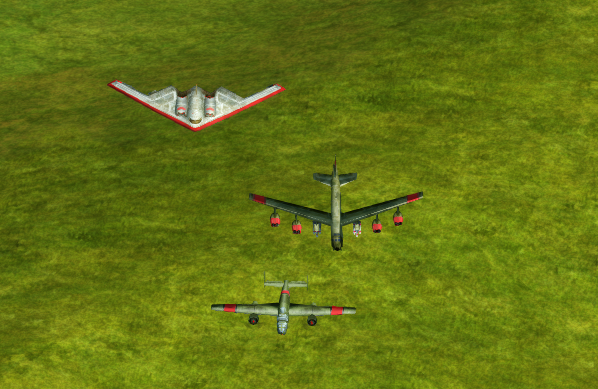
Bomber Aircraft (Modern Age-Information Age)
- Cost: Oil, Wealth
- Matchups: strong vs buildings, weak vs. Fighter Aircraft, Anti-Air
- Bombers are slower than Fighters, but have more fuel and HP. They are highly effective against buildings and are good for destroying forts and reducing enemy cities to pave the way for a ground attack. They are much less effective against ground units and (despite what the game implies) ships than Fighters are. Bombers cannot attack other aircraft and are vulnerable to AA, so if you want them to survive their bombing runs, you will need to destroy or jam enemy AA in the area and deal with enemy Fighters. Stealth Bombers, which are available in the Information Age after researching Global Prosperity, have far more speed, power, and fuel than their predecessors, and they're one of the strongest units in the entire game. Stealth Bombers are immune to land-based AA and ships; they are only vulnerable to Fighter Aircraft and nuclear blasts. Thus, besides destroying enemy Airbases, Fighters are the only defense against them.
As a piece of trivia, there is an unused model for an Industrial Age bomber based on the German WWI-era Gotha, but it was scrapped from the final game.
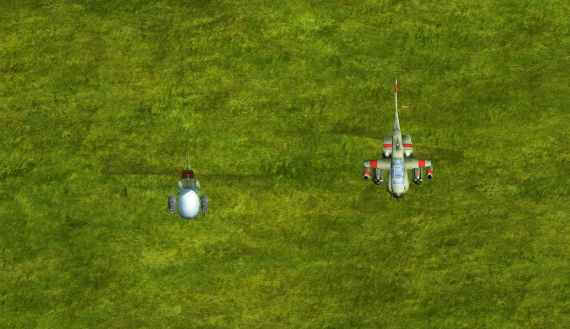
Helicopters (Modern Age-Information Age)
- Cost: Oil, Wealth
- Matchups: strong vs. Tanks, Artillery Weapons, Submarines, weak vs. Anti-Air, Fighter Aircraft, Light Ships
- Helicopters in many ways behave more like other units than planes. Unlike planes, they spawn outside Airbases when created, can remain stationary by hovering, and have no finite fuel meter, thus never needing to return to an Airbase to refuel. However, they can still be garrisoned inside Airbases to heal and for protection. Most ranged ground units and ships can attack Helicopters, as can cities, forts, and towers. Obviously, Helicopters cannot be attacked by melee units. Helicopters are detector units like Scouts, and reveal nearby hidden enemy units such as Spies and Submarines. Helicopters can attack pretty much anything except planes, including other Helicopters, though they don't do much damage against each other. Because they have infinite fuel, are very fast, detect hidden units, and are unimpeded by terrain, they are arguably the most mobile unit in the game and are good for patrols and exploration. Helicopters' attacks are very effective against Tanks, Artillery, and Submarines, none of which can shoot back at the Helicopters, making them great Tank killers. Helicopters are very vulnerable to AA and Fighters, as well as Light Ships, and thus need protection from these units to function effectively.
Missiles
There are two types of missiles in Rise of Nations, and two of each type, for a total of four missiles. Missiles are produced at Missile Silos, and each Silo can only hold one missile at a time. They are the only units in the game that cost Knowledge to produce. Like aircraft in an Airbase, a missile in a Silo is also lost if that Silo is destroyed. After a missile's target is selected, it cannot be rerouted, and missiles do not home in on enemy units. The Future Technology Missile Shield, available in the Information Age after completing all standard Library research, protects a nation from being targeted by missile strikes. If the Missile Shield is finished researching after an enemy launches a missile but before it hits, the missile will simply vanish on impact harmlessly. Missile Shield also prevents enemies from firing missiles into the water close to your territory. It also prevents you from firing missiles into allies' territory if said allies have Missile Shield, even at mutual enemies. It is still possible to hurt enemy units of a nation with Missile Shield using missiles if they are indirectly targeted outside their territory with the Bombard Ground command. The game alerts you whenever another nation launches a missile. Missile Shield is the only counter to missiles other than destroying enemy Missile Silos and maybe spacing out your own buildings. Missiles in flight cannot be attacked by any other unit. As a tip, you can have a Silo immediately start building another missile of the same kind after each launch with the infinite queue button, right next to the progress bar.
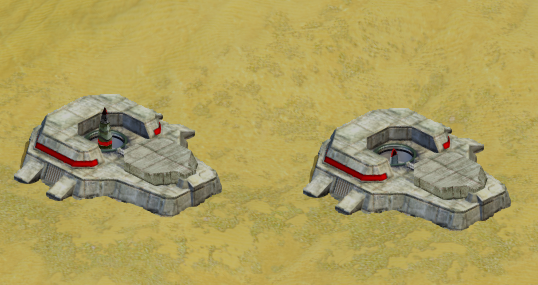
Conventional Missiles (Modern Age-Information Age)
Nuclear Missiles (Modern Age-Information Age)
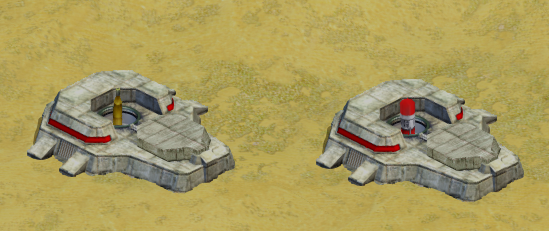
Conventional Missiles (Modern Age-Information Age)
- Cost: Knowledge, Oil
- Conventional Missiles are produced more cheaply and quickly than nukes, but are much less powerful. Conventional Missiles have a limited launch range, displayed on the mini-map when the Silo is selected. They work best against buildings as they are larger, stationary targets, but have a bit of a damage penalty against Wonders. Aircraft are immune to Conventional Missiles. There are two Conventional Missiles; the V-2 Rocket and the Cruise Missile. The V-2 Rocket takes about 10 seconds to hit from target selection to impact. Its upgrade, the Cruise Missile, functions a bit differently from it and the other missiles. It has more range, power, accuracy, and splash damage, making it much stronger against multiple buildings clustered together, or even units if they don't get out of the way. Unlike the V-2, the Cruise Missile flies along the map to its target instead of going straight up and down, so the time it takes to reach the point of impact depends on its distance from the Silo. It also means that enemies can potentially see it coming.
Nuclear Missiles (Modern Age-Information Age)
- Cost: Knowledge, Oil
- There are two Nuclear Missiles in the game, the initial Nuclear Missile and the Nuclear ICBM (Inter-Continental Ballistic Missile). Unlike the V-2 Rocket, the Nuclear Missile is not immediately available upon reaching the Modern Age and must first be researched. Researching, producing, and upgrading nukes is very expensive and slow; much slower than any other unit in the game. Like the V-2, nukes fly straight up and down and take about 10 seconds to land. Unlike Conventional Missiles, they have infinite launch range and can be launched to anywhere on the map regardless of its size or their Silo's location. When a nation launches a nuke, the game will loudly notify you and the mini-map will display when and where the missile will land. Nukes produce large, immensely powerful blasts, with the damage varying depending on how close to the middle of the blast the victim units/buildings were. Anything at the epicenter except city centers and more advanced Wonders will be destroyed for sure. Aircraft caught in the blast are also destroyed. The ICBM is stronger than the Modern Age Nuclear Missile and has a much bigger blast radius, being the strongest weapon in the entire game. Nuclear Missile usage has two consequences: nuclear embargoes and the Armageddon clock. When you launch a nuke, you are temporarily unable to use the Market's buy/sell function for a while, unless you have the Space Program Wonder, in which case you are unaffected by nuclear embargoes. The Armageddon clock becomes visible after the first nuke is launched, and it decreases by one for each nuclear missile launched. If it reaches 0, the game ends in Armageddon and counts as a defeat for all players. AI nations will only use nukes if their difficulty is set to Moderate or higher, and will refrain from launching any more if the Armageddon clock is at 1. Each time a nation researches Missile Shield, it turns back the Armageddon clock by 2.
Others
All of the units in this section except Armed Merchants and Armed Caravans are treated as military units.
Generals & Patriots (Classical Age-Information Age)
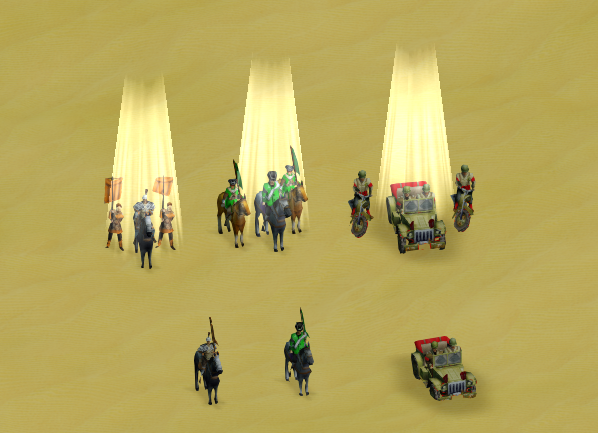
Spies (Medieval Age-Information Age)
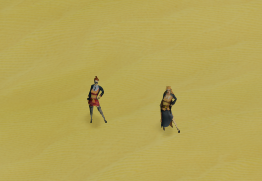
Militia (Classical Age-Information Age)
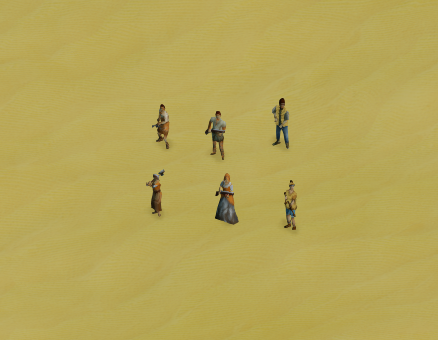
Generals & Patriots (Classical Age-Information Age)
- Cost: Wealth, Metal
- Generals are created at forts, as are Spies. Generals themselves do not fight but benefit all other units in their radius. They passively grant +2 armor to themselves and all other nearby units, plus an additional +2 armor for each Fort unit upgrade technology (Tactics, Operations, Strategy), up to +8, or +10 for The Comrade. This research is also what upgrades Generals' HP, radius, Craft regeneration rate, and the duration of their Ambush/Forced Marched abilities. General armor does not stack with other Generals, but multiple Generals provides redundancy, especially for large or spread-out armies, or if one or more Generals are killed. This armor also applies to ships and aircraft within the General's radius. Generals cannot attack, but they move quickly and have a lot of HP when upgraded. They are probably the one target Scouts' Sniper ability is worth using on, but all Patriot Generals are immune to sniping, and The CEO makes all units in his radius immune to sniping too, including other Generals. Generals can be killed by just about anything with enough persistence, but cavalry, Heavy Infantry, and Fighters do the most damage to them. Generals have four abilities which require craft to use.
-Forced March makes land units in the General's radius move faster, with the effect being strongest on foot units, and weaker on mounted and vehicular units.
-Ambush grants the General himself and land units in his radius the Hidden status until they attack or are revealed by detector units or buildings. The General will not start regenerating Craft until the Ambush effect times out.
-Entrench entrenches Barracks units and militia, which makes them take 1/3 less damage from splash damage and frontal attacks. The General can't move while setting up Entrench; if he does, it will be canceled, and this is also true for Create Decoys. Units can only entrench in friendly territory. Entrenched units will not move unless told to (sort of like having the Stand Ground stance), so do not entrench melee units. The entrenched status is lost if the unit moves or is attacked by a Flamethrower.
-Create Decoy makes fake translucent copies of troops in the General's radius that look real to your enemies and can be used to divert your opponents and distract their units. Decoys' attacks deal no damage, they only last for a limited period of time, and they vanish upon being attacked.
Although they don't add to garrison level themselves, having at least one General inside a city, fort, or tower increases its attack power and range by 1. - Patriots are special Generals introduced in Thrones and Patriots. They have all the abilities of normal Generals, but are immune to bribery and sniping, and you can only have one at a time. Patriots are easily identifiable by the ray of light that shines over them, even when in a Transport ship. Each Patriot unit is tied to a specific government (i.e. Republic=Senator, Socialism=Comrade), so changing your government changes your Patriot too. Each Patriot has its own unique set of abilities, but democratic (Republic/Democracy/Capitalism) Patriots tend to have more defensive abilities, and authoritarian (Despotism/Monarchy/Socialism) Patriots more offensive ones. Authoritarian Patriots also function as extended-radius Supply Wagons, and have more HP and Craft than other Generals. When your Patriot dies, he will automatically respawn from your Senate after 30 seconds, or if your Senate is destroyed, your capital city, or if your capital city has been taken, another city. Patriots do not count against the Population Limit.
Spies (Medieval Age-Information Age)
- Cost: Wealth, Metal
- Spies, like Generals, are a support military unit created at forts. Spies cannot attack any units besides other Spies, but they have three abilities that require Craft. Spies are uniquely always hidden unless revealed by a detector unit/building (i.e. Scouts, Lookouts). Using Counterintelligence or Bribe also reveals the Spy, though she will re-cloak after a period of time.
-Counterintelligence works just like it does on Scouts, and is used for one-hit killing enemy Spies and removing their Informers.
-Informer can be used on any enemy unit or building and lets you see its condition and have its line-of-sight. On buildings, it lets you see what units they've created. Affected targets periodically flash the color of the Spy's nation.
-Bribe can be used on land military units (except for Patriots). Upon completion, it makes that unit become yours. When a Spy begins a Bribe attempt, she becomes semi-visible to enemy players, but is still treated as hidden and cannot be directly targeted until it is complete or the Spy is detected. Enemy buildings stranded in your territory can also be bribed.
Note that the game will warn enemy players whenever a Spy attempts an Informer or Bribe.
Like Generals, Spies are upgraded by researching Tactics/Operations/Strategy at the fort, which increases their HP, speed, and rate of Craft recovery.
Militia (Classical Age-Information Age)
- Matchups: strong vs. Ranged Cavalry, weak vs. infantry, Tanks, everything else really
- Militia are a unique transformation available to Citizens and Scholars that turns them into armed military units. They can freely turn to militia and back again, with the process only taking about a second. Militia become available and are upgraded by researching the relevant technologies in towers; these also increase Citizens' max HP. The earliest Militia are melee units, while Minutemen and Partisans (respectively available in the Enlightenment and Modern Ages) are ranged units. Partisans are also hidden when not moving or attacking, just like Scouts. Militia have a damage bonus against Ranged Cavalry, but are otherwise quite weak and will lose to most proper military units. They're really only there for Citizens to defend themselves if they can't garrison inside a building, and as cheap desperation troops. AI nations will never turn Citizens or Scholars into Militia units.
Others (continued)
Dutch Armed Civilians (Ancient Age-Information Age)
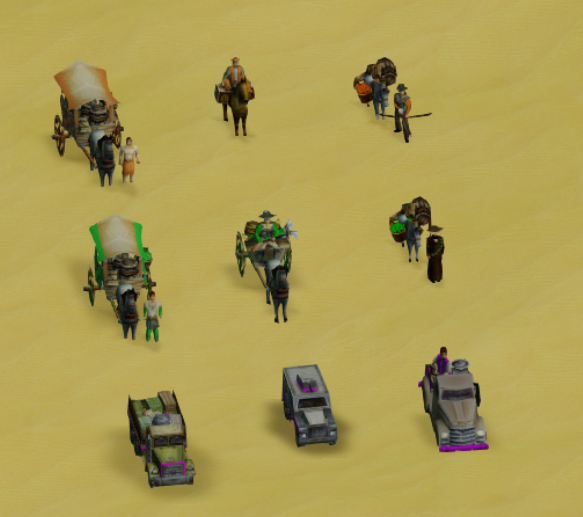
- The Dutch have unique Merchants, Caravans, and Supply Wagons which are armed but in the case of the Merchants and Caravans are otherwise treated as civilian units. They gain HP, armor, and attack power with each Age. While they're pretty weak and won't fight off any armies, their main draw is that they're more durable than their unarmed counterparts. Armed Merchants can prevent enemy Merchants from setting up at the same rare resources. Armed Supply Wagons lack an attack animation and look the same as normal Supply Wagons. Both Age advances and Smelter research increase their HP. Whenever a deployed Armed Merchant is attacking, it temporarily ceases providing its rare resource until it stops. Armed Caravans can attack while moving.
Boadicea (Ancient Age?)- Matchups: strong vs. none, weak vs. Archers, Gunpowder Infantry
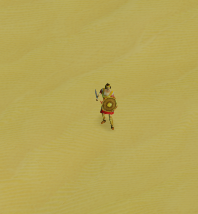
- Boadicea is a unique melee unit only found in the first, most basic tutorial mission in the Learn to Play menu. Boadicea is the main protagonist of this short mission and if she dies (unlikely unless you intentionally kill her), the mission instantly ends in failure. She is one of only three female military units, the others being Spies and female Militia.
In real life, Boadicea, also called Boudica, was a tribal queen of Celtic Britons in Britain who led a bloody uprising against the Romans in the first century A.D. Unlike in the game, Boadicea’s rebellion was ultimately unsuccessful and she died soon after, allegedly from suicide or illness.
- Matchups: strong vs. none, weak vs. Archers, Gunpowder Infantry
More Rise of Nations: Extended Edition guides
- Rise of Nations Русификатор 1.20★ 5 (316)19k views370 ♥1 minRussianUpdated Apr 30, 2020
- Efficiency and Hot Key Guide★ 5 (625)19k views822 ♥26 minUpdated Apr 10, 2015
- How to: Increase the population cap★ 4 (155)15k views221 ♥1 minUpdated Jan 16, 2018
- Taunt Guide★ 5 (288)15k views331 ♥3 minUpdated Jul 16, 2014
- Rise of Nations : Extended Edition - To Achieve 100%★ 5 (533)13k views686 ♥15 minUpdated Jan 1, 2018
- Economic goals for a good base start for a decent mid game★ 5 (212)11k views336 ♥3 minUpdated Jun 16, 2014


This guide was created by its original author on the Steam Community. Are you the author and want it removed? Request removal.