The Essentialest of Food Guides for Banished
Introduction
This guide only applies to vanilla Banished as any installed mods can affect the following information.
Protein
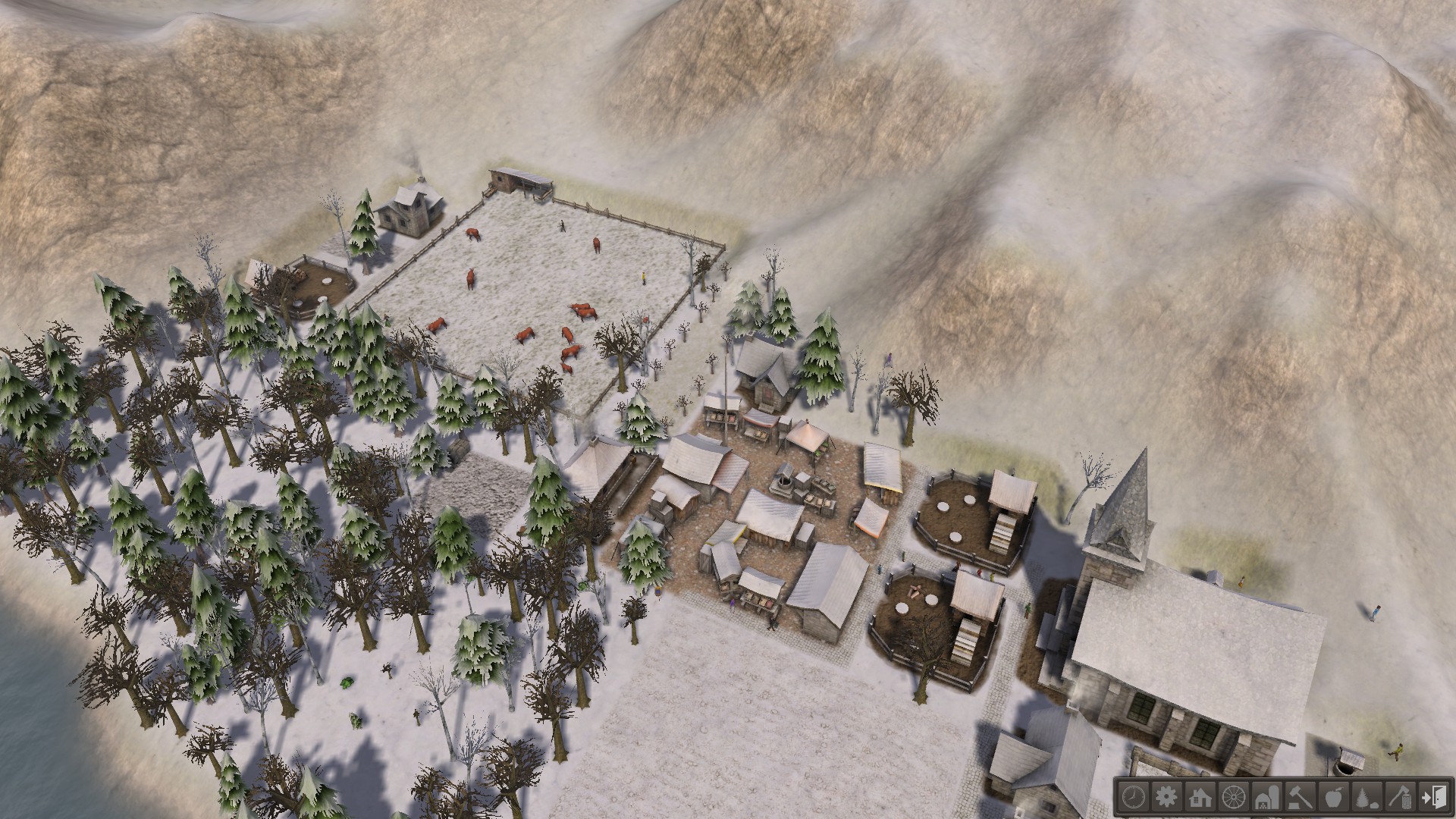
Foods with protein are provided by three buildings: fishing docks, hunting cabins, and pastures.
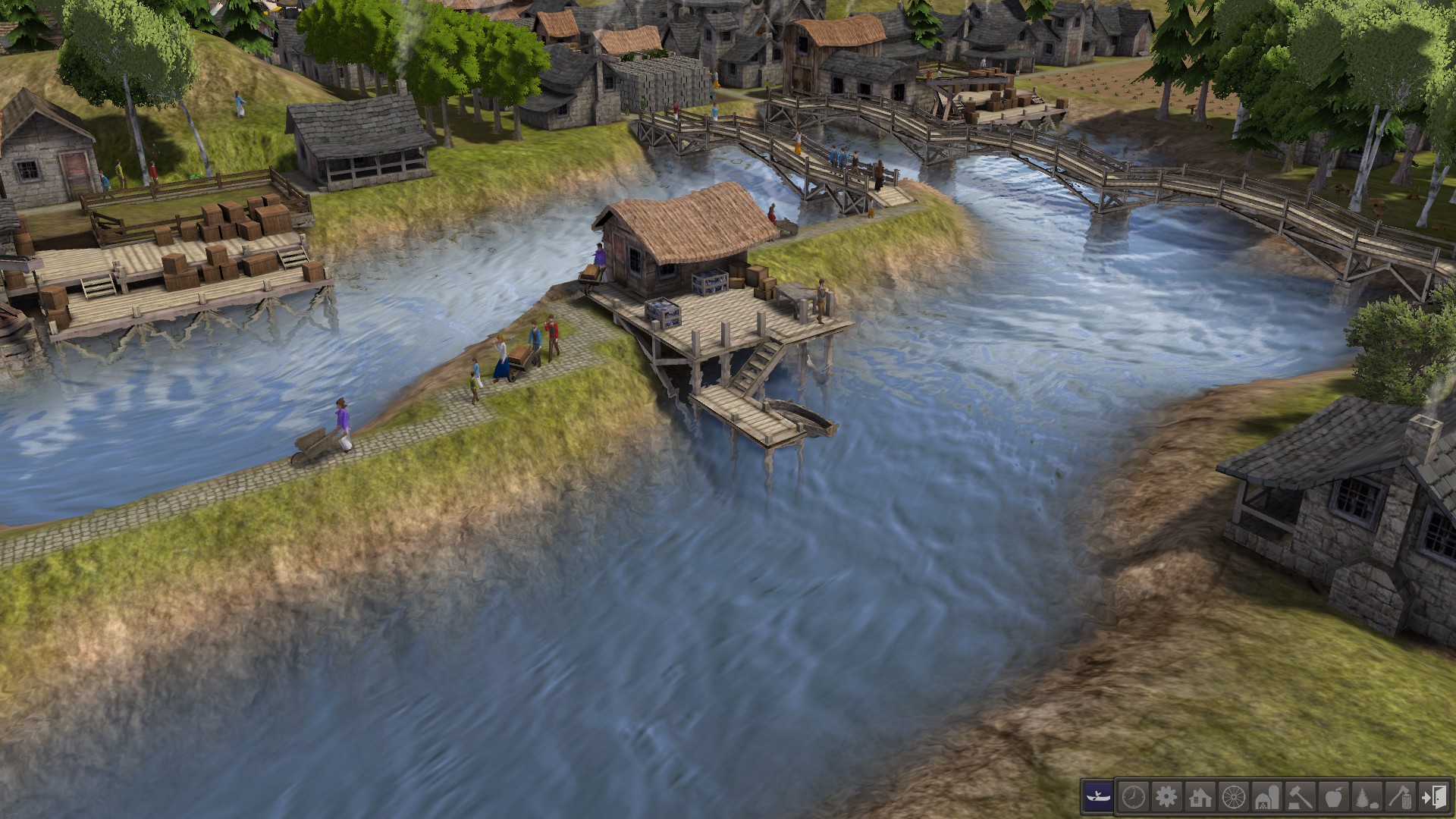
For fishing docks, the more water tiles they cover, the better their yield. Avoid placing water structures (e.g., trading posts and bridges) over the fishing dock’s coverage as they will lessen fish production. Avoid placing fishing docks on streams, as streams have few water tiles. Place them on the big lakes and river bends instead, and make sure it juts out into the water as much as possible. Ensure that there are no two fishing docks with overlapping areas, as this will deplete all the fish in that area.
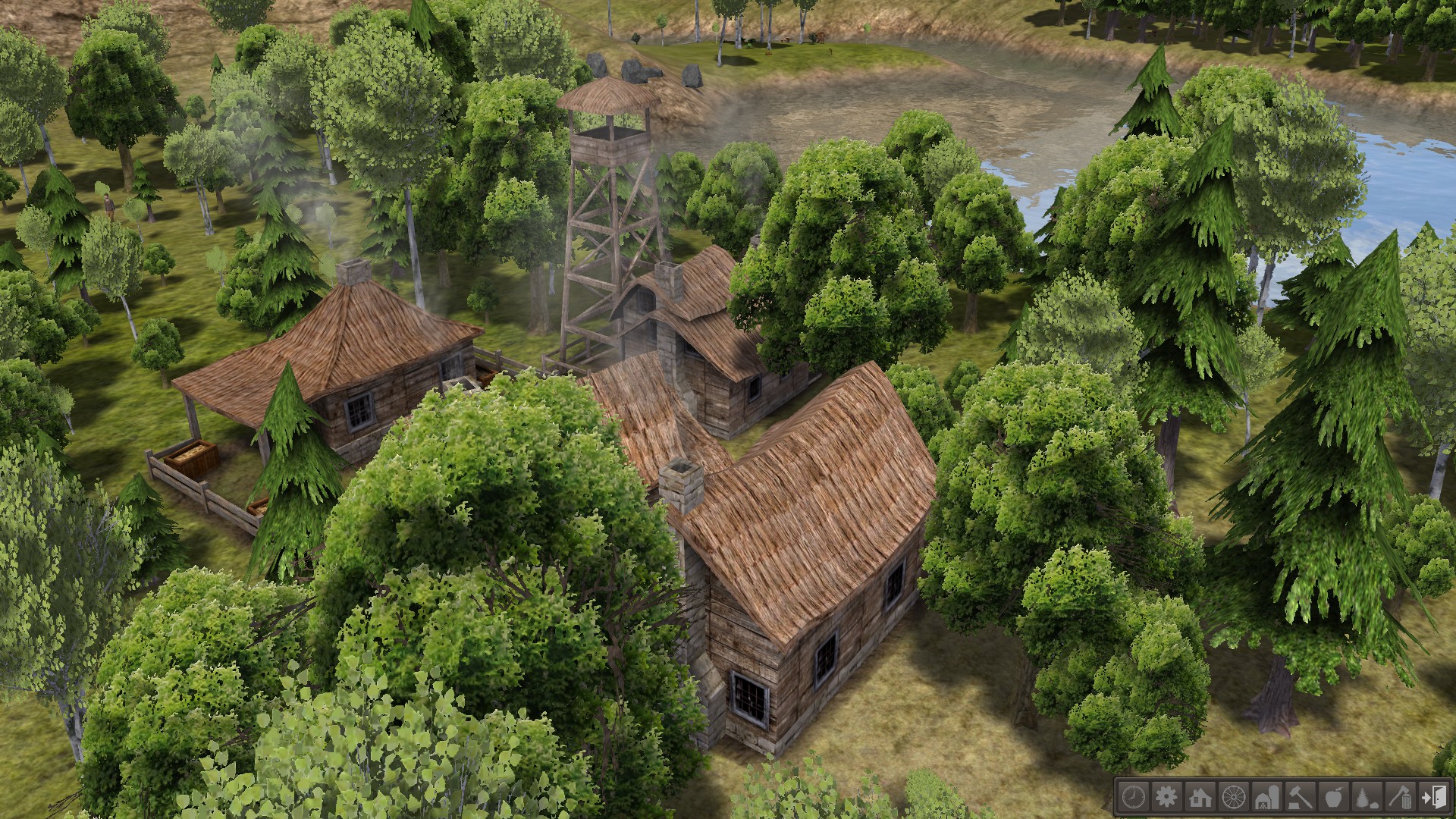 As for hunting cabins, they bring in venison and leather, leather being used for clothes production. Since hunting cabins have an established limit to the deer that hunters can kill, assigning two citizens to each hunting cabin is perfectly fine. Deer avoid areas with plenty of people, so place them far away from your main town. Do not place houses within the range of the hunting cabin because children will scare away the deer.
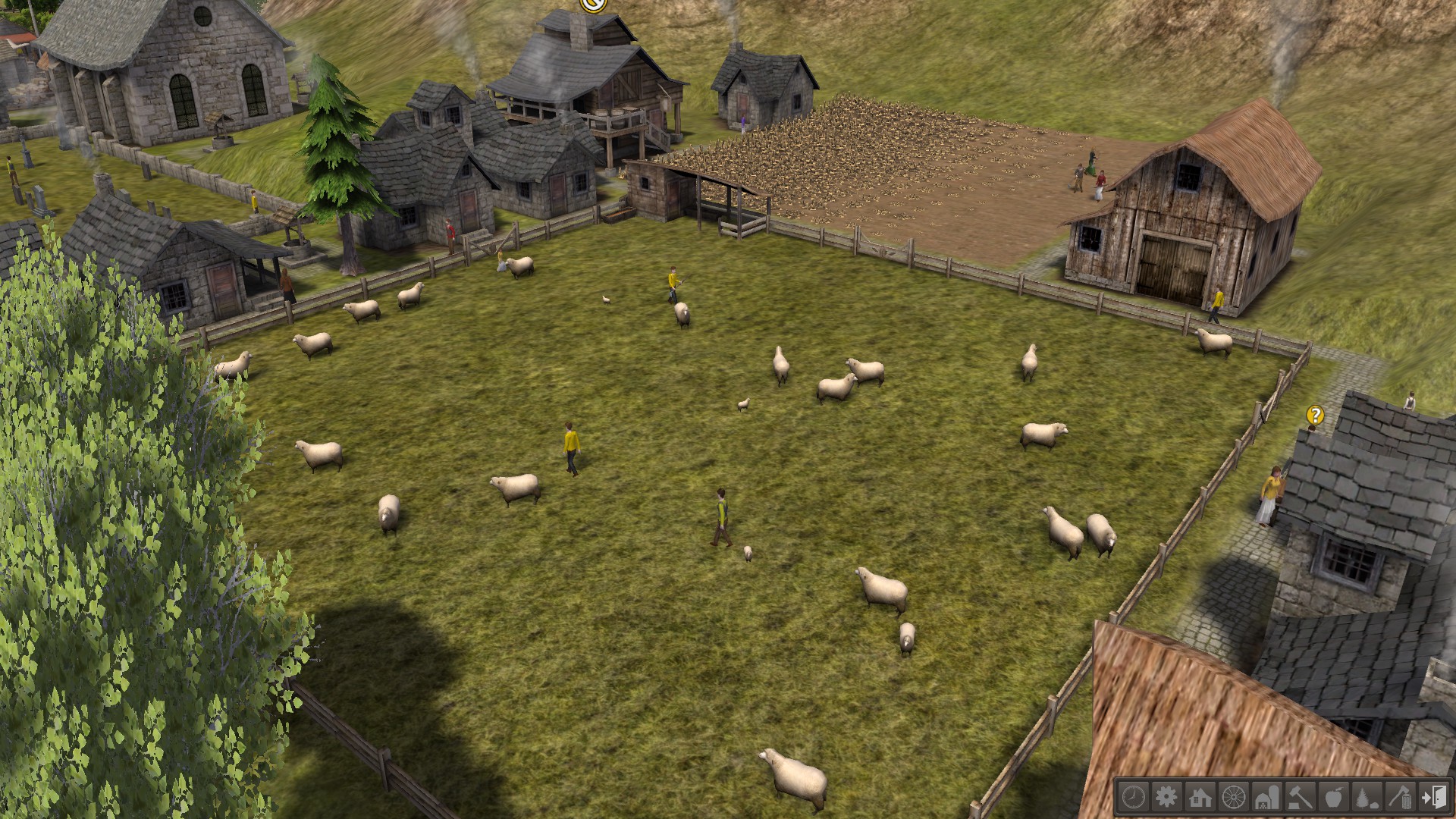 Regarding pastures, sheep are the best starting pasture animals as they supply both mutton and wool, the latter of which is used for clothes production. The most efficient sizes for pastures are 20x20. The notable exception to this is the humble chicken, for which the largest efficient pasture size is either 18x20 or 20x18.
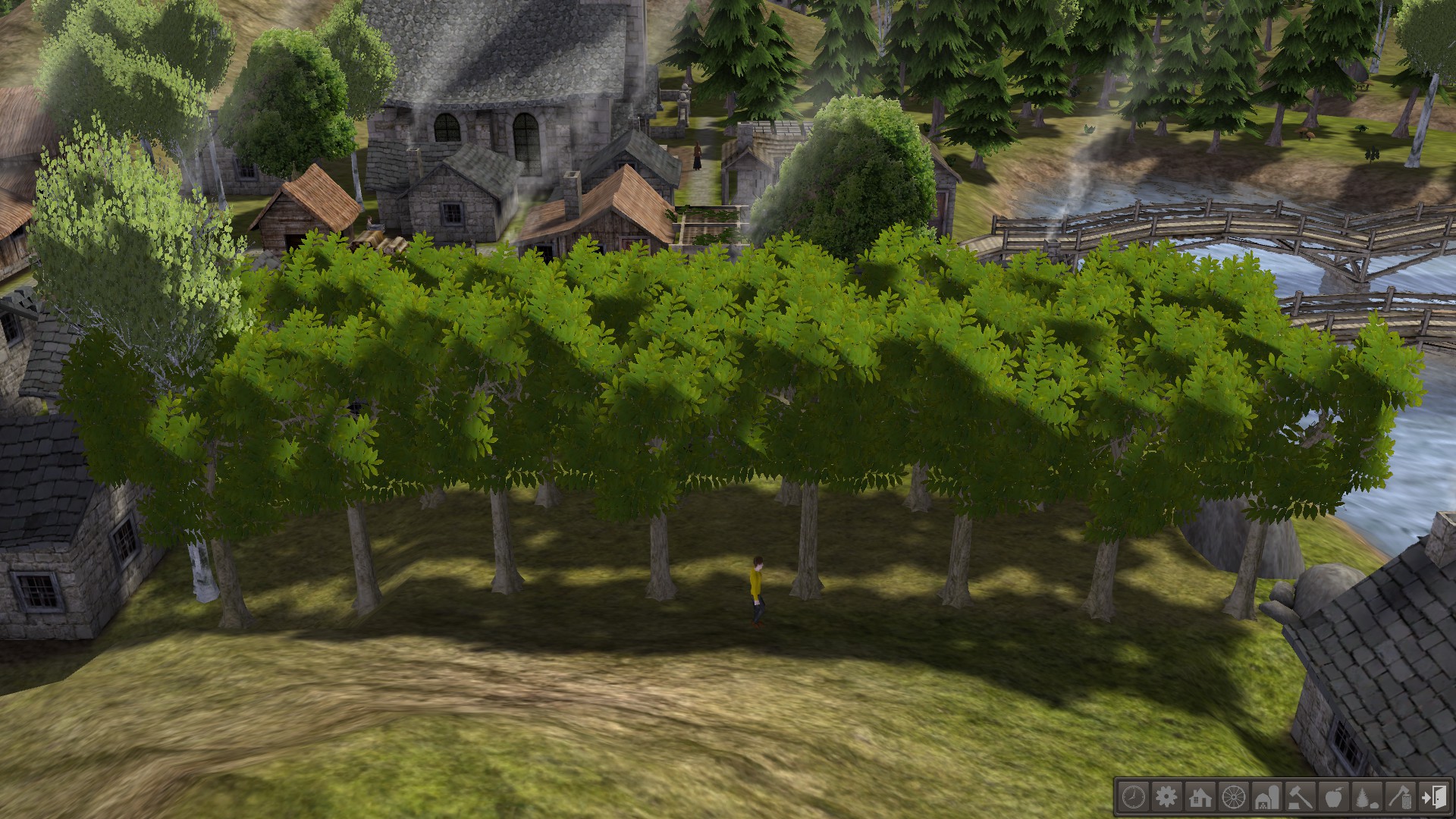 And finally, for orchards, only three out of the eight tree options provide protein: chestnuts, pecan, and walnut. The best orchard size for tree efficiency is 15x4 (not 4x15). Make sure to place your orchards away from your forester’s lodges as the trees will be cut down upon reaching maturity.
Grains
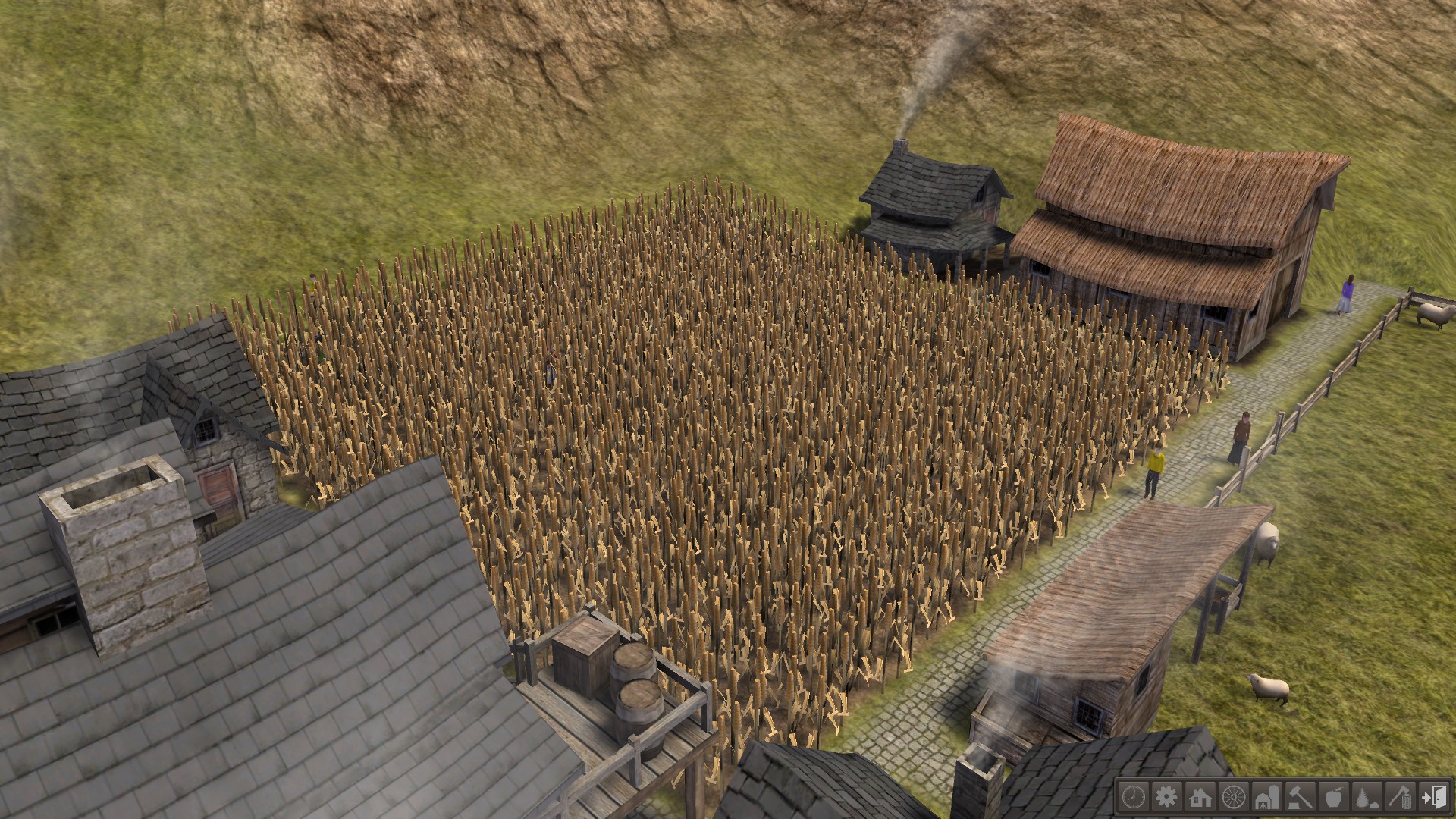 There are two grains available in the game: corn and wheat. Both can be farmed. Wheat is the preferred grain of most players, as it can be processed into ale at the tavern. The field size with the highest food yield per worker is 11x11, although some players use 15x15 because it maximizes space, requires only one extra worker, and still produces high food yield per worker.
Fruits
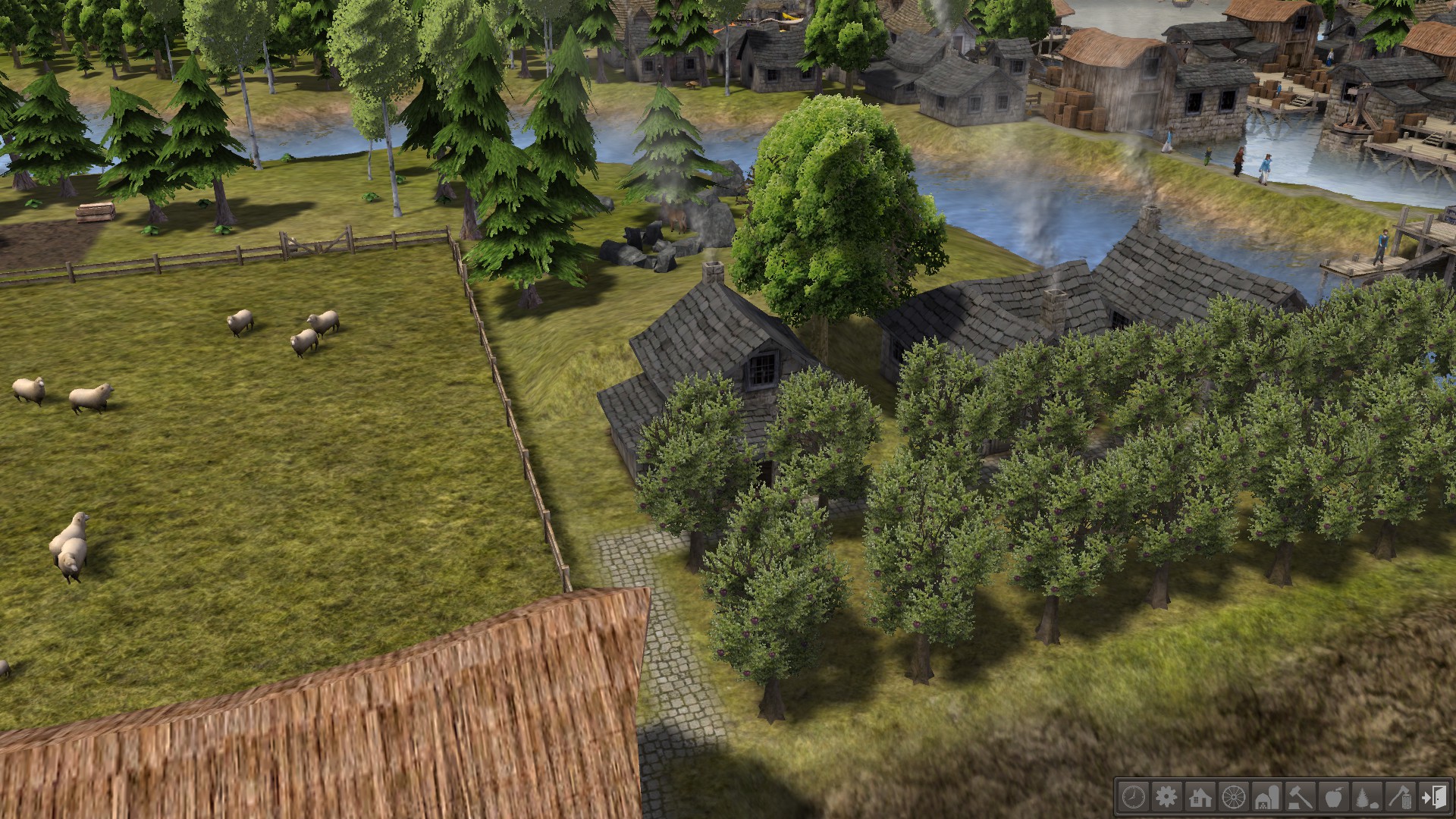 All in-game fruits (apples, cherries, pears, plums, and peaches) can be picked from their corresponding orchard trees. The only exception is berries, which are gathered by gatherers. All fruits can be turned into ale at a tavern. For aesthetic purposes, the tallest orchard trees are chestnuts, while plums are the shortest. The best orchard size for tree efficiency is 15x4 (not 4x15). Make sure to place your orchards away from your forester’s lodges as the trees will be cut down upon reaching maturity.
 Vegetables
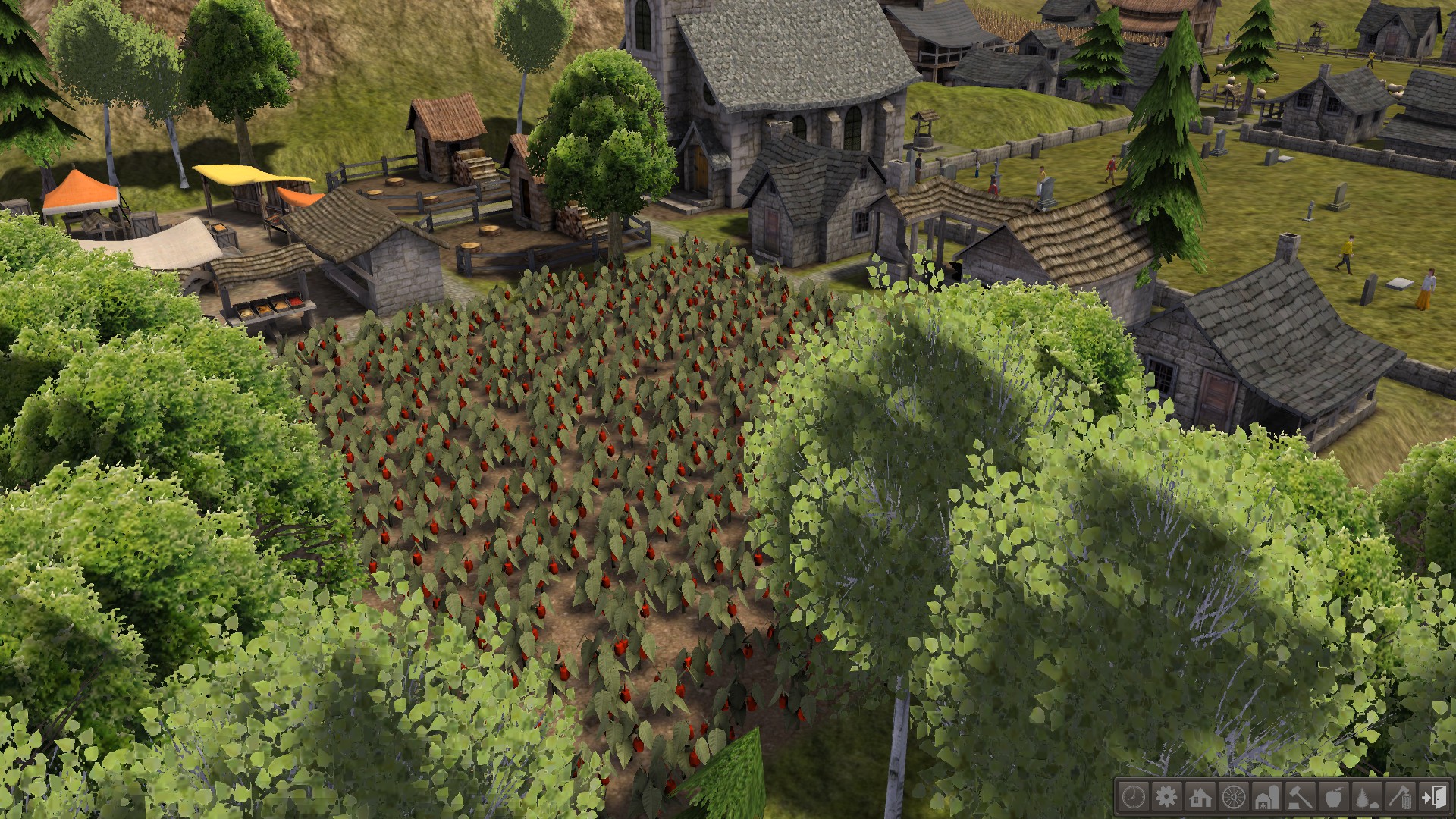
Vegetables can be farmed or gathered by gatherers. The vegetables available for farming are beans, cabbage, pepper, potato, pumpkin, and squash, while the vegetables from gatherers are mushrooms, onions, and roots. Some crops have an edge over others. Beans have the highest yield, and squash is resistant (but not immune) to cold temperatures. Avoid pumpkins because they are the slowest-growing crop.
As with grains, the field size with the highest food yield per worker is 11x11, although some players use 15x15 because it maximizes space, requires only one extra worker, and still produces high food yield per worker.
Herbs
If you’re still in the early game and/or lack the necessary buildings for a proper diet, you should build an herbalist. Herbalists gather herbs, which are a supplement to your people’s diet. There is a popular misconception that old trees increase the yield of herbalist, which is wrong. Herbalists prefer mature trees, not old ones. If you want to maximize their yield, build a forester beside it, and set the forester to plant only. Tree density in that area will increase and so will herb production.
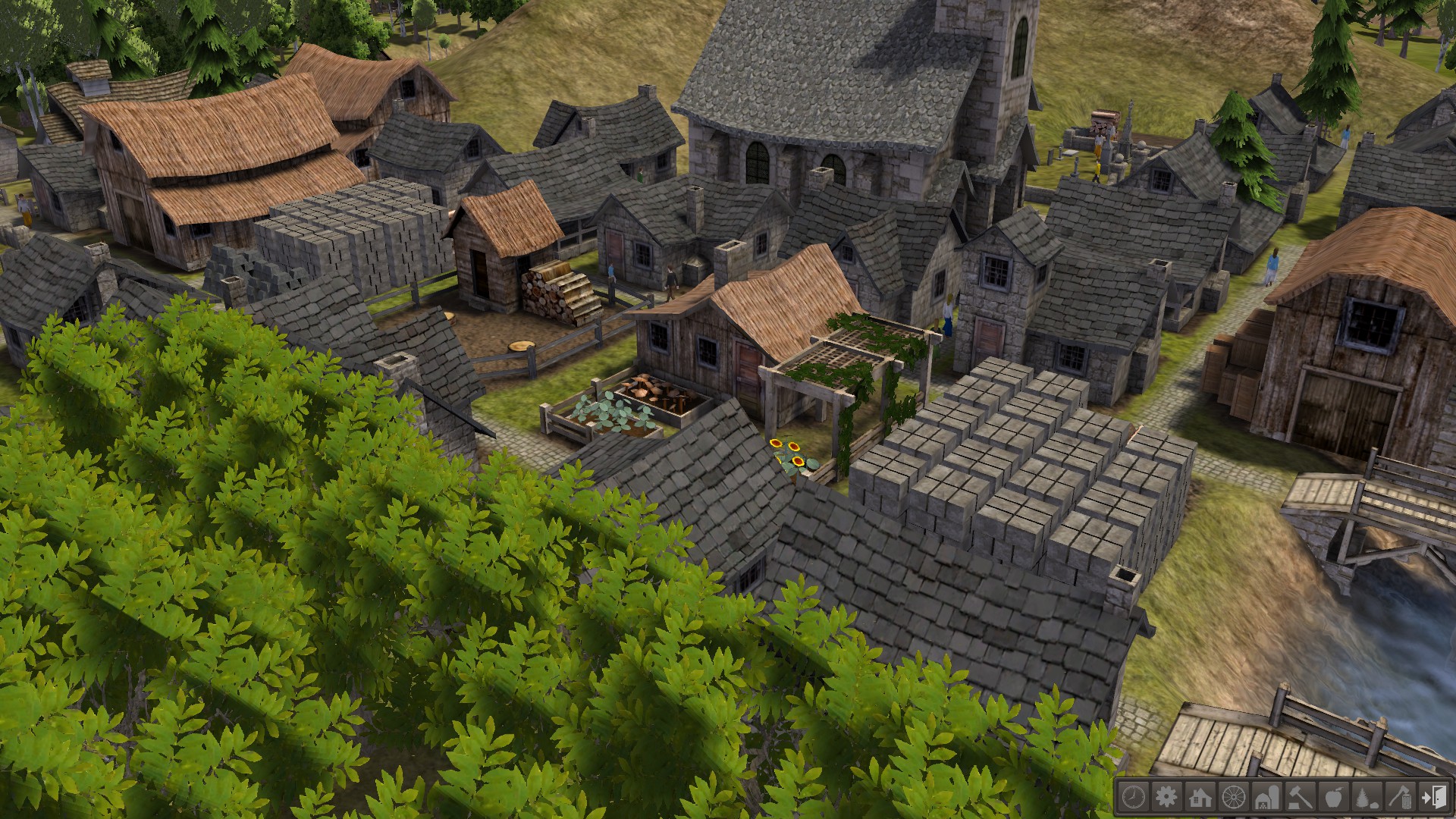 Build one herbalist in or near the center of your town so that your people don’t have to walk far for healing. As your city grows and food variety increases, you may notice you’re not consuming herbs as fast as before, and that’s because your people’s diet is already good enough to keep them healthy.
And that's the end of the guide. I hope you got something out of it!
- The Most Important Lesson in Banished★ 5 (795)87k views615 ♥4 minUpdated 2 Feb, 2015
- Quick Tips for Banished★ 5 (1.4k)69k views1.6k ♥22 minUpdated 22 May, 2016
- No More Starvation★ 5 (503)67k views270 ♥1 minBulgarianUpdated 2 Nov, 2015
- Banished tips and tricks + Easy Start Guide★ 5 (647)60k views1.1k ♥18 minUpdated 14 May, 2017
- Banished: Beginners Guide★ 5 (746)54k views1.2k ♥6 minUpdated 7 Apr, 2015
- City Planning Tips and Tricks★ 5 (733)51k views998 ♥13 minUpdated 29 Sep, 2025




- Upgrading to PremiumTeam Fortress 2★ 5 (20k)1441k views11k ♥6 minUpdated May 11, 2022
- No More Room in Hell Official ManualNo More Room in Hell★ 5 (2.8k)569k views2.1k ♥29 minUpdated Apr 22, 2019
- NMRiH Community Hosting GuidesNo More Room in Hell★ 5 (526)351k views653 ♥1 minUpdated Aug 10, 2022
- ULTIMATE GUIDE FOR GAME DEV TYCOONGame Dev Tycoon★ 5 (5.8k)326k views10k ♥4 minUpdated 23 Jan, 2014
- How to 'Git Gud' Soon™MORDHAU★ 5 (2k)318k views3k ♥68 minUpdated Nov 16, 2024
- Лучшие кооперативные игры SteamPAYDAY 2★ 5 (1.5k)315k views2.1k ♥56 minRussianUpdated Apr 27, 2025





This guide was created by its original author on the Steam Community. Are you the author and want it removed? Request removal.