Dino Peat factory
Dino Peat Farm
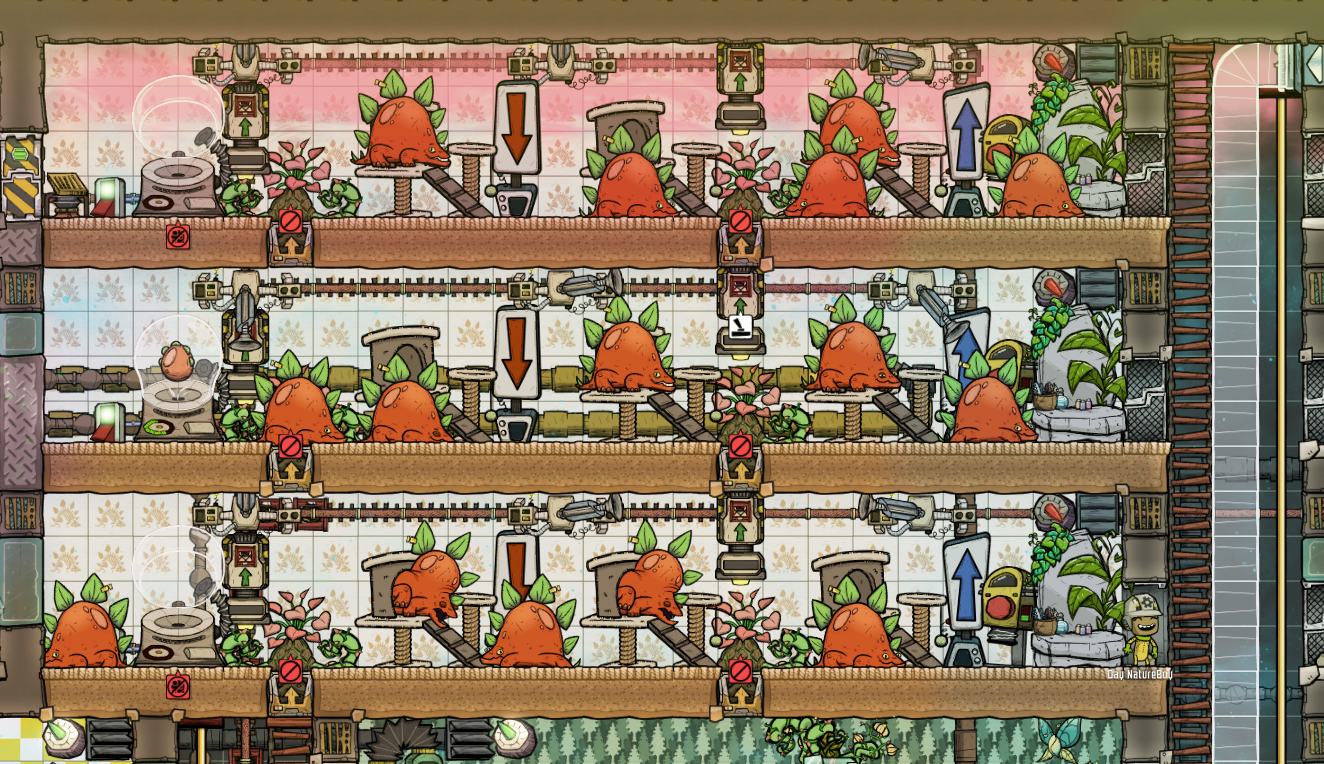
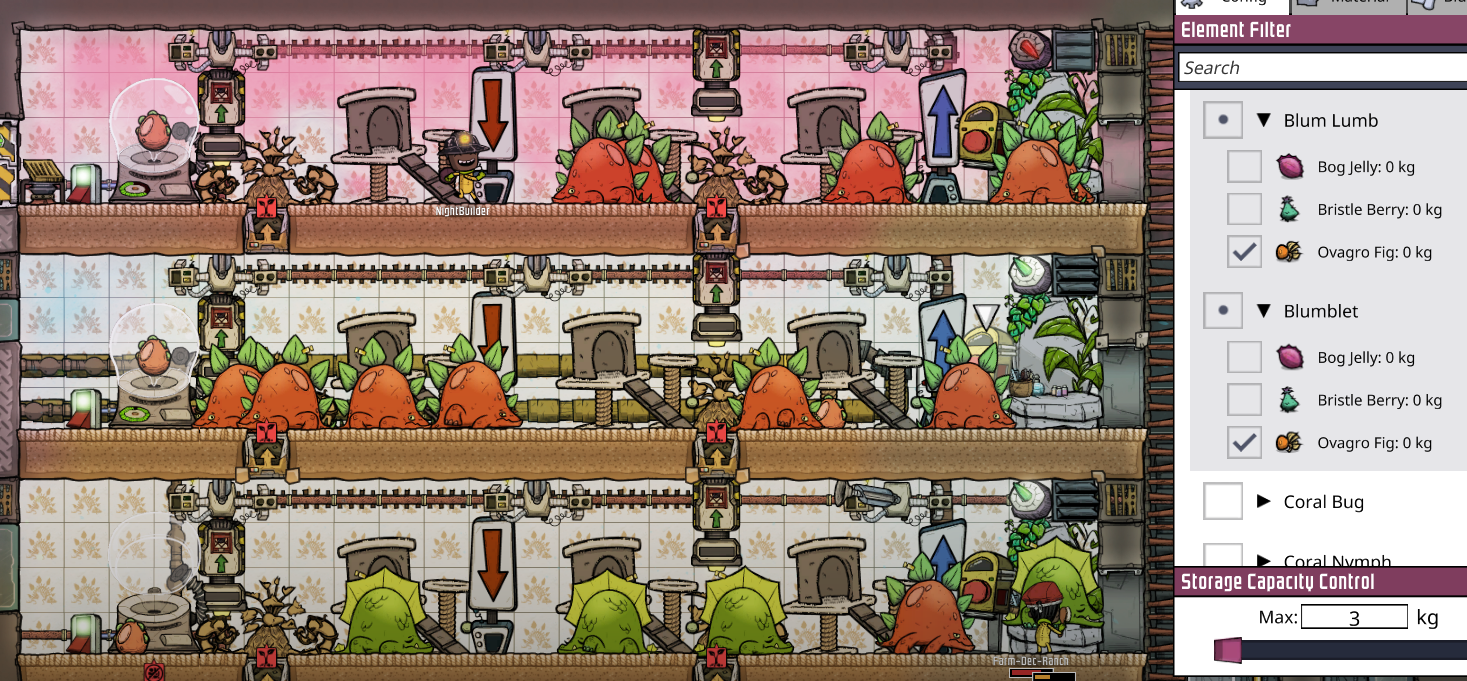
Peat Farm (6-Lumb Stable + Ovagro Vine System)
Triple Stable
 Dual Greenhouses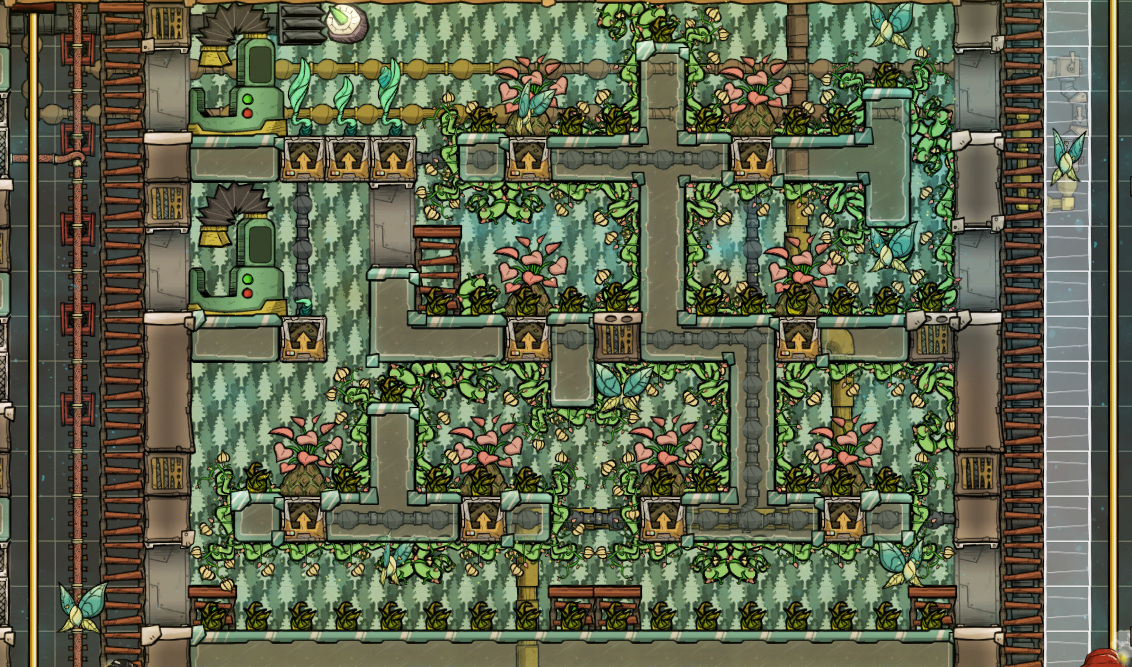
Peat Factory
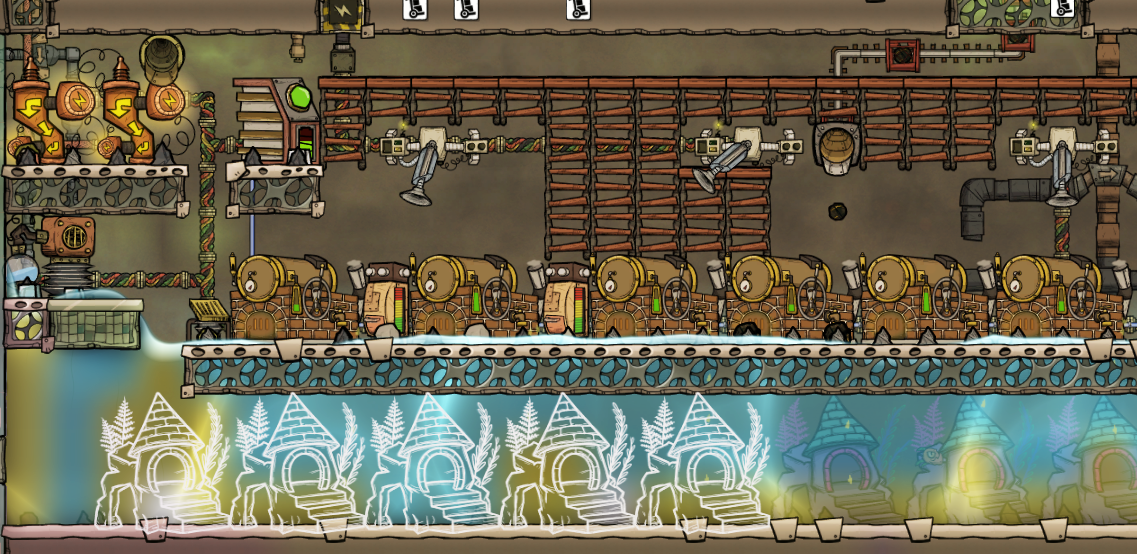
My stock after 600 cycles

📘 Complete Guide — Ovagro Vine Greenhouse + Lumb Peat Farm
(ONI Prehistoric Expansion)
A fully optimized and renewable fuel-production loop.
1. Overview
This guide explains how to build:
- Efficient Ovagro Vine Greenhouses
- A 6-Lumb Stable for massive Peat production
- A fully renewable Peat-powered industrial loop
Core mechanics:
- Ovagro Nodes only climb directly connected solid tiles
- They cannot jump gaps
- Water consumption is fixed (–90 kg/cycle) regardless of vine length
- Lumbs eat Ovagro Figs and have extremely low survival needs
- Each Lumb produces 200 kg/cycle Peat (300 kg with Bog Jelly)
- A Peat Burner consumes 60 kg/cycle and produces 480 W
2. Ovagro Node Mechanics
- Must be placed on a Farm Tile
- Grows vines only along continuous solid tiles
- Cannot cross empty space
- Two Nodes cannot share the same vine tile
- Does not jump between separated walls
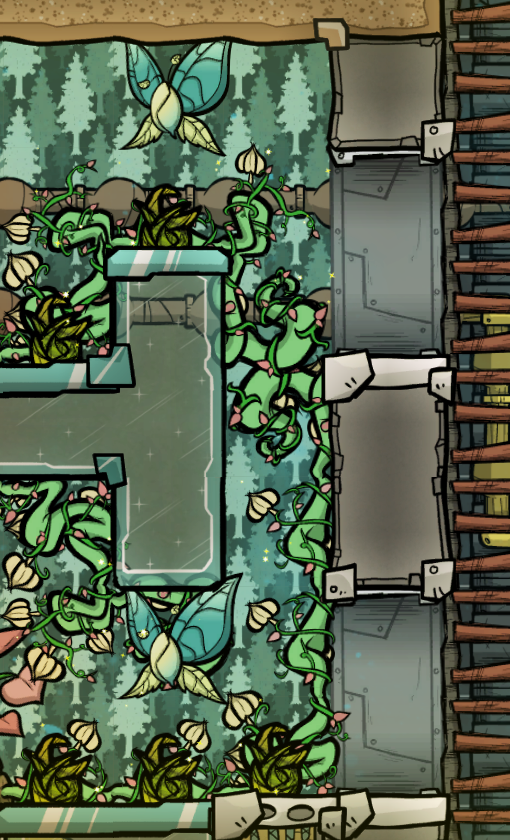 Additional rules:
- Maximum vine reach: 12 tiles
- Acceptable atmospheres: O₂, CO₂, PO₂
- Temperature range: 25–45 °C
- –90 kg/cycle water, regardless of vine size or extension
Implication:
To maximize fig output, create one large continuous trellis network per Node.
3. Greenhouse Requirements (ONI Room Rules)
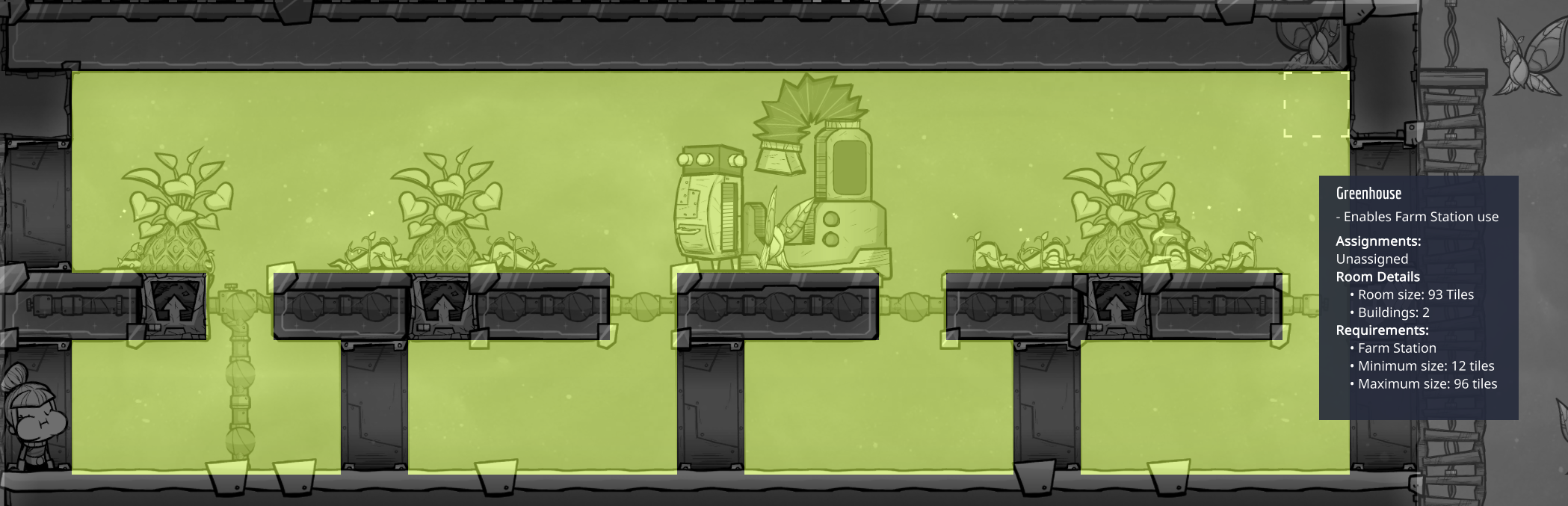
To be a valid greenhouse:
- Must have a door
- Dupes must be able to reach every Farm Tile
- Dupes can climb 2 tiles
- Add ladders only when necessary
- Avoid horizontal floors (they block vine paths)
Design priorities:
- Maximize solid wall surfaces
- Maintain dupe access
- Keep each trellis network continuous
- Separate networks when using multiple Nodes
4. Optimal Single-Node Greenhouse Design
Concentric or nested-wall structures maximize vine surface. Examples:
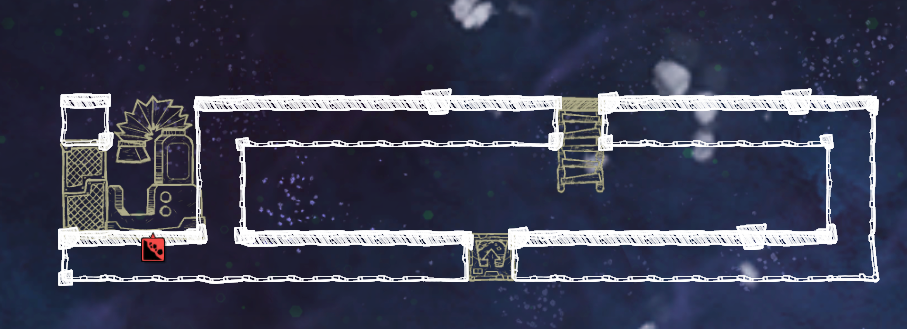
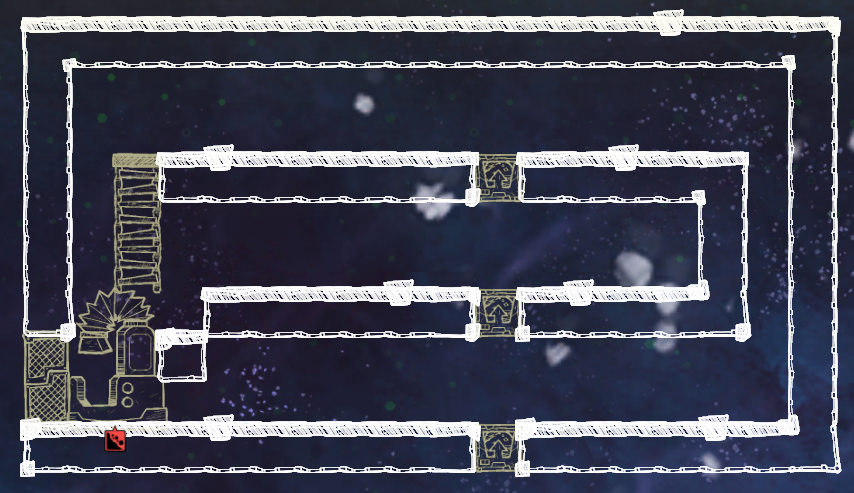
Notes:
- A Node takes time to grow its vines
- Too few Nodes = slow early production
- Single-Node setups scale well but require time
- Multi-Node setups accelerate early fig output
Key Principles:
- All # tiles form one continuous network
- Node sits at the bottom on a Farm Tile
- Vines propagate along every connected surface
- Dupes access everything from below
- Minimal ladders required
Benefits:
- Maximum vine reach
- Zero wasted wall tiles
- Low dupe pathing time
- Easy maintenance
5. Dual-Node Greenhouse (Two Independent Networks)
A Node occupies 2 tiles when fully grown.
Nodes cannot share vine paths.
This compact setup worked reliably over 600 cycles:
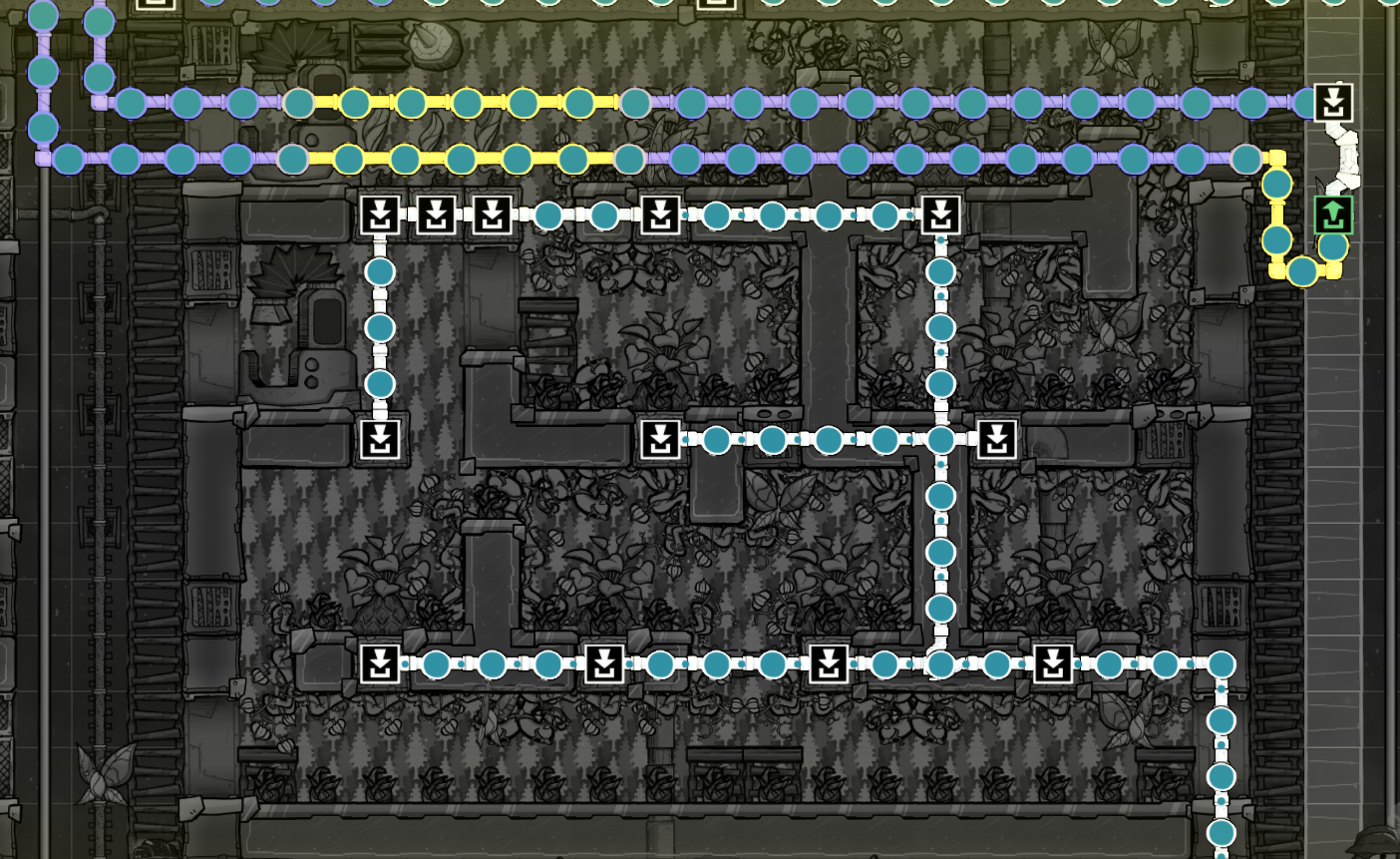
Advantages:
- Zero vine overlap
- Both Nodes propagate efficiently
- Compact and reliable layout
6. Lumb Ranch Integration (96-Tile Stable)
A 96-tile Stable supports:
- 6 Lumbs (1 Lumb requires 16 tiles)
- Atmosphere: O₂ / CO₂ / PO₂
- Temperature: 20–70 °C
- Lifespan: 200 cycles
Peat Output:
- 200 kg/cycle with Ovagro Figs or Bristle Berries
- 300 kg/cycle with Bog Jelly
Feeding Requirements (verified in-game):
- Official need: 1 300 kcal/cycle
- One Ovagro Fig = 325 kcal
Lumbs survive with minimal food:
- 1 Fig prevents starvation
- They need 10 starvation cycles to die
Conclusion:
Ovagro Vines produce far more food than Lumbs need.
One Node can reliably feed multiple Lumbs. Recommendations:
- Forbid duplicants from eating figs to preserve supply
- Add Mimika buds to accelerate vine growth
- Keep stable doors open only where Mimikas should roam
- One feeder per ranch (1–5 kg, identical priority)
- Disabled Nodes inside Stables provide permanent emergency vines
You can butcher Lumbs for 12 kg carcass → Tender Brisket (32k kcal) in a Smoker.
7. Peat Burner Integration
Peat always flows toward storage with the highest priority.
So if distant containers have a higher priority than the ones near the production area, all newly produced Peat will automatically travel away from the drop zone into those higher-priority containers. Peat Burner Stats:
- Consumption: 1 kg/s = 60 kg/cycle
- Power: 480 W
- Outputs: CO₂ + Polluted Water + Heat (4.5 kDTU/s)
- Overheat: 75 °C
Production Ratios:
- 1 Lumb → 200 kg/cycle Peat
- 1 Burner → 60 kg/cycle
Therefore:
- 1 Lumb powers 3.33 Peat Burners
- 6-Lumb farm → 1 200 kg/cycle → 20 Peat Burners (≈ 9.6 kW)
CO₂ Handling:
Peat Burners generate CO₂.
It must be removed from the Peat Factory (CO₂ pit or pump).
8. Full Loop Summary
- Nodes consume a fixed –90 kg/cycle
- Vines propagate along walls and doors
- Produces massive fig output
- Lumbs require very little food
- Lumbs produce 200–300 kg/cycle Peat
- Peat Burners convert Peat into consistent power
9. Tips & Notes
- Mimika plants increase vine growth speed
- Use Auto-Sweepers for figs and peat
- Maintain 25–45 °C in greenhouses
- Add ladders only where dupes cannot climb
- Stables can contain disabled Nodes for internal vines
- Meat via butchery is optional (Tender Brisket = 32k kcal)
10. Conclusion
This system is:
- Water-efficient
- Space-efficient
- Low-maintenance
- Fully renewable
It supports:
- Dual-Node double greenhouses
- Triple-greenhouse farms
- Large-scale Peat power
- Stable early-to-late game progression
How to Start a Prehistoric Map
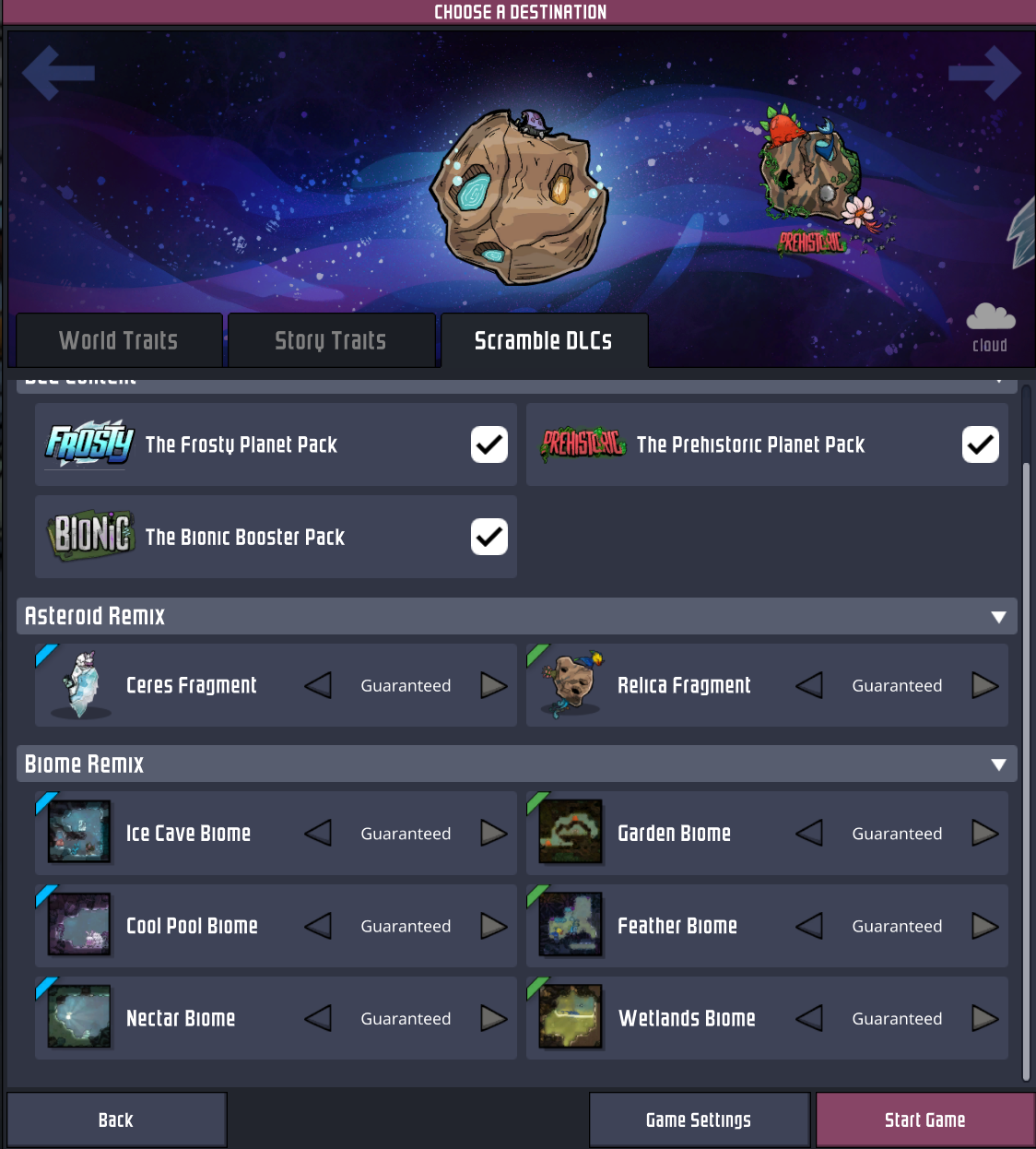
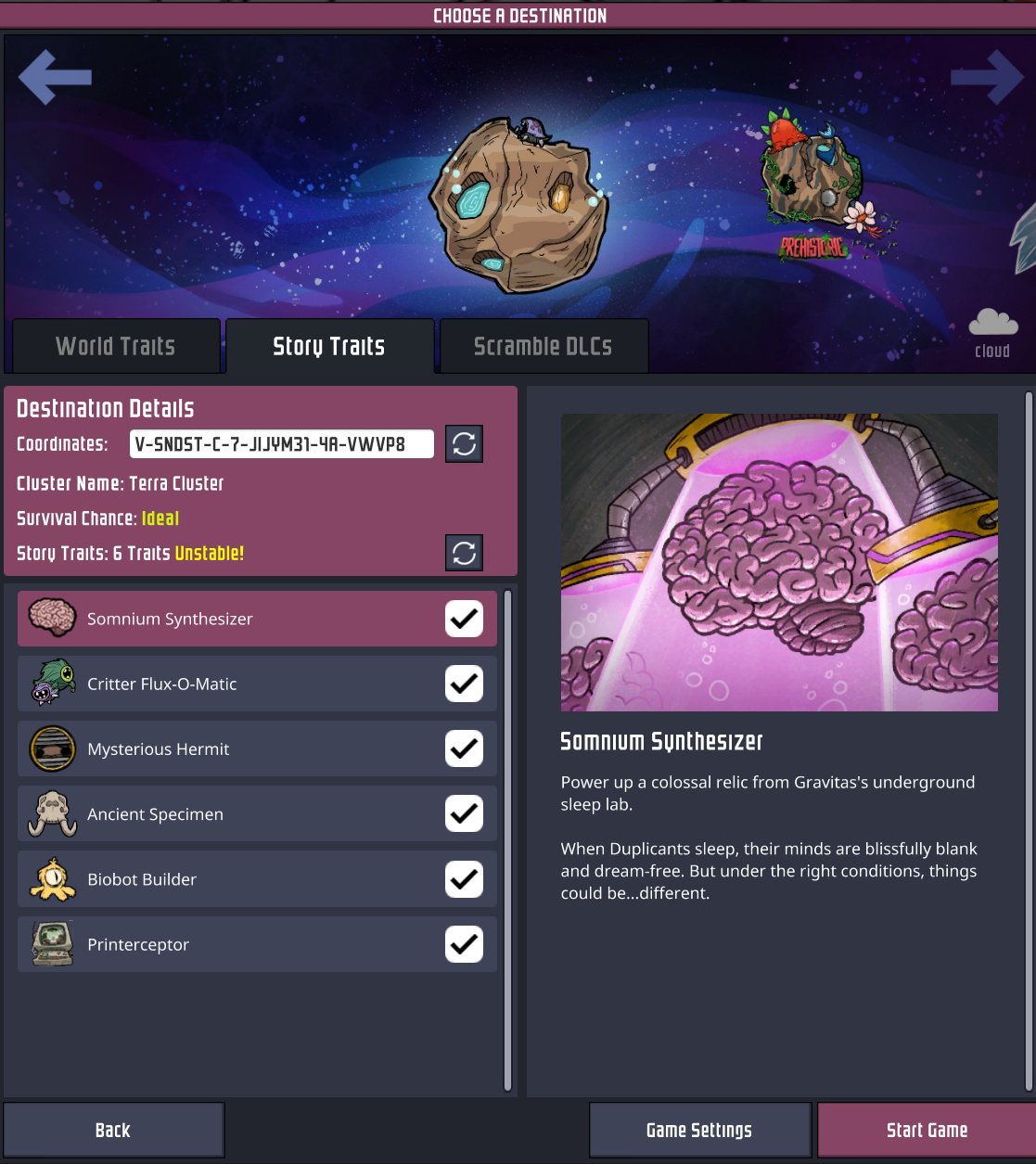 Disable the asteroid:
 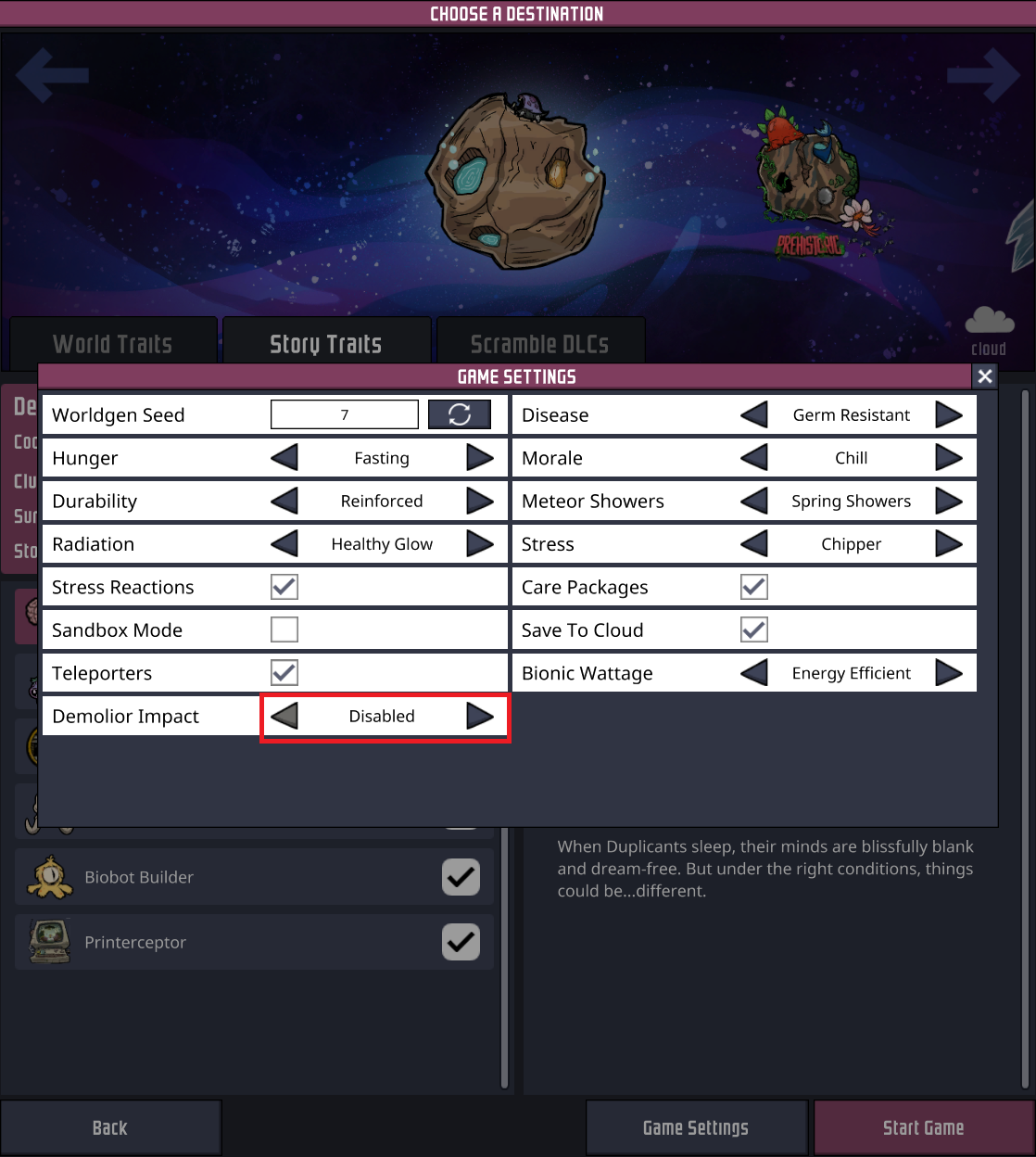 If this does not work: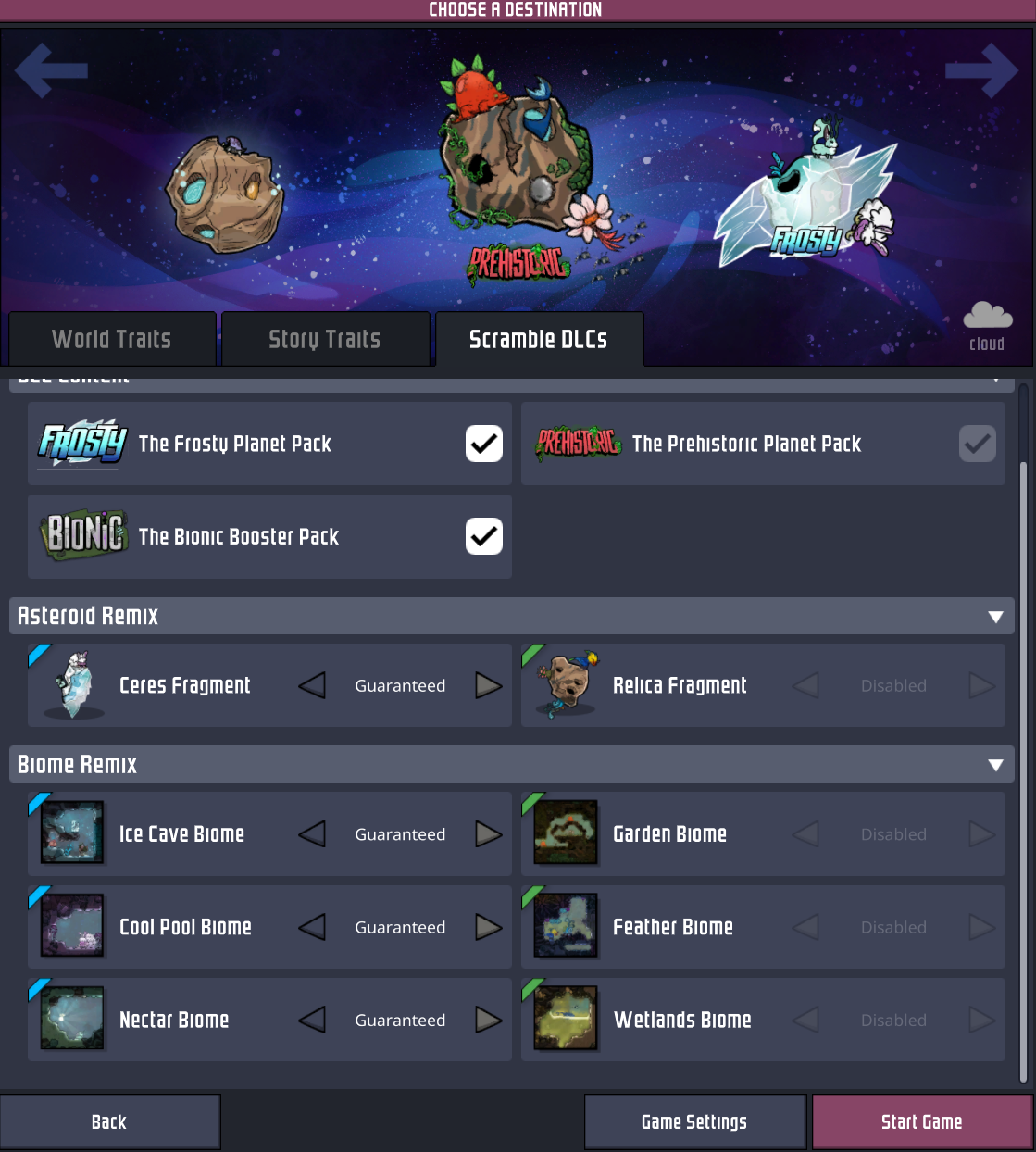
More Oxygen Not Included guides
- ONI - Surviving the Early Game★ 5 (2.4k)83k views6.3k ♥54 minUpdated 6 Aug, 2019
- Useful Construction Patterns★ 5 (1.8k)74k views5.2k ♥66 minUpdated 29 Aug, 2020
- 10* things I wish I knew sooner...★ 5 (754)58k views1k ♥4 minUpdated 6 Oct, 2017
- ONI - Surviving the Mid-Game★ 5 (1.3k)44k views3.8k ♥150 minUpdated 6 Sep, 2019
- Not Quite Beginner's Guide★ 5 (361)32k views1.1k ♥91 minUpdated Mar 26, 2023
- Руководство для начинающих. (ОСНОВЫ)★ 5 (629)32k views1.2k ♥21 minRussianUpdated 20 Apr, 2019




🔥 Popular guides
- Upgrading to PremiumTeam Fortress 2★ 5 (20k)1441k views11k ♥6 minUpdated May 11, 2022
- No More Room in Hell Official ManualNo More Room in Hell★ 5 (2.8k)569k views2.1k ♥29 minUpdated Apr 22, 2019
- NMRiH Community Hosting GuidesNo More Room in Hell★ 5 (526)351k views653 ♥1 minUpdated Aug 10, 2022
- ULTIMATE GUIDE FOR GAME DEV TYCOONGame Dev Tycoon★ 5 (5.8k)326k views10k ♥4 minUpdated 23 Jan, 2014
- How to 'Git Gud' Soon™MORDHAU★ 5 (2k)318k views3k ♥68 minUpdated Nov 16, 2024
- Лучшие кооперативные игры SteamPAYDAY 2★ 5 (1.5k)315k views2.1k ♥56 minRussianUpdated Apr 27, 2025






This guide was created by its original author on the Steam Community. Are you the author and want it removed? Request removal.