DLC Meteors
Intro
When starting a new colony, several asteroids will be assigned to have one or more types of meteor shower. The meteors on your starting asteroid will be easier than in other locations.
To know the type that a place will get, select the asteroid on the starmap and look at the information subpanel. Some asteroids will never receive meteors.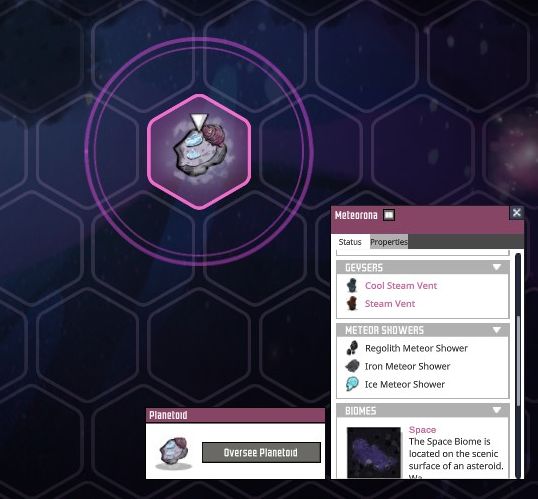
Meteor showers are spawned in waves from the edge of the starmap and will target all planetoids -that you have landed in- and reach them at the same time. Meteors will start unidentified until scanned by a nearby telescope. Scanning reveals their type and lets you look at their composition as showers include different types of "projectiles" within them.
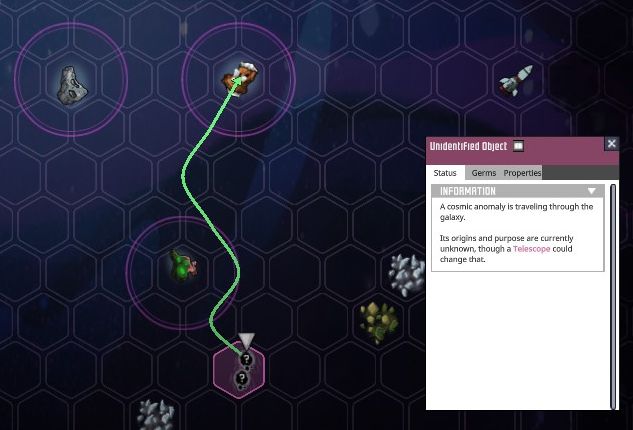
Meteor types
- Creates a couple tiles of oxylite.
- Doesn't damage tiles.
- You can receive over half a dozen tons of oxylite per shower.
- Oxylite will disperse unless it lands on a liquid.
Ice (Ice, Snow)
- Creates tiles of cold snow and crushed ice.
- Doesn't damage tiles.
- Snow and ice may stack up to extremely annoying heights.
- May cause flooding.
Slime
- Solid tiles of slime.
- Doesn't damage tiles
- Other meteor types can heat slime until it becomes dirt.
Metal (Gold/Iron/Copper, Rock, Dust Fluff)
- Leaves small amounts of raw metal debris.
- Will damage tiles.
- Shower type would have little economic value if it wasn't for it including regolith.
Uranium (Uranium, Dust, Dust Fluff)
- Creates tiles of uranium.
- Dust meteors can damage tiles.
- Could be melted into Liquid Uranium.
- Asteroid surface requires maintenance to avoid uranium build up.
- Can't be mined by Robo-Miners.
- Requires a dupe with the skill "Superhard Digging" (Tier 2).
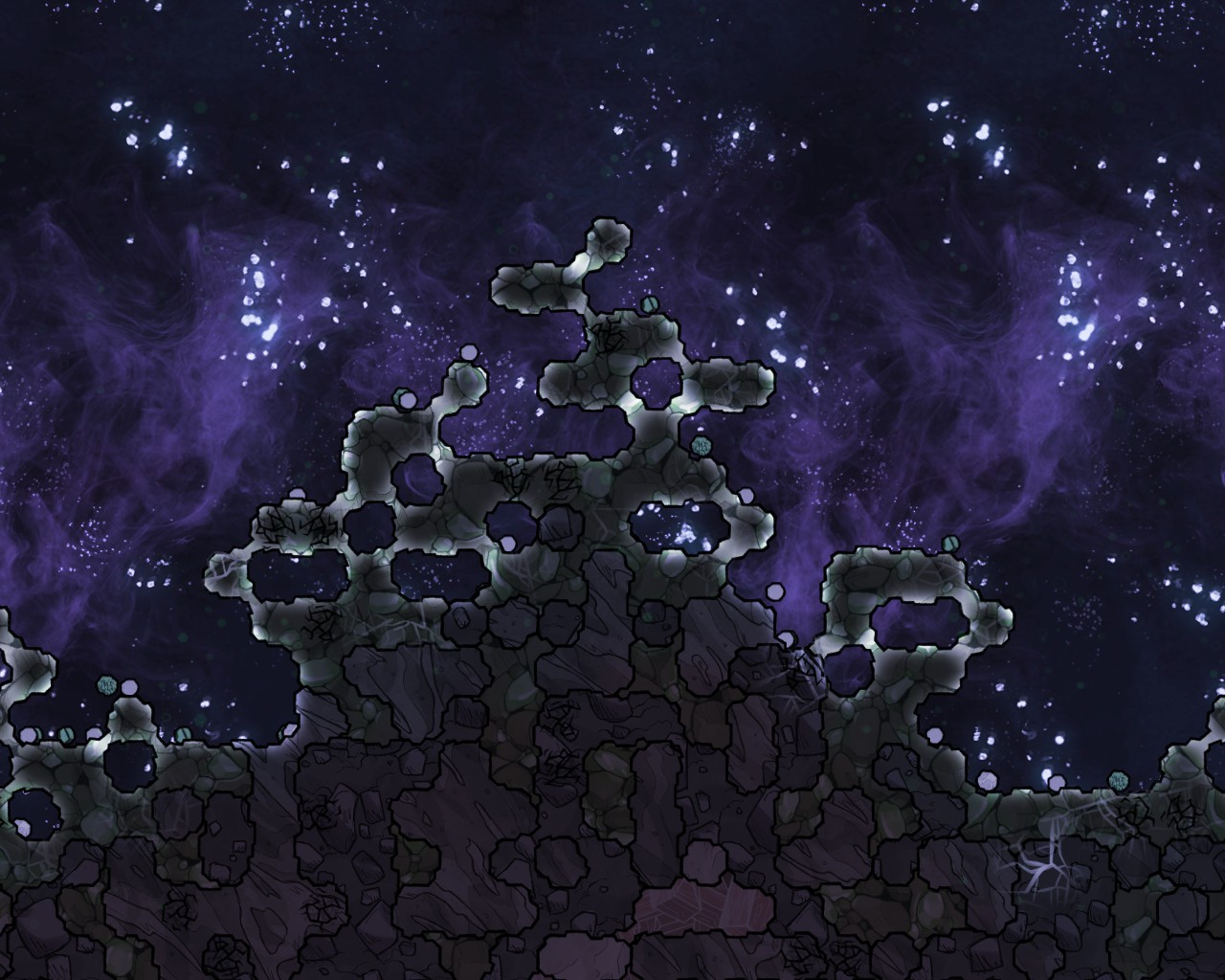
Mooteors (Cows)
- Several Gassy Moos arrive.
- Won't damage tiles
- Moos may be turned into meat or ranched.
Regolith
- Massive amounts of hot Regolith that is affected by gravity, much like sand.
- After the shower, regolith tiles can fall through open bunker doors.
- Meteors will damage tiles.
Ways to deal with them
DISCLAIMER: Some asteroids are subject to several types of meteors in a pattern which complicates things, such as [Ice, Regolith, Iron].
The solutions to these hostile weather conditions are -unless stated- meant for asteroids that have a single type of meteor shower.
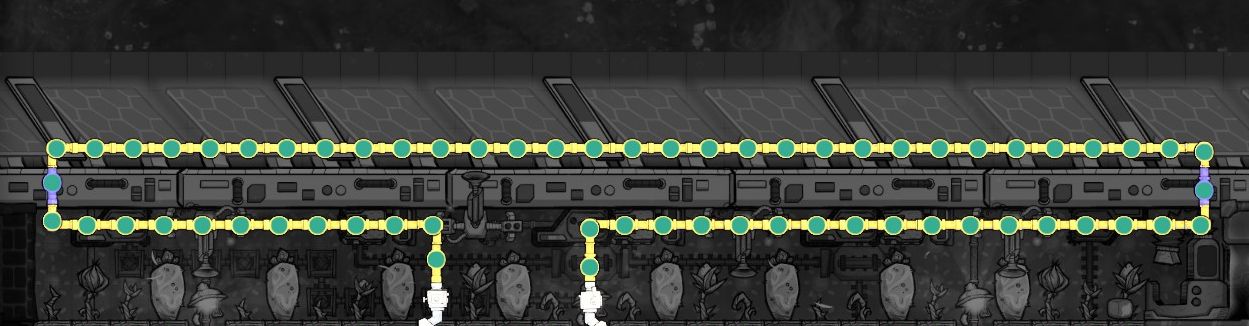
Run radiant piping through the surface of your asteroid, pipes should contain a fluid that's between 3C and 74C as to melt the ice and so that you can still get some cooling out of it, but not so hot that the water flashes to steam or so that certain equipment (solar panels) break.
Also set up a pit for water to fall into. Using low temperature water to melt ice may result in burst pipes; I've used petroleum due to it's low freezing point then super coolant afterwards.
Oxylite
Build horizontal "trays", place robo miners that cover each other, auto sweepers inbetween then conveyor loaders above every other robo miner. You can use glass or airflow tiles for the bottom then place solar panels underneath although solar panel output will be reduced.
Afterwards flood them (tried 100kg/tile but it was overkill) but if you don't mind losing oxylite you can skip using a liquid.

Slime
While harmless, they can be part of a rotation with meteor showers that include hot regolith tiles (copper, iron, gold) which would cook slime into dirt.
Gold/Iron/Copper
Block them with bunker doors. Metal meteors leave behind debris.
Showers include hot tiles of regolith.
Uranium
Block them with bunker doors.
Have someone mine them; alternatively run extremely hot liquids through bunker tiles so that the uranium touching them melts.
You could also allow beetas to roam the surface of your asteroid.
Regolith
Block them with bunker doors.
Regolith will fall after opening doors which makes the cleanup easier than slime or uranium, though the resulting regolith debris has to be dealt with.
Mooteors.
WIP
All Meteors
You can turn petroleum and refined metals into blast-shot (bullets) that can be used to destroy meteors, the type of meteor intercepted can be set by the building.
Notes
- ONI - Surviving the Early Game★ 5 (2.4k)83k views6.3k ♥54 minUpdated 6 Aug, 2019
- Useful Construction Patterns★ 5 (1.8k)74k views5.2k ♥66 minUpdated 29 Aug, 2020
- 10* things I wish I knew sooner...★ 5 (754)58k views1k ♥4 minUpdated 6 Oct, 2017
- ONI - Surviving the Mid-Game★ 5 (1.3k)44k views3.8k ♥150 minUpdated 6 Sep, 2019
- Not Quite Beginner's Guide★ 5 (361)32k views1.1k ♥91 minUpdated Mar 26, 2023
- Руководство для начинающих. (ОСНОВЫ)★ 5 (629)32k views1.2k ♥21 minRussianUpdated 20 Apr, 2019




- Upgrading to PremiumTeam Fortress 2★ 5 (20k)1441k views11k ♥6 minUpdated May 11, 2022
- No More Room in Hell Official ManualNo More Room in Hell★ 5 (2.8k)569k views2.1k ♥29 minUpdated Apr 22, 2019
- NMRiH Community Hosting GuidesNo More Room in Hell★ 5 (526)351k views653 ♥1 minUpdated Aug 10, 2022
- ULTIMATE GUIDE FOR GAME DEV TYCOONGame Dev Tycoon★ 5 (5.8k)326k views10k ♥4 minUpdated 23 Jan, 2014
- How to 'Git Gud' Soon™MORDHAU★ 5 (2k)318k views3k ♥68 minUpdated Nov 16, 2024
- Лучшие кооперативные игры SteamPAYDAY 2★ 5 (1.5k)315k views2.1k ♥56 minRussianUpdated Apr 27, 2025




This guide was created by its original author on the Steam Community. Are you the author and want it removed? Request removal.