SIMPLE METHOD TO TAME THE HYDROGEN VENT
INTRODUCTION
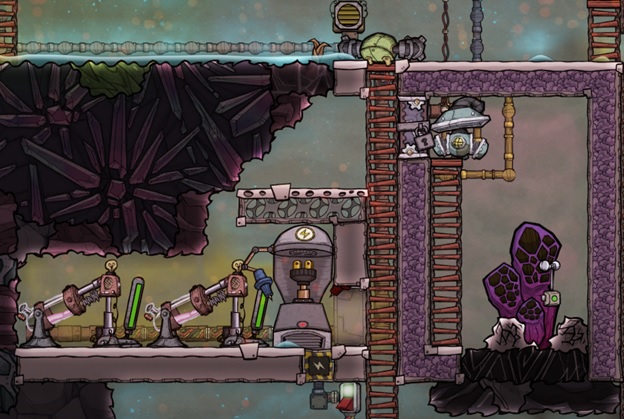
Hydrogen Vents produce a stream of hydrogen gas that can be conveniently used to generate electricity, clean and efficiently. However, the hydrogen is expelled from the vent at a very high temperature (up to 500C) which makes it a challenge to take advantage of this source of renewable energy.
The purpose of this guide is to present a method to tame the Hydrogen Vent in a simple way that can be built with mid-game technologies and materials. Simplicity, reliability and low cost are the main focus of this design and also the advantage compared to other designs available on the web.
Note that this method is intended to be “simple” and, thus enable players to take advantage of the Hydrogen Vent at a mid-stage of the game. This is NOT intended to be an “ultimate” design that achieves some sort of perfection in perpetuity: you may want to explore other designs if that’s your goal.
BASIC DESIGN
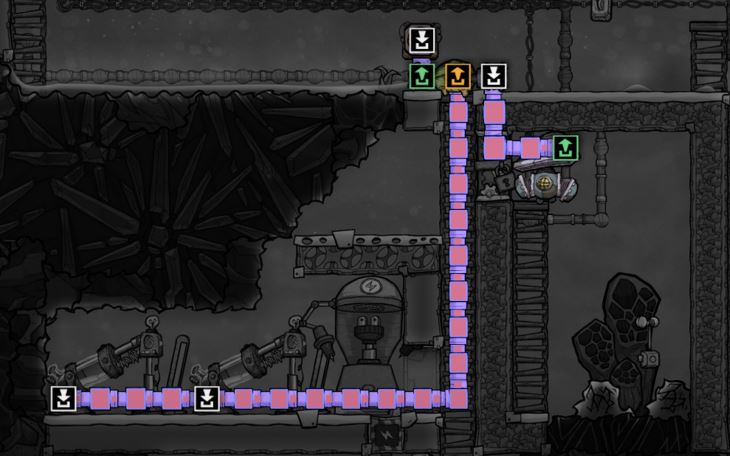
The following image shows the gas ducting for this design. The gas filter on top is a necessity when you first start this system (and gases other than hydrogen are present in the enclosure), but later on only hydrogen will be left inside the enclosure, so you can then eliminate the filter.
PROTECTING THE GAS PUMP
The Gas Pump is made of steel, which increases its over-heat temperature to 275C, but the gas expelled by the vent is hotter, so if left unprotected the Gas Pump will eventually reach overheating temperature.
To protect the Gas Pump, we build a small web of Radiating Pipes (made out of steel) that cocoon the Gas Pump. A constant stream of “cool” water flows from the top, enters the web and absorbs heat from the hot Hydrogen Gas, then exits the web, keeping the pump operating within the acceptable temperature range.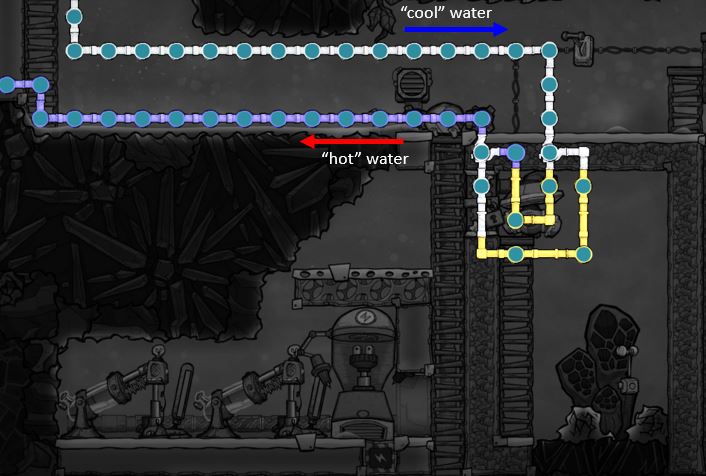 The next image shows how the Gas Pump is protected by this web of cool water. Note the lower temperature at the core of the web compared to the rest of the gas in the enclosure. This web of pipes may seem odd, but it does the job; you may want to explore a different web design (i.e., a coil-like web) and see if that works better for you.
 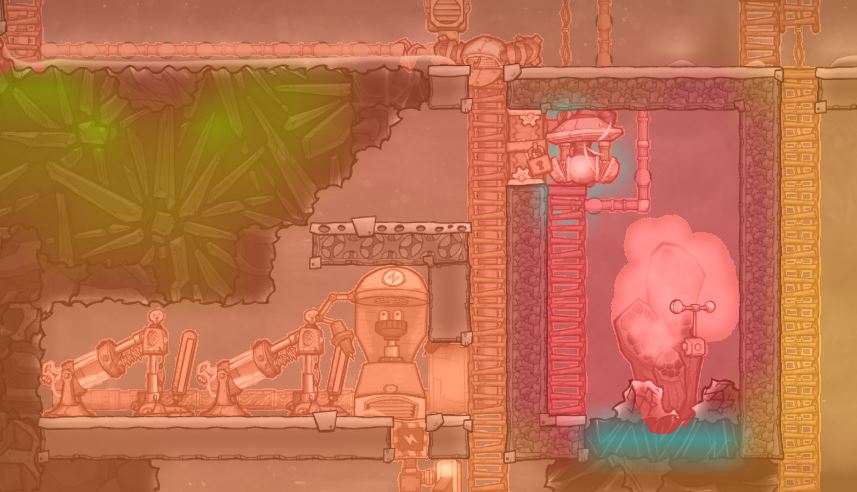 The “hotter” water returns in the pipe and exchanges its heat with a large pool of water, thus lowering its temperature before it enters the Liquid Reservoir and loops again in a perpetual cycle. In effect, we are “moving” the heat from the very hot hydrogen gas to this large pool of water.
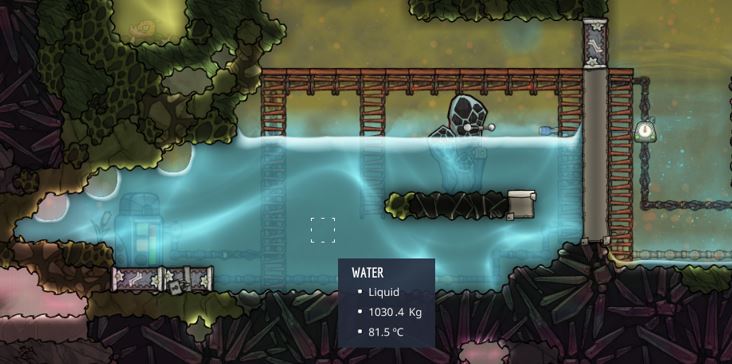
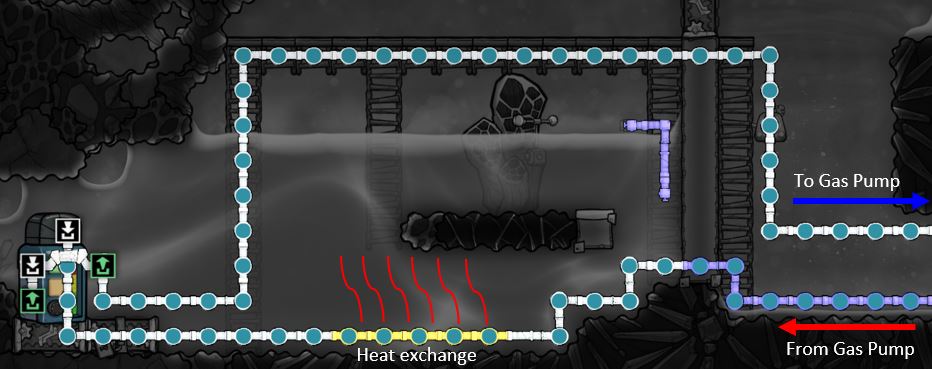 In my case, this pool of water was readily available, as the vapor vent shown there vented and condensed water from the very start of the game. This water (at 70C) was too hot for agricultural use, so I never used until I figured I could use it for this purpose.
You may use a different pool of water for this purpose. For example, you can use a pool of polluted water available somewhere else in your map.
WHY THIS WORKS
Without going into complex calculations, this system works because we are pumping water at a rate of 10kg/s and water’s specific heat is 4.179; whereas the Hydrogen Vent produces gas at an average rate of 0.1kg/s and hydrogen’s specific heat is 2.4. And then we transfer whatever heat from the hydrogen to a pool with literally tons of water.
So, because we have a (relatively) gigantic mass of water with twice the specific heat, the water can comfortably absorb the heat from the hot hydrogen.
The image below shows the gas pump working at a comfortable temperature of 93.4C.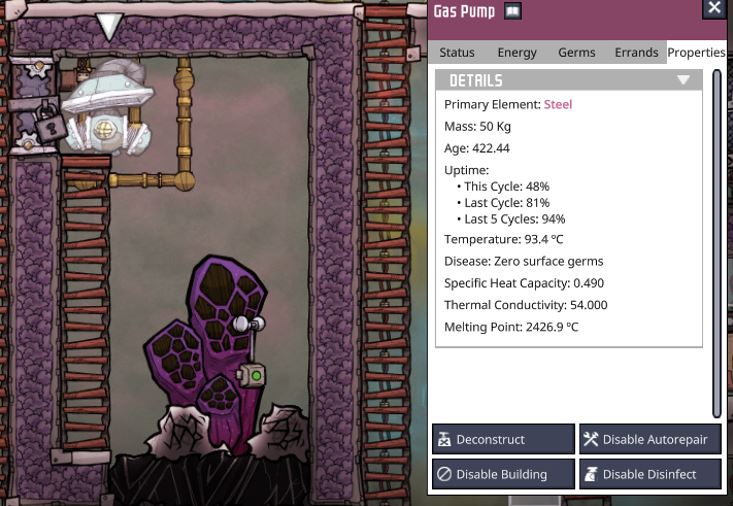
MAINTENANCE
THE (VERY) LONG RUN
So, if we are merely moving the heat from the hot hydrogen created by the vent to the large pool of water, even all that water will eventually reach boiling point and evaporate – right?
Well, that’s right, depending on how large is your pool of water, the mass will eventually reach boiling point. Exactly when is this going to happen is a question… for some time in the distant future.
See, my pool of water started at a temperature of something like 70C, and currently, after more than 422 cycles, stands at 81.5C. Therefore, this system in particular will probably serve for at least another 400 cycles, and then I will have to furnish a new pool of water.
Also note that I am using water as "coolant" in the pipes, which will likely boil over first inside the pipes as the pool reaches the evaporation point. If I use Polluted Water or Petroleum instead, I could increase/maximize the amount of cycles I can get out of this pool.
CONCLUSION
- ONI - Surviving the Early Game★ 5 (2.4k)83k views6.3k ♥54 minUpdated 6 Aug, 2019
- Useful Construction Patterns★ 5 (1.8k)74k views5.2k ♥66 minUpdated 29 Aug, 2020
- 10* things I wish I knew sooner...★ 5 (754)58k views1k ♥4 minUpdated 6 Oct, 2017
- ONI - Surviving the Mid-Game★ 5 (1.3k)44k views3.8k ♥150 minUpdated 6 Sep, 2019
- Not Quite Beginner's Guide★ 5 (361)32k views1.1k ♥91 minUpdated Mar 26, 2023
- Руководство для начинающих. (ОСНОВЫ)★ 5 (629)32k views1.2k ♥21 minRussianUpdated 20 Apr, 2019




- Upgrading to PremiumTeam Fortress 2★ 5 (20k)1441k views11k ♥6 minUpdated May 11, 2022
- No More Room in Hell Official ManualNo More Room in Hell★ 5 (2.8k)569k views2.1k ♥29 minUpdated Apr 22, 2019
- NMRiH Community Hosting GuidesNo More Room in Hell★ 5 (526)351k views653 ♥1 minUpdated Aug 10, 2022
- ULTIMATE GUIDE FOR GAME DEV TYCOONGame Dev Tycoon★ 5 (5.8k)326k views10k ♥4 minUpdated 23 Jan, 2014
- How to 'Git Gud' Soon™MORDHAU★ 5 (2k)318k views3k ♥68 minUpdated Nov 16, 2024
- Лучшие кооперативные игры SteamPAYDAY 2★ 5 (1.5k)315k views2.1k ♥56 minRussianUpdated Apr 27, 2025






This guide was created by its original author on the Steam Community. Are you the author and want it removed? Request removal.