SpaceFlat Protocol
Concept, life support, rooms and temperature
A modular and transportable colony concept for Oxygen Not Included
- Spaced Out!
- Aquatic Planet Pack for the Mini Fridge and aquatic content
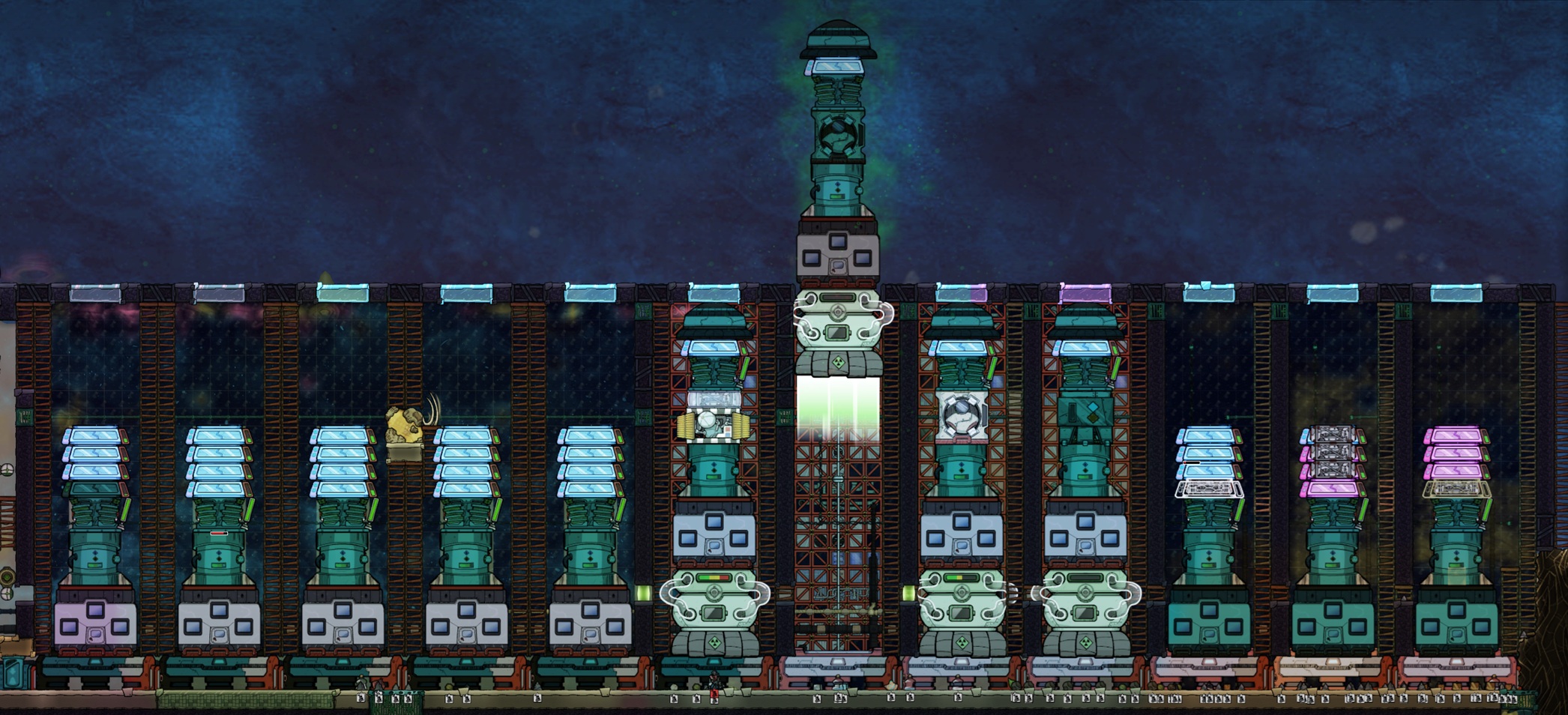
In Oxygen Not Included, a large central base eventually becomes one interconnected machine. Oxygen, water, food, power, cooling, sanitation, morale, and transport all depend on the same infrastructure.
When one critical system fails, the entire colony can be affected.
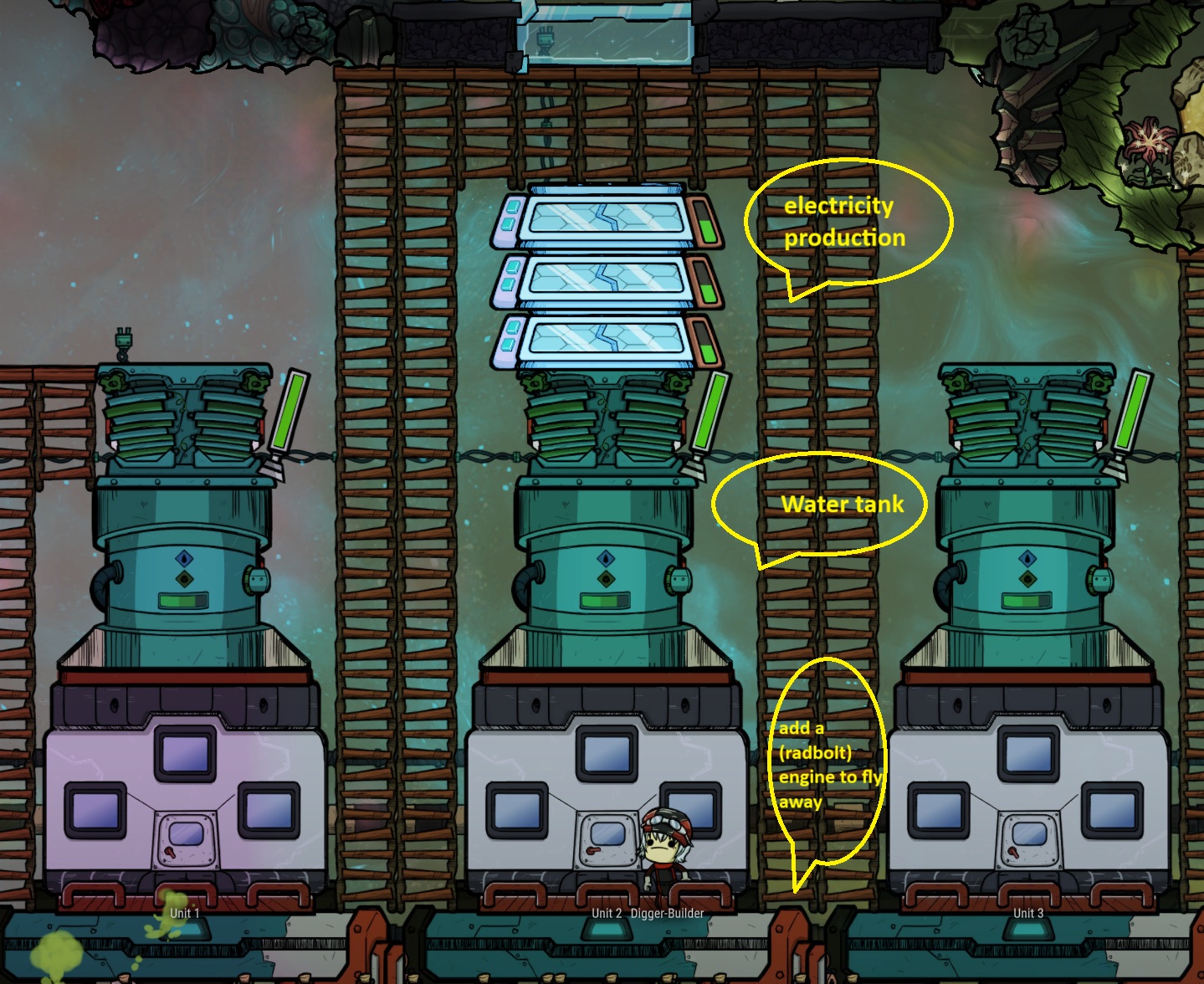
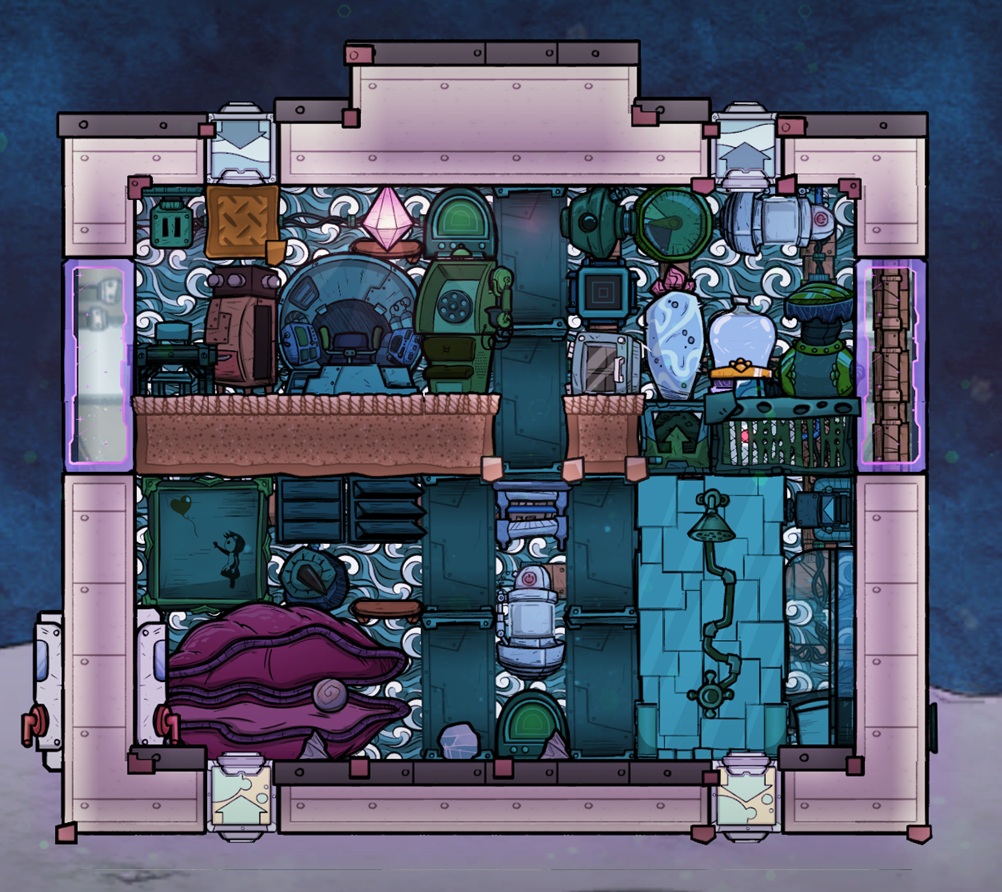
The SpaceFlat approach reverses this logic.
Instead of building one permanent base, the colony is divided into compact mobile life-support units.
Each unit is designed for one duplicant, or one specialist role, and can be reproduced, upgraded, refilled, transported, and redeployed on another asteroid.
The objective is not to build the prettiest base. The objective is to build a colony that can move.
Each duplicant has predictable needs: oxygen, food, clean water, toilet access, hygiene, power, sleep, temperature stability, and morale.
A SpaceFlat unit is a compact survival cell designed to meet these needs locally.
It does not need to produce every resource independently. Water, food, and power can still be loaded from a shared service point.
However, once supplied, the unit must be able to support its duplicant while separated from the main colony.
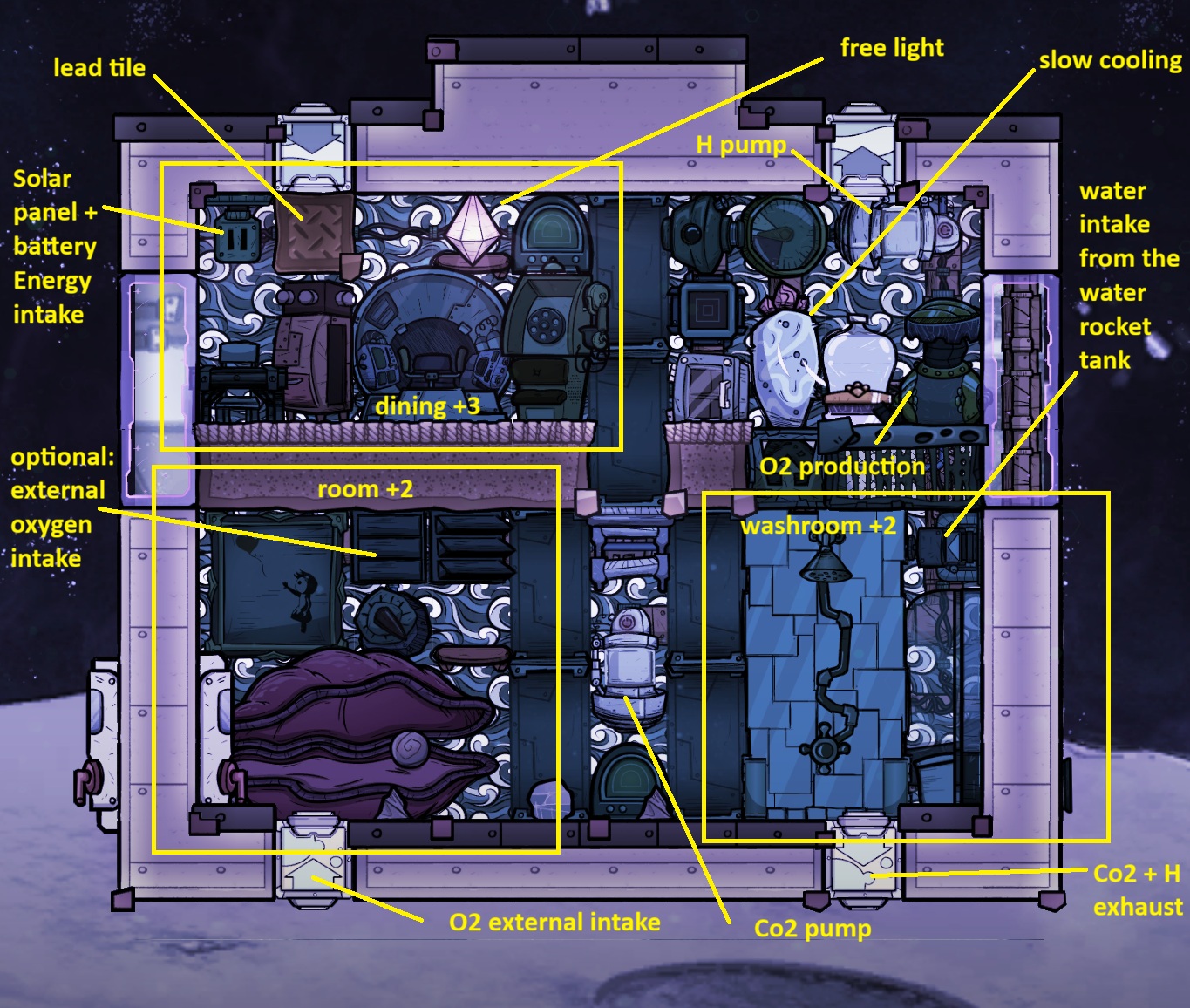
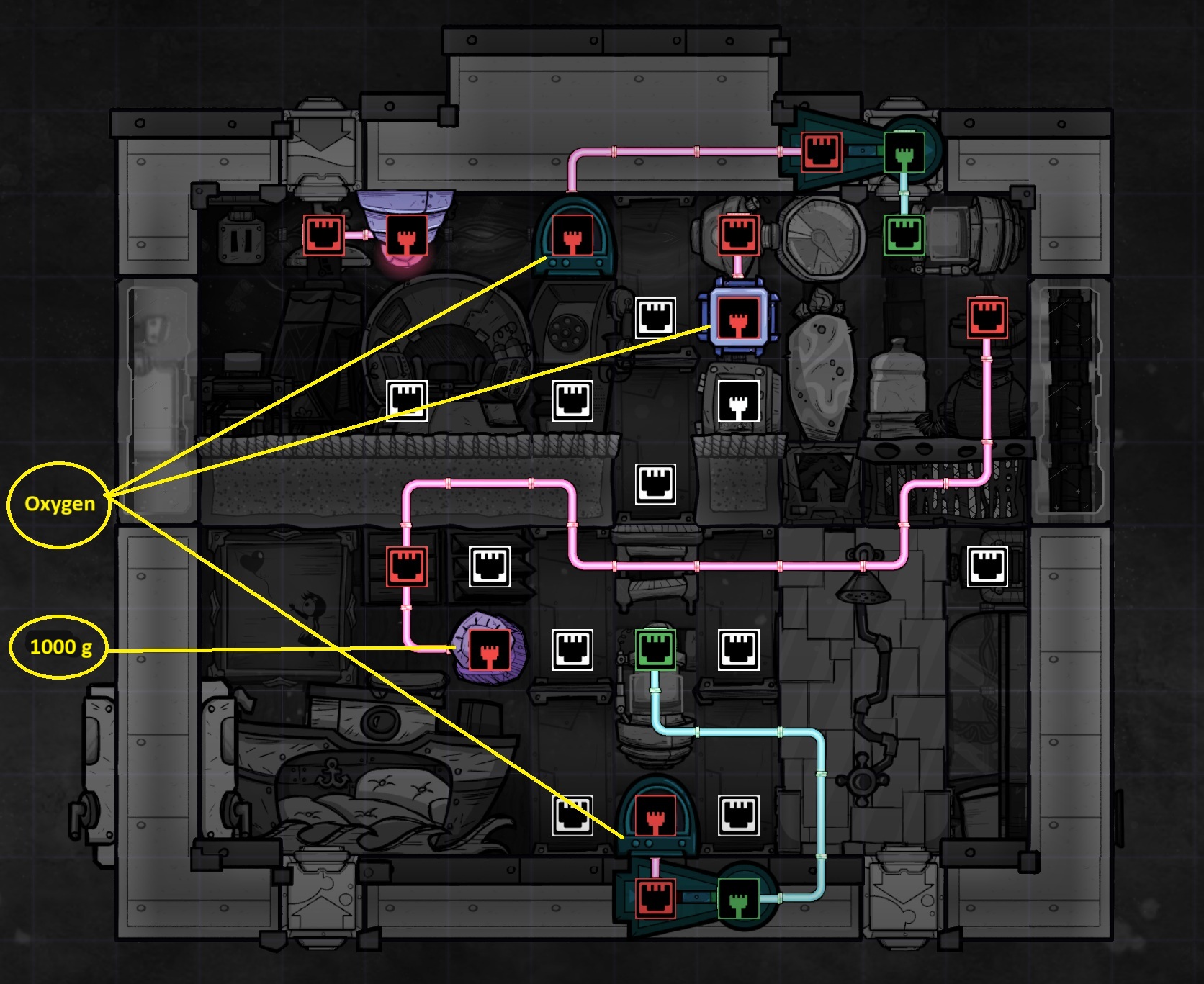
Oxygen is produced inside the Spacefarer Module by an Electrolyzer.
The system is controlled by pressure.
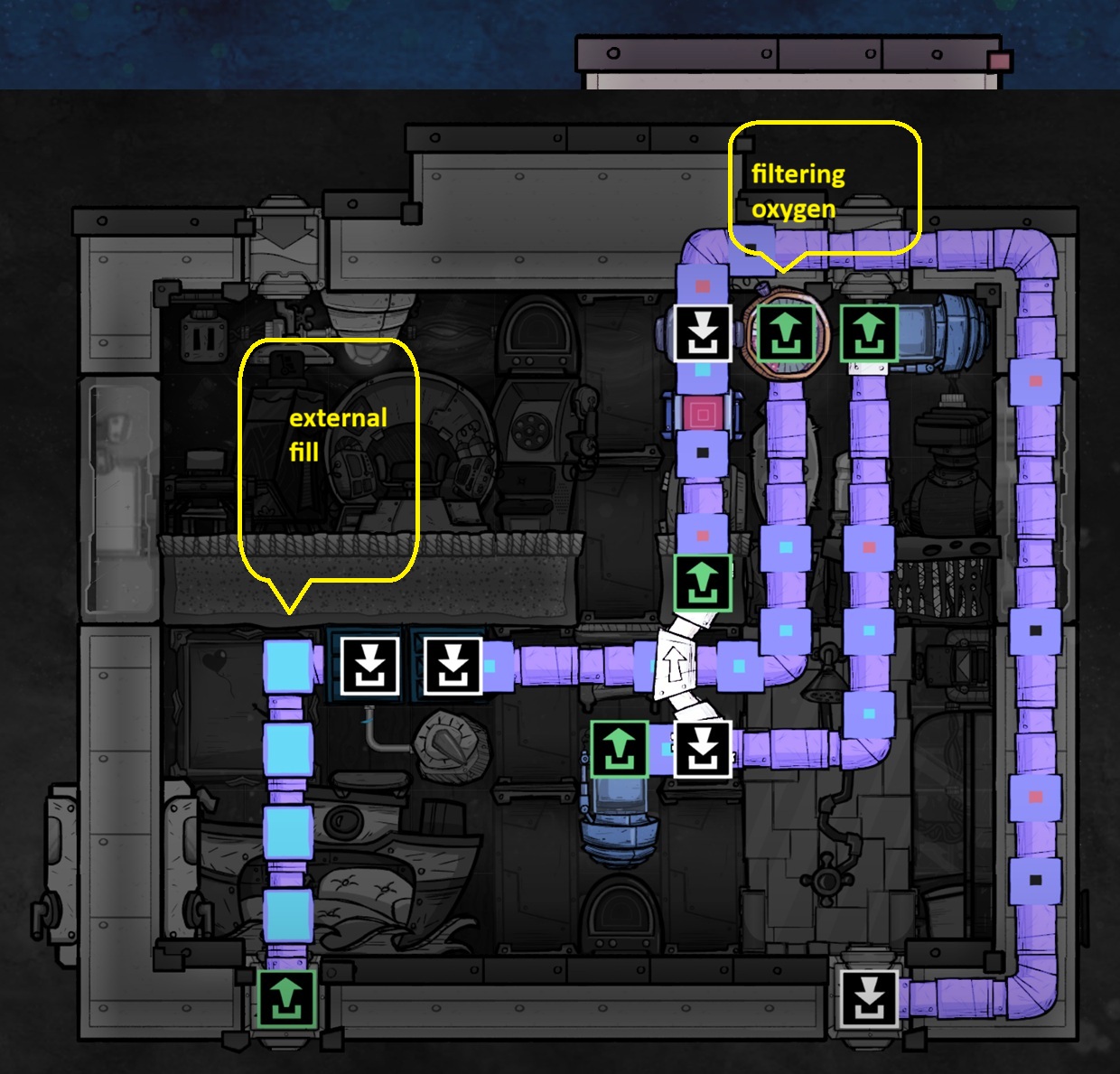
When cabin pressure falls below approximately 1000 g per tile, the Electrolyzer activates.
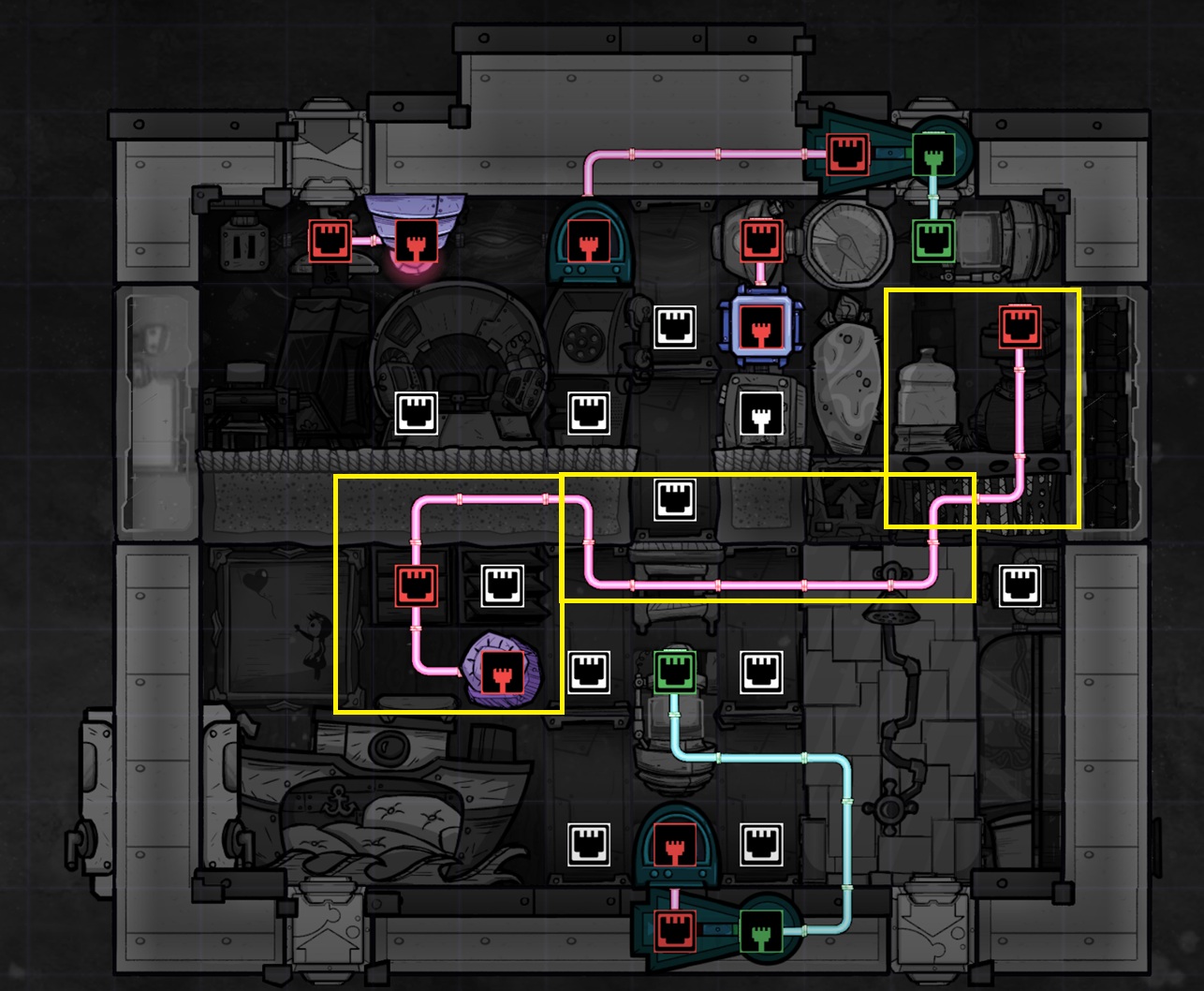
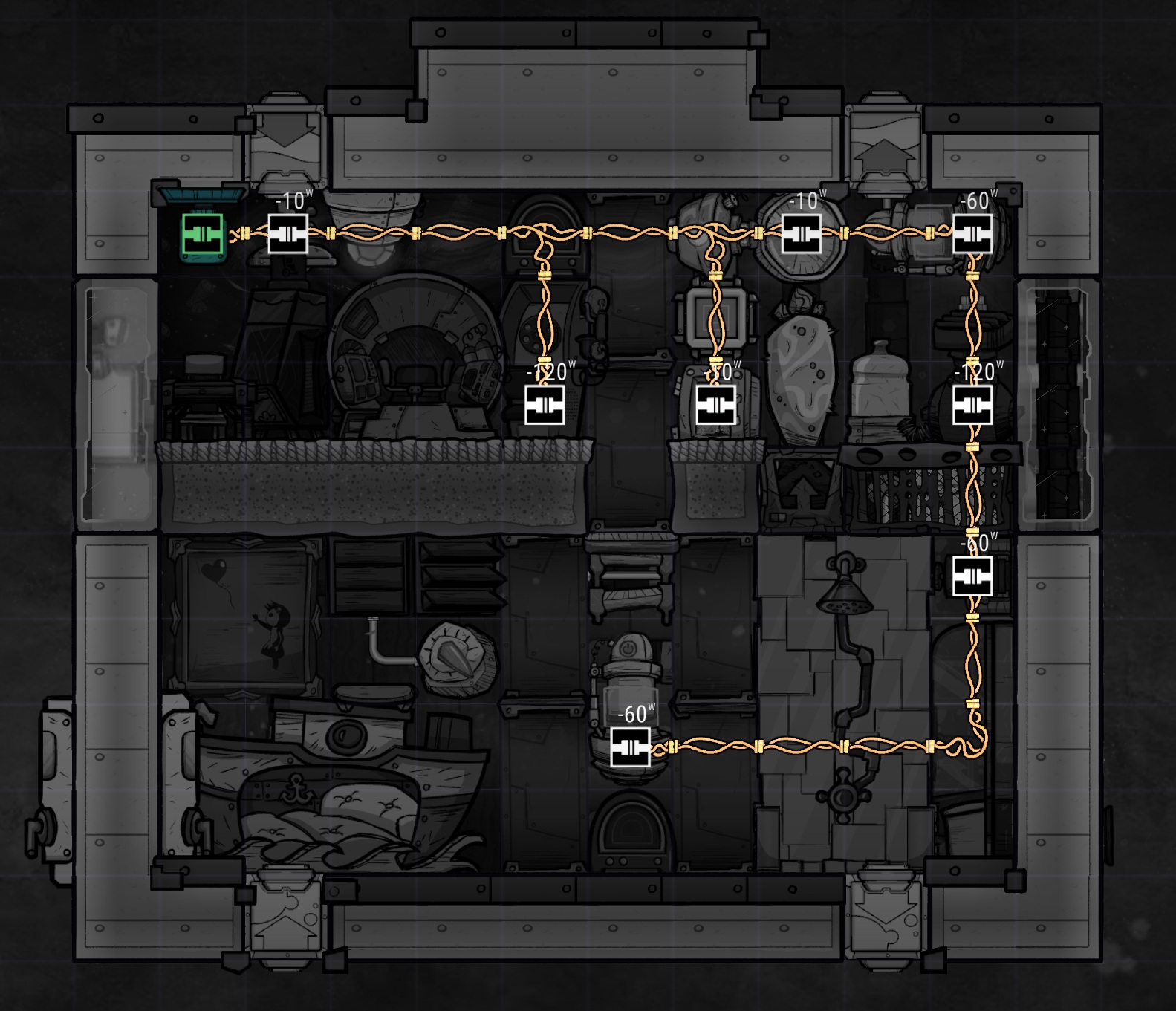
Once the target pressure is restored, oxygen production stops.
This saves water, power, and heat, while preventing overpressure.
The duplicant should never depend on the destination asteroid’s atmosphere to breathe.
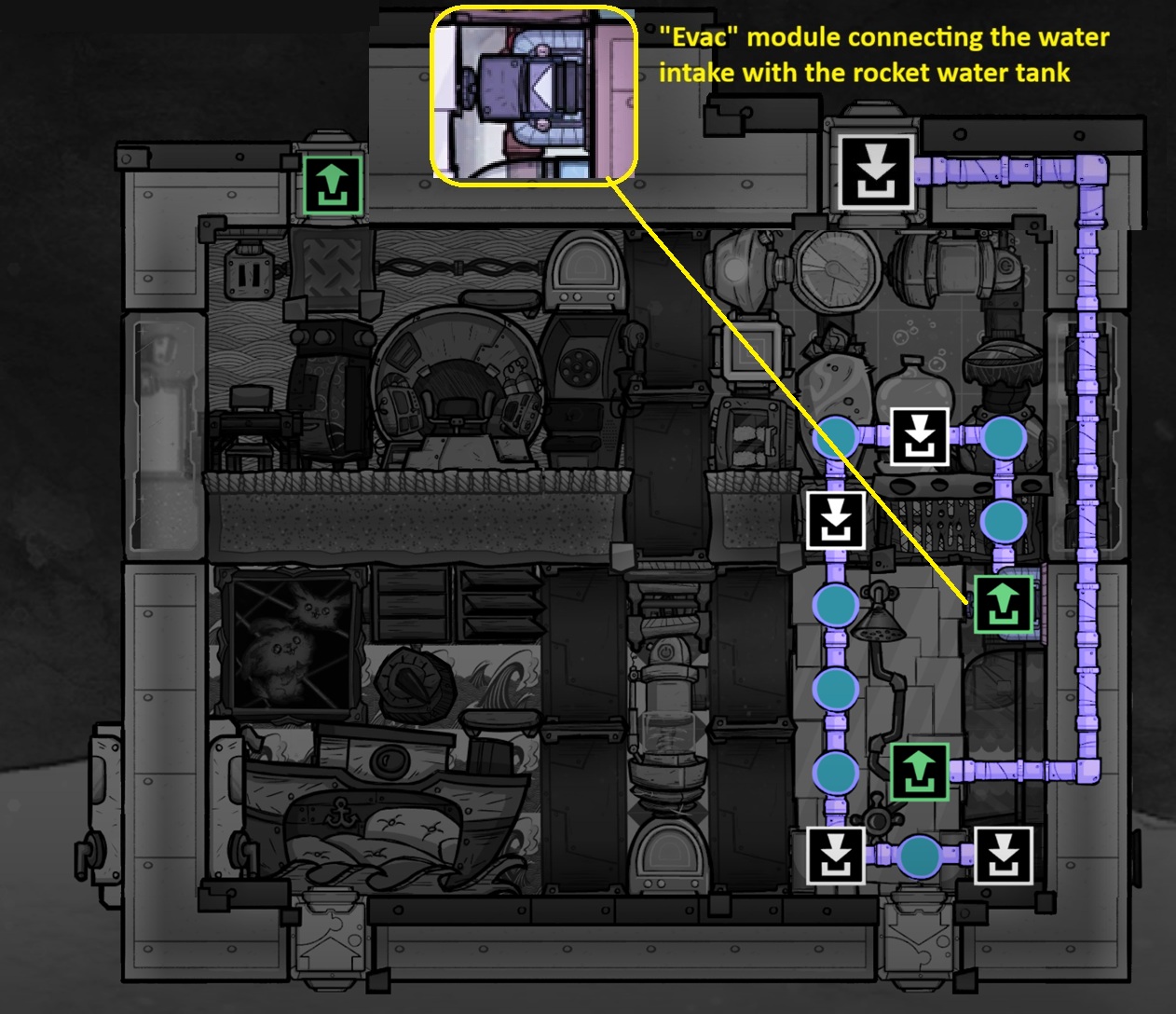
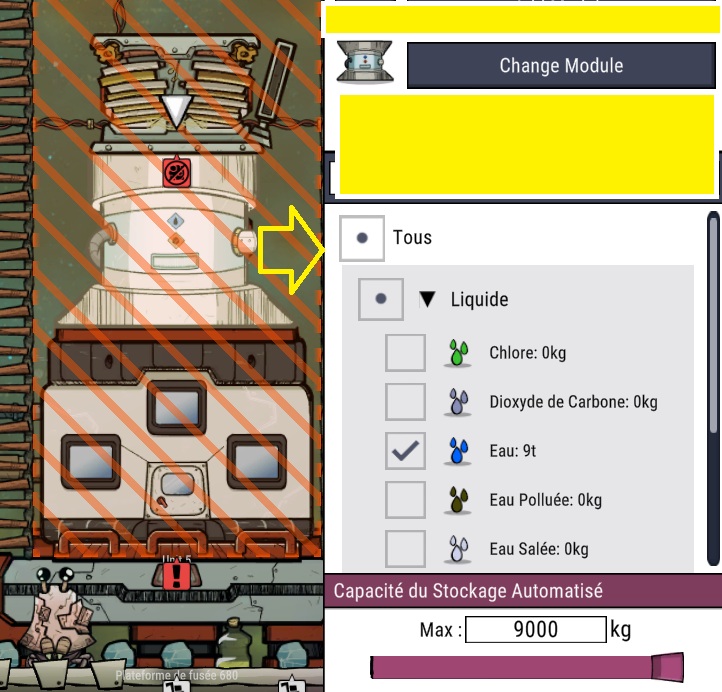
Clean water is stored in an external Liquid Cargo Tank.
It supplies the Electrolyzer, Space Toilet, and shower while preserving interior space.
The cabin is designed to remain almost entirely filled with oxygen.
Non-oxygen gases are detected and removed.
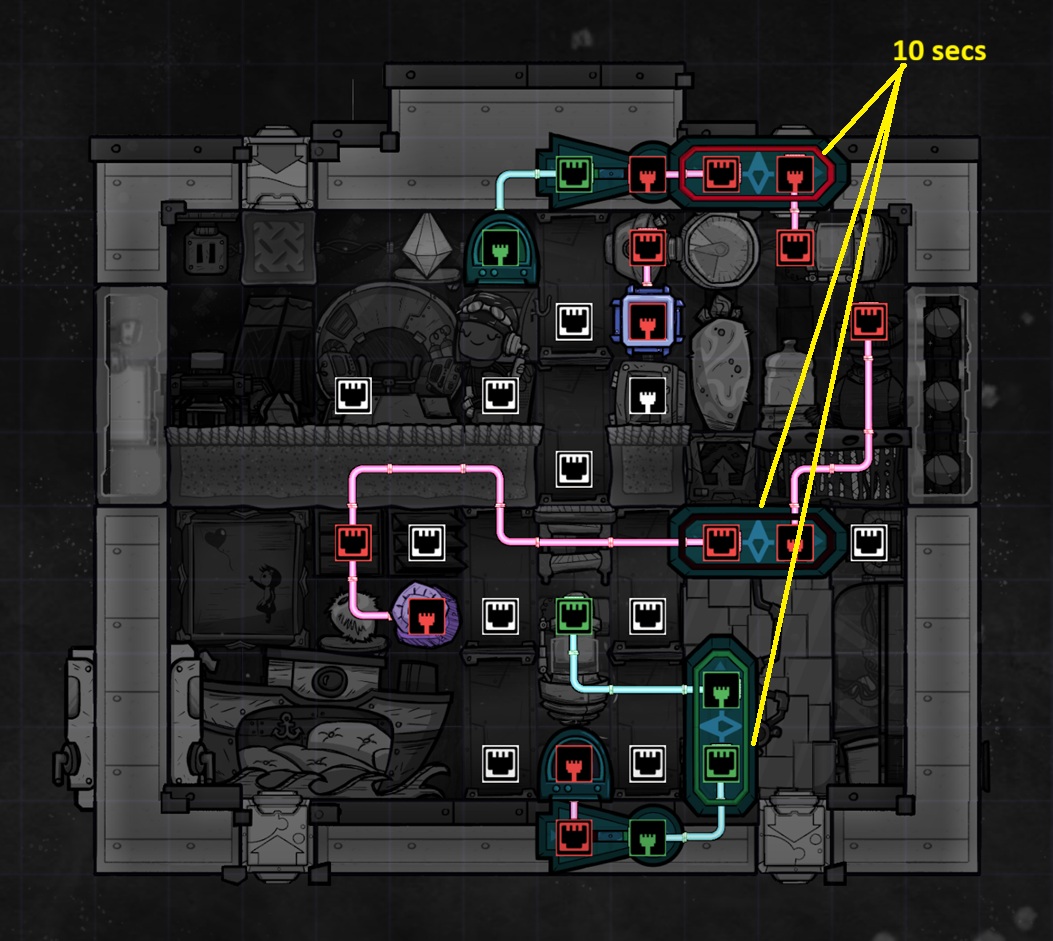
The upper intake removes light gases, mainly hydrogen.
The lower intake removes heavy gases, mainly carbon dioxide.
The unwanted gases are expelled through the Spacefarer Module’s gas output ports and may be filtered or recycled outside the cabin.
A filter or buffer gate can require non-oxygen gas to be detected for more than ten seconds before activating a pump.
This avoids pump spam caused by tiny gas packets.
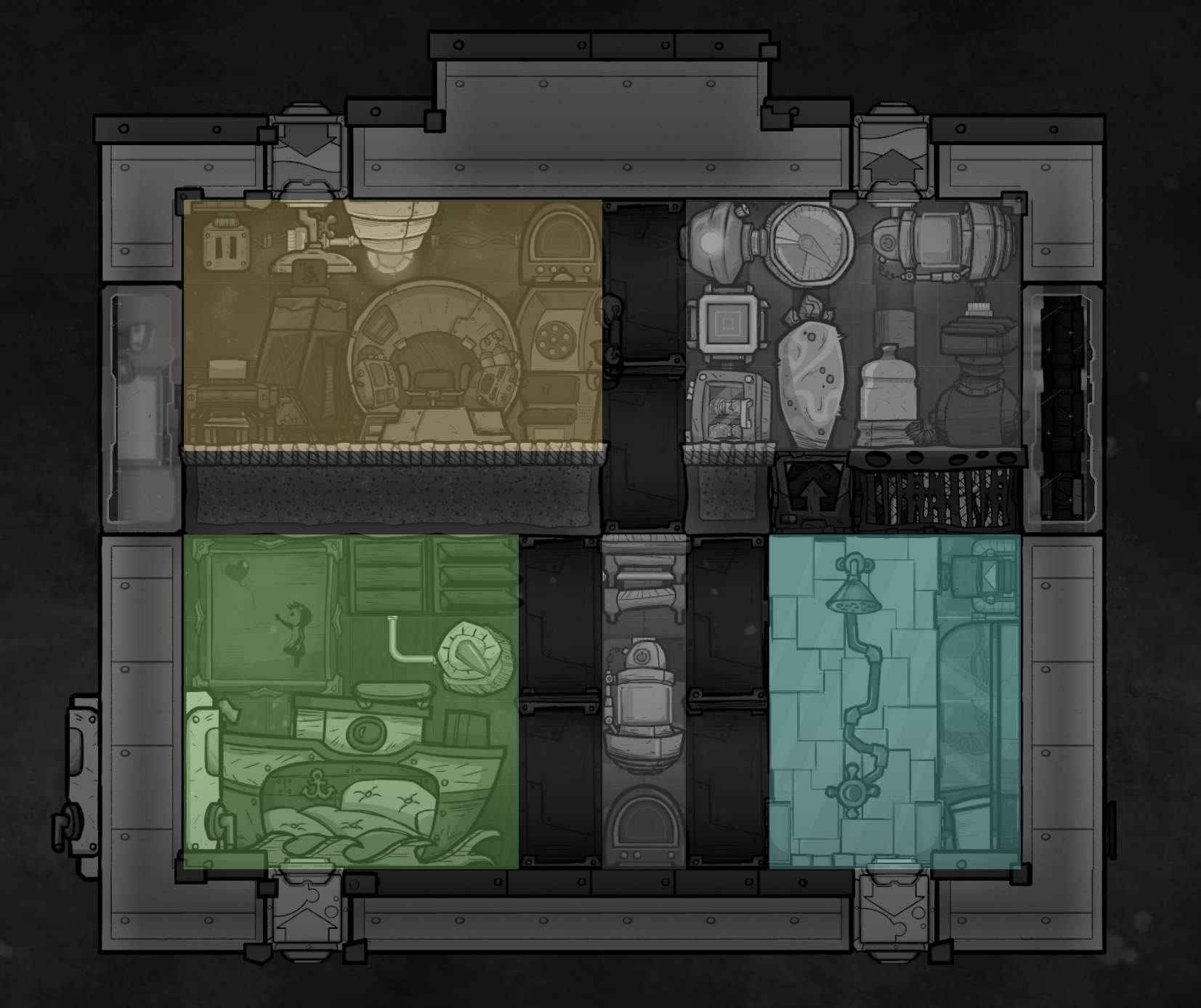
The standard layout provides:
- Dining Room: +3 Morale
- Bedroom: +2 Morale
- Washroom: +2 Morale
This gives a stable room-based morale baseline of approximately +7.
The Party Line Phone is also useful in compact units, especially for isolated or long-distance missions.
The washroom acts as a hygiene checkpoint: the shower removes germs, while the Space Toilet handles sanitation inside the closed cabin.
A newly built Spacefarer Module starts in vacuum.
This gives control over the starting atmosphere and temperature.
Before adding oxygen, the cabin can be prepared with ice, cold materials, or chilled water.
Because there is no gas at first, there is almost no internal gas conduction during preparation.
The interior does not passively adopt the temperature of the asteroid, rocket platform, or surrounding space.
Its temperature is mainly determined by imported water, oxygen, machinery, duplicants, and materials carried inside.
- Build the interior while it is still in vacuum.
- Bring in ice or another cold material.
- Remove it before it melts completely, or the cabin may flood.
- Let the cabin and equipment cool.
- Remove or contain meltwater.
- Introduce oxygen after reaching the desired starting temperature.
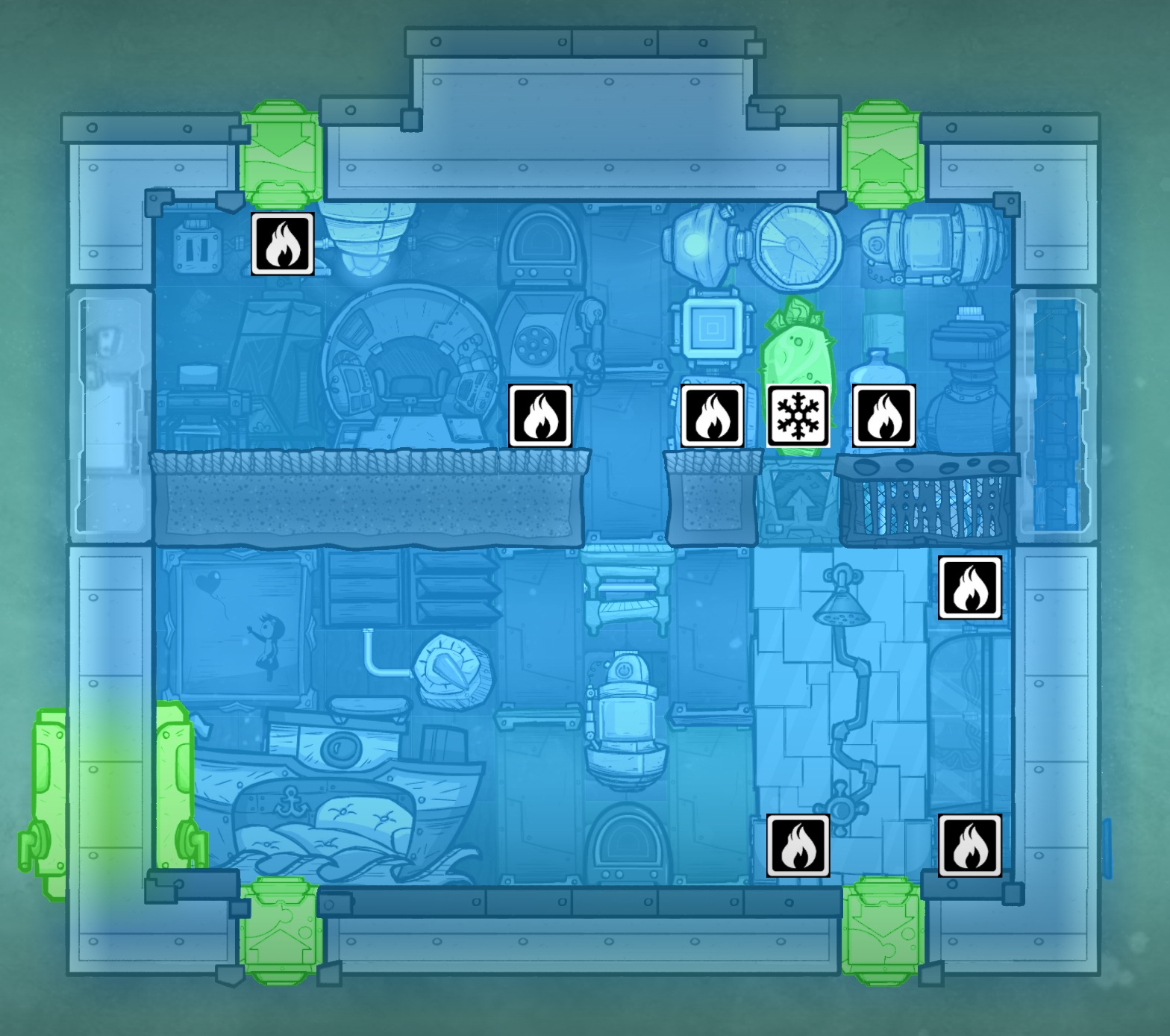
Because the cabin is isolated from the external map, a prepared starting temperature can remain stable for a long time.
Duplicants moving from platform to platform may open rocket doors without entering the modules, wasting time.
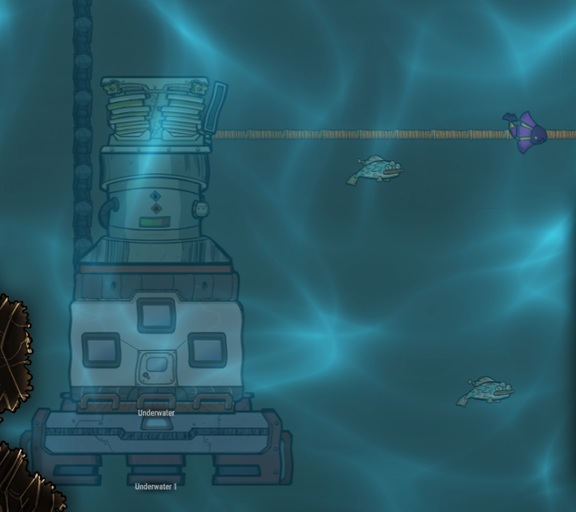
It is possible to remove the rocket platform without destroying the rocket, then build tiles underneath it.
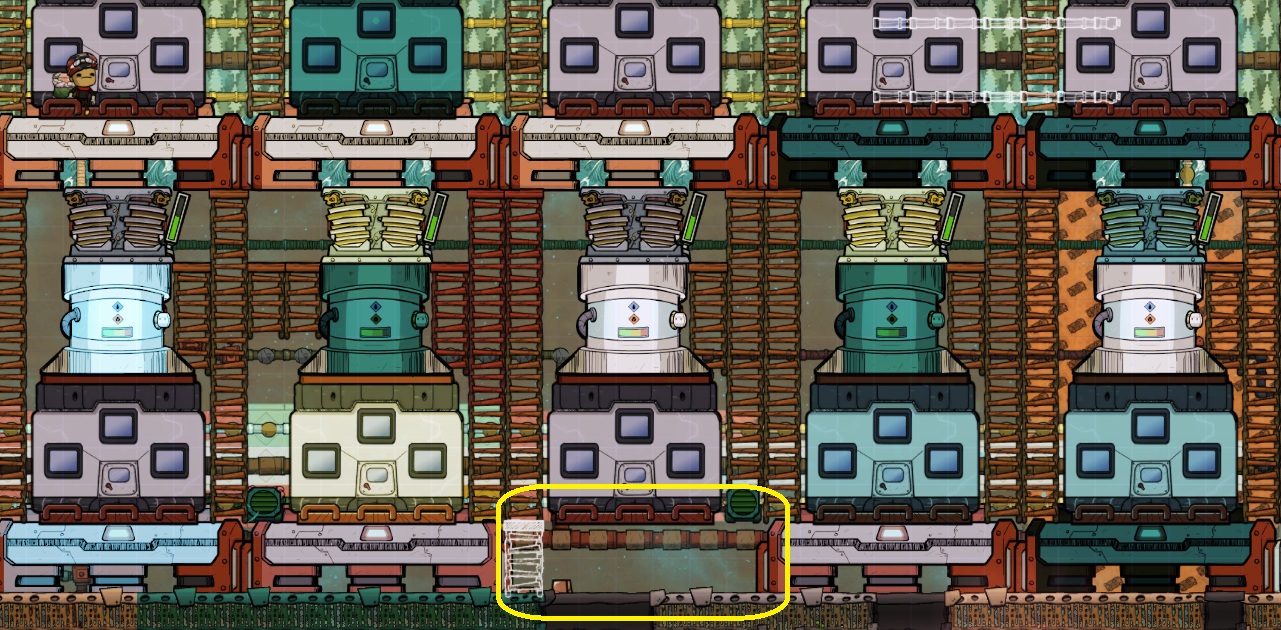
This allows flat foundations, sealed access areas, or underwater structures.
Refilling, artifacts, science and colonization
The units are autonomous during operation, but they can all be serviced from centralized filling points before departure.
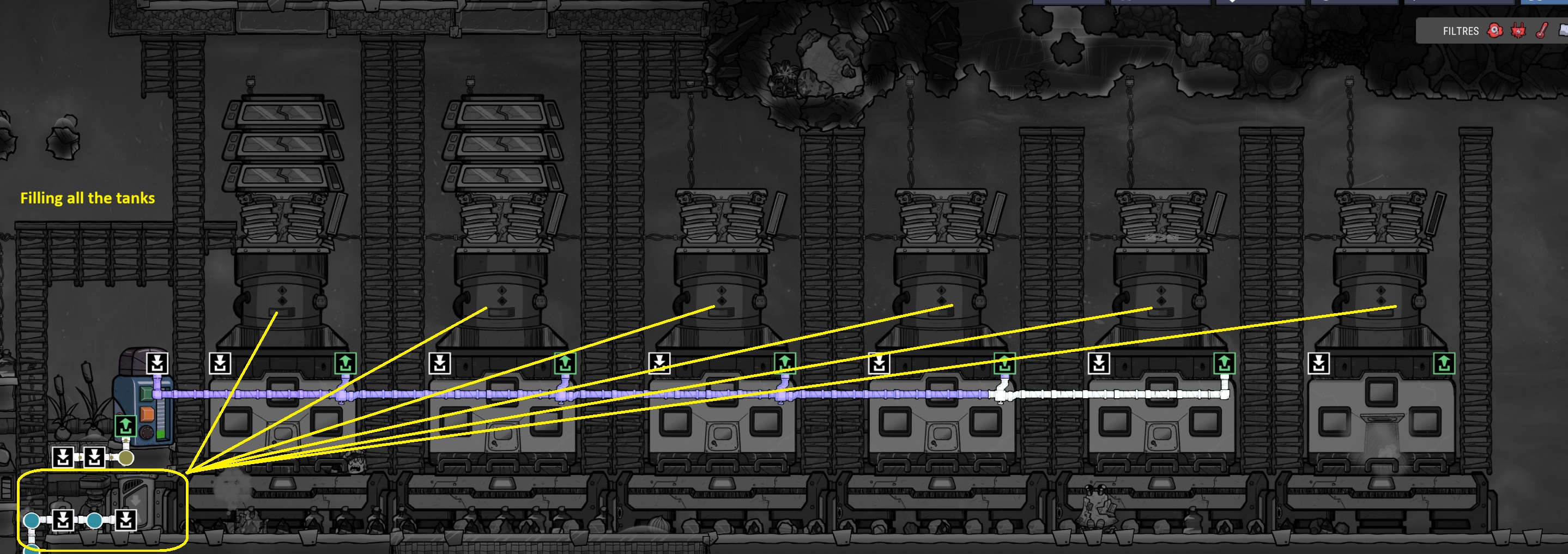
All Liquid Cargo Tanks can be filled from a single shared water line.
This makes it possible to prepare several SpaceFlat units without building a separate loading system for every rocket.
One filling point can supply the entire fleet.
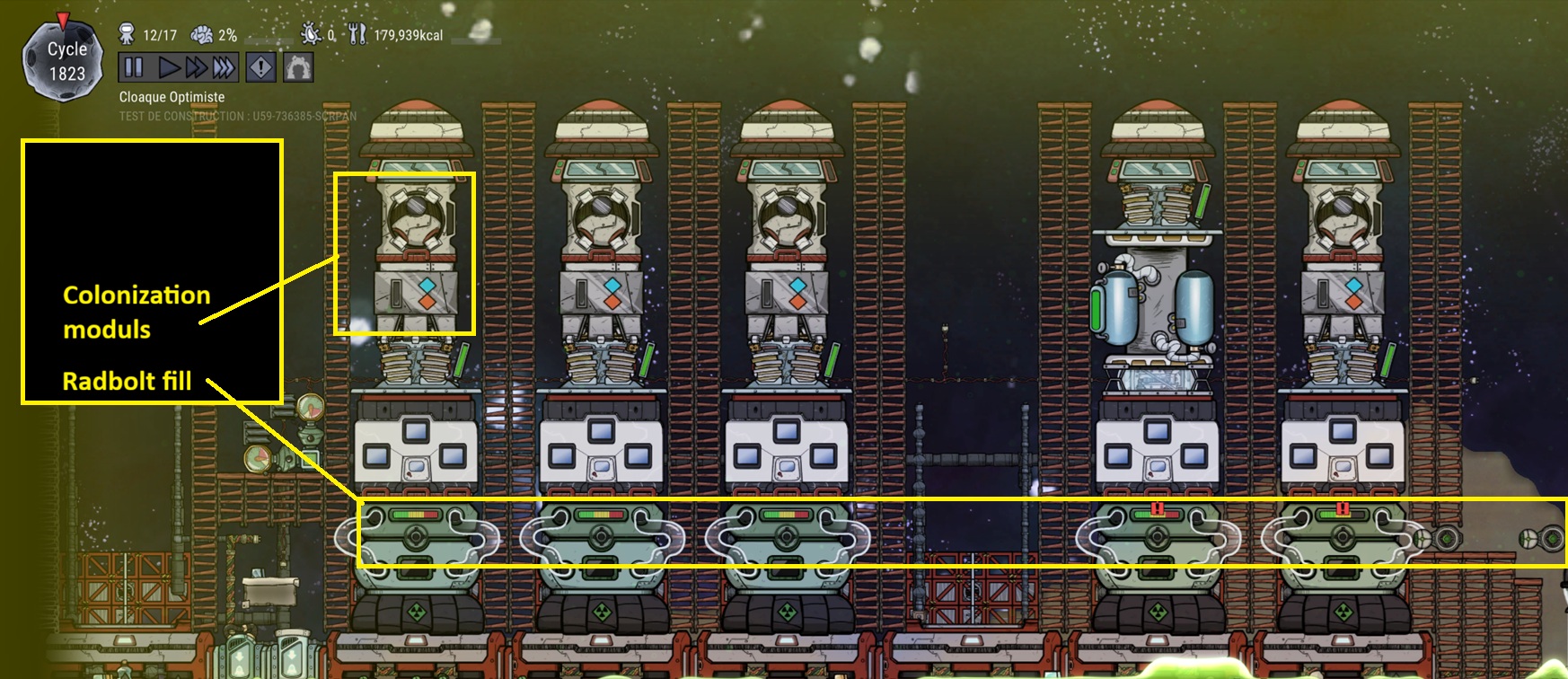
The same principle can be applied to radbolt engines.
A centralized radbolt installation can charge several rockets from one service area, reducing duplicated infrastructure.
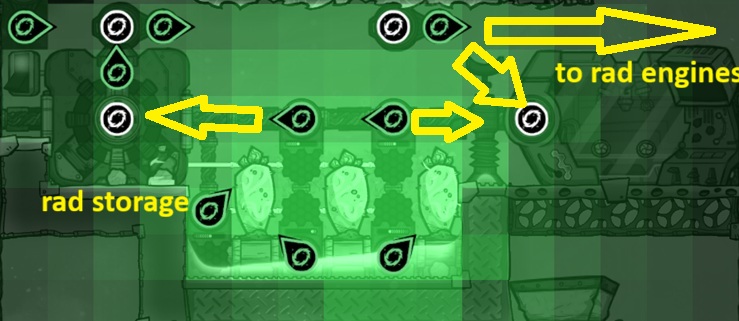
storing nuclear wast (from radengines), ideally on lead tiles.
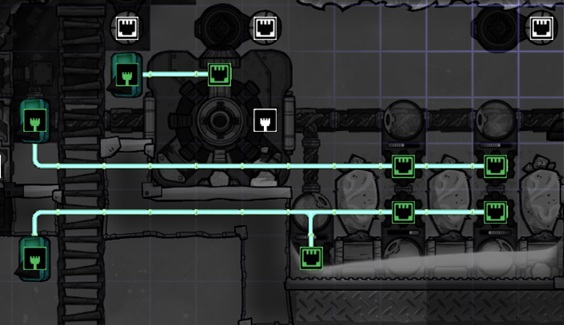
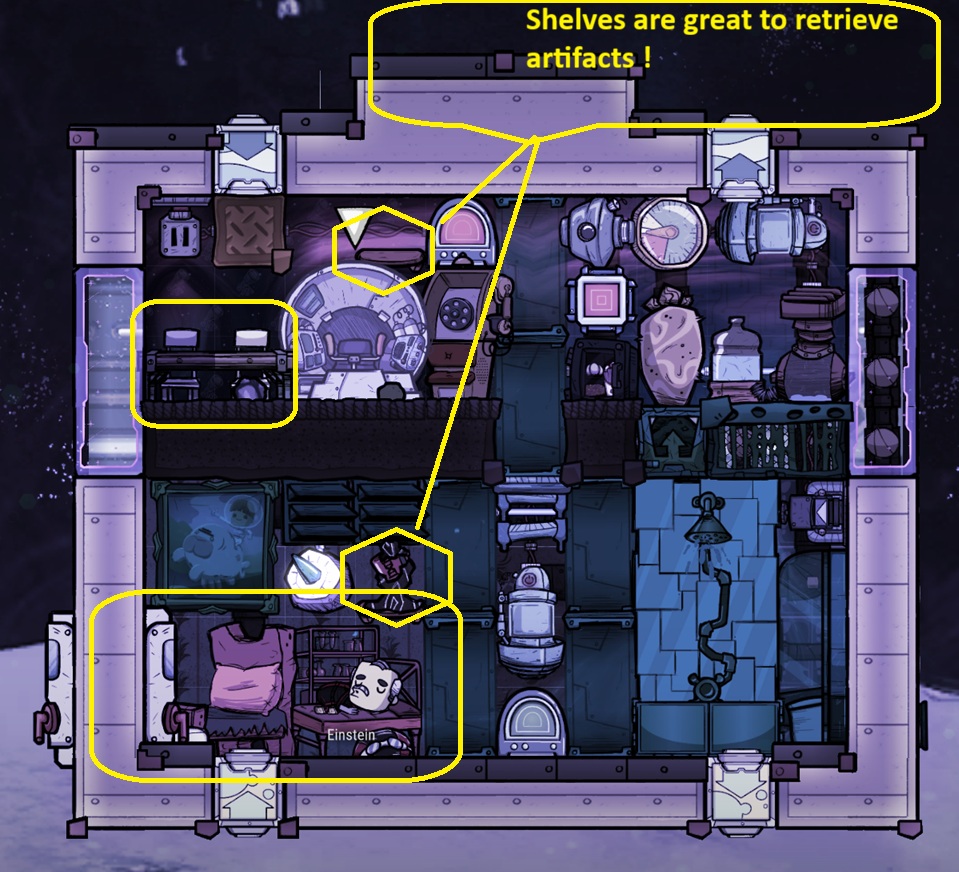
Display Shelves are especially useful inside a mobile unit.
They require a back wall before they can be built, so Drywall or another valid background material must be placed first.
A Display Shelf can be used to retrieve artifacts found on other asteroids.
After discovering an artifact:
- Select the Display Shelf inside the rocket.
- Choose the artifact in the shelf’s storage selection.
- Set the shelf to urgent priority.
- Allow the duplicant to collect the artifact.
- Return the rocket to the main colony.
This makes artifact transport simple and avoids dedicating a separate cargo module to them.
Each radbolt-powered unit should carry at least one or two Wheezewort seeds.
If the rocket reaches a remote asteroid without enough radbolts for the return journey, the duplicant can create an emergency radiation source.
In an emergency:
- Build two Farm Tiles or Flower Pots.
- Plant the Wheezeworts.
- Build a Radbolt Generator nearby.
- Use the radiation emitted by the plants to generate return fuel.
Every radbolt-powered unit should carry the materials required to manufacture its own return fuel.
The emergency return setup also requires enough electrical power to operate the Radbolt Generator.
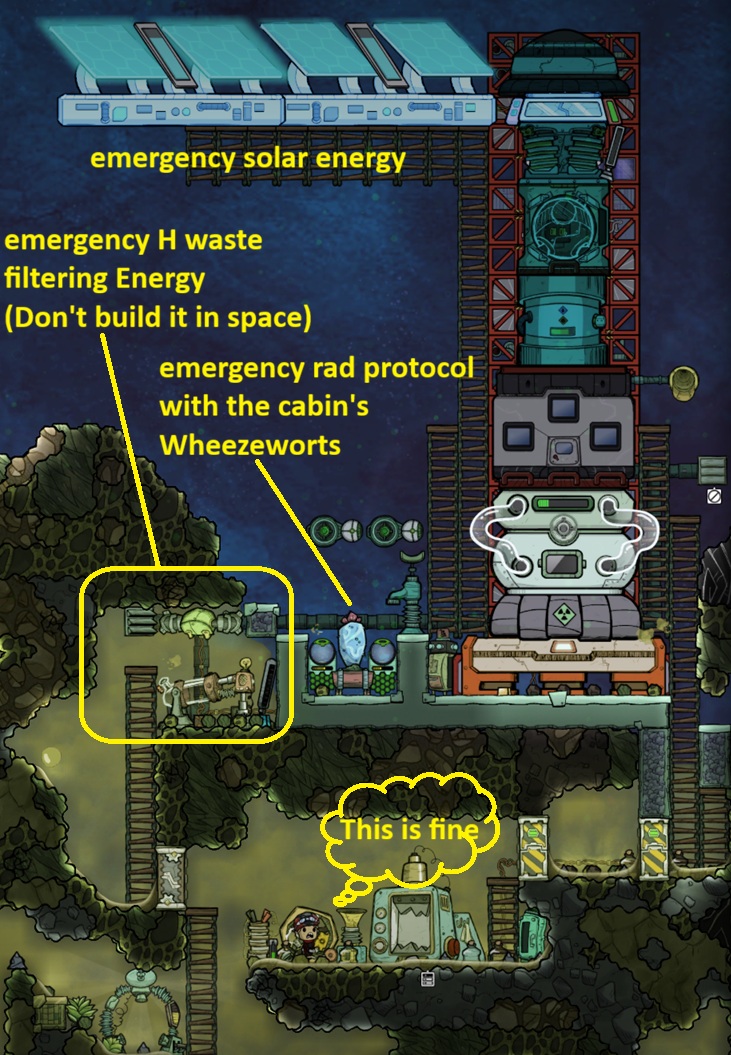
Two practical solutions are available:
- Solar backup: carry enough plastic and refined metal to build a Solar Panel and connect it to the emergency power grid.
- Hydrogen recovery: collect the hydrogen expelled from the cabin, filter it, and store or route it to a Hydrogen Generator.
The hydrogen option reuses a normal by-product of the onboard electrolyzer. Instead of venting all hydrogen into space, part of it can be recovered and converted into electrical power.
A complete emergency reserve should therefore include:
- Two Wheezewort seeds
- Refined metal for the Radbolt Generator
- Material for Farm Tiles or Flower Pots
- Phosphorite
- Either plastic and refined metal for a Solar Panel
- Or the equipment required to collect, filter, and burn hydrogen in a Hydrogen Generator
The most reliable option is to prepare both systems whenever cargo space allows: solar power as the primary emergency source, and recovered hydrogen as a secondary backup.
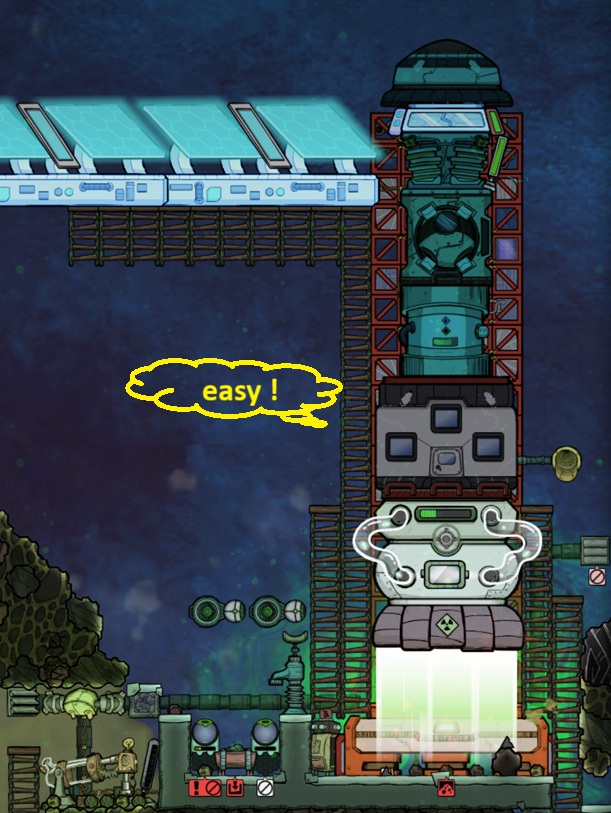
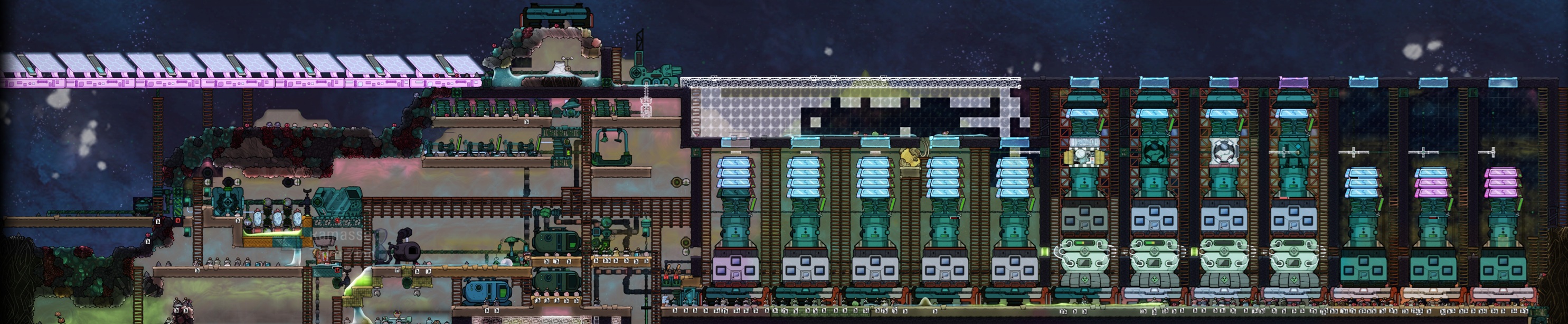
The first construction phase is a horizontal array of rocket platforms.
Each platform becomes a docking and service point for one mobile survival unit.
The rockets are aligned side by side and separated by ladder shafts.
This makes the fleet:
- Easy to read
- Easy to expand
- Easy to service
- Easy to reproduce
Each rocket should include:
- Spacefarer Module
- Liquid Cargo Tank
- Rocket Battery Module
- Solar Panels
- An engine suitable for the mission
A SpaceFlat unit can also be configured as a mobile scientific station.
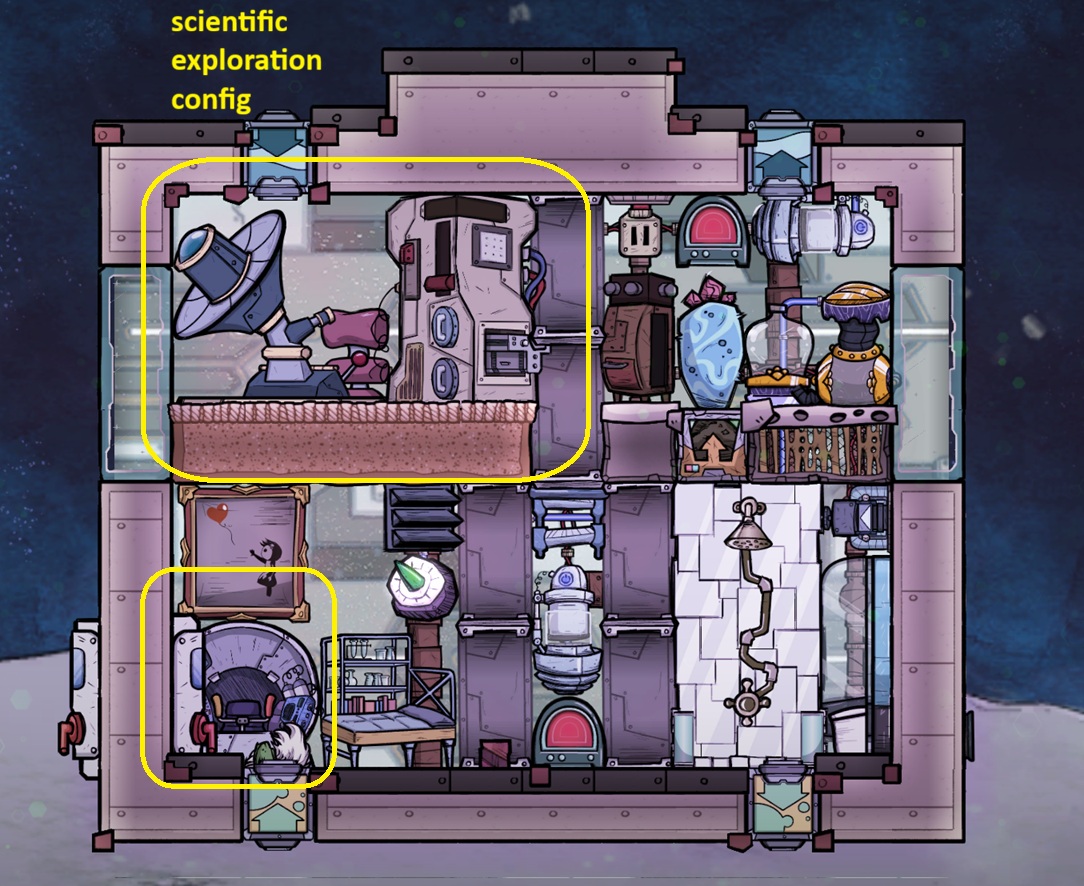
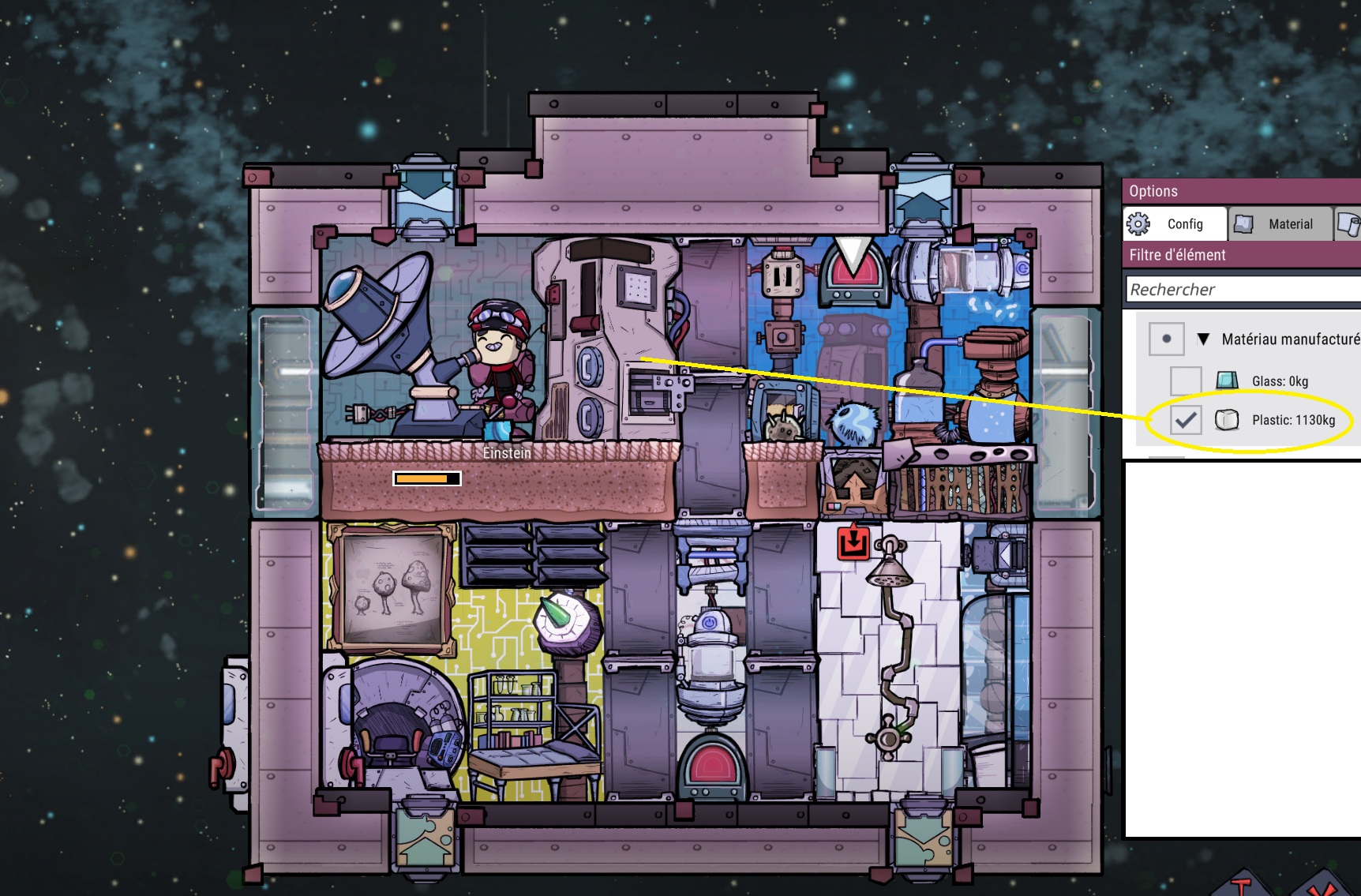
A science unit can be used for:
- Orbital data collection
- Research missions
- Map analysis
- Artifact retrieval
- Long-duration observation
Because the life-support system is integrated into the cabin, the scientist can remain in orbit or on another asteroid without constant support from the main colony.
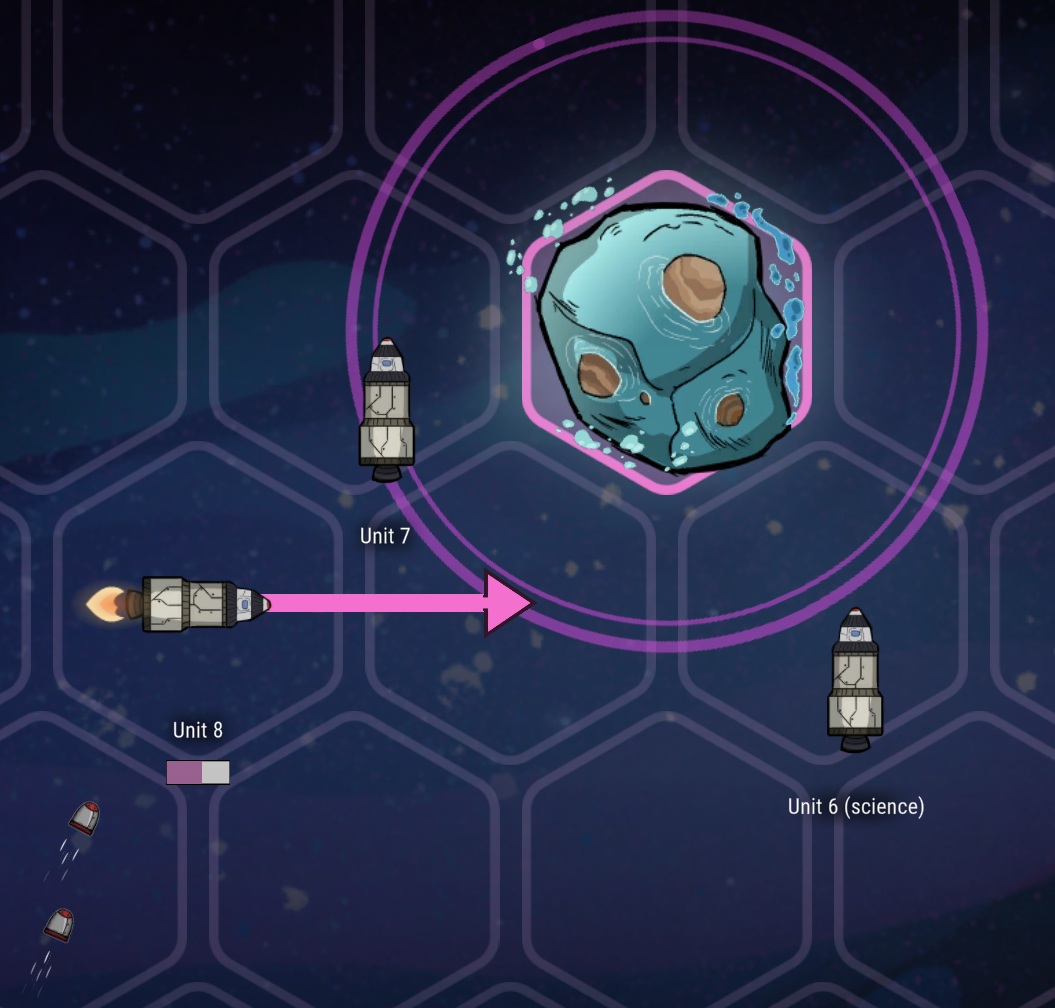
This setup can support one or more duplicants on a distant asteroid for an extended period.
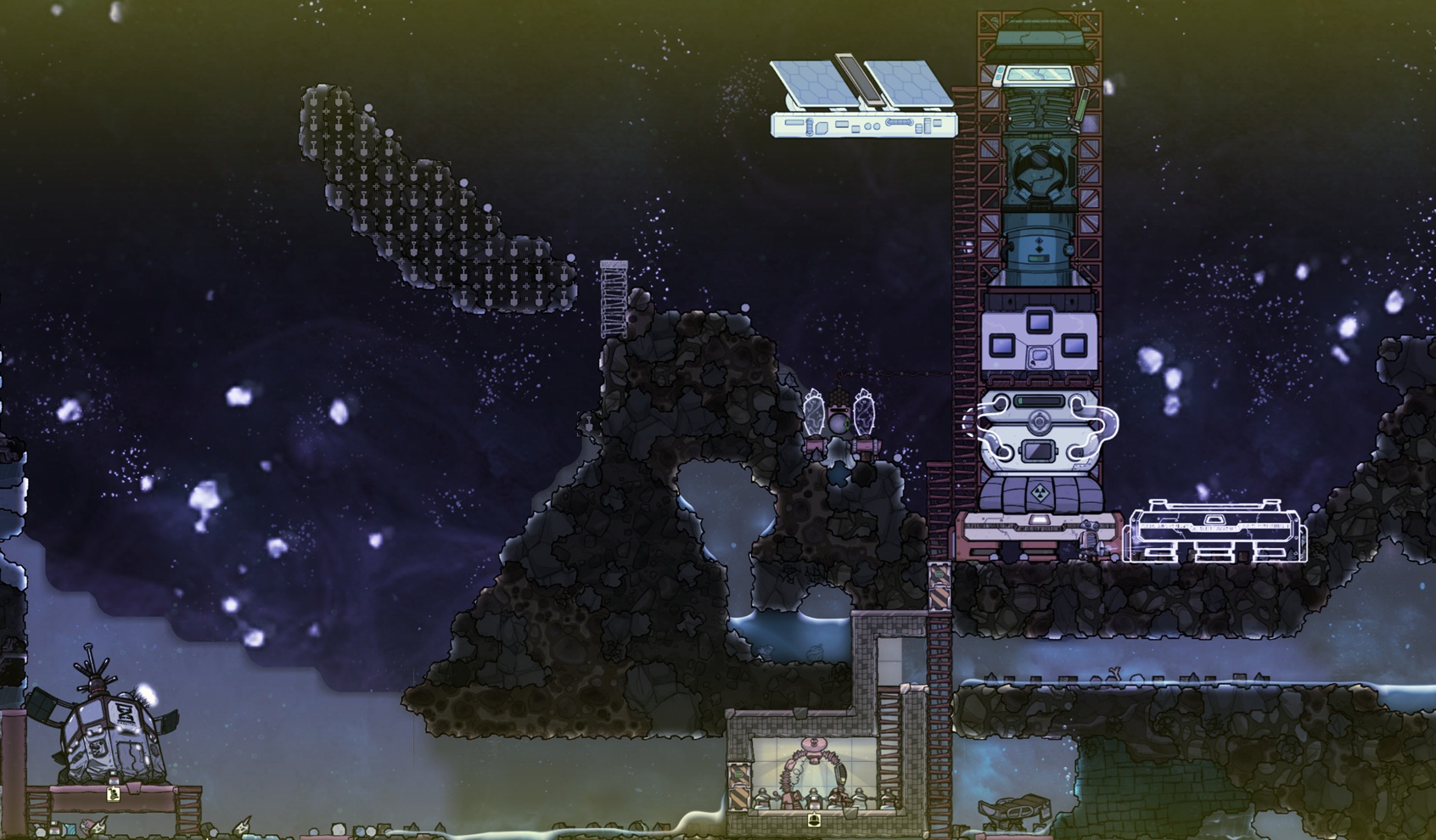
The unit becomes a protected survival core while the duplicant develops the local asteroid.
For two duplicants, the layout must provide additional sleeping space, food, oxygen capacity and bathroom access.
Verify:
- Two sleeping spaces
- Enough food (and permissions to eat it)
- Higher oxygen production
- Enough water for sanitation
- Sufficient battery capacity
- Acceptable morale
- Reliable carbon-dioxide removal
- Failures remain local.
- Each unit can be tested independently.
- The same layout can be copied.
- Colonization becomes safer.
- Specialists travel with their own support system.
- The colony can expand across several asteroids.
- The units can be refilled and reused.
- Higher material cost
- Duplicated machinery
- Requires advanced techs and materials
- More automation
- More planning
- Limited interior space
- Possible higher power consumption
- No flood management
- The design is for 1 or 2 dupes, transporting 4 dupes for several turns may fail
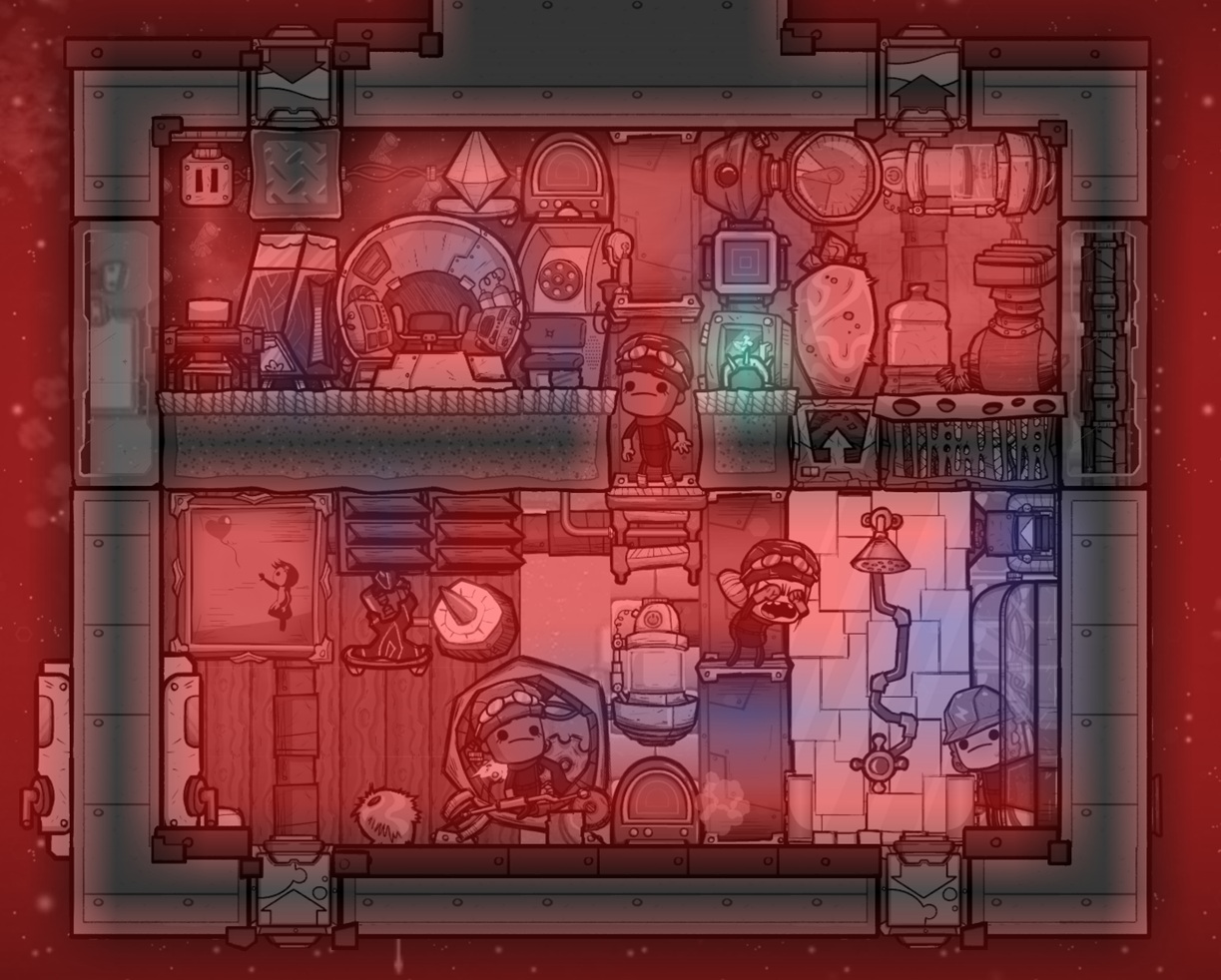
The system is not designed for maximum efficiency.
Its strength is mobility, redundancy and survivability.
SpaceFlat is not simply a rocket-interior design.
It is a different way of organizing an ONI colony.
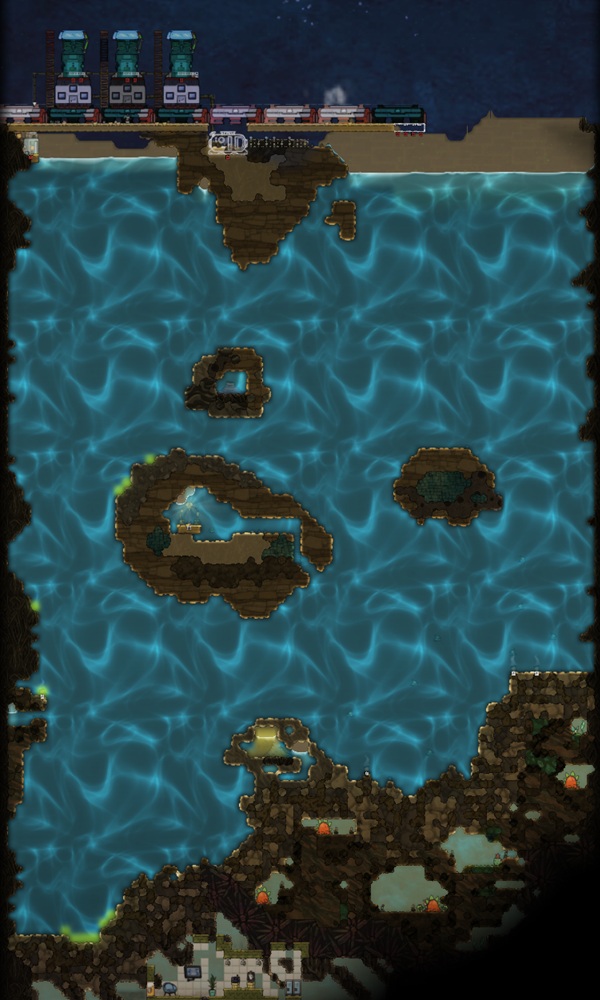
Each unit becomes:
- A home
- A life-support system
- A mission vehicle
- A specialist workstation
- A temporary colony core
A conventional colony expands outward from one fixed base.
SpaceFlat reproduces itself across the star map.
SpaceFlat — Early-Game Prototype and Required Upgrades
The first units do not need the complete advanced layout.
A simplified early version can be built with basic materials and limited research.
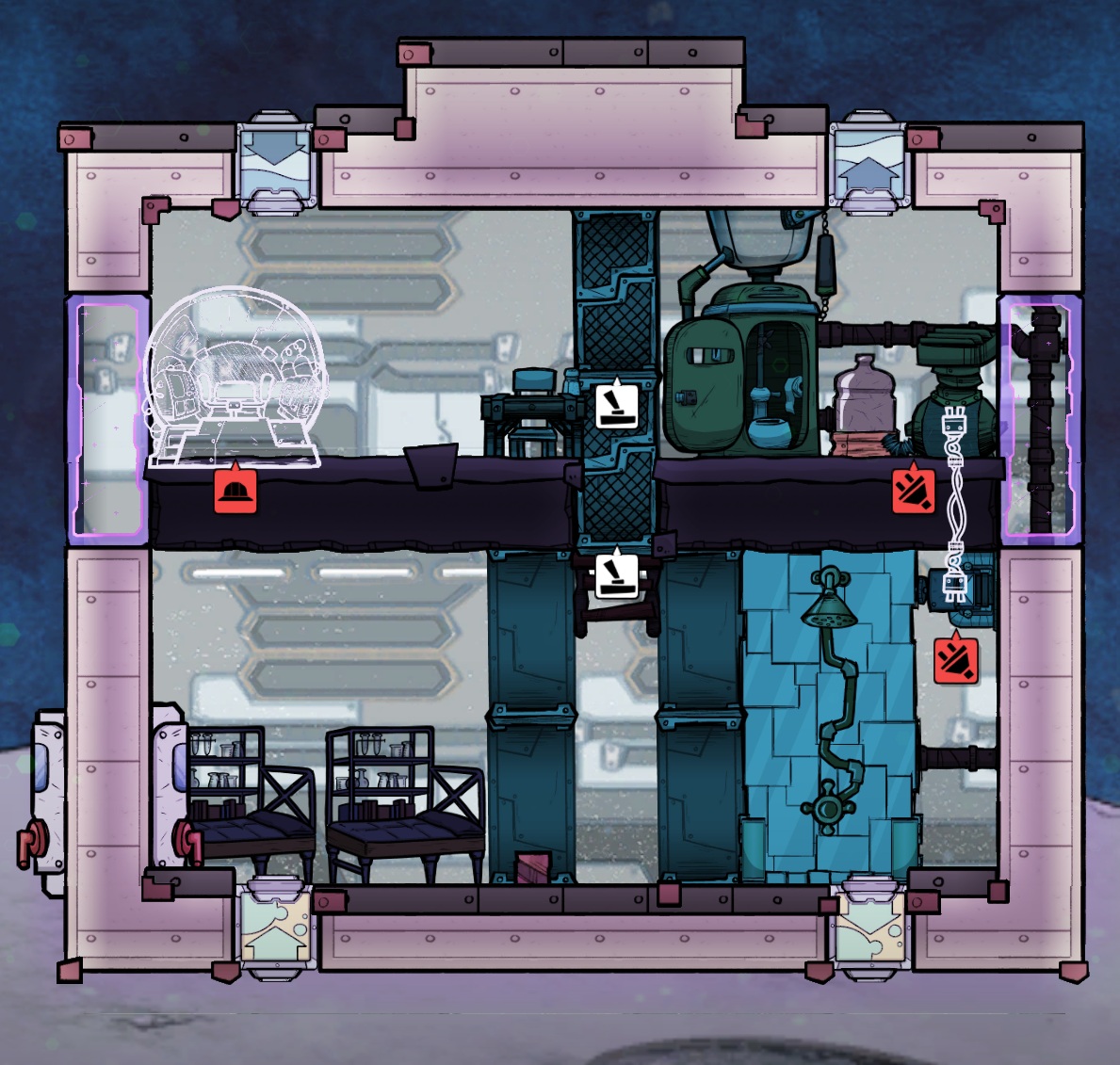
However, this version is only a temporary survival module.
If it is not upgraded, it will eventually fail.
The electrolyzer continuously produces both oxygen and hydrogen. Without an upper extraction system, hydrogen will gradually accumulate near the ceiling.
At the same time, the duplicant produces carbon dioxide. Without a lower extraction system, CO₂ will collect at the bottom of the cabin and progressively reduce the usable breathing space.
Internal equipment also generates heat. Because the cabin is isolated from the external map, this heat cannot simply dissipate into the asteroid. Over time, the temperature will rise and may eventually affect food storage, plants, equipment, and duplicant comfort.
The early unit should therefore be treated as a temporary bridge toward the complete design.
- Hydrogen accumulation: hydrogen produced by the electrolyzer collects at the top of the cabin.
- Carbon dioxide accumulation: CO₂ produced by the duplicant collects near the floor.
- Reduced oxygen volume: unwanted gases gradually replace part of the breathable atmosphere.
- Rising temperature: the electrolyzer, pumps, batteries, equipment, and duplicant continuously add heat.
- Power waste: systems without sensors or automation may run when they are not needed.
Solving flod :
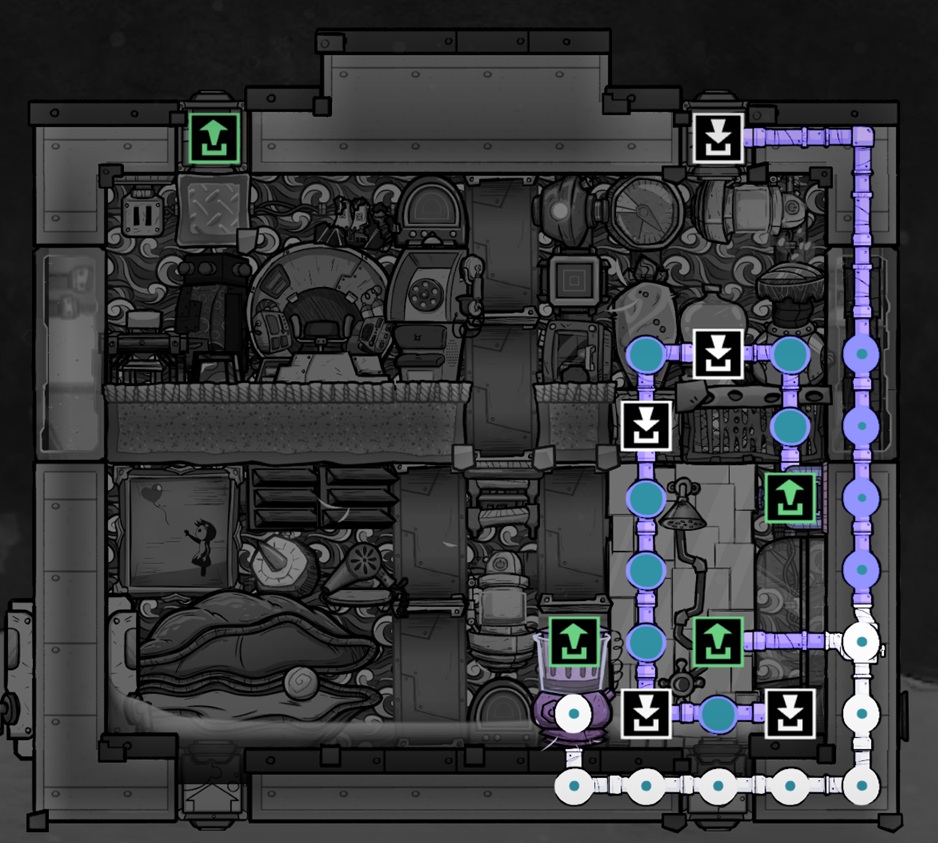
Remove one door ans connect a mini water pump.
To convert the early unit into a stable long-duration module, prioritize the research paths that unlock the following systems:
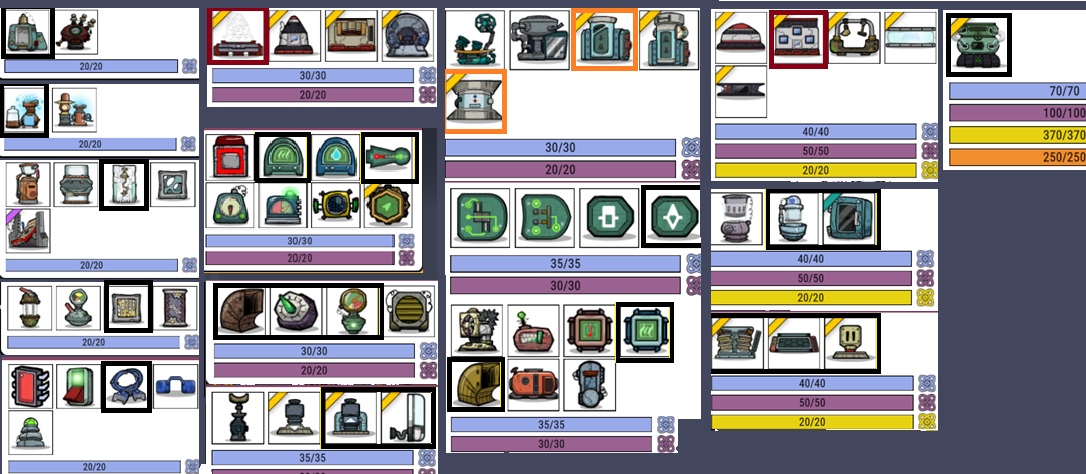
- Air Systems: unlocks the Electrolyzer for internal oxygen production.
- Ventilation: unlocks gas pipes, vents, and the standard Gas Pump.
- Generic Sensors: unlocks the Atmo Sensor and Gas Element Sensor required for automatic pressure control and gas detection.
- Basic Automation and Advanced Automation: unlock automation wire and the logic gates used to control pumps and life-support systems.
- Valve Miniaturization: unlocks the Mini Gas Pump, which is particularly useful inside the limited space of a rocket cabin.
- Plastic Manufacturing: provides the plastic required for Mini Gas Pumps and other compact equipment.
- Sanitation Research: unlocks the plumbing and bathroom equipment required for the shower and space toilet.
- Rocketry and Space-Habitation Research: unlocks the Spacefarer Module, cargo modules, batteries, solar panels, and other rocket infrastructure.
- Electrolyzer
- Gas pipes and vents
- Upper and lower gas pumps
- Atmo Sensor
- Gas Element Sensors
- Filter or Buffer Gates
- Mini Gas Pumps
- Bathroom and water supply
- Long-term power and cooling
- Automation wire
Do not send the early version on a long unattended mission until hydrogen extraction, carbon-dioxide extraction, pressure control, and temperature monitoring are operational.
The early version is a prototype. The automated version is the actual long-term life-support unit.
If the unit becomes too cold, disable the farm tile or remove other cooling sources.
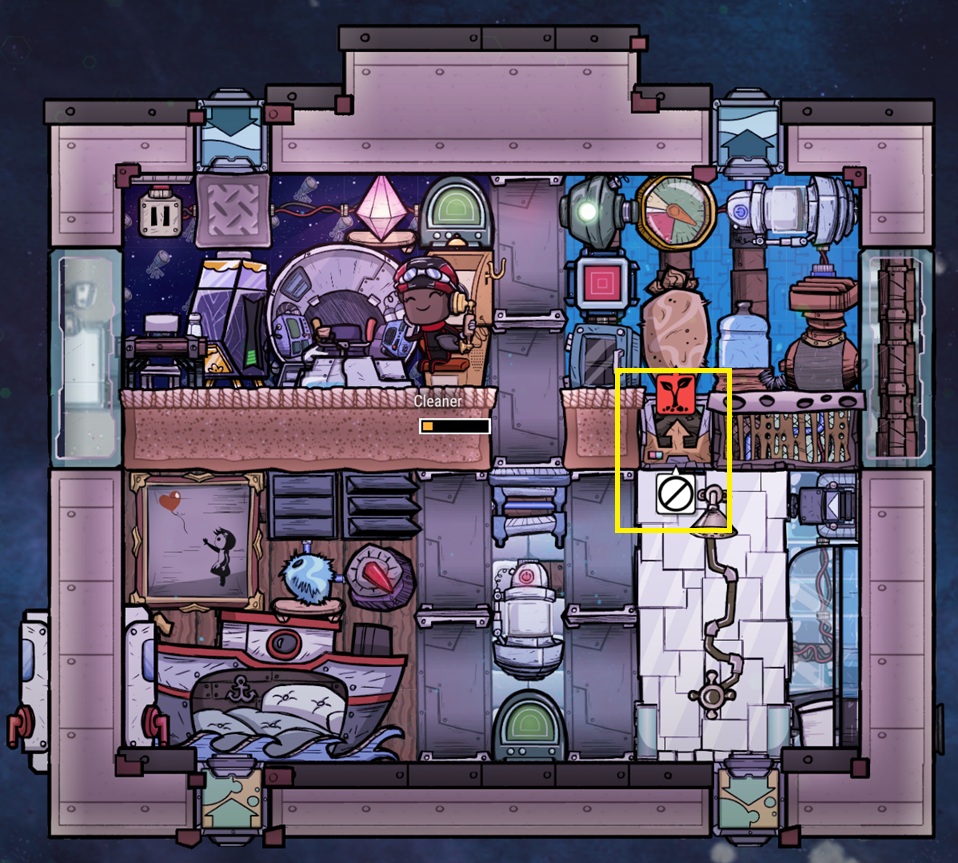
Internal machinery, the duplicant, and the electrolyzer will then gradually restore the temperature.
If the cabin becomes too warm:
- Store a lot of ICE.
- Cool the supplied water.
- Avoid importing hot materials.
The Space City
The SpaceFlat concept began with one simple idea:
One duplicant, one mobile life-support unit.
Because of a vanilla game limitation, only 16 active command modules can exist at the same time.
The second command module added by Rocketry Expanded (DLC) can bypass this limitation.
Once the residential units proved stable, I extended the same principle to the entire colony.
Instead of rebuilding every major system directly on the asteroid, I began placing essential infrastructure inside dedicated Spacefarer Modules.
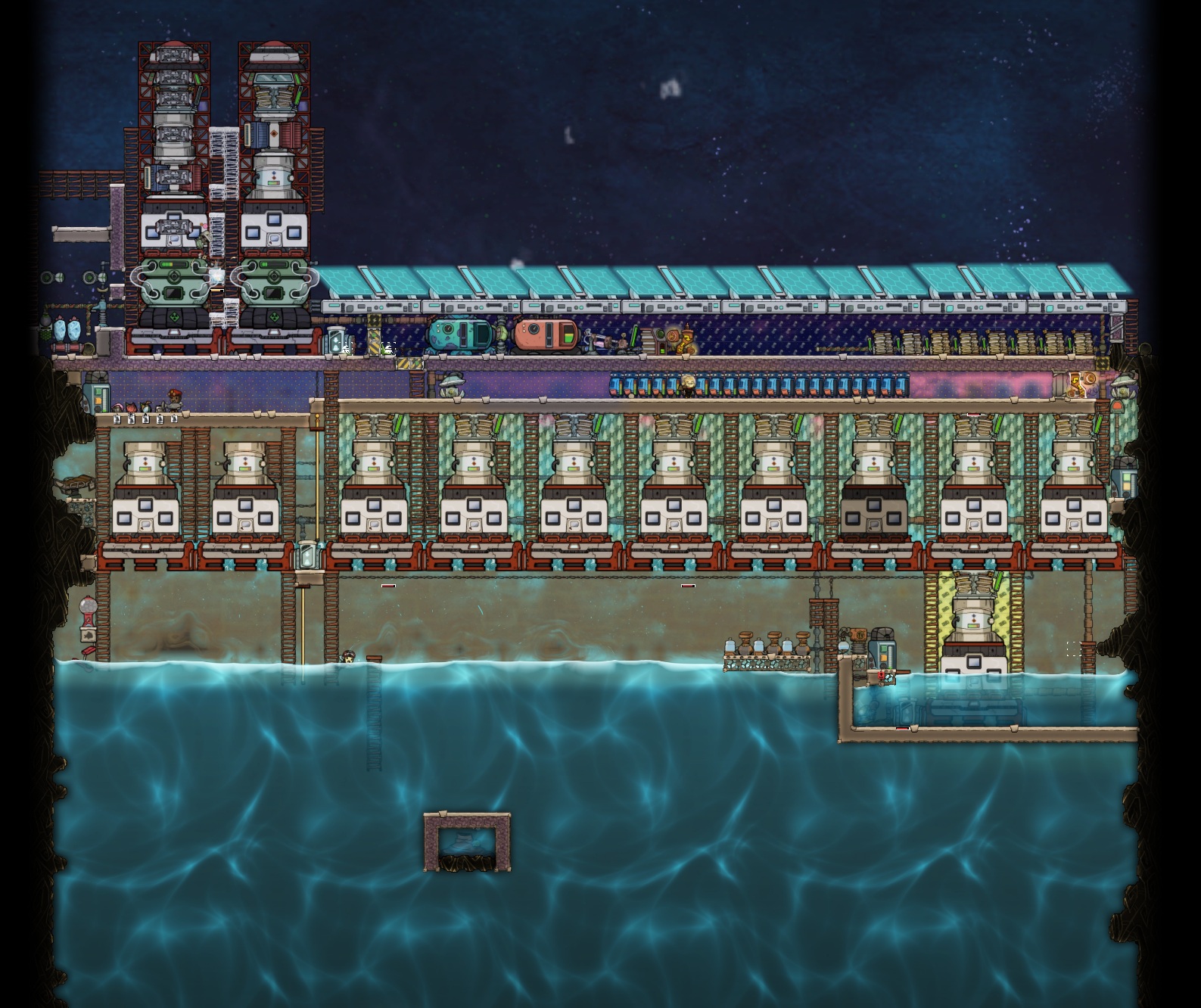
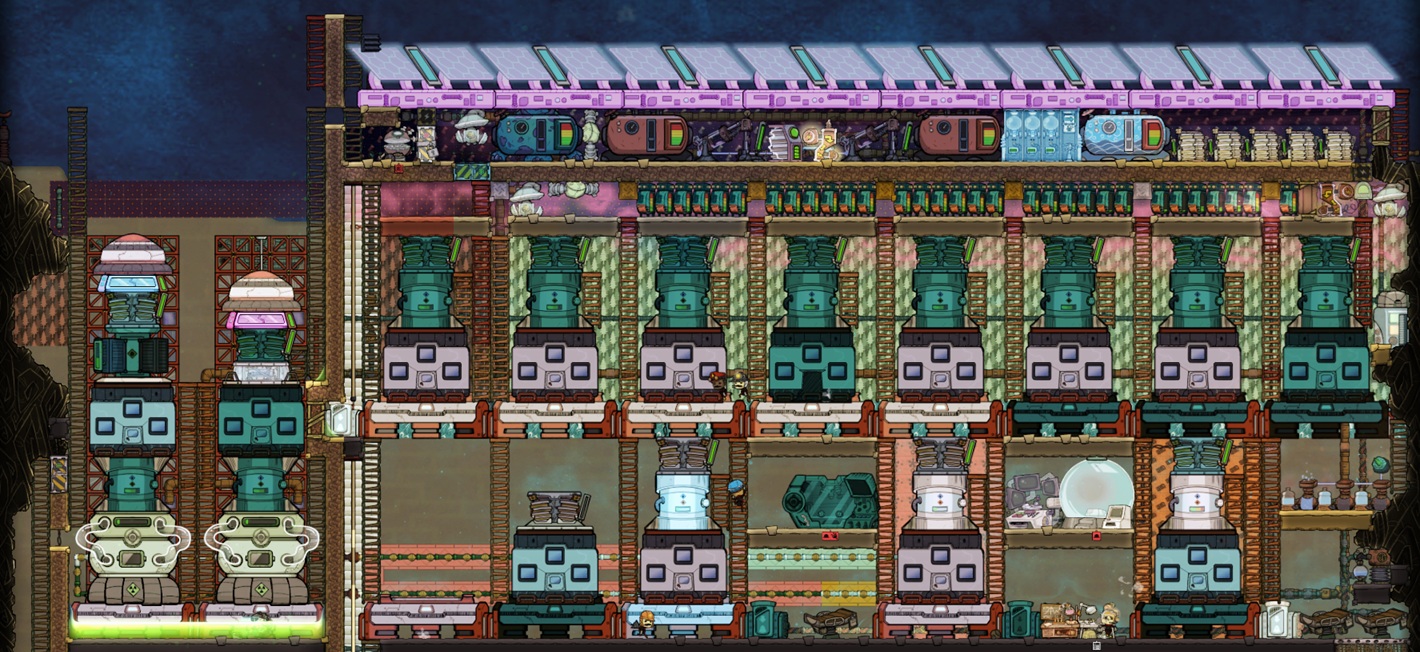
The entire colony, consisting of 12 duplicants, moved to a new asteroid with its homes and life-support systems.
The next stage is to place each major city function inside its own module.
The asteroid is no longer the permanent base of the colony.
It is a docking site.
The city is designed to depend as little as possible on local resources.
Water is transported in Liquid Cargo Tanks, while metals, minerals, artifacts, food, plastic, fuel, and emergency materials are mainly collected or transported through space.
This allows the colony to settle on asteroids that would normally be unsuitable for immediate habitation.
The local asteroid mainly provides space, landing areas, temporary materials, and access to exploration.
The asteroid is one destination among many, not the colony’s only source of survival.
Each major function can be assigned to a dedicated module:
housing, food production, research, medicine, storage, industry, utilities, recreation, or cooling.
The modules are waterproof, sealed from the external atmosphere, thermally separated from the asteroid map, and initially built in vacuum.
This provides precise control over the starting atmosphere, pressure, temperature, and contents of each module.
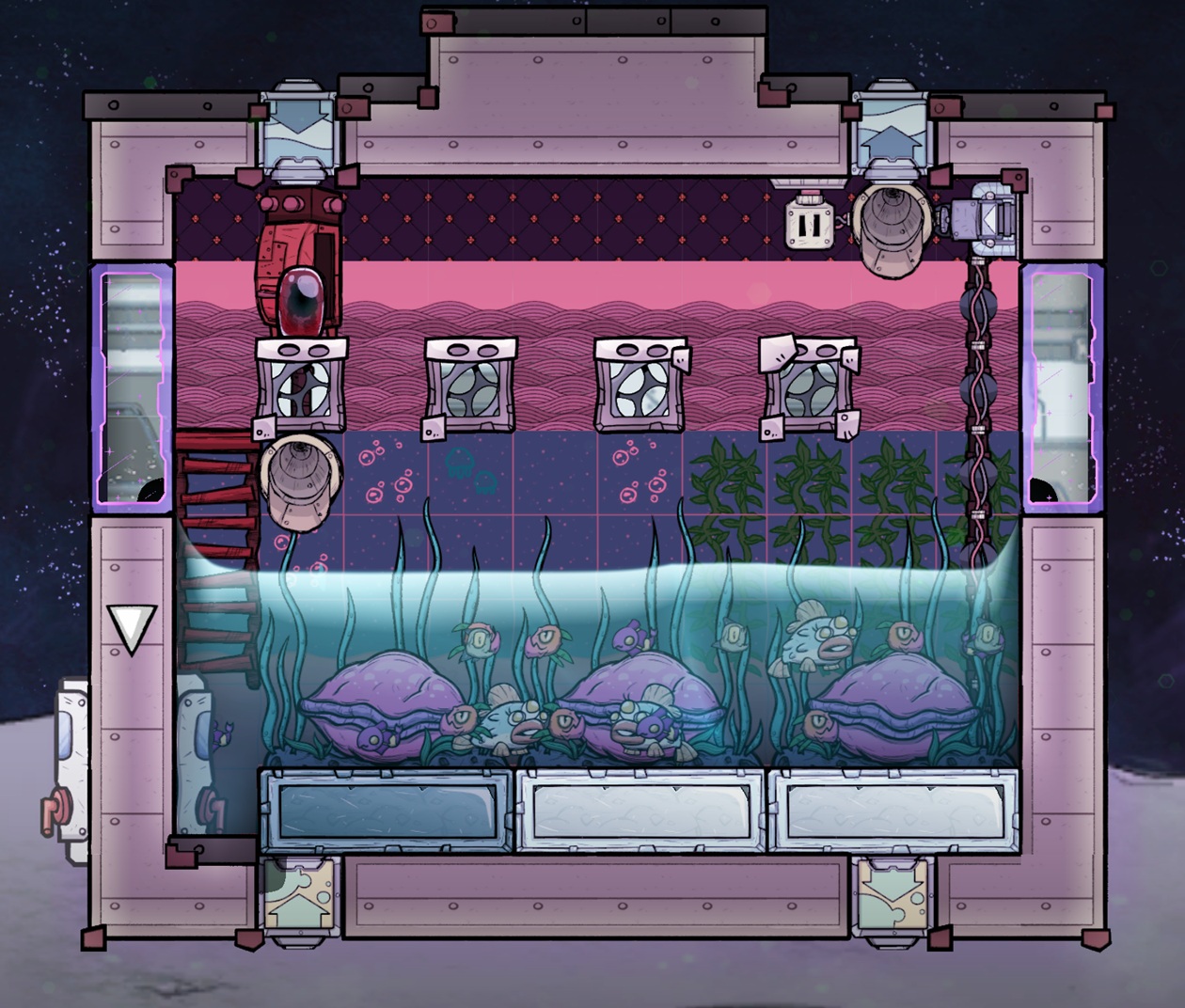
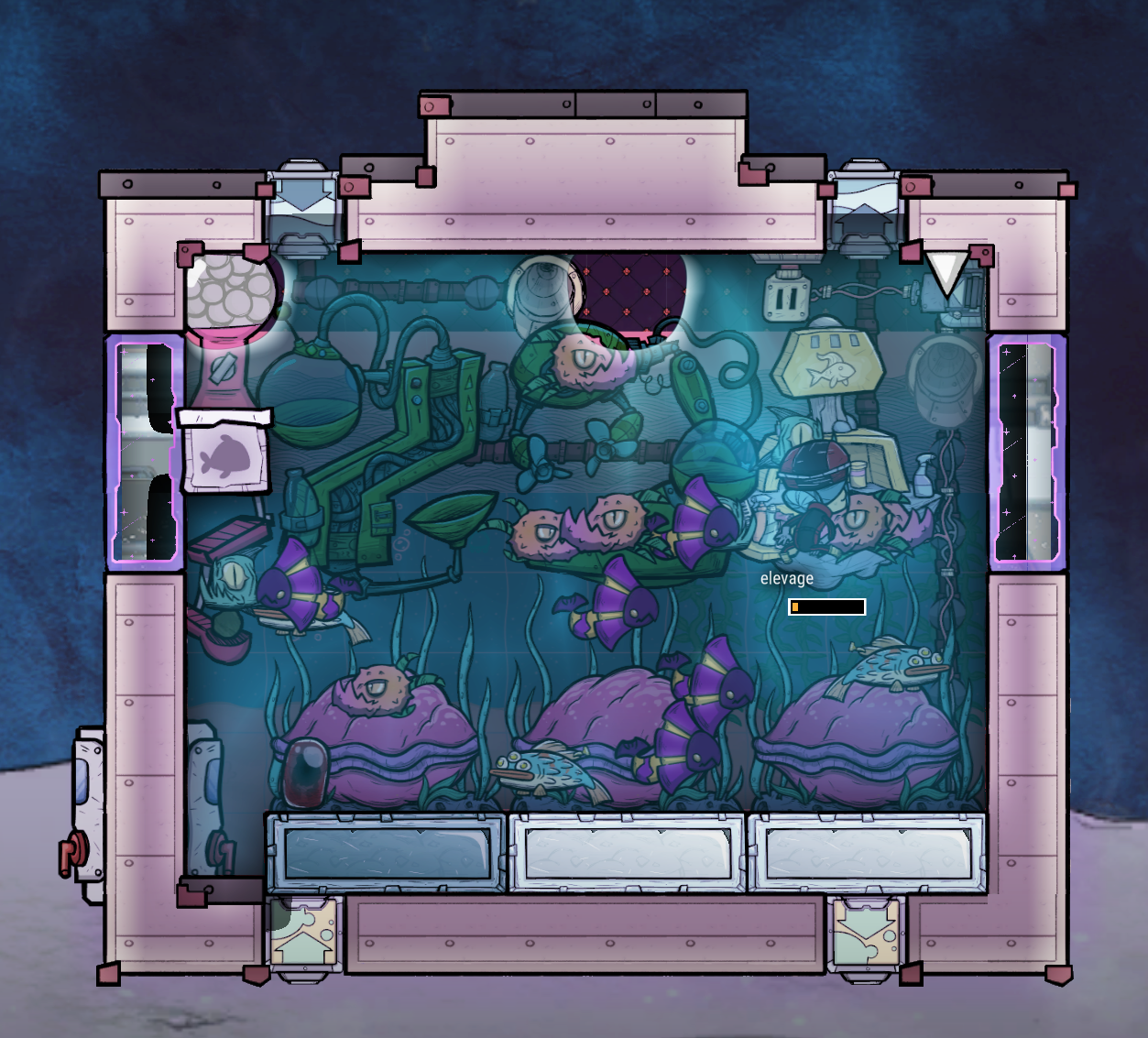
The Aquarium is a sealed aquatic-production module.
Because the Spacefarer Module is waterproof, the interior can safely contain large quantities of water without flooding the surrounding asteroid.
It can be used for aquatic plants, food production, or other water-based resources.
The water mass also acts as a large thermal buffer.
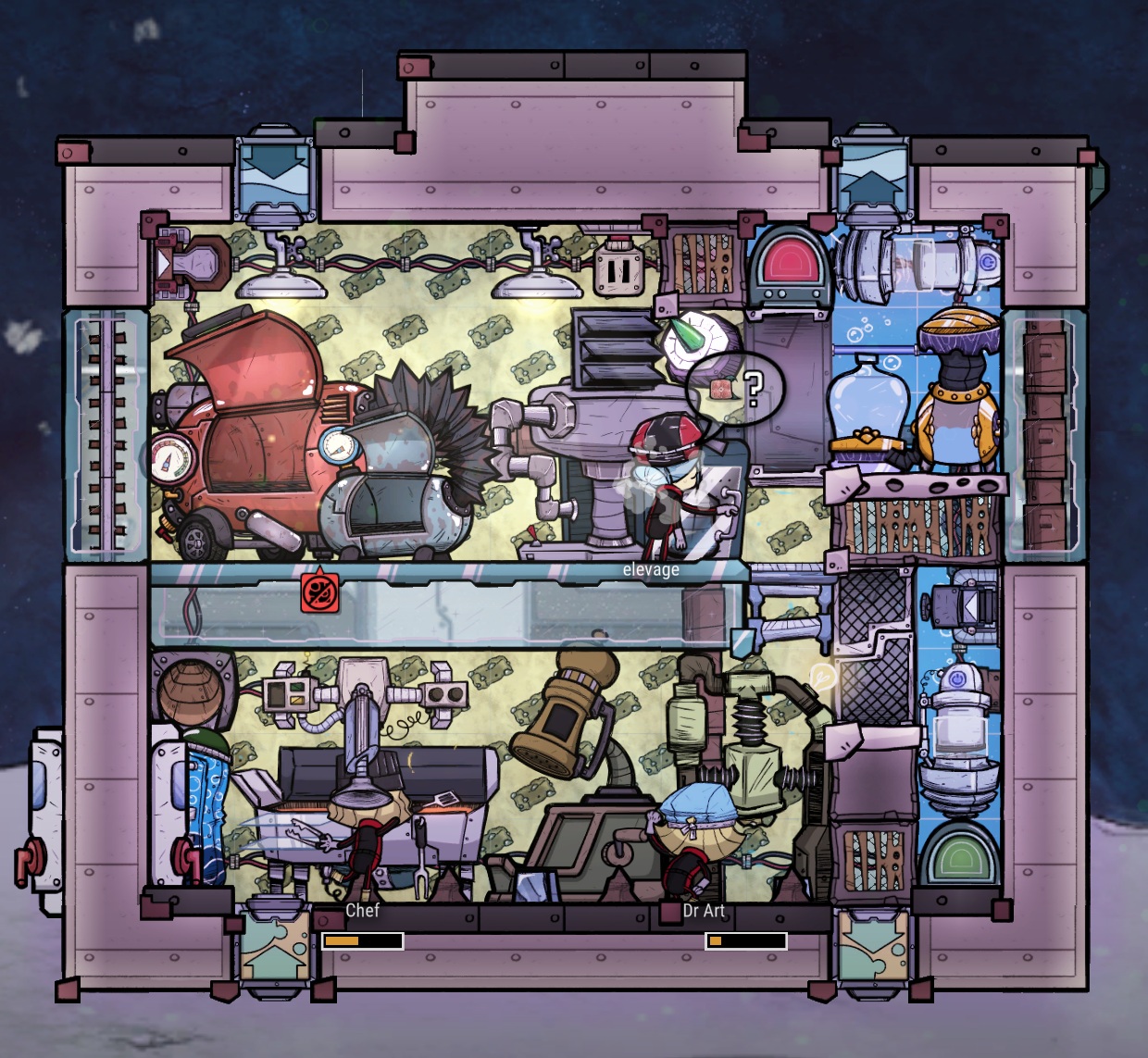
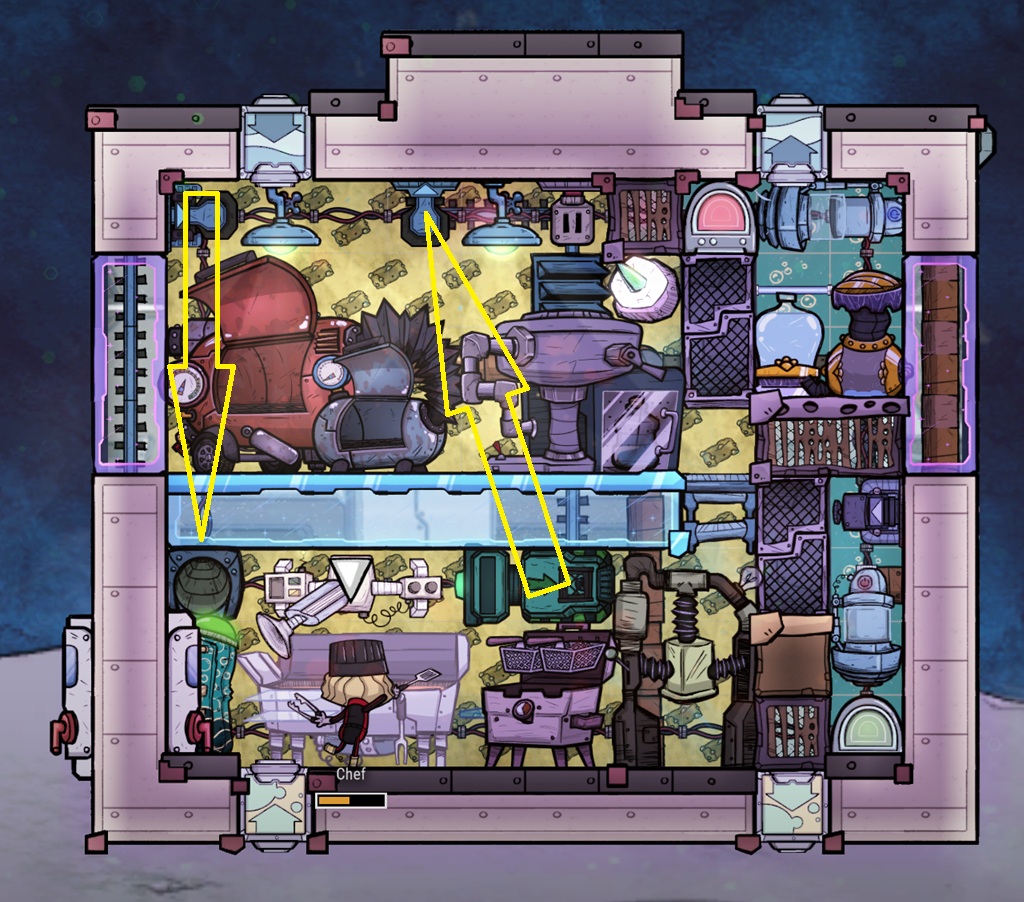
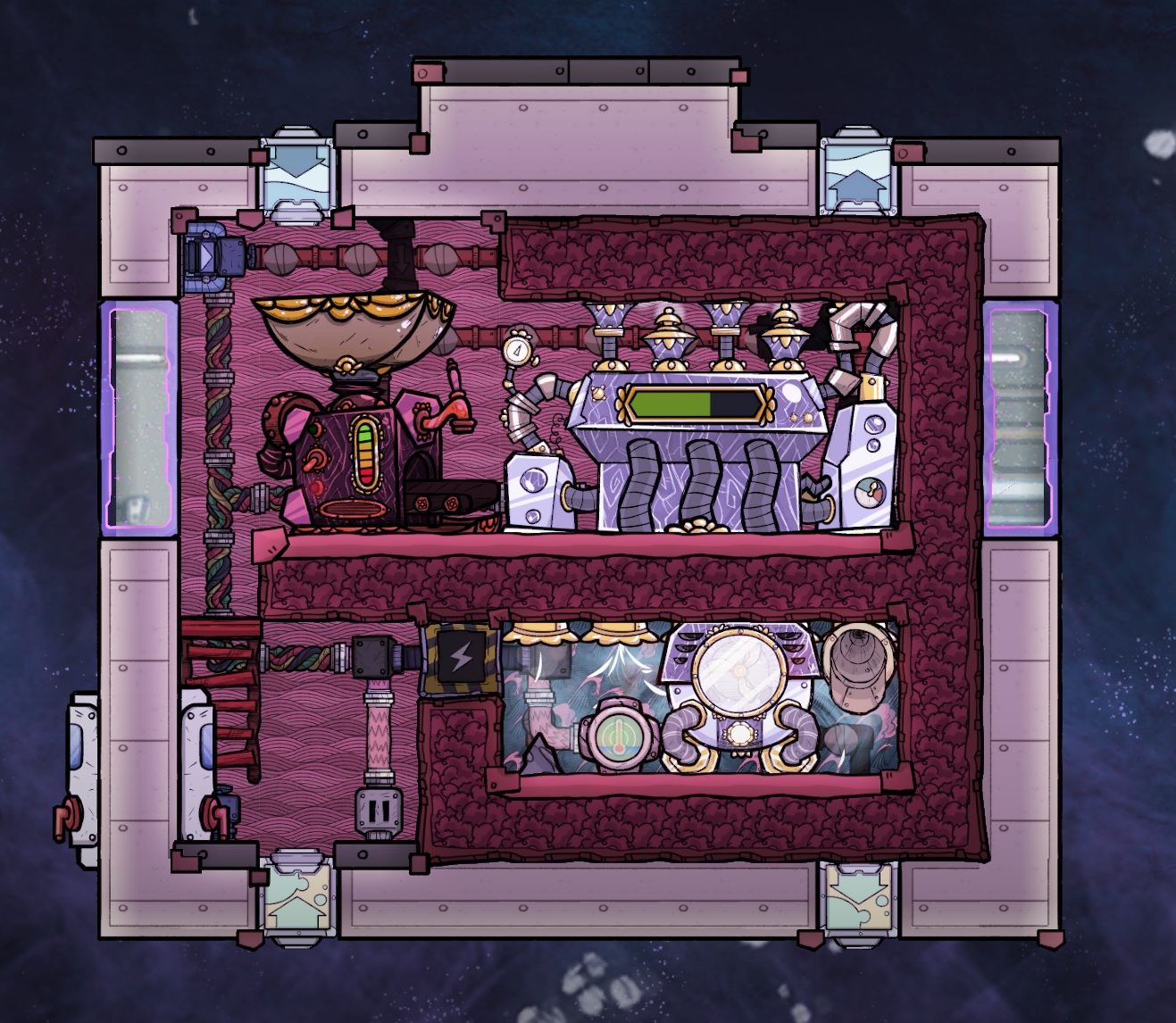
The Food Factory contains the colony’s main cooking and food-processing equipment.
Its purpose is to centralize food production inside a compact, protected, and transportable environment.
Because it is built inside a Spacefarer Module, it remains operational even if the surrounding asteroid is flooded, frozen, contaminated, or filled with unsuitable gases.
The Food Factory is not designed to remain cold.
The electrolyzer introduces hot oxygen, so the cabin will naturally begin above approximately 40°C. Cooking equipment then adds more heat.
Instead of using a complete cooling system, the module uses short atmospheric cycles.
The pressure target is set to approximately 800 g per tile.
When pressure falls below this value, the electrolyzer activates. Once the target pressure is restored, the cabin is periodically ventilated without filtering the gas inside the module.
Part of the hot atmosphere is expelled and replaced during the next oxygen-production cycle.
The working hypothesis is that the small interior volume and repeated ventilation cycles will keep the Food Factory below approximately 60°C.
This value is still experimental and under testing.
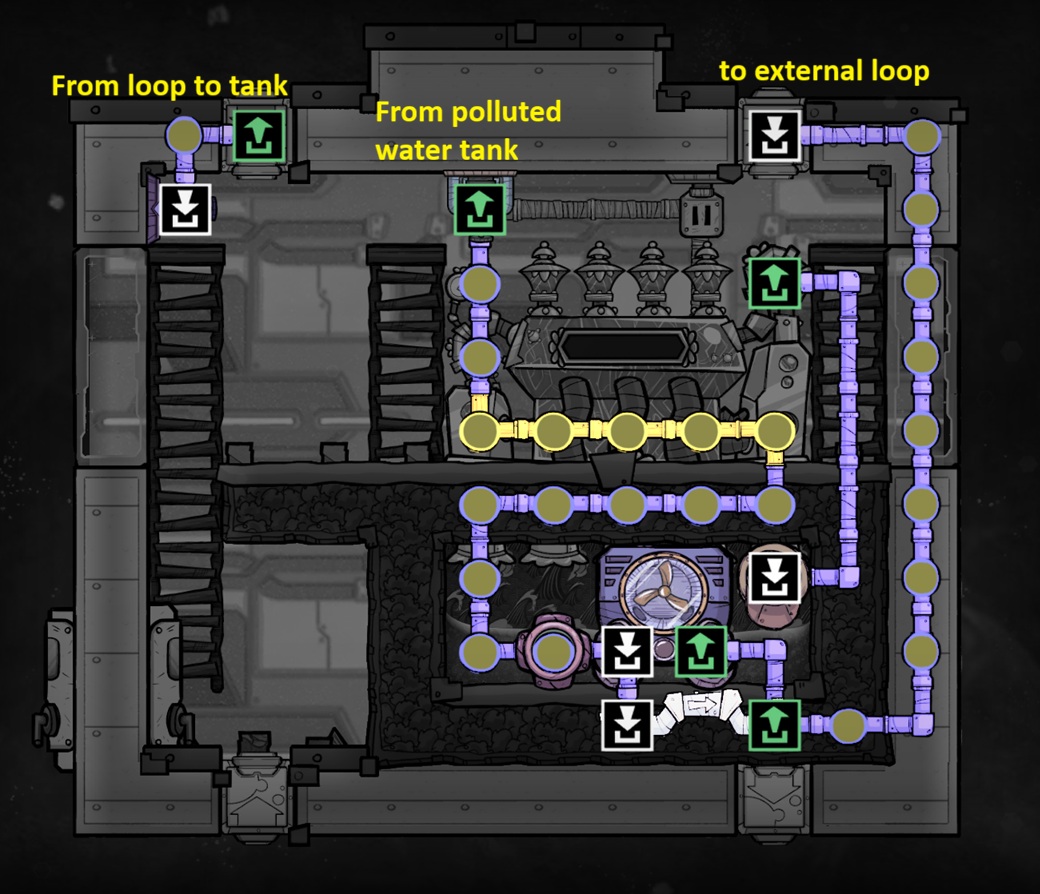

The city also includes a transportable cooling plant built inside a Spacefarer Module.
The system contains:
- A Thermo Aquatuner
- A Steam Turbine
- A Liquid Cargo Tank filled with polluted water
- A connection to an external cooling loop
The Aquatic Planet Pack introduced the 4 kW Insulated Conductive Wire.
This wire can power the Aquatuner and the internal equipment without requiring transformers or Heavy-Watt Joint Plates inside the module.
This saves a significant amount of space.
The trade-off is the rubber required to build it.
The polluted-water circuit is:
Liquid Cargo Tank → Thermo Aquatuner → External Cooling Loop → Liquid Cargo Tank
Polluted water enters the module from the cargo tank and passes through the Thermo Aquatuner.
The cooled water then leaves the module and circulates through the asteroid base.
After absorbing heat, it returns to the rocket and is stored again in the Liquid Cargo Tank.
The cargo tank itself does not cool the base.
Cooling occurs in the external loop, where chilled polluted water flows through radiant pipes or conductive areas.
The Aquatuner transfers heat into an insulated steam chamber.
The Steam Turbine absorbs heat from the steam and returns condensed water to the chamber.
Part of the cold-water loop passes behind the turbine to keep it below its operating temperature.
The module begins in vacuum, but the turbine area must contain oxygen or another suitable gas unless direct conductive cooling is used.
Without a cooling path, the turbine will eventually overheat and stop.
Once landed, the cooling plant only needs power, a filled cargo tank, and a connection to the external loop.
The complete machinery remains protected inside the rocket.
Only the chilled liquid circulates through the asteroid base.
The result is a mobile cooling station that can be moved wherever the colony needs it.
A conventional base is permanently attached to one asteroid.
The Space City is different.
Its homes, farms, kitchens, laboratories, and cooling systems can be disconnected, launched, transported, landed elsewhere, and returned to operation.
The colony does not rebuild every critical system after each migration.
It moves the infrastructure itself.
The relocation of all 12 duplicants demonstrates the broader objective of SpaceFlat.
The colony is becoming a city organized as a fleet.
Asteroids become temporary harbors.
Rockets become buildings.
Modules become districts.
Space becomes the main logistics network.
The Space City survives because it can leave, relocate, and begin again.
- ONI - Surviving the Early Game★ 5 (2.4k)83k views6.3k ♥54 minUpdated 6 Aug, 2019
- Useful Construction Patterns★ 5 (1.8k)74k views5.2k ♥66 minUpdated 29 Aug, 2020
- 10* things I wish I knew sooner...★ 5 (754)58k views1k ♥4 minUpdated 6 Oct, 2017
- ONI - Surviving the Mid-Game★ 5 (1.3k)44k views3.8k ♥150 minUpdated 6 Sep, 2019
- Not Quite Beginner's Guide★ 5 (361)32k views1.1k ♥91 minUpdated Mar 26, 2023
- Руководство для начинающих. (ОСНОВЫ)★ 5 (629)32k views1.2k ♥21 minRussianUpdated 20 Apr, 2019




- Upgrading to PremiumTeam Fortress 2★ 5 (20k)1441k views11k ♥6 minUpdated May 11, 2022
- No More Room in Hell Official ManualNo More Room in Hell★ 5 (2.8k)569k views2.1k ♥29 minUpdated Apr 22, 2019
- NMRiH Community Hosting GuidesNo More Room in Hell★ 5 (526)351k views653 ♥1 minUpdated Aug 10, 2022
- ULTIMATE GUIDE FOR GAME DEV TYCOONGame Dev Tycoon★ 5 (5.8k)326k views10k ♥4 minUpdated 23 Jan, 2014
- How to 'Git Gud' Soon™MORDHAU★ 5 (2k)318k views3k ♥68 minUpdated Nov 16, 2024
- Лучшие кооперативные игры SteamPAYDAY 2★ 5 (1.5k)315k views2.1k ♥56 minRussianUpdated Apr 27, 2025





This guide was created by its original author on the Steam Community. Are you the author and want it removed? Request removal.