The Beginner's Guide to Traffic
Preface
Welcome to my traffic guide. Whether you are a beginner or a master city builder, I hope you find this guide helpful. If you do, don't forget to favourite or rate up so others can find it.
The examples are all using a very basic grid on a super flat map, but these practices can be applied to any map on any terrain. While I will refer to certain "rules" you should follow, rules are meant to be broken. Once you have gotten a handle on the "rules" in your city building, start bending and breaking rules to build crazy beautiful cities. (For city beautification tips read How CRAP makes your cities look great[imgur.com] )
You can find links to more in-depth guides in the Additional Resources section.
I don't need donations but I do love screenshots of your cities! Link in the comments or tag me in your reddit post at /u/bmulvihill
Traffic 101 - Getting Off the Highway
The first thing you need to know to master traffic is how to get your Cims on and off the highway. The goal of this guide is to show you the basic ways to connect your city to your highways and help prevent you from making some common mistakes.
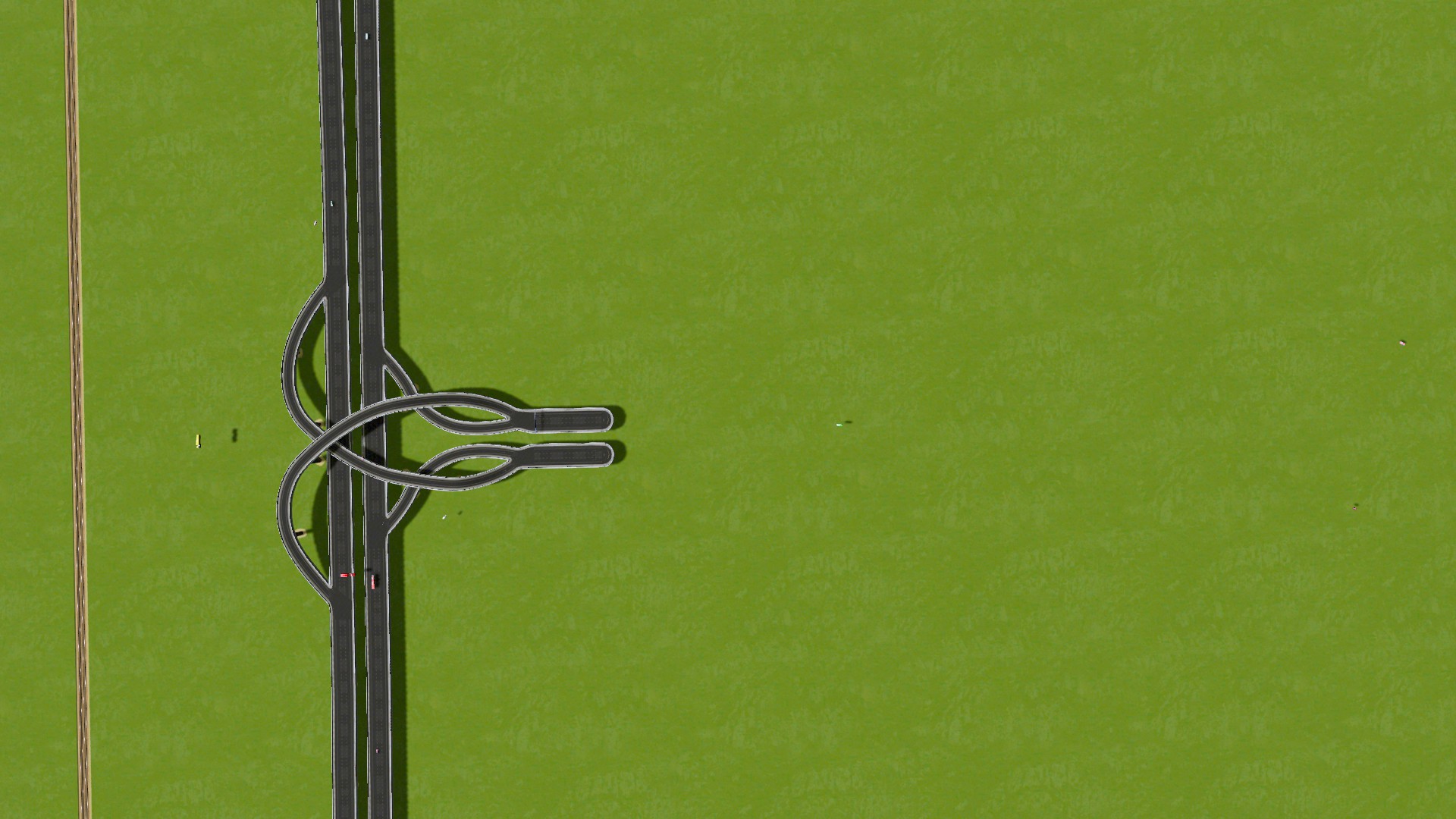 Highway's don't have intersections, they have interchanges. In the picture we can see the T-interchange available in the vanilla game. To get off or on the highway we need a Service Interchange https://en.wikipedia.org/wiki/Interchange_(road)#Service_interchange
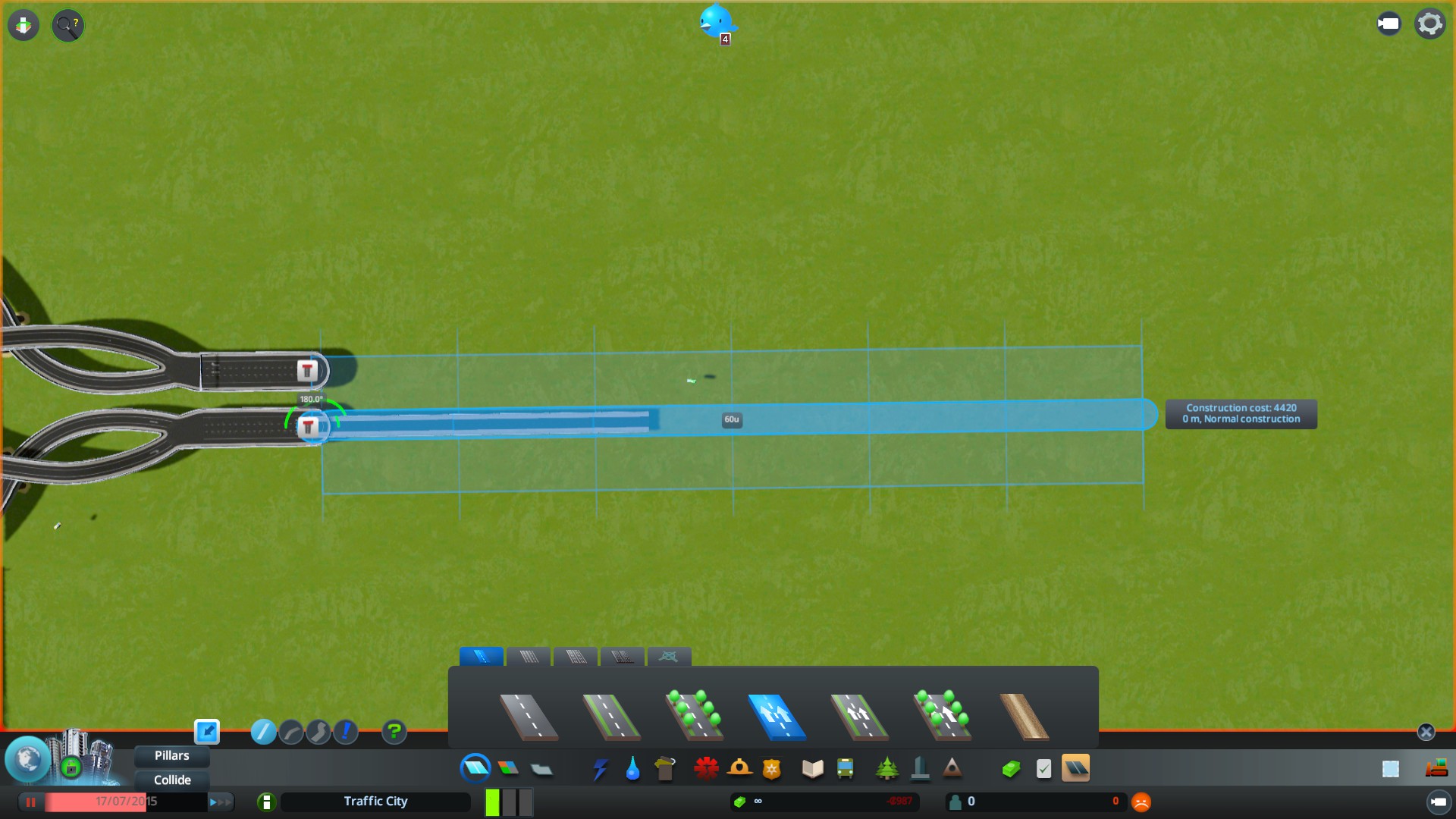 The first rule when working with highways is to leave a lot of space between your interchanges. I like to leave at least 60 squares between a full sized highway interchange and my first service interchange.
 If you are playing without everything unlocked you don't get access to highways but we can use one way roads and upgrade later.
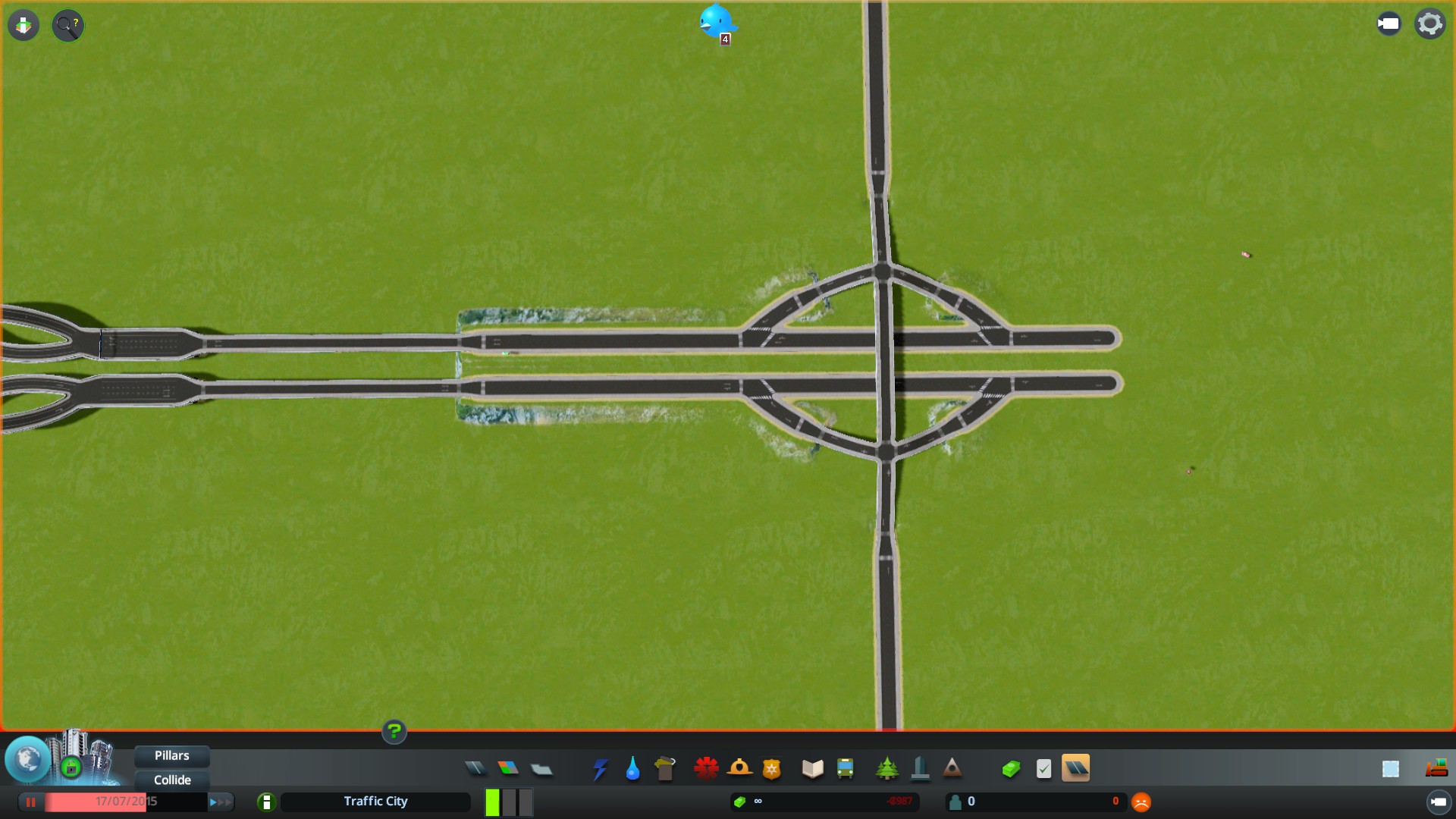 When you are starting out and poor the basic diamond service interchange is cheap and easy to make.
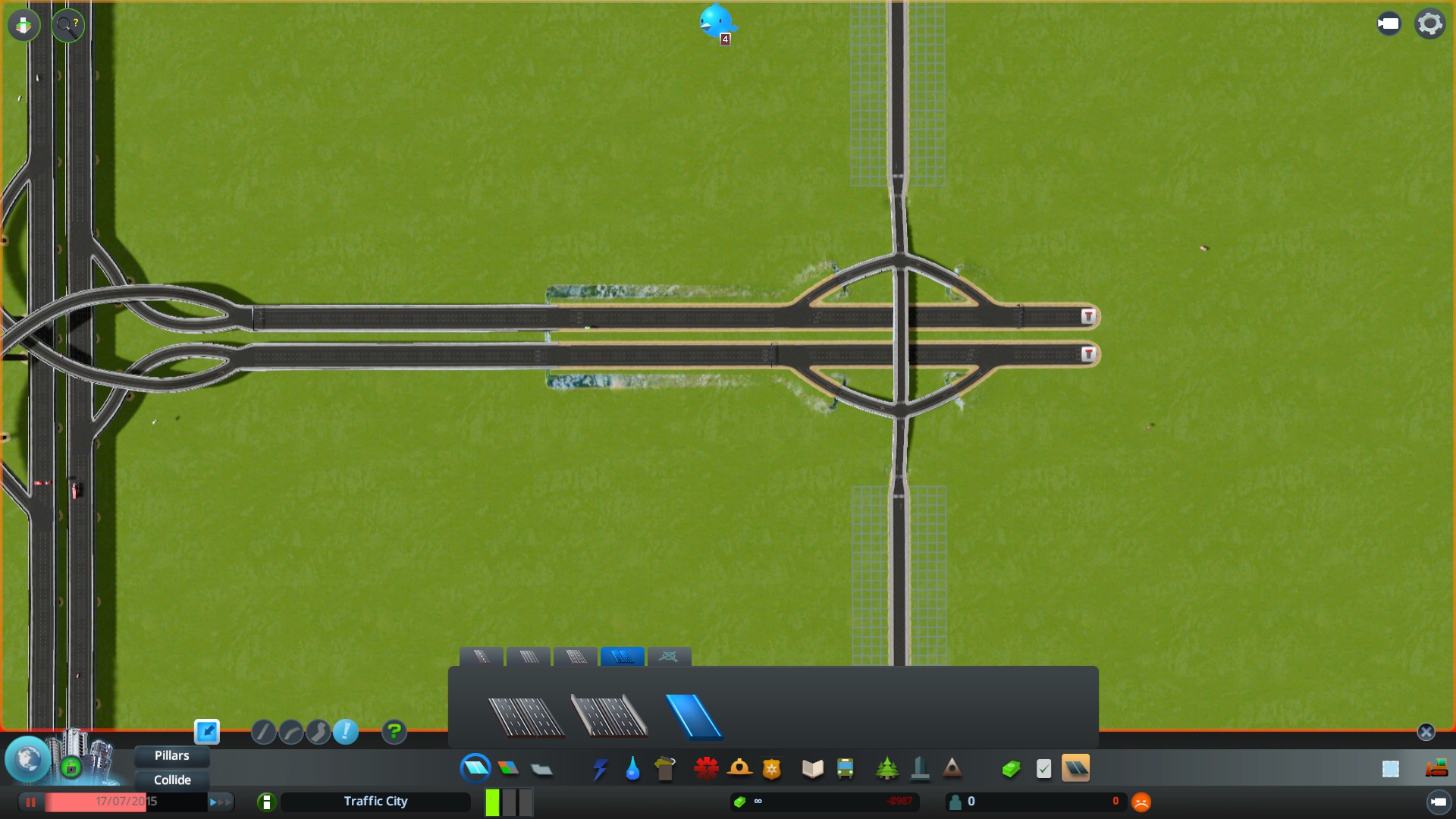 Once you have the highways unlocked you can easily upgrade your diamond without having to change the layout.
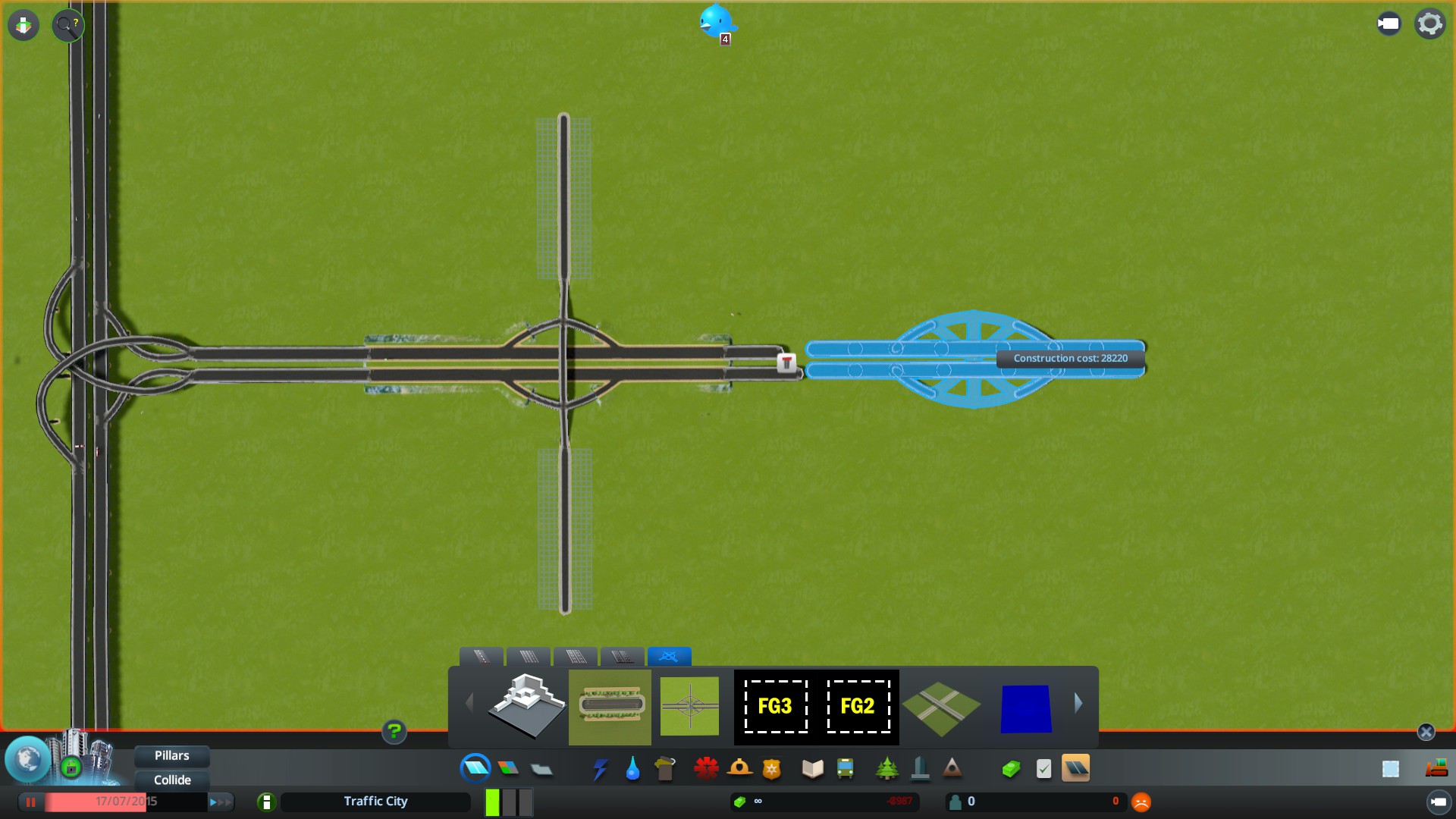 With highway's unlocked we can also start using pre-made service interchange assets.
Here is a basic pre made diamond you can use http://steamcommunity.com/sharedfiles/filedetails/?id=480144824.
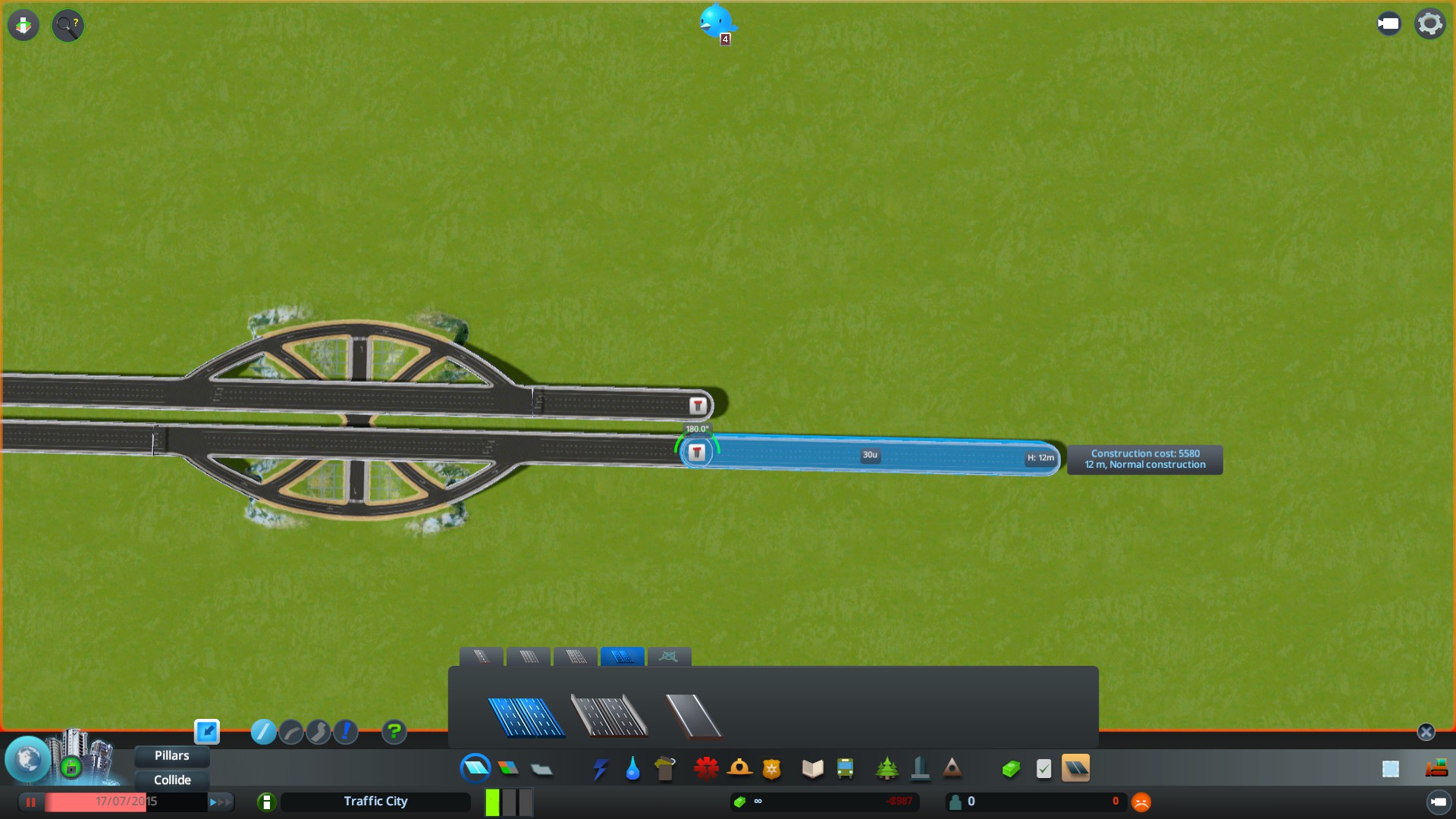 While the diamond is cheap and easy, it can get backed up quickly. The advantage to a diamond is you can turn it into a Single Point Urban Interchange (SPUI) very easily. The SPUI is able to move a bit more traffic through the interchange before it will back up.
Here is a basic pre made SPUI you can use
http://steamcommunity.com/sharedfiles/filedetails/?id=480145246
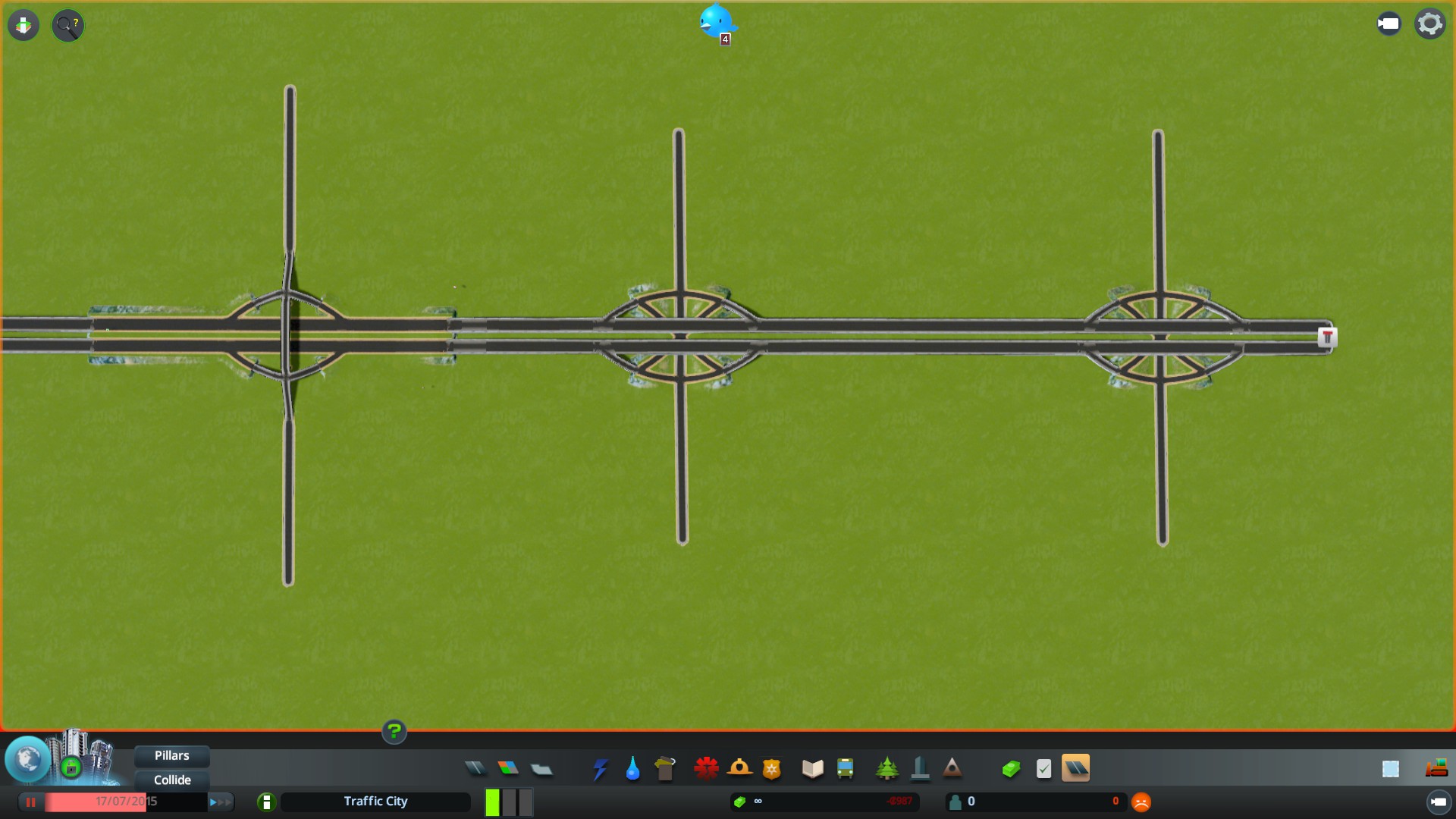 A major complaint new players have is that the cims seem to make crazy merges and will pile into one lane rather than use the other lanes. These strange behaviors are almost always the result of having interchanges to close together, having too many, and having exits and entrances from the fast lanes.
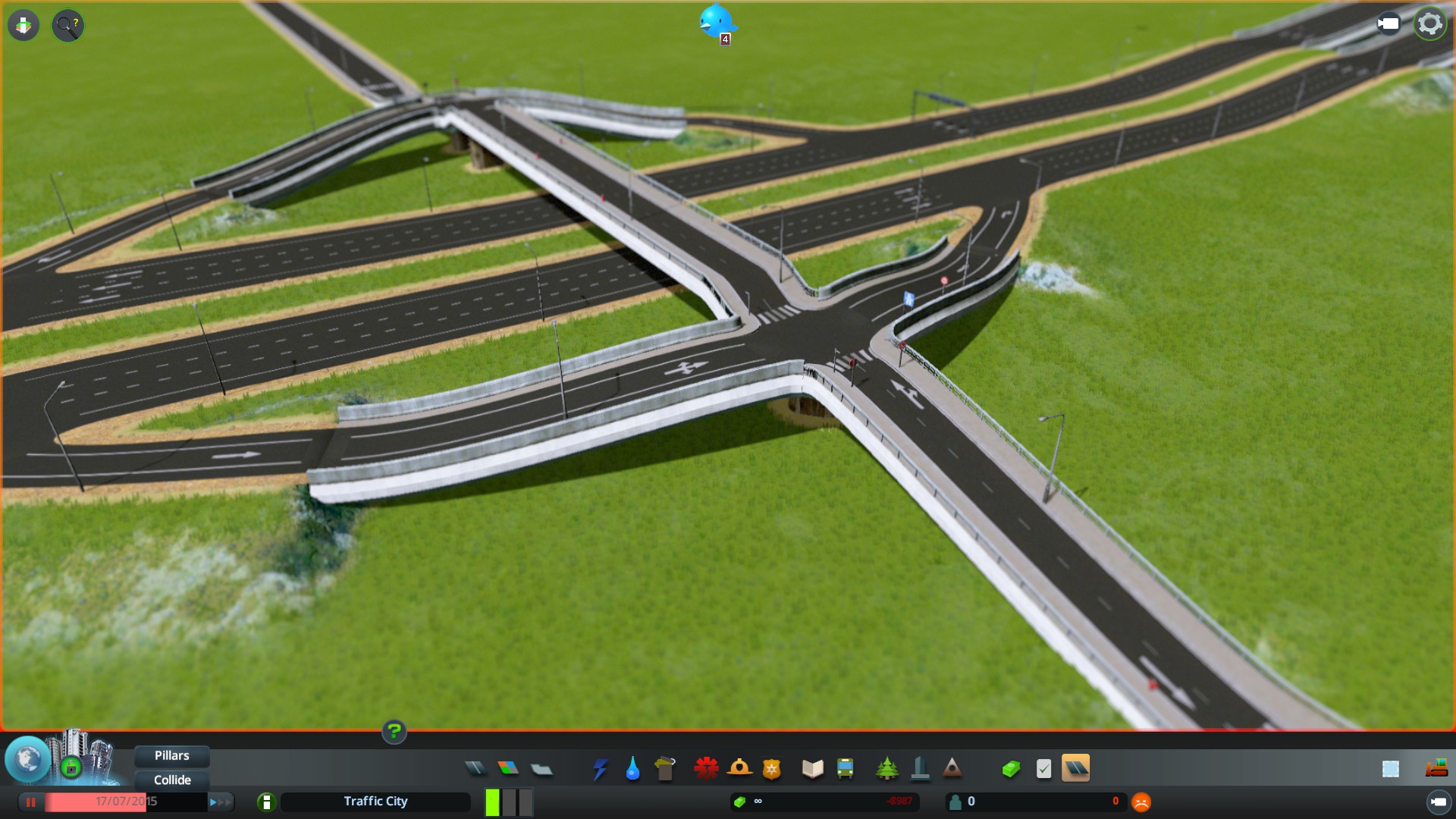 Both the Diamond and SPUI work well in the game for light to medium traffic so long as you are using a two lane road with no traffic lights.
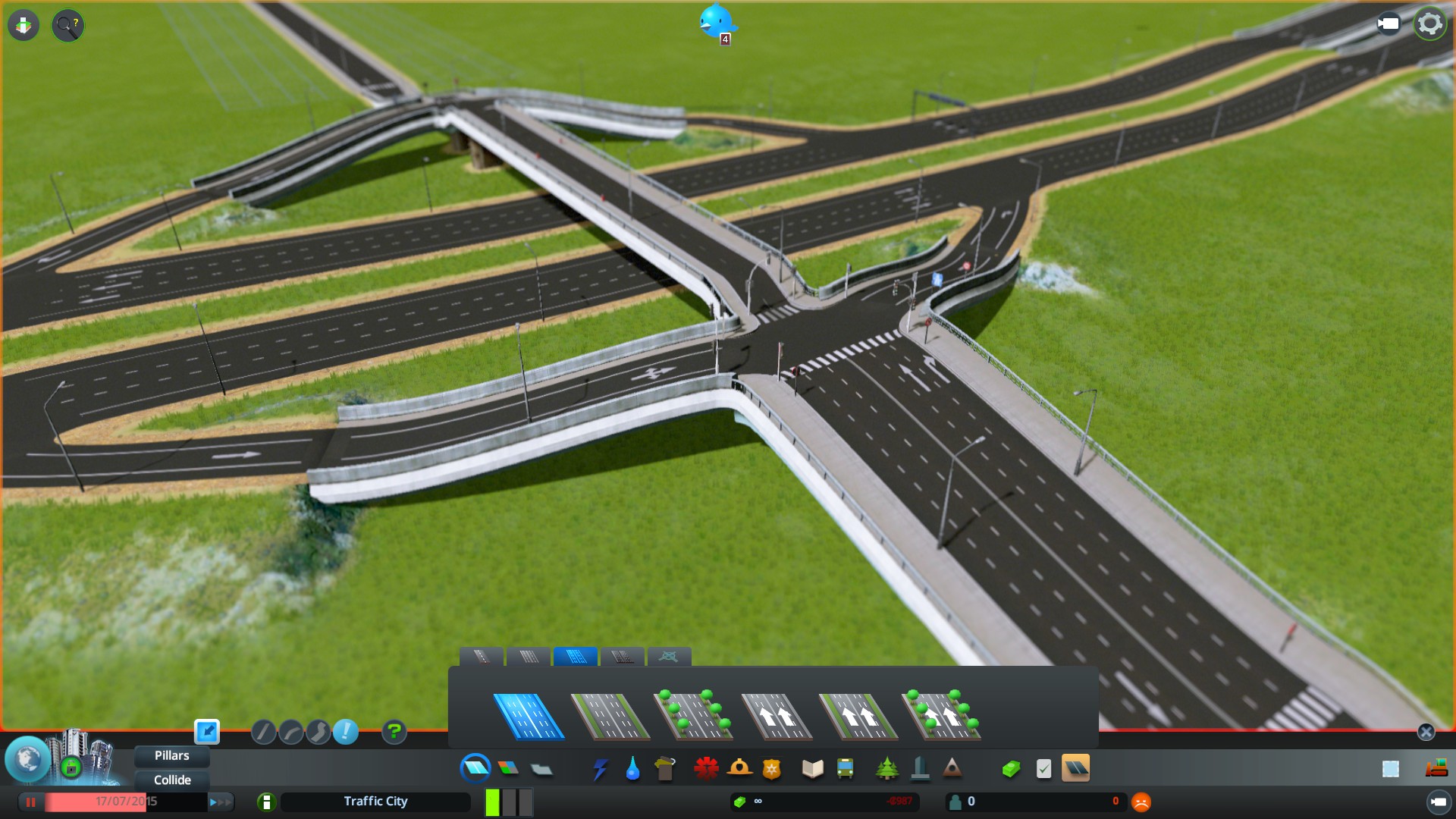 If we upgrade the two lane to six lane it will create lights and quickly cause traffic to back up onto the highway. If we want to use a six lane road we'll need a bigger better service interchange.
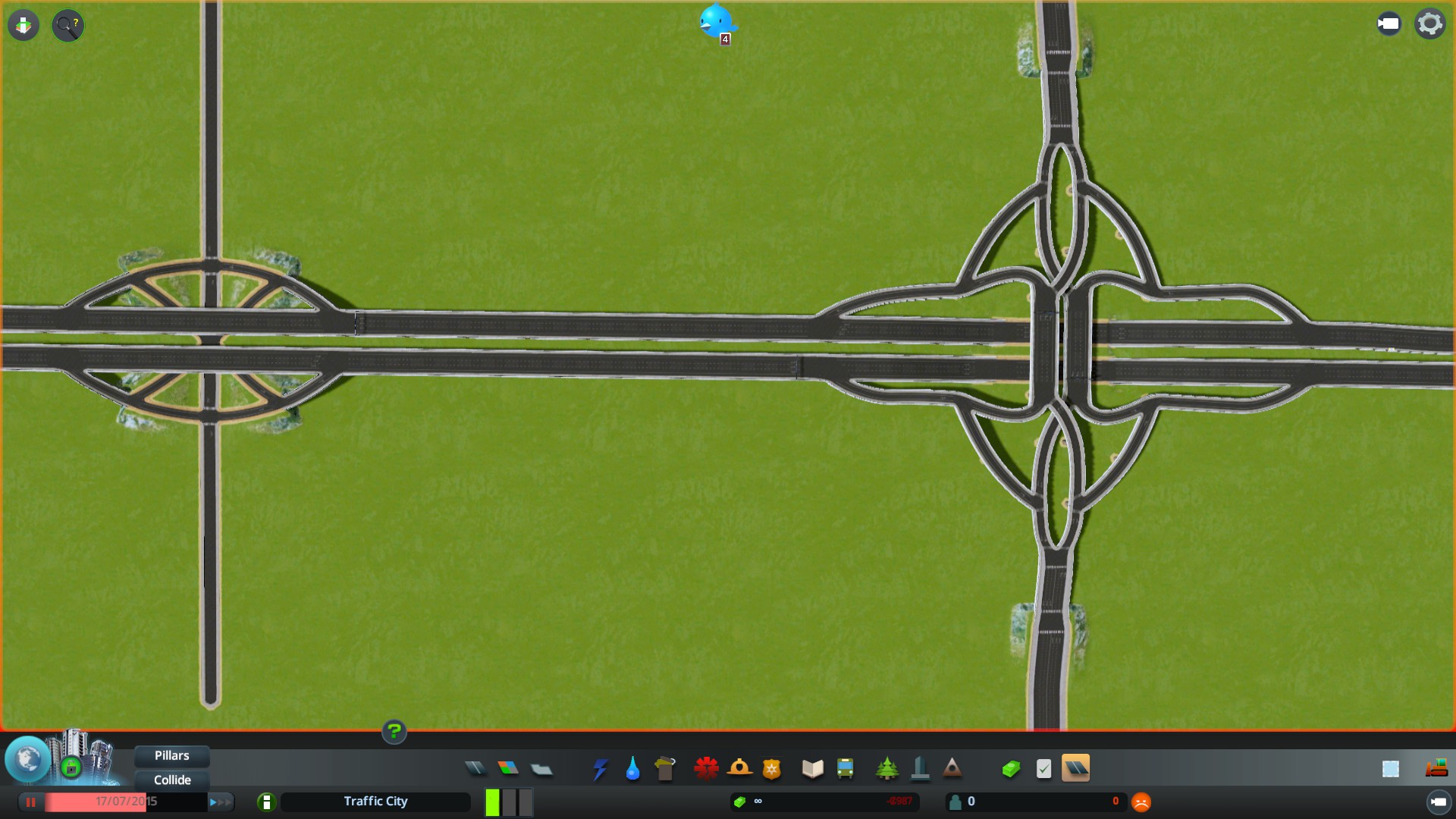 For it's size, nothing can hold up to the DCMI. They can be a bit tricky to build but the workshop has a number ready for you. The one pictured is available here http://steamcommunity.com/sharedfiles/filedetails/?id=480174534
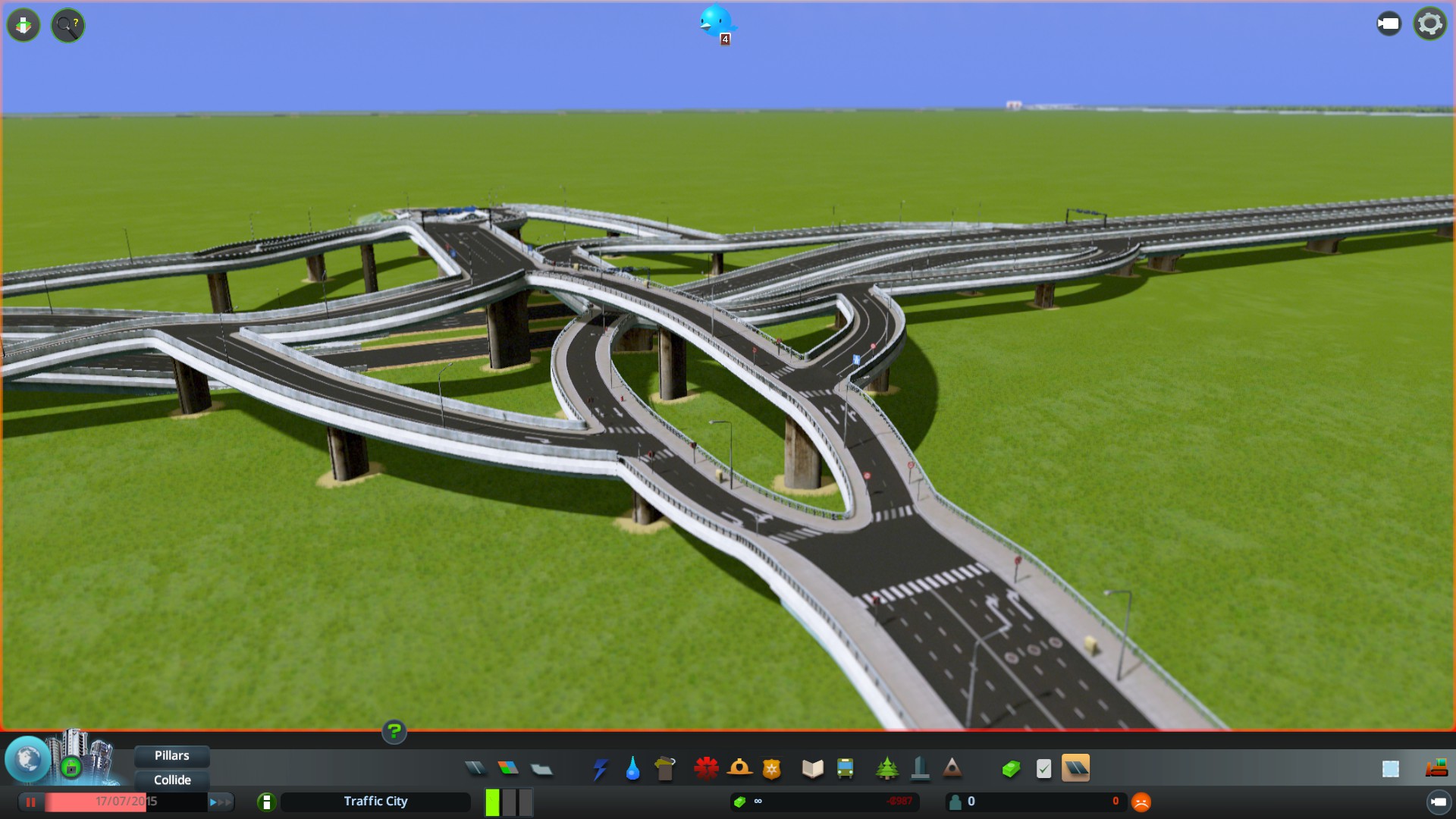 The DCMI has no traffic lights on the six lane road and moves the traffic very well. The one in the picture is not perfect because it still allows for "weaving" . Weaving is caused by having an entrance before an exit. A proper DCMI will have the exits before the entrances. You can grab a small and proper DCMI here http://steamcommunity.com/sharedfiles/filedetails/?id=459578807
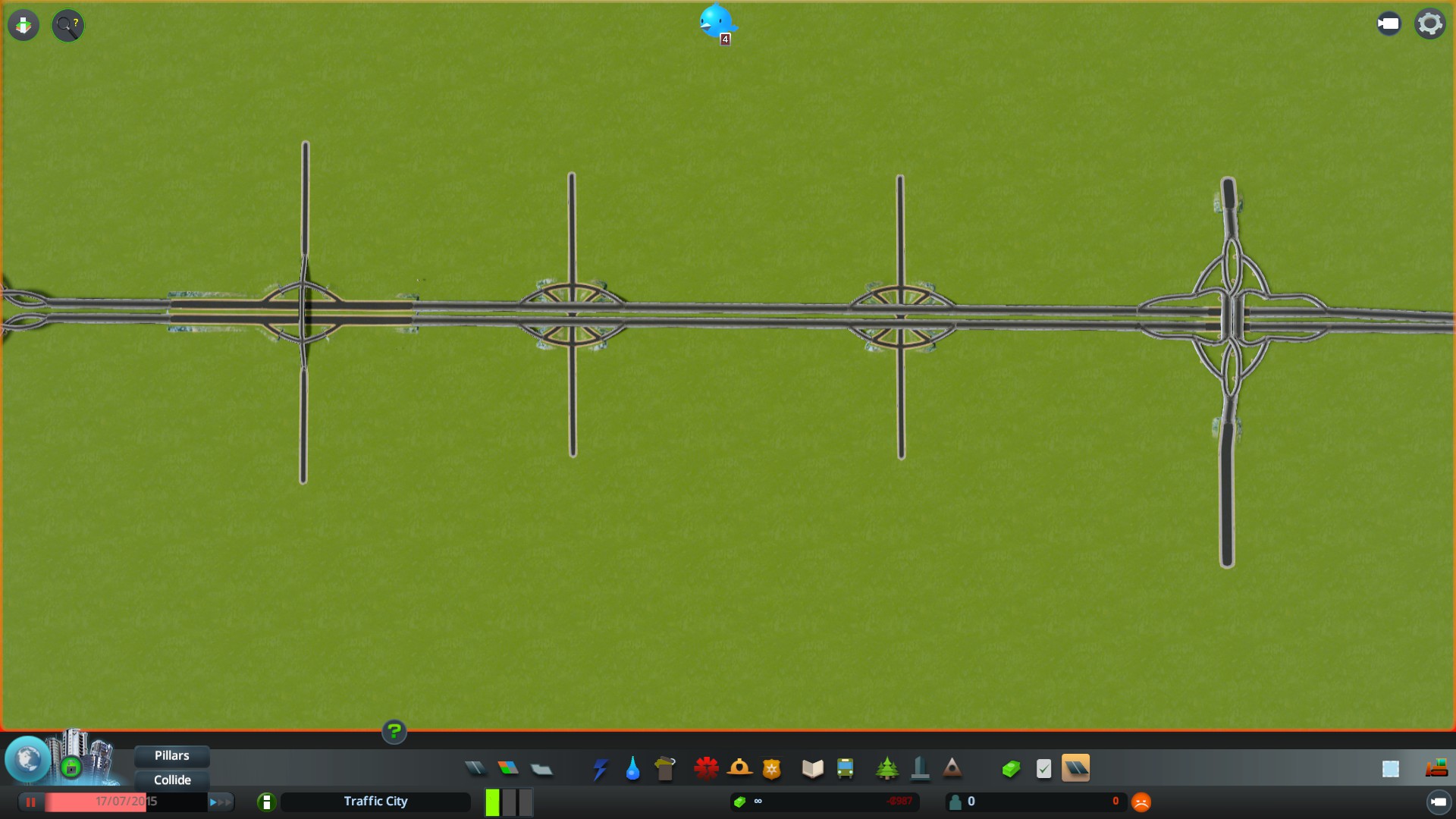 The thing I want you to remember from this guide is that when it comes to highways, less is more, and bigger is better. Fewer, larger interchanges are going to cause less traffic problems on your highways. The more space between interchanges the more room cims have to change lanes.
While I covered mostly service interchanges here, the same logic applies to highway interchanges. The bigger the interchange the more traffic it can handle.
For a great interchange resource checkout Timboh's Marvelous Interchange Emporium http://steamcommunity.com/sharedfiles/filedetails/?id=406303686
Traffic 102 - Road Hierarchy and Zoning
In this guide you will learn how the road hierarchy works and how to use it with your zoning. By the end you should be able to identify what type of street you live on and what type you work and shop on.
There are a number of different terminologies for describing road hierarchies. For the purposes of this guide I will be using Highway --> Arterial Road --> Collector Road --> Local Roads
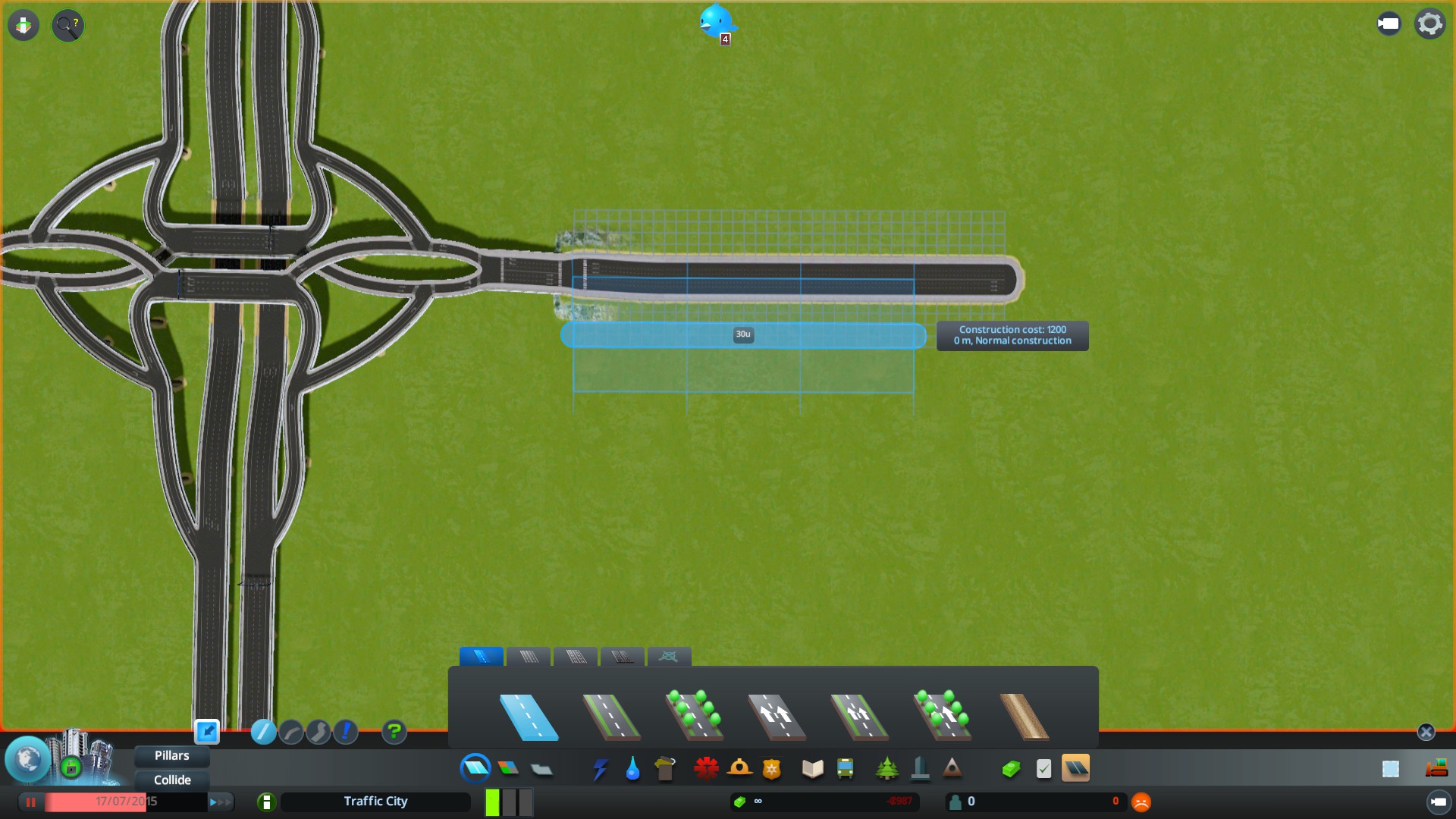 If your arteries get clogged and seize up you have a heart attack and die. If your arterial roads get clogged and seize up garbage and dead bodies start to pile up.
Arterials are the cities major roads and often connect to your highway network using service interchanges. Arterials should only intersect with other arterial and collector roads. Those intersections should be few and far between.
Getting off the highway I like to leave about 30 squares before my first intersection with a collector road.
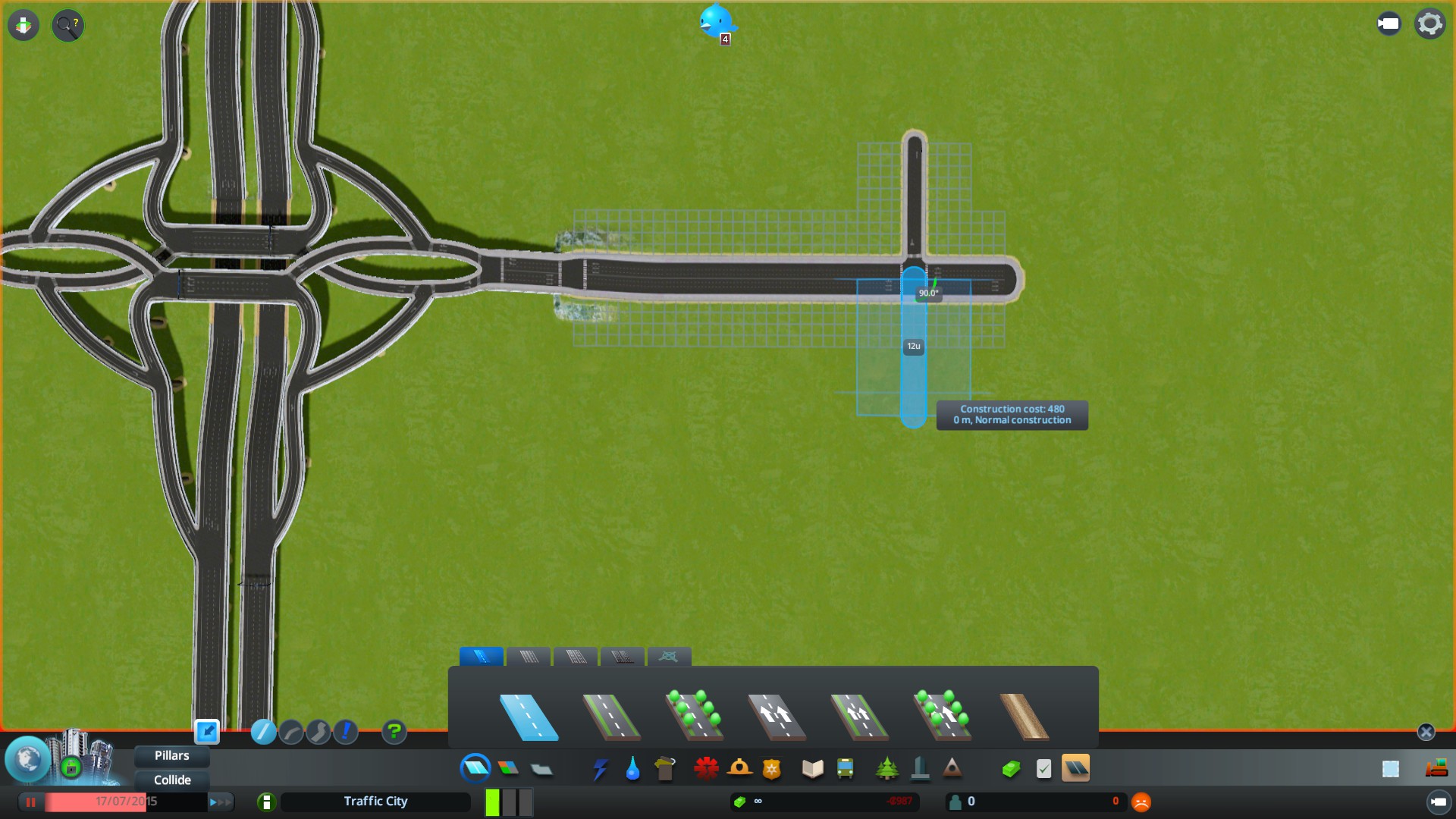 Collector roads literally collect traffic from neighbourhoods and bring your Cims to the arterial roads. Without mods, I try to only use two lane roads for my collectors. Since collectors have the most intersections and the intersections are often close together using two lane roads means no traffic lights with the other two lane local roads.
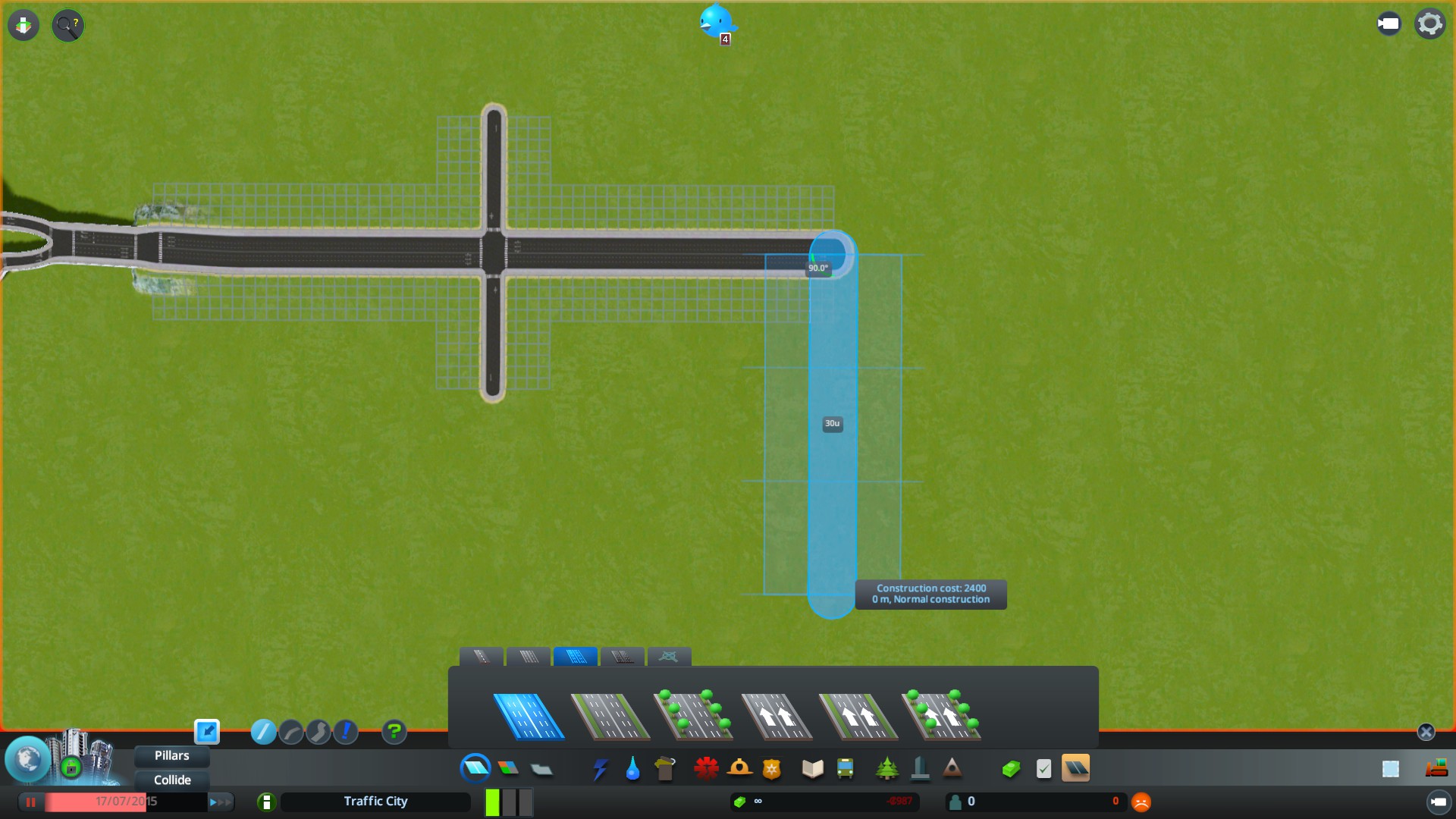 From my first collector I'll go another 30 squares and start a new arterial. This arterial road will connect several arterial roads which connect to the highway.
Many people will use a roundabout for large arterial on arterial intersections to keep a steady flow of traffic but I don't want flow. I want my traffic to be chopped up a bit so delivery trucks can make deliveries without stopping a flow.
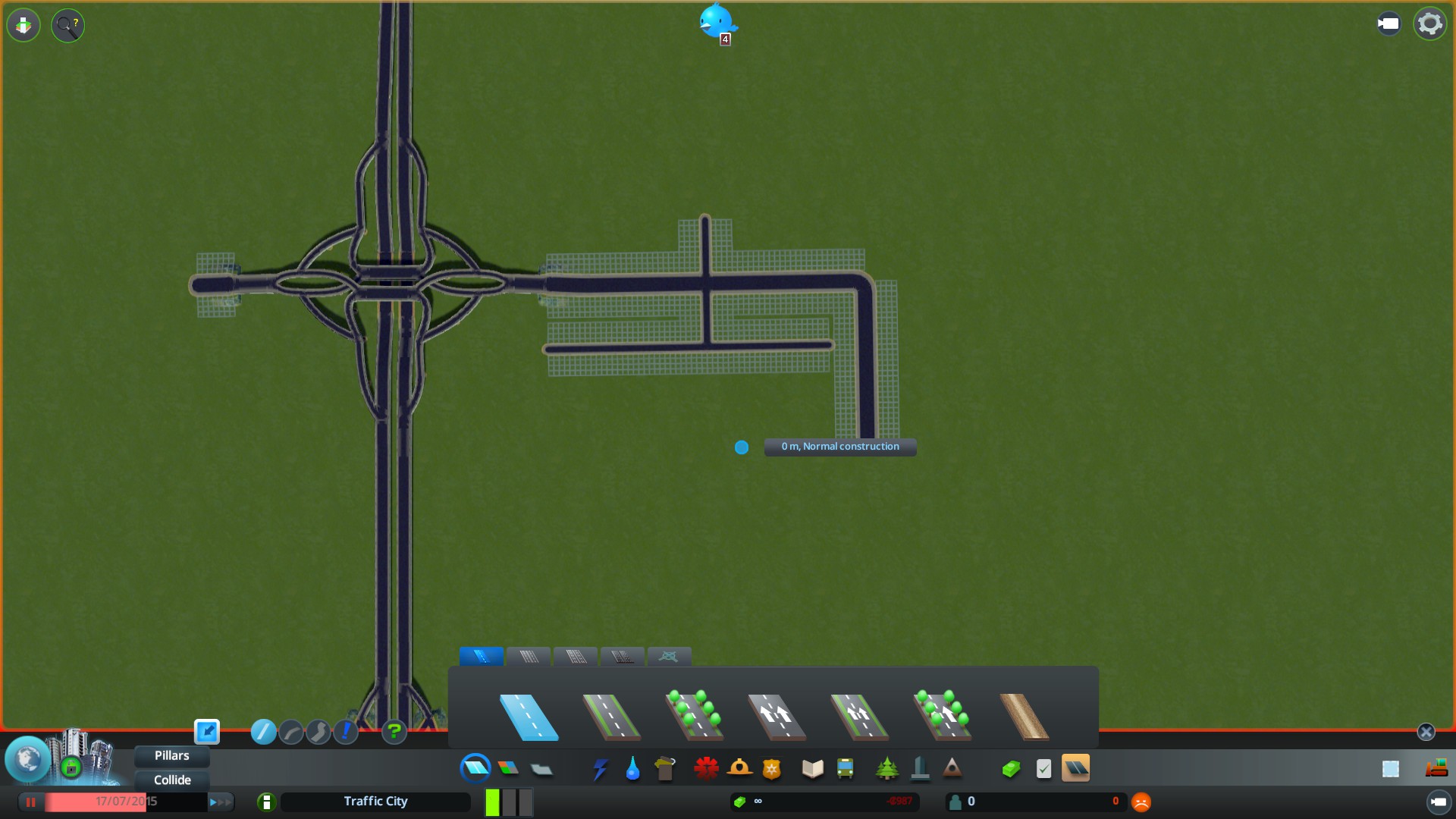 With our arterials and first collector we can add our first local street. It won't intersect with the arterials and as you will see in Traffic 103 have strategic reasons for being dead ends near arterial intersections. I have also left a single square between the arterial and local roads to leave room for pedestrian paths.
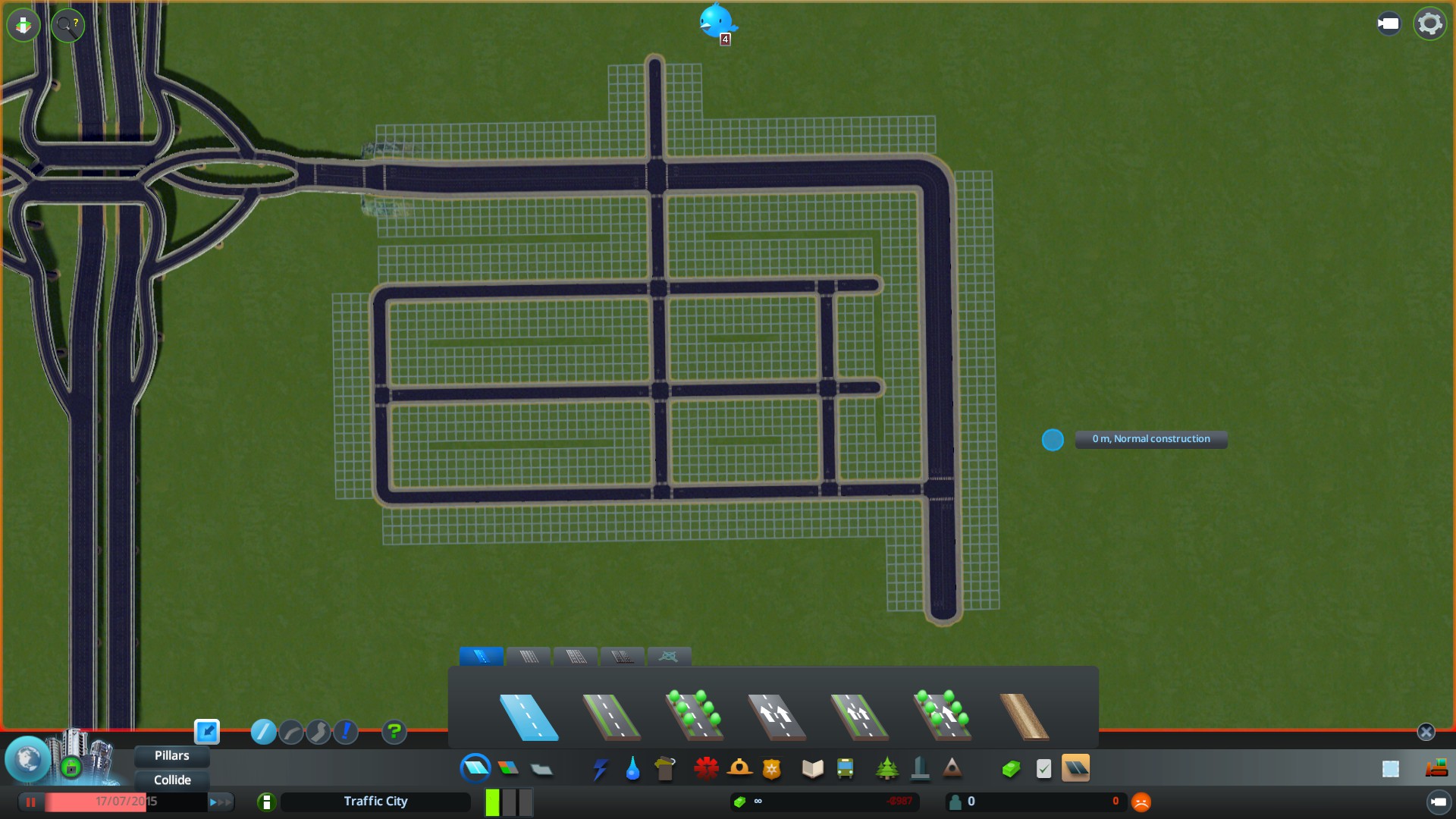 After adding a couple of local roads I will add a new collector road to intersect with the arterial road on the right. The Cims living on the local roads now have two ways to get out to the arterial roads.
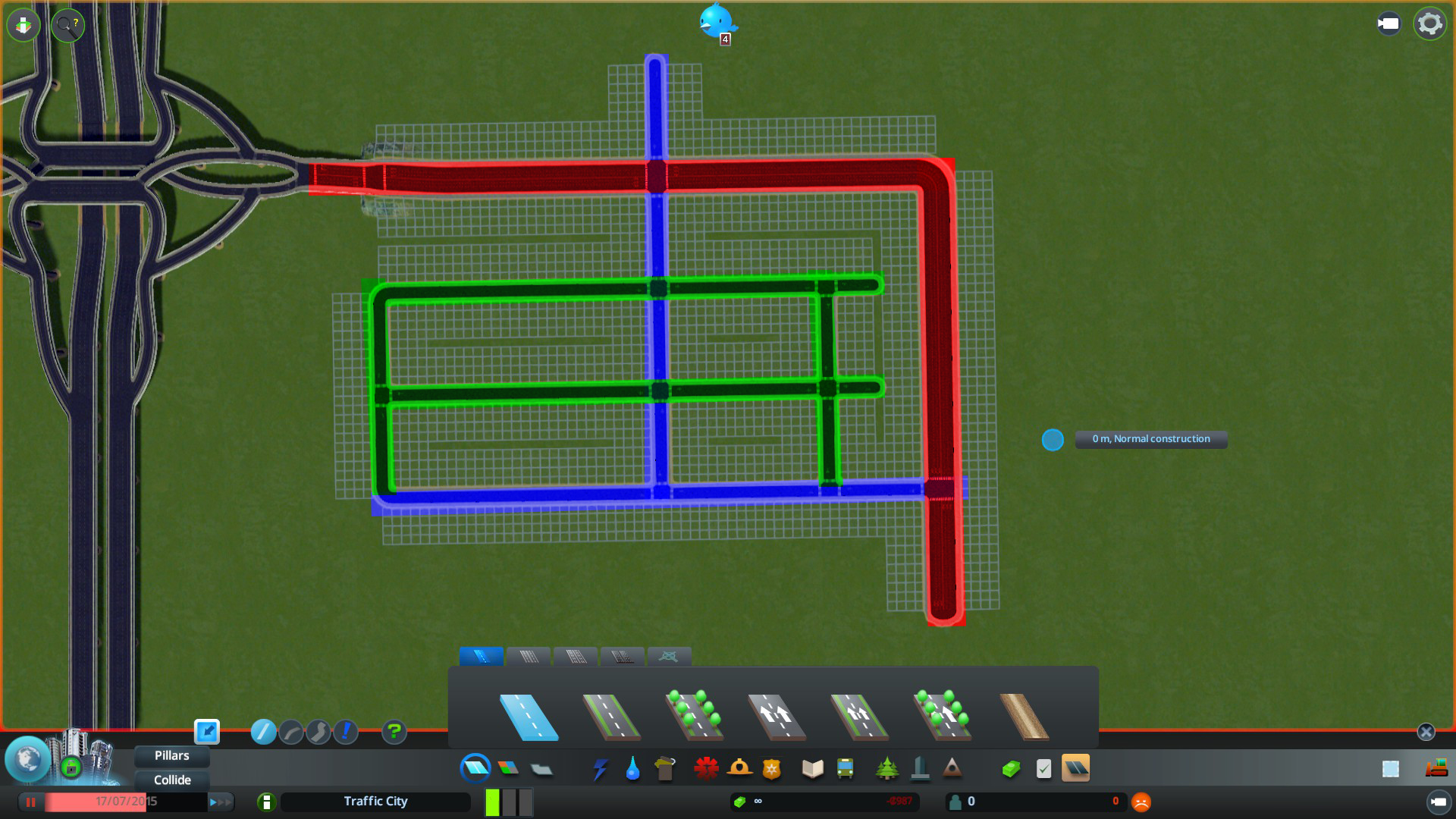 To review, arterials are in red, collectors are blue and local roads are green.
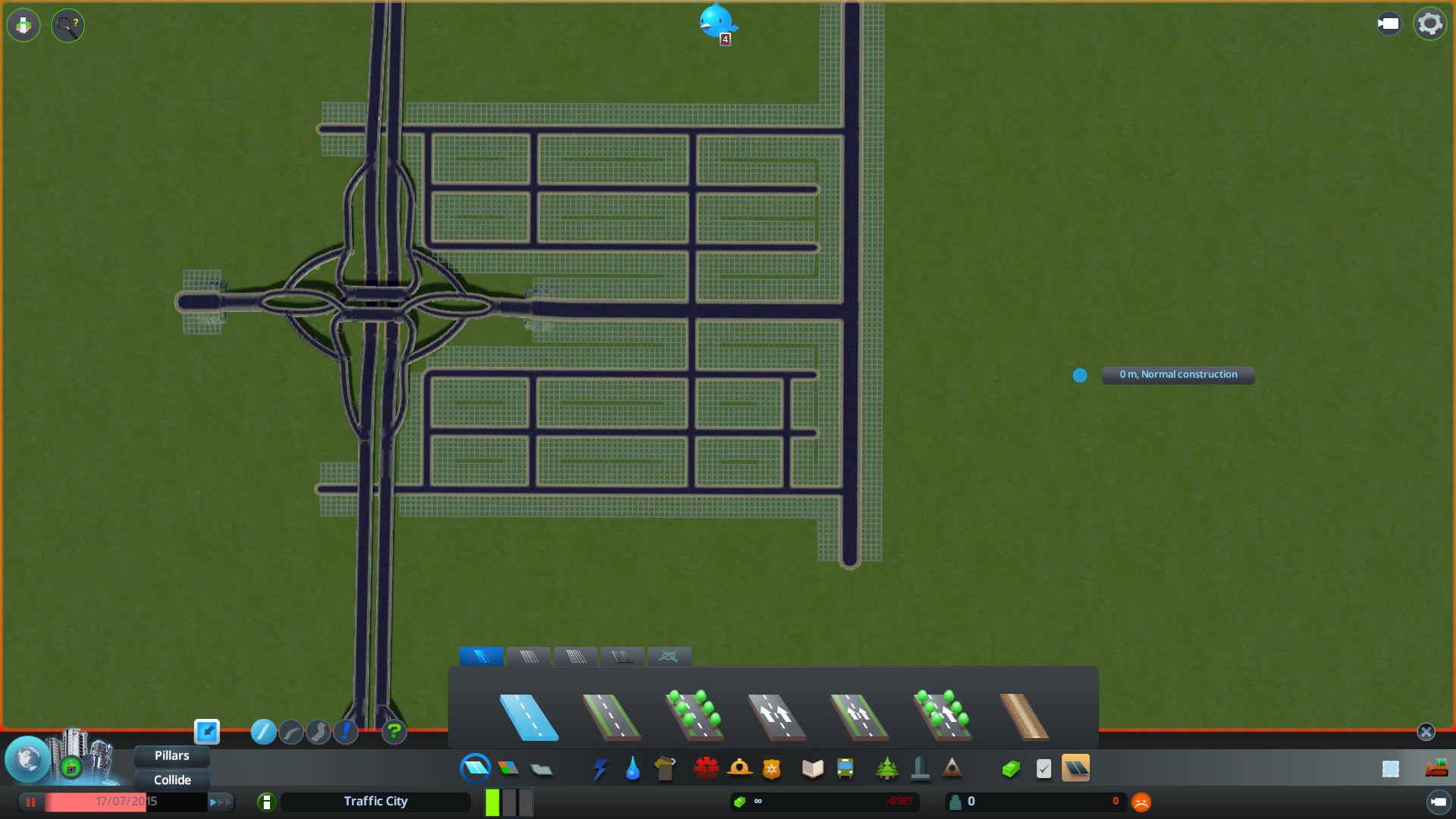 By adding an equal sized neighbourhood on the other side of the arterial road we ensure a balance in the traffic forces. Traffic coming off the highway will spread out across the three lanes because they have three places to go. You might see some long lines when you first zone as people move in and stores get their first stock of goods but once both sides are fully zoned and built up you will have Cims using all the lanes.
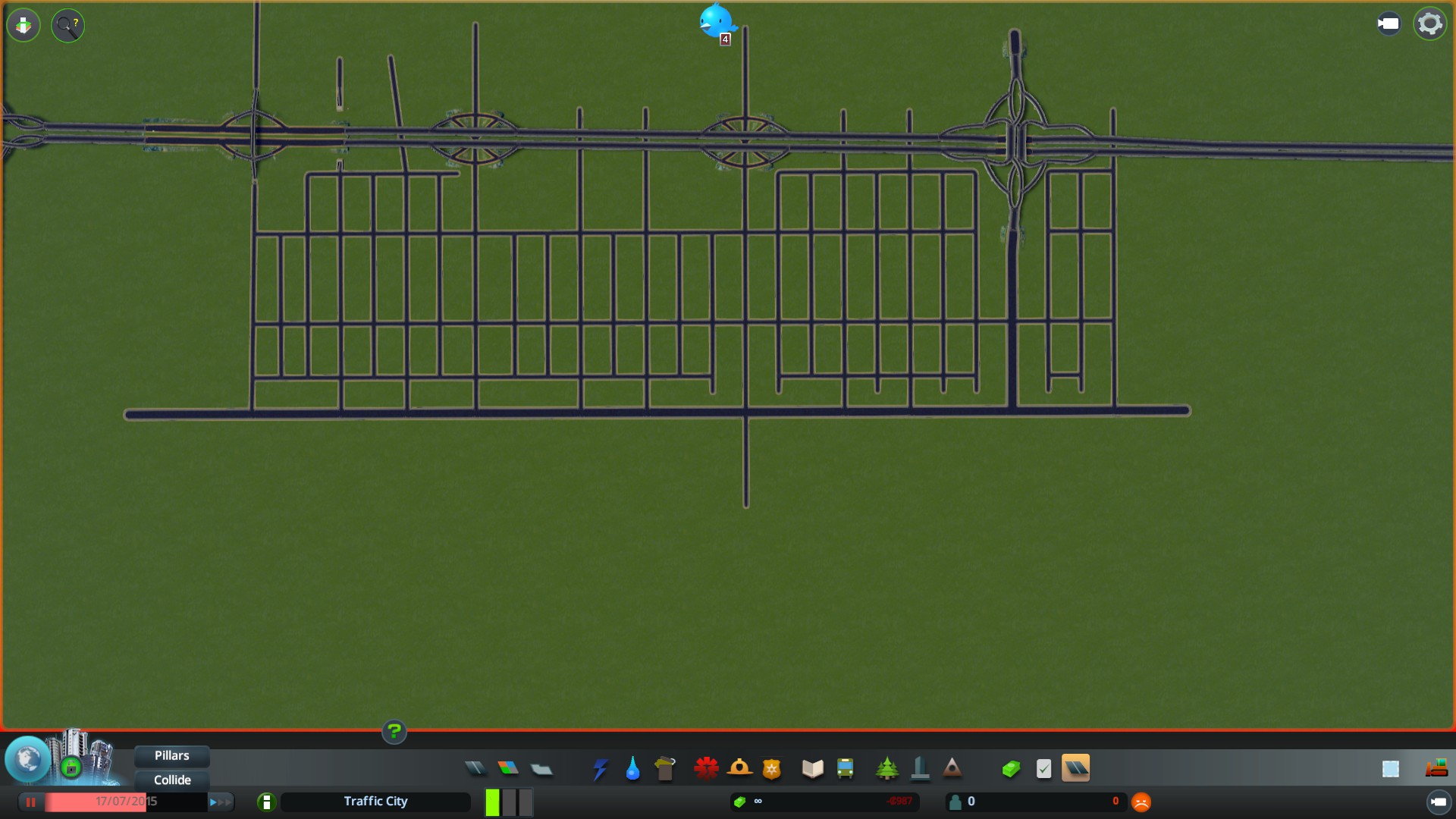 Using the highway exits from Traffic 101 we can quickly complete our city's downtown grid. You can see our arterial roads connect to the highway and extend out to the other side, but so do the some of the collectors under the elevated highway.
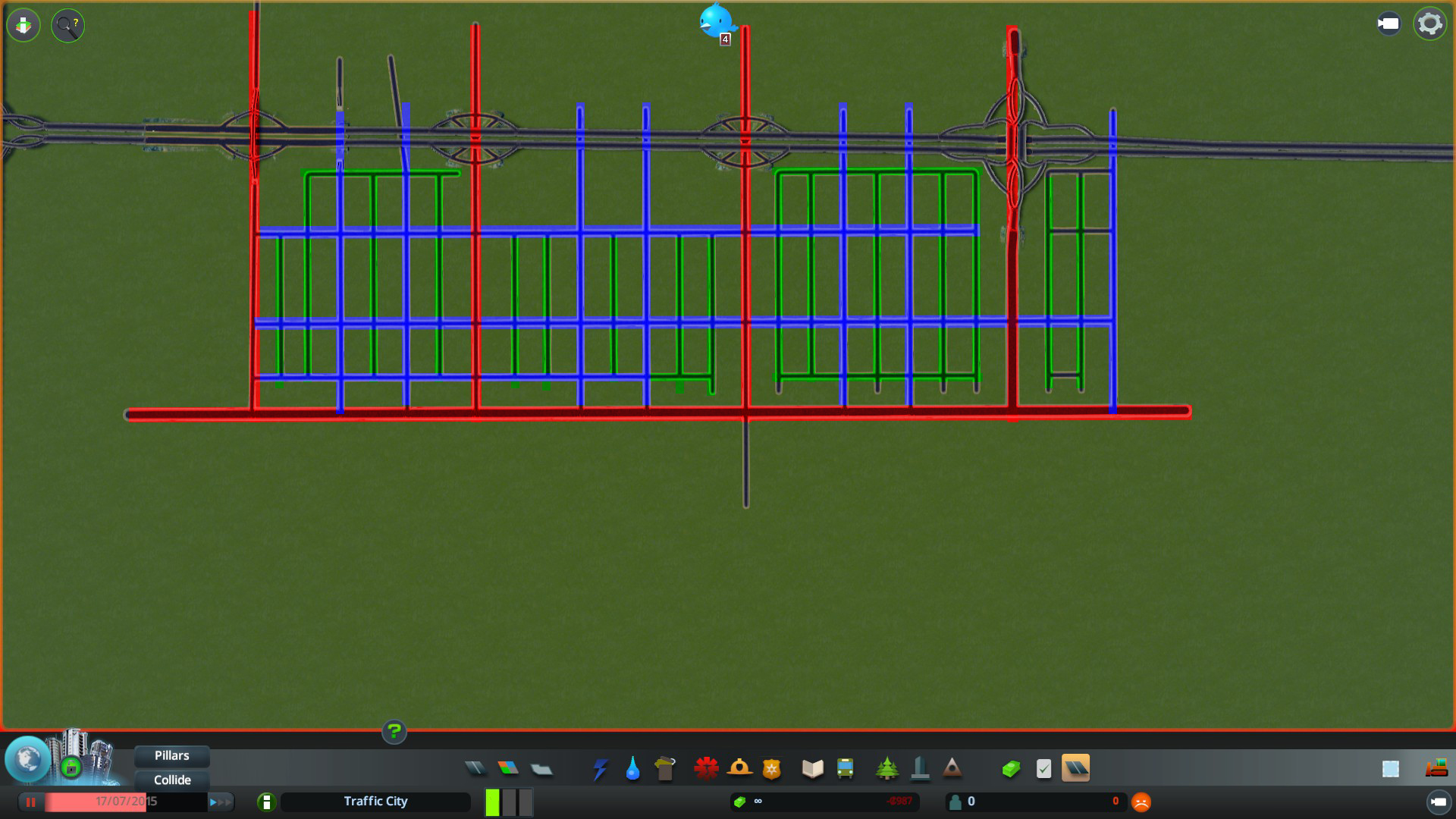 POP QUIZ: How many horizontal collector roads are there?
Answer: 3 but I would have accepted 2.5
With the roads illustrated it is easier to see I have not treated all the arterial roads equally. The two lane roads have more collector roads intersecting with them. That's cool, but if we decide to upgrade to a six lane road and convert the SPUI to a DCMI, the collectors closest to the highway and horizontal arterial will lose their intersections and become local roads.
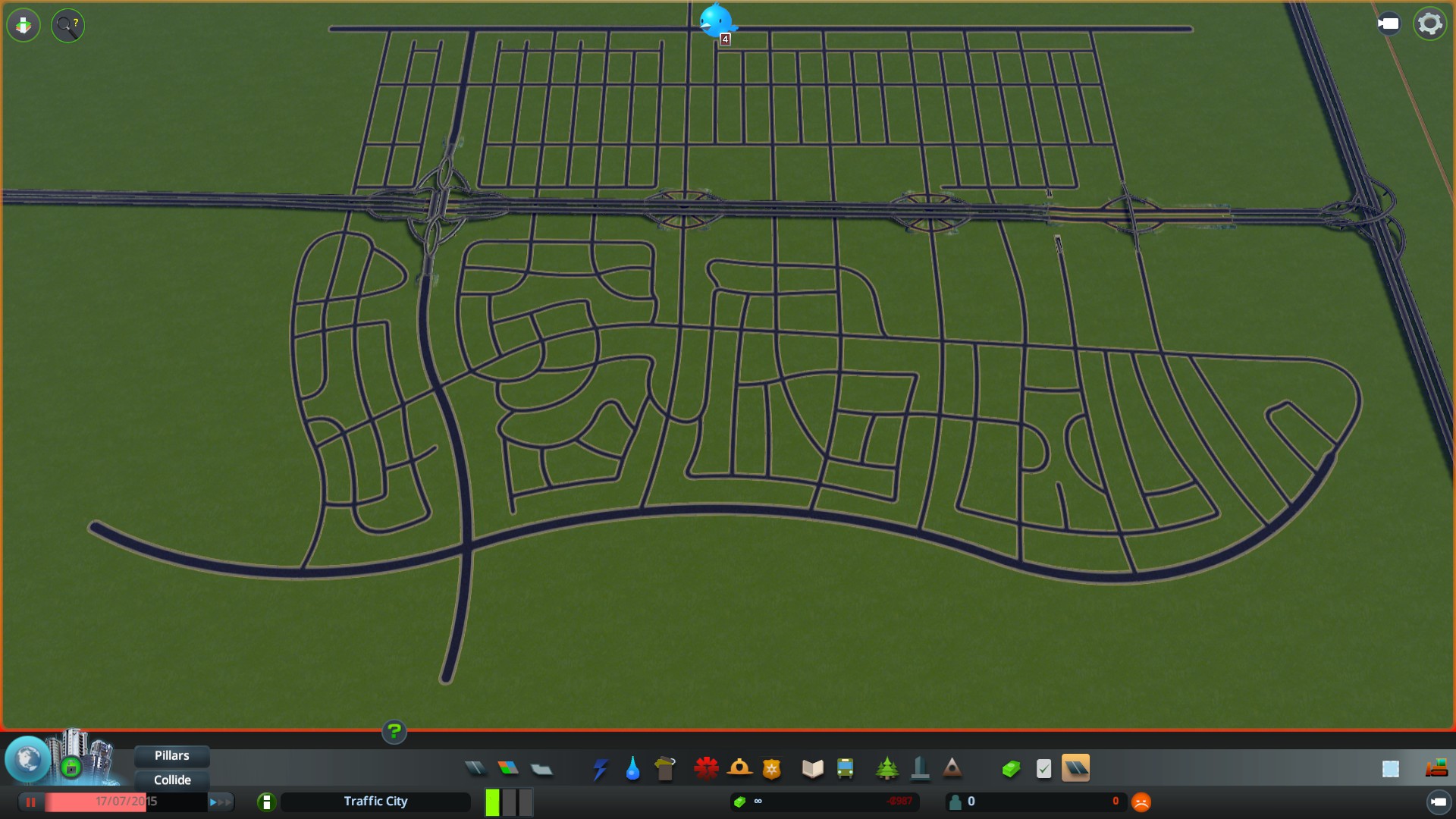 On the other side of the highway I've built a curvy suburban grid using the same hierarchy, but curvy.
Whether a downtown grid, a suburban grid, a geometric pattern or a road system conforming to the landscape, the pattern of Arterial -> Collector -> Local will hold up provided you don't overload your zoning
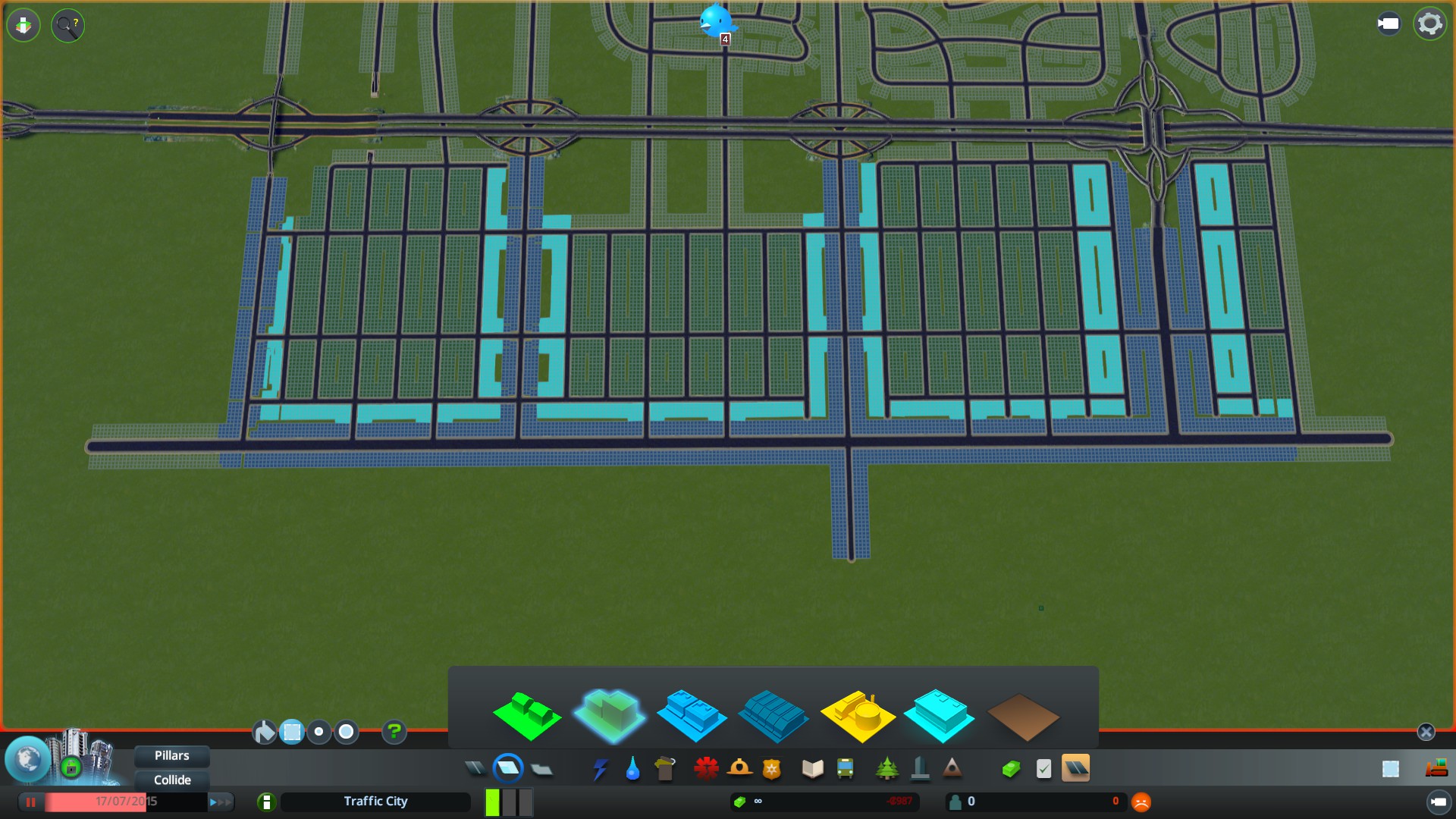 Proper zoning is half the traffic battle. One way to make your traffic life easy is to keep your commercial along arterial roads. Zone some office next to the commercial to buffer the noise and put residential on the local roads.
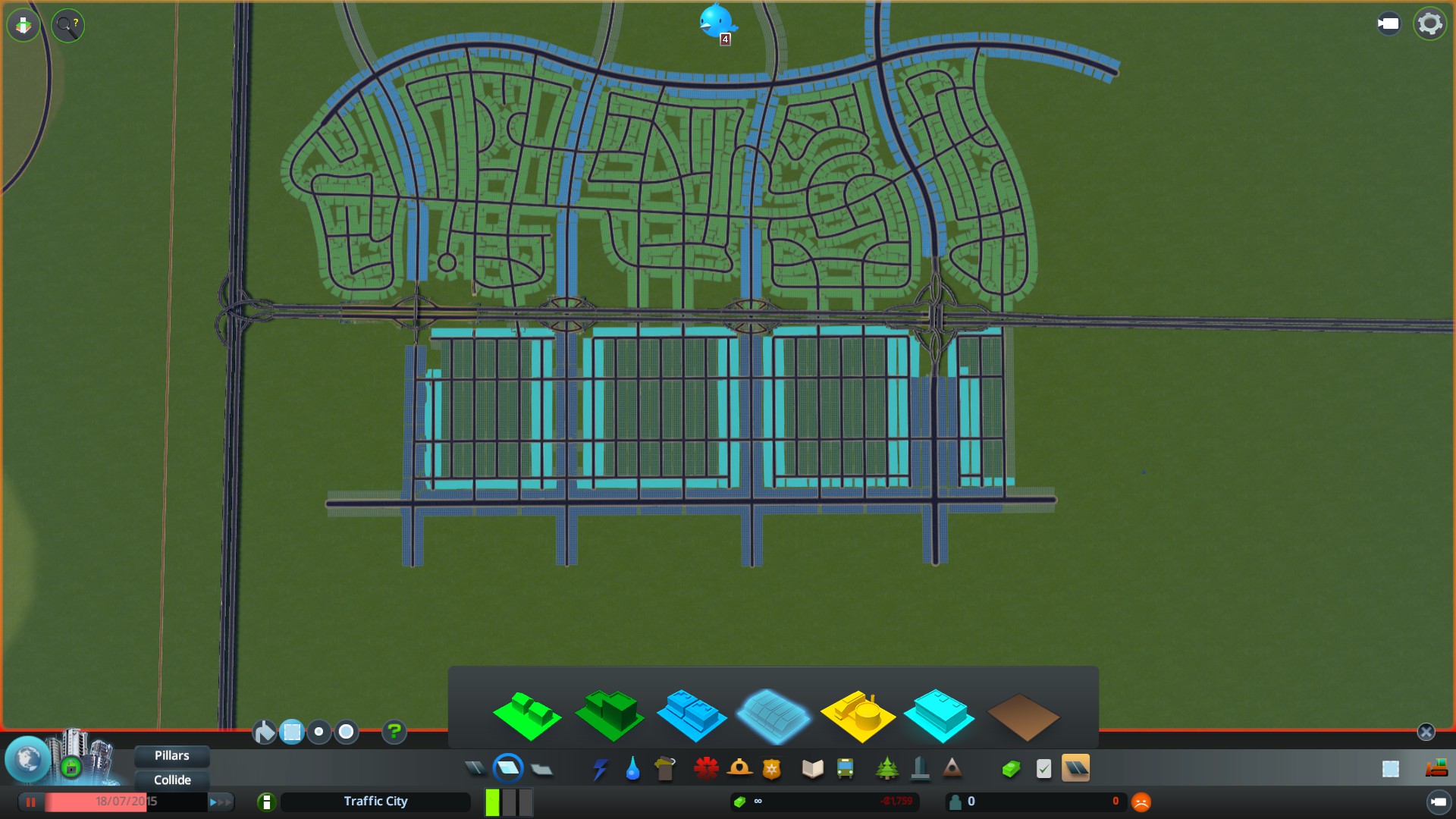 The same applies in the suburbs. Light commercial makes less noise so you can zone residential alongside but mixing in some small office lots will help reduce the noise intensity.
Traffic 103 - Public Transit
Buses
To start placing bus lines you need to build one bus depot. That one depot will supply all the buses your city needs. The only occasion where you may need a second depot is if you build a Bus Rapid Transit System (BRT) where some buses are isolated from the rest of the road network.
Buses make frequent stops and generally run a short route around a neighbourhood. Think of buses like the collectors roads in a public transit hierarchy. They collect cims, bring them somewhere busier and then bring them back.
Metro
Cims love metro. It's fast, and works best with a few well placed out stops. Just like arterial roads, the metro system is your high capacity portion of the public transit hierarchy.
Rail
If buses are like collectors, and metro like arterials, rail is a lot like highways. It's very fast (and awesome to watch) but like highways works best with a few rules. Use straight lines and wide curves so trains don't have to slow down. They don't corner as well as metro so a long winding rail line will be slow, and under used. Just like you don't intersect a highway with a local road, intersecting a rail line with a road is not a good idea.
Harbour and Airport
While not normally considered a part of a transit hierarchy, if you're feeling bold, it is possible to create island communities with the only way in or out is an airport or harbour.
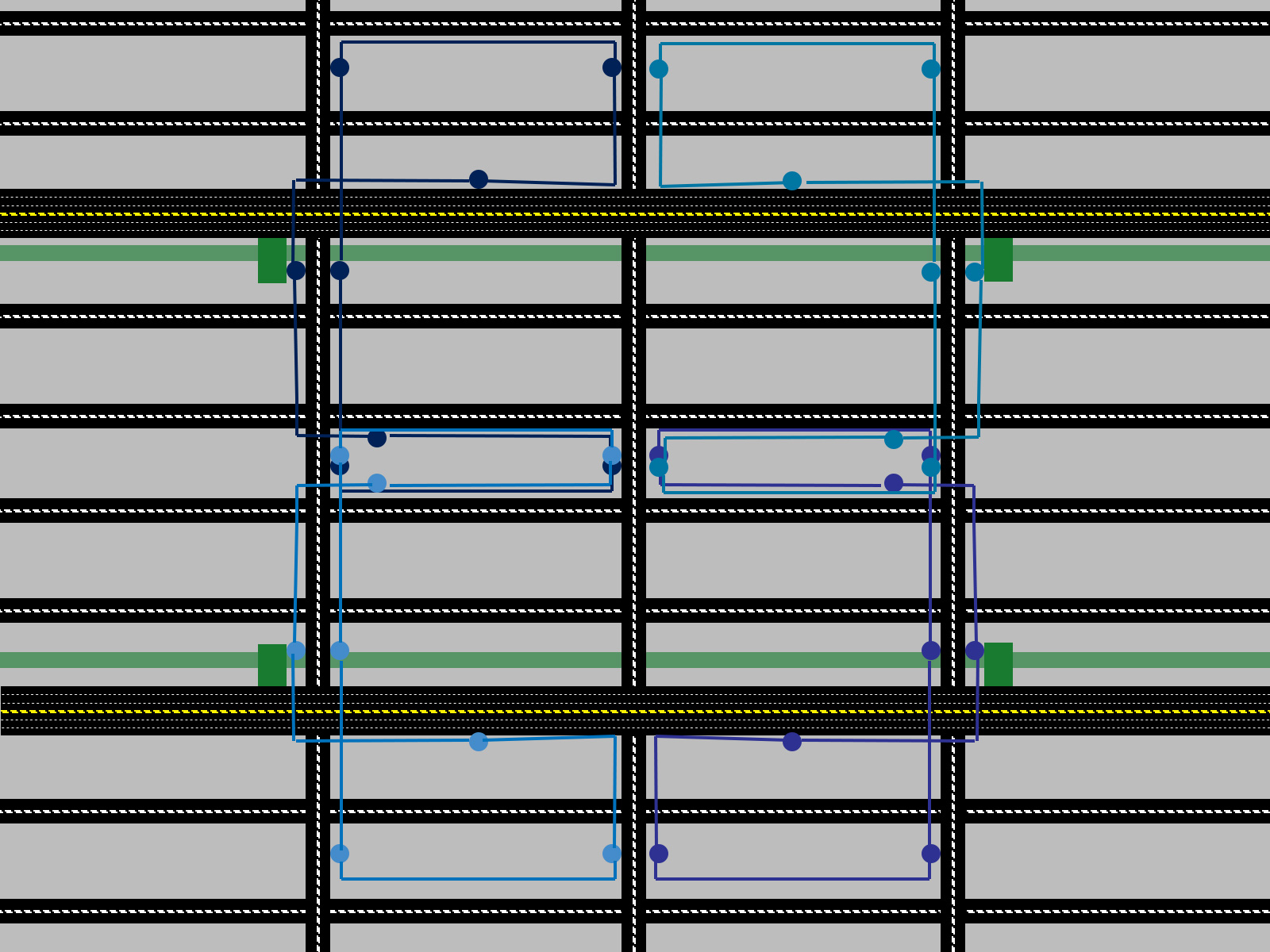 Metro's run along the arterials and buses go from the middle of the neighbourhood, bring Cims close to a metro station and loop back.
 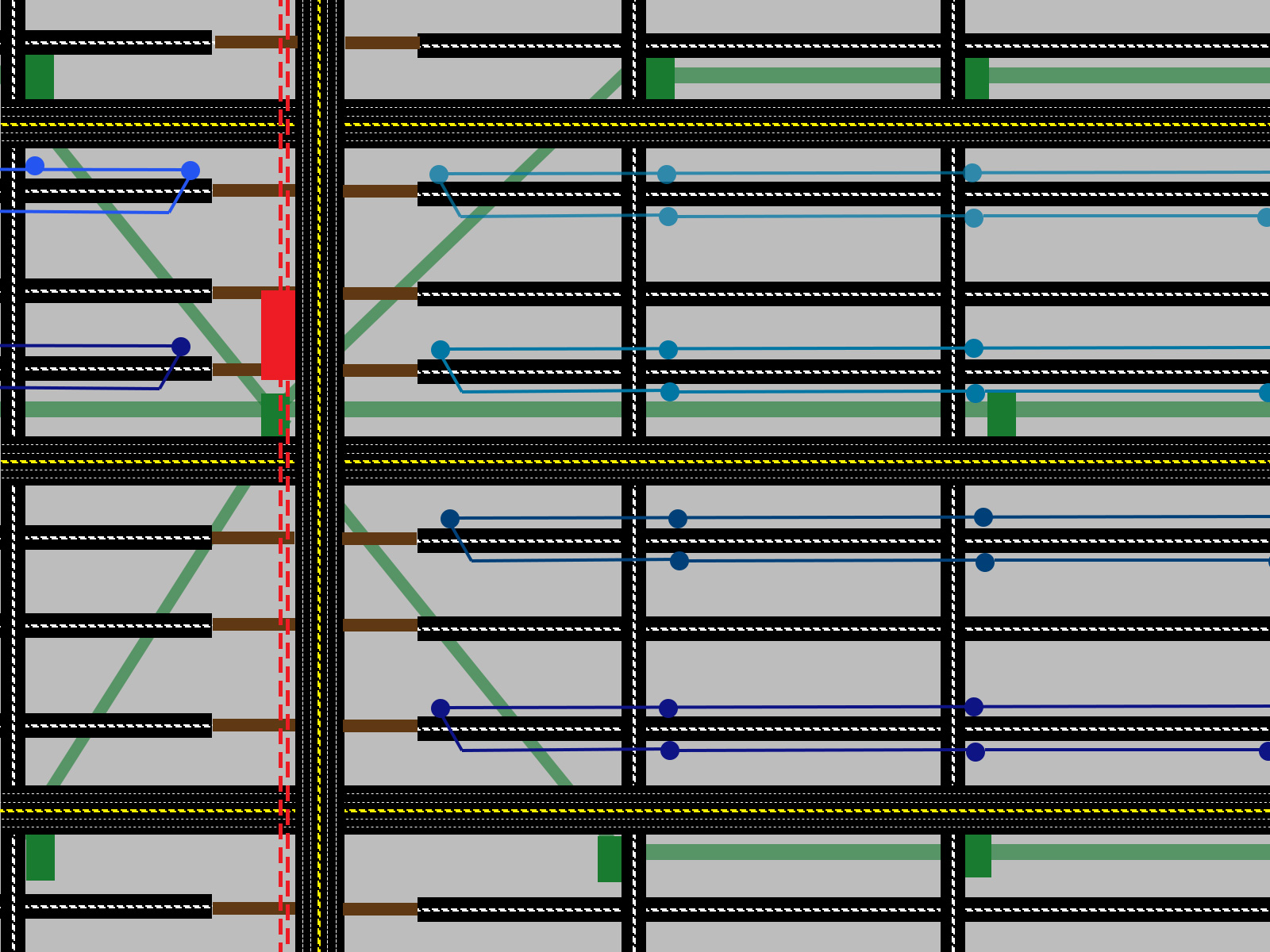 Having metro lines converge at a rail station allows your cims to switch metro lines or get on a rail line.
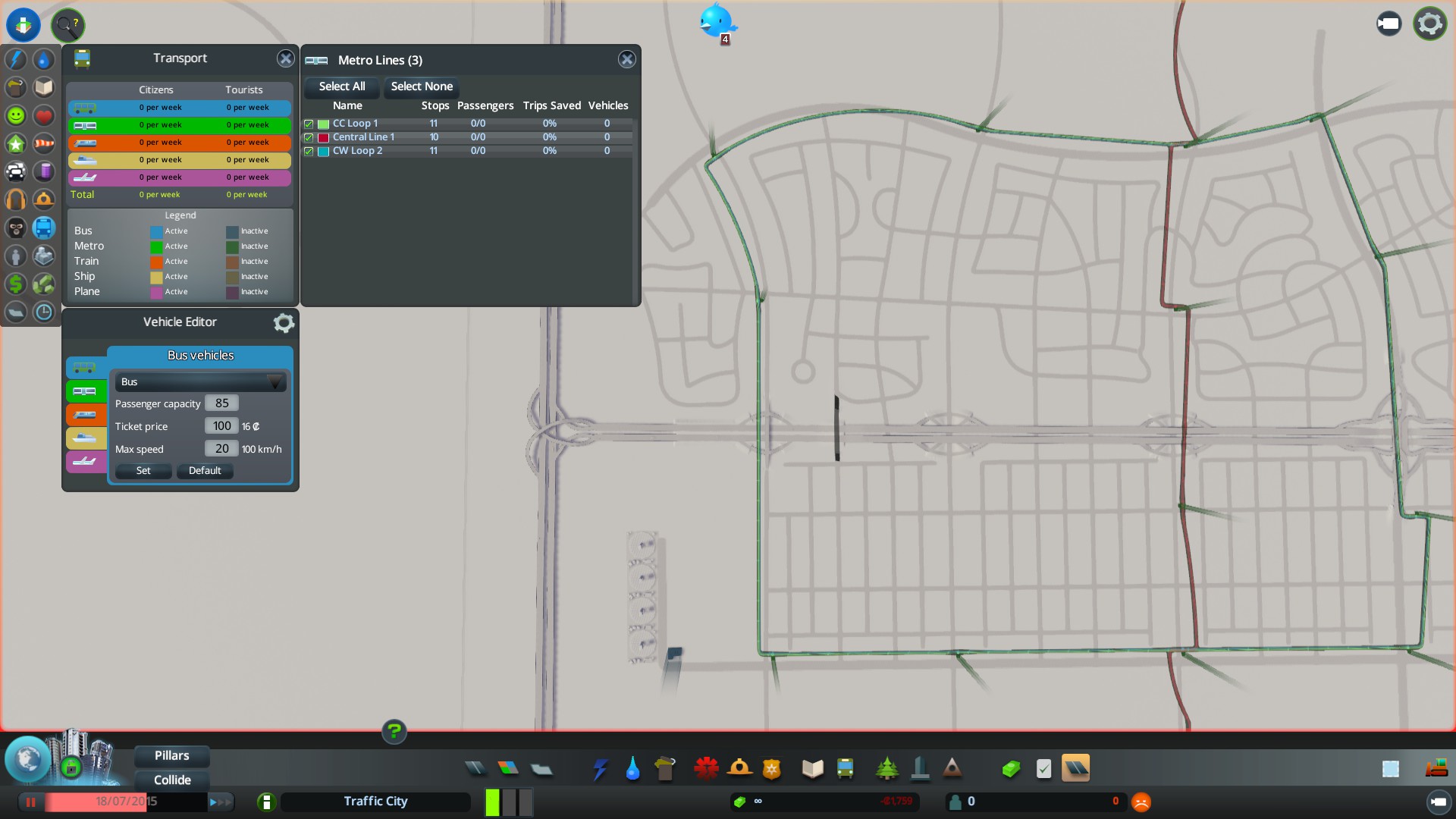 I have had considerable success with metro by combining loops and lines. The green lines run around the city and the red line runs through the city. As the city grows I may add new loops and new lines, extend the existing loops and lines, or both.
Planning Your Stops
I have had considerable success with metro by combining loops and lines. The green lines run around the city and the red line runs through the city. As the city grows I may add new loops and new lines, extend the existing loops and lines, or both.
Planning Your Stops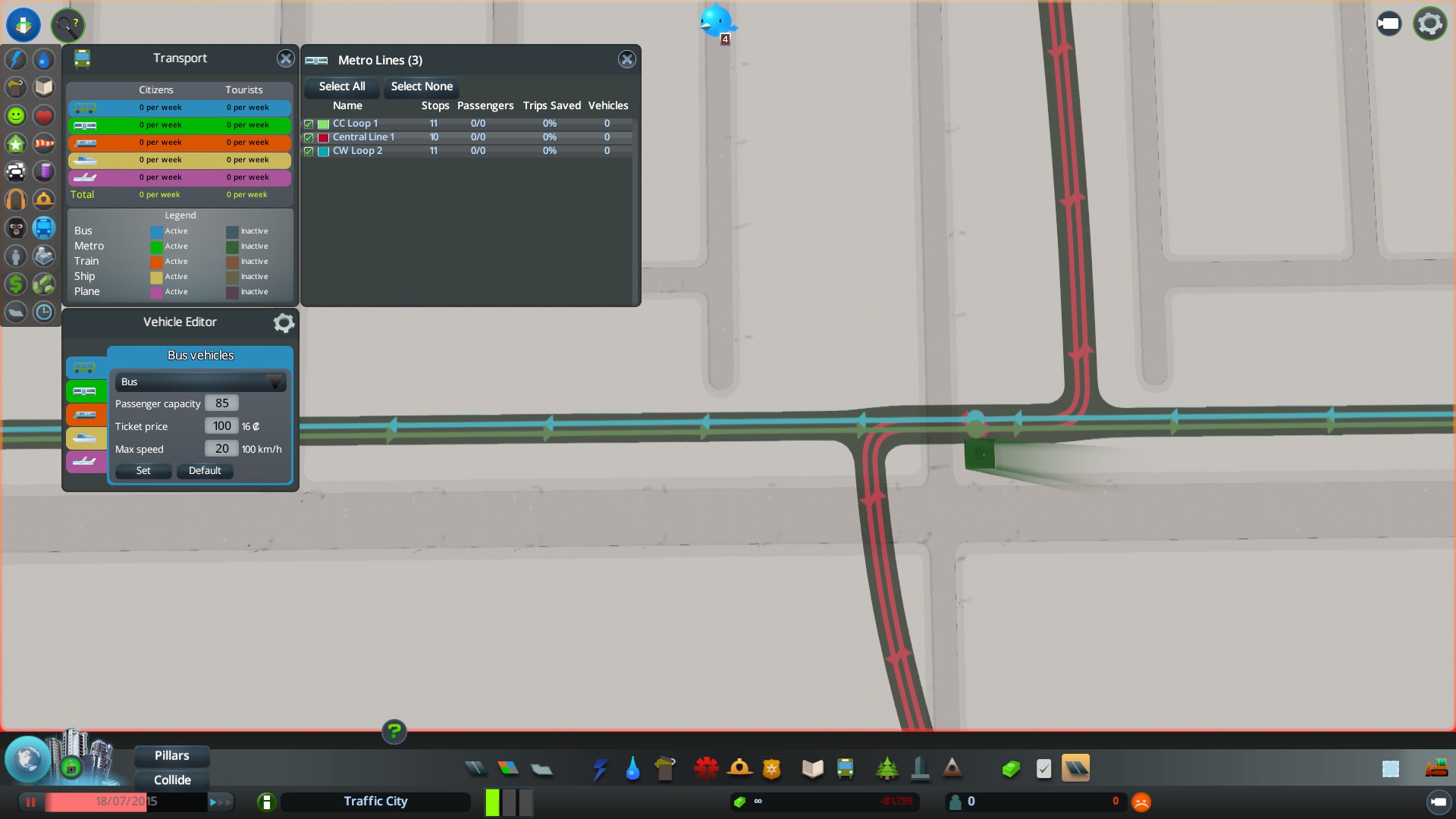 Once I have figured out where the loop will go and where the line cuts through it, I will create my ClockWise loop (light blue) and my CounterClockwise loop (puke green).
In One End Out the Other
Once I have figured out where the loop will go and where the line cuts through it, I will create my ClockWise loop (light blue) and my CounterClockwise loop (puke green).
In One End Out the Other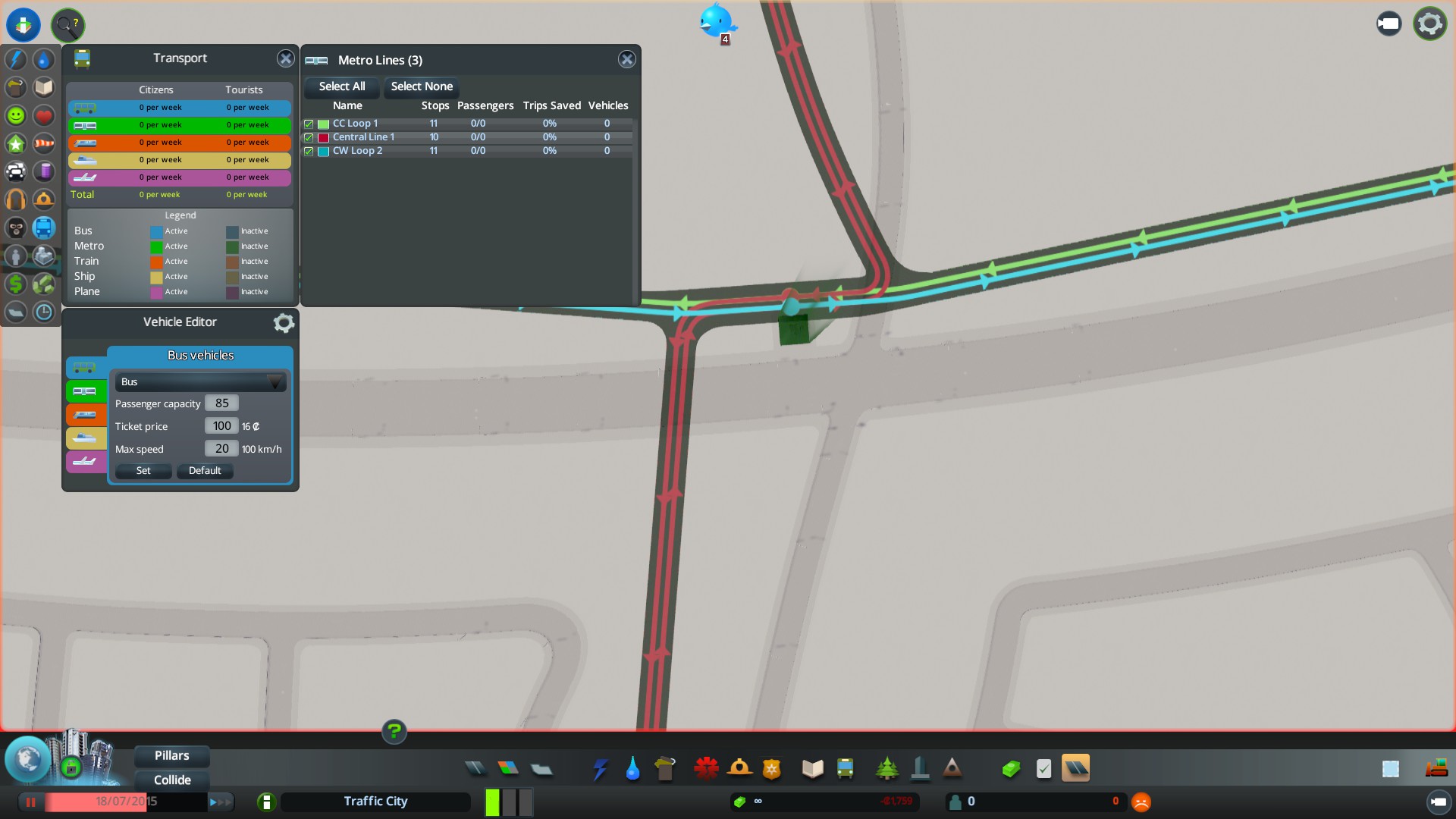 By having the metro tunnel for the red Central line come in one end of the station and out the other, the metro train will stop on one side on the way up, and on the other side on the way down. Without using a multi station mod this set-up allows you to have the loops and lines in the same station without metro trains backing up.
Bus Lines
By having the metro tunnel for the red Central line come in one end of the station and out the other, the metro train will stop on one side on the way up, and on the other side on the way down. Without using a multi station mod this set-up allows you to have the loops and lines in the same station without metro trains backing up.
Bus LinesA bus line needs to bring people somewhere and then bring them back. The easiest set-up is to have the bus bring people from the residential neighbourhood inside the arterial block to the metro station on the edge of the block. From there they can take the metro to any store.
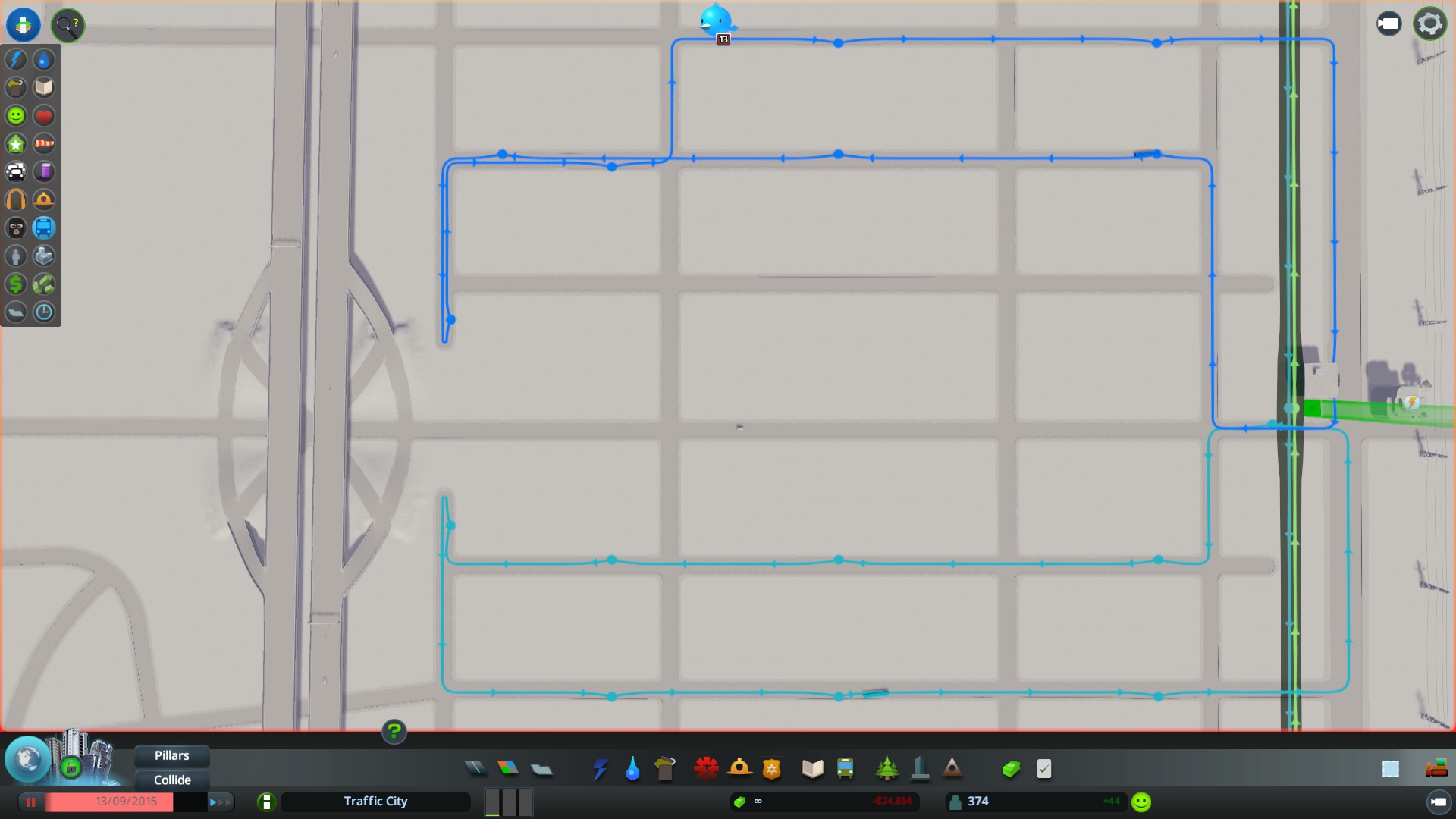 When they are done shopping, they can go to the same bus stop they got off when going to the metro, to go back to the stop they first got on when they left their house. Dead end streets near highways are great places to start local bus routes.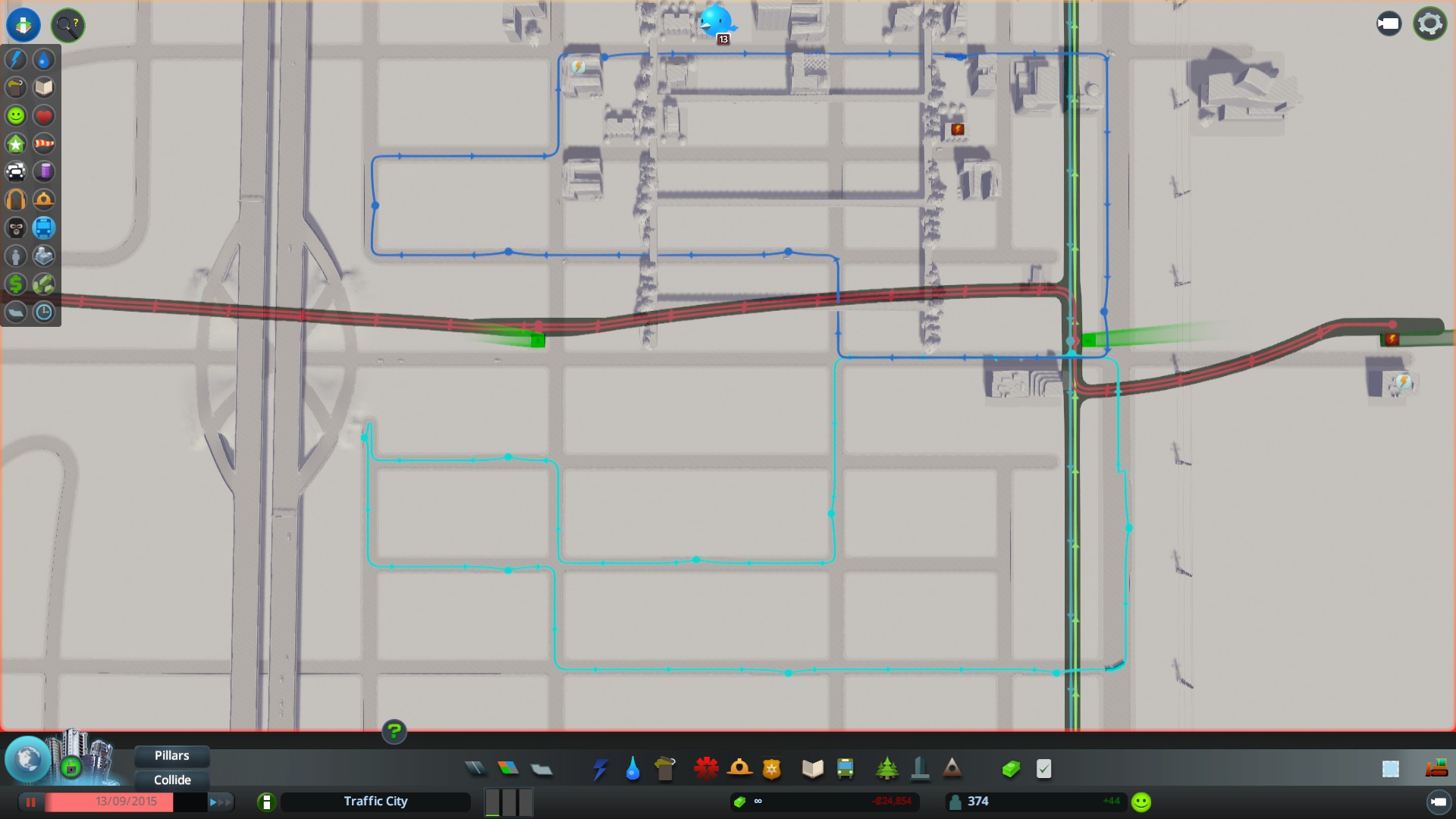
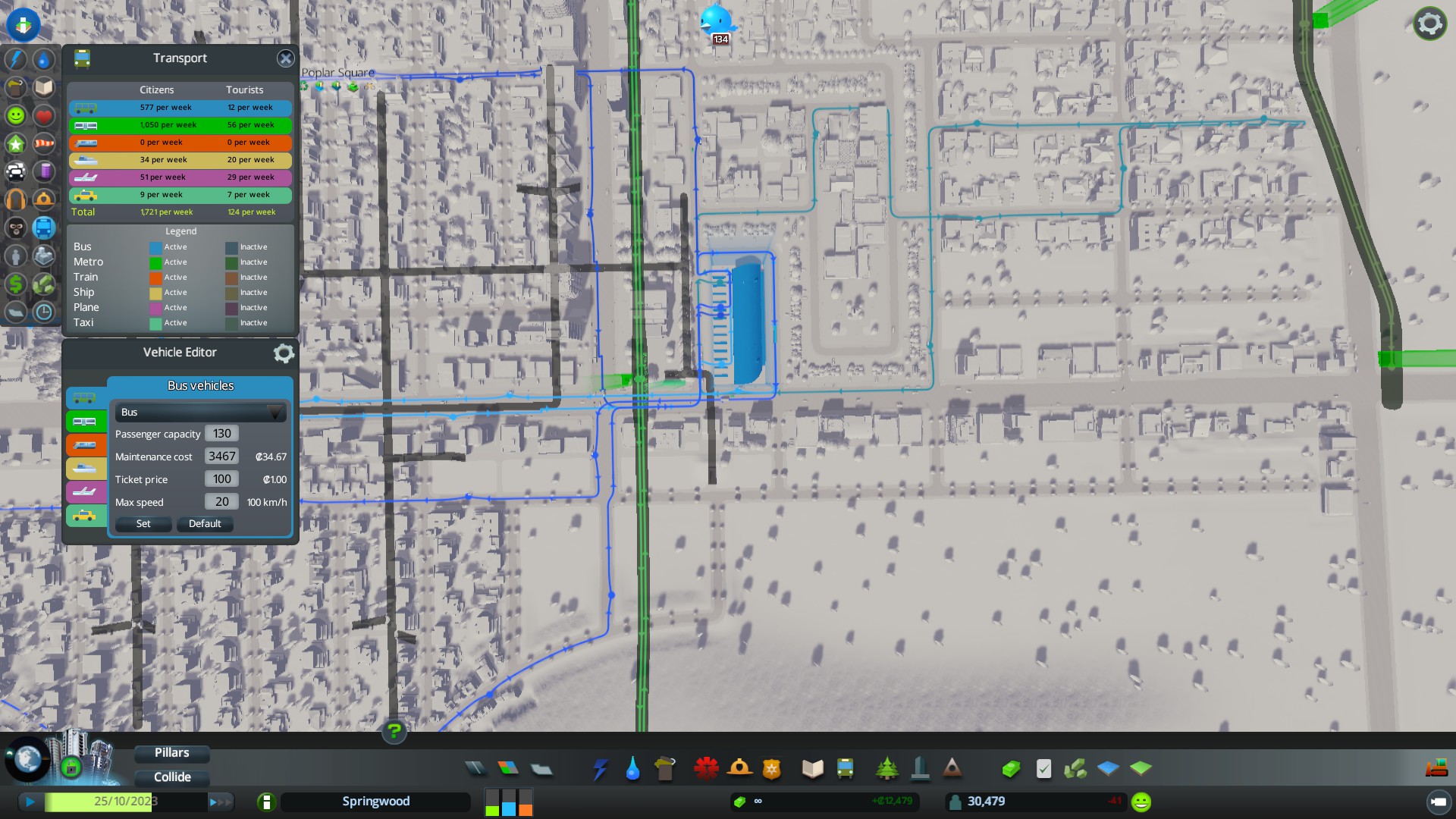 If you have the DLC then you have the bus transfer station. A great place for the transfer station is near a major arterial intersection. In many cities, when two arterials meet-up, a mall is born. And a mall is a great place for a transit station. The above image shows local bus routes converging at the transfer station, located beside a mall, a university, and a metro station. More pics here http://imgur.com/a/6jXYg
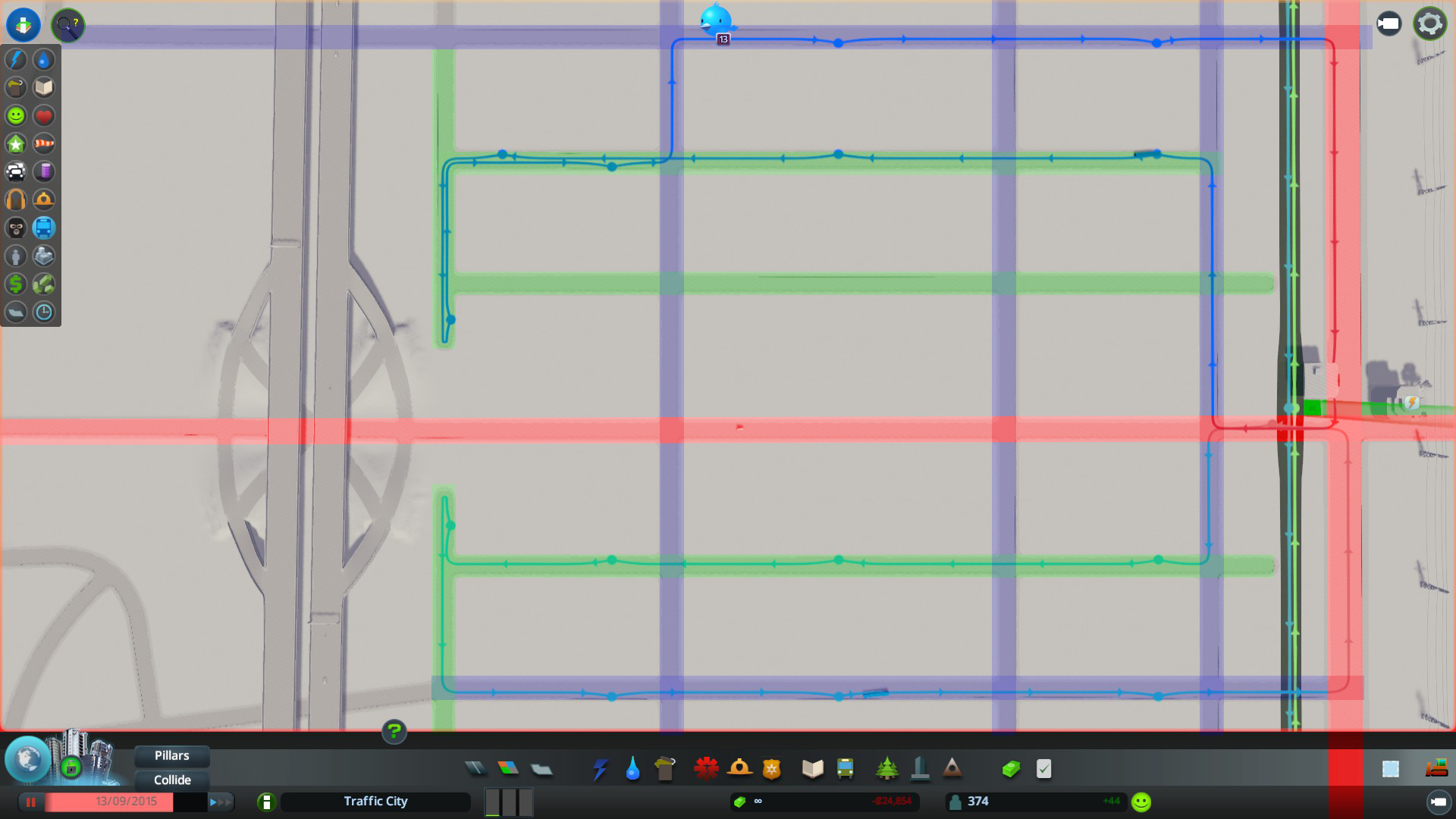 If you have taken to heart the lessons from Traffic 101 and 102, you don't actually need a public transit system. But that would be lame. A great transit system brings your city to life. By collecting your cims with buses, bringing them to one of a few dozen arterial metro stations which converge at a couple of major rail stations, you will have less traffic and lots of activity to watch.
Traffic 104 - Paths and Parks
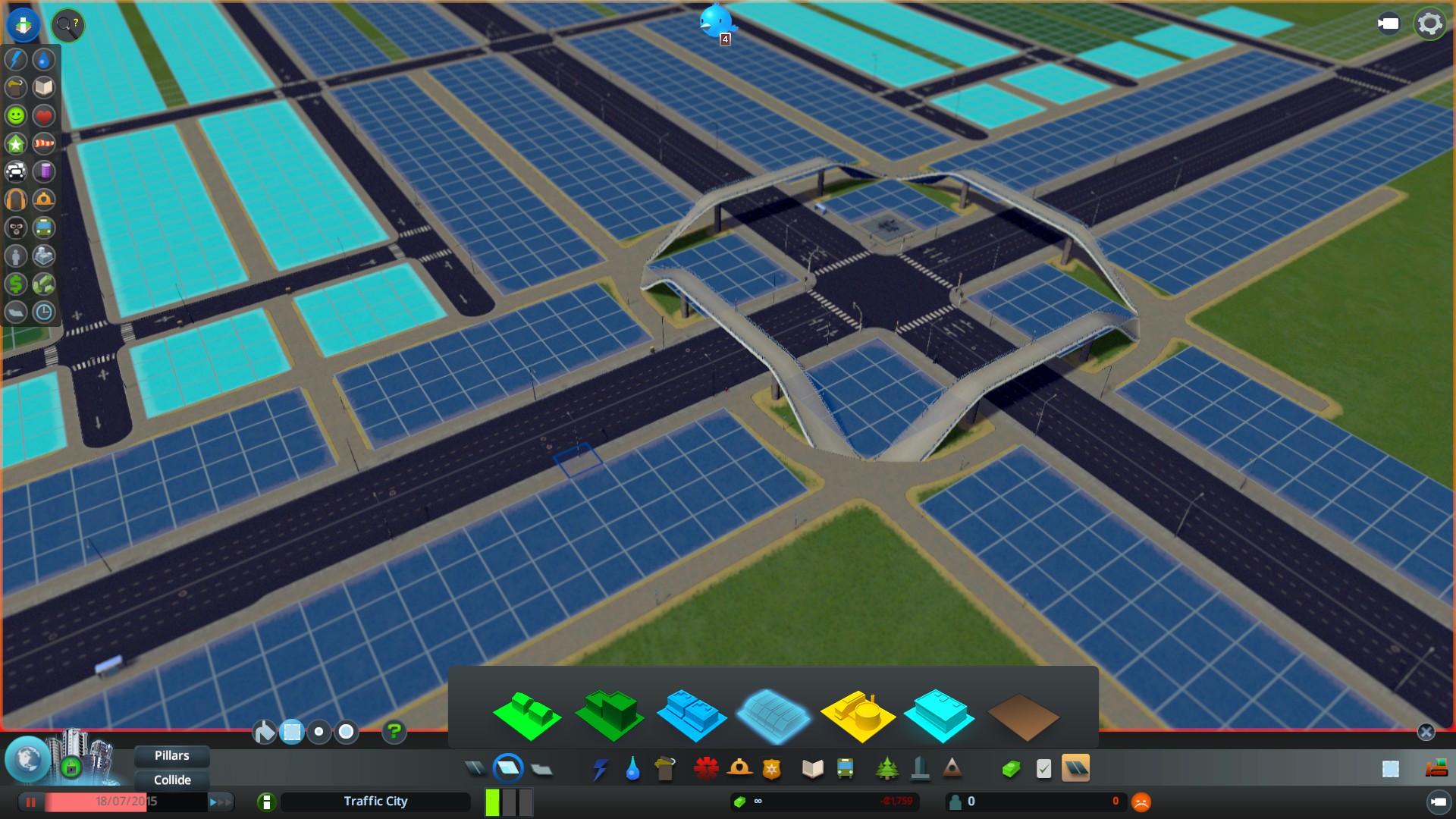 Elevated paths (or tunnels) near arterial intersections can remove a lot of the traffic slowdowns caused by huge waves of pedestrians. By setting the elevated paths (or tunnels) back we don't get 100% usage but we also don't lose valuable real estate.
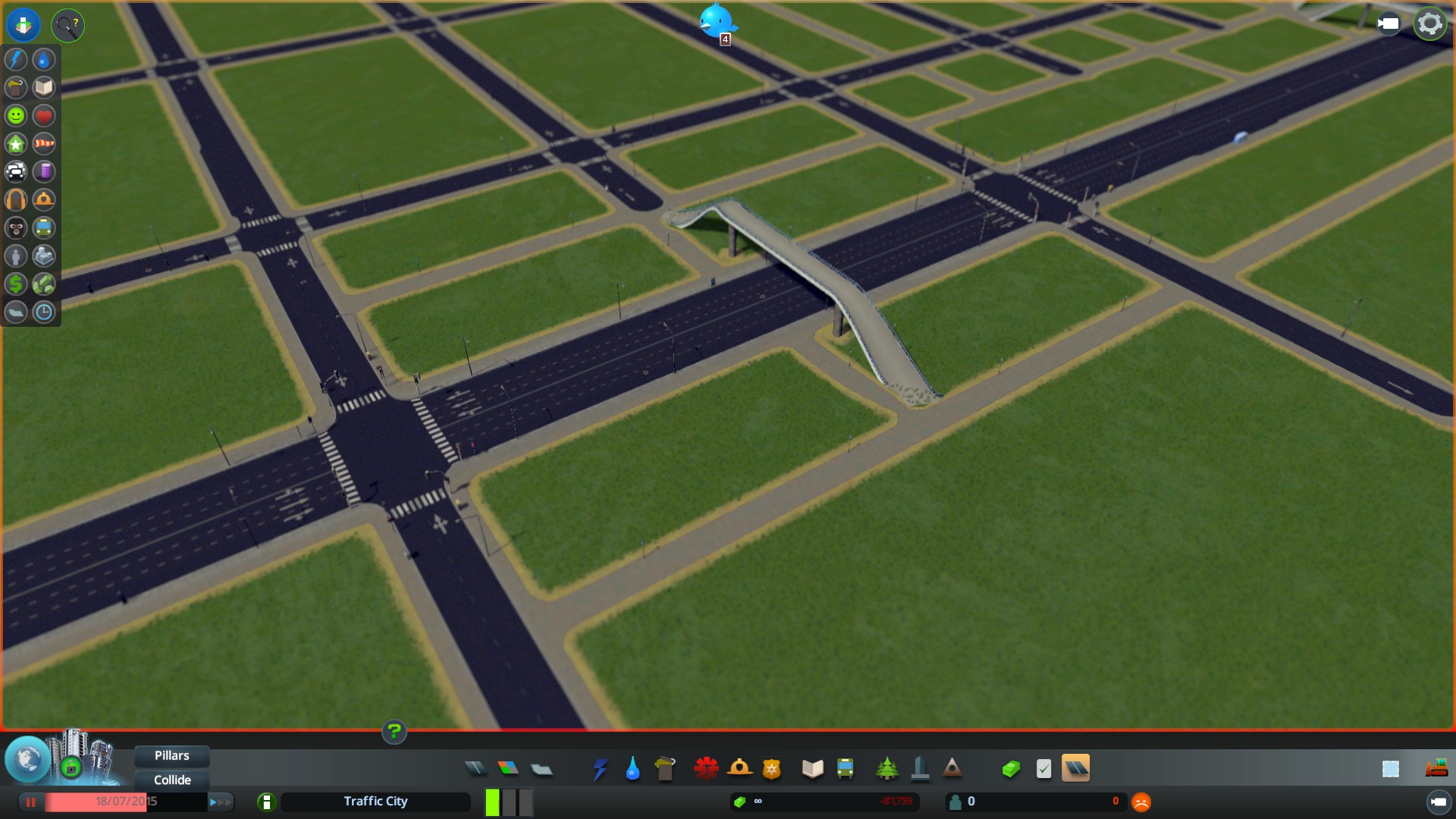 Adding some paths extending from the dead ends out to and across the arterial roads helps make walking a quicker route option.
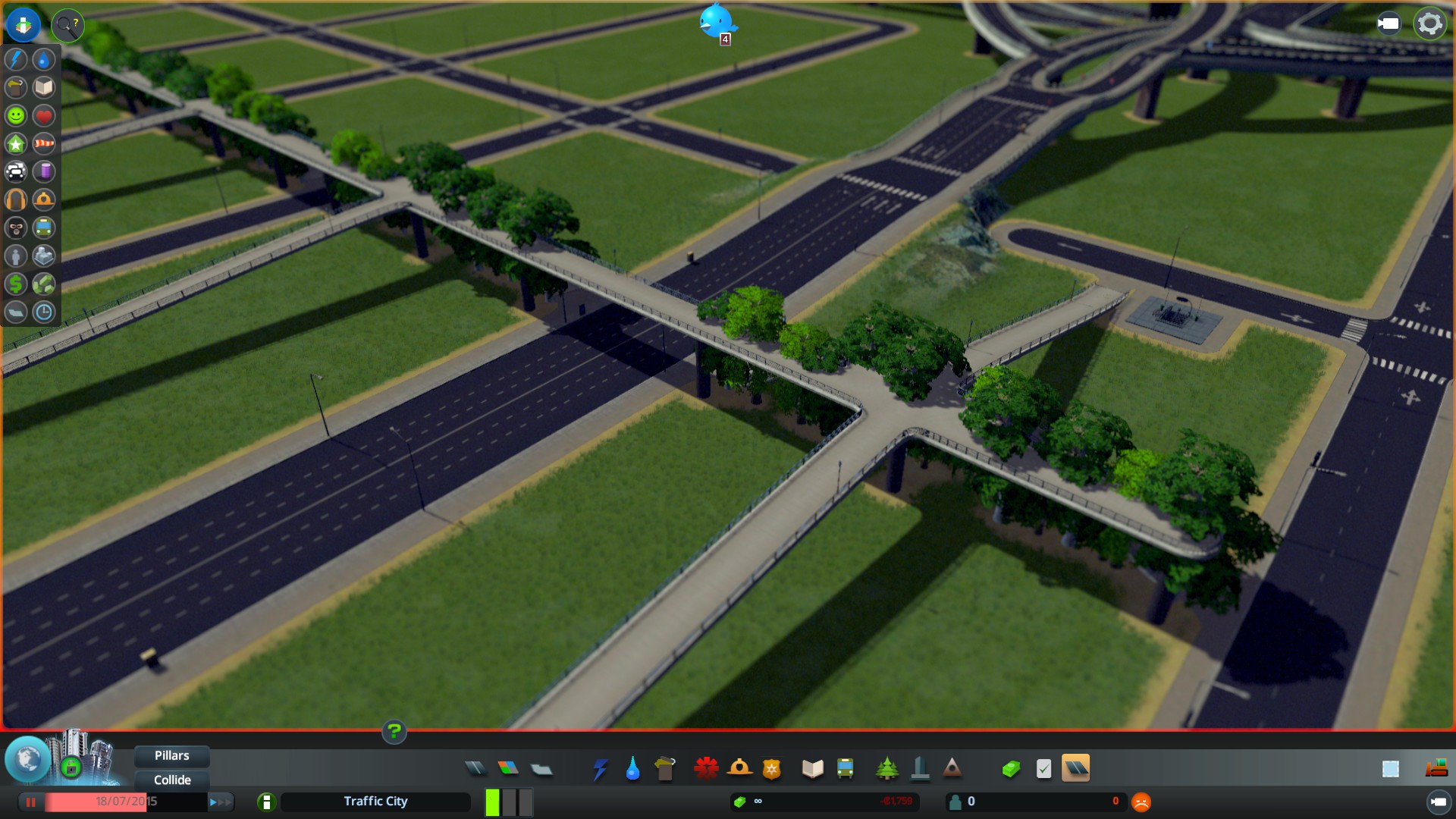 An extensive elevated path system may not be realistic, but it's cool and will drastically reduce traffic.
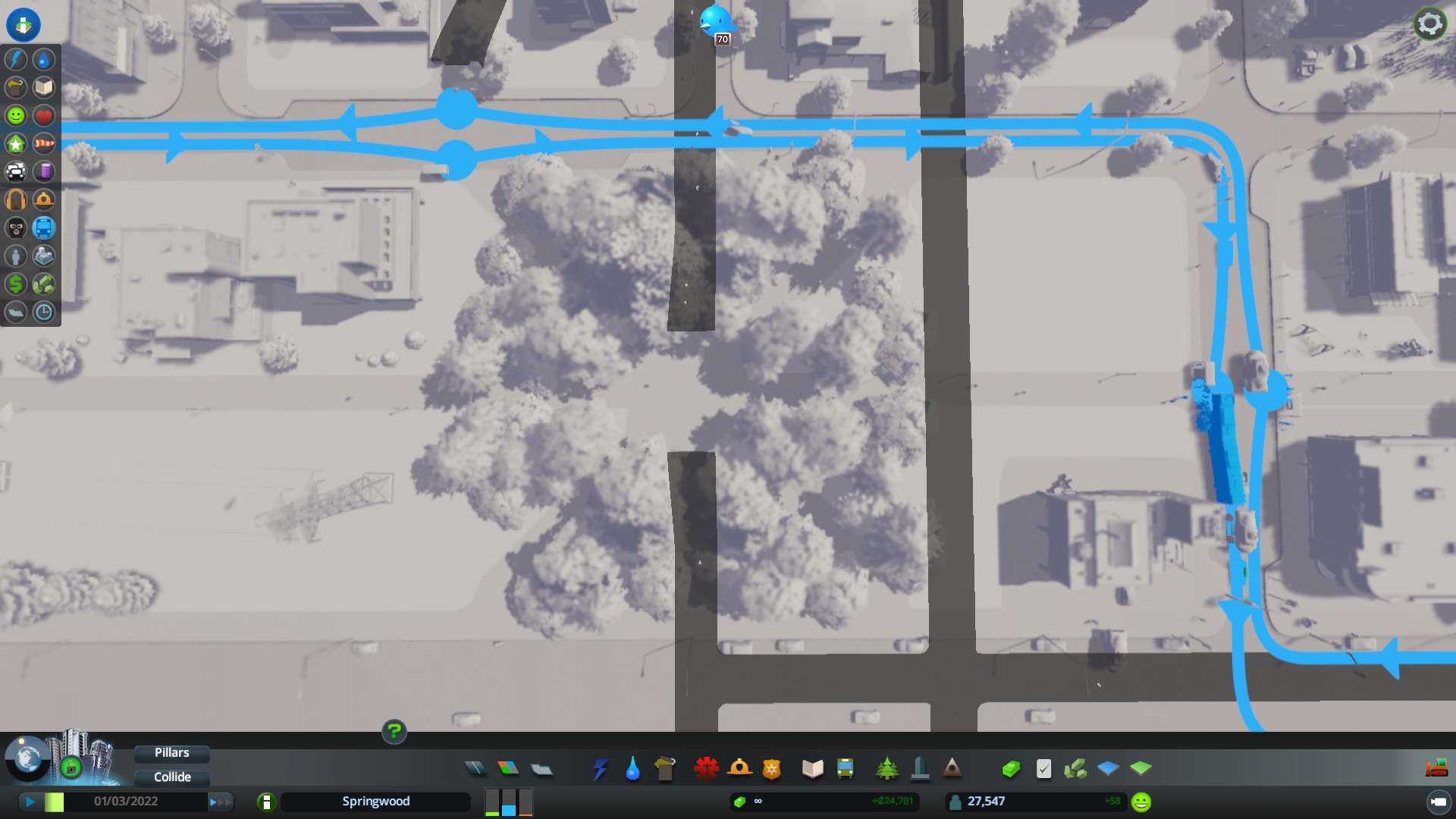 An extensive tunnel system may be a bit more realistic, it's cool and it will drastically reduce traffic.
 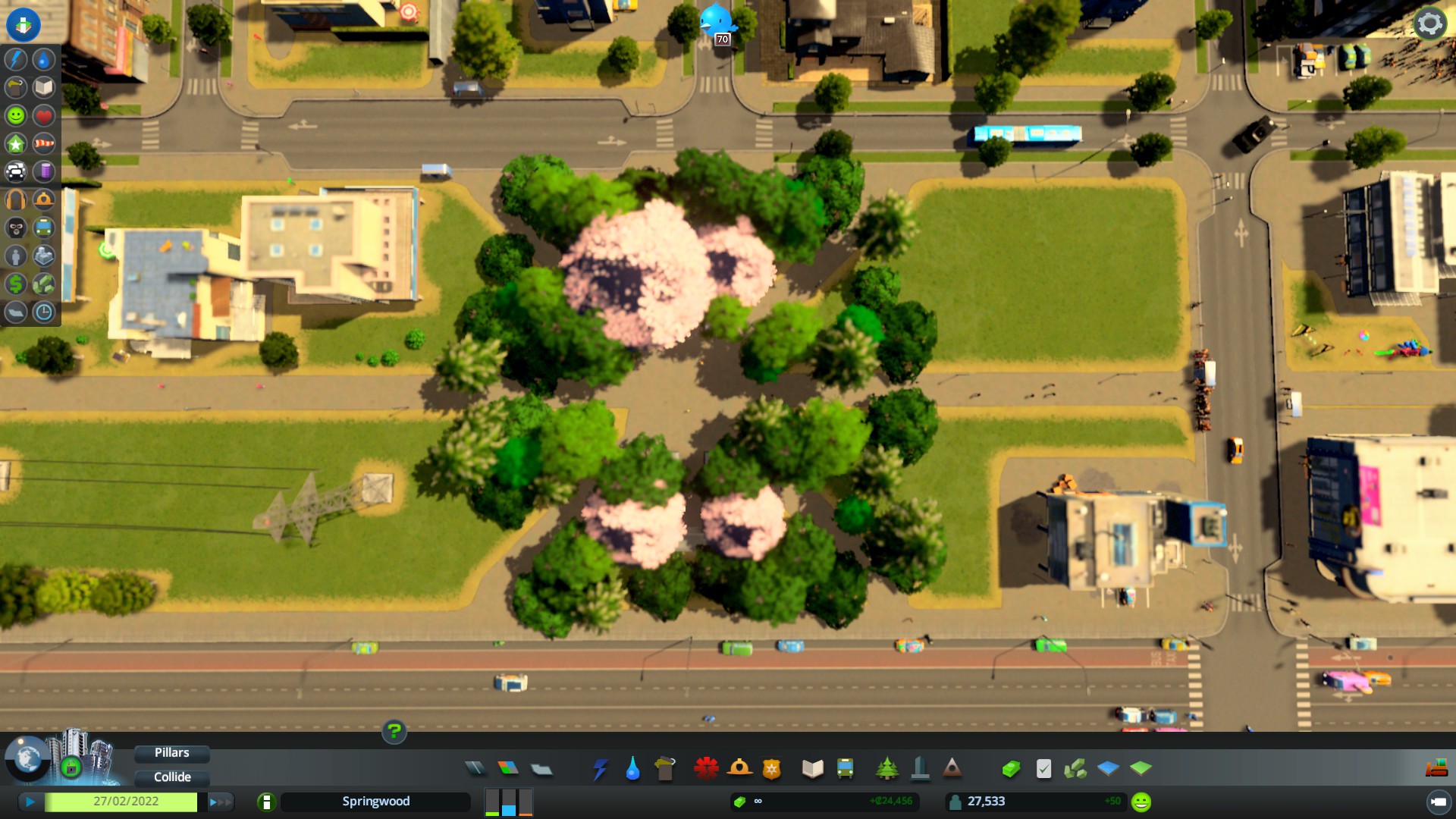 Before I start a new city but after I have selected a map, I like to build a custom park or two which act as both a park and a path intersection. Some custom trees are great at hiding tunnel entrances.
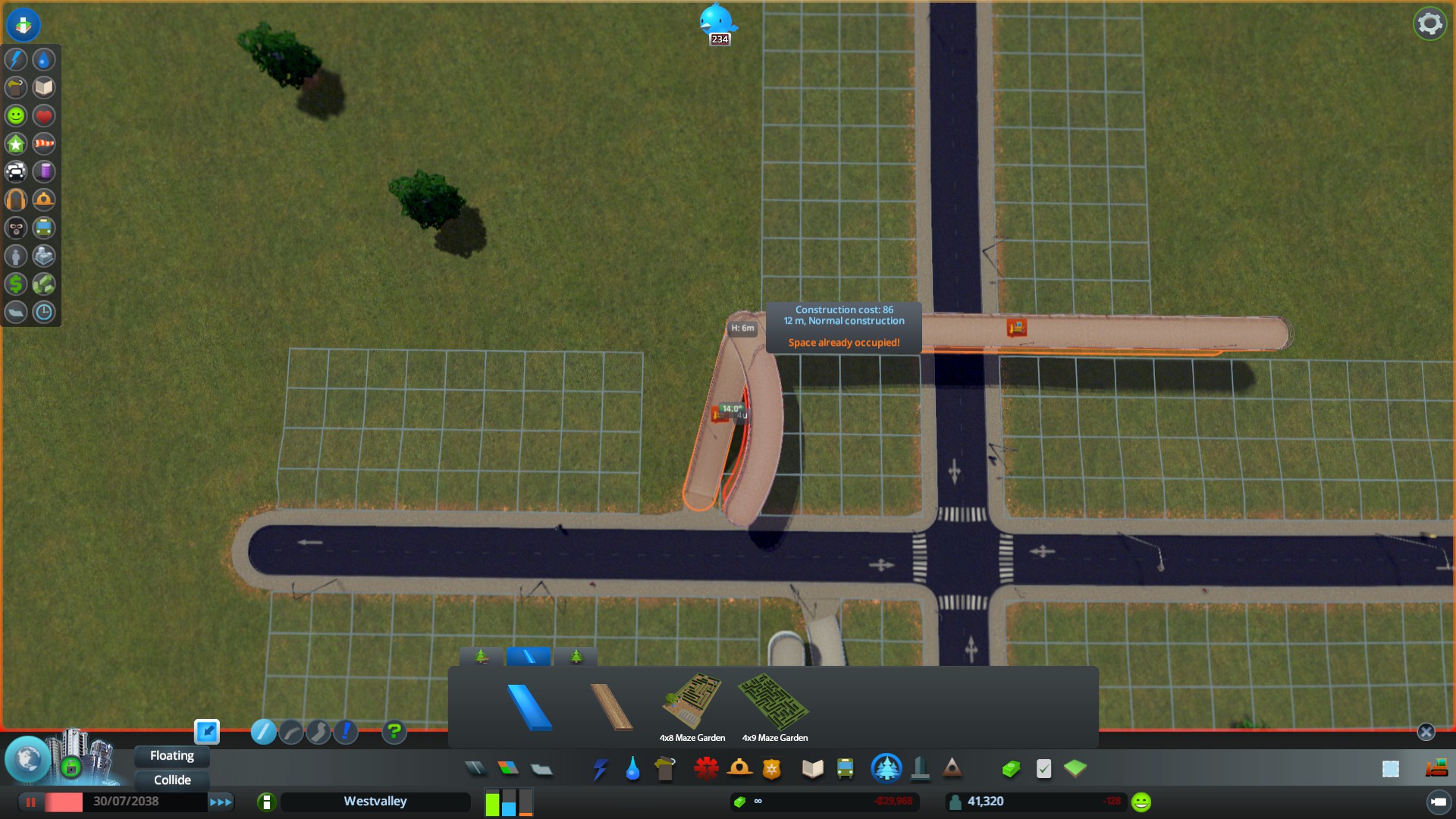 Building elevated ramps and tunnel ramps can be tricky.
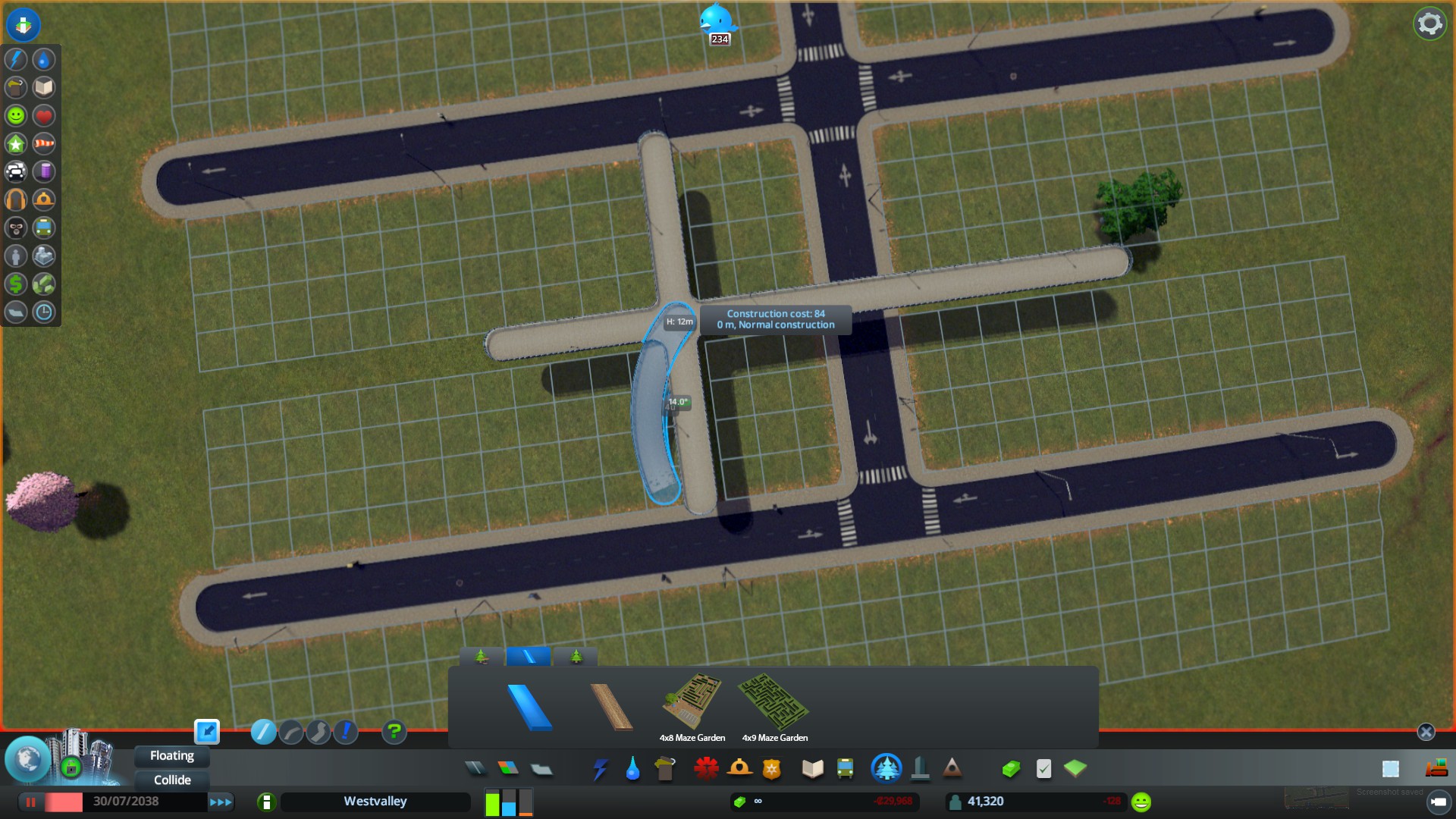 Connecting to an existing intersection is a lot easier.
 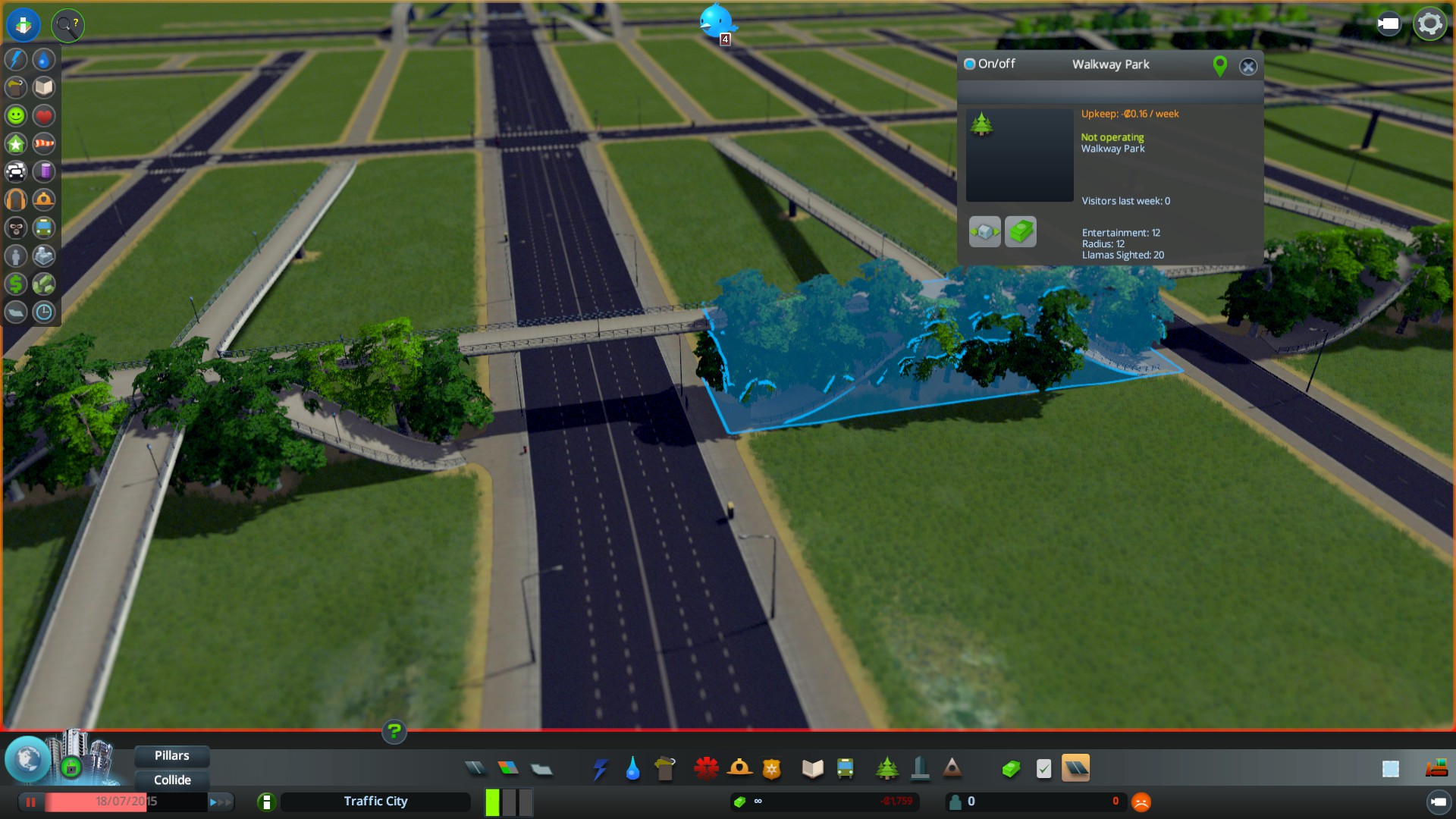 Building a bunch of ramps can be tedious but you can save time by making a park in the asset editor that is just ramps and attracts no tourism. You can find the one used in Traffic School City here http://steamcommunity.com/sharedfiles/filedetails/?id=479371537
And my Cherry tunnel park here
http://steamcommunity.com/sharedfiles/filedetails/?id=511532997
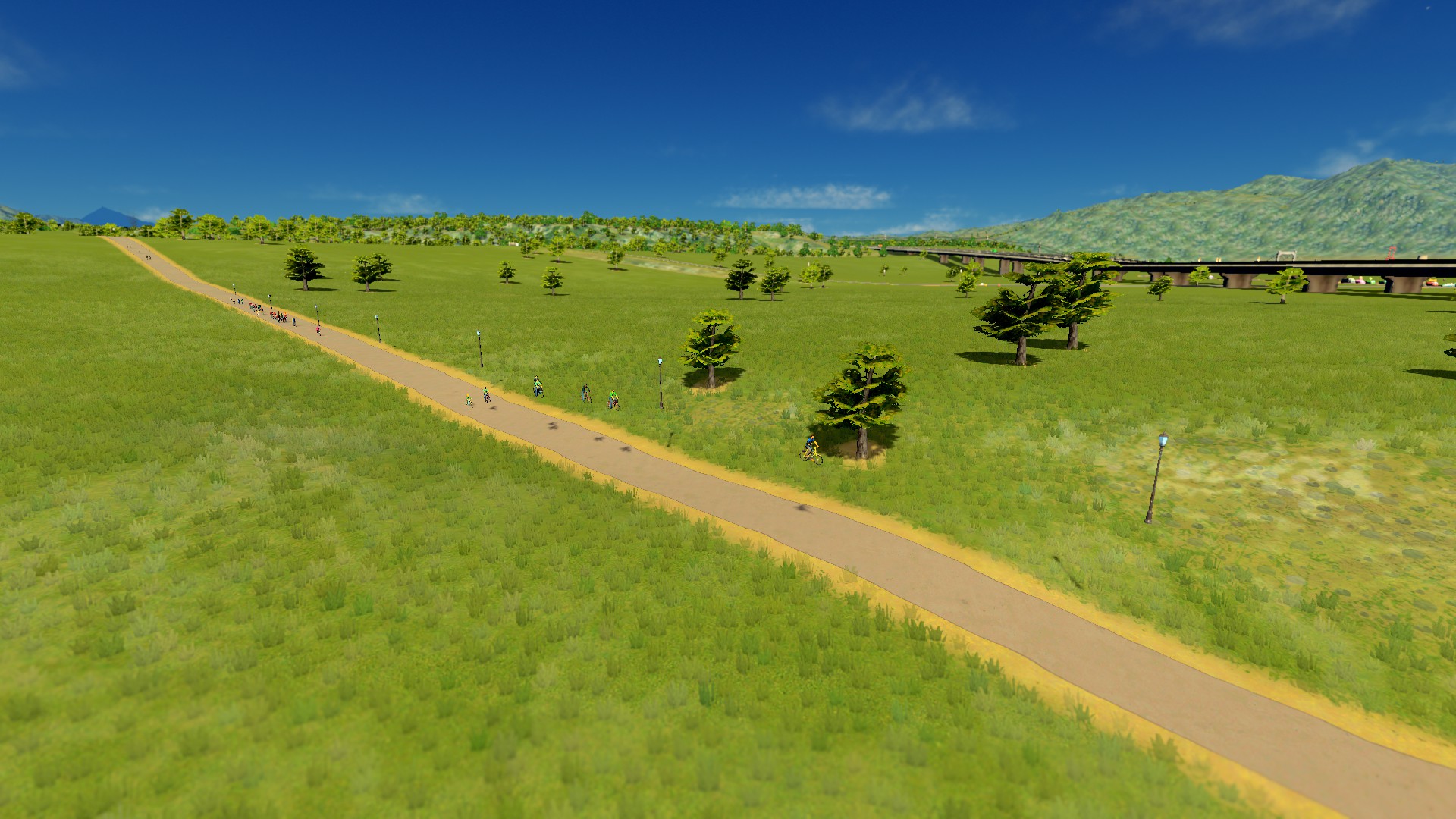 I still have some kinks to work out in what are best bike practices but by enabling the bike promotion policy and making the bike path the shortest route, traffic in my first AD city almost vanished.
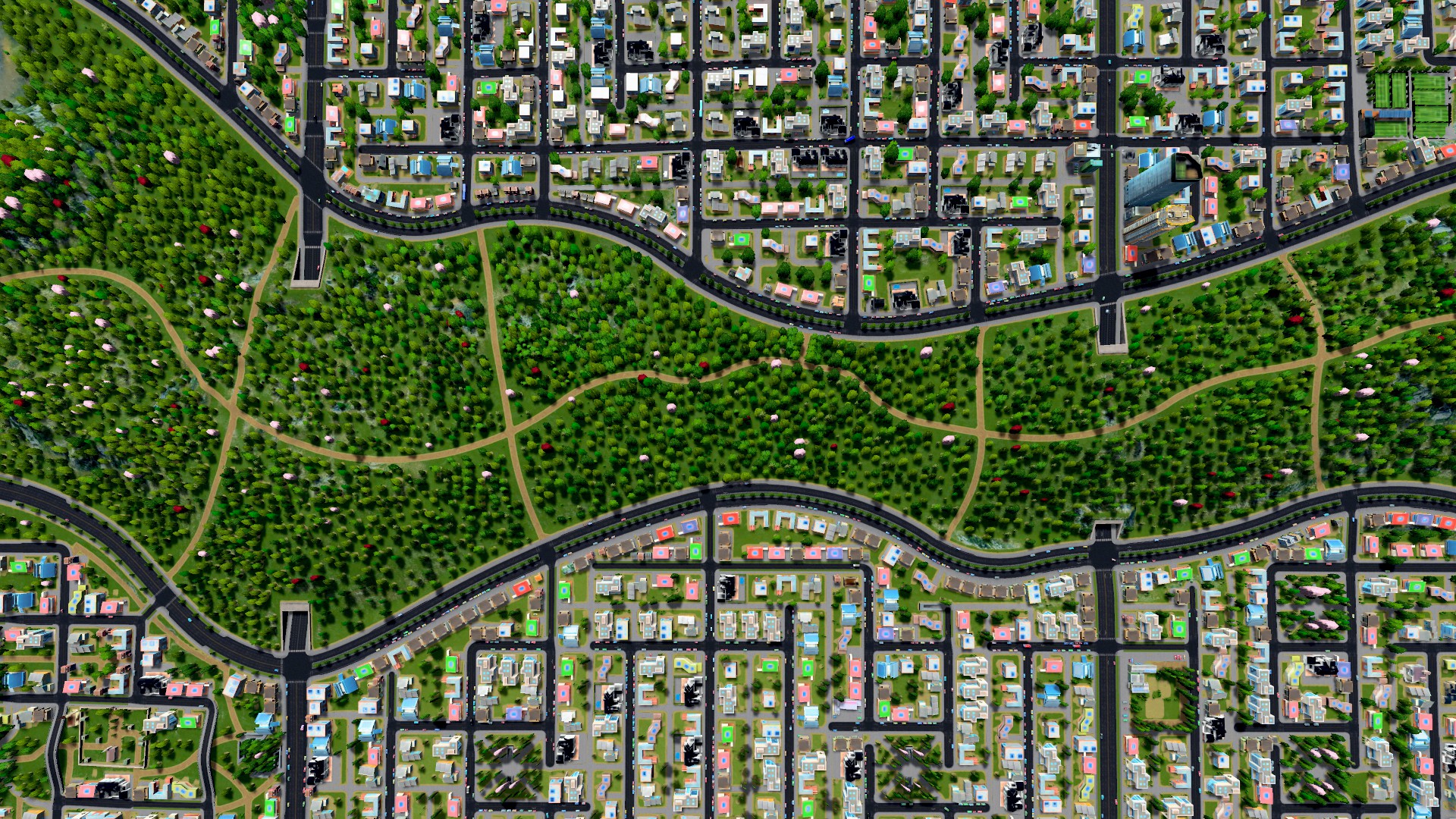 Parks and paths can create shortcuts and shorter trip times for your cims. They add colour and animate your city. Thinking of them as part of a transit system allows you to break free of rectangle grids.
http://steamcommunity.com/sharedfiles/filedetails/?id=511868886
Traffic 201 - Industrial Strategy
In this guide you will learn how industry works, how to keep industry working, and strategies for tackling the traffic challenge. A big part of handling industry traffic are trains and harbours which we will cover in Traffic 202.
Unlike the lessons in 101-102, I don't have rules for industry. Because you can build a city with a million people using only office and residential, how much industry or what types of industry you build is entirely a creative choice. Your only restrictions are the game's mechanics and your imagination.
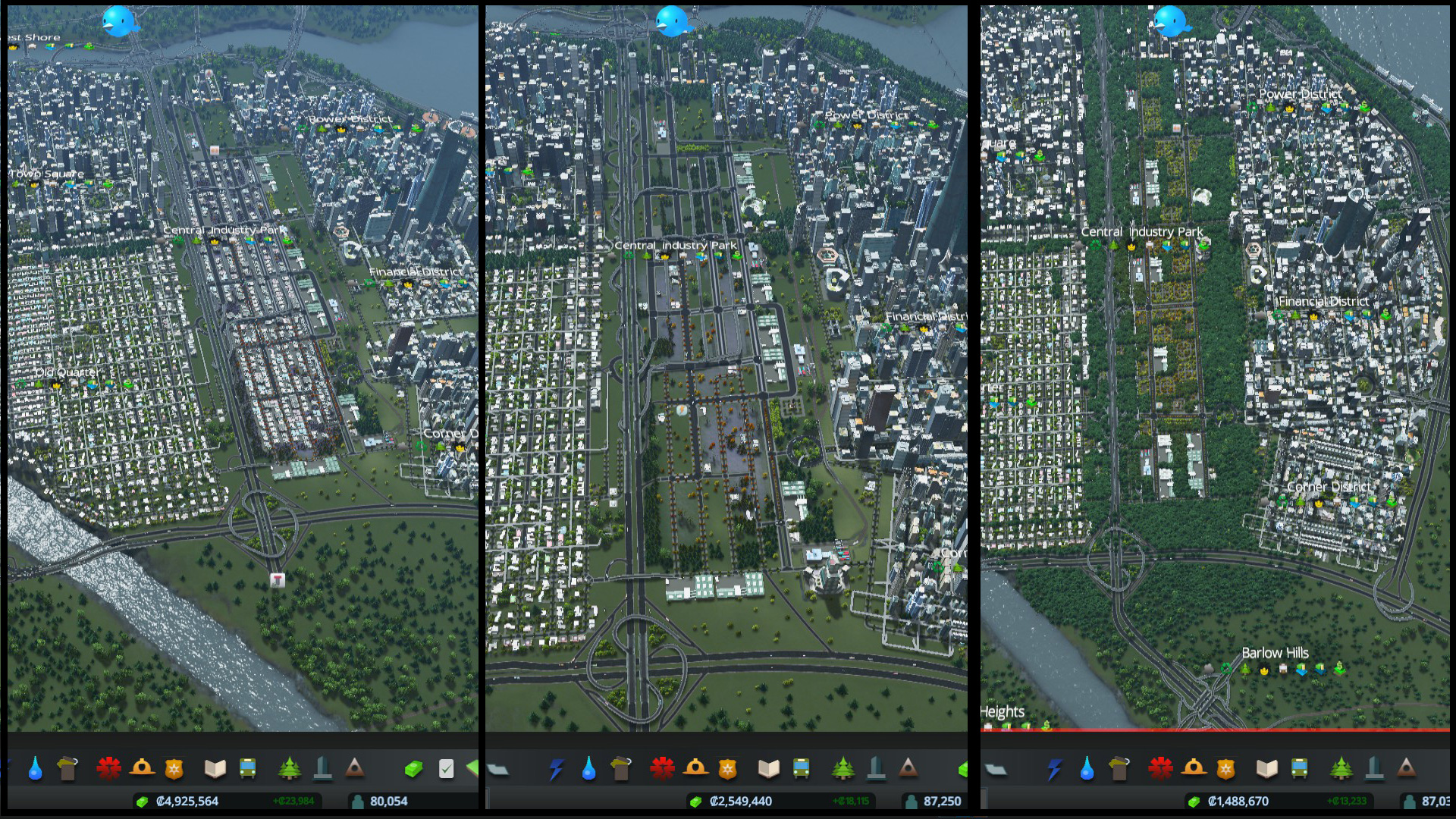 While there is no one way to build industry, in a classic progression game, you will experience some typical ebbs and flows.
As your cims average education increases it becomes harder to keep them in crappy jobs. If you have a bunch of educated workers labouring on a farm, the minute you unlock and zone office, your cims will quit the farm for a chance at a cubicle.
Often your first industrial sector is not in the ideal location. Since I know I am going to move my industrial sector, when I start zoning office I dezone the industry buildings which start complaining about no workers until my original site is empty. Once I have unlocked all the tiles, I can move it to a better location.
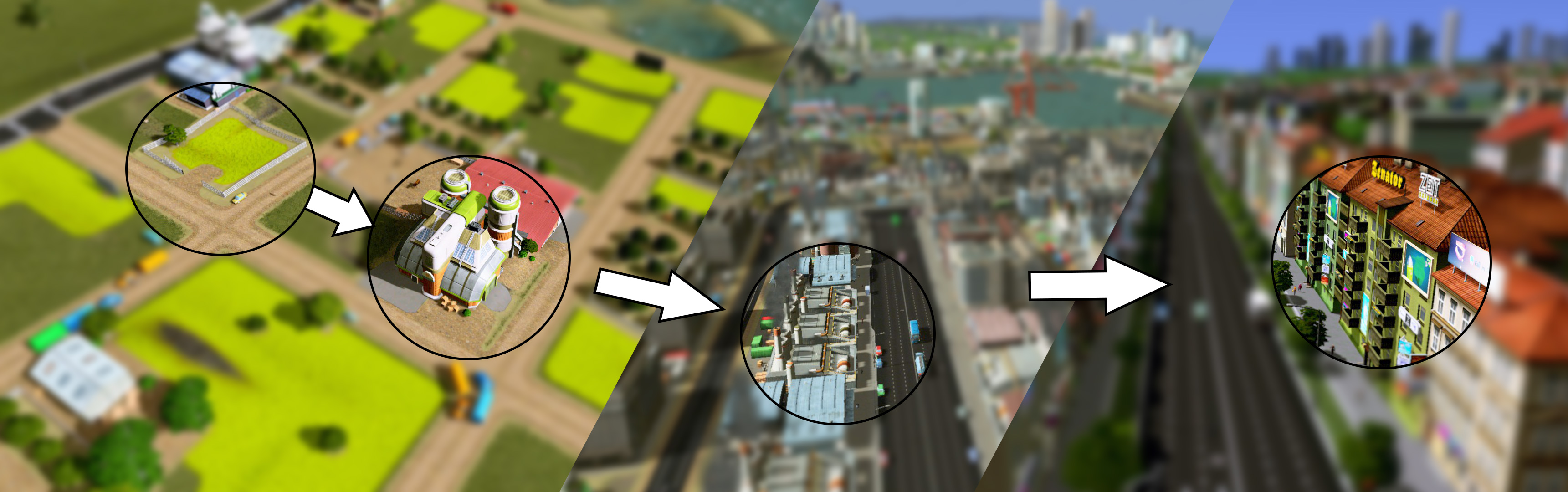 The specialized industries, farming, forestry, coal and oil produce raw products. The raw product is then transported to a specialized processor building in your specialized industrial zone. If you run out of oil or coal, or if you zone farm or forestry without fertile lands or trees, all your buildings will be processors.
Processed products are delivered to generic industry. They turn it into Goods for sale in your commercial sector. At each point along the production chain you will have heavy trucks coming and going to different industrial buildings, with light trucks make deliveries to your commercial sector.
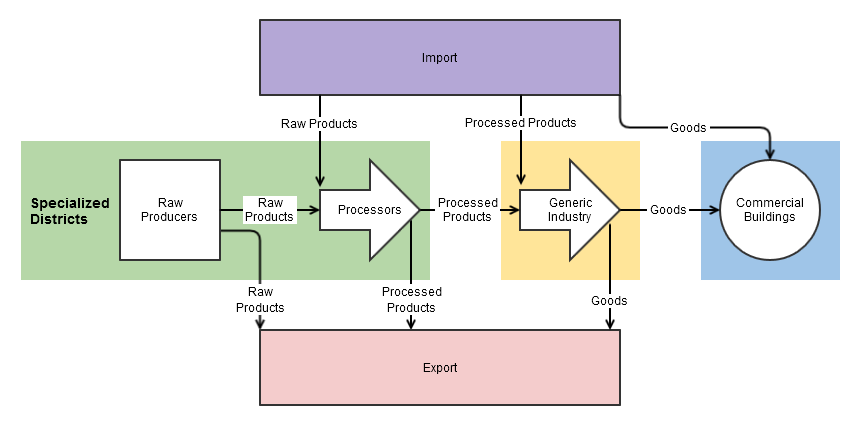 The above flow chart made by /u/DerMef (Original post http://redd.it/2yxfez) lays out the production chain in detail. While it may look complicated the concept is simple, anything you don't produce enough of locally will be imported, up to a point. Anything your industry produces in excess of what is needed by commercial will be exported, up to a point.
If you are wondering where that point, at which you can't import enough or export enough is, I don't know. If you can make use of all the highway, rail, and ship connections, (and your map has all 4 of each) your point will be higher than if you don't have those things.
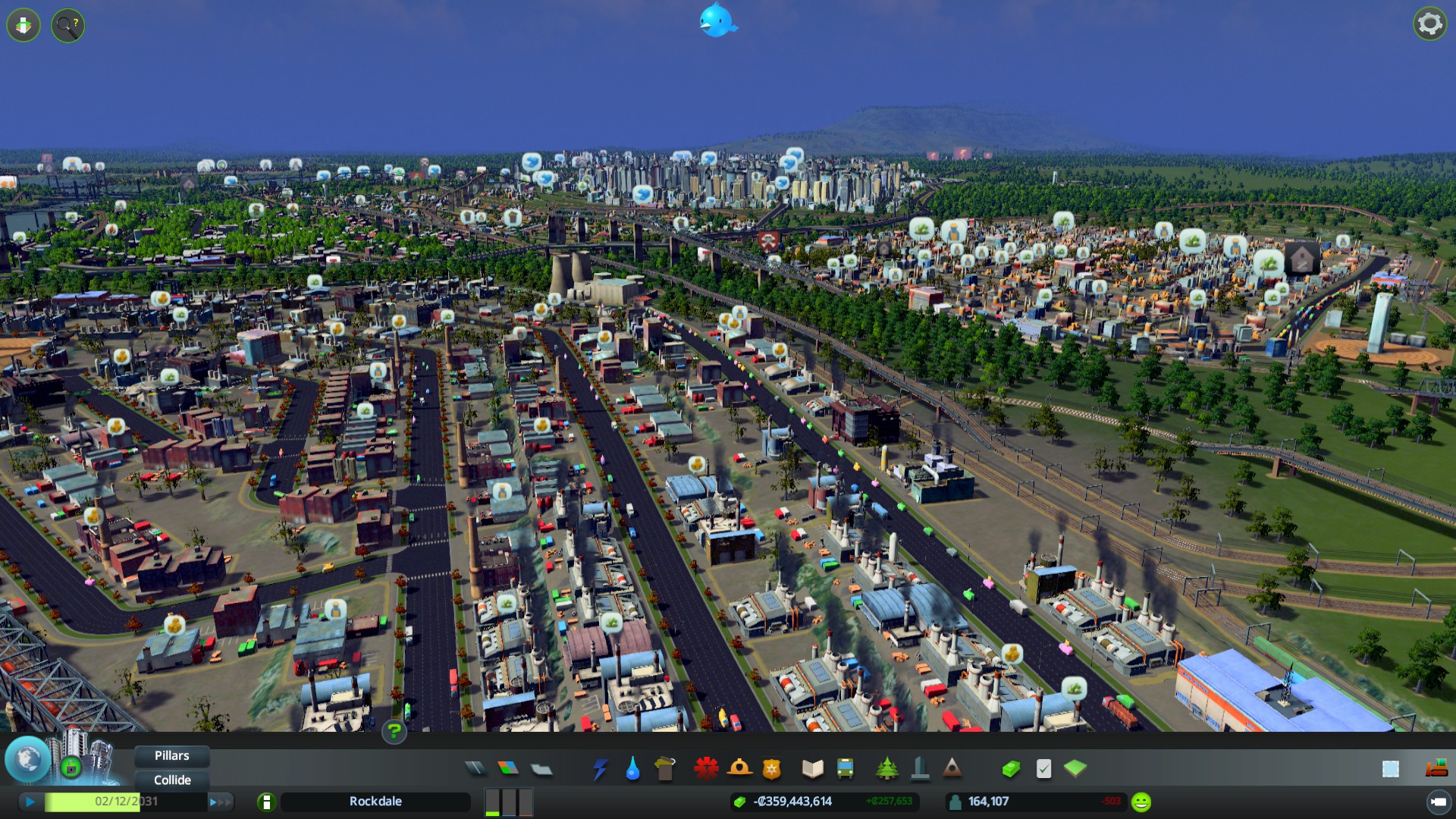 You will know you have reached that point when the bad icons -not enough goods, -not enough buyers, and -not enough raw products begin to appear.
Unlike the not enough smart or dumb workers icons, which are easily solved, the bad icons can quickly cripple your budget. If you see these start popping up, pause and diagnose the problem. Traffic will probably be your first one, but even if you have a solid road network you might have reached a capacity limit on your external connections. Or a harbour burned down and you didn't notice. Or you placed a harbour to close to a shipping line and the boats are getting confused and stuck. Or you have found a new way ♥♥♥♥ can go wrong.
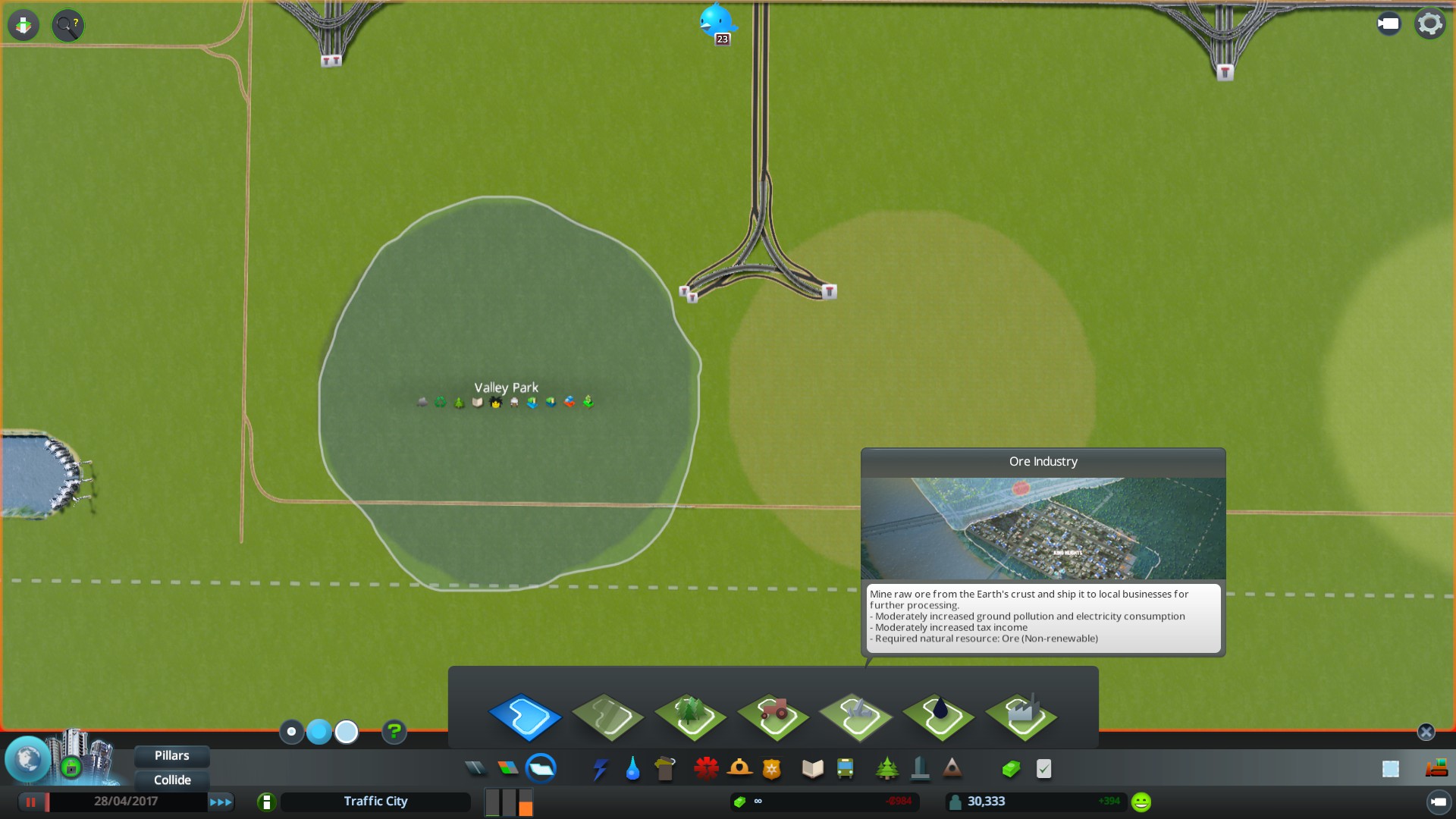 To set up a specialized industry which produces raw resources, you have to create a district over the appropriate resource then select the matching district tab and click on on your newly created district.
Oil and ore will run out eventually (without using the infinite oil and ore mod) while farm and forestry are renewable resources. NOTE: Planting trees on fertile land will soak up the fertility resource and you can't get it back.
A 4x4 farms or forestry plot will create 16 low education jobs.
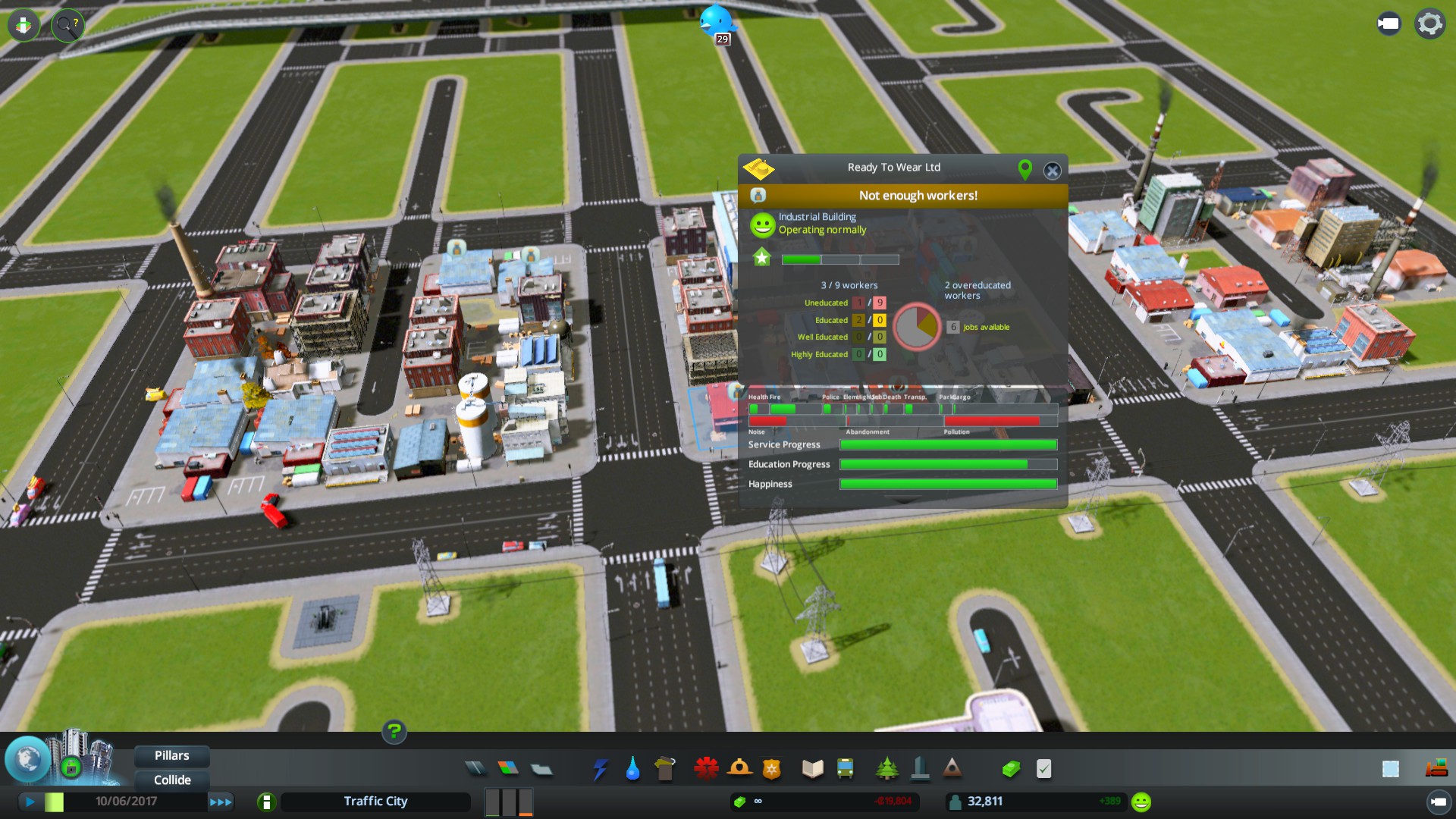 When you first see the -not enough workers icon, DON'T PANIC!
You have a good problem and there are 3 easy ways to fix it..
- Do nothing
- Zone more residential
- Level up industry
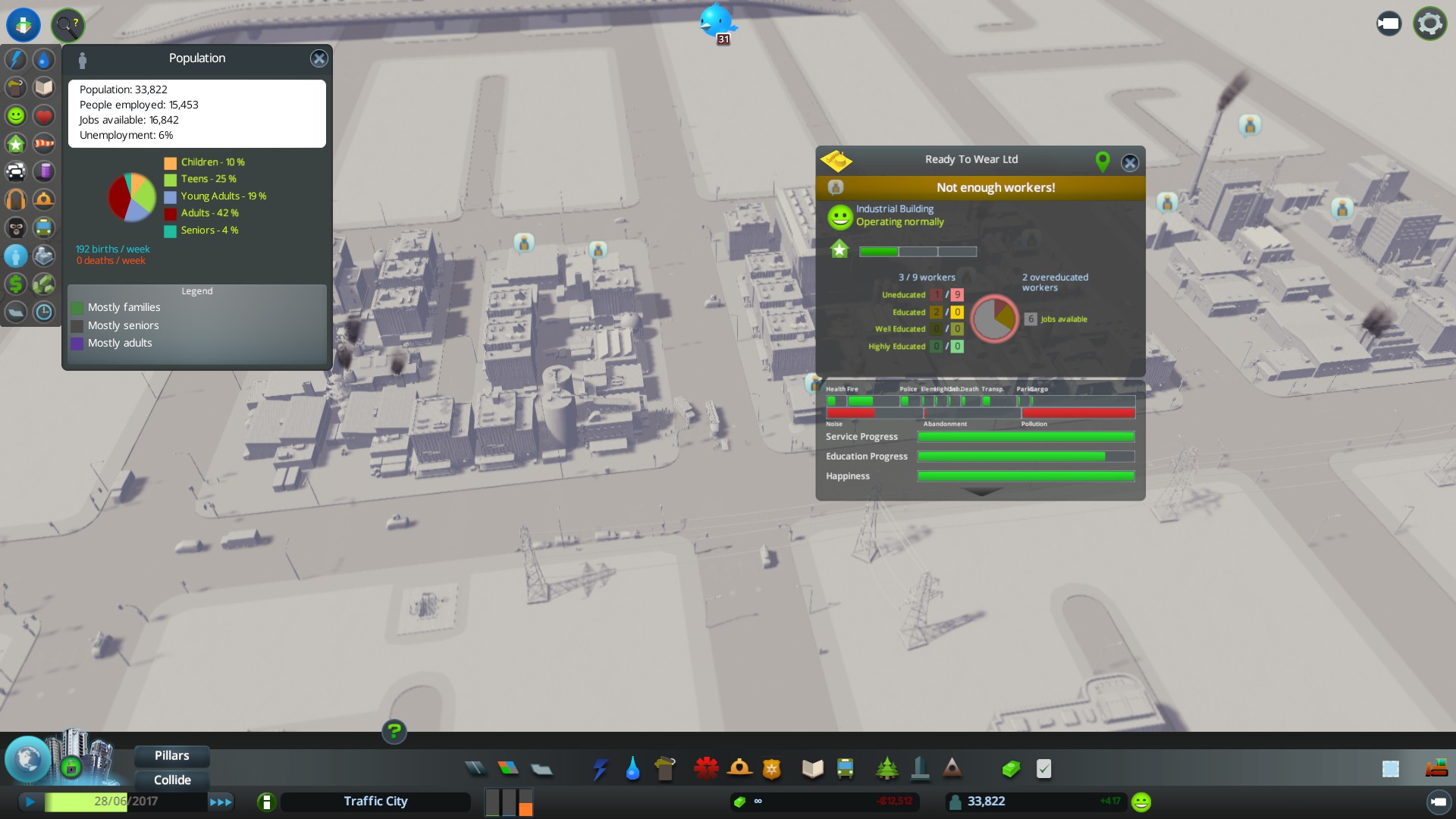 To figure out which fix you need, check your demographics info tab. This will tell you the unemployment rate, the size of your workforce, and the size of your upcoming workforce.
In this picture, the solution to the not enough workers problem is to do nothing. Half the city are kids in school. When they graduate they will need a job. If I don't zone any more industry or office, those jobs will get filled and the unemployment rate will start to go up.
Highly educated cims will take lower education jobs, eventually. From my experience, a 10% unemployment rate will get them to work in generic, 12-13% for coal and oil, and 14-15% for farm and forestry.
If you don't have a ton of kids and unemployment gets too low, you will need more residential. If you don't have demand for residential, level up your existing residential buildings and you will increase your population. A great way to level up residential is to add schools, which means one solution to not enough uneducated workers is to build more schools!
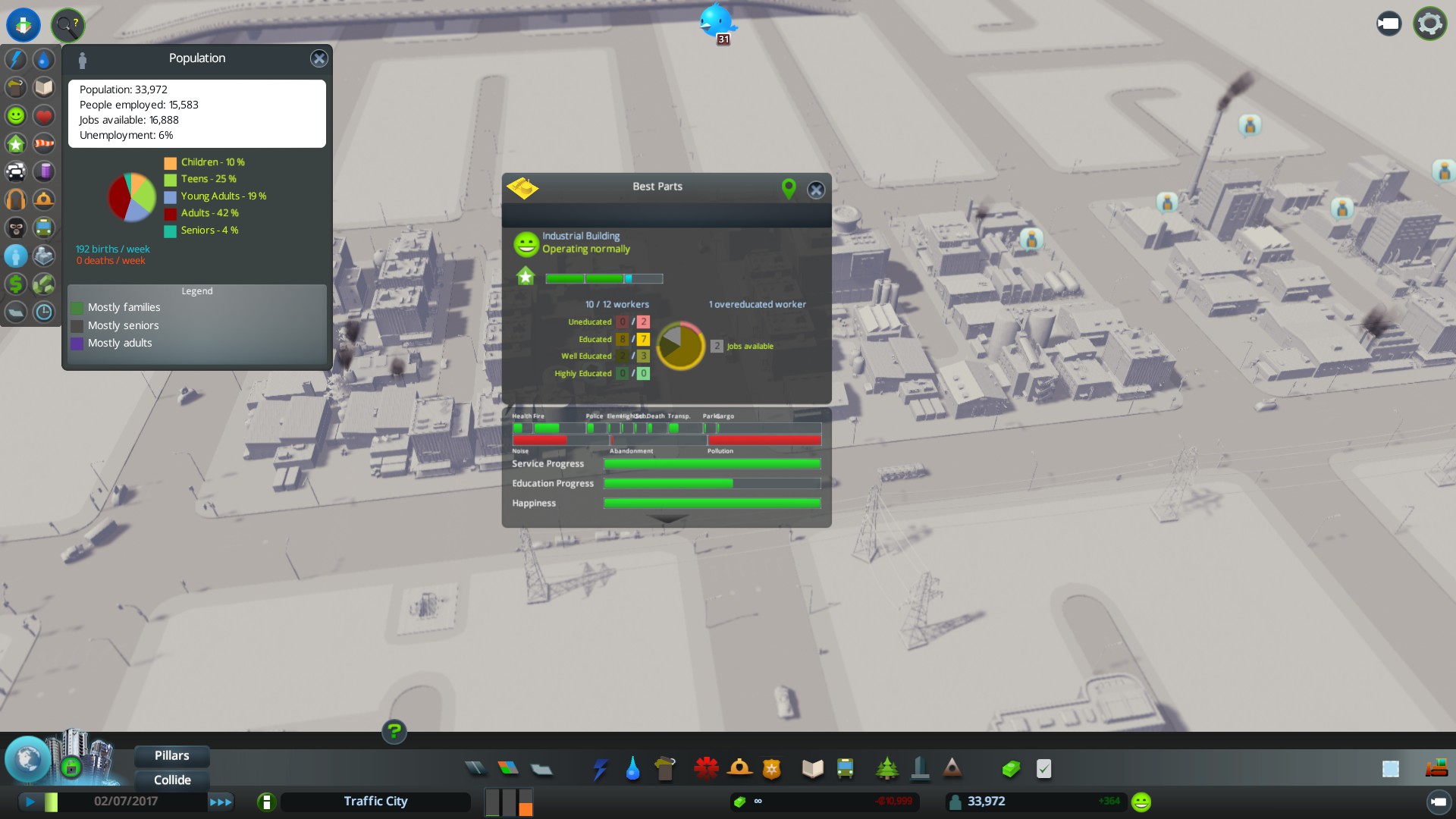 If you have a highly educated population and unemployment between 6-10% then adding more residential might not work. You have enough workers, they just want a better job. Leveling up industry will increase your available jobs and provide jobs for people with higher education.
A 4x4 Level 1 generic industry building has 16 uneducated jobs, while a 4x4 Level 3 generic industry building has 32 jobs, 16 of those being highly educated positions.
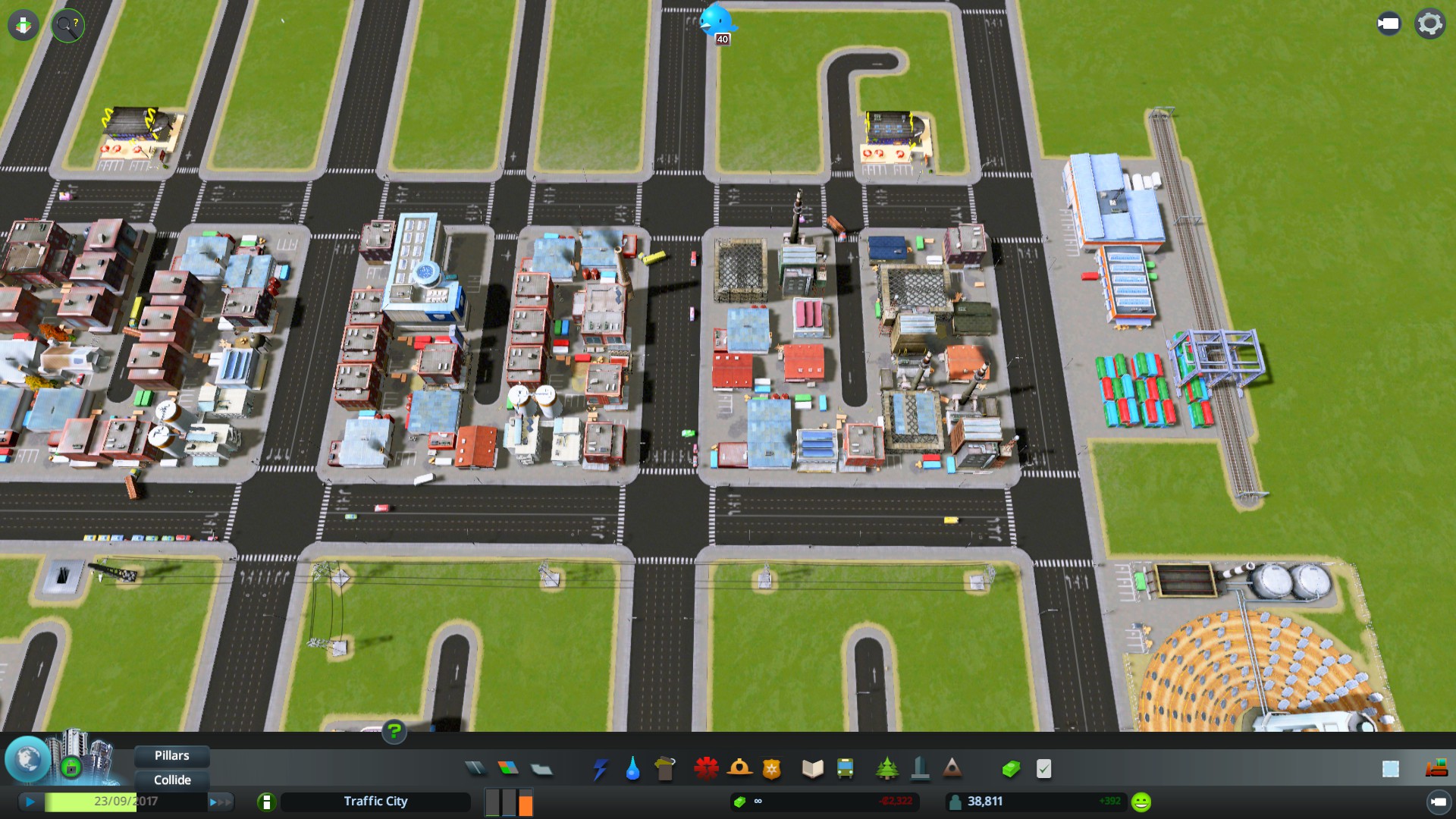 If you need to rush the level for industry, drop a cargo station nearby. You don't need to connect it to anything to get industry to level up. In fact, while cargo trains can be great, if you build a kick ass road network, you don't even need them.
Traffic 202 - Industrial Traffic
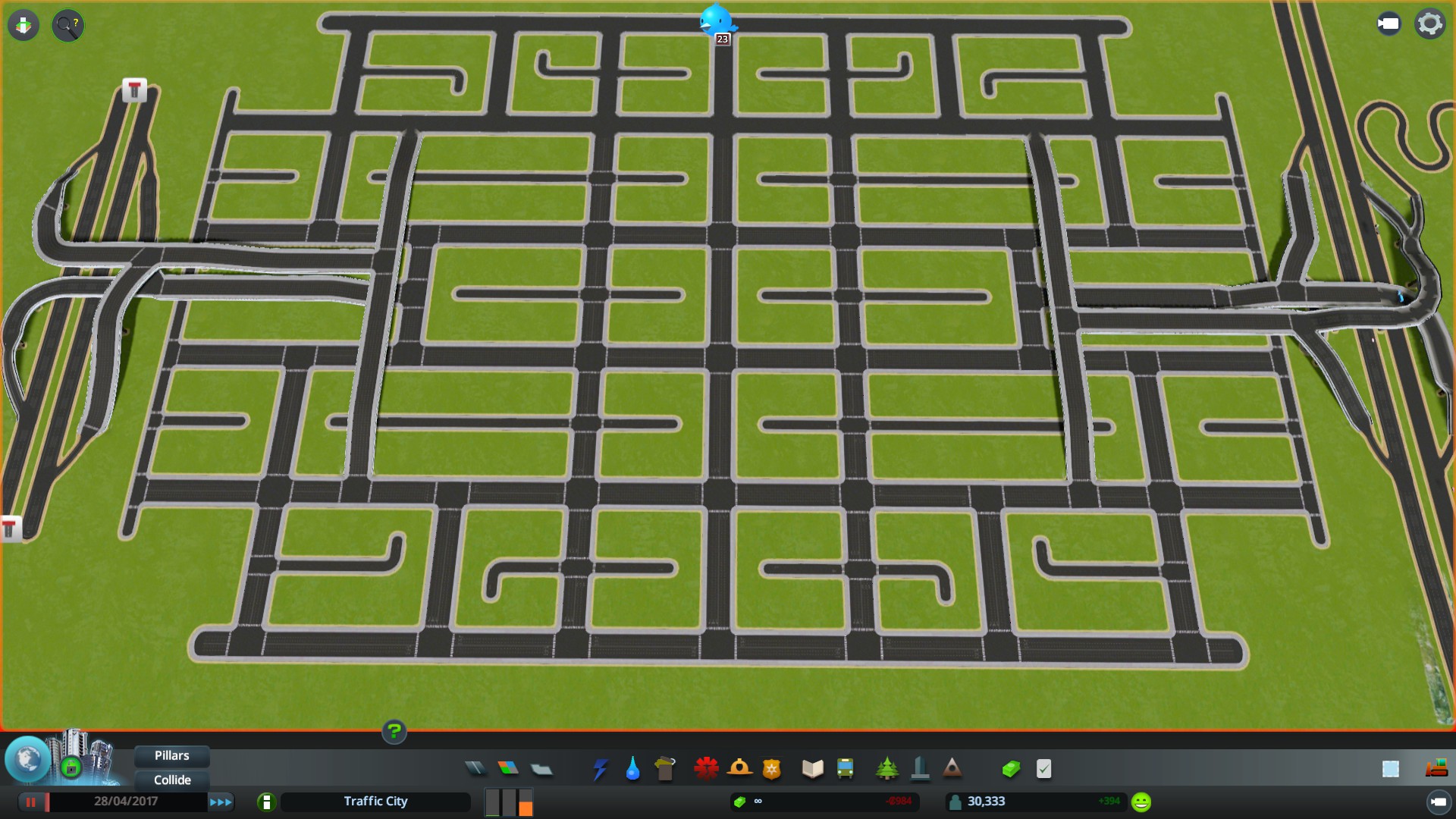 Anything less than a kick ass road network and you are going to get crushed by industrial traffic if your goal is produce everything locally.
I tried a number of different industrial layouts, with varying degrees of success until I found the IHT by Brian, which you can find in this collection
http://steamcommunity.com/sharedfiles/filedetails/?id=482947010
The IHT was built based on the examples and concepts from this post by /u/mitchells00
You can see /u/mitchells00's initial IHT in action here[gfycat.com].
The key lesson from the IHT and /u/mitchells00's design is to separate and evenly disburse the incoming and outgoing traffic while still allowing for trucks to drive around the industrial sector to make multiple deliveries.
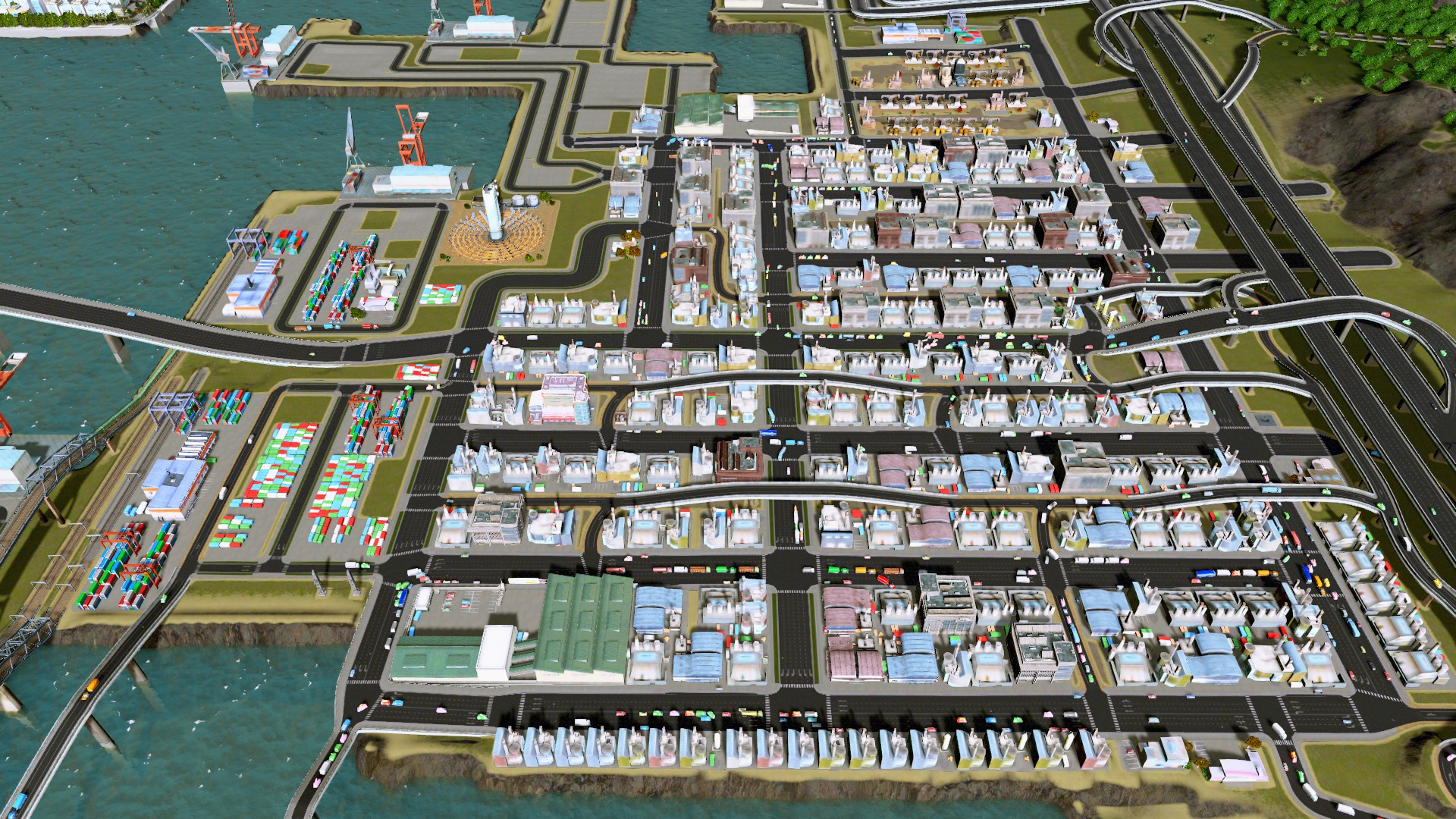 The concepts in the IHT can be adapted to place your industry in a slightly more realistic setting like a harbour area. The benefit of creating your own industrial area to match the environment is the level up benefit. From being close to harbours or your cities other services like hospitals and schools, leveling up your industry is even easier then a large IHT on the outskirts of town.
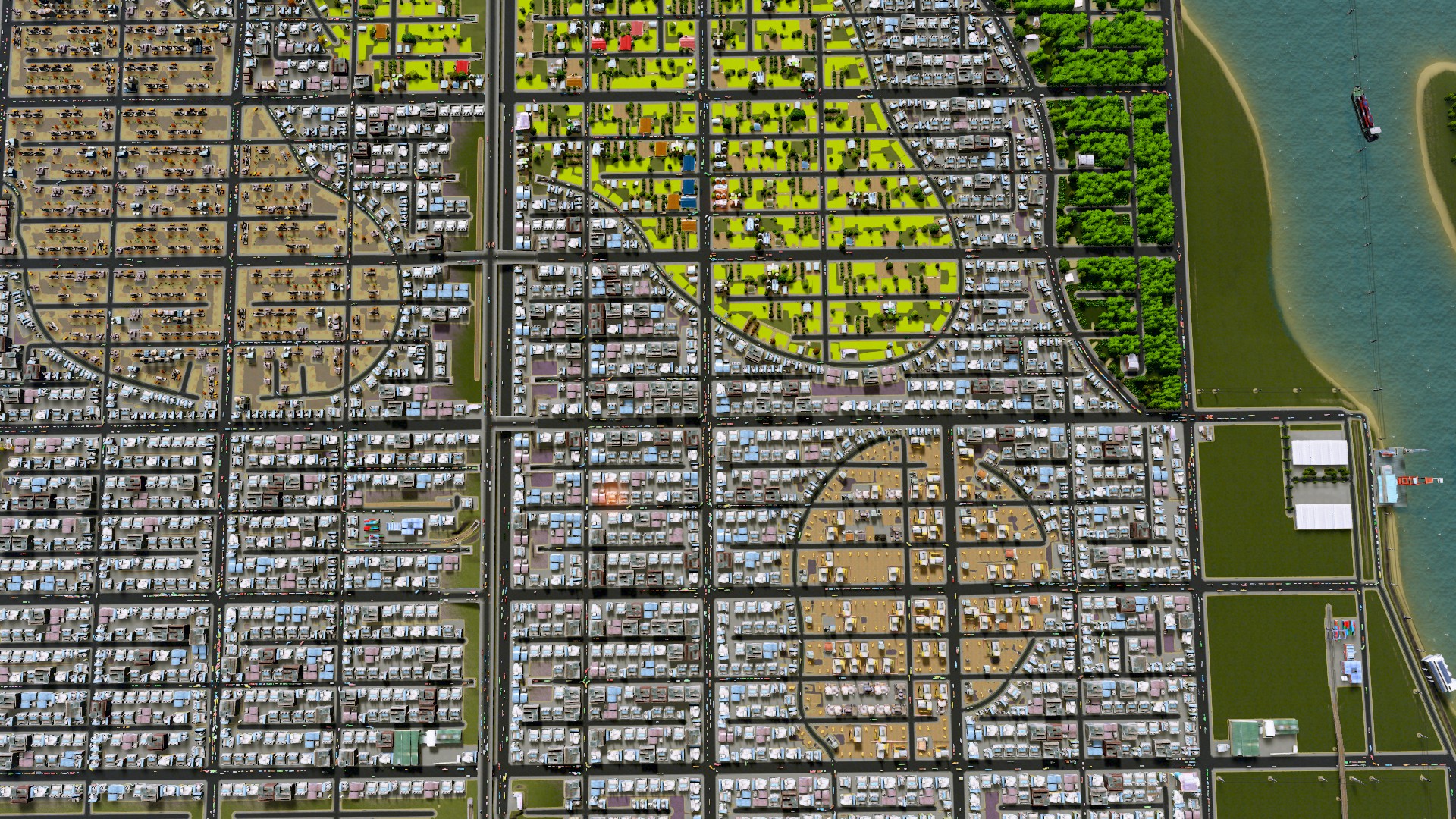 If you're creating your own custom industrial sector by applying the concept of separating your incoming and outgoing traffic, you should still follow a road hierarchy.
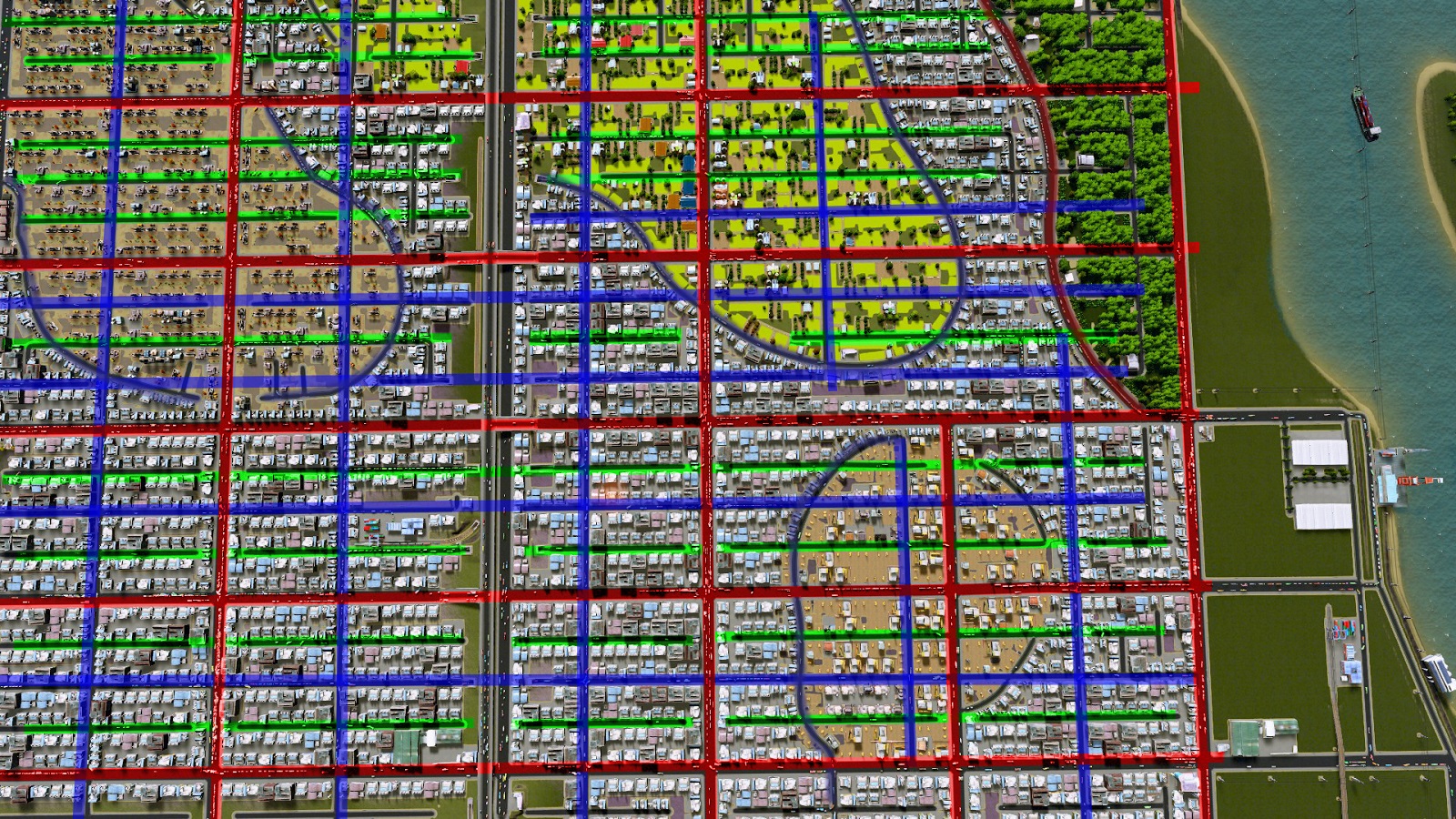 Red are the arterials, blue for collectors and green for local roads.
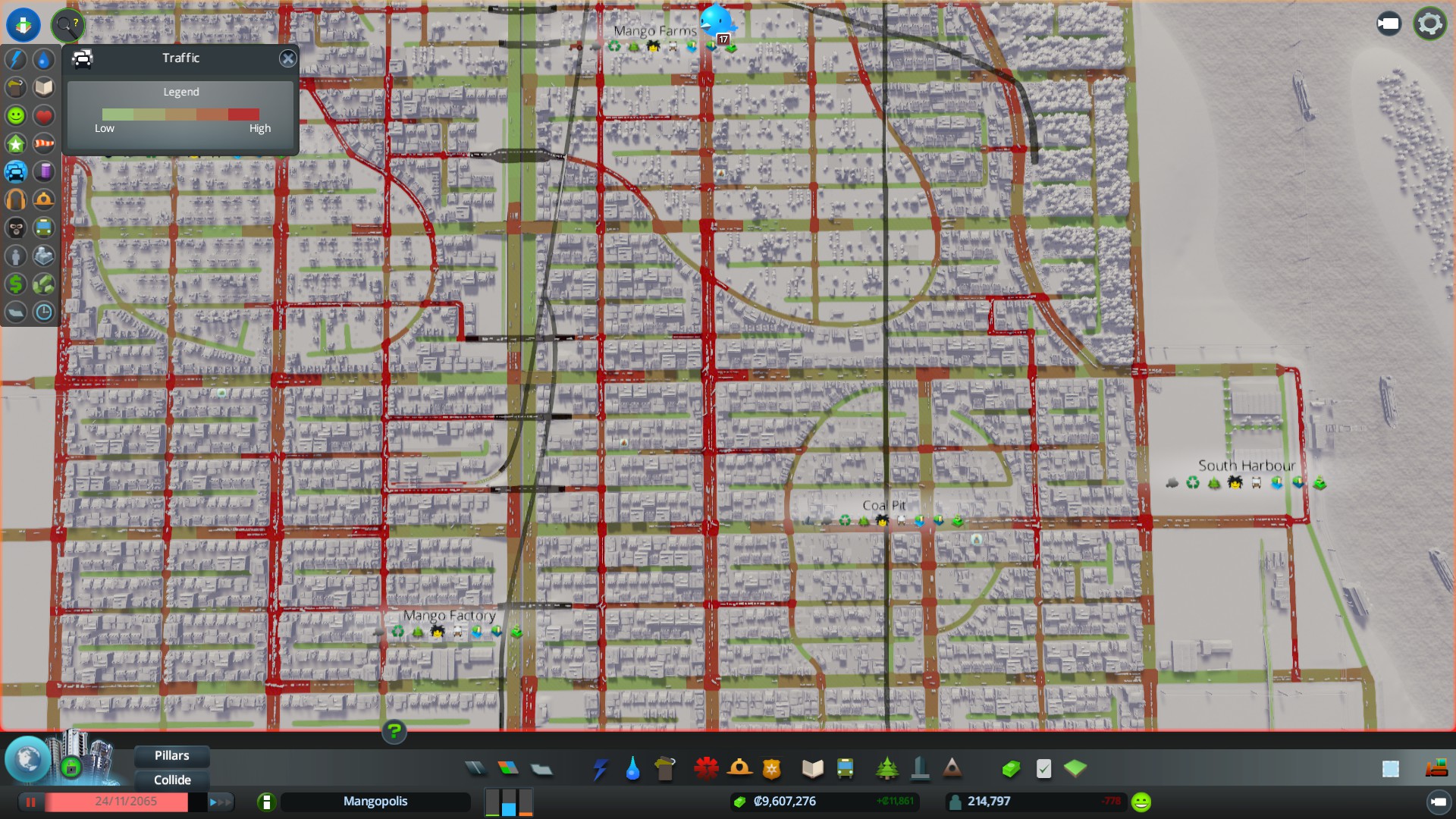 Having a lot of read roads in the traffic view is not necessarily a problem. The only roads I really worry about are the incoming and outgoing six lane roads in the centre. If traffic can't move in or out of the sector the bad icons will start to appear.
Now that you know how goods get made and how to keep industry running you can go out and build a massive industrial city, a single industry town, or a thriving commercial hub.
The most import thing you should take away from this guide is that you can build a fairly big city without any industry and just import finished goods. You can have a bigger city by adding generic industry and importing raw products and exporting excess goods. You can have an even bigger city with specialized industry, generic industry, and export the excess. Or you can have a city with a million cims and no traffic by zoning only residential and office.
Traffic 203 - Cargo Trains
In this guide I will try to illustrate a few tips and tricks for a decent cargo network.
Like everything else in City Skylines, there is no best way to train, rather there are different set-ups which work better in different cities. That said, if you are going to have an internal passenger rail system, keep it separate from the external lines or your internal cargo lines.
For an excellent detailed guide to trains check out High Train Traffic Solutions by notydino
http://steamcommunity.com/sharedfiles/filedetails/?id=408643569
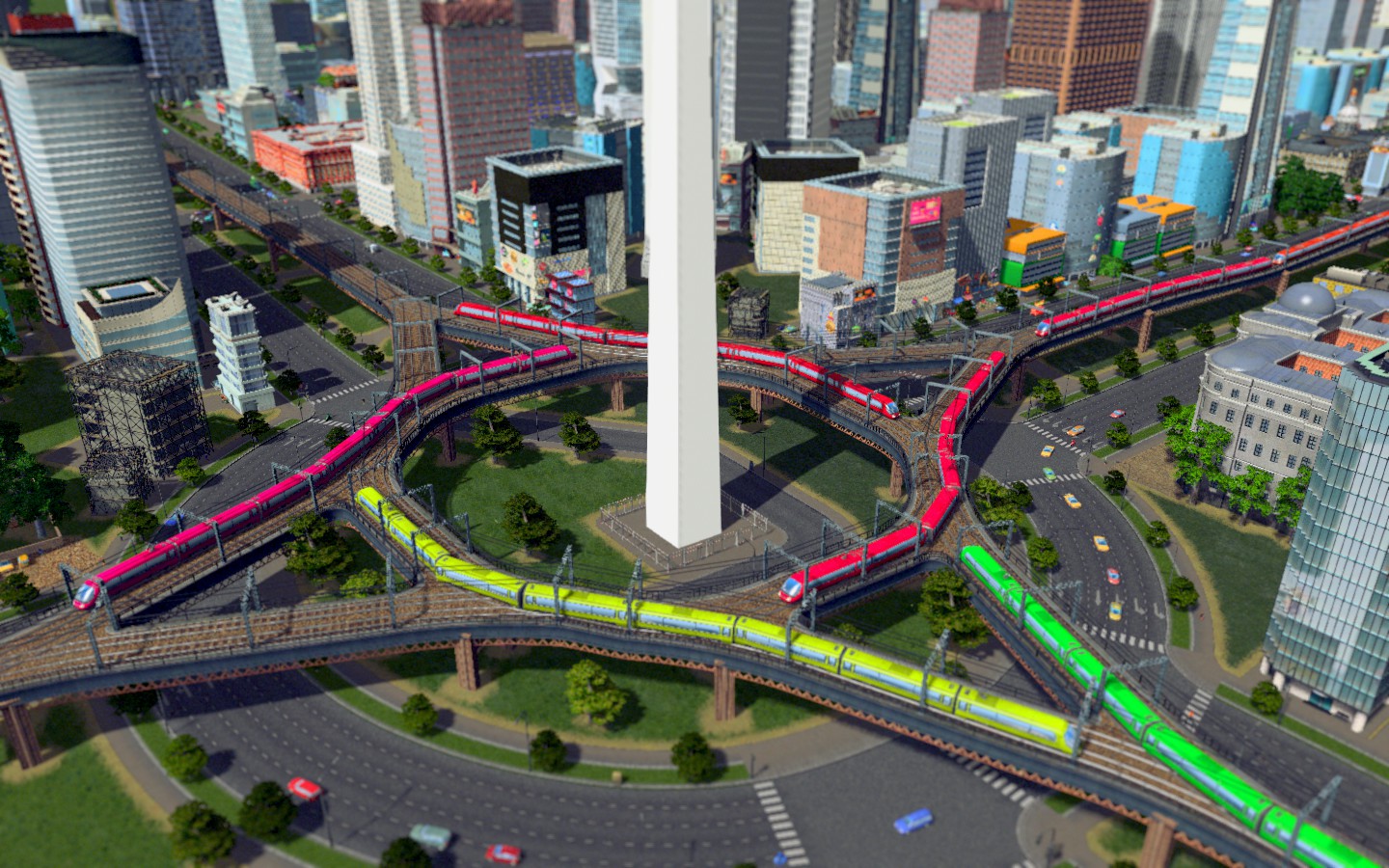
As /u/City_Master demonstrated in this post http://redd.it/316rd3 the most important rule to remember is to allow enough space for trains to get by each other when making train intersections.
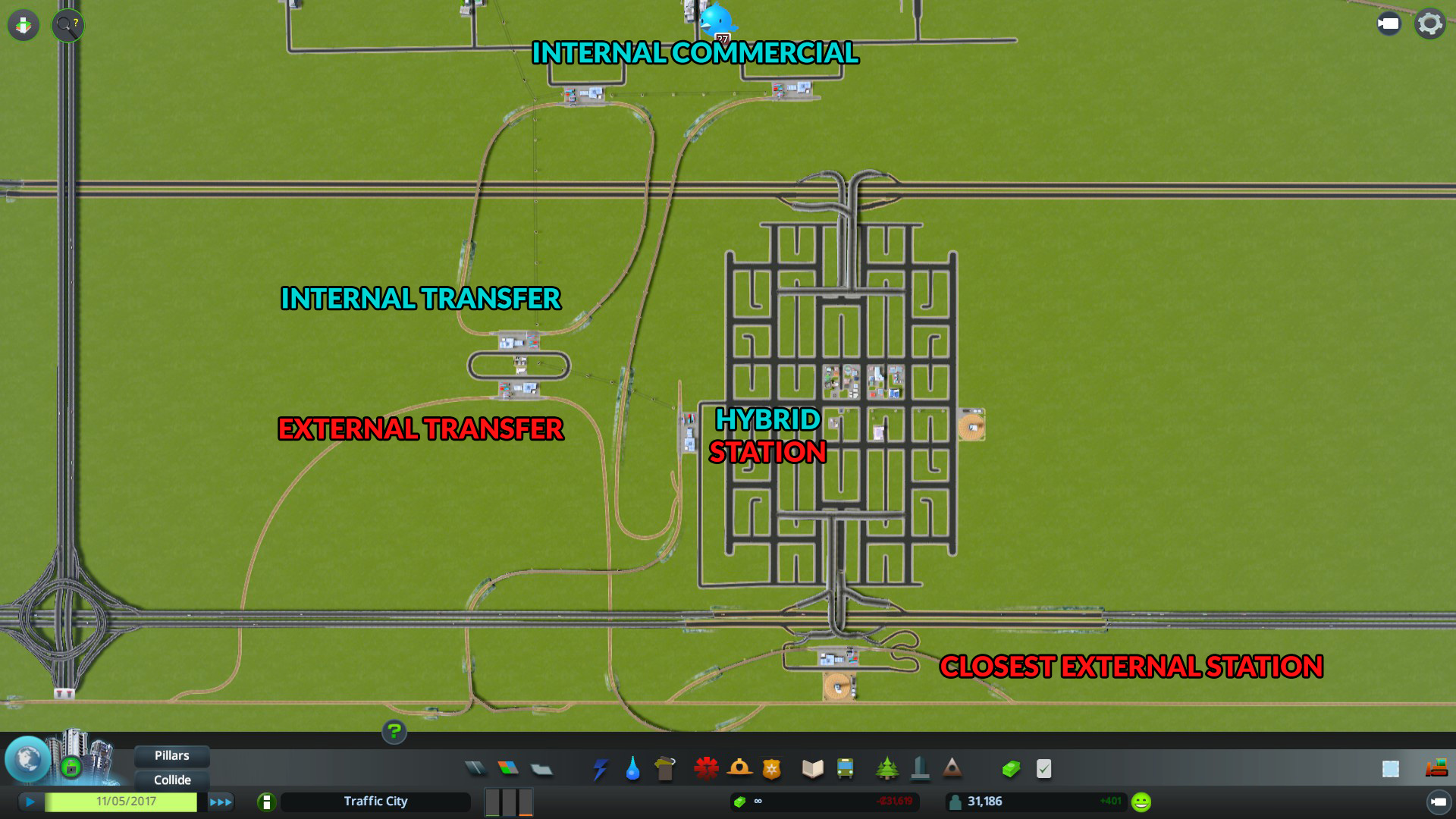
This is not meant to be a representation of a final train system. I've put a few systems together to help illustrate the differences.
Currently the city is importing a lot of goods, producing a bit of goods, and importing a bit of processed products. Imported goods are all going to through the transfer stations because they are closest to the commercial sector. Locally produced goods are all being delivered by the hybrid station since it is faster than taking the highway. Imported processed products are coming in by the bottom station closest to the external borders.
Everything is awesome when the stations are working as a team, but what would happen if I filled the grid and began importing lots of processed products and exporting excess finished goods?
The transfer stations would sit unused. All the commercial goods would go out through the hybrid station and in through the one commercial station. Half the excess exports would go to the bottom station and half to fight with the trucks importing processed products. The other half of the exports would try to go out through the hybrid station but rather than use the external line they would go to the commercial station to highways with external connections on the other side.
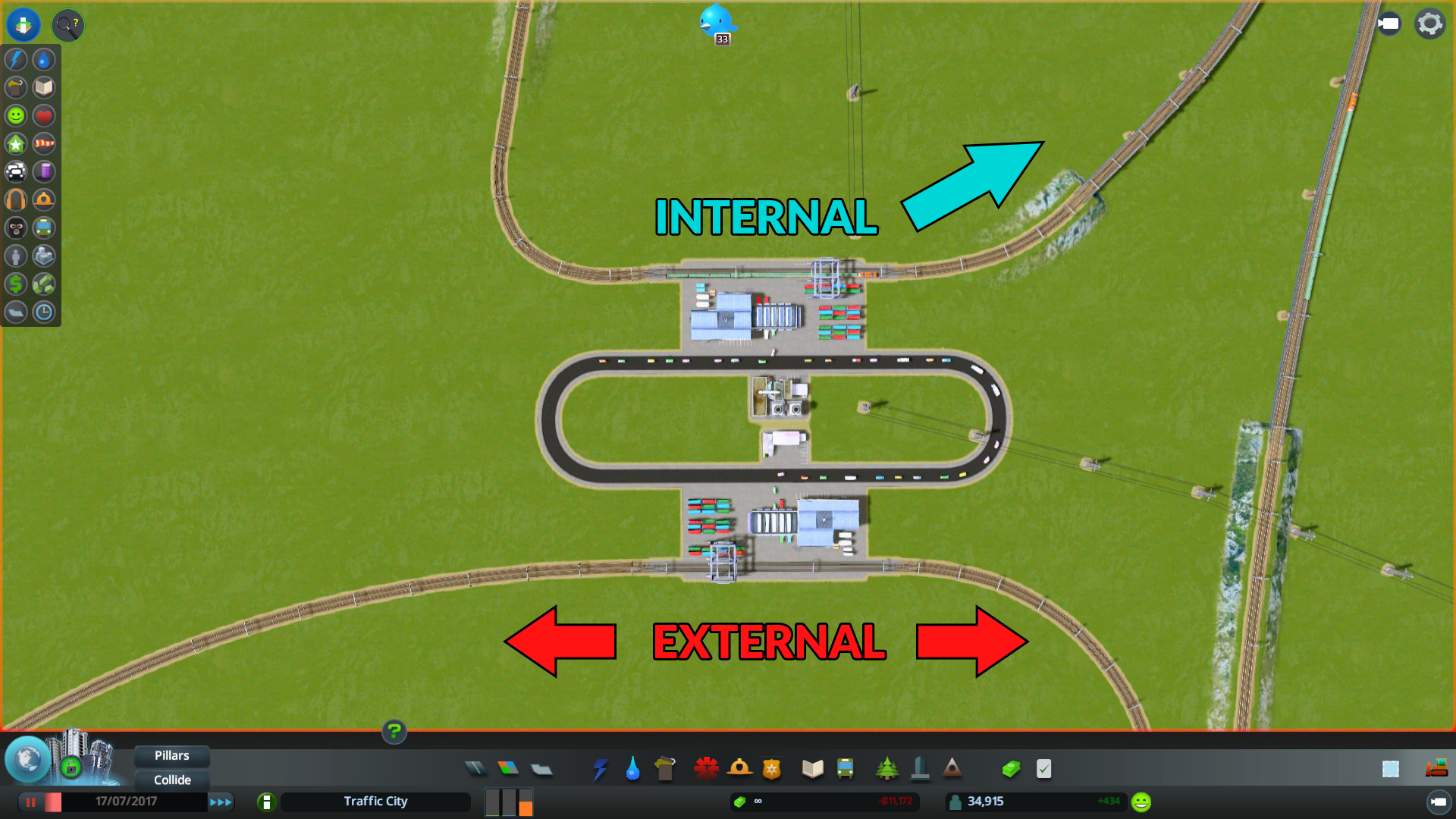
I first saw the transfer station idea in this post http://redd.it/31cyoy by /u/KapitanWalnut.
The transfer station set-up lets you easily move goods between an external rail line and an internal rail line while helping to consolidate imports and exports onto fewer fuller trains.
You want to ensure you add a garbage facility and fire station otherwise they burn down.
For a cool transfer station set up check out this gif by /u/redsquizza https://gfycat.com/HarmfulGoodIndianelephant
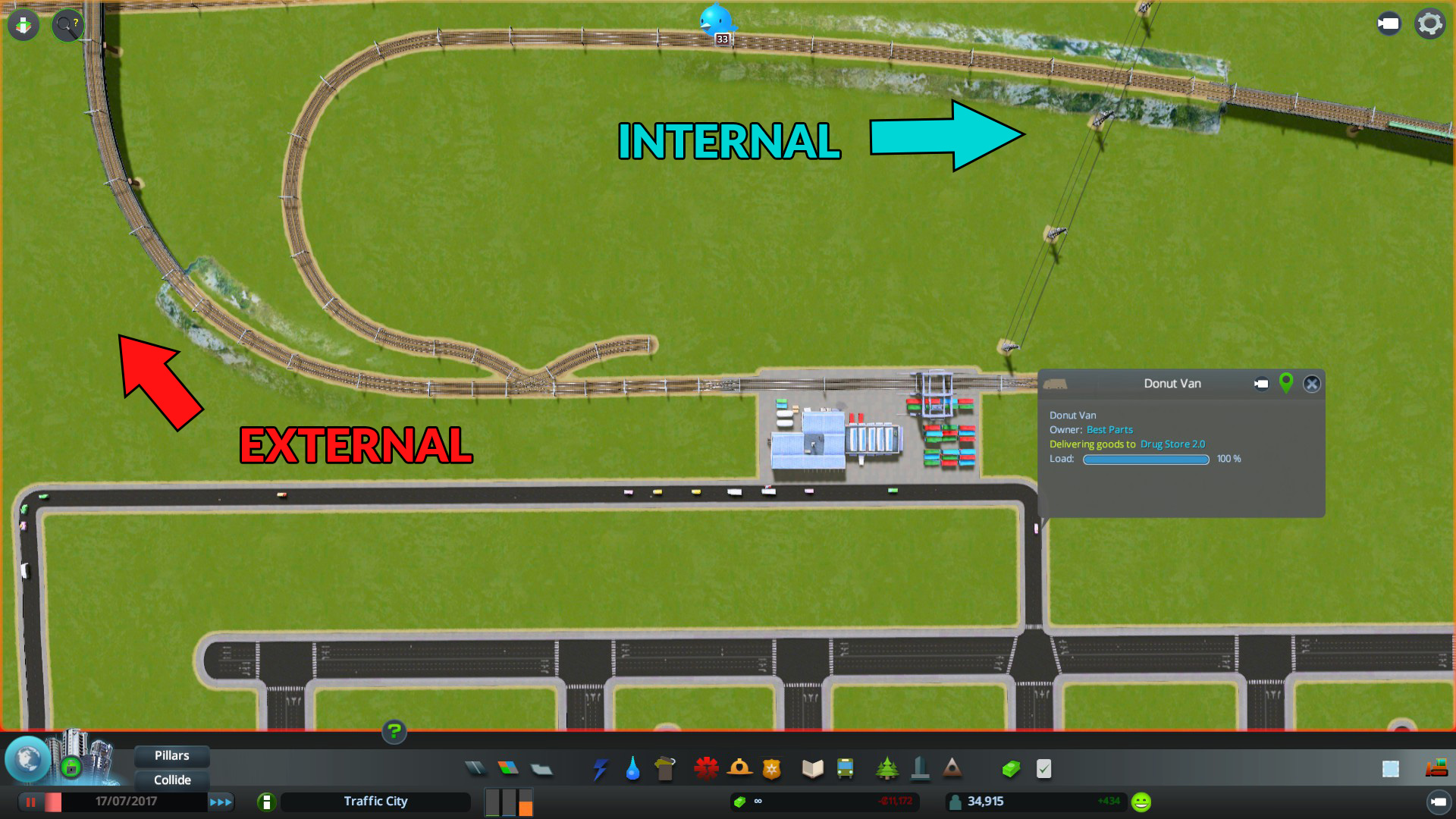
I couldn’t find the original post to give proper credit, but the Hybrid or controlled access station functions like 2 transfer stations. An importing train carrying both processed products and finished goods will drop the entire load at the hybrid station. The hybrid station will spawn a new train and send it and the finished goods to the commercial station while releasing trucks to deliver processed products to industry.
This is achieved by not allowing the external trains to drive through the hybrid station and by not connecting the internal line in a way they can go directly to the external line.
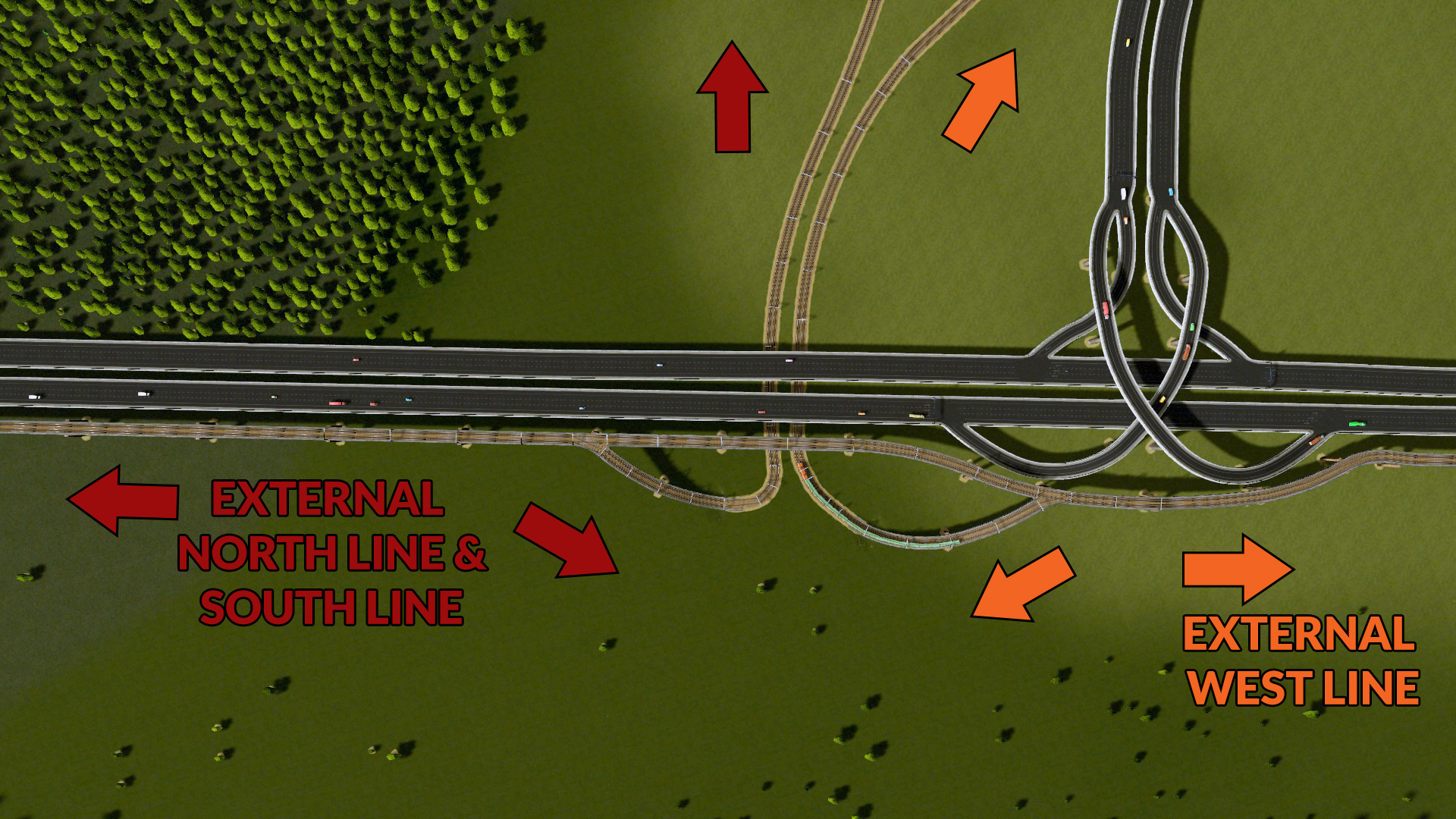 If you plan on exporting or importing as much as you can, you can direct the external lines so cargo trains are split into two lines heading towards two stations. In this set-up, external passenger trains can still go between external cities but cargo trains coming in from the left or right only have one way to get to the industrial sector.
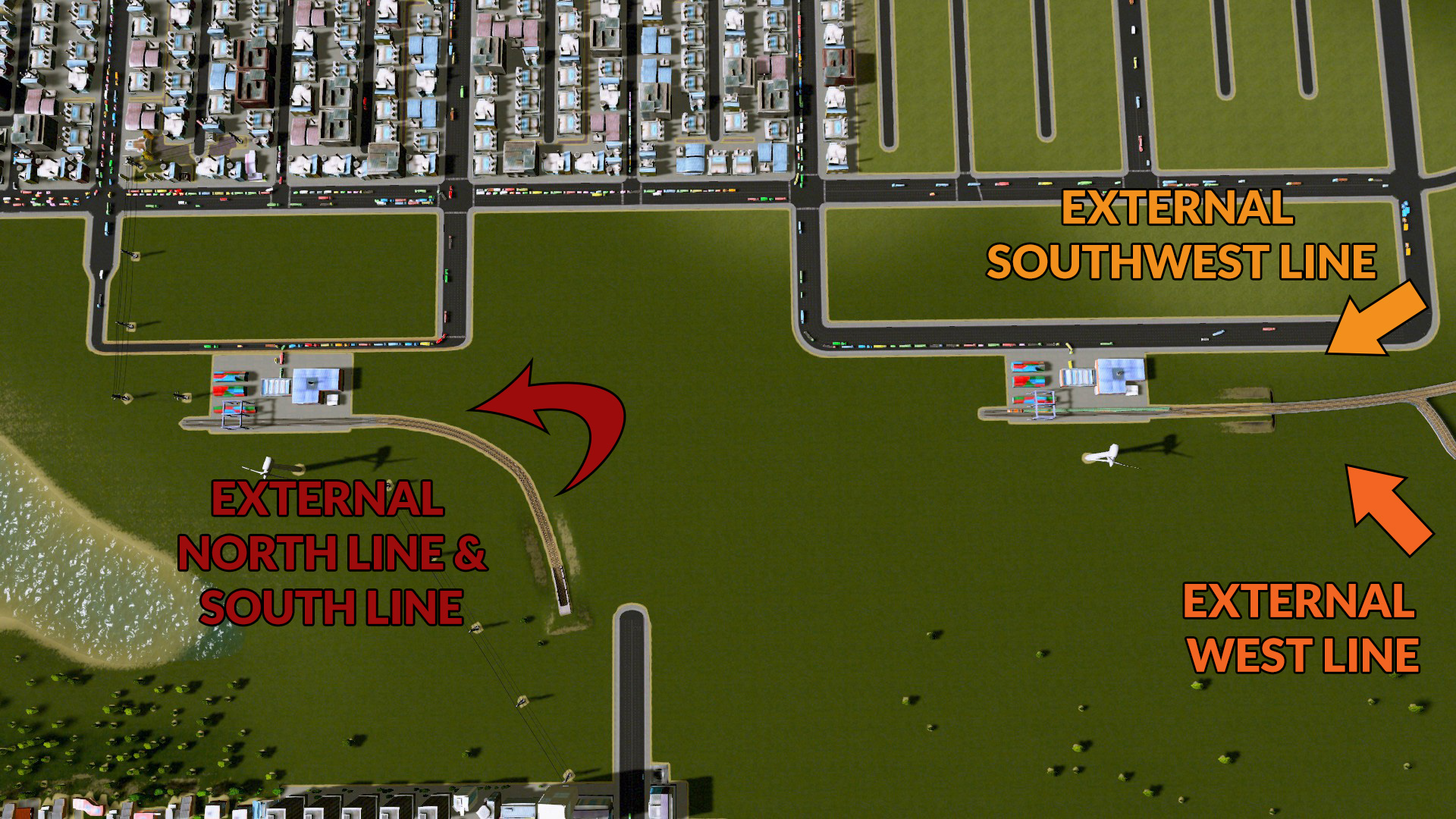
Each station is connected to two external connections and neither is overwhelmed with traffic as they’d be if it was one station handling four external connections. A similar effect can be achieved with cargo harbors, so long as the map maker hasn’t blocked access to one shipping line by another.
Because your needs for raw products or finished goods can fluctuate, external rail lines should have both an incoming and outgoing road.
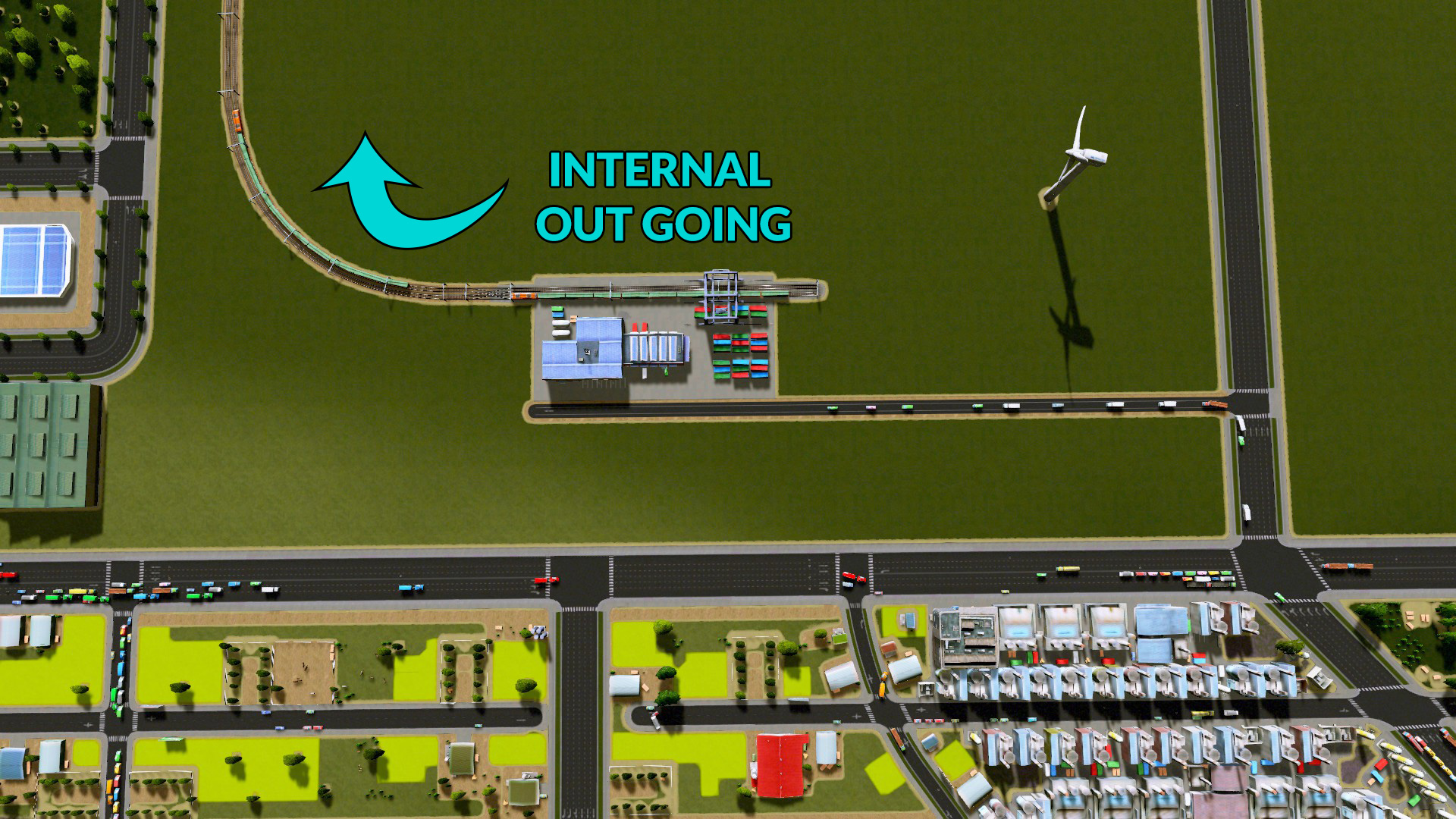 For internal lines you can control access to and from your stations. Trucks can enter the station in your industrial sector...
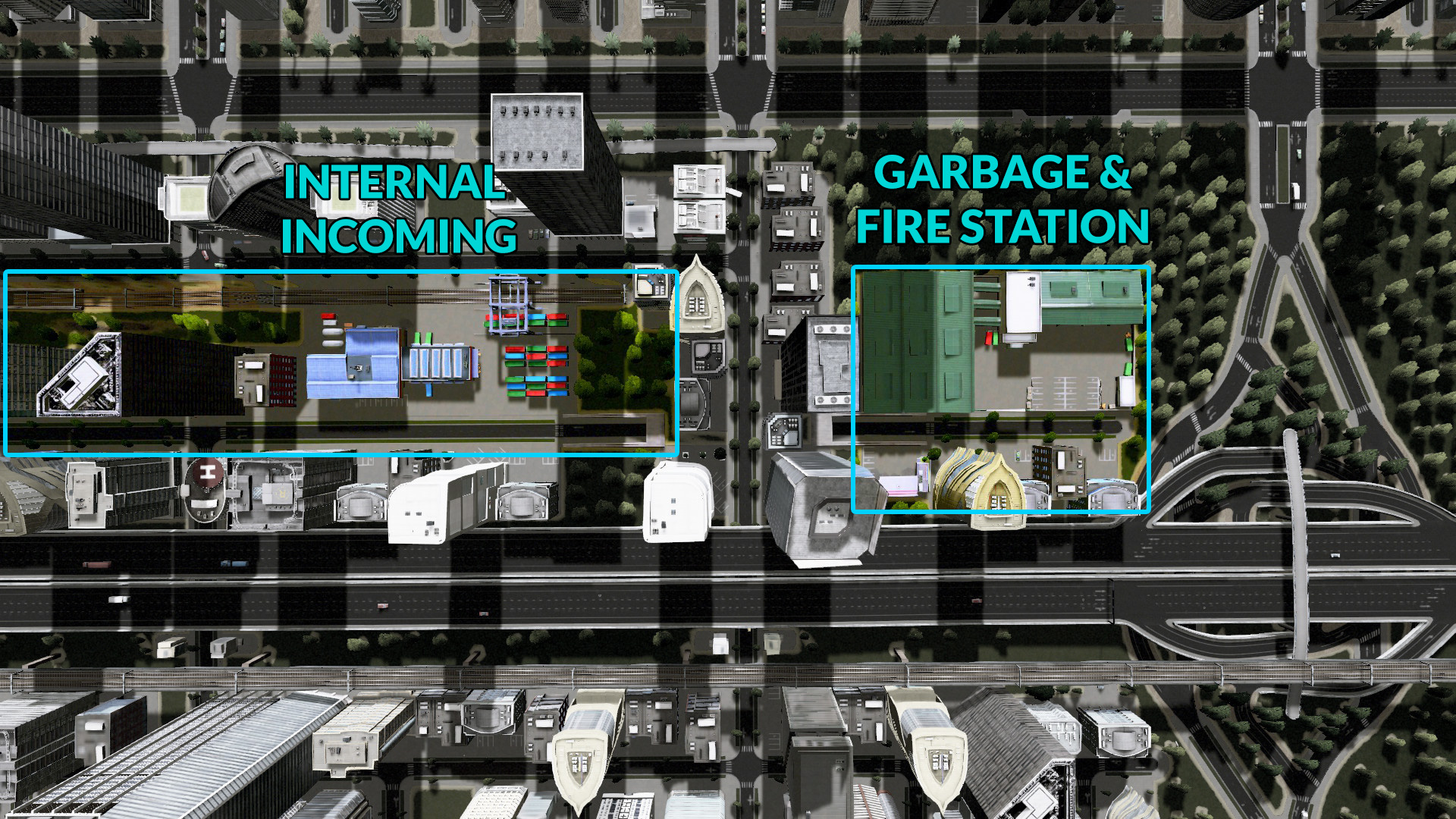 ...and exit out from the station in your commercial sector. If you are going to this, be sure to give a garbage facility and fire station access to the station.
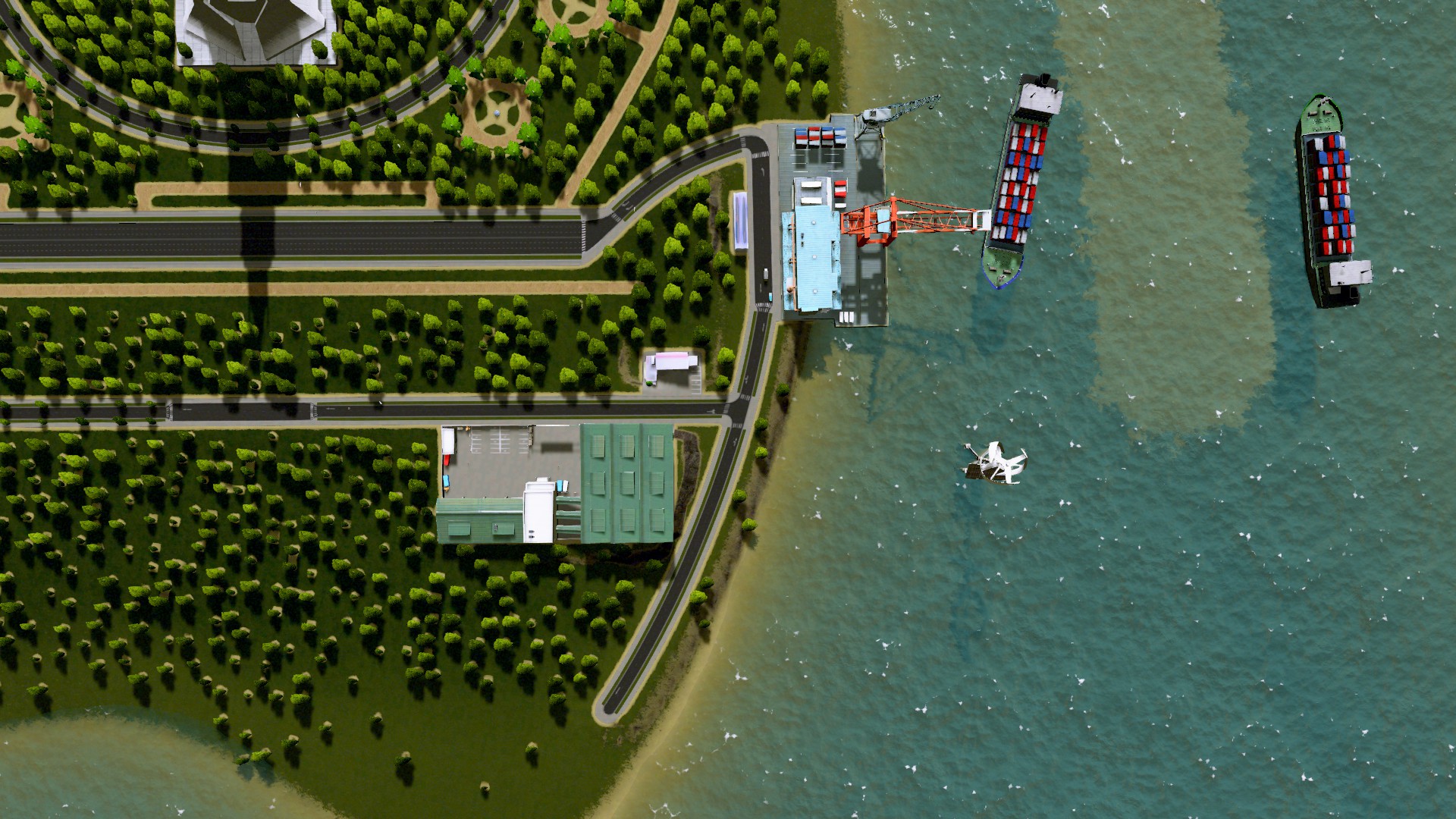
The same set-up can be achieved with harbours close to commercial but a harbor near your industrial sector would need both a way in and out.
We've reviewed some common set-ups for controlling train traffic that you can implement depending on your city's needs.
As I described earlier, a cargo system which works great at importing goods might not be the best for exporting goods, and could potentially cause more traffic. You really need to monitor your exports and imports and manage your lines accordingly.
Traffic 204 - Getting On the Highway
If you have adopted the practice of using well spaced out interchanges to get off the highway, you don't have to worry, but sometimes you can't fit in a full sized service interchange. That is why I have included this short guide to how the highway pathfinding works and why it makes roundabouts useless.
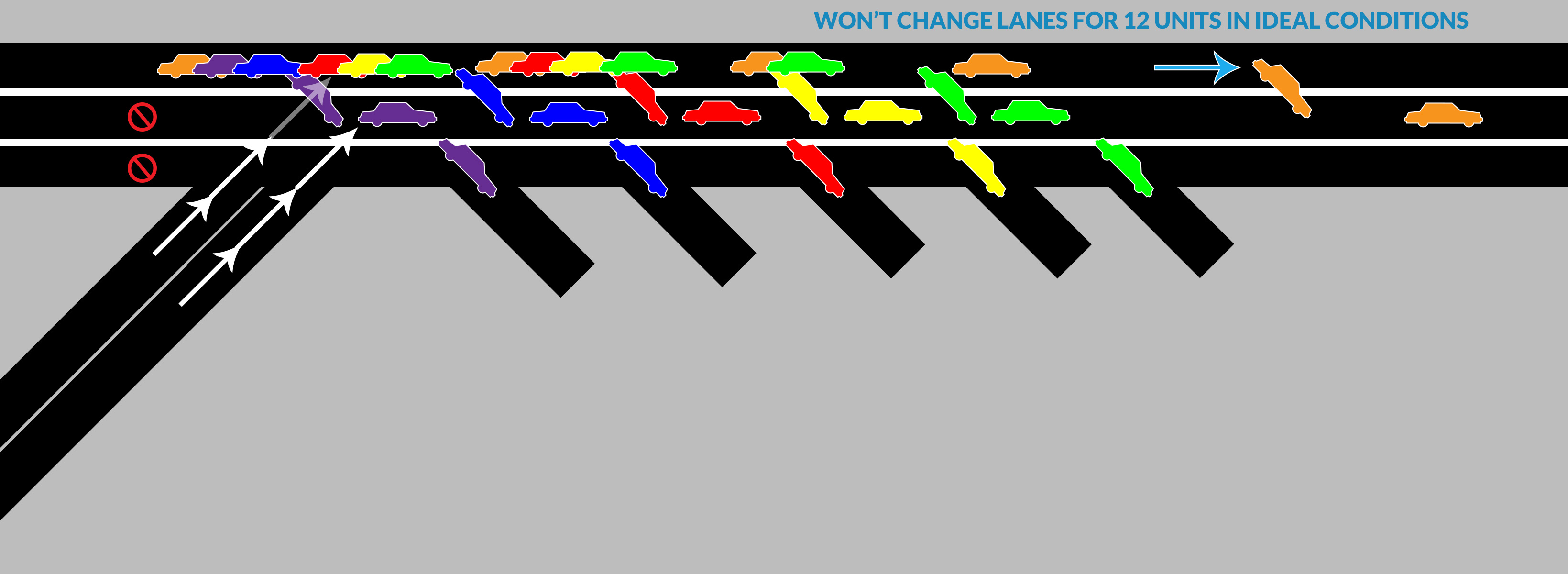 In many jurisdictions cars coming onto a highway have the right of way. So too with the game, cars will yield to traffic coming on. To not have the highways grind to a halt, the algorithm tells the cars to stay out the slow lane until their exit is next AND they have passed the last onramp. If the "onramp" is a two-lane road or a highway, the cims on the highway will leave two lanes clear.
 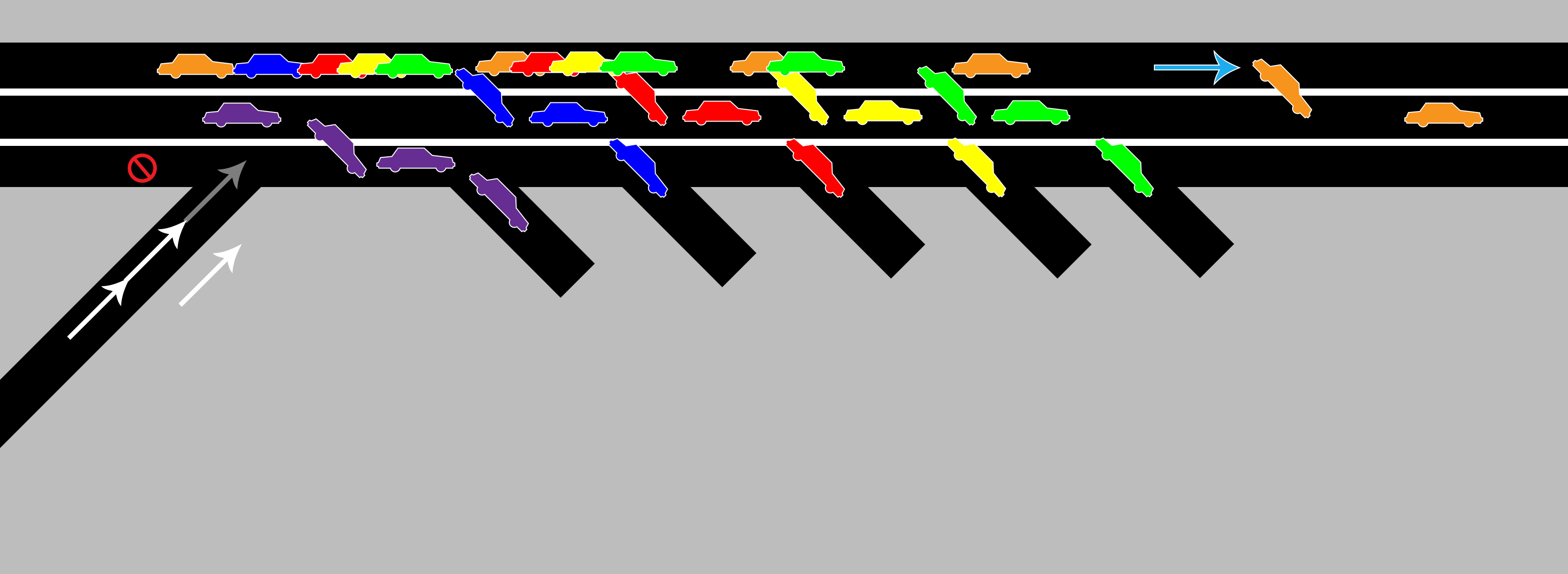 Once they have cleared the onramp Cims won't get into the middle lane until their exit is coming up after the first exit. With so many exits they barely have time to get into the middle lane before they need to get into the slow lane.
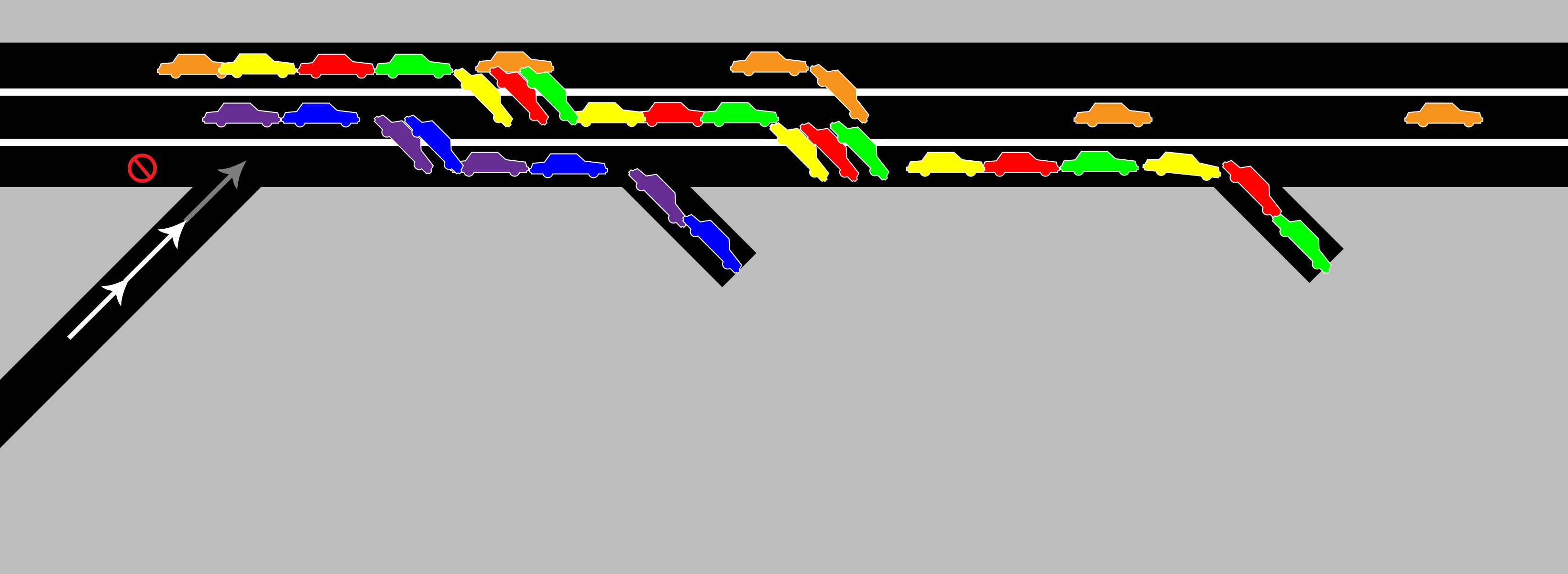 Taking away 3 exits and we've only moved the blue car from the fast lane.
 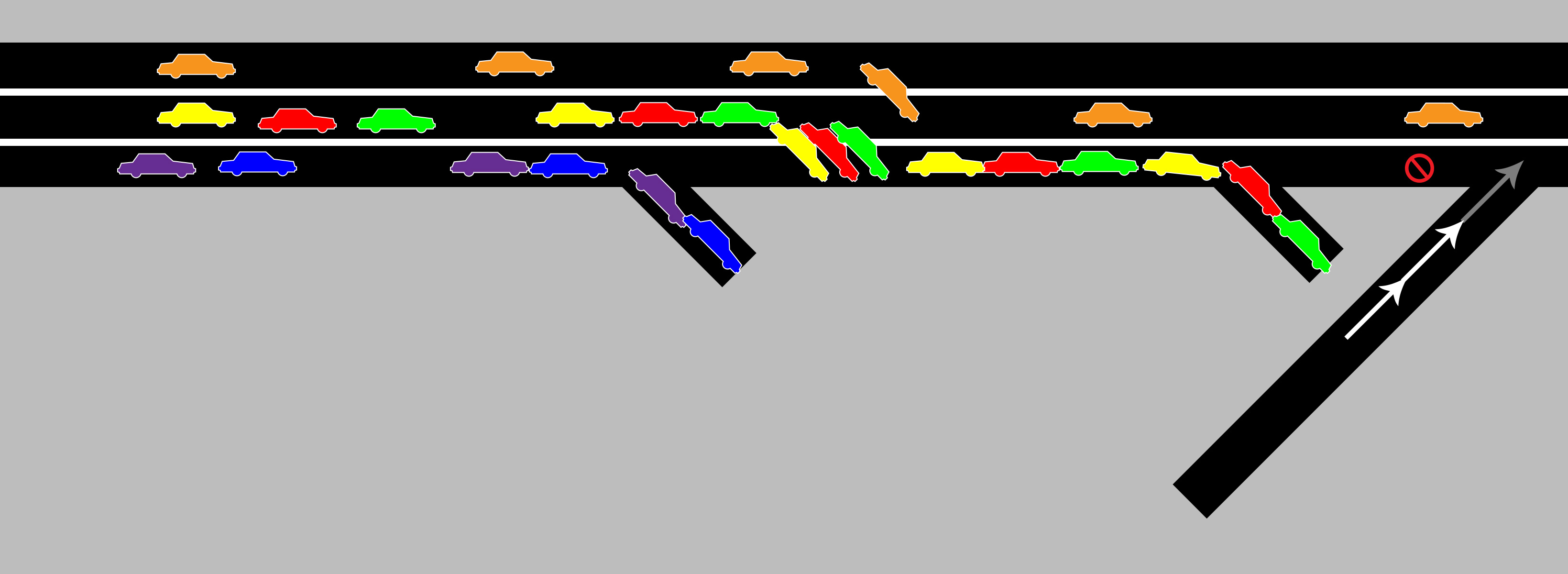 With the on ramp moved to after the exits and fewer exits, your Cims are using all the lanes.
Additional Resources
For the best all round start your city guide checkout The Road to Tomorrow[imgur.com] by reddit user /u/blackether
For a great tutorial on highway transitions check out /u/WF187's guide here: http://imgur.com/a/gA81F
For more in-depth traffic guides
HOW TO TRAFFIC: Imgur Album Version[imgur.com]
http://steamcommunity.com/sharedfiles/filedetails/?id=410236188
Traffic Planning Guide for Realistic Cities
http://steamcommunity.com/sharedfiles/filedetails/?id=475455648
You can grab a copy of Traffic School City, the city used in much of this guide. http://steamcommunity.com/sharedfiles/filedetails/?id=480146471
You can also find a copy of city road layout which incorporates all of the concepts demonstrated in this traffic guide
http://steamcommunity.com/sharedfiles/filedetails/?id=470421923
You can find my city albums and city guides at http://brendanmulvihill.imgur.com/
Credits
These guides would not have possible without the mods and many different contributors to www.reddit.com/r/CitiesSkylines/
Special thanks to /u/blackether and /u/mitchells00 for their posts and comments helping me understand and conquer traffic.
- HOW TO TRAFFIC★ 5 (3.5k)95k views5.2k ♥33 minUpdated Mar 26, 2017
- 都市天际线模组推荐指南V5.1★ 5 (1.9k)67k views6.5k ♥29 minSimplified ChineseUpdated Dec 26, 2023
- Cities Skylines: An In-Depth Beginner's Guide & Walkthrough★ 5 (926)66k views2.8k ♥37 minUpdated Apr 9, 2015
- Traffic Planning Guide for Realistic Cities★ 5 (1.4k)59k views3.1k ♥30 minUpdated Jul 20, 2017
- Cities Skylines | A Beginner's Guide To Using Mods & Custom Content★ 5 (898)47k views2k ♥28 minUpdated May 21, 2023
- How to Bypass the Paradox Launcher (All Platforms)★ 5 (1.3k)47k views1.3k ♥6 minUpdated Dec 23, 2025



- Upgrading to PremiumTeam Fortress 2★ 5 (20k)1441k views11k ♥6 minUpdated May 11, 2022
- No More Room in Hell Official ManualNo More Room in Hell★ 5 (2.8k)569k views2.1k ♥29 minUpdated Apr 22, 2019
- NMRiH Community Hosting GuidesNo More Room in Hell★ 5 (526)351k views653 ♥1 minUpdated Aug 10, 2022
- How to 'Git Gud' Soon™MORDHAU★ 5 (2k)318k views3k ♥68 minUpdated Nov 16, 2024
- Лучшие кооперативные игры SteamPAYDAY 2★ 5 (1.5k)315k views2.1k ♥56 minRussianUpdated Apr 27, 2025
- Desert Eagle Heat Treated | Blue GemCounter-Strike 2★ 5 (1.6k)293k views1.5k ♥2 minUpdated Jan 16




This guide was created by its original author on the Steam Community. Are you the author and want it removed? Request removal.