Official Verdun Weapon Guide
Weapon Handling
The weapon handling in Verdun leans towards realism, so you will have to learn how to handle bullet drop, leading your targets and different reloading methods.
Bullet Drop
Bullets will slowly drop towards the ground due to gravity. In Verdun this is implemented realistically for the weapons of the period, which in practice means that bullet drop is not very noticeable at short distances. If your target is 100m away the bullet will drop a distance of around 5cm. So adjust your aim height based on the target distance.
Leading
Target leading is more important. Since bullets take time to reach to their target you should aim a little ahead of the target to compensate for their movement speed. At a distance of 100m it takes around 0.2 seconds for a bullet to reach a target. You will get the hang of this after practicing for a while.
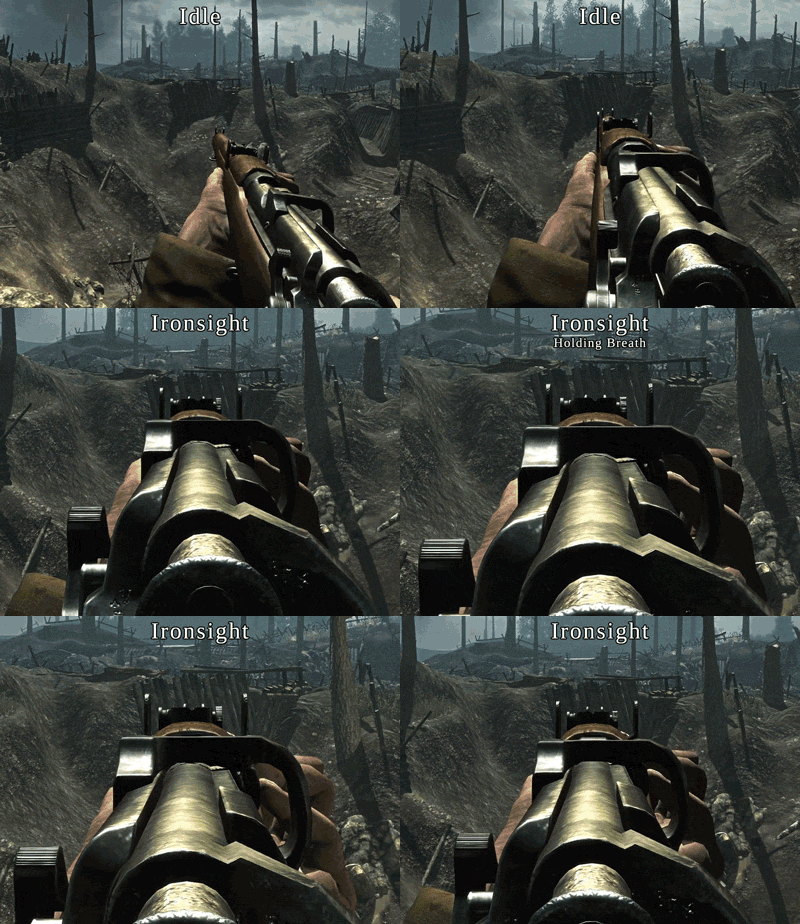 While standing and using ironsights you will have difficulty stabilising the gun because of the weight. This means that your weapons will sway a little and your sights will not perfectly align. You can reduce this effect by crouching, going prone, or deploying your gun. You can temporarily reduce weapon sway by holding your breath before you take a shot, which both reduces sway and increases your zoom.
- Bullet-by-bullet: Can only be loaded one bullet at a time, like the 'Lebel' rifle.
- Bullets and clips: You can load individual bullets, but you can also load several bullets at once with a stripper clip, if you have fired enough shots for there to be space. For instance, the Kar98AZ allows both options.
- Clips only: The gun only accepts clips, and has to be fully emptied before reloading. The 'Berthier' is an example of such a weapon.
- Melee Weapon: A powerful way to kill the enemy at close range. Click to perform an a melee attack
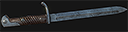
- Bayonet attachment: Some weapons have a sharp bayonet attachment. Press the melee button ('V' by default) to stab at the enemy.
- Bash: Every other weapon has a bash attack you can use - it has lower damage but can still be effective. Press the melee button ('V' by default) to bash.
Changing Weapons
- Switch to your sidearm or melee weapon (if you have one) by scrolling the mouse wheel:
- Change the loadout of your role in the squad screen. For the possible loadouts available to each role, please click here to see the squad guide.
- Switch to a different role in your squad. This can be done by clicking switch in the squad screen. If the role is already taken you will need permission to swap.
- Switch to a different squad and role via the scoreboard.
- If you still don’t have any of your preferred weapons, you can always create your own squad and take the role you want. But playing as different roles to what you usually go for can be fun, and gives you valuable insight into their strengths and weaknesses.
In Rifle Deathmatch you can change your loadout by going to the loadout menu via the ESC key. There you can select the different weapons you have unlocked, and then respawn with your new selection.
Now, onto the weapons themselves!
Fusil Mle 1907-15 "Berthier"
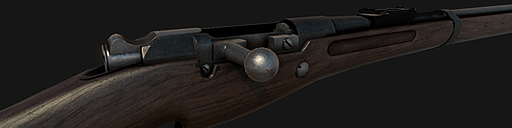
After the success of the Berthier carbines, full-length Berthier rifles were introduced. Lighter and easier to handle and load than the Mle 1886/M93 Lebel rifle, the Berthier rifles proved more suitable for offhand shootingm and were easier to maintain in tropical environments.
Weapon Type: Bolt ActionShort Name: Berthier
Ammo: 3
Accepted Ammo:
Bloc Clip 3x Cartouche 8x50mmR
Available Attachments:
Mousqueton Mle. 1892 "Berthier"
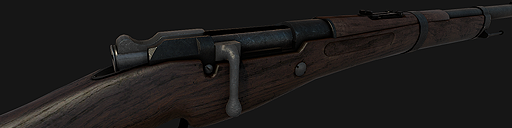
The Berthier design began as the "Mousquetons Berthier" - a series of bolt action cavalry and artillery carbines with distinctly different actions from the Mle 1886M93 8mm Lebel rifle. For instance, the Berthier carbine's bolt lugs lock vertically into the receiver instead of horizontally as in the Lebel rifle.
Weapon Type: Bolt ActionShort Name: Mousqueton
Ammo: 3
Accepted Ammo:
Bloc Clip 3x Cartouche 8x50mmR
Available Attachments:
Fusil Mitrailleur Mle 1915 CSRG "Chauchat"
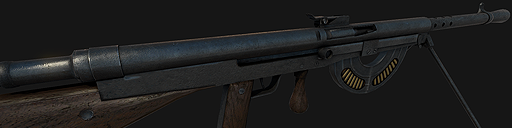
Designated Fusil Mitrailleuse Mle 1915 CSRG, the Chauchat machine rifle was one of the first light, automatic rifle caliber weapons designed to be carried and fired by a single operator. Furthermore, it could be routinely fired from the hip and while walking.
Weapon Type: Light Machine Gun
Short Name: Chauchat
Ammo: 20
Accepted Ammo:
Cartouche 8x50mmR
Grenade Mle 1916 Billant F1

The F1 percussion grenade was designed during the First World War. The F1 was designed to use a lighter-based ignition system, but later it began using a percussion cap fuse.
Weapon Type: Grenade
Short Name: F1
Fuse Time: 5s
M1887 Feldspaten
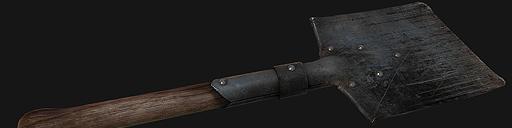
The M1887 entrenching tool was carried by most infantry and used for field work. In the close confines of a trench, rifles and fixed bayonets were often too long for effective use, and entrenching tools were commonly used as auxiliary arms for close-quarter fighting. From 1915, soldiers on both sides routinely sharpened the edges of entrenching shovels for use as weapons.
Weapon Type: Melee
Short Name: Feldspaten
Fernglas08 "Binoculars"
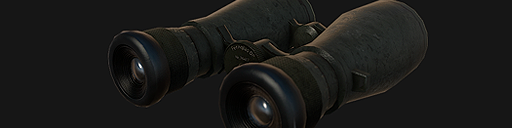
Various ranks were issued field binoculars for reconnaissance purposes. The glasses were issued to all group leaders (usually NCOs) but officers would usually purchase their own pair.
Weapon Type: Melee
Short Name: Binocs
Gewehr '98
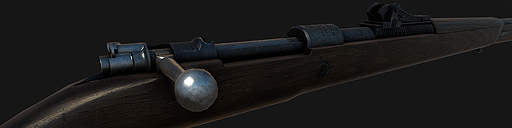
A German bolt action Mauser rifle firing cartridges from a 5 round internal clip-loaded magazine. This was the standard issue German service rifle from 1898 to 1935
Weapon Type: Bolt ActionShort Name: G98
Ammo: 5
Accepted Ammo:
Mauser Stripper Clip 7.92x57mm
Mauser Cartridge 7.92x57mm
Available Attachments:
Karabiner 98AZ
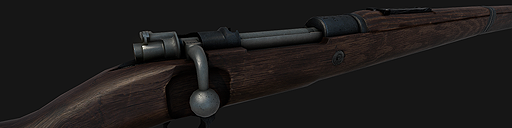
A shorter version of the Gewehr 98 originally made for use by cavalry and support units. The original model Karabiner 98, with a shorter barrel than the G98, was produced from 1899–1908.
Weapon Type: Bolt ActionShort Name: Kar98AZ
Ammo: 5
Accepted Ammo:
Mauser Stripper Clip 7.92x57mm
Mauser Cartridge 7.92x57mm
Available Attachments:
Fusil Mle 1886 M93 "Lebel"
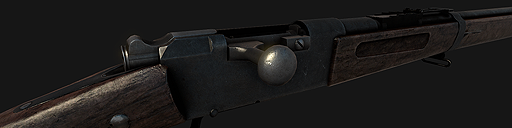
An 8mm bolt action infantry rifle which entered service in the French Army in April 1887. It is a repeating rifle that can hold eight rounds in its forestock tube magazine, plus one round in the transporter.
Weapon Type: Bolt ActionShort Name: Lebel
Ammo: 8
Accepted Ammo:
Lebel Cartouche 8x50mmR
Available Attachments:
Machine Gun Model 1914 "Lewis"
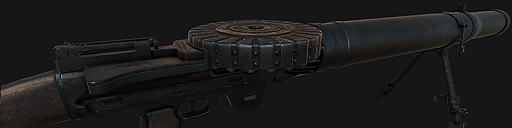
The American designed Lewis automatic rifle with the distinctive top-mounted, 47 round drum-pan magazine. Capable of firing 550 rounds per minute effectively up to 800m.
Weapon Type: Light Machine Gun
Short Name: Lewis
Ammo: 47
Accepted Ammo:
.303 Lewis 47 Drum Magazine
Pistole Parabellum 1908 "Luger"
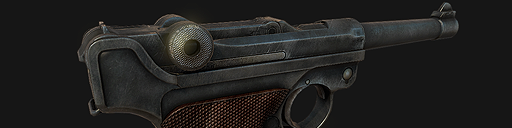
The Pistole Parabellum 1908 is a toggle-locked recoil-operated semi-automatic pistol. One of the first semi-automatic pistols, the Luger was designed with a toggle-lock action, which uses a jointed arm to lock, as opposed to the slide actions of almost every other semi-automatic pistol.
Weapon Type: Pistol
Short Name: Luger
Ammo: 8
Accepted Ammo:
Clip (8) 9x19mm Parabellum
Maschinengewehr '08/15
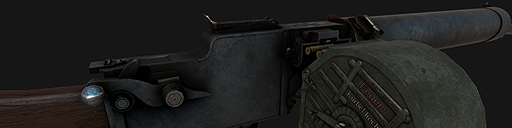
At 18 kg, the MG 08/15 had been designed to provide increased mobility of infantry automatic fire, and was lighter and less cumbersome than the standard MG 08. It needs to be deployed in order to fire.
Weapon Type: Heavy Machine Gun
Short Name: '08/15
Ammo: 100
Accepted Ammo:
0815 100-Round belt container
Mk I No. 5 "Mills Bomb"

The Mills bomb was adopted by the British Army as its standard fragmentation hand grenade in 1915, and designated as the No. 5. The fuse time ranged from seven seconds in original models to four seconds in the final production forms
Weapon Type: Grenade
Short Name: Mills
Fuse Time: 5s
Maschinenpistole 18/I
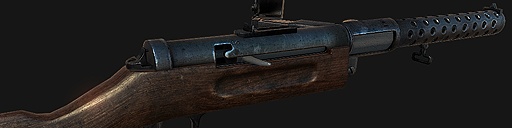
The Bergmann Maschinenpistole 18/I went into production in early 1918 using the 32 round snail drum magazine used in the P08 Luger. Issued in the final stages of World War One at least 5,000 MP18/Is were built and issued before the war ended. Capable of firing 450 round per minute.
Weapon Type: Sub Machine Gun
Short Name: MP18
Ammo: 32
Accepted Ammo:
Snail Drum (32) 9x19mm Parabellum
Pistolet Automatique "Ruby"
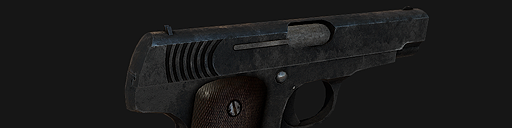
The Pistolet Automatique de 7 millim.65 genre "Ruby" as used by the French army is the most common version of the Ruby pistol. It is very intuitive to operate, even for novices, but the disadvantage of these pistols (apart from quality control issues) was the relatively weak cartridges they were chambered in, which gave the pistol little stopping power.
Weapon Type: Pistol
Short Name: Ruby
Ammo: 9
Accepted Ammo:
Clip 9 7.65x17mm
Lee Enfield Mark III*
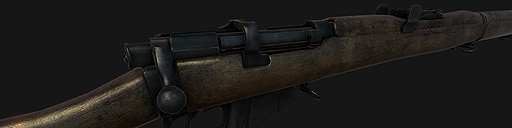
The Short Magazine Lee-Enfield (SMLE) Mark III was introduced on 26 January 1907, capable of firing 20-30 aimed shots per minute effectively up to 500m. The simplified war-time Mark III* was introduced in 1915.
Weapon Type: Bolt ActionShort Name: SMLE
Ammo: 10
Accepted Ammo:
Cartridge .303 7.7x56mm
Stripper Clip .303 7.7x56mm
Available Attachments:
Stielhandgranate M1915

The first of its series, the M15 Stielhandgranate was a peculiar design. Nicknamed the "Potato Masher" it featured a long stick (stiel) with a string coming from the bottom, attached to the stick with tape.
Weapon Type: Grenade
Short Name: M15
Fuse Time: 5s
Trench Club
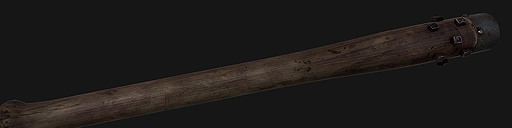
Trench clubs were manufactured in bulk by units based behind the lines. Typically, regimental carpenters and metal workers would make large numbers of the same design of club. It was common practice to fix a metal object at the striking end in order to maximize the injury inflicted.
Weapon Type: Melee
Short Name: Trenchclub
Boker M1915 Trench Knife
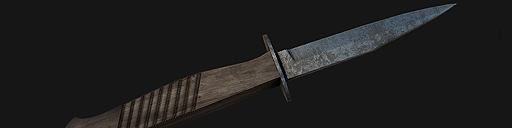
Developed in 1915 by Heinrich Boker, it is a compact fighting knife that is especially useful for trench warfare.
Weapon Type: Melee
Short Name: Bokerknife
Trench Knife Mle 1916 "Le Vengeur"
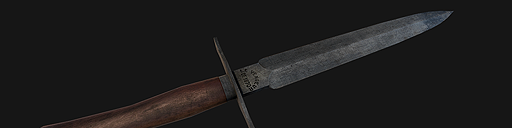
Designed in France in October 1915. The knife has an ordinary double edged blade with marked ricasso, a wide straight cross guard and wooden grip of Walnut. There is a ferule made of steel close to the cross guard, strengthening the wooden grip.
Weapon Type: Melee
Short Name: Venguer
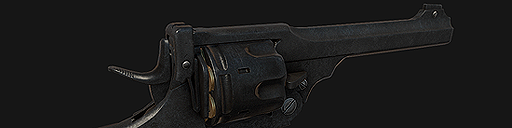
Webley Mk VI Revolver
 r
r
The Webley Mk VI revolver was adopted as the standard sidearm for British and Commonwealth troops for most of the war. The Mk VI proved to be a very reliable and hardy weapon. Chambered in .455 Webley it featured a 6-round cylinder with an effective range of up to 50 meters.
Weapon Type: RevolverShort Name: Webley
Ammo: 6
Accepted Ammo:
.455 Revolver loader
Available Attachments:
U.S. CSRG .30-06 M1918 "Chauchat"
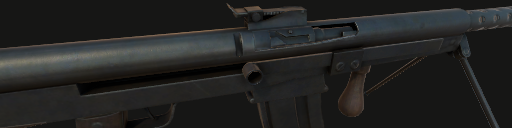
An adapted version of the original 1915 version. It fires more powerful cartridges and features a closed, but flimsy, magazine. It had many defects and it was not uncommon for units to ditch the weapon in favour of a regular rifle.
Hotchkiss M1909 "Benét–Mercié"
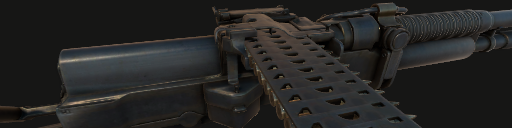
The Hotchkiss boasts a high rate of fire and uses a 30 round magazine. However, it was quite susceptible to mud and dirt and thus wasn’t ideal for trench warfare
Madsen
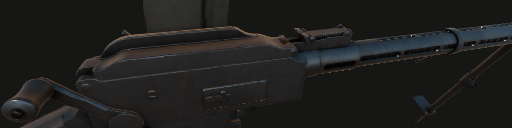
Developed by the Danish army in the early 1900s, the Madsen was an extremely successful early LMG. It was a very portable, reliable machine gun and proved extremely useful. The weapon was designed with central iron sights, unlike most MGs of the time which have sights offset to the side.
Bergmann 1915 MG 15 n.A.
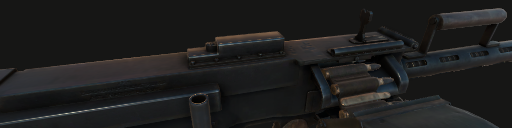
Being lighter than the MG 08/15, and offering a similar rate of fire, this weapon also filled the gap between the category of rifle and HMG. A large order was placed by the German army after the battles of 1916, as the German army needed something light that could combat the Lewis gun.
Maschinengewehr 08/18
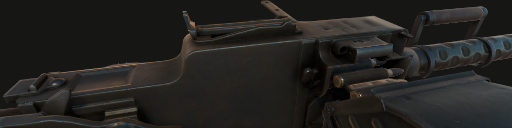
A modified version of the heavy and cumbersome MG 08/15. The water cooled barrel was replaced by an air cooled variant and a carrying handle was fitted, making the weapon much lighter and easier to handle. Very few eventually saw action on the front, with most being used to counter the Allied 100-day offensive in 1918.
Tankgewehr M1918
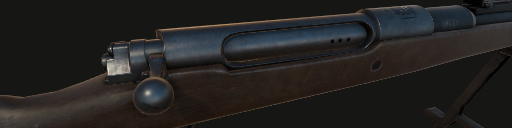
The T-Gewehr was in essence an enlarged version of the Gewehr 98, and used the 13mm TuF (Tank und Flieger) armour piercing round, which would quite readily handle any light / medium armour of the period.
Browning Automatic Rifle M1918 "BAR"
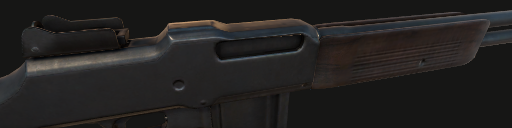
The BAR proved its worth during the Meuse-Argonne offensive, providing U.S troops with a reliable automatic firearm. The BAR’s impact on the overall war was small, but during the brief actions it saw, it was so successful that many countries would go on to place orders for the firearm both during and after the war.
Mousqueton Mle. 1892 M16 "Berthier"
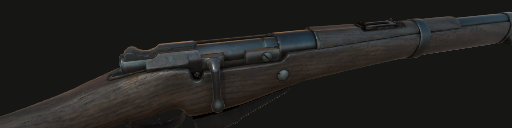
The Berthier M16 was a higher capacity and slightly updated version of the M1892 Berthier Mousqueton. The Berthier M16 saw an additional 2 rounds added to the capacity of the Mle 1892 Mousqueton - which, while only bringing the rifle up to par with other carbines for the time, made for a considerable difference.
G.P.K. Model 1888/05 "Kommissionsgewehr"
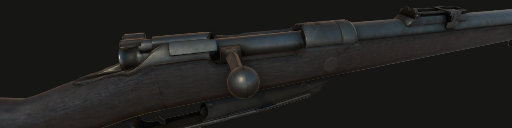
The Gewehr 88 was recommissioned by the German army in 1905 (and 1914) with a new model that used stripper clips instead of a 5 round enbloc. It has a near identical barrel to the Lebel 1886, but looks notably different due to the addition of a barrel sleeve.
Mauser Model 1889
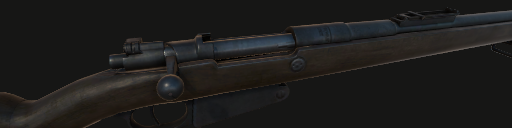
The Mauser Gewehr 1889 was developed by the Mauser company for Belgium in the later parts of the 1880s. Like many nations in Europe around the time, Belgium was looking to modernise its forces, and this modernisation required a bolt action rifle that would match the arsenal of any potential enemies. The G89 was Belgium's answer.
Karabiner 1888
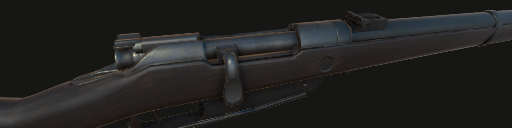
Developed alongside the Gewehr 88, the Kar 88 was designed for use with cavalry units. With a shorter barrel, lighter weight and reshaped bolt handle, it fulfilled its role well - it did however retain the barrel sleeve. With several carbine variants being produced, it often saw its way to the front lines of the Great War.
Mauser Model 1889 Carabine Mle. 16
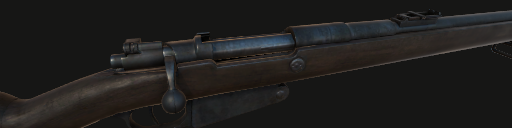
The Mauser 89 Karbine was effectively just the carbine version of the Mauser 1889, reduced in length, weight, and streamlined for use with cavalry units. The rifle offered a nice middle ground between a small arm and a long arm.
Magazine Lee–Enfield (MLE)
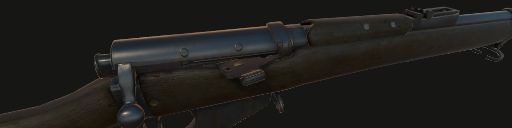
The Magazine Lee-Enfield (or MLE) MK.I, nicknamed "Long Lee" was introduced in 1895. It was the first in the line of Lee-Enfield rifles, capable of handling the new smokeless powder cartridges using the more rigid Enfield rifling. Otherwise identical to the Lee-Metford Mk. II, sporting the distinctive dust cover and lack of charger bridge for stripper clips.
M1917 Enfield
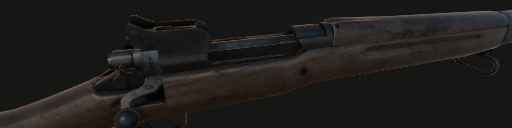
The P17 was a successful rifle, boasting decent accuracy and a reasonable rate of fire, though many U.S soldiers would still swear by their 1903 Springfields.
M1910 Mark III "Ross"
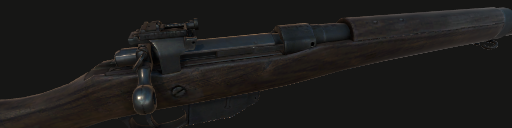
The Canadian Expeditionary Force (CEF) was equipped with the Ross as they embarked for the Western Front in 1915. Exposing the Ross to the mud and damp of the Western Front made apparent that this rifle, which was otherwise an excellent and accurate rifle, was highly unsuitable for trench warfare.
Model 1903 "Springfield"
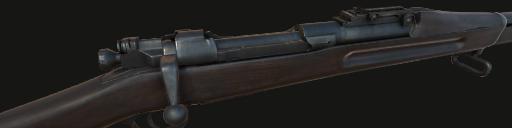
Renowned for its accuracy and reliability, the Springfield was loved by both the US Army and the US Marine Corps. The P17 would see more use during the Great War, but the Springfield was still very much a part of the fighting. This rifle would see action in many conflicts involving the U.S. during the 20th century.
Lange Pistole Parabellum 1908 "Artillerie-Luger"
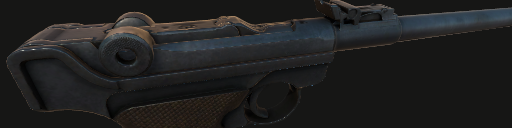
The Artillery Luger was an adaptation of the already popular Luger P08 for use by German artillery personnel for defence. With a longer barrel, wooden stock and 32 round magazine, the artillery luger would become iconic among the trenches of the Great War, and a favourite among trench raiding parties.
Mauser C96 "Broomhandle"
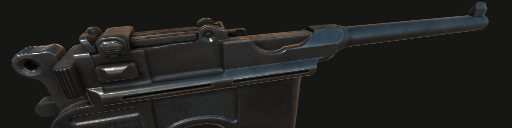
Fed with a 10-round clip the large magazine and general effectiveness made this handgun a favourite amongst soldiers. It saw military service with German half way through WW1, and they were also carried by officers from other nations as private purchases.
FN Browning M1900
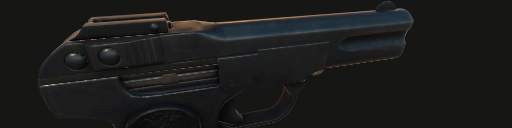
The FN1900 was the first production handgun to use a slide and was one of the most important weapon designs of the late 19th century. It quickly became a popular pistol for both military use and civilian use. Belgium was the primary user of the FN1900 - alongside the Ruby and other pistols including the Nagant revolver.
Revolver de 8 mm modèle 1892
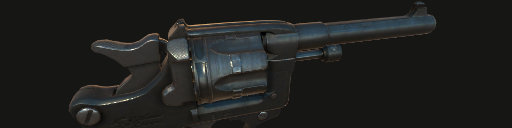
The standard issue French sidearm during the Great War. It is commonly referred to as the "Lebel" revolver, despite actually being manufactured by St. Etienne. A double-action revolver, it was well designed for its time and served all the way up until the Second World War.
Reichsrevolver M1883
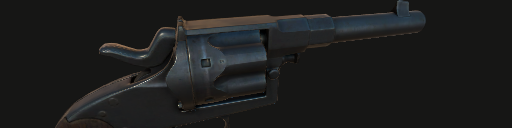
The original M1879 design was heavy and cumbersome. In the early 1880’s Germany decided to make the revolver a little easier to handle. Reducing its weight led to the M1883. A single action revolver, which was still ‘old tech’ for its time, but did the Job until the C96 Mauser and P08 Luger arrived.
Fusil Automatique Mle. 1917 "RSC"
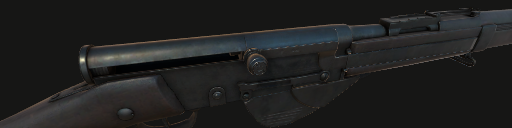
In 1916 the French army recognised the need to start replacing its outdated Lebel 1886 rifle. They chose to go with a semi-automatic design, having tried and tested semi-automatic rifles before the war broke out. The RSC17 has a 5 round enbloc magazine, and is gas operated.
Fusil Automatique Mle. 1918 "RSC"
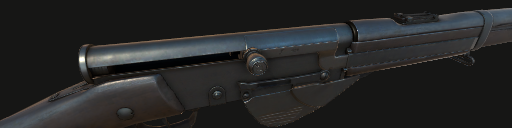
A shorter more compact version of the RSC 17, the RSC 18 started production during the very last weeks of the war. The rifle was absolutely renowned for its accuracy and loved by its users. Only a small number were made, (around 4000) with most of those being produced after the war.
Webley Self-Loading Pistol MKI Model I
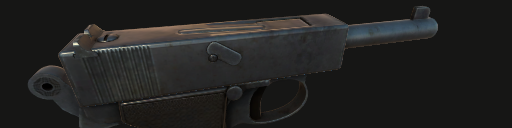
A popular private purchase weapons for officers who had the funds available. Chambering the same powerful .455 round as the Webley revolver, and offering 7 rounds before reloading, it was ultimately only a marginal improvement on the Webley MKVI.
Wechselapparat M1917 "Wex"
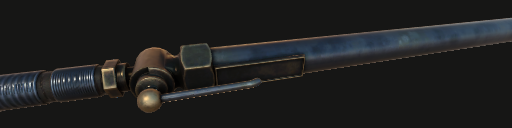
The German Wechselapparat Flamethrower or ‘Wex’ was developed in 1917 following the successful but outdated Kleif flamethrower. Flamethrowers had seen use since the early years of the war, with one of the first recorded uses being during 1915 near Verdun. A highly intimidating and effective weapon.
Eierhandgranate M1917

The "Eierhandgranate M1917" has with a fragmenting ring around the the centre to enhance its potential to inflict damage within the trenches. It is significantly smaller than the stick grenades, and so more could be carried and they could be thrown further with decent accuracy.
M1917 Geballte Ladung 6x
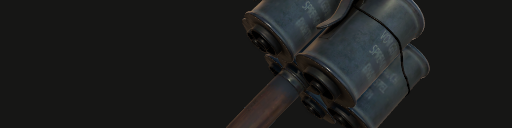
An improvised explosive made by the Germans out of 6 of the M1917 stick grenades. The main disadvantage with these bundled grenades was that they could only really be thrown short distances, making it a far riskier task for the grenadier to get within range of the target.
M1917 Geballte Ladung 9x

An improvised explosive made by the Germans out of 9 of the M1917 stick grenades. Even heavier than the version with 6 grenades, but also more explosive.
No. 34 Egg Grenade

The introduction of the Eierhandgranate led the British to introduce the No. 34 Egg grenade. The No. 34 used an internal percussion delay fuse, which meant that after removing the pin the grenade had to be smashed against a hard surface in order to trigger the fuse.
Winchester Model 1897 "Trench Gun"
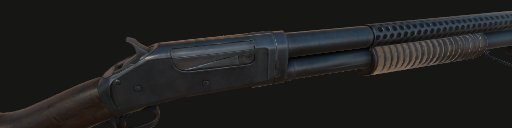
The Winchester Model 1897 was utterly devastating when used within an enemy trench. German military leaders considered shotgun use to be ‘barbaric’, and an order was issued to German forces to execute U.S soldiers caught with shotguns or shotgun ammunition. It's unknown if this order was often followed, however.
Stielhandgranate M1917

While the M15 has the simple string taped to the stick, the M1917 model used a cap at the bottom of the stick to prevent both humidity from affecting the string and offering better safety. The bottom of the cap also had prongs lining it to create a better grip for in the muddy trenches.
M1911 Automatic Pistol
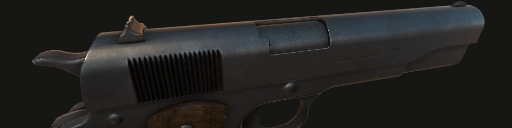
The Colt 1911 had good stopping power, was accurate enough for the use it was intended for, and it was reliable and well made - it made a nice rounded package ideal for close quarters combat. Serving from 1911, it is still used with some military branches today and saw heavy use through WW2, Korea and Vietnam.
P14 Enfield
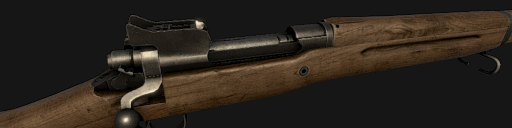
The P14 Enfield was designed after the British struggled against Mauser rifles in the Boer War, and fearing at the outbreak of war that the Germans would have an advantage they set up production in America. But by the time enough P14s were available, the SMLE had already proven its worth and become the standard issue British rifle. However, the P14 was a more accurate rifle, so saw some use with snipers.
Senegalese Machete Sabre D’Abattis
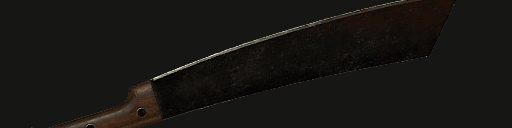
A cutting or chopping tool was issued to the colonial soldiers of the Tirailleurs Sénégalais, it would see a lot of action in the trenches. Its thick (between 5-8mm) and extremely sharp blade would make quick work of flesh and bone.
1908 E-Tool

The desperate nature of the fighting in the trenches saw the use of entrenching tools as effective melee weapons. The 1908 E-Tool was carried by most commonwealth troops and was easily accessible as a melee weapon.
Webley-Fosbery

The Webley-Fosbery was of unusual design with the zig-zag grooves on the cylinder. Because of this design it was much easier to fire accurately and thus popular with target shooters. It saw limited action during WW1 as a private purchase weapon, never being adopted because of easy fouling of the mechanism.
Fusil Colonial MLE. 1907 Berthier Senegalais
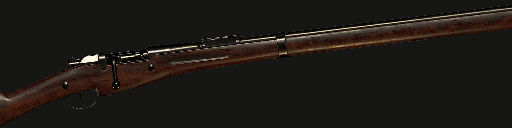
Named the "Fusil Colonial Modèle 1907" after 1908, it was designed to meet the need for a new infantry rifle for the colonial troops in Africa. It would be based on the Mle. 1892 Mousqueton with a turned down bolt and used the 3-shot "Berthier" en-bloc charger.
OF1 Grenade

This French light weight "offensive" grenade from 1915 was designed more so to stun defenders. Following the introduction of the "Billant Modèle 1916 B", the OF1 would also utilize this modern grenade igniter plug with a 5-second fuse like its "defensive" counterpart: the F1.
Petard Explosive

An improvised grenade made due to the shortages in standard grenades, it would feature an 100 gram charge of high explosive attached to a wooden stick. It was armed by striking the nail at the top inside of the wood block which lights the fuse to the explosive charge.
- Official Verdun Game Guide★ 5 (960)244k views1.1k ♥13 minUpdated Jun 3, 2019
- The Do's and Don'ts of Verdun (In Pictures)★ 5 (363)15k views234 ♥11 minUpdated Aug 3, 2015
- Verdun Veteran Tactics★ 5 (475)11k views524 ♥61 minUpdated Nov 8, 2016
- Trench Raiding Guide★ 4 (122)4.9k views116 ♥9 minUpdated Dec 22, 2025
- Guide For Historical Verdun Matches (OUTDATED)★ 4 (110)4.6k views109 ♥12 minUpdated Jun 14, 2022
- Verdun Server Commands and Custom Match Administration★ 4 (92)3.3k views166 ♥10 minUpdated Aug 26, 2020




- Upgrading to PremiumTeam Fortress 2★ 5 (20k)1441k views11k ♥6 minUpdated May 11, 2022
- No More Room in Hell Official ManualNo More Room in Hell★ 5 (2.8k)569k views2.1k ♥29 minUpdated Apr 22, 2019
- NMRiH Community Hosting GuidesNo More Room in Hell★ 5 (526)351k views653 ♥1 minUpdated Aug 10, 2022
- ULTIMATE GUIDE FOR GAME DEV TYCOONGame Dev Tycoon★ 5 (5.8k)326k views10k ♥4 minUpdated 23 Jan, 2014
- How to 'Git Gud' Soon™MORDHAU★ 5 (2k)318k views3k ♥68 minUpdated Nov 16, 2024
- Лучшие кооперативные игры SteamPAYDAY 2★ 5 (1.5k)315k views2.1k ♥56 minRussianUpdated Apr 27, 2025




This guide was created by its original author on the Steam Community. Are you the author and want it removed? Request removal.