Terraforming Guide
Introduction
Перевод на русский язык - Галактик
Endless Space has 12 types of planets (not including asteroid belts). Each planet type has an associated approval rating. Gas giants have a -20 approval negative effect and lush terrestrial planets have no effect on approval rating. Planet types also have bonuses for Food, Industry, Dust and Science (FIDS). The in-game icons for each is: Approval , Food
  , Industry
  , Dust
  and Science
  .
.
Terraforming requires researching technologies than can be found on the bottom of the Technology Tree under Exploration and Expansion. Terraforming to Class I and II planets requires access to special resources. Tundra planets require Adamantian. Arid Planets require Siderite.
All Class I planets require access to Quadrinix.
Endless Space has 12 types of planets (not including asteroid belts). Each planet type has an associated approval rating. Gas giants have a -20 approval negative effect and lush terrestrial planets have no effect on approval rating. Planet types also have bonuses for Food, Industry, Dust and Science (FIDS). The in-game icons for each is: Approval
, Food , Industry , Dust and Science .Terraforming requires researching technologies than can be found on the bottom of the Technology Tree under Exploration and Expansion. Terraforming to Class I and II planets requires access to special resources. Tundra planets require Adamantian. Arid Planets require Siderite.
All Class I planets require access to Quadrinix.
Quick Reference
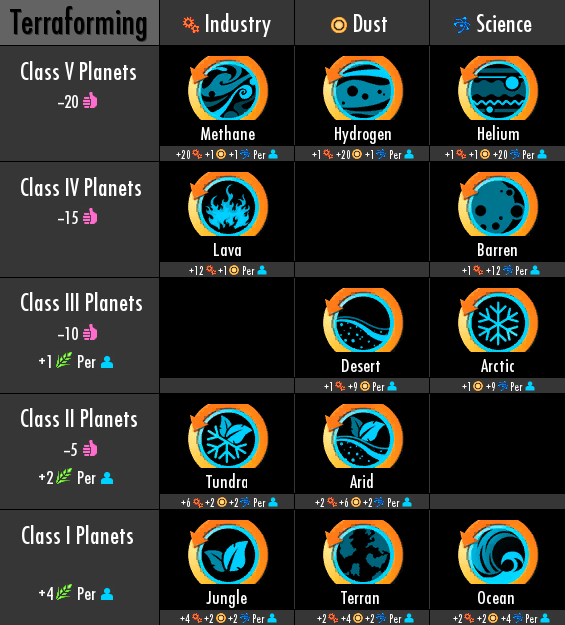
This quick reference guide groups the different planet types by their primary bonuses. The top row shows the Class V planets, which are gas giant planets. The second row has Class IV, followed by Class III and Class II. The bottom row has Class I planets, which are lush terrestrial planets. Once all the proper technologies are researched, terraforming can be performed between any row and the one above or below it. Planet types on the same row can also be terraformed.
Example #1:
A system contains a Helium planet that needs to be converted to an Arctic planet to reduce the negative Approval effect but keep the Science bonus. If the Helium planet is colonized and the correct technologies are known (Deuyivan Construction, Atmospheric Engineering and Low-Temp Hydration), the following transformation can occur: - Helium --> Barren --> Arctic
Example #2:
A Tundra planet's Industry bonus was helpful to improve a system but now more Dust is required to support it. The Tundra planet can be terraformed to an Hydrogen planet with the correct technologies (Low-Temp Hydration, Graviton Manipulation and Deuyivan Construction): - Tundra --> Arctic --> Lava --> Hydrogen
Example #3:
Late in the game a new solar system is colonized with two huge gas giant planets; one Methane and the other Hydrogen. These planets would make excellent Jungle planets in order to support a higher population with a focus on Industry. There are several terraforming routes to take but here are two that would work with the right technologies (Graviton Manipulation, Soil Revivification, Low-Temp Hydration, Exotic Thermodynamics and Mass Hydration) and access to the right resources (Adamantian and Quadrinix):- Methane --> Lava --> Arctic --> Tundra --> Jungle
- Hydrogen --> Lava --> Desert --> Tundra --> Jungle
Technology Requirements
Terraforming can be performed after researching the appropriate technology in the Exploration and Expansion branch of the technology tree. The technologies listed below are required to terraform a planet into the named planet type.
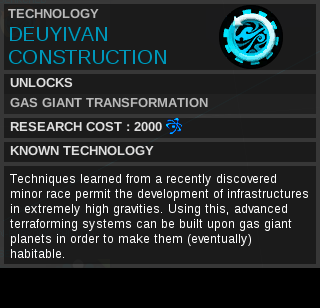
Deuyivan Construction - Methane, Hydrogen and Helium planet types
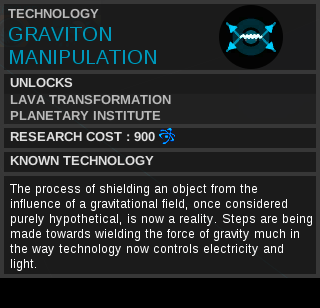
Graviton Manipulation - Lava planet type
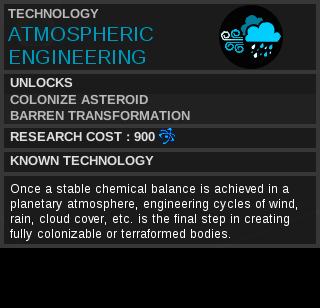
Atmospheric Engineering - Barren planet type
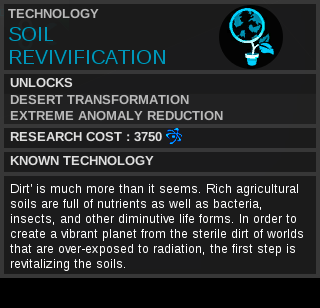
Soil Revivification - Desert planet type
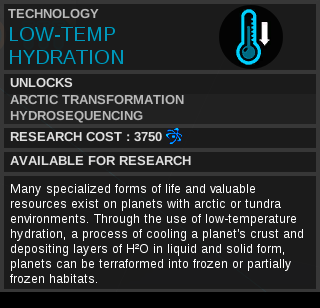
Low-Temp Hydration - Arctic planet type
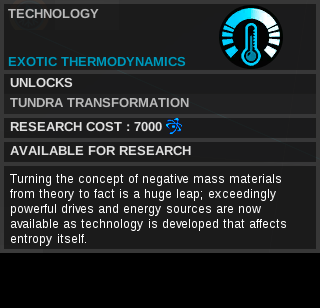
Exotic Thermodynamics - Tundra planet type
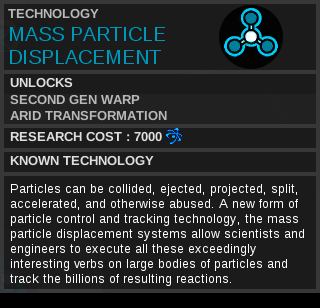
Mass Particle Displacement - Arid planet type
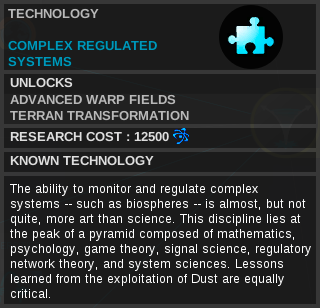
Complex Regulated Systems - Terran planet type
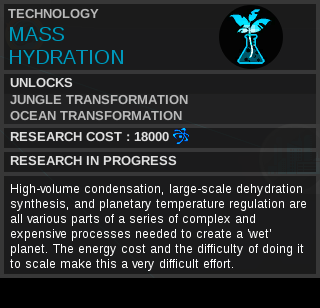
Mass Hydration - Jungle and Ocean planet types
Class V Planets
Deuyivan Construction - Methane, Hydrogen and Helium planet types
Class IV Planets
Graviton Manipulation - Lava planet type
Atmospheric Engineering - Barren planet type
Class III Planets
Soil Revivification - Desert planet type
Low-Temp Hydration - Arctic planet type
Class II Planets
Exotic Thermodynamics - Tundra planet type
Mass Particle Displacement - Arid planet type
Class I Planets
Complex Regulated Systems - Terran planet type
Mass Hydration - Jungle and Ocean planet types
Planet Type Bonuses
Each planet type has different effects for Approval, Food, Industy, Dust and Science.
Approval Negative Effects:
- Class V: -20 Approval
- Class IV: -15 Approval
- Class III: -10 Approval
- Class II: -5 Approval
- Class I: n/a
Planet Food Bonuses:
- Class V: n/a
- Class IV: n/a
- Class III: +1 Food
- Class II: +2 Food
- Class I: +4 Food
Planet Industry Bonuses:
- Class V (Methane): +20 Industry
- Class IV (Lava): +12 Industry
- Class III: n/a
- Class II (Tundra): +6 Industry
- Class I (Jungle): +4 Industry
Planet Dust Bonuses:
- Class V (Hydrogen): +1 Industry
- Class IV: n/a
- Class III (Desert): +1 Industry
- Class II (Arid): +2 Industry
- Class I (Terran): +2 Industry
Planet Science Bonuses:
- Class V (Helium): +1 Industry
- Class IV (Barren): +1 Industry
- Class III (Arctic): +1 Dust
- Class II: n/a
- Class I (Ocean): +2 Industry
Planet Populations
The minimum population for each planet depends on the planet type as well as the planet size. Planets range in size from tiny to huge. The minimum populations are shown below for each class of planet. Some technologies and planet anomalies affect these values.
Tiny
- Class V: +1 Population
(methane, hydrogen and helium)
- Class IV: +1 Population
- Class III: +2 Population
- Class II: +3 Population
- Class I: +4 Population
Small
- Class V: +2 Population
- Class IV: +2 Population
- Class III: +3 Population
- Class II: +4 Population
- Class I: +5 Population
Medium
- Class V: +3 Population
- Class IV: +3 Population
- Class III: +4 Population
- Class II: +5 Population
- Class I: +6 Population
Large
- Class V: +3 Population
- Class IV: +4 Population
- Class III: +5 Population
- Class II: +7 Population
- Class I: +8 Population
Huge
- Class V: +4 Population
- Class IV: +4 Population
- Class III: +6 Population
- Class II: +8 Population
- Class I: +10 Population
Class V Planets
Class V planets include Methane, Hydrogen and Helium planet types.
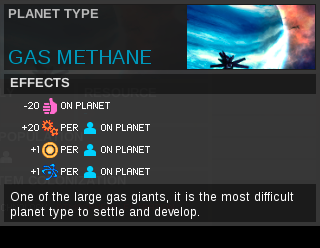
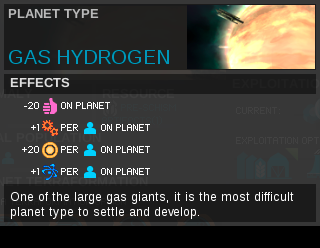
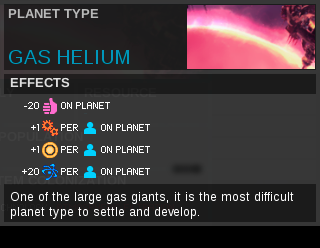
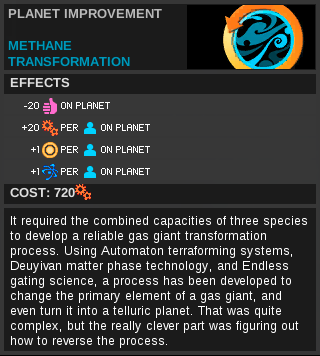
Methane planets can be terraformed to:
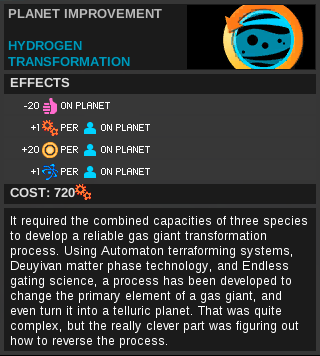
Hydrogen planets can be terraformed to:
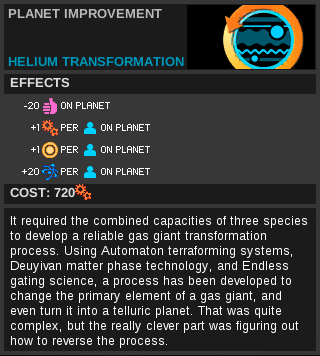
Helium planets can be terraformed to:
Methane Planet - Industry Bonus
Methane planets can be terraformed to:
- Other Class V planets: Hydrogen and Helium
- Class IV planets: Lava and Barren
Hydrogen Planet - Dust Bonus
Hydrogen planets can be terraformed to:
- Other Class V planets: Methane and Helium
- Class IV planets: Lava and Barren
Helium Planet - Science Bonus
Helium planets can be terraformed to:
- Other Class V planets: Methane and Hydrogen
- Class IV planets: Lava and Barren
Class IV Planets
Class IV planets include Lava and Barren planet types.
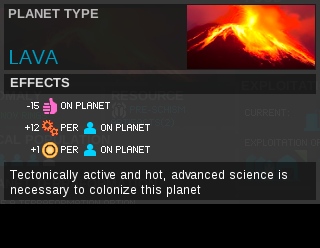
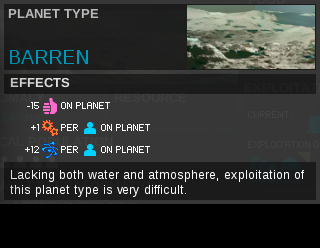
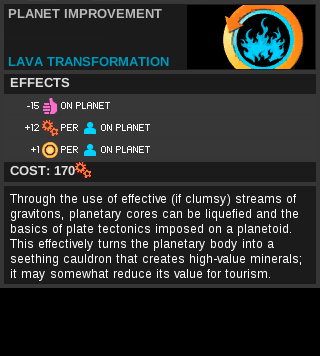
Lava planets can be terraformed to:
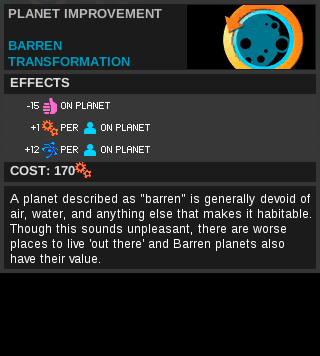
Barren planets can be terraformed to:
Lava Planet - Industry Bonus
Lava planets can be terraformed to:
- Class V planets: Methane, Hydrogen and Helium
- Other Class IV planets: Barren
- Class III planets: Desert and Arctic
Barren Planet - Science Bonus
Barren planets can be terraformed to:
- Class V planets: Methane, Hydrogen and Helium
- Other Class IV planets: Lava
- Class III planets: Desert and Arctic
Class III Planets
Class III planets include Desert and Arctic planet types.
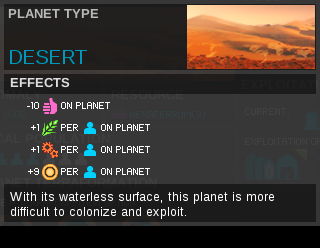
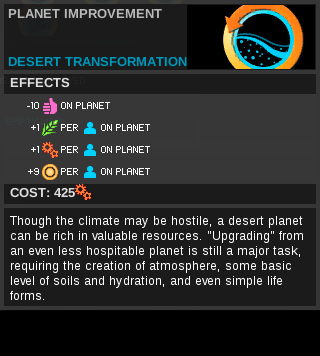
Desert planets can be terraformed to:
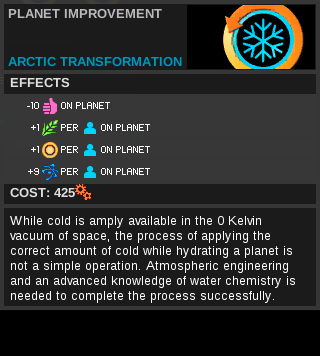
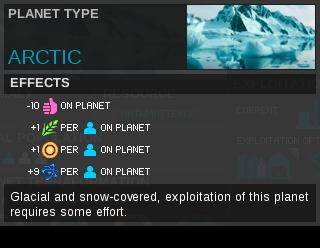
Arctic planets can be terraformed to:
Desert Planet - Dust Bonus
Desert planets can be terraformed to:
- Class IV planets: Lava and Barren
- Other Class III planets: Arctic
- Class II planets: Tundra and Arid
Arctic Planet - Science Bonus
Arctic planets can be terraformed to:
- Class IV planets: Lava and Barren
- Other Class III planets: Desert
- Class II planets: Tundra and Arid
Class II Planets
Class II planets include Tundra and Arid planet types. Terraforming to a Class II planet requires access to special resources. Tundra planets require Adamantian. Arid Planets require Siderite.
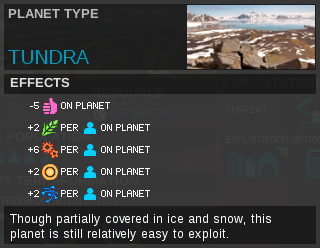
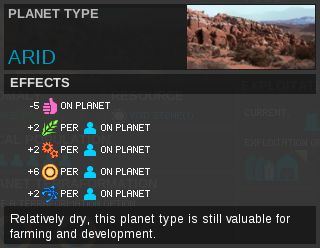
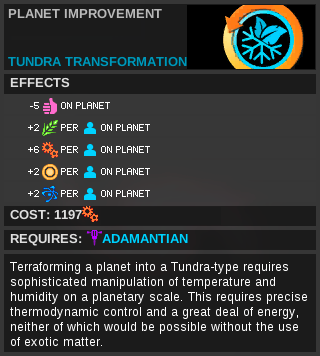
Tundra planets can be terraformed to:
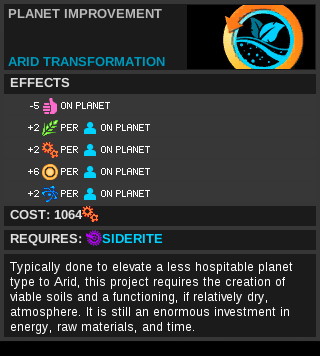
Arid planets can be terraformed to:
Tundra Planet - Industry Bonus
Tundra planets can be terraformed to:
- Class III planets: Desert and Arctic
- Other Class II planets: Arid
- Class I planets: Jungle, Terran and Ocean
Arid Planet - Dust Bonus
Arid planets can be terraformed to:
- Class III planets: Desert and Arctic
- Other Class II planets: Tundra
- Class I planets: Jungle, Terran and Ocean
Class I Planets
Class I planets include Jungle, Terran and Ocean planet types. Terraforming to a Class I planet requires access to the special resource Quadrinix.
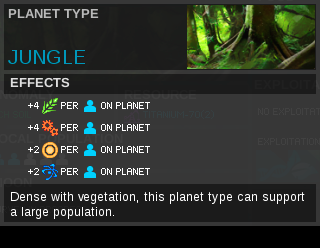
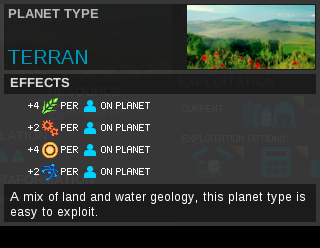
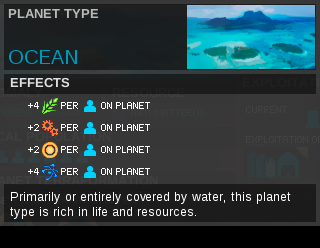
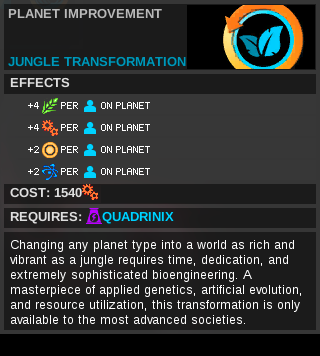
Jungle planets can be terraformed to:
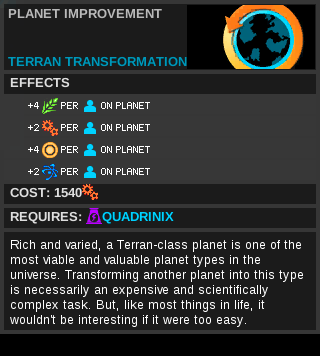
Terran planets can be terraformed to:
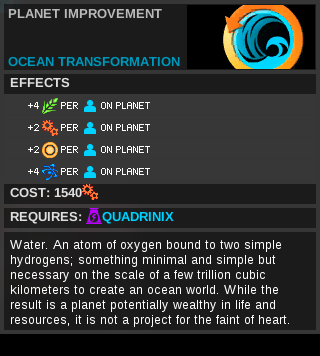
Ocean planets can be terraformed to:
Jungle Planet - Industry Bonus
Jungle planets can be terraformed to:
- Class II planets: Tundra and Arid
- Other Class I planets: Terran and Ocean
Terran Planet - Dust Bonus
Terran planets can be terraformed to:
- Class II planets: Tundra and Arid
- Other Class I planets: Jungle and Ocean
Ocean Planet - Science Bonus
Ocean planets can be terraformed to:
- Class II planets: Tundra and Arid
- Other Class I planets: Jungle and Terran
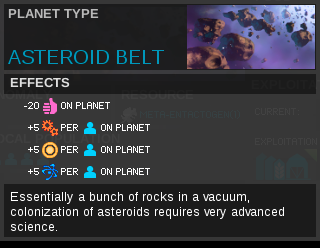
Asteroid Belt
Asteroid belts can be colonized but cannot be terraformed.
Notes
- Created July 6, 2014.
- Updated quick reference July 8, 2014.
- Added technology descriptions July 13, 2014.
- Added planet sizes and FIDS symbols Aug 15, 2014.
- Updated quick reference to include FIDS, added planet and asteroid info Feb 21, 2015.
More ENDLESS Space™ - Definitive Edition guides
- Starting off in Endless Space: Disharmony★ 5 (996)37k views1.4k ♥31 minUpdated Apr 21, 2015
- Speeding up Ship Creation★ 5 (379)27k views161 ♥6 minUpdated Dec 25, 2012
- Invasion mechanics explained (how to invade successfully)★ 5 (178)16k views165 ♥7 minUpdated Apr 21, 2017
- Эндлесс Спейс – быстрое начало.★ 5 (712)15k views457 ♥7 minRussianUpdated Apr 1, 2013
- How to get the three achievements of exploring galaxies★ 5 (175)8.9k views124 ♥5 minUpdated Jul 27, 2013
- Простой способ победы над ИИ на максимальной сложности★ 5 (324)8.2k views244 ♥3 minRussianUpdated Mar 6, 2014


This guide was created by its original author on the Steam Community. Are you the author and want it removed? Request removal.