Dark Souls Maps & Lore
LORE
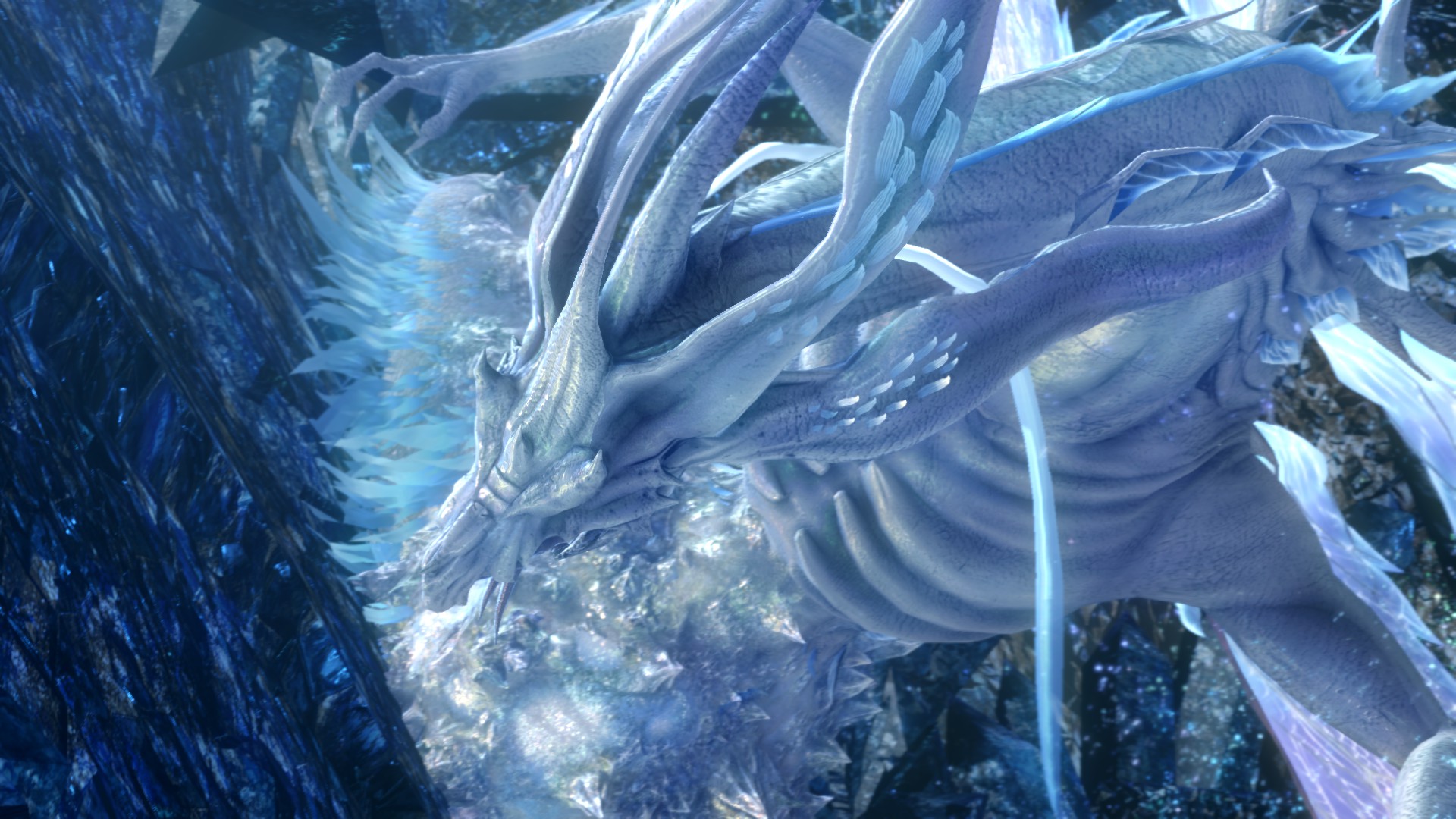
In the beginning, there was nothing.
Only an Age of Ancients, a gray and timeless world ruled by Everlasting Dragons, whose stone scales made them eternal. There was no life, no death — only stillness.
Then came the Flame.
The First Flame brought something the world had never known: difference.
With fire came light and dark, heat and cold, life and death.
And from that contrast, beings emerged — those who would forever change the world.
Among them were Gwyn, Lord of Sunlight, the Witch of Izalith, Nito, the First of the Dead, and the Furtive Pygmy, who discovered a unique soul — the Dark Soul, from which humanity itself would be born.
The three Lords united against the dragons, using the power of the Flame to bring forth the Age of Fire. Gwyn struck down the dragons with lightning, Nito spread death among them, and the Witch of Izalith unleashed chaos itself.
The dragons fell, and the world was remade in fire and light.
But all flames, no matter how bright, eventually fade.
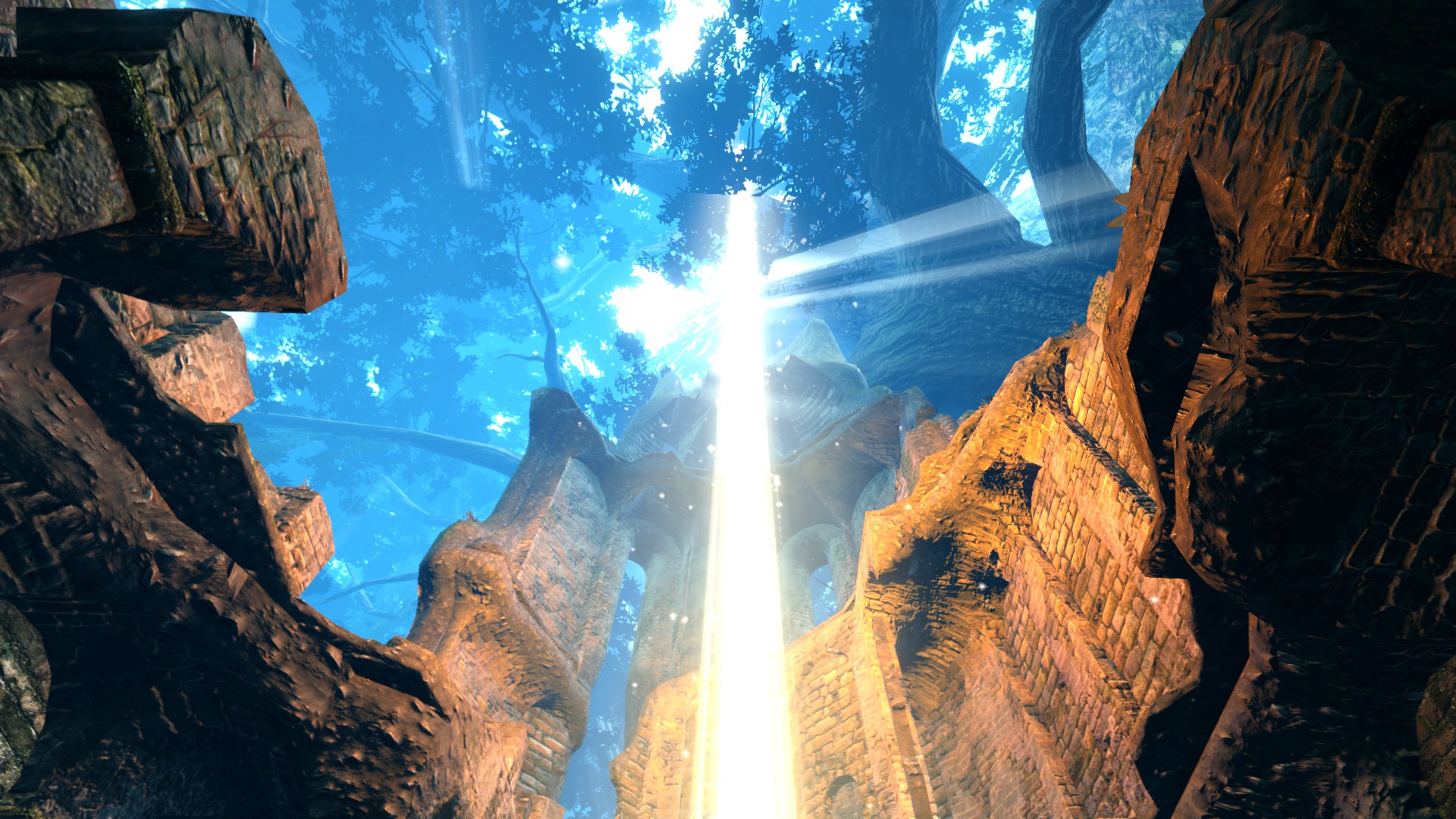
As time passed, the First Flame began to dwindle. The cities of the gods decayed, their light dimmed, and the shadows of Darkness crept slowly into the world of men.
Humans —descendants of the Furtive Pygmy, bearers of the Dark Soul— were mortal and fragile, yet possessed something the gods feared: free will.
As the Flame faded, the Curse of the Undead spread.
Those marked by the Darksign would die and return again, endlessly, each time losing a fragment of their mind and humanity, until they became Hollow —soulless husks without purpose, driven only by instinct.
Gwyn, terrified of the end of his Age and the coming Age of Dark —the Age of Man— made a desperate choice: he sacrificed his own soul to rekindle the First Flame.
In doing so, he became the Lord of Cinder, forever burning in the Flame he sought to preserve.
It was an act of love, of fear, and of denial.
Thus, the world continued, held together by sacrifice… and by fear.
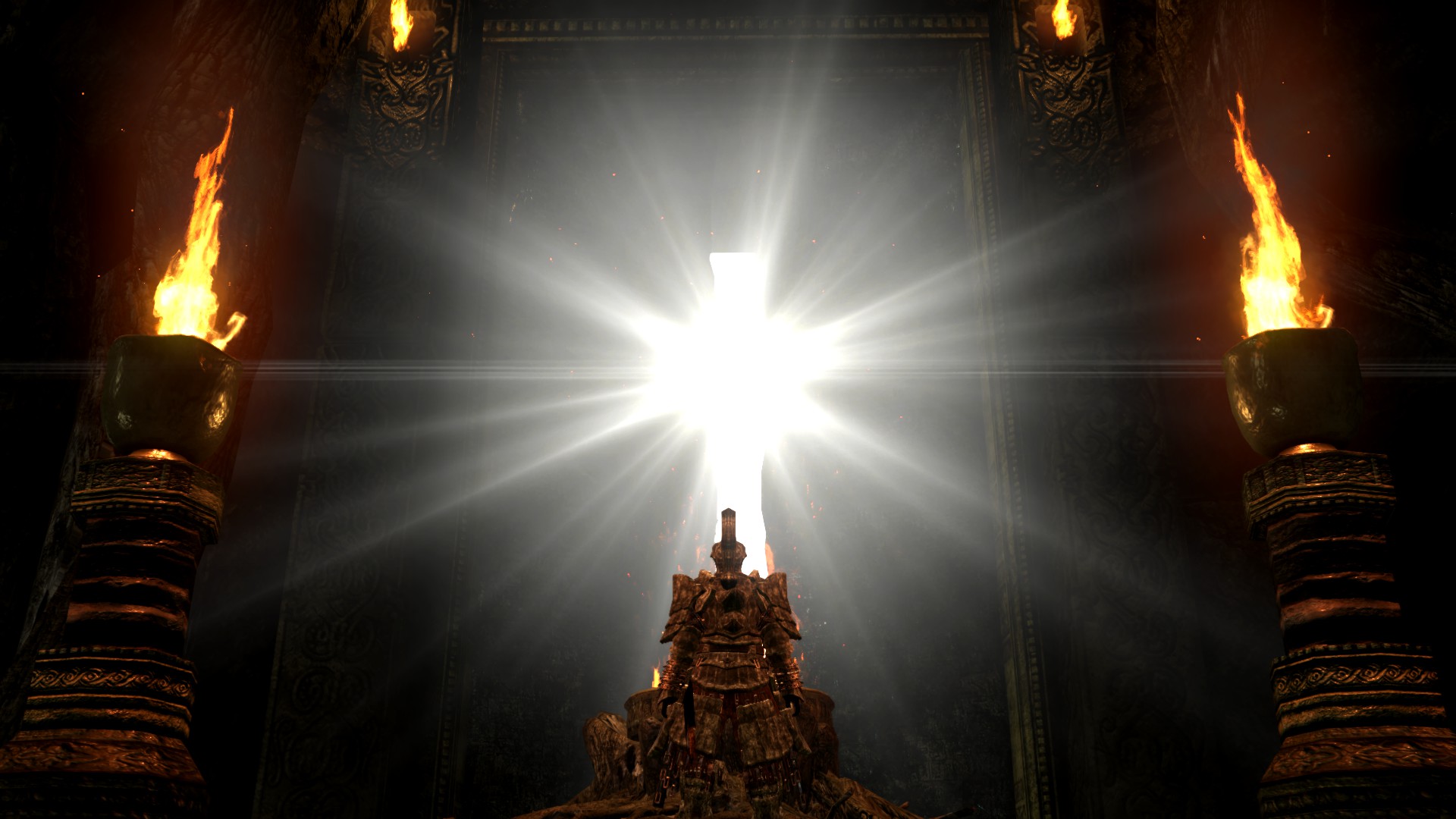
In this dying world, you —the Chosen Undead— awaken within a prison, cursed and forgotten.
Your destiny, according to prophecy, is to seek the great souls, defeat the Lords of old, and discover the truth behind the fading fire.
Your journey takes you through the ruins of past ages, across kingdoms lost to time, facing beings who were once gods, heroes, or monsters —each clinging to what remains of their purpose.
Every foe you face is a reflection of a fading era, and every victory brings you closer to the Kiln of the First Flame, where Gwyn himself awaits… and where the fate of the world will be decided.
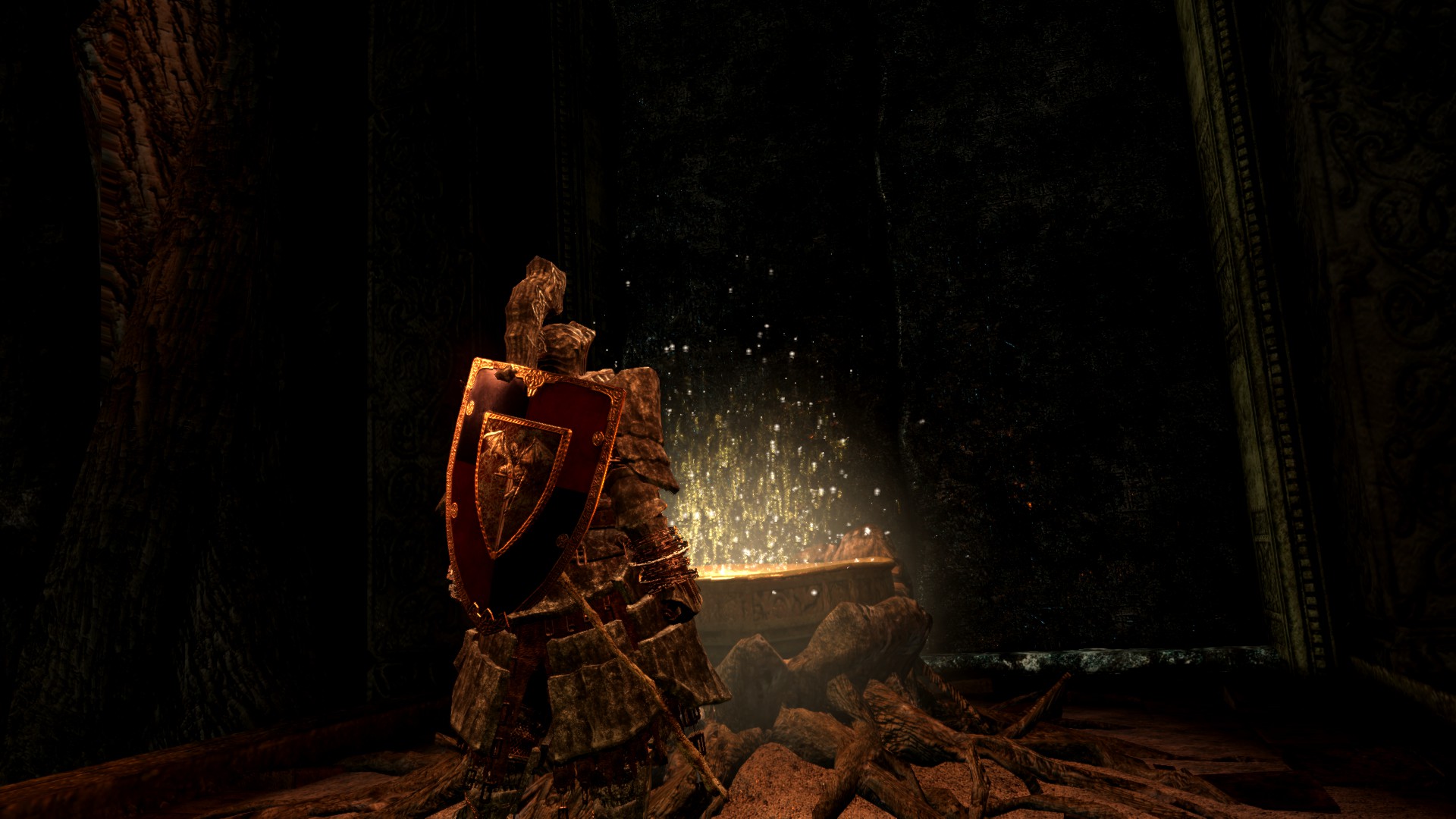
Throughout your journey, the world seems to tell a tale of light versus dark, but Dark Souls was never about good versus evil.
The Fire represents order, civilization, and control, yet it also brings stagnation.
The Darkness represents mortality, imperfection, and freedom.
The Dark Soul, the essence of humanity, is not a curse —it is what makes humans truly human. It is the capacity to choose, to create, to err, and to overcome.
The Abyss, often feared as corruption, is not inherently evil. It is the raw potential of humankind, unshaped and unrestrained —the symbol of free will itself.
The gods fear the Darkness because in it lies the end of their dominion.
When man embraces his Dark Soul, he ceases to be a servant of the gods and becomes master of his own fate.
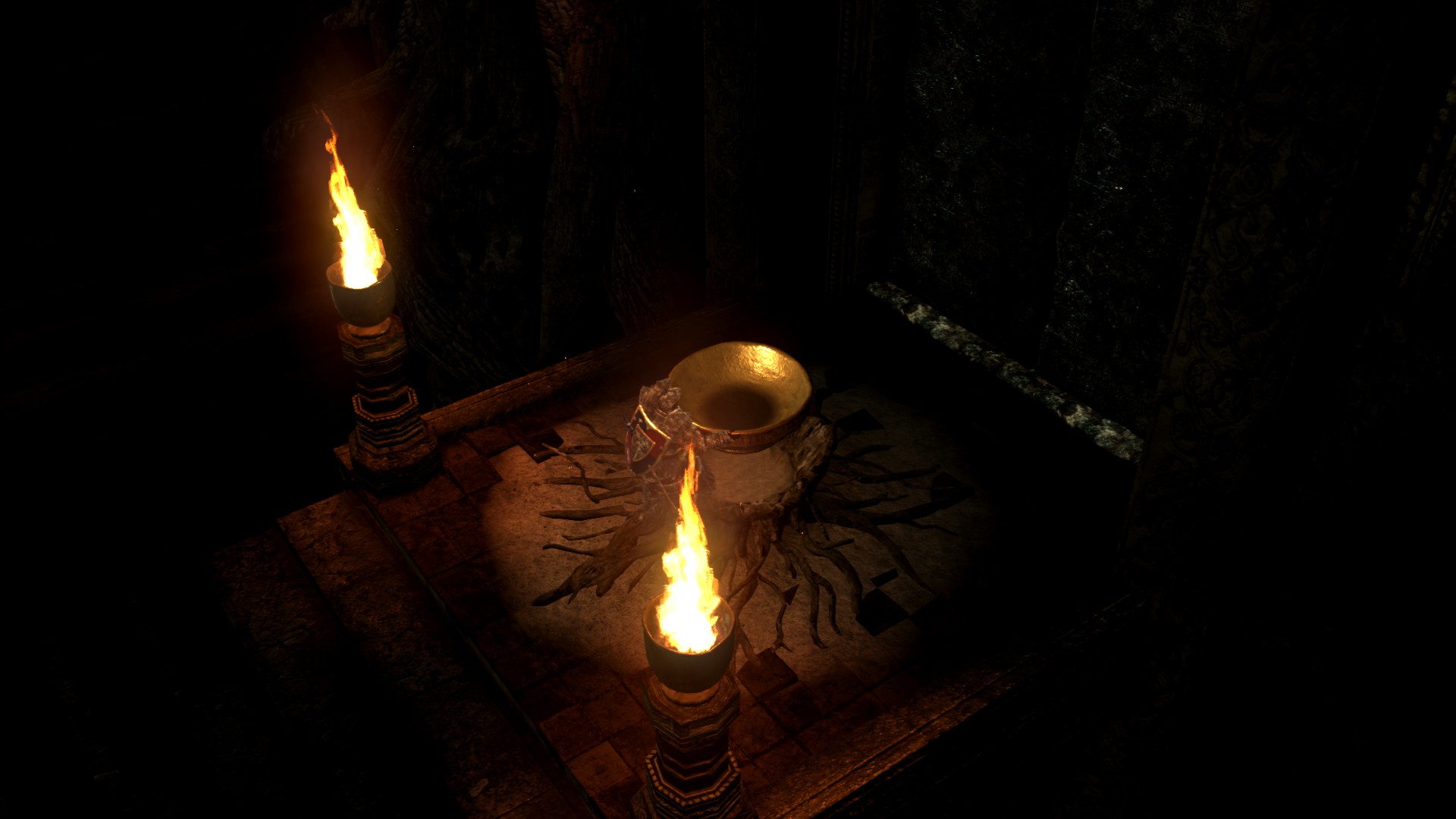
At the end of your journey, you confront Gwyn, Lord of Cinder.
You do not slay him out of hatred —but out of mercy.
He was once a noble god, a bringer of light, who feared the Dark so deeply that he chained the world to an endless cycle of fire.
Defeating him is not rebellion; it is release.
Then, before the dying Flame, you must decide.
🔥 1. Link the Flame
You may choose to sacrifice yourself, becoming the next Lord of Cinder to keep the fire alive.
The world will continue to burn —for a time— but the cycle will repeat endlessly.
This choice represents the preservation of order, but also the denial of change and freedom.
It is the path of the gods, the continuation of their illusion of light.
🌑 2. Let the Flame Die
Or you may turn away, allowing the First Flame to fade and the world to fall into Darkness.
This is not destruction —it is transformation.
The gods’ reign ends, and the Age of Man begins.
In the shadows, humanity claims its true inheritance: the freedom to define its own destiny.
It is not a bad ending.
It is the beginning of a world free from divine control, uncertain yet real —a world of true humanity.
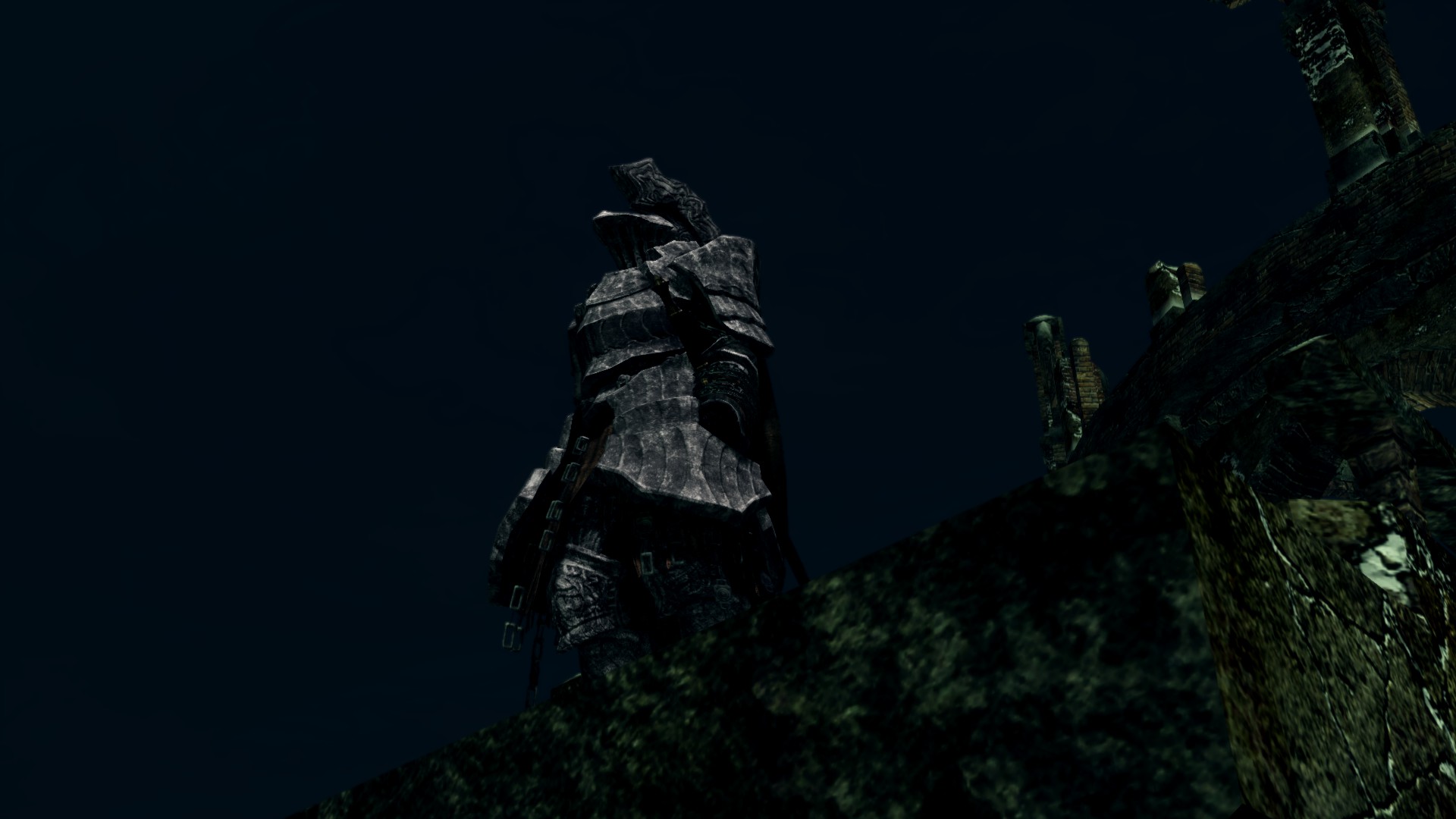
Dark Souls is not merely a story of monsters and despair.
It is a meditation on cycles, choice, and persistence.
Every bonfire you kindle is a spark of hope in a dying world.
Every death, a lesson.
Every step forward, an act of defiance against inevitability.
The Flame and the Dark are not enemies —they are two sides of the same truth.
The Flame gives purpose, but the Dark gives freedom.
“In the end, the choice is yours —
to prolong the age of light,
or to embrace the dark,
and let mankind walk its own path.”
LORDRAN
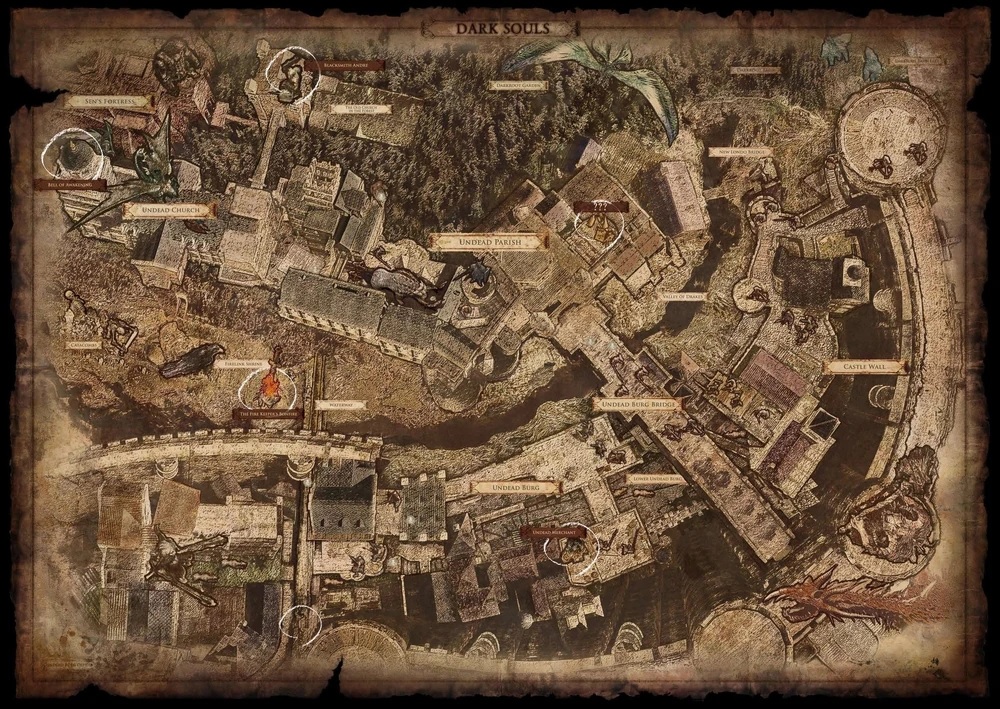
"But the old legends speak of one day when an Undead shall be chosen to leave the Undead Asylum, in pilgrimage to the land of the ancient lords, Lordran." — Narrator of Dark Souls
Lordran is the kingdom where the events of Dark Souls take place.
The kingdom of Lordran is protected by enormous walls, and at its center rises the city of the gods, Anor Londo. The history of the realm began with the advent of the Age of Fire, when the Everlasting Dragons were defeated by the Lords.
The land grew and prospered until one day the Curse of the Undead appeared. Several attempts were made to solve this problem, all in vain. The areas surrounding Anor Londo fell into ruin, and the city itself was eventually abandoned. As part of those efforts, all those branded with the Darksign were imprisoned in a vast asylum in the north.
The kingdom is inhabited by many different beings: gods, giants, humans, demons, and even dragons. However, the ancient dragons, those who fought against the gods and existed since the dawn of time, are nearly impossible to find—only a few descendants remain within the realm.
Unlike the outside world, the only currency of value in Lordran is souls. The most precious coins of the human world are worthless here.
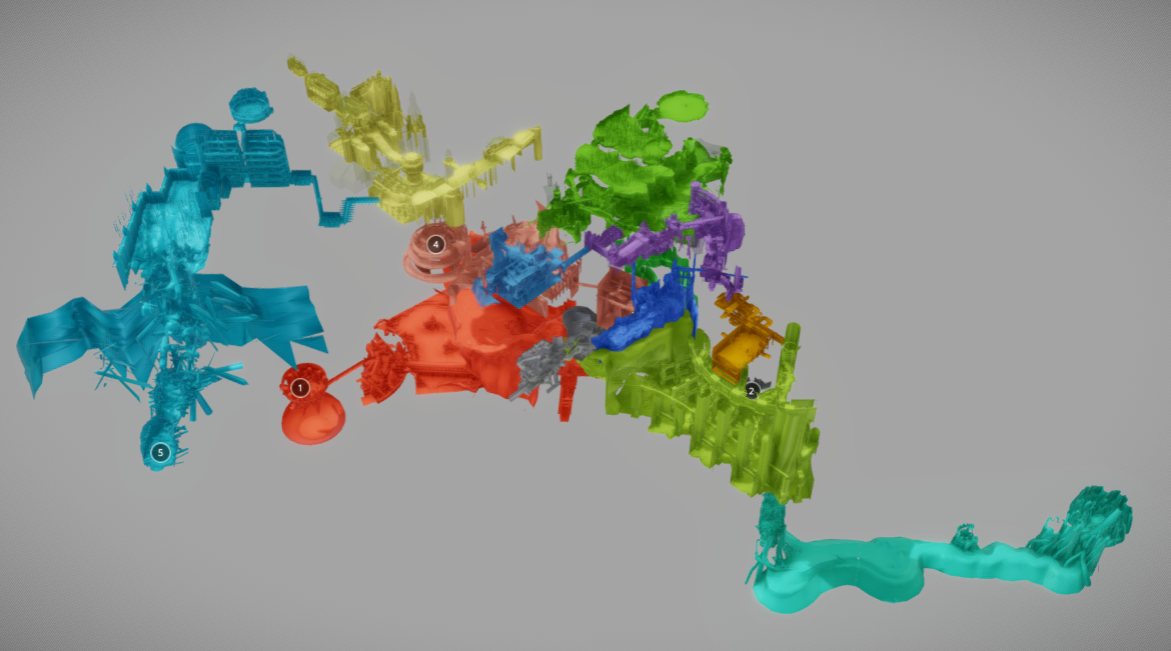
ENTIRE MAP
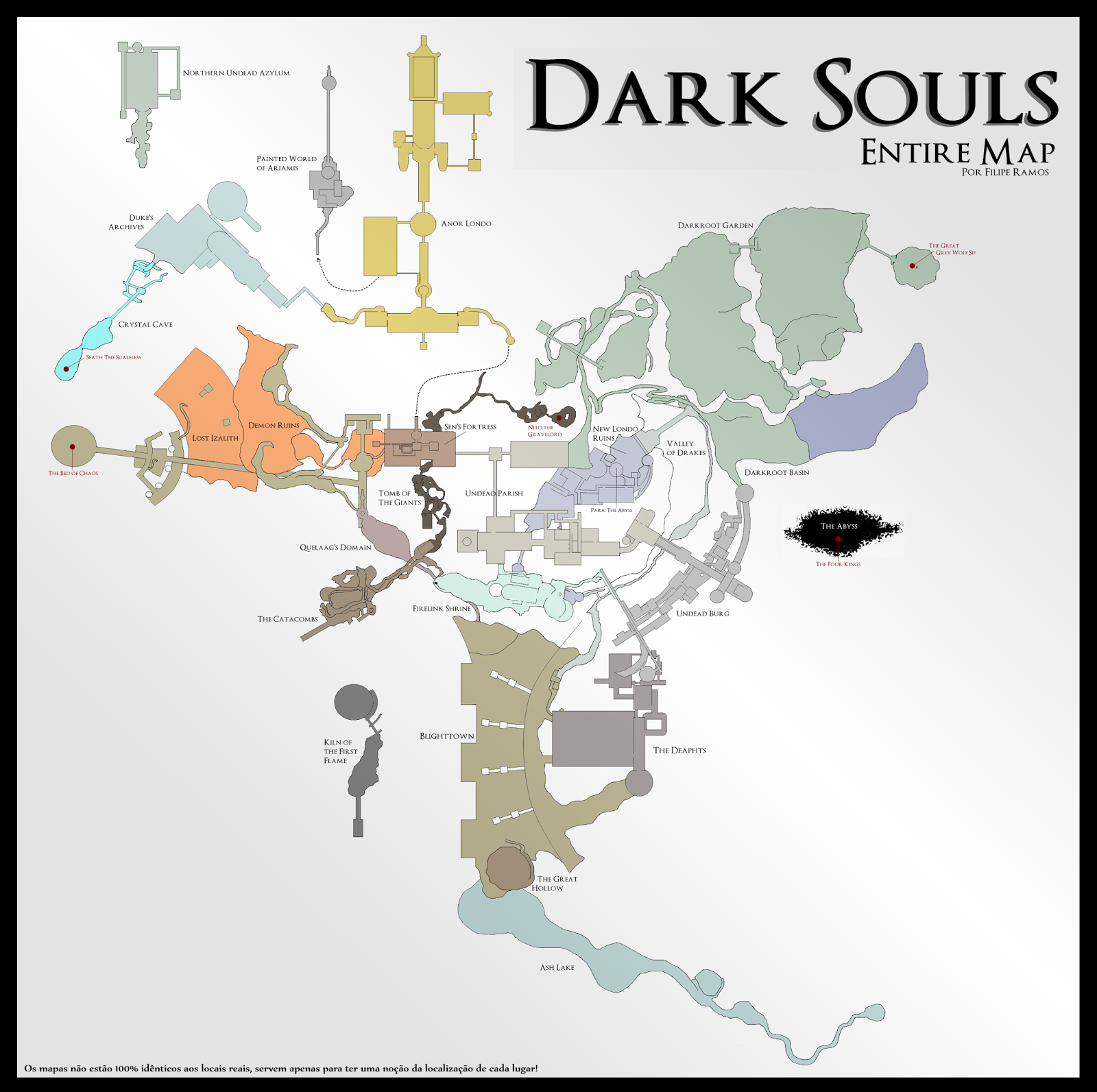
===========================================================
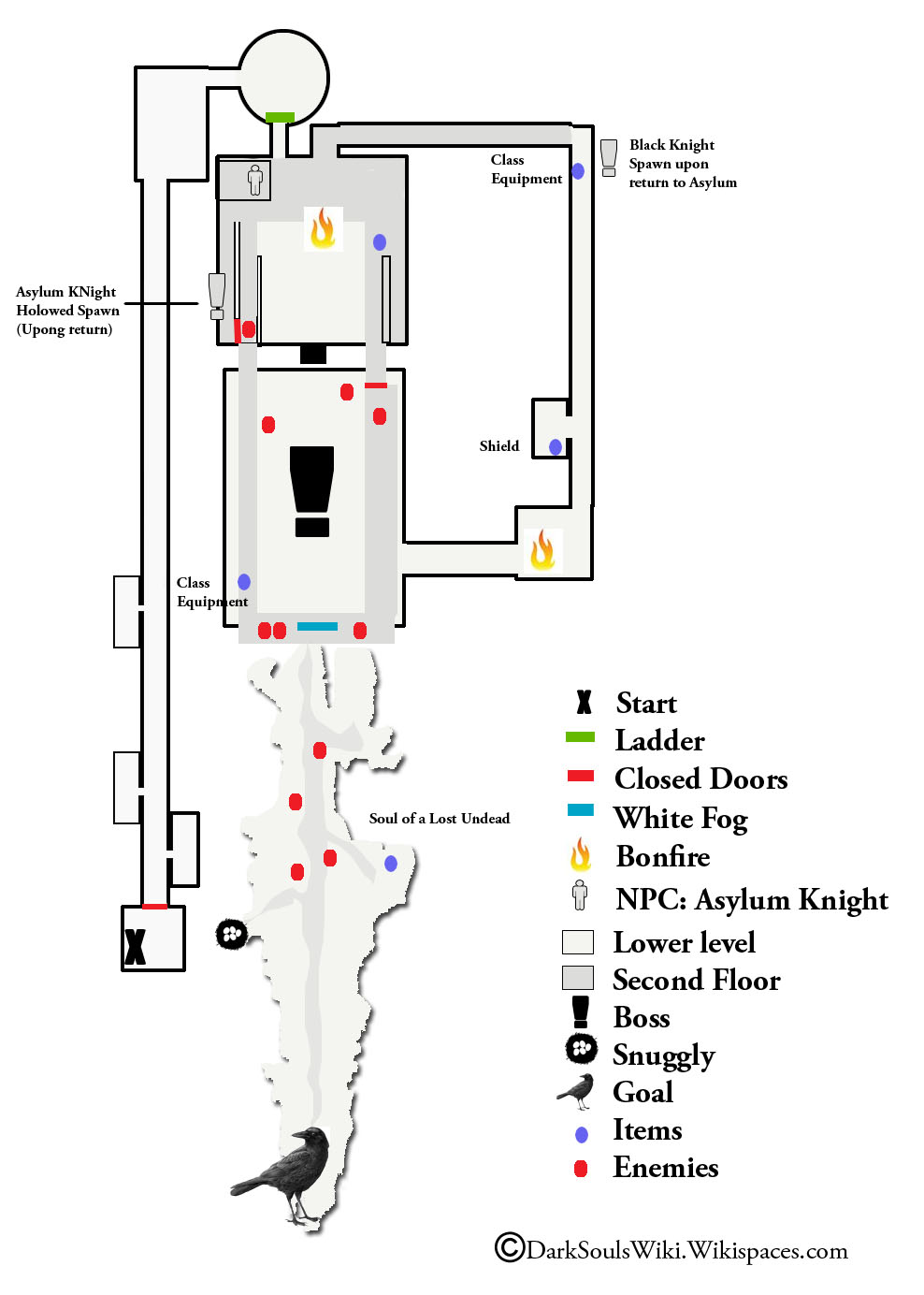
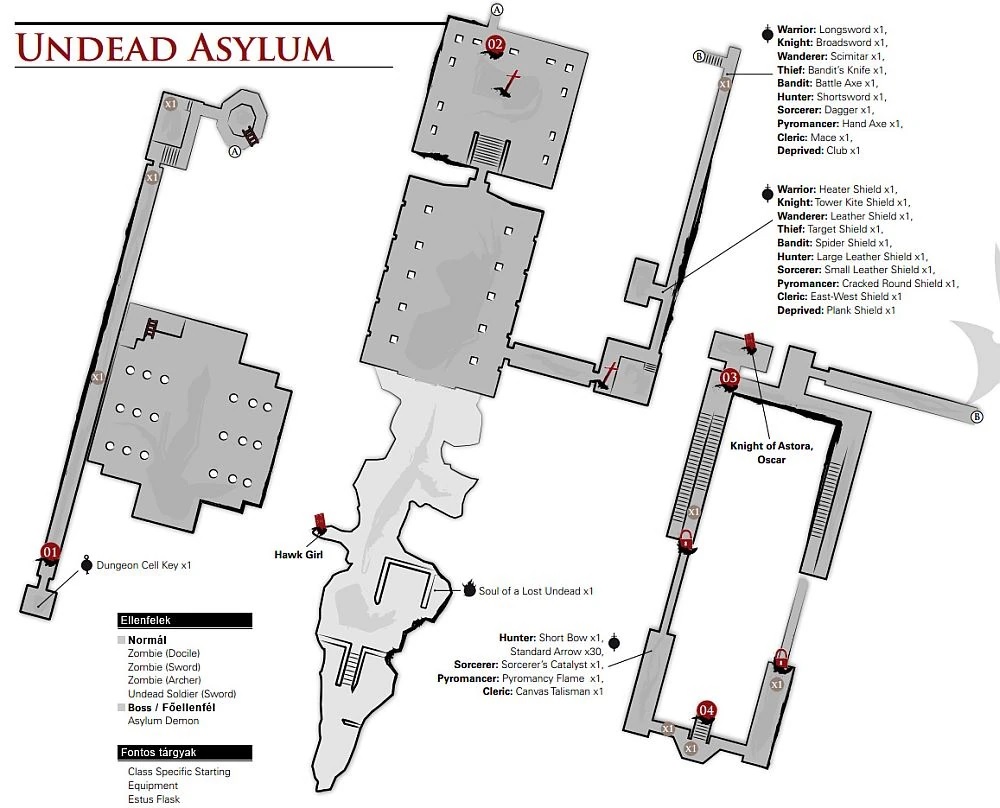
Northern Undead Asylum
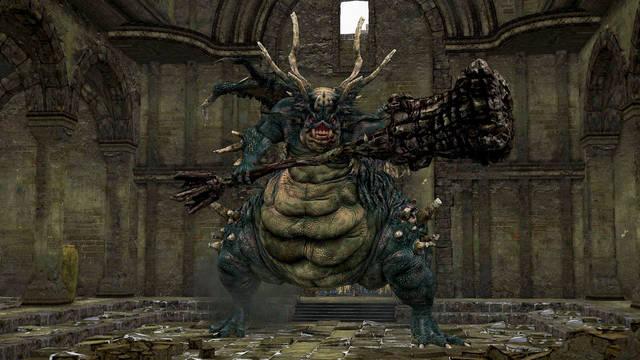
The Northern Undead Asylum lays in the far North. It serves as a giant prison for the Undead branded with the Darksign, allowing them to be reborn after death. All Undead are corralled and led to the Asylum, meant to reside here till the end of the world. In ancient legends there is said that one day a particular Undead will be chosen (then known as the Chosen Undead) to escape the asylum and go on a pilgrimage to Lordran, land of the ancient gods. The Chosen Undead is equipped with a unique key.
Escaping from a cell does not guarantee success, as the Asylum Demon watches over the Asylum's main door. The guarding demon wields a hammer carved from stone archtree. Raven (although commonly referred to as a crow) waiting at the outside is the Firelink messenger, guiding the Undead to the land of ancient gods.
This place serves as the game’s tutorial, as it contains numerous messages explaining the basic controls. The enemies found here consist only of common Hollow Soldiers and Shielded Hollows. After defeating the area’s boss, the Asylum Demon, you obtain the key that allows you to leave the zone.
FIRELINK SHRINE
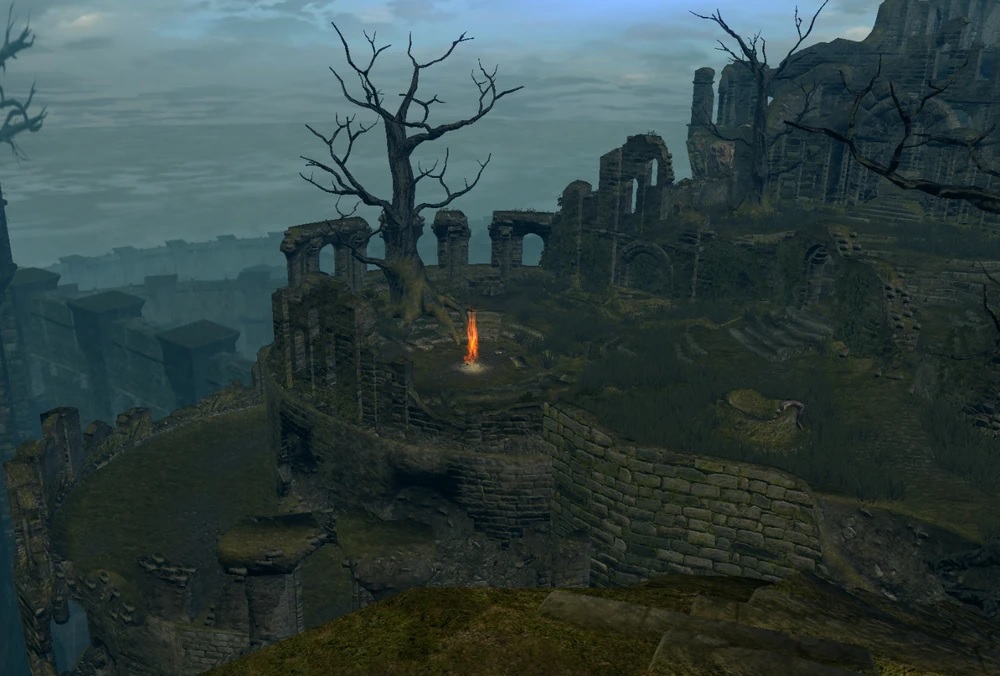
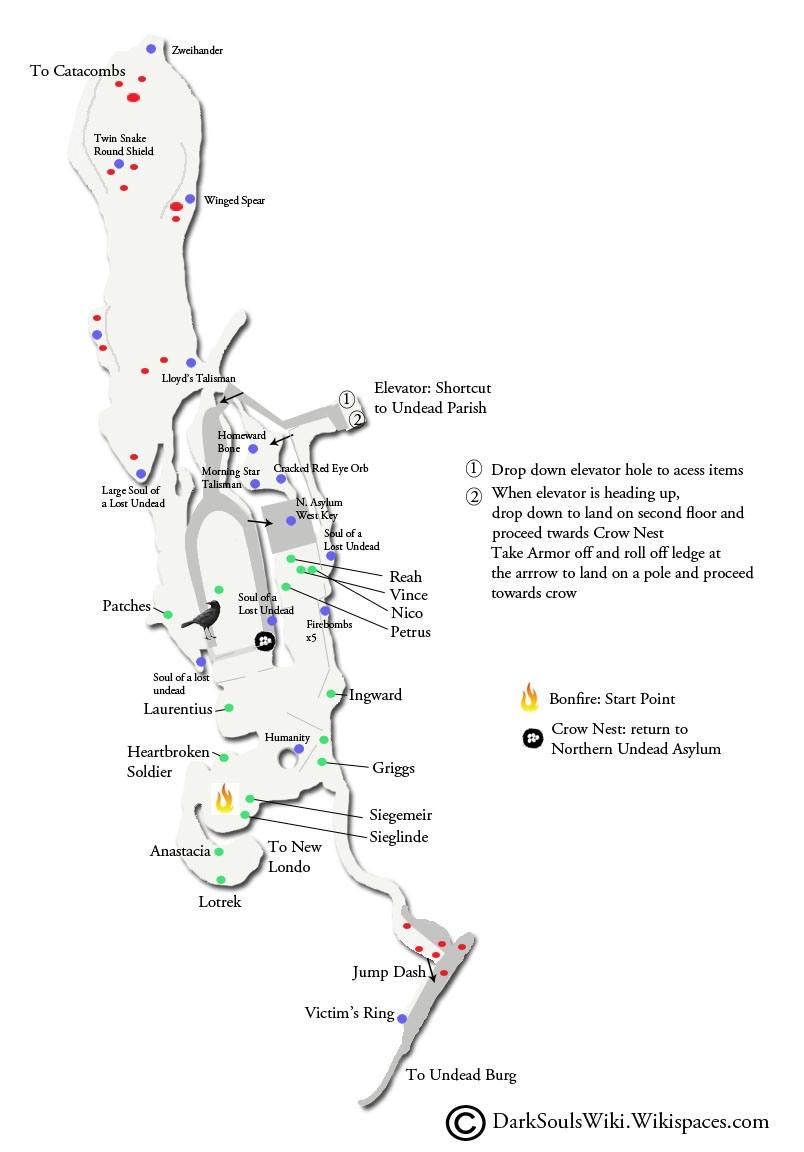
It is the first location the player visits in Lordran after escaping the Undead Asylum.
It serves as a refuge or main hub and connects to many other areas. Each time a character is rescued, they will appear at the Shrine to offer some kind of service, such as selling goods or teaching spells. Anastacia of Astora is the Fire Keeper of the bonfire in this location.
If a key item, such as a Lord Soul or the Covenant of Artorias, is dropped, it will reappear in the chest located behind Kingseeker Frampt’s trapdoor.
1 Undead Burg
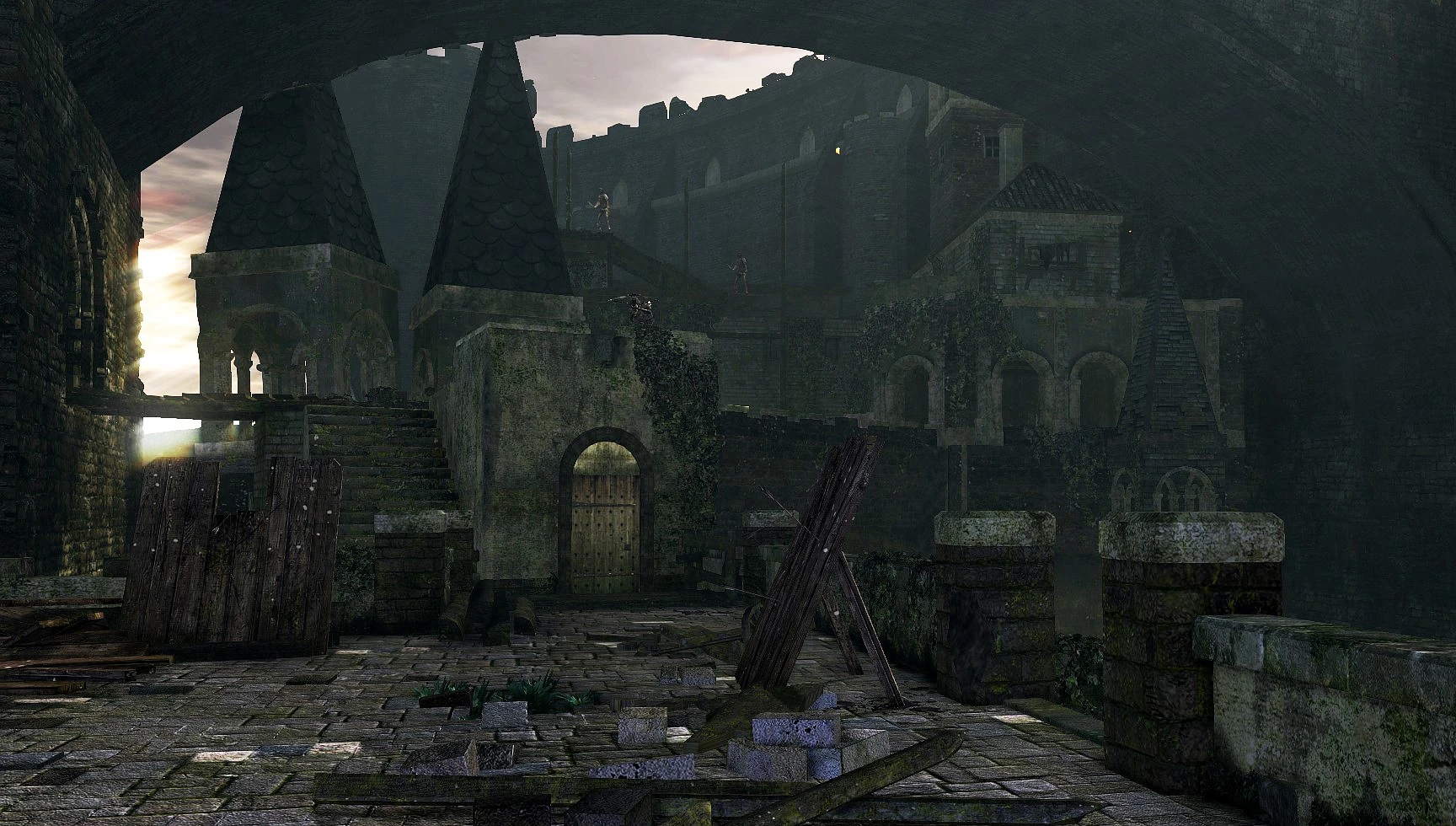
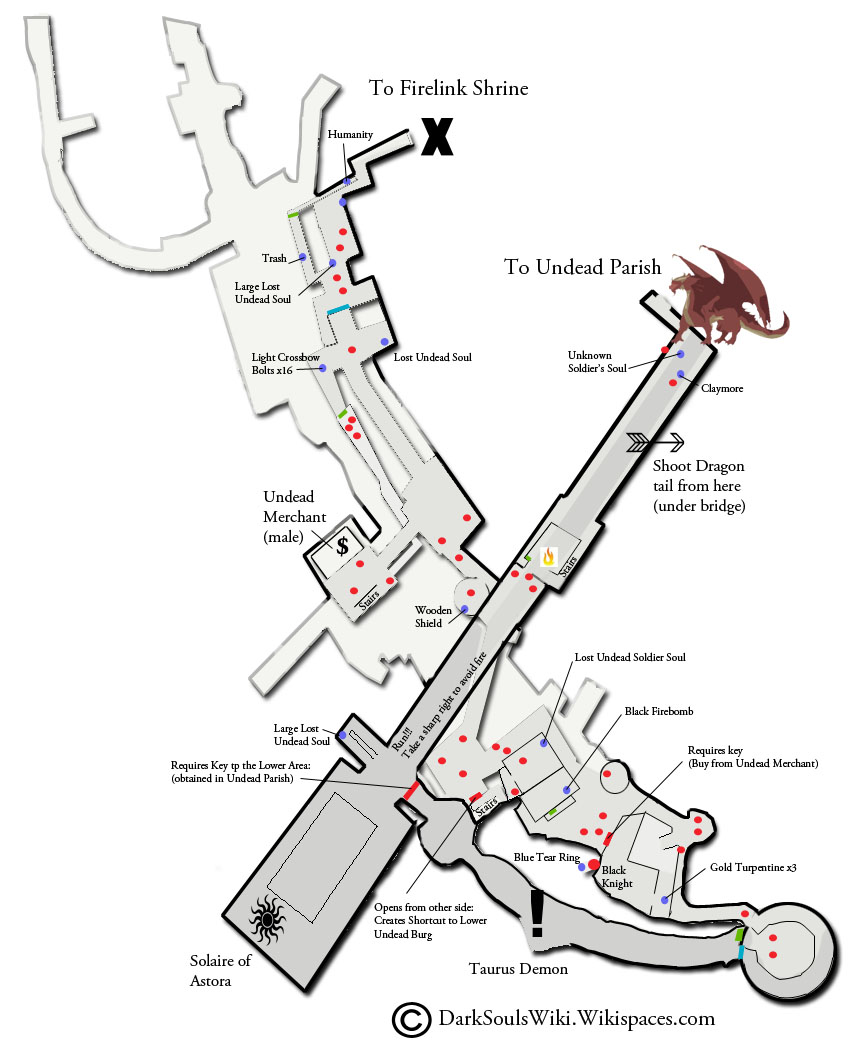
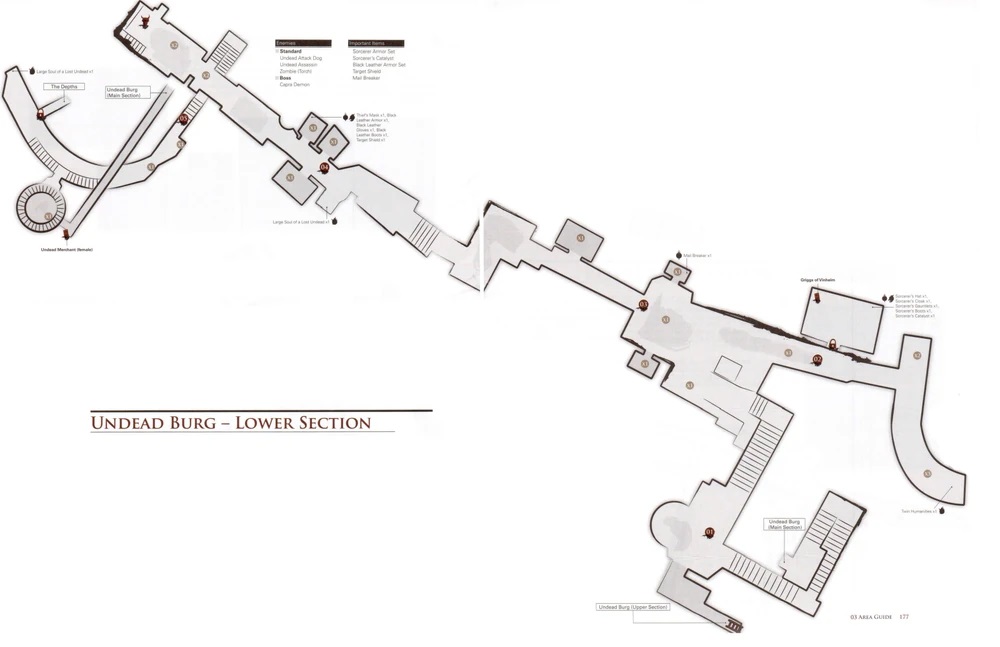
It is a fortified city surrounded by large walls and watchtowers, inhabited by several hostile undead. It consists of both an upper and a lower section. The lower section can be accessed with the Basement Key through the door at the top of the bridge, in front of the Hellkite Dragon.
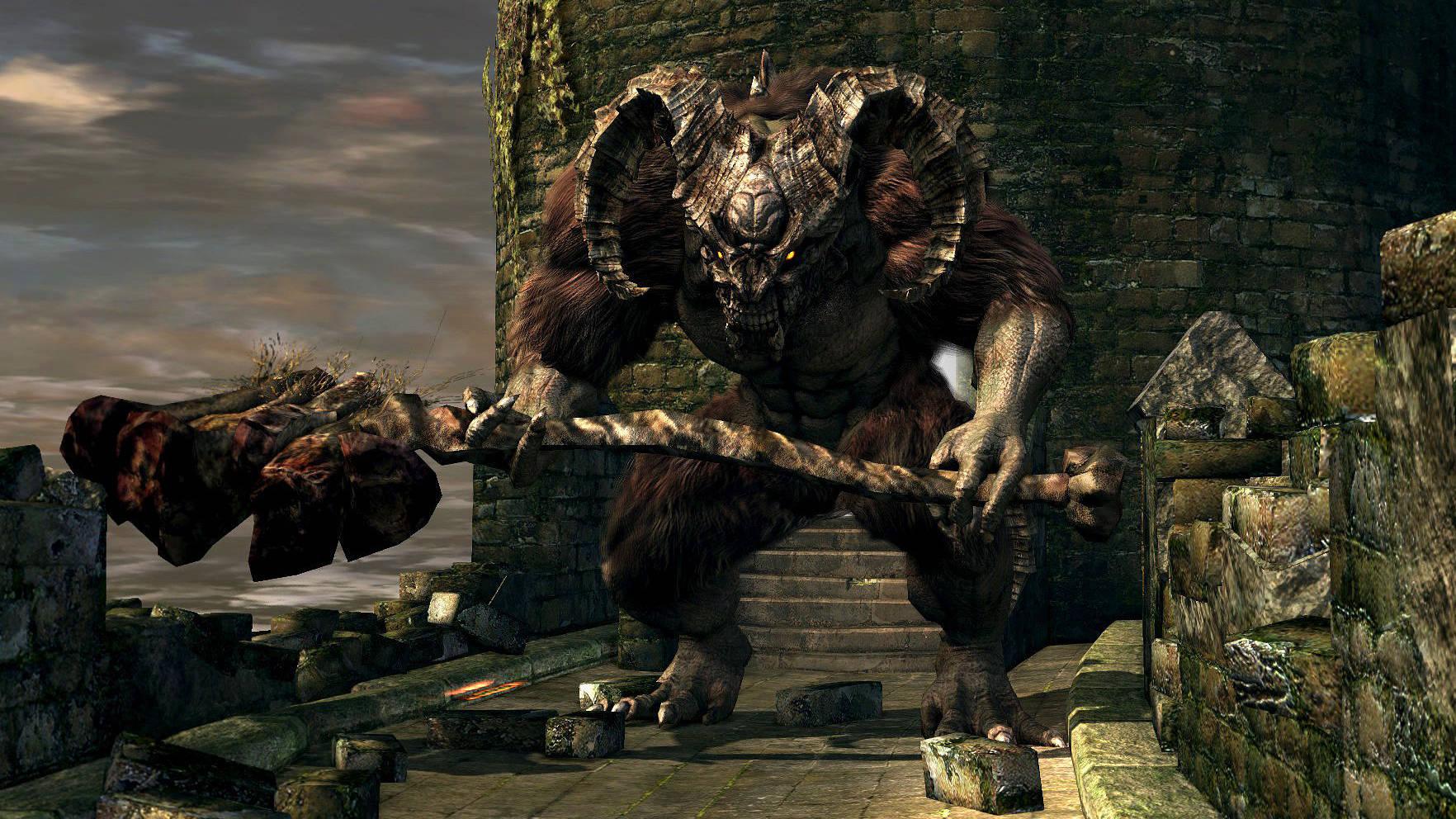
The Taurus Demon is a huge monster resembling a minotaur, covered in brown fur. It wields a Great Demon Axe. These demons were likely created when the Witch of Izalith attempted to duplicate the First Flame using a Lord Soul. The attempt failed, and she accidentally created the Bed of Chaos, the mother and source of all demons. The Taurus Demons were classified as lesser demons.
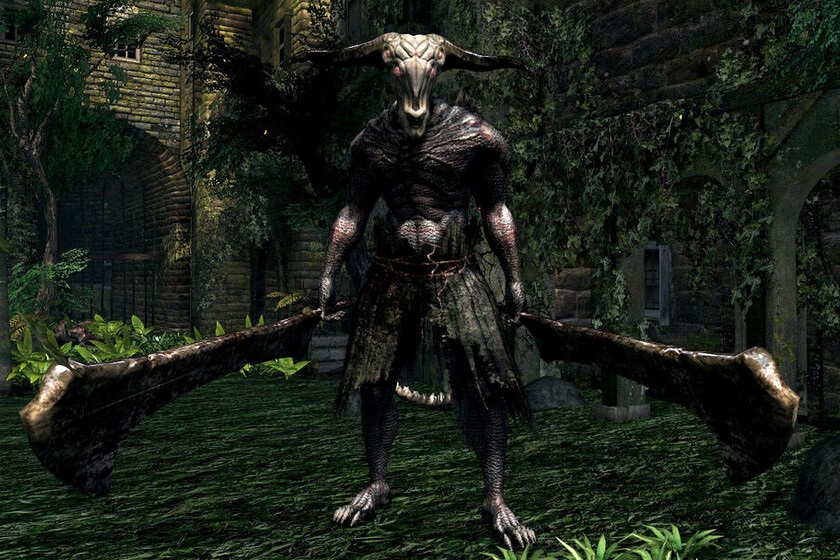
The Capra Demons are large humanoids with four glowing red eyes and a horned skull for a head. They have a bony tail, and their shoulder blades and spine are exposed. They also wear a tattered skirt and wield two Demon Machetes. These demons were likely created when the Witch of Izalith attempted to duplicate the First Flame using a Lord Soul. The attempt failed, and she accidentally created the Bed of Chaos, the mother and source of all demons. The Capra Demons were classified as lesser demons.
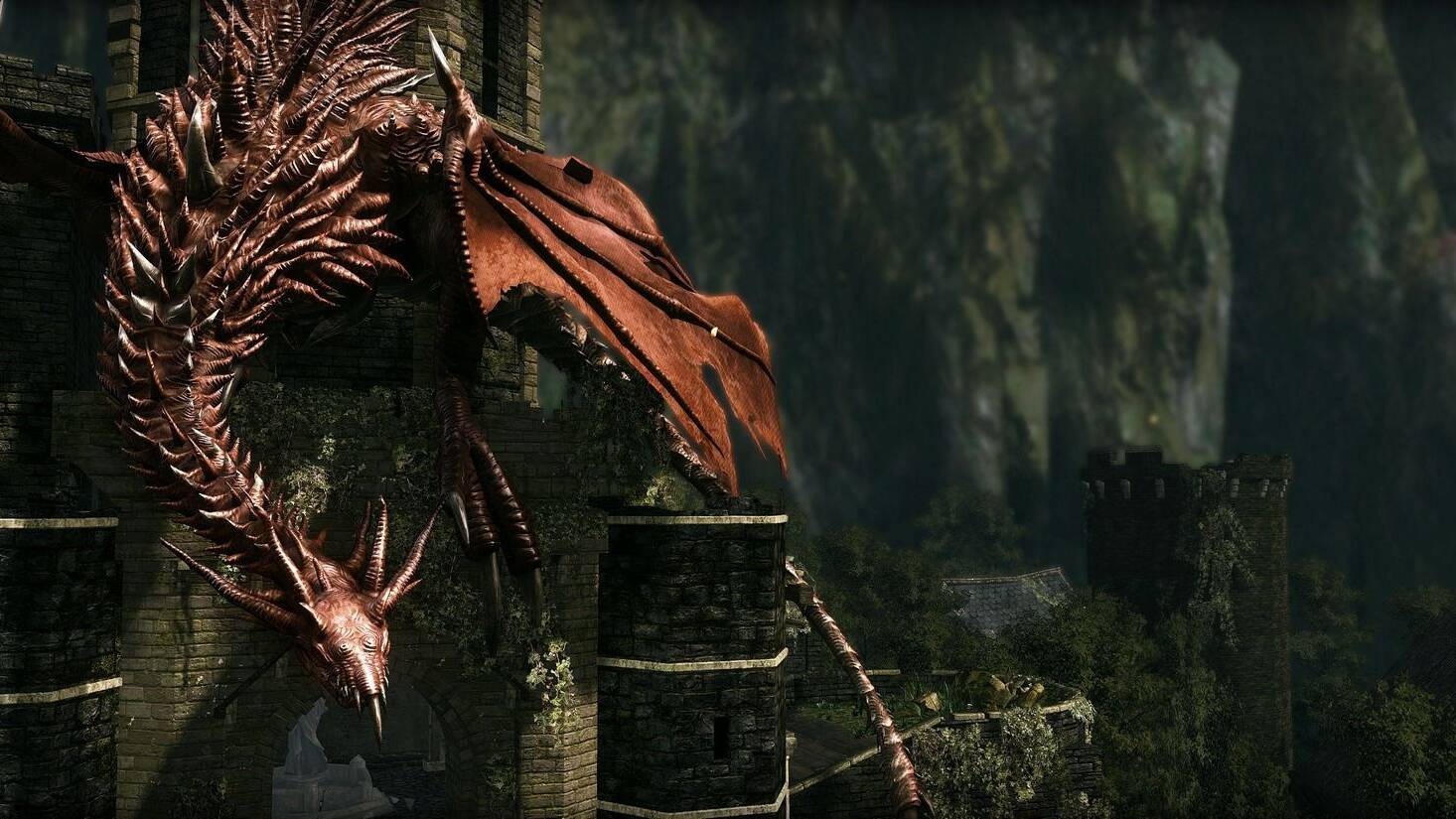
The Hellkite Dragon is not a true dragon — it is a drake. Drakes are considered underdeveloped imitators of dragons, though they may be distant relatives.
1 Undead Parish
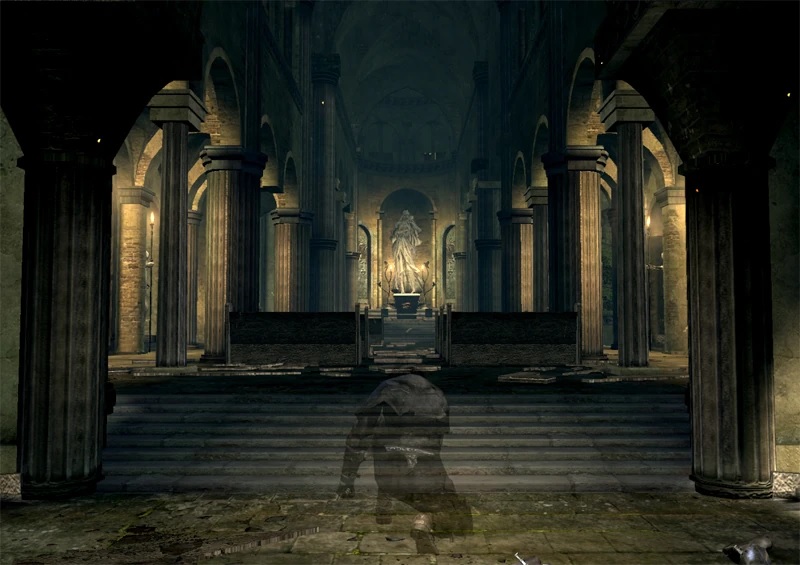
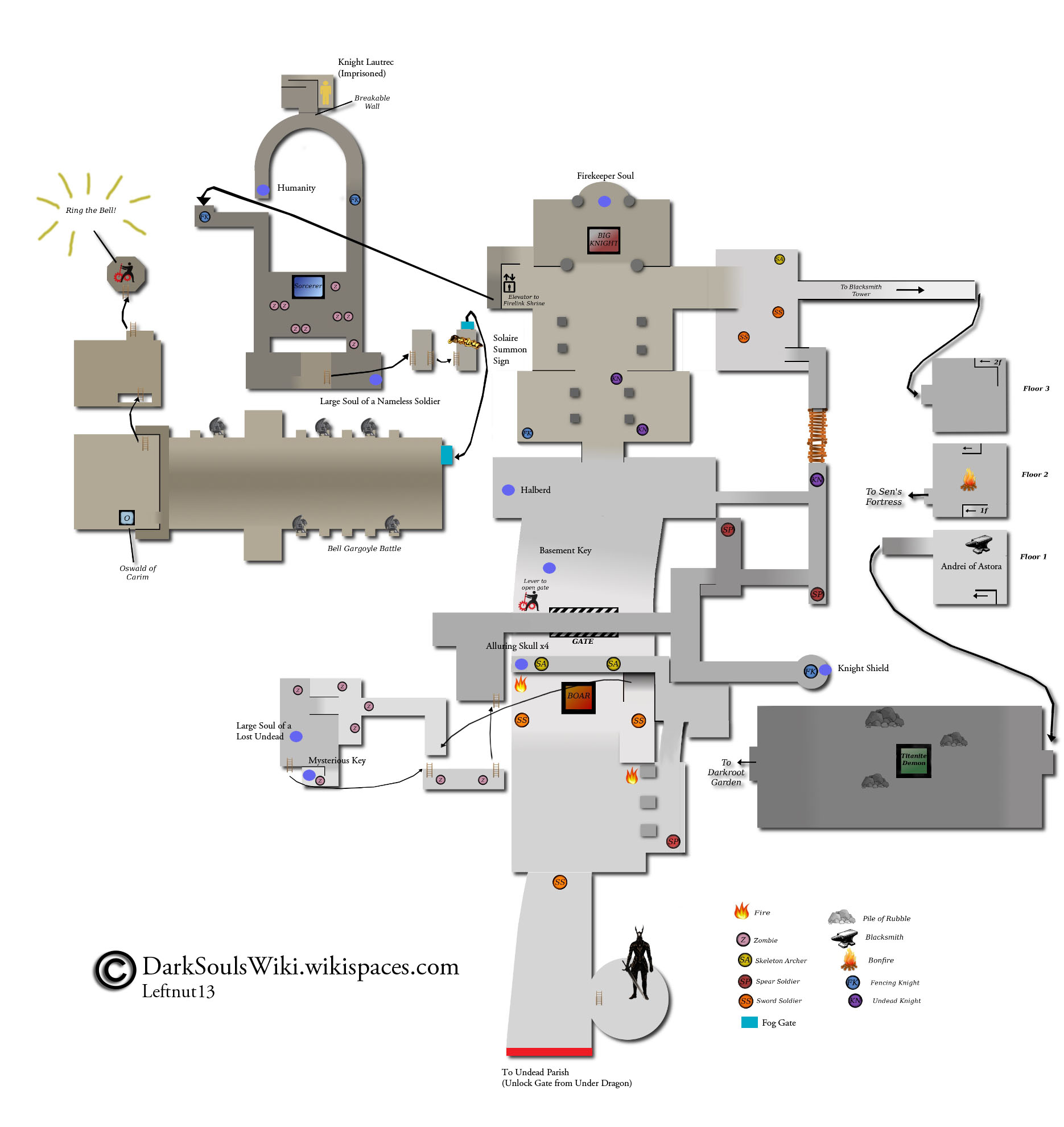
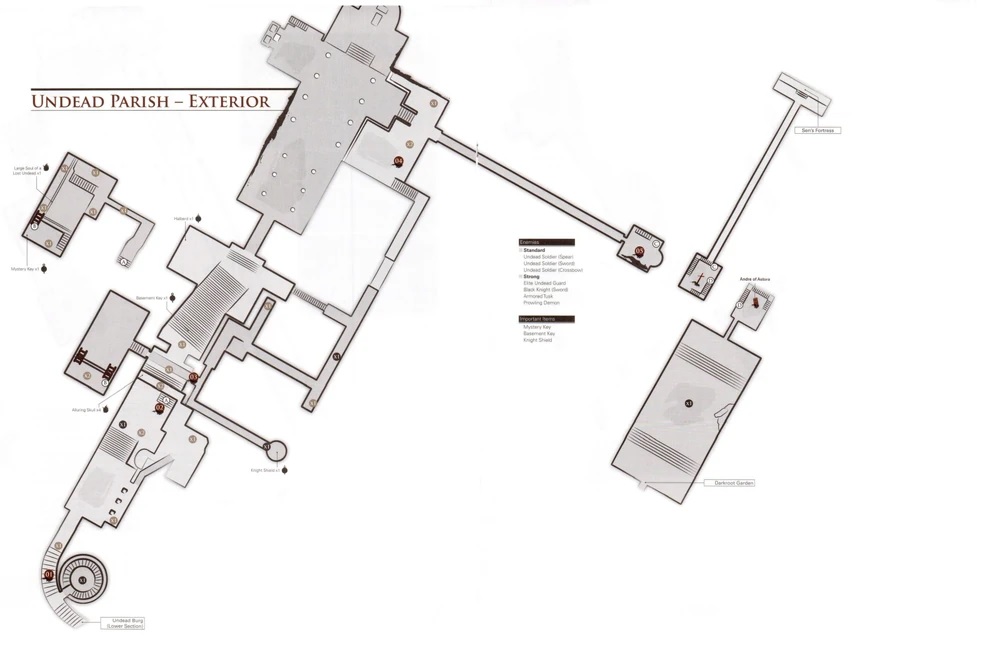
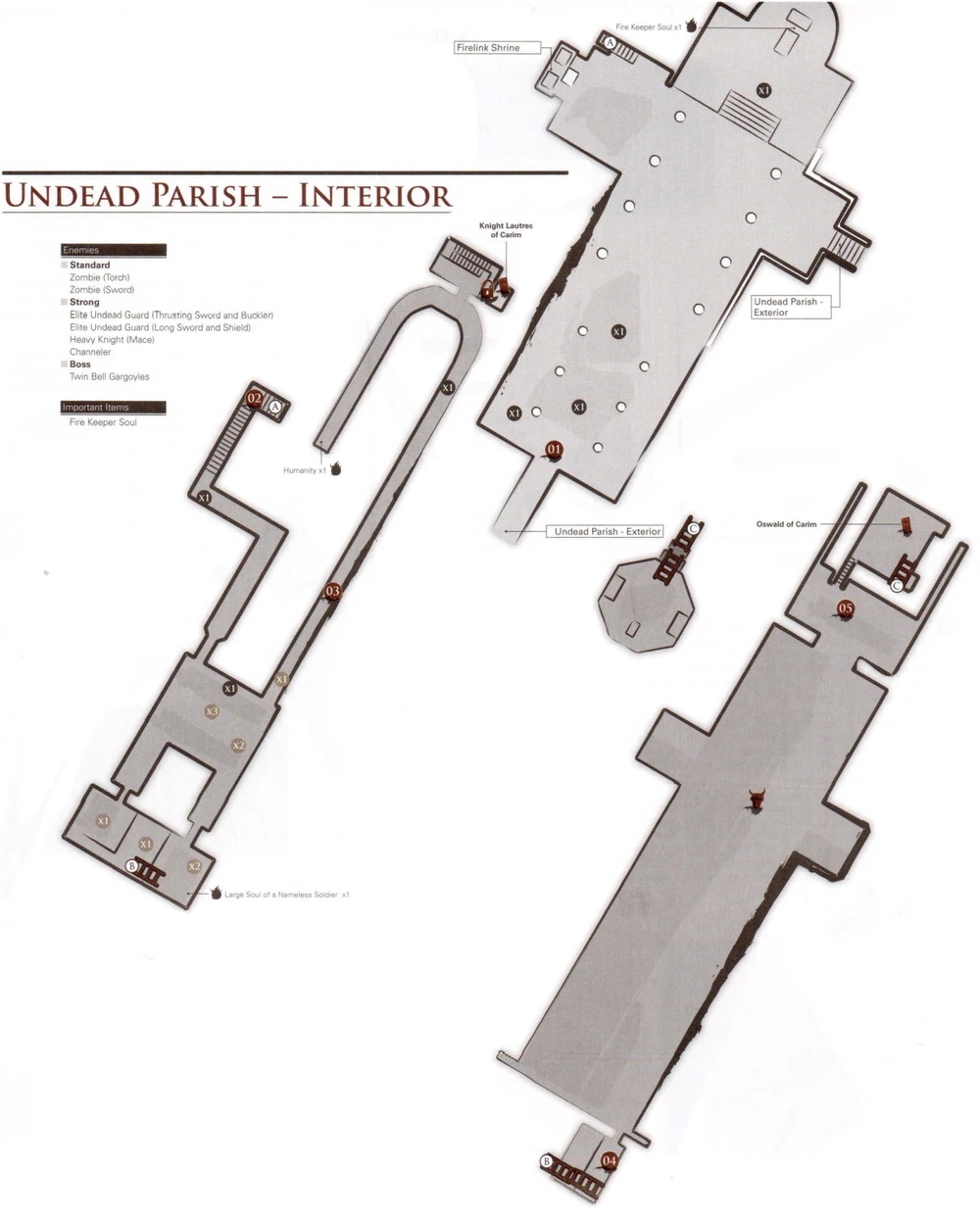
It is a small area that contains both the old and the new church, along with several other buildings.
It is possible to theorize that the numerous female statues holding a child present in the Undead Burg, the Undead Parish and the Firelink Shrine represent the advent of the Chosen Undead awaited by humanity who would succeeds Gwyn, Lord of Cinder and bring back the splendor of the Age of Fire erasing the Curse of Undeath. This is reinforced by the fact that the statues are present in the Church of the city where the Undead lived, built by Anor Londo to follow Gwyn's plan of sheperding the humans to repeat his sacrifice, and in the Firelink Shrine, the place where Frampt would lead the potential Chosen Undead, effectively creating cultural artifacts with a specific message connected to the Linking of the Fire cult to convey. The iconography of the woman who holds and presents the baby clearly recalls that of the numerous Christian depictions of the Virgin Mary together with Christ Child, whose meaning is precisely the birth of the one who will save humanity with his sacrifice.
Additionally, since it is the staute of a goddess, the female figure may represent Gwynevere, Princess of Sunlight as she is represented in one case with a crown, her being officially "queen", despite as an illusion created by Gwyndolin, and in the other surrounded by humans offering gifts of animals and harvest, her being the goddess of the harvest and blessings. This is reinforced by the fact that, despite being an illusion created by Gwyndolin, the goddess had the role of receiving the Chosen Undead who would be able to overcome the multiple trials on their path, receiving them in the cathedral of Anor Londo and giving them the Lordvessel, effectively making Gwynever the female figure who would confirm the coming of the "savior of the world". This is further reinforced by the fact that Reah of Thorolund is found praying toward the statue, implying that the goddess is integrated into the Way of White and that the statue in Firelink Shrine is depicted wearing the same Maiden Set of Reah, that sells the Divine Blessing of Gywnevere.
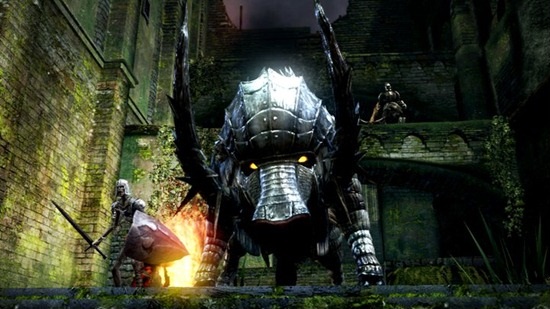
The Armored Boar is a powerful beast covered in thick metal armor that protects most of its body, except for its rear. It attacks with powerful charges and can deal significant damage if not avoided in time. This enemy appears in the Undead Parish, guarding the path to the upper area.
Also known as the Fang Boar, was one of the beasts created by the Knights of Lordran to serve as guardians in times of war. Its armor was forged to withstand even the mightiest weapons, and its ferocity made it a symbol of the kingdom’s military strength. However, with the fall of civilization and the spread of the Undead Curse, these creatures were left behind, roaming aimlessly.
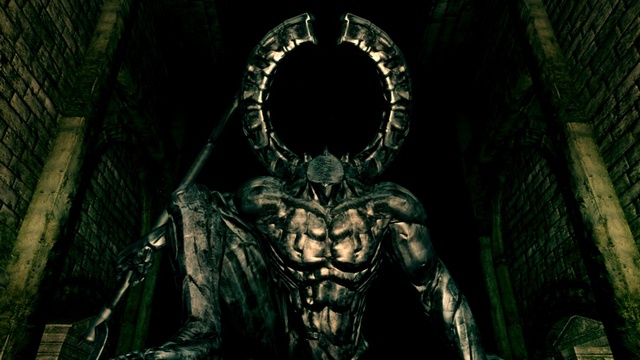
Titanite Demons wield Titanite Catch Poles, enchanted weapons with residual power that possibly originates from Titanite Slabs. The demons are large, muscular creatures with bodies made from Demon Titanite. They have two crescent-shaped horns growing out of their faceless skulls. Most appear to be missing a leg and consequently drag themselves across the ground to move.
Titanite Demons first arose from several Titanite Slabs after the death of the Nameless Blacksmith Deity, a legendary individual who forged the weapons of their fellow Gods. The power of Titanite was imbued within the demons and their bodies held a special variant known as Demon Titanite. They roamed the land of Lordran.
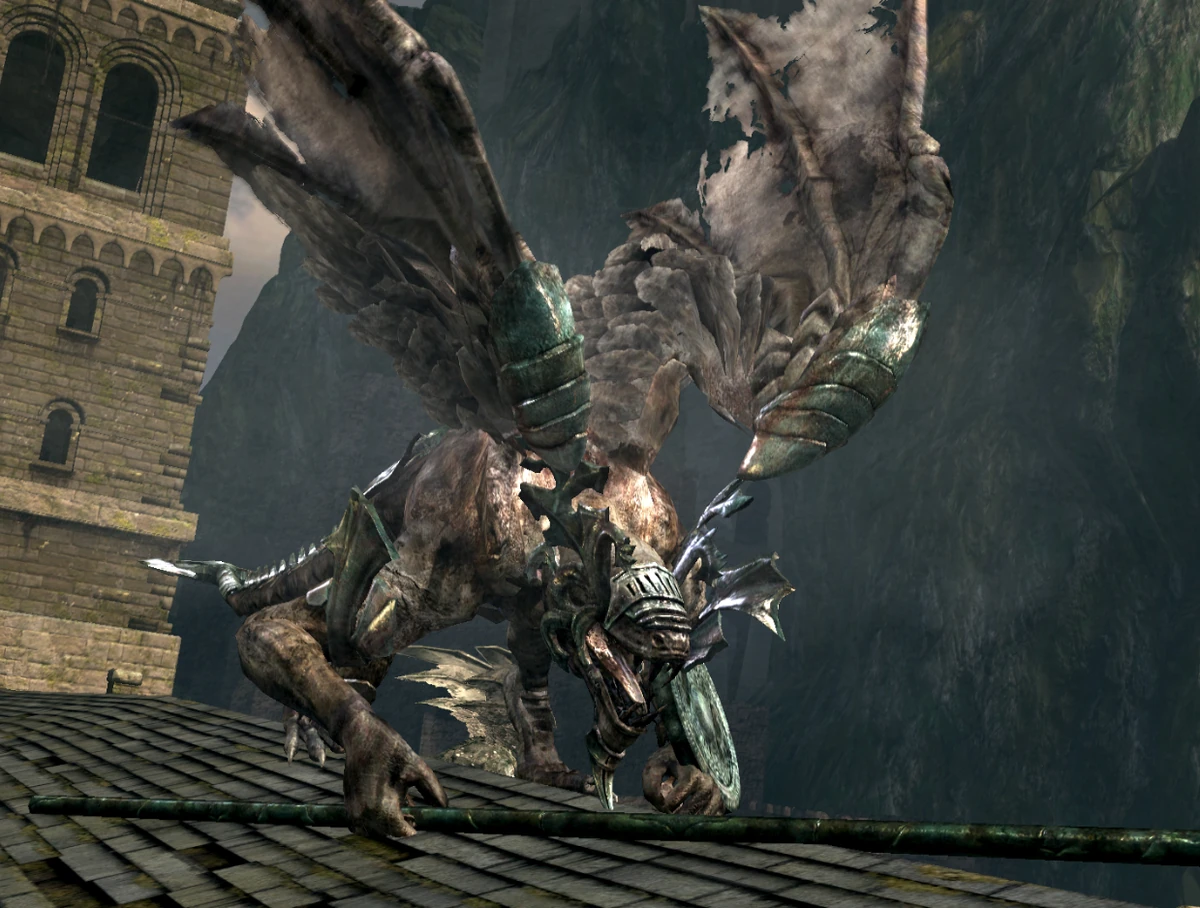
Gargoyles are stone creatures created by the Gods through magic to help patrol Anor Londo or sites deemed important. In addition to their tough and hard skin, they are able to breathe fire or lightning and are armed with a bronze shield and a bronze helmet for purely decorative purposes while they use a bronze halberd as a weapon.
After Lord Gwyn sacrificed himself to link the First Flame and prolong the Age of Fire, several Gargoyles were placed to guard the Bell of Awakening placed on the Undead Church of the Undead Burg and act as ritual challenge. The Undead who wished to follow in Gwyn's footsteps to sacrifice themselves to the Flame would have to be tested before obtaining the Lordvessel and seeking powerful souls. Ringing the Bells of Awakening represents only the first of these challenges, and success means gaining access to Sen's Fortress to be tested further.
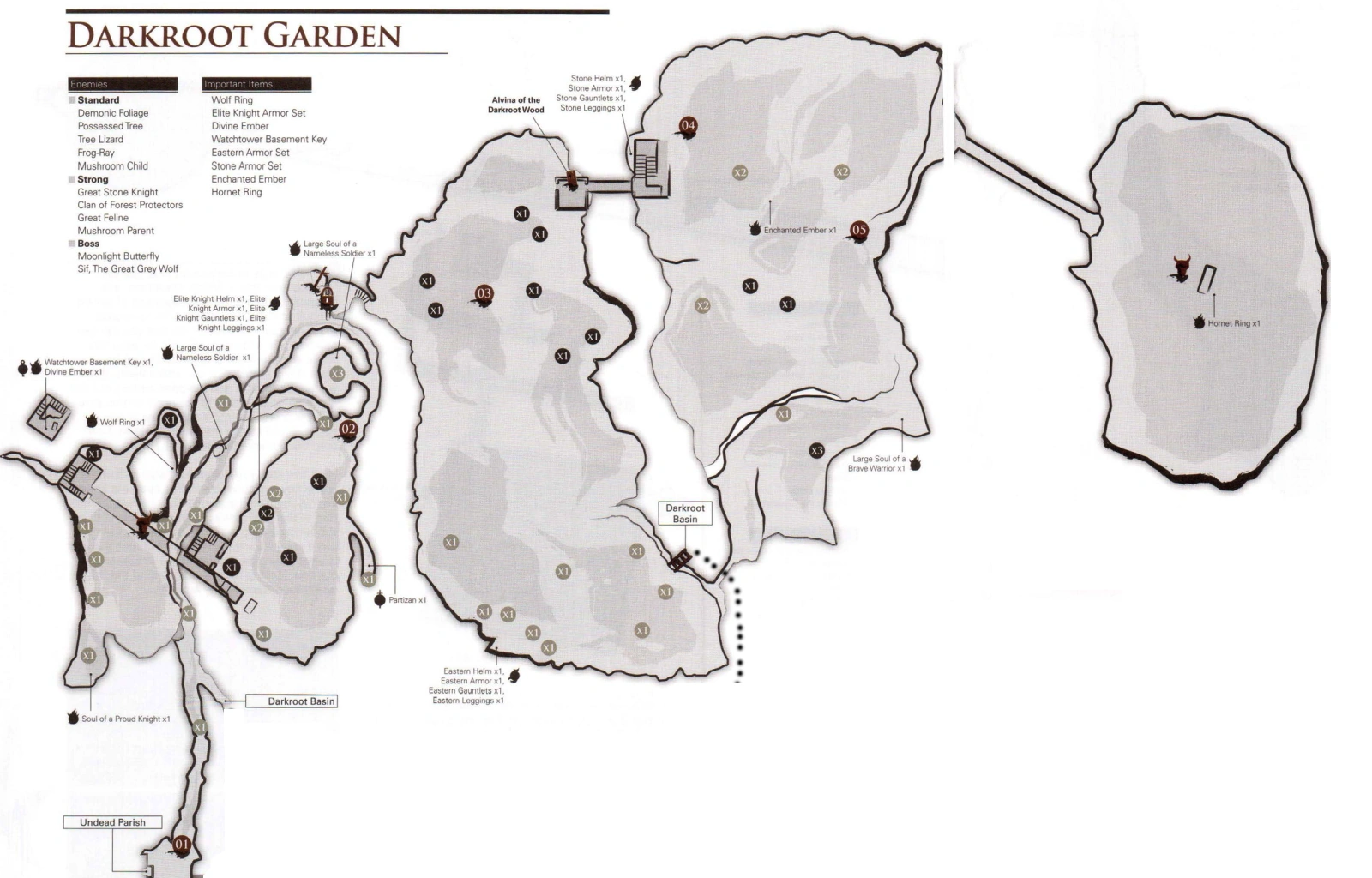
1 Darkroot Garden
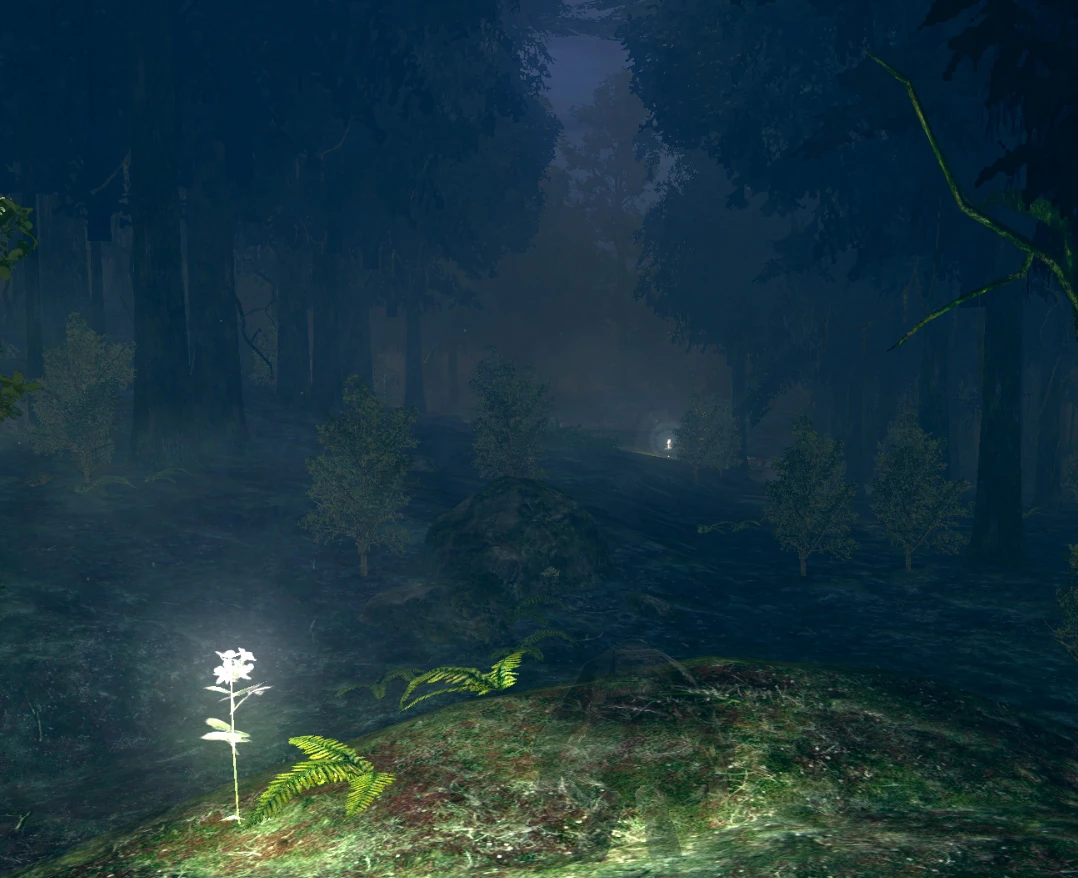
The garden is usually accessed early in the game by heading downstairs from Blacksmith Andre in the Undead Parish. It is also possible to enter from Darkroot Basin, but this requires heading through very dangerous territory for a low-level character.
Darkroot Forest
The area beyond the sealed door, requiring the Crest of Artorias is often referred to as "Darkroot Forest", or "PvP Forest" by the Dark Souls community, for its high amount of Player versus Player combat. The forest contains more dangerous enemies than other parts of the area and holds the gate to the area's boss, Great Grey Wolf Sif. One side of the forest is also home to character members of the Forest Hunter covenant, including the covenant's leader, Alvina of the Darkroot Wood.
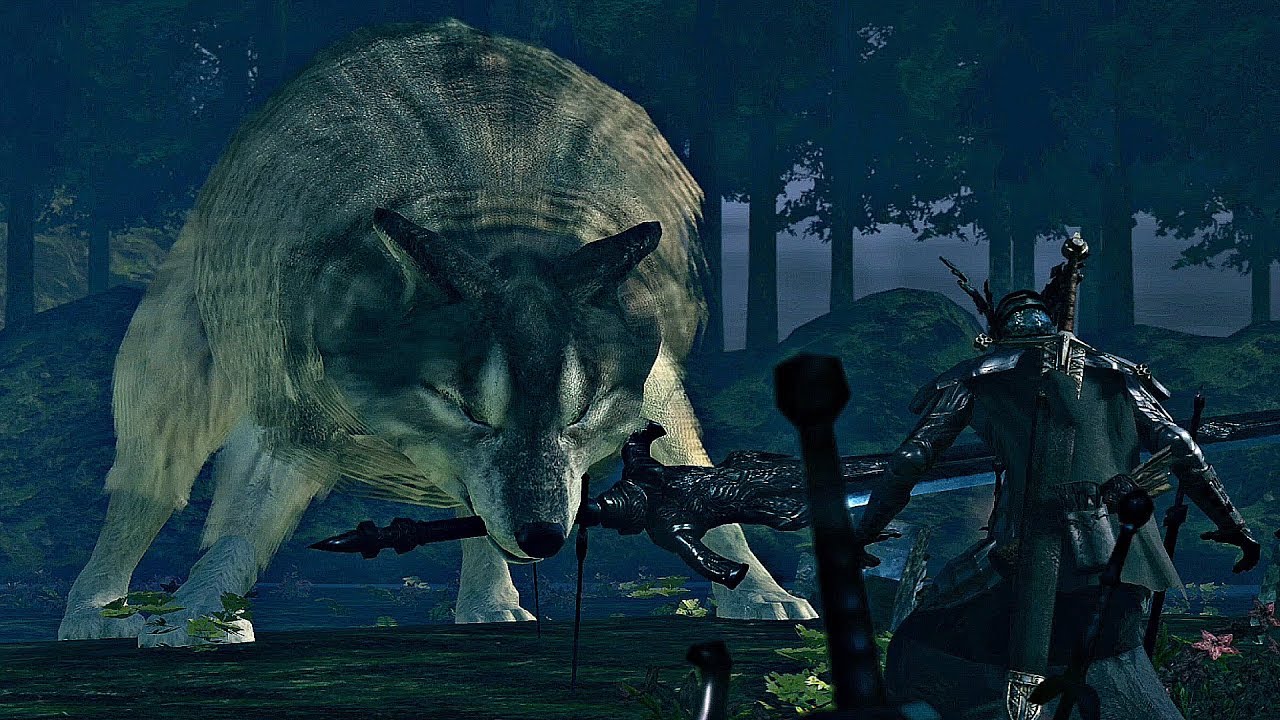
Sif was the wolf companion of Sir Artorias, the Abysswalker. The wolf accompanied Artorias on his mission to save the kingdom of Oolacile from the forces of the Abyss. However, Artorias and Sif were overwhelmed by the darkness, and the knight used his shield to create a barrier over Sif, protecting him from the Abyss’s corruption. After Artorias’s death, Sif became the guardian of the knight’s grave in the Darkroot Garden, preventing others from meeting the same fate as his former master.
If the Chosen Undead saves Sif in the Chasm of the Abyss before killing Sif in Darkroot Garden, a different cutscene will play before the fight; however this will prevent you from meeting Kaathe, because you need to place the Lordvessel and visit the Duke's Archives to access the DLC. In the cutscene, Sif will recognize the player as they approach and let out a whimper. The protagonist reaches out to pet the wolf, but Sif pulls away and howls mournfully before sadly picking up Artorias' greatsword. The fight will continue as normal after this point.
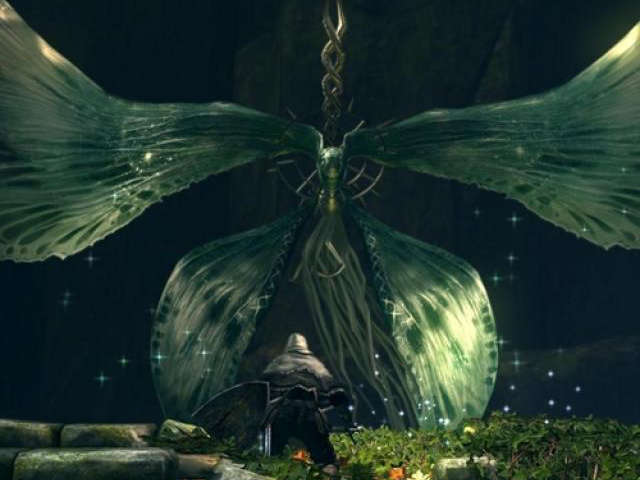
The Moonlight Butterfly is a mystical creature whose soul was created by Seath the Scaleless. The result is a being naturally infused with a pure and powerful crystal power and moonlight magic, Seath's own characteristics, which are capable of emitting crystal sorceries and moonlight energy. Seath created multiple specimens of these butterflies that remained in his Crystal Cave but one left the place to move to inhabit the Darkroot Forest, defending its territory from intruders.
Despite the death of their creator, multiple moon butterflies survived over the centuries, migrating to Drangleic, evolving into Great Moths and developing poisoning abilities. They became rare and mysterious creatures that would appear only on full-moon nights in the winter. Their entire ecology was not known as their larvae were never once spotted, leading to rumors about the fact that creatures had been created with the magic their bodies were tinged in.
Theories
It is possible to theorize that Seath used a human as the basis to create the Moonlight Butterfly. Seath has a long history of experimenting on humans to create new creatures like the Pisacas, the Serpent Soldiers, the Undead Crystal Soldier and Menscorpion.
2 Depths
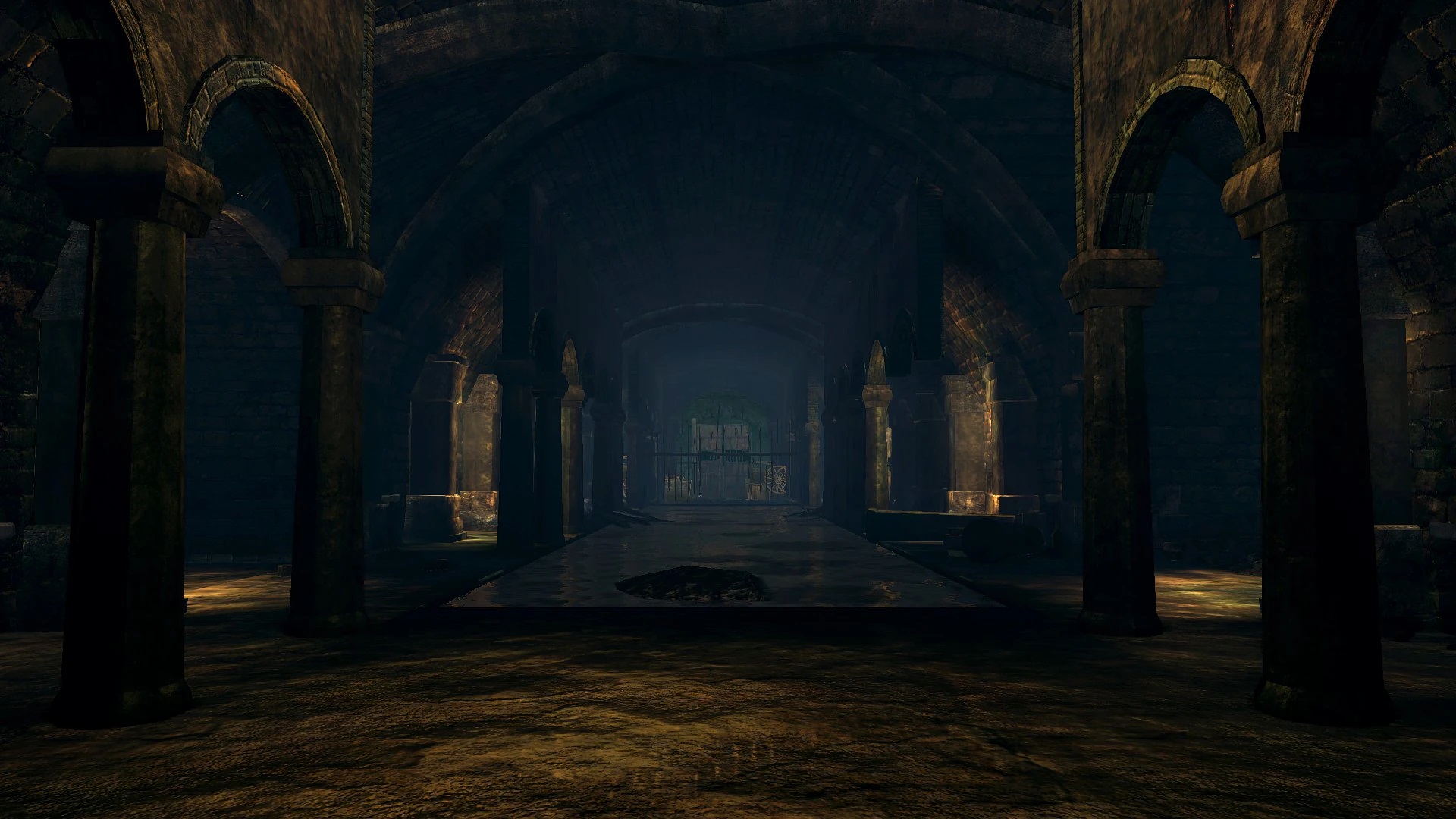
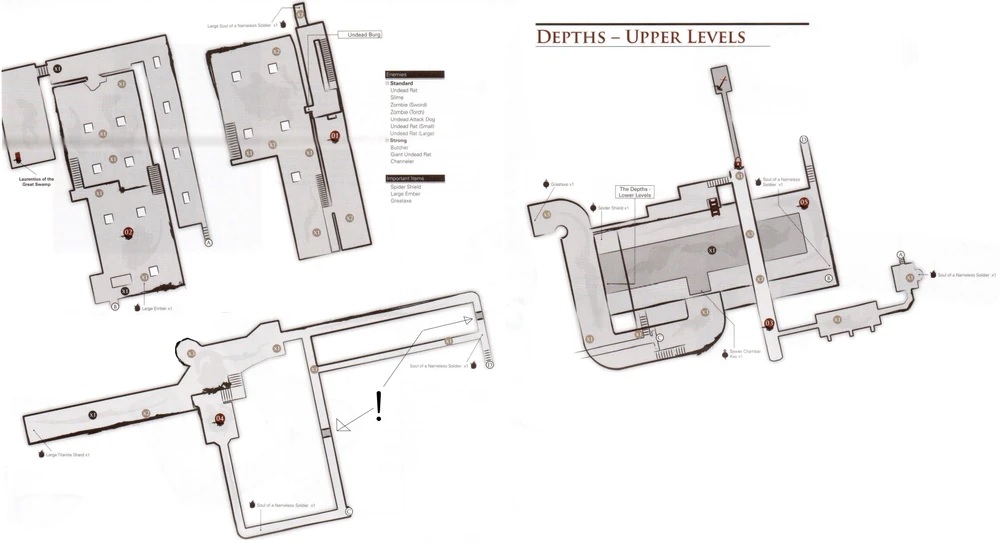
The Depths are place to which those from the Undead Burg are banished, for reasons like thievery, as those banished are known to show insatiable greed. No sunlight gets here. About a half of Depths is flooded labyrinth, dangerous place. Inside two Undead Butchers reside, women man-eaters. Depths inhabitants are said to be polluted, although still aware of Blighttown's dangers, so they build giant door to separate it. At the end of the Depths resides Gaping Dragon, distant and deformed descendant of everlasting dragons, guarding entrance to Blighttown.
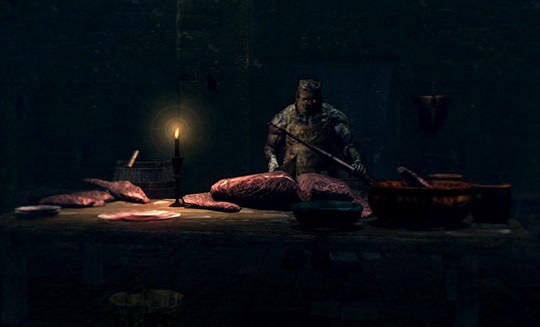
The Butchers are in fact female, which was confirmed by developers. Laurentius of the Great Swamp also mentions their sex prior to being freed. Brutish, man-eating undead who wear Sacks over their heads. They wield the Butcher Knife in one hand and an unnamed stake in the other.
One is encountered early in the Depths, preparing a meal along with some Attack Dogs. Another is encountered not long after, on a platform above the storage room where Laurentius of the Great Swamp is trapped.
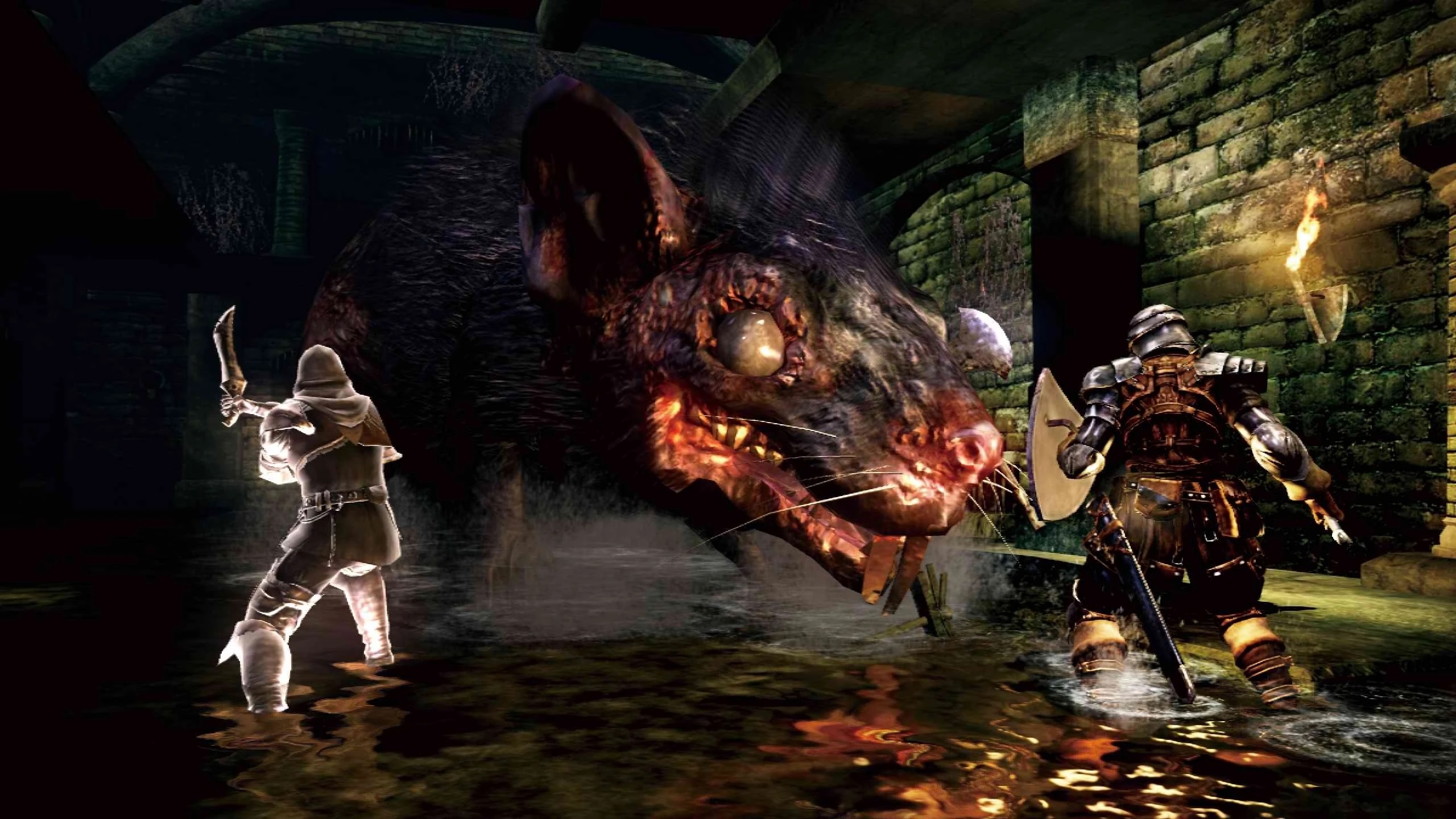
The Giant Undead Rat is a miniboss. A much larger, more powerful, non-respawning version of the Undead Rat.
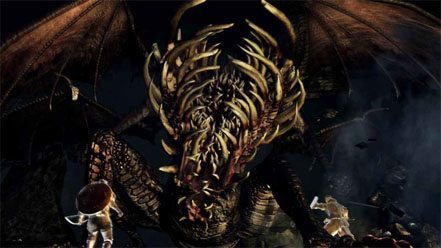
The Gaping Dragon has developed an additional pair of legs to support its large stomach, and even though it cannot fly, its four mangled wings are used to assist in high jumps. Its ravenous gluttony has transformed its rib cage into a gigantic vertical maw that can inflict crushing bites and oozes acid, while its head regressed to a stubby proboscis to detect potential prey.
Is a distant descendant of the primordial archdragons. It existed long before the emergence of mankind, and is the last of its breed, which was partly mineral. As one of the few dragons to survive the war against the bearers of the Lord Souls it found itself alone and was forced to survive in any way it could. It eventually found itself in the furthest depths of the Undead Burg, a place called Blighttown, feared even by the outcasts of the Depths for its great pestilence. The dragon over time was corrupted by emotions which came after the emergence of fire, such as greed and gluttony and transformed into a deformed abomination, its rib cage turned into a gigantic maw oozing with acid. The dragon devoured the key to the mighty door that the inhabitants of the Depths had built to remain safely separated from the plague of Blighttown and which it tried to break down to reemerge.
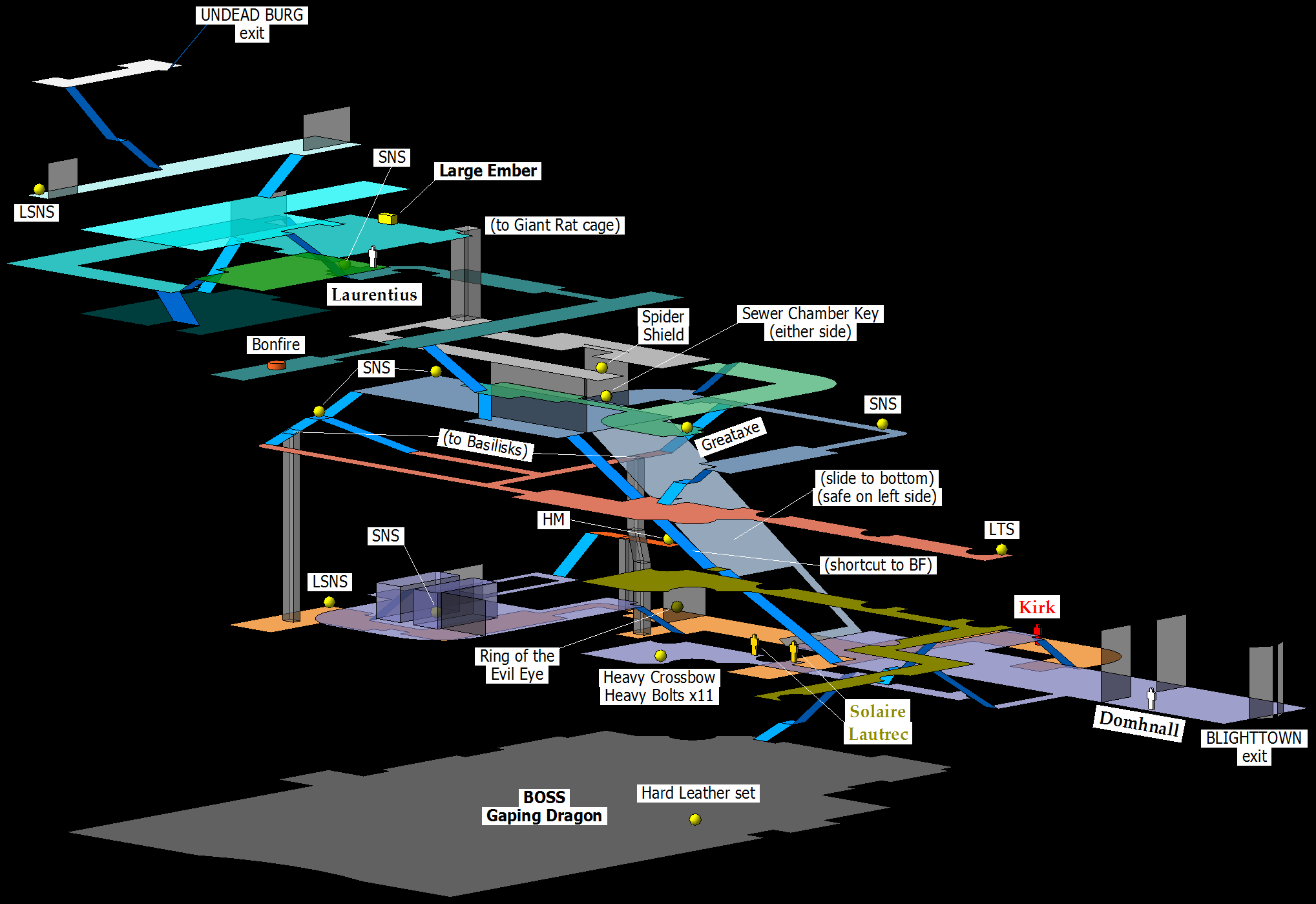
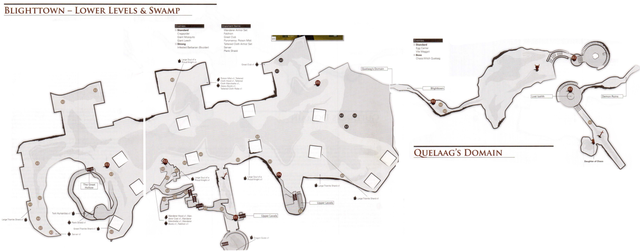
2 Blighttown & Quelaag's Domain
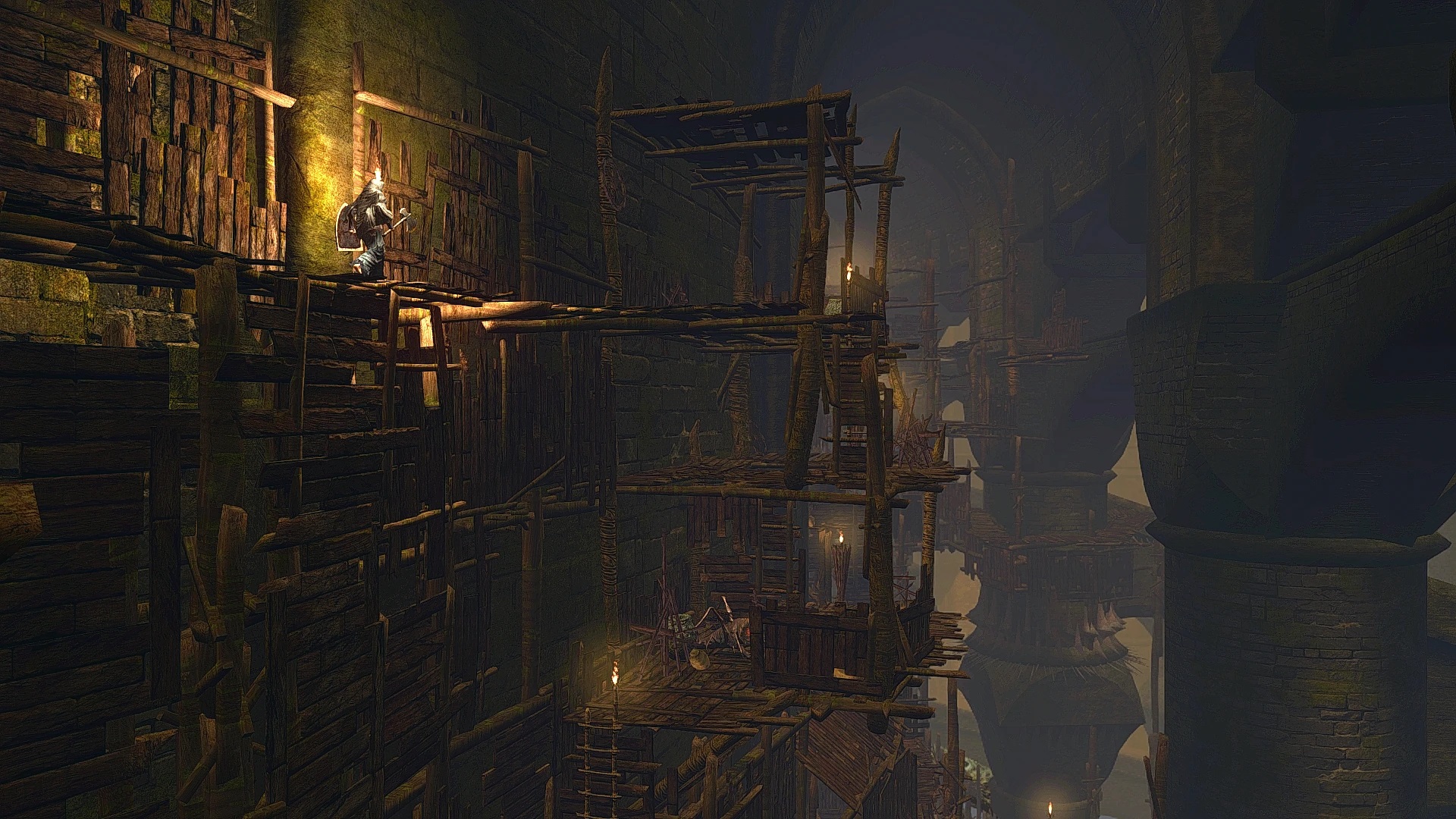
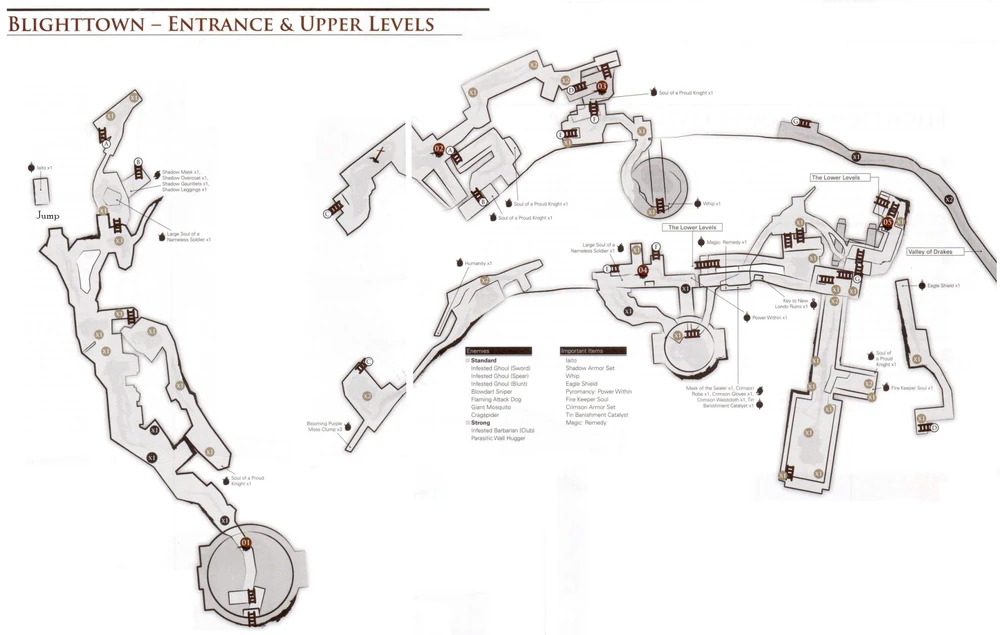
Blighttown is a rather treacherous area with a high degree of verticality. It can be accessed through either the Depths through defeating the Gaping Dragon and acquiring the Blighttown Key, or the Valley of Drakes by navigating through Darkroot Basin from the Undead Parish.
The upper parts consist of interconnecting bridges and scaffolding, with plenty of places to fall to one's death if not careful. The bottom portion of the area is a poisonous swamp that will slow the player's movements.
Many enemies in the area can inflict poison, while Blowdart Snipers are able to deal Toxic from a great distance.
Accessing Blighttown is necessary to ring the second Bell of Awakening, found past Chaos Witch Quelaag in Quelaag's Domain located at the very bottom of the area. Several NPCs visit Blighttown as part of their respective questlines, with Quelana of Izalith and Shiva of the East both acting as merchants.
Quelaag's Domain
Even though Chaos Witch Quelaag is located in Quelaag's Domain, she is considered to be the boss of Blighttown as well; slaying her will prevent any future summoning and invading in Blighttown. The entrance to Quelaag's Domain can be found on the face of the large mound covered in spider webs in the swamp.
Within Quelaag's Domain lies Quelaag's Arena, the secret chamber where her sister nests, and the second Bell of Awakening (immediately after the confrontation with Quelaag).
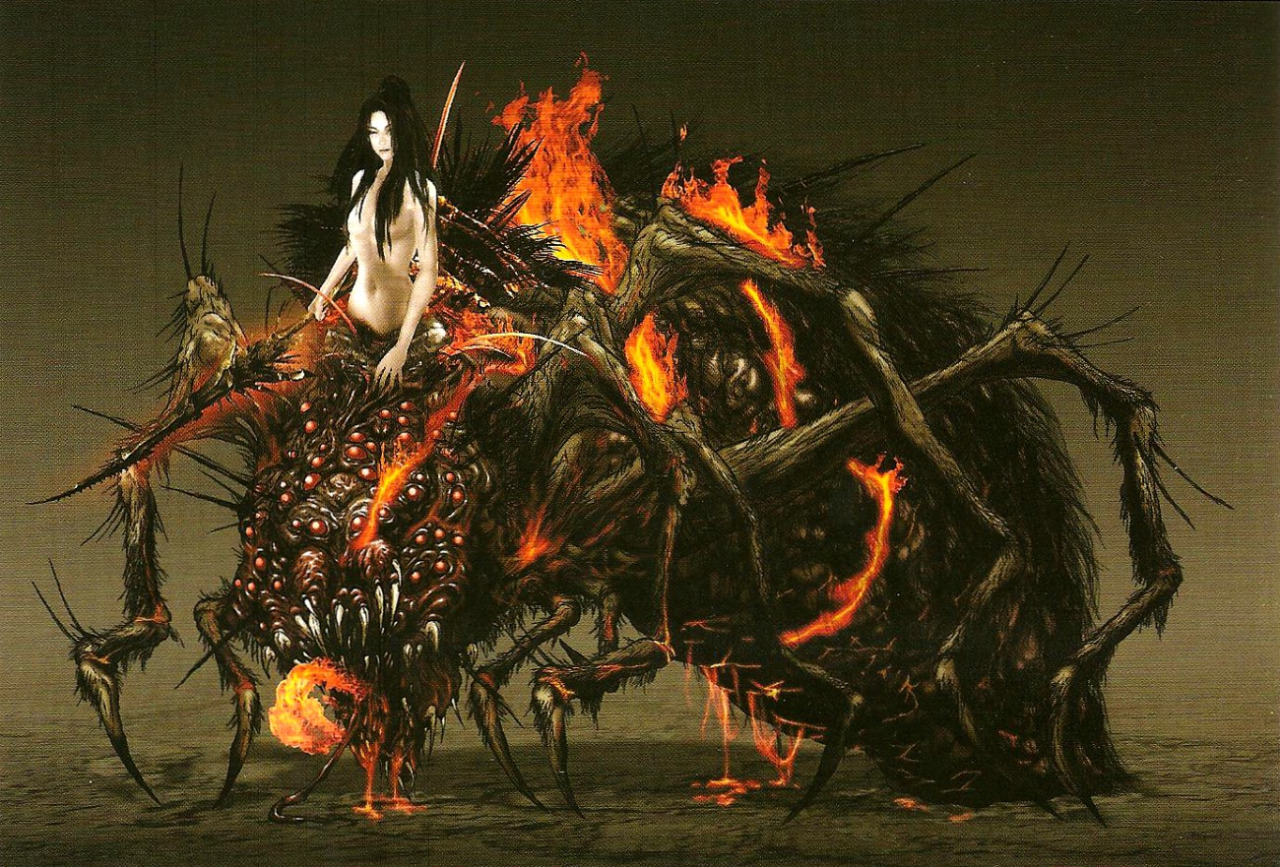
Quelaag is a daughter of the Witch of Izalith and, along with most of her family, failed to escape from the chaotic flame and was corrupted by it. Due to exposure to the flame, Quelaag and her sister mutated into spider-like creatures with their upper body being fused to the monsters' backs.
She is the Fair Lady's older sister. When their mother, the Witch of Izalith along with their other two sisters became the Bed of Chaos, she and her sister became half demon spiders.
Quelaag and her sister stationed just outside the Demon Ruins, in a fraction of Blighttown that became known as Quelaag's Domain. The two started to breed demon insects to enlarge the demon army, by offering Humanities to the Fair Lady. People in Blighttown venerated the two witches, and gladly accepted to become hosts of the Fair Lady's eggs.
When the people were stricken by a blight, Quelaag's sister chose to absorb their pus to save their lives, which greatly weakened and blinded her while making any further eggs incapable of holding life. Quelaag remained by her side as her guardian and a hunter of undead to gather the humanity necessary to sustain her sister as a Fire Keeper.
When the Chosen Undead entered Quelaag's Domain, the Chaos Witch looked at them with a gleeful smile at the promise of the plentiful Humanities she would obtain from them.
2 The Great Hollow
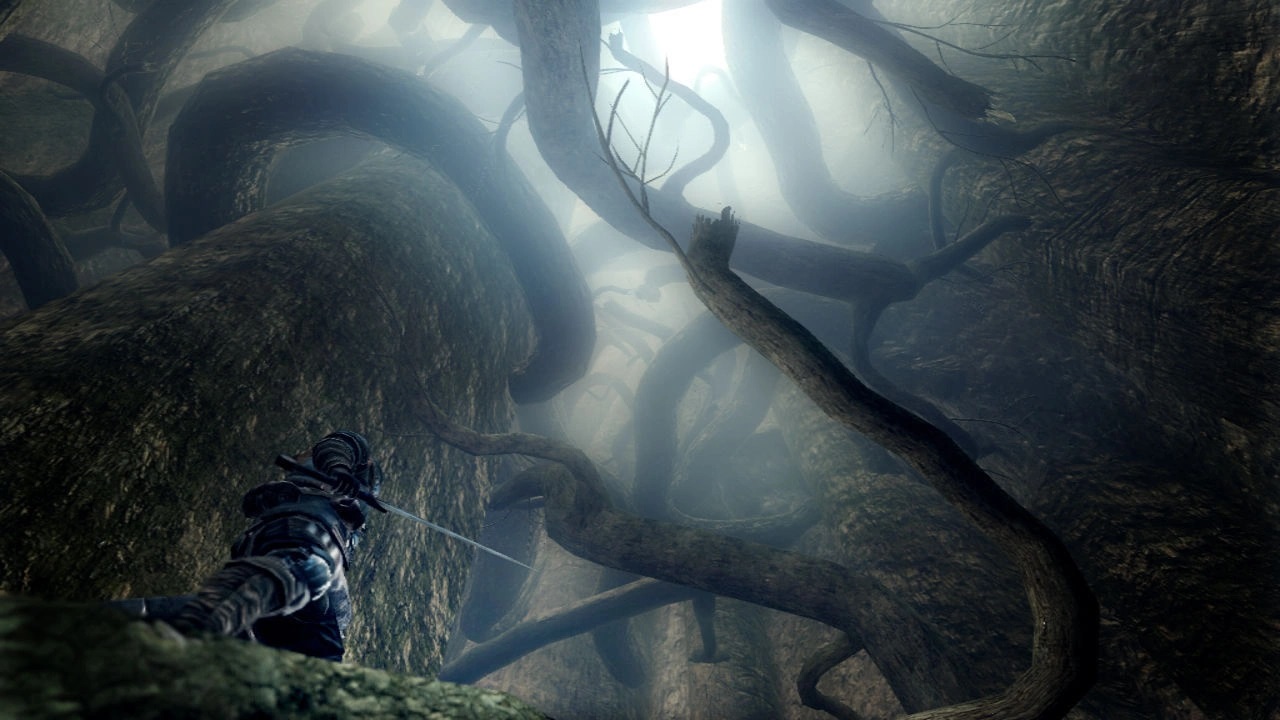
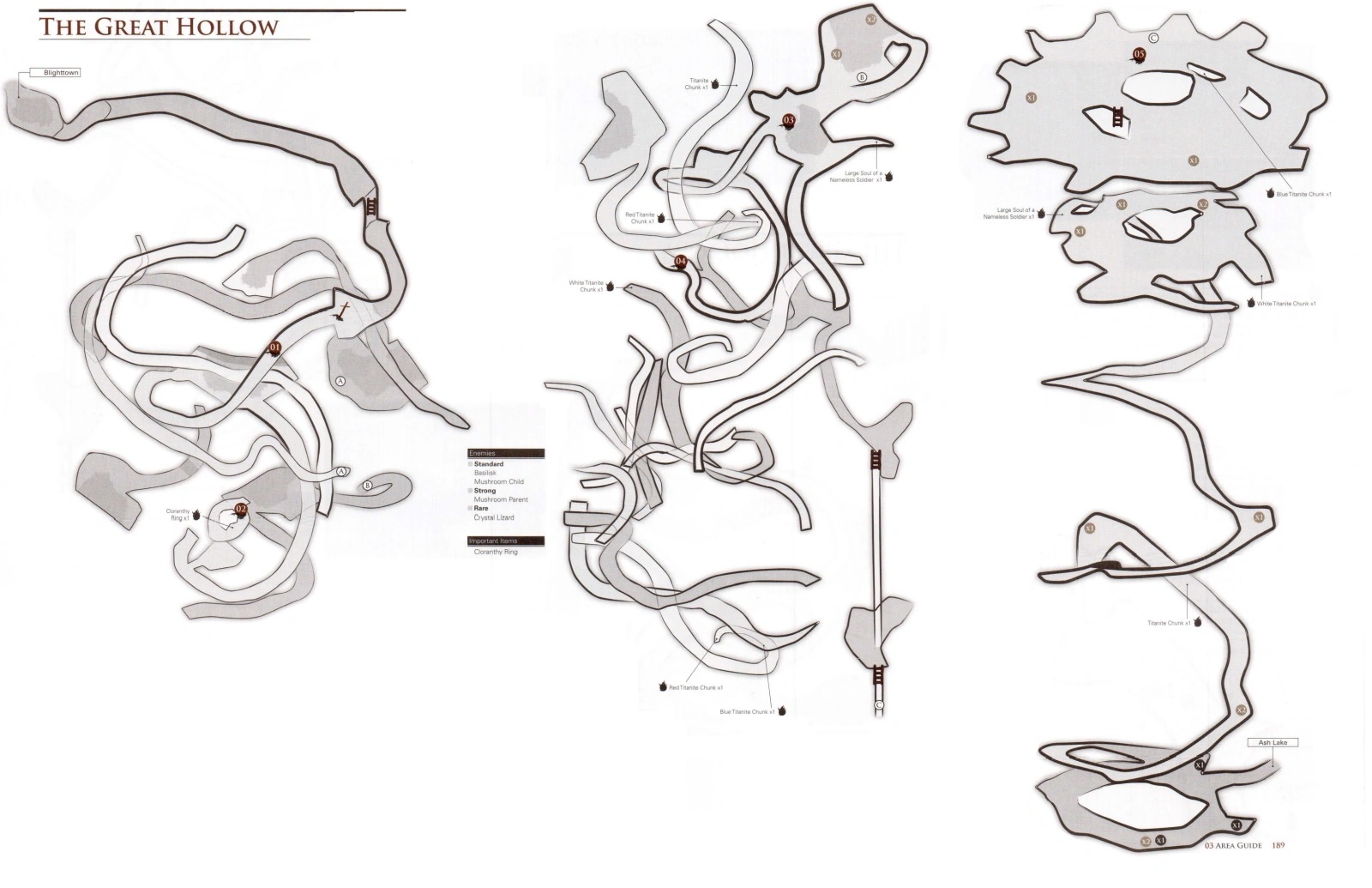
The Great Hollow is in the center of a giant tree, the entrance of which is located in the poison swamp at the bottom of Blighttown. There are two illusory walls that lie along the way. At the very bottom of the tree is the entrance to Ash Lake. Can be a dangerous place due the constant possibility of falling to one's death, getting Cursed by Basilisks, or failing to deal with the Mushroom Parents and Mushroom Children.
The Great Hollow is notable for hosting a large amount of Crystal Lizards, many of which spawn in close proximity to one another.
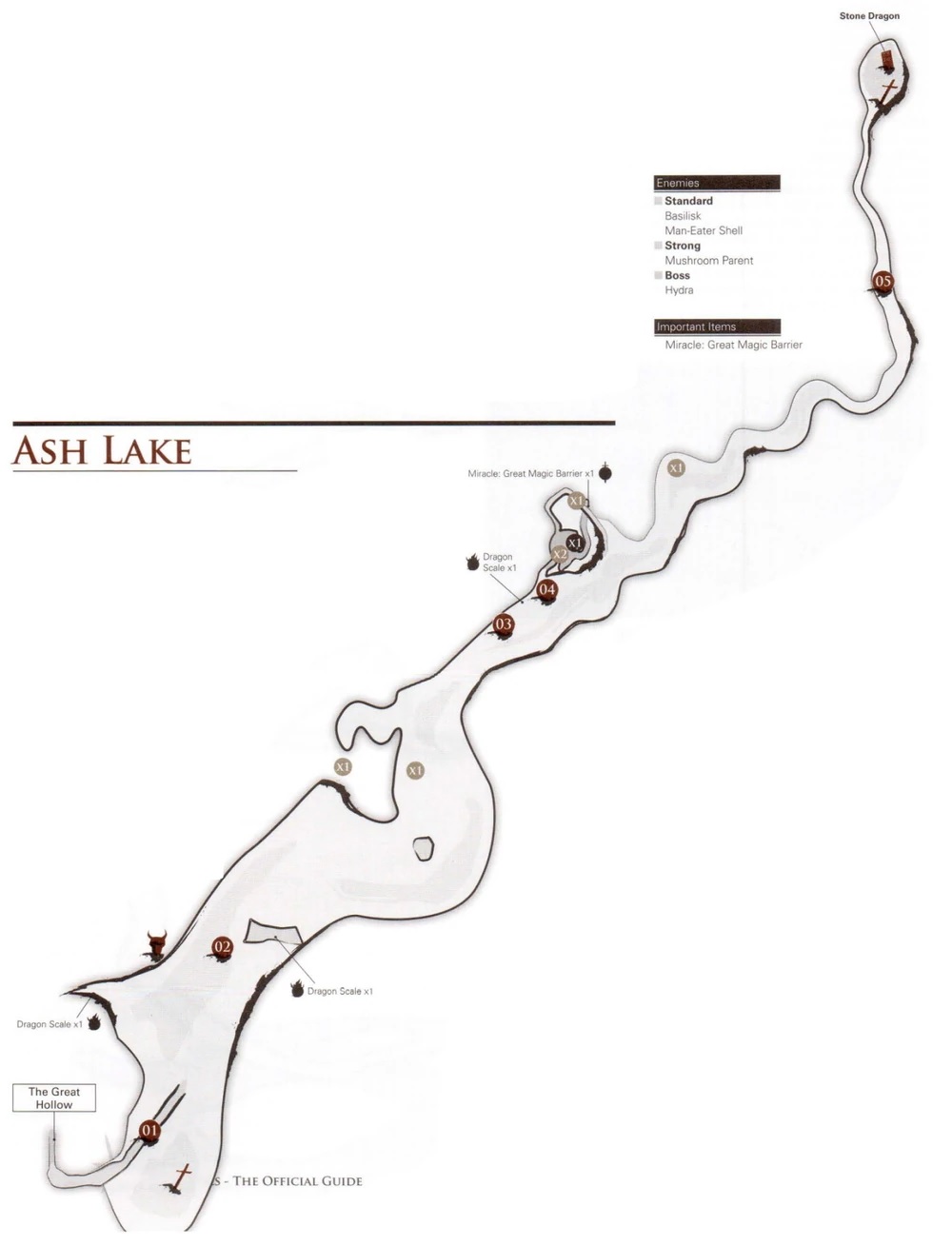
2 Ash Lake
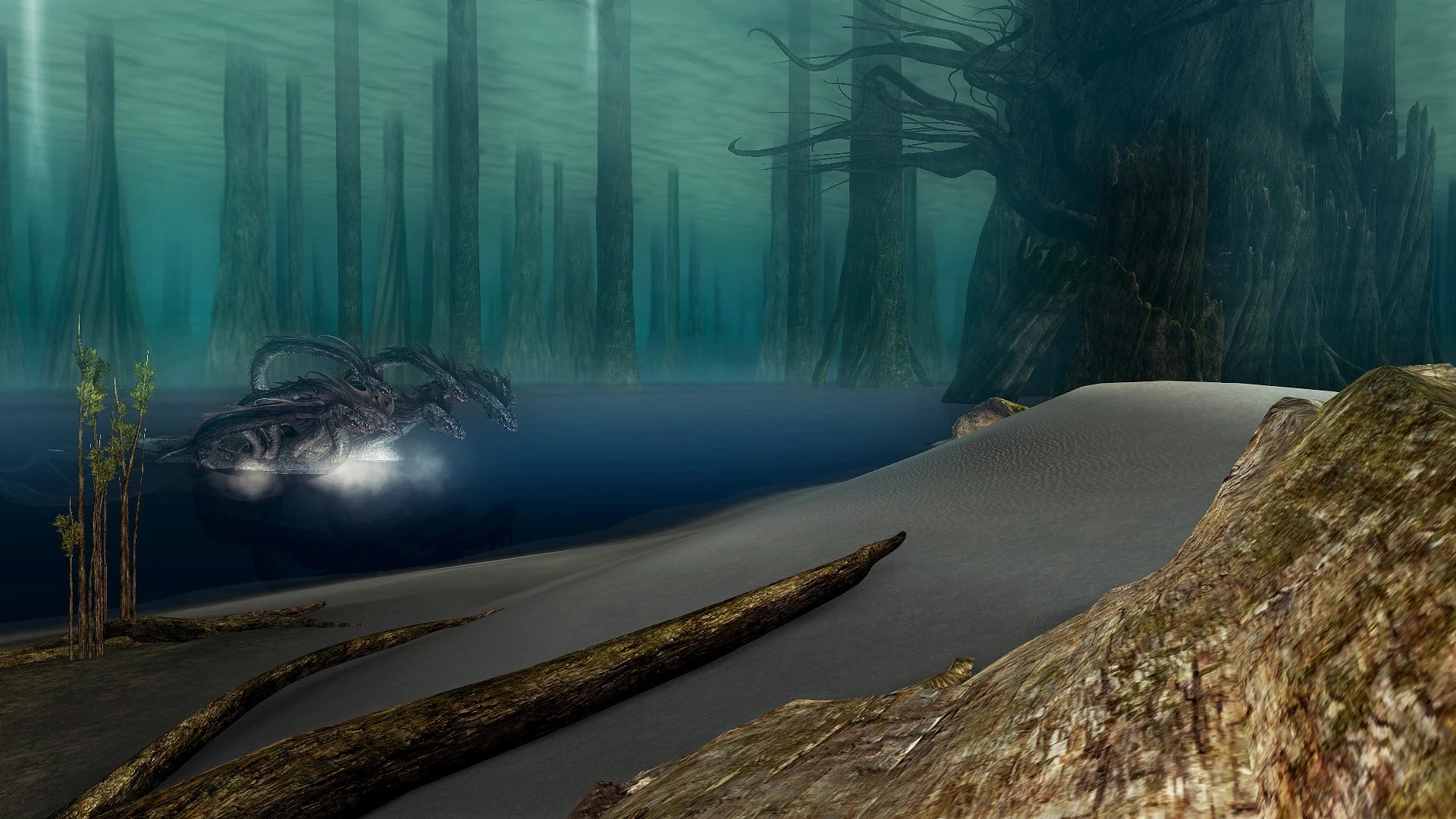
Ash Lake is an optional area accessed by successfully reaching the bottom of The Great Hollow, through a tunnel past the Mushroom enemies. It is a wide, open space with seemingly endless views of Archtrees amidst deep, dark blue waters and below a sky of dense clouds. A large stretch of sand connects two Archtrees, and the shores abruptly end, leading to a watery grave.
The Stone Dragon is a passive and invulnerable entity that serves as initiator to the Path of the Dragon covenant.
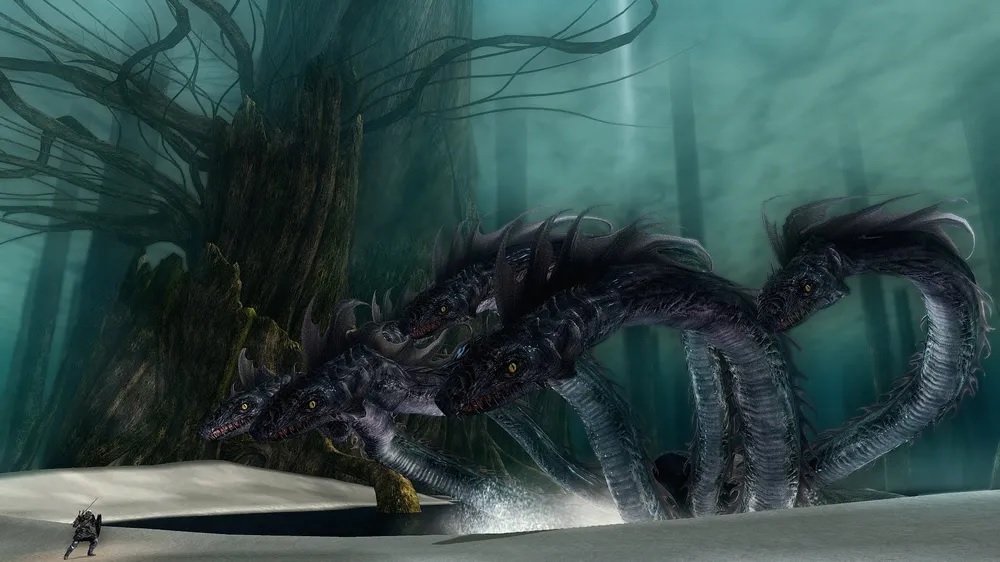
The Black Hydra is a large sea monster with a body similar to a plesiosaur, but with tentacles underneath a shell-like structure and several long necks and heads. Each head can fire blasts of water from a distance or lunge into the ground for a close range attack.
3 Sen's Fortress
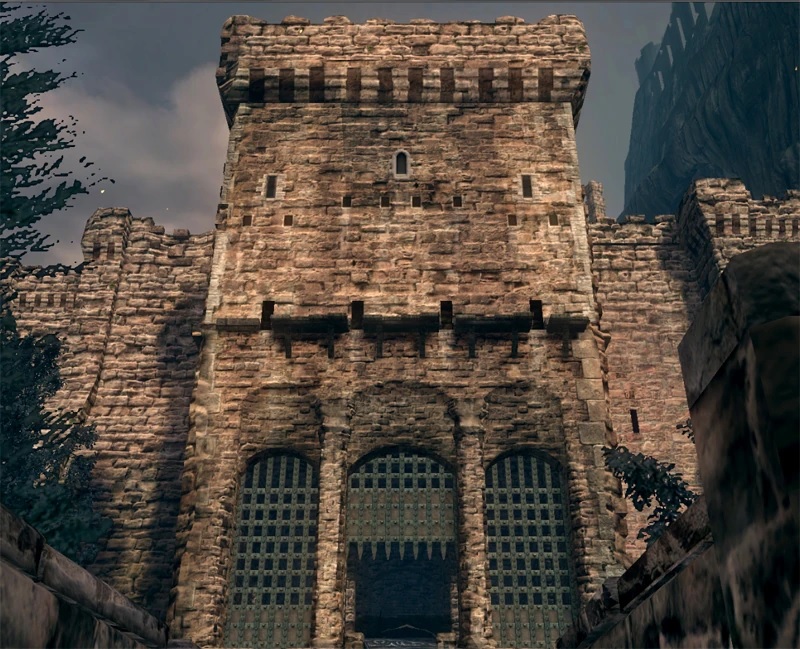
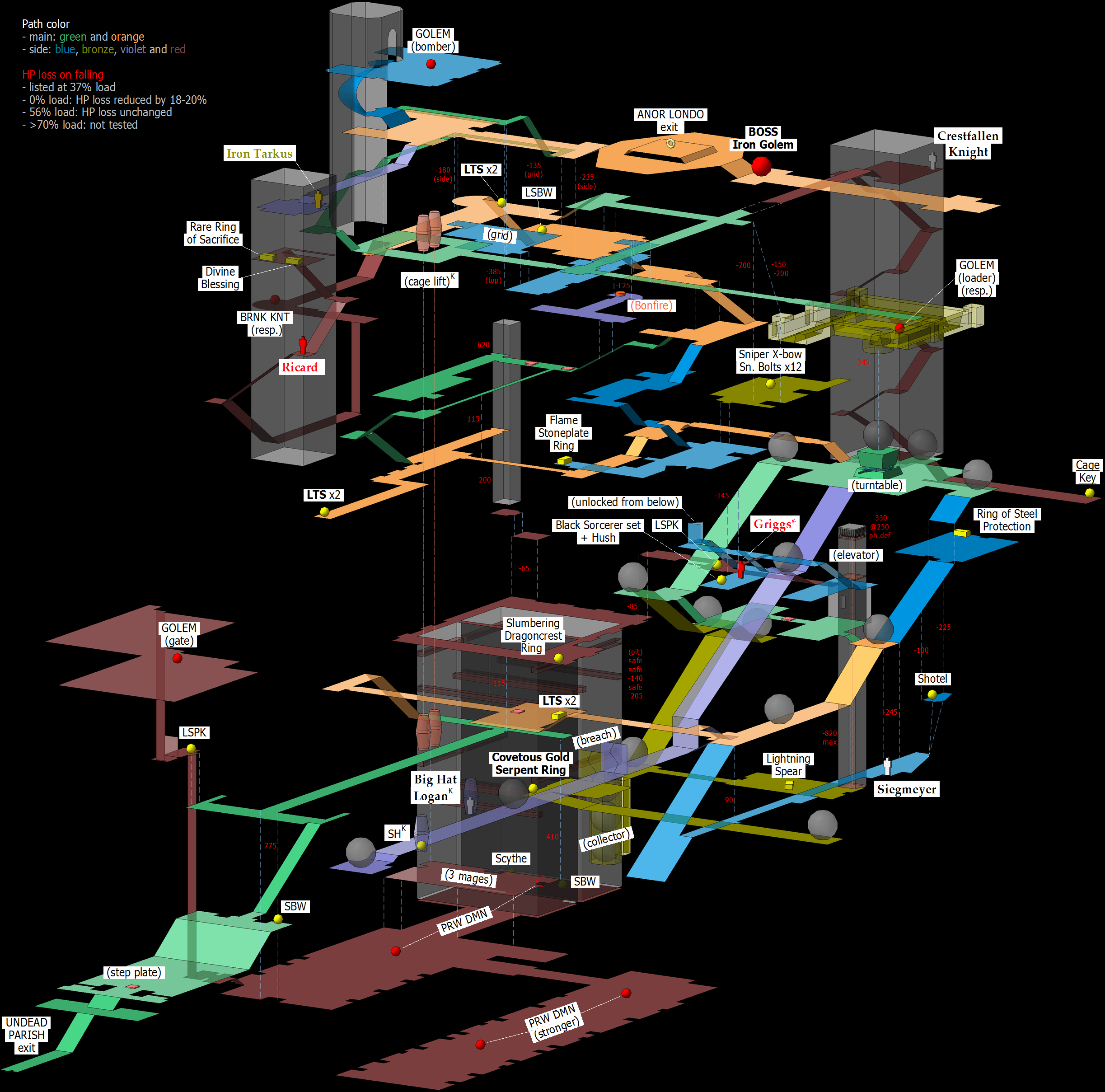
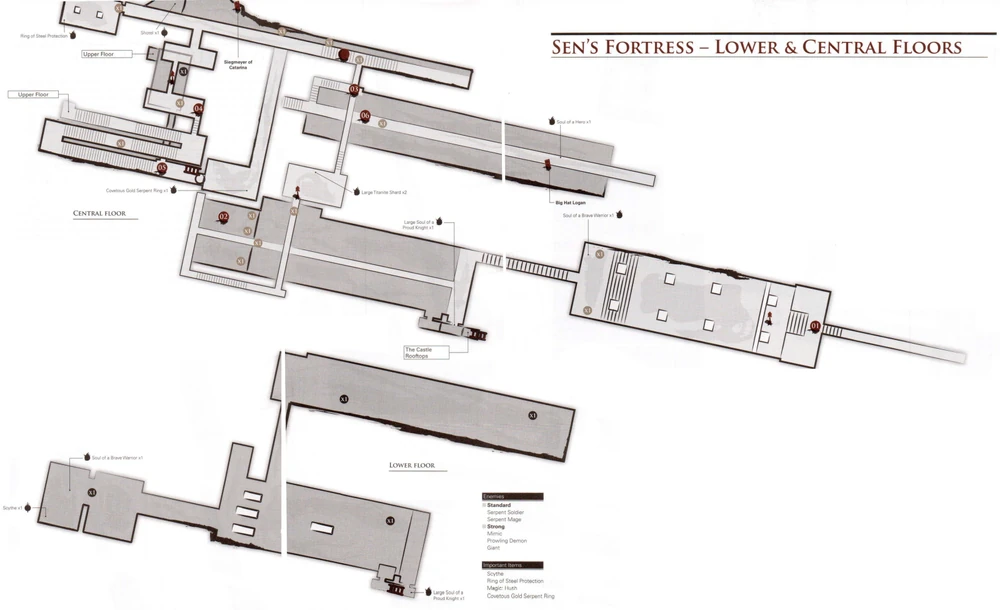
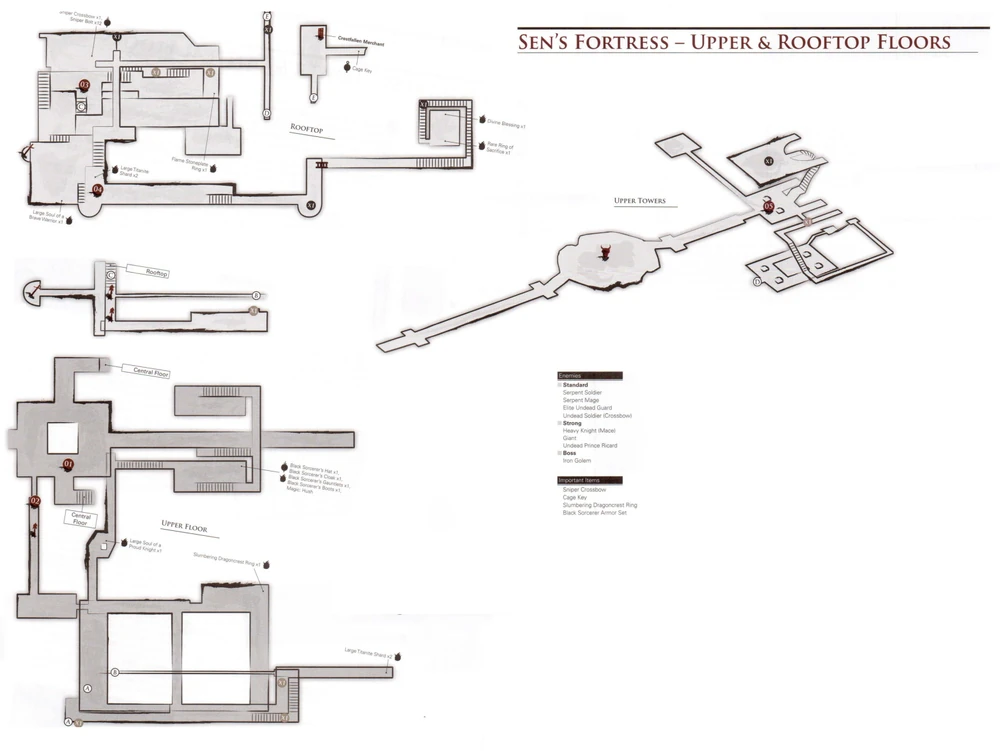
It is the only route that leads directly to great Anor Londo and can be found by crossing the stone bridge leading out of the enclosure in the Undead Parish out of a doorway in front of the bonfire before where Andre of Astora is working. The fort can only be entered after ringing both of the Bells of Awakening.
After Lord Gwyn sacrificed himself to link the First Flame and prolong the Age of Fire, his sons followed his design of shepherding the humans to repeat his sacrifice and preventing the coming of a Dark Lord among them. Accordingly, at the foot of Anor Londo and behind the Undead Burg, the gods built Sen's Fortress on the only route leading to their city to serve as a further testing ground. The fortress would become the second main trial for the Undead that managed to overcome the first challenge of the Bells of Awakening and sought to enter Anor Londo to receive the Lordvessel.
After ringing the Bell of Awakening placed on the Undead Church of the Undead Burg and in Quelaag's Domain the Chosen Undead would learn of their mission from the awakened Kingseeker Frampt at Firelink Shrine. The Primordial Serpent would tell them that their fate is to succeed Lord Gwyn and link the Flame to continue the Age of Fire and undo the curse of Undeath, directing them towards Sen's Fortress, to be tested further and prove themselves worthy enough of entering the city of the gods where they would acquire the Lordvessel and continue their journey. After ringing the two bells, an enslaved Giant would recognize that an Undead has completed the first trial of their quest and open the gate to allow them to enter the fortress.
The structure was filled with many lethal traps including swinging blades, large rolling boulders and hidden ballistae traps to create the ultimate deadly challenge path. Many deadly enemies also guarded the fortress to hinder those who attempted to venture though. The main force of the defenders is composed of Serpent Soldiers and Serpent Mages, hybrids of humans and snakes with monstrous appearance and strength created by Seath the Scaleless to act as his jailers. Additionally enslaved Giants were used as gatekeepers, living launchers of firebombs and loaders a machine which will send boulders rolling throughout the fortress, creating environmental hazards capable of destroying those who wandered around the location.
As the final challenge for those Undead that managed to venture past the fortress, the gods placed an Iron Golem, a construct with the purpose of acting as a guardian for Anor Londo. The golem is a hunk of iron that makes up its iron armor of immense weight and is equipped with a heavy iron ax capable of releasing a powerful blade of wind. It's animated by a core that the gods created by infusing the bone of an archdragons with the power of souls. The golem served its purpose well and, over the centuries, slayed countless heroes seeking to reach Anor Londo. For the few exceptional champions who would have managed to pass this further test, three Batwing Demons would have come to pick them up and transport them inside the walls of Anor Londo where their trials and the journey to obtain the Lordvessel would continue.
Centuries after Lord Gwyn's sacrifice, as the First Flame began to fade and the curse of Undeath to regain strength heroes and warriors from all different lands tried to reach Lordran and ventured to Sen's Fortress to try and reach Anor Londo. Very few were successful, like the strongest Berenike Knight known as Black Iron Tarkus and a Warrior of Sunlight known as Solaire of Astora. However, most of them failed in their mission to conquer the fortress's challenges despite their multiple attempts over the decades, ending up trapped, hollow or only becoming additional roadblocks to further hinder future warriors. Among them the famous sorcerer Big Hat Logan who tried to reach the Duke's Archives to seek Seath the Scaleless's knowledge, the Undead Prince Ricard a legendary hero who wandered the lands in a fateful ill-conceived journey until he ended up Undead and in Lordran and the Knight King Rendal and his Balder Knights who attempted to seek the Lordvessel and restore the power of the Flame to save their country plagued by Undead.
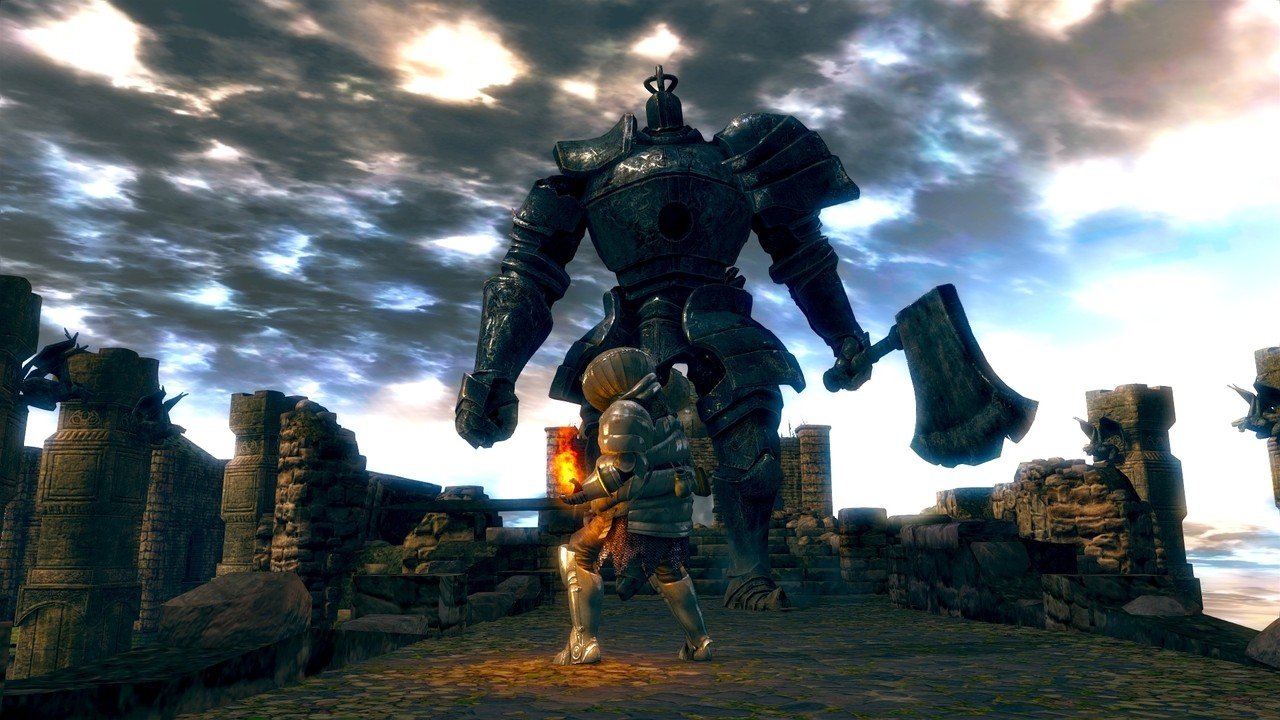
The Iron Golem is a construct created by the Gods with the purpose of acting as a guardian for their city of Anor Londo. The golem is essentially a hunk of iron that makes up its iron armor of immense weight and is equipped with a heavy iron axe capable of releasing a powerful blade of wind. The construct is animated by a core that the gods created by infusing the bone of one of the archdragons they had defeated with the power of souls.
After Lord Gwyn sacrificed himself to link the First Flame and prolong the Age of Fire, the Iron Golem was placed to act as the last ritual challenge of Sen's Fortress. In fact, the Undead who tried to follow in Gwyn's footsteps to sacrifice themselves to the Flame would have to be tested even before obtaining the Lordvessel and seeking powerful souls. Ringing the Bells of Awakening represents only the first of these challenges, and success means gaining access to Sen's Fortress to be tested further. For the Undead who manage to overcome the tests and dangers of the fortress, the Iron Golem represents the last challenge to access the city of the gods. The construct has served its purpose well and, over the centuries, slayed countless heroes seeking to reach Anor Londo.
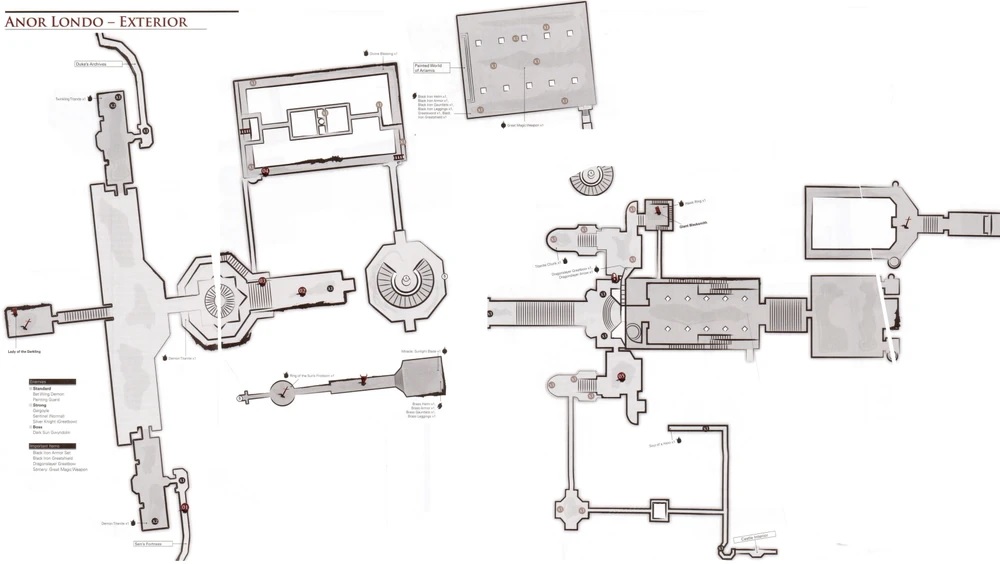
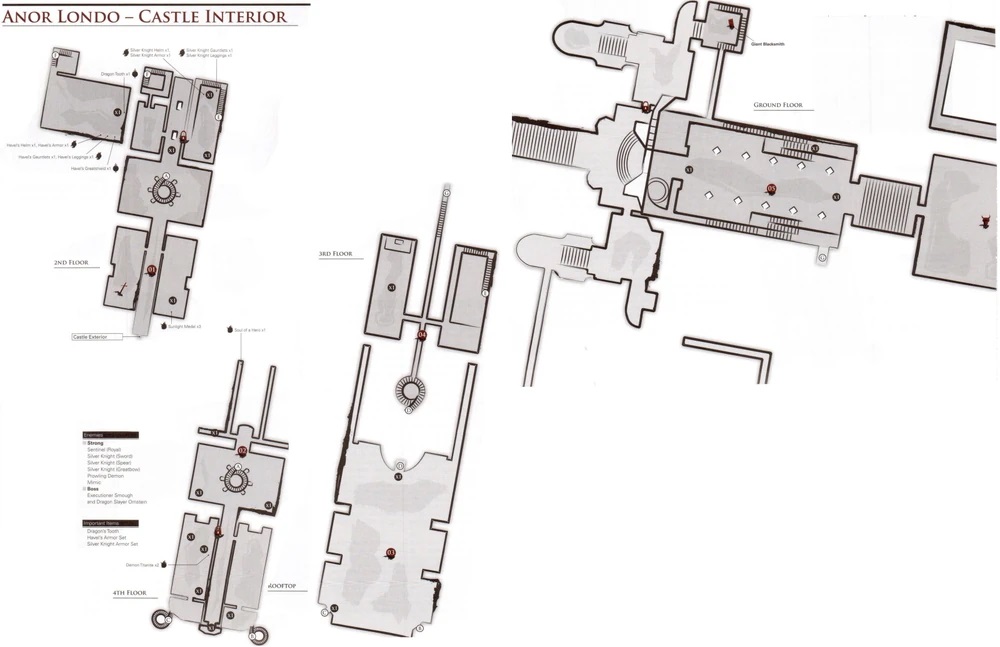
3 Anor Londo (Part 1)
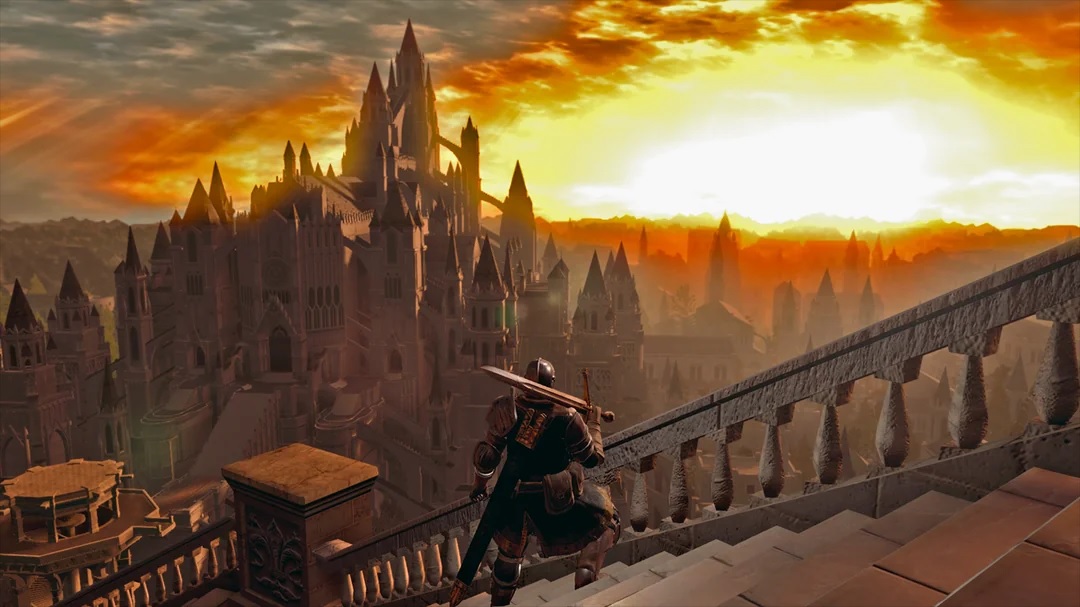
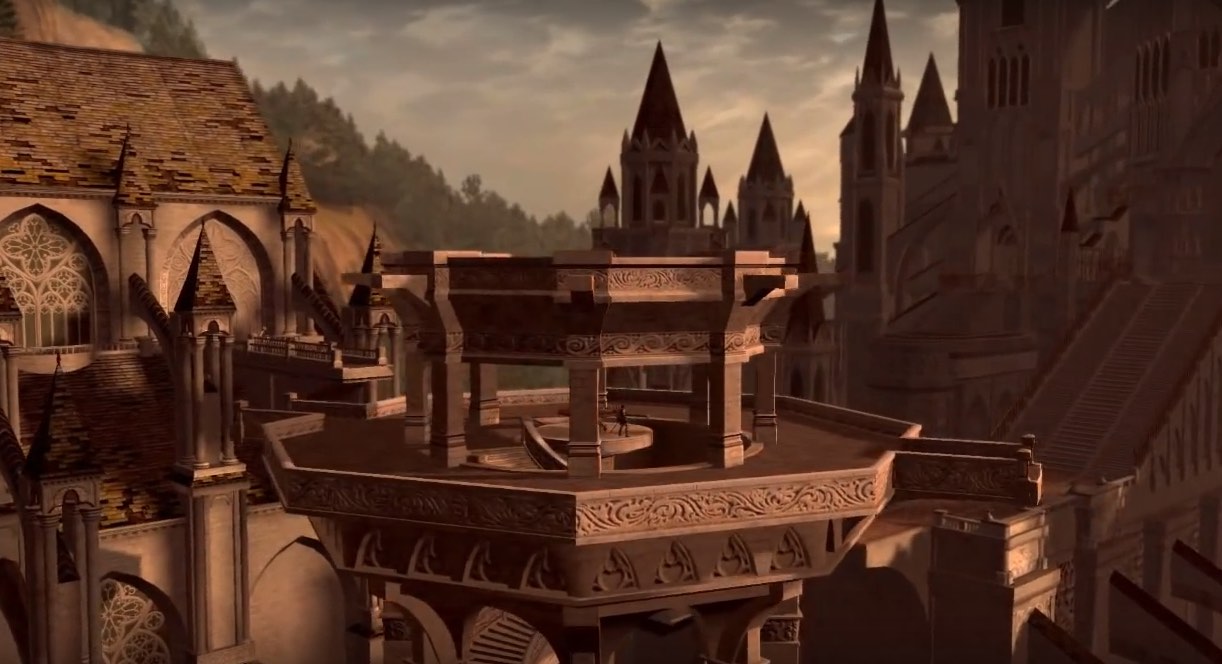
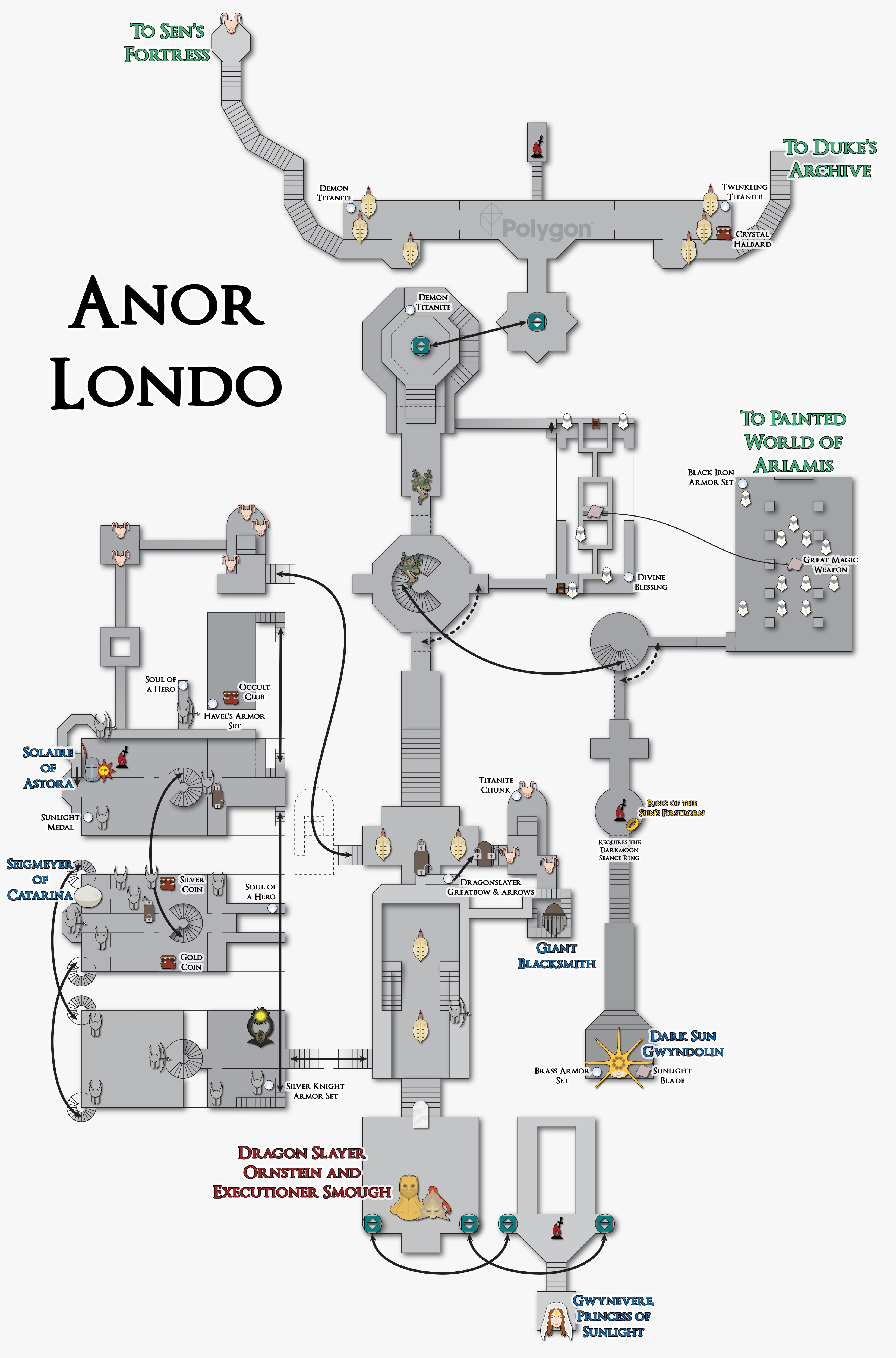
Anor Londo is the legendary city of the gods. It was the seat of power of High Lord Gwyn and his clan. Since Gwyn bound the First Flame, the city has been abandoned by the other gods, and now only Gwyndolin the Dark Sun remains to guard the tomb in honor of his father. The Chosen Undead is tasked by Frampt the Kingseeker on a journey here to acquire the Lordvessel.
Anor Londo is accessible from a yellow Resonance Ring that appears in the Iron Golem's arena after it has been defeated. It plays an important role in gameplay, as the Lordvessel is obtained here after defeating Dragon Slayer Ornstein and Executioner Smough and reaching Gwynevere, Princess of Sunlight. Two covenants can be joined in Anor Londo.
If the player wishes to return to Sen's Fortress, they may speak to the Batwing Demon that appears where the player is placed after activating the Resonance Ring.
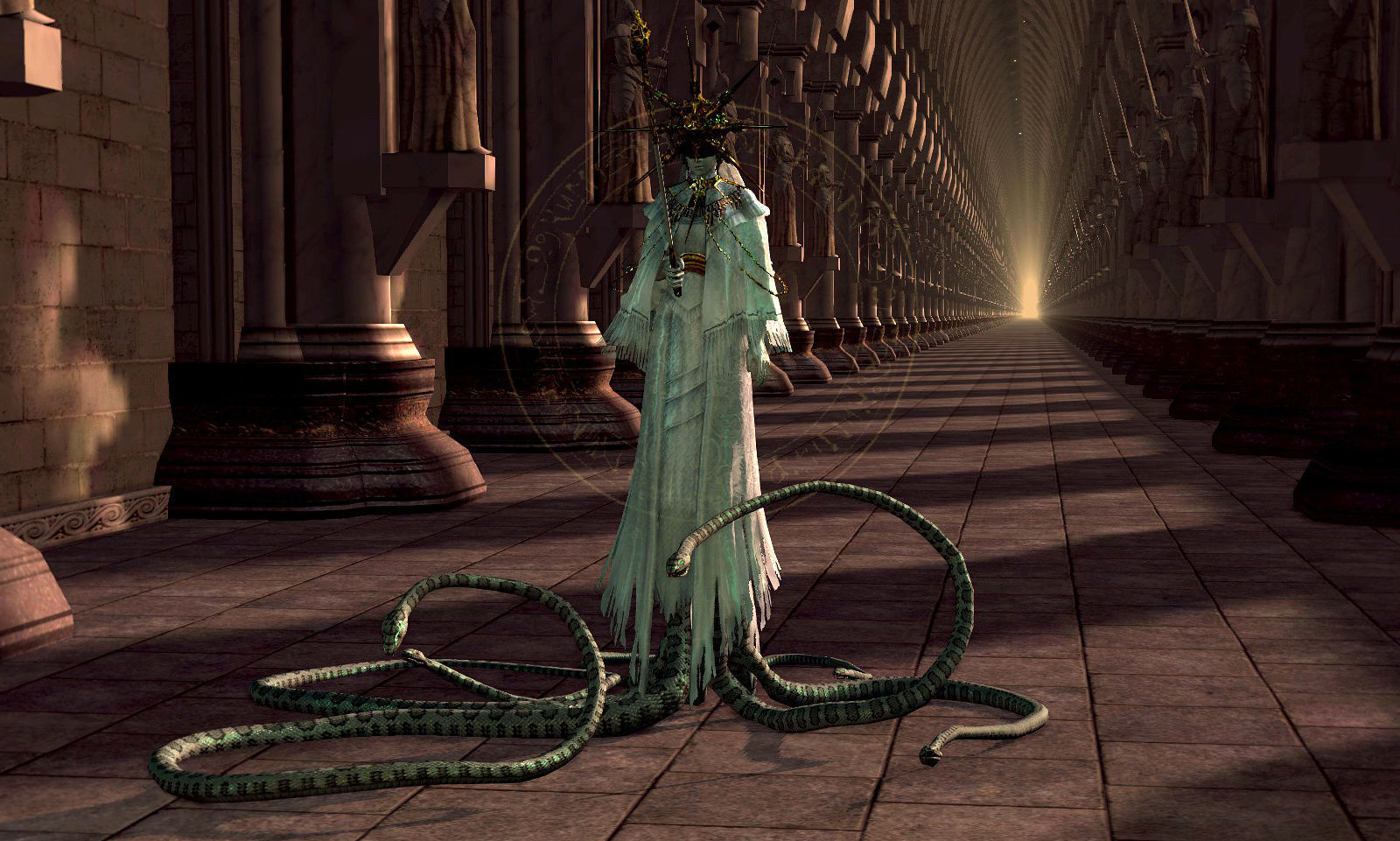
Dark Sun Gwyndolin guards the honorary tomb of Gwyn, Lord of Sunlight in Anor Londo. The tomb can be found by using the spiraling staircase on the rotating bridge while the bridge is in its lowest position and descending to the second accessible bonfire. If the player wears the Darkmoon Seance Ring in this location, Gwyn's statue will vanish and Gwyndolin's fog door will be revealed. The player can then either pledge allegiance to him and his Blades of the Darkmoon or dare to trespass the fog door behind which he dwells, thus beginning the boss battle. Gwyndolin also appears as a special character Dark Souls III.
If the player does not yet have the Darkmoon Seance Ring, they can kill Gwynevere instead, which at that moment will be revealed to be just an illusion set up by Gwyndolin himself. The entrance to Gwyndolin's boss room will be accessible at the same aforementioned location. Be advised that killing Gwynevere will cause players to respawn at the first Bonfire in Anor Londo if dying or using Homeward/Dark Sign in Anor Londo regardless of the last Bonfire rested at. This will last until Gwyndolin is dead.
Gwyndolin is the lastborn child of Gwyn, Lord of Sunlight and one of the deities who resided in Anor Londo during the Age of Fire, although his legitimacy as such only came from being a child of his father. He was worshipped as the "God of the Darkmoon" and held the title of "God of the Dark Sun".
Despite being the son of Gwyn, Gwyndolin was born with a strong moon power, and "weak and repulsive" in appearance, particularly due to the snakes coiled around his lower half. Because of his darkmoon powers and his strong affinity for moon magic, as well as his lineage, Gwyndolin was raised as a female. While still young, Gwyn made him wear women's clothing and gave him a magic ring which would allow Gwyndolin to move and act in a feminine way, leading him to behave "like a dark and fleeting goddess".
Despite his harsh upbringing, and having accepted his identity in the eyes of the other deities as fragile and repulsive, Gwyndolin would grow up with a deep admiration for his father and an aspiration to become like him, wearing a crown with the design of the sun that was imbued with his dark moon magic. He accepted his place and role to the point of supporting his father's will even after his death, and he took part in the workings of his kingdom. Although he was a deity of Anor Londo, Gwyndolin still grew into a powerful sorcerer, using a golden bow, infused with strong magic and employing arrows of moonlight, and even a catalyst for sorcery that channeled not the intelligence but the faith of the user. Gwyndolin also became an eminent figure in Oolacile, where multiple statues of the deity were erected throughout the city. He was depicted with his moonlight robes and the catalyst of the country, implying that he had studied Oolacile sorcery and learned to use their catalysts. At some point, an immense arena was erected in Oolacile in which a ritual combat called the "Battle of Stoicism" took place. The victorious warriors were welcomed to Anor Londo. Curiously, the structure where the fighting took place was covered in those same Gwyndolin statues.
After his father Gwyn linked the First Flame, his throne passed to his firstborn son who, treacherously, chose to "ally" with the ancient dragons, the ancient enemies of the gods, and was therefore dethroned, exiled and his name eradicated from history. Following these events, his sister Gwynevere, Princess of Sunlight abandoned Anor Londo together with nearly all of the other deities, leaving Gwyndolin as the last remaining deity in the city. Despite being the last son of the royal family of the gods, Gwyndolin was psychologically unfit to become the next ruler, still playing the feminine role imposed on him by his father Gwyn, leaving Lloyd to take advantage of the situation who proclaimed himself king of the gods, justified by his being Gwyn's uncle, and become the chief deity of the Way of White.
Gwyndolin created an illusory image of his sister Gwynevere, to govern through her cherished figure and covering for her departure, taking upon himself to lead what remained of his father's kingdom and the Silver Knights through this illusion, though he didn't attempt to claim the throne for himself. Gwyndolin also collaborated with Kingseeker Frampt to maintain the system and religion created by his father to keep the First Flame and the Age of Fire alive. Together they used the illusion of Gwynevere to seek a worthy champion to link the Flame again, creating a prophecy which they hoped to make self-fulfilling by guiding and manipulating those who passed their various challenges and earned the Lordvessel, a component required to access the Kiln of the First Flame, while also maintaining some semblance of divinity and control over the ancient city.
Meanwhile Gwyndolin did not remain passive and founded the Blade of the Darkmoon covenant, welcoming into his service those knights who shouldered the duty of hunting down and punishing those who sinned against the gods, forming a corps that instilled respect for as well as fear of gods among humans. For their mission these knights were granted the Blue Eye Orbs which enabled them to invade the time and place of the sinner and mete out the vengeance of the gods. For this eternal mandate, Gwyndolin collaborated with Velka, Goddess of Sin, who determined the sin and marked the sinners on her Book of the Guilty so that one day they would face the wrath of the Blades of the Darkmoon. Gwyndolin's followers would cut off an ear from the corpse of the sinners they vanquished, bringing them to their god as proof of their task accomplished, receiving Gwyndolin's ring and talisman in return, and even learning of his miracle, creating a sword with the rays of the Darkmoon to manifest the vengeance of their god.
Gwyndolin thus continued to remain hidden in his father's empty mausoleum, administering Anor Londo from the shadows and continuing to carry out his father's will to uphold the Age of Fire, punishing sinners and leading the Undead without revealing himself. At some point, he was visited "at the Mausoleum of the Spiral Depths", a location nothing is known about, by an Undead woman. The woman entered his service as a Blade of the Darkmoon and became the sole Fire Keeper in Anor Londo, although whether she was already a Keeper or became one upon entering his service is unclear. He gifted this "Darkmoon Knightess" with a golden armor set to hide her own "hideous form", as well as his Darkmoon special talisman and Darkmoon Blade miracle.
3 Anor Londo (Part 2)
The Knightess assisted in Gwyndolin's attempt of fulfilling his father's prophecy, offering Undead who reached Anor Londo her kindled bonfire, and some guidance, first towards the illusion of Gwynevere, or, if they have already obtained the Lordvessel from the illusion, with information on Seath the Scaleless, the nearest of the powerful beings the prophecy would have the Undead slay to feed the Lordvessel. The Knightess helped maintain the facade of Gwynevere, talking about the illusion as if it was the real Goddess even as she knew it was not real. Should an Undead prove a threat to the Gods by attacking the illusion or Gwyndolin, or passing through the later's Fog Door and witness his true form, the Knightess would attempt to slay the heretic Undead. Two more Blades of the Darkmoon assisted in Gwyndolin's quest, a man wielding a greatsword and another wielding a straight sword, both of whom would try to slay any Undead who would shatter Gwyndolin's illusions.
Dark Souls II
Although one day a Chosen Undead managed to link the First Flame, ensuring that the Age of Fire and the rule of the gods continued, at some point remnants of the late inhabitants of Anor Londo left Lordran and moved to Drangleic, founding the civilization of Heide. In fact, Heide's Knights still possessed the Cracked Blue Eye Orbs, the worn remains of the Blue Eye Orbs that were granted to the Blades of the Darkmoon who served Gwyndolin to mete out the vengeance of the gods at the times of Anor Londo, implying that the original founders of Heide were once servants of Gwyndolin and part of his covenant.
In Heide also originated the Way of Blue, which was not a developed religion but a humble prayer that spread naturally among those seeking help, but which eventually grew to the point that a huge Cathedral of Blue was built in the heart of the city. In a similar way to the role played by the Blades of the Darkmoon, the Blue Sentinels were formed, a group of knights tasked with defending the apostles of Blue from evil spirits by travelling through space and time thanks to the Cracked Blue Eye Orbs. Although this order continued to follow the ideals of their ancestors and protect the apostles of the Way of Blue even after the fall of Heide, knowledge of Anor Londo's deities and even their names was lost and their faith evolved towards seeking a higher plane through good deeds.
However, the Blue Sentinels continued to exist past the falls of both Heide and Drangleic, with the dutiful Targray still standing watch at the Cathedral of Blue, and providing those worthy with Cracked Blue Eye Orbs and a lightning miracle similar to those of the Gods of Anor Londo, while in the town of Majula, which acts as an entry point and home base to new Undead in Drangleic, a crestfallen warrior, Saulden, introduced newcomers to the Way of Blue, ensuring that they received the Sentinels' assistance should they wish for it. Fittingly, Targray was guarded by an old Dragonslayer acting as a trial to would-be Sentinels as Dragon Slayer Ornstein once acted as trial for Undead in Anor Londo; this Dragonslayer donned a black version of Ornstein's armor, as well as an identical spear and ring.
Dark Souls III
During the events of Dark Souls III, Gwyndolin has become the foremost figure of authority and worship in Anor Londo, now located in the center of Irithyll in the Boreal Valley, taking his father's title as "King of the Gods." In addition to continuing to monitor those who bind the Flame, Gwyndolin appeared to be tracking the descendants of the gods who fled Anor Londo millennia earlier to bring them back to Irithyll.
He ruled alongside his apparent sister, Yorshka, a young hybrid. Although the exact nature of their familial ties is unclear, it is known that Gwyndolin thought highly of her, as he provided her with her own personal bell and her name.
Sulyvahn, a former inhabitant of the Painted World and ally of the Dark Saint Aldrich, would infiltrate the city of Irithyll and the Darkmoon system to usurp it from within. It is strongly implied that Sulyvahn worked his way through the power system in Irithyll, converting the city guards into worshippers of the Deep.
Later, Gwyndolin would be stricken with an illness so severe that it would force him to withdraw from his own pact and the city. Because of this, the leadership of the pact passed to Yorshka, who was soon after imprisoned by Sulyvahn, who took complete control of the city and claimed the title of Pontiff. Following this, the Darkmoon God was imprisoned within the ruins of the ancient cathedral of Anor Londo.
After being revived as Lord of Cinder, Aldrich grew disillusioned with his throne and traveled to Irithyll to devour the imprisoned god. Once he arrived, he began slowly consuming Gwyndolin, who was likely unable to defend herself, both physically and spiritually, gaining access to her knowledge of Priscilla while she dreamed. Gwyndolin was freed from his gruesome fate when the Ashen One slew the Lord of Cinder.
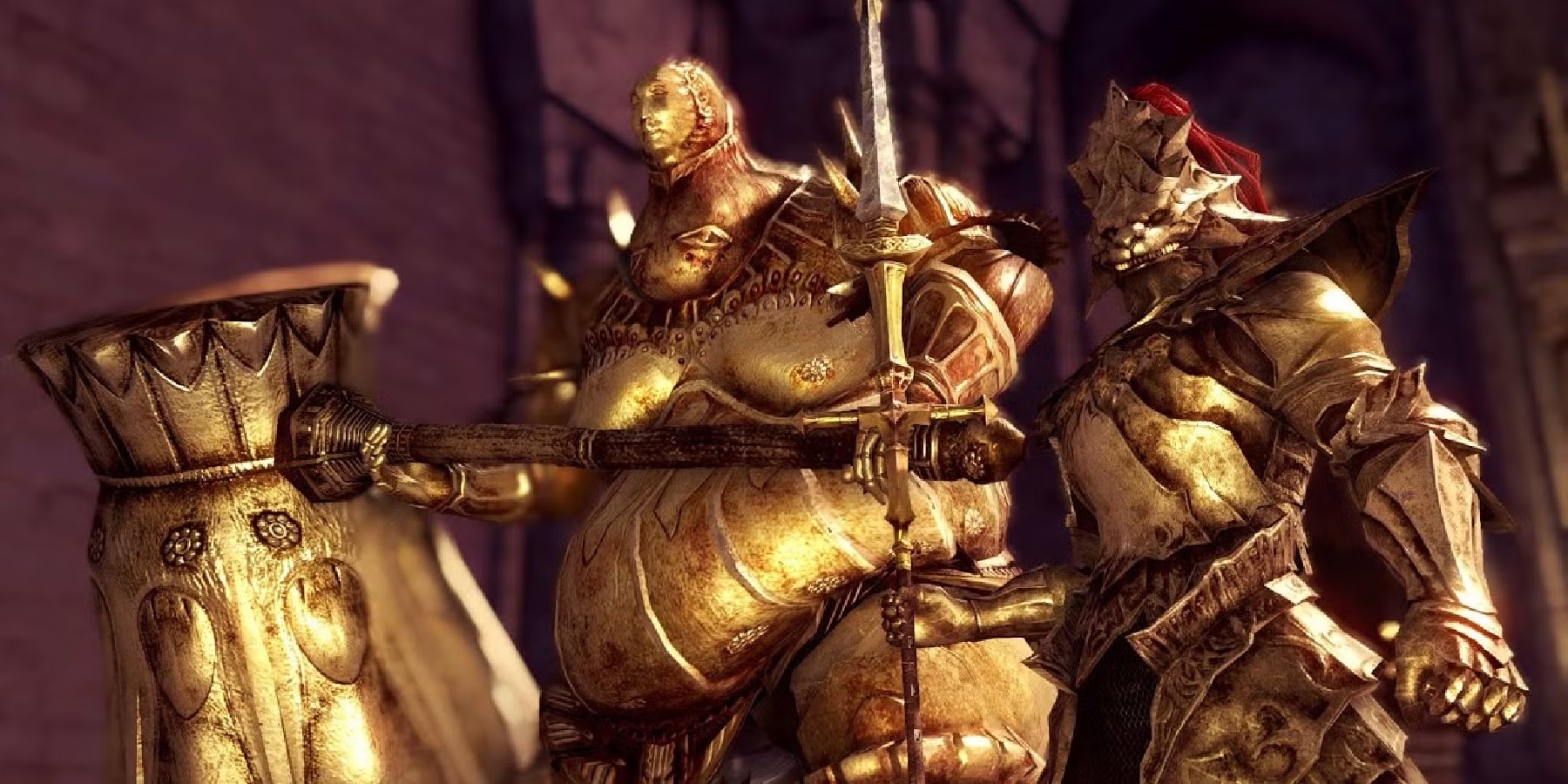
Ornstein and Smough represent the last ritual challenge for the potential Chosen Undead. In fact, the Undead who tried to follow in Gwyn's footsteps to sacrifice themselves to the First Flame would have to be tested even before obtaining the Lordvessel and seeking powerful souls. Ringing the Bells of Awakening represents only the first of these challenges, and success means gaining access to Sen's Fortress to be tested further. The Undead who manage to overcome the tests and dangers of the fortress and defeat the Iron Golem would manage to access Anor Londo. Once they managed to enter the cathedral of the city of the gods to try to obtain the Lordvessel they would still be challenged by Ornstein and Smough guarding it, to ensure that only the strongest of the strongest Undead could have an audience with "Gwynevere, Princess of Sunlight".
Ornstein
Is one of the knights at the service of Lord of Sunlight, and one of those who took part in his Lord's war against the Dragons. He wore a golden armor made to resemble a lion, and wielded a great cross spear which, combined with its wielder's great strength, could bury itself deep within a dragon's hide, piercing their stone scales; and send mere human flying. Both his armor and his weapon were imbued with the power of lightning to be effective against dragons.
During the war against the dragons Ornstein fought valiantly together with Gwyn's firstborn son, obtaining the title of "Dragon Slayer Knight" and becoming one of Gwyn's most trusted knights. Once his Lord won the war, exterminating the ancient dragons and conquering the world] Ornstein, along with Artorias, Ciaran and Gough, became part of the Four Knights of Gwyn as their captain. As a symbol of his association with the order he gained a magical ring with the lion symbol, which strengthened counter attacks with thrust weapons, making his fighting style with his cross spear more effective.
Would also become the first knight of Gwyn's firstborn, having accompanied him during the war against dragons. The story of the battles of Ornstein, Gwyn's unnamed firstborn son, and the dragonslayers in their service, were manifested as miracles of war; these were taught to the Warriors of Sunlight, a group of knights that had joined in covenant with the god of war and heir of Gwyn.
At some point after Gwyn linked the First Flame and Gwyn's firstborn son was dethroned and exiled, nearly all of the deities abandoned Anor Londo and moved to an unknown location. Ornstein seemingly remained in the forsaken city alongside Executioner Smough to guard the cathedral where Gwynevere, the Princess of Sunlight resided.
3 Anor Londo (Part 3)
Together, these two powerful warriors would become the last ritual challenge before a Chosen Undead could be rewarded with the Lordvessel. Only after a lethal and lengthy trial, which involved ringing the Bells of Awakening and surviving Sen's Fortress, could the Chosen Undead be granted entry into the city of the gods. Here, guarding the chambers of Gwynevere, Ornstein waited alongside Smough, and oversaw those seeking an audience with the Princess of Sunlight. However, after centuries of waiting for the Chosen Undead without success, Ornstein grew tired of his duty, and left the cathedral under his companion's watch, to search for the Nameless King, while leaving behind the ring that symbolized his membership in the Four Knights of Gwyn. Ornstein's ring was preserved as a relic by Dark Sun Gwyndolin and protected in his manor when Irithyll of the Boreal Valley rose from the ruins of Anor Londo.
Theories
It is possible to theorize that the Ornstein faced by the Chosen Undead in Dark Souls is merely a golem animated by its powerful soul. If so, after abandoning his duty to search for the Nameless King, Ornstein left his Leo Ring behind, which remained in Gwyndolin's custody, implying the renunciation of his title. Furthermore, there is precedent to strong beings' essence being used to power great golems, in the form of the Iron Golem.
Smough
Was the royal executioner of Anor Londo in service of the Gods, wielding a massive hammer and wearing grotesque armor. He derived great pleasure from his work, to the point of being depicted as an "eerily gleeful" executioner. It is stated that he used to ground the bones of his victims beneath his hammer and consume them with his food; this ghastly habit might be what tempered his hammer's ability to absorb the lifeforce of adversaries. Smough also desired to be a part of the Four Knights of Gwyn, but his monstrous behaviour instead led to him being shunned and feared by the honourable knights.
After centuries of waiting for the Chosen Undead without success, Ornstein grew tired of his duty and left the cathedral in search of the Nameless King. Consequently, the last remaining guard was Smough, who continued to hold his post and protect "Gwynevere". As a reward for his loyalty, Gwyndolin finally granted him the title of "knight," even if he was the last one left in Anor Londo after all others had abandoned it. As the cathedral's sole guardian, Smough met his end when a worthy Undead reached Anor Londo and defeated him, gaining an audience with "Gwynevere" and the Lordvessel with which to begin their search for powerful souls.
Smough's ritual hammer was preserved as a relic by Gwyndolin and protected in his manor when Irithyll of the Boreal Valley rose from the ruins of Anor Londo.
3 Painted World of Ariamis (Part 1)
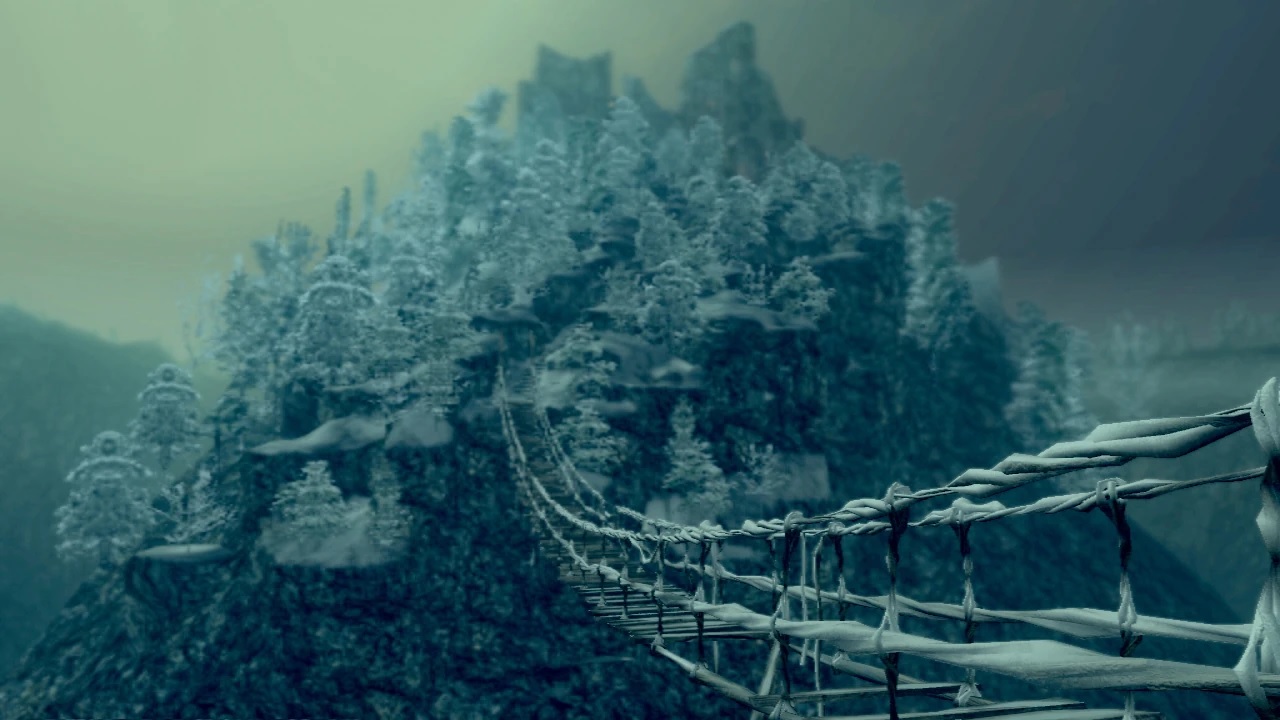
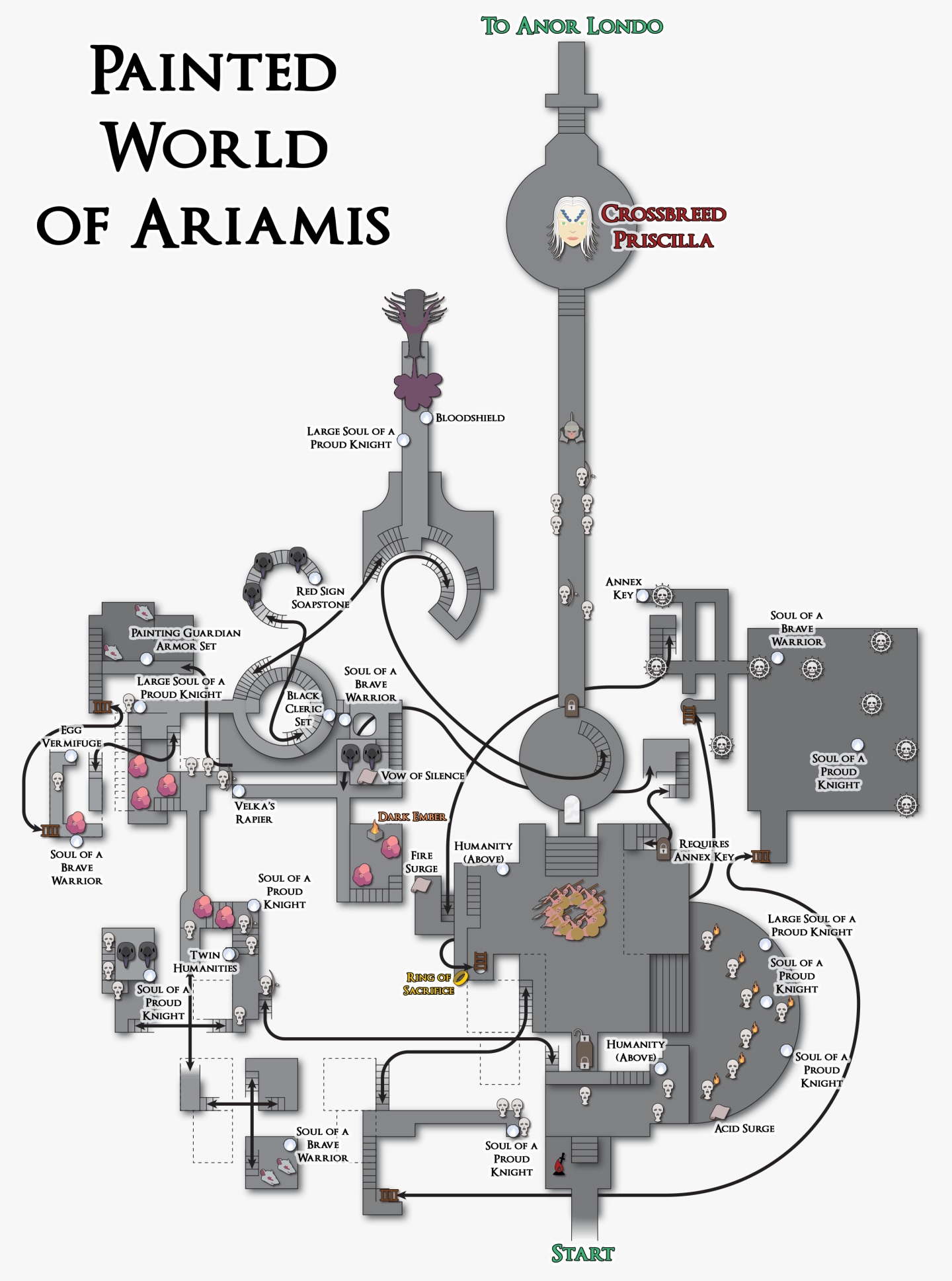
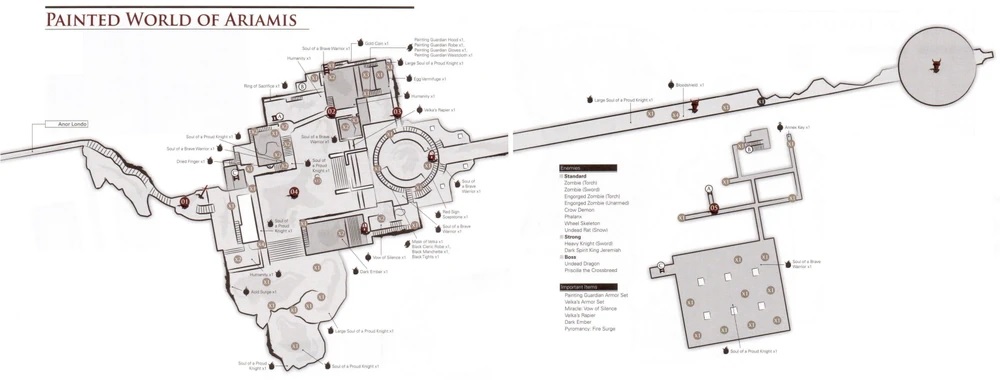
Entering: In order to access this world, the player must first pick up the Peculiar Doll located in the Northern Undead Asylum, upon the return visit later in the game. When examining the large guarded painting in Anor Londo, the player will be mysteriously pulled into the cloistered area.
Exiting: Priscilla the Crossbreed, the boss of the area who resides in a tower, will not begin attacking straight away, instead imploring the player to leave her world. Unless the player jumps off the ledge behind Priscilla, it is impossible to leave the Painted World of Ariamis, even with the Lordvessel's warp ability or through the use of a Homeward Bone or the Homeward miracle.
If Priscilla is attacked, attempting to leave by jumping off the ledge will result in death. At this point, players will only be allowed to leave upon her defeat.
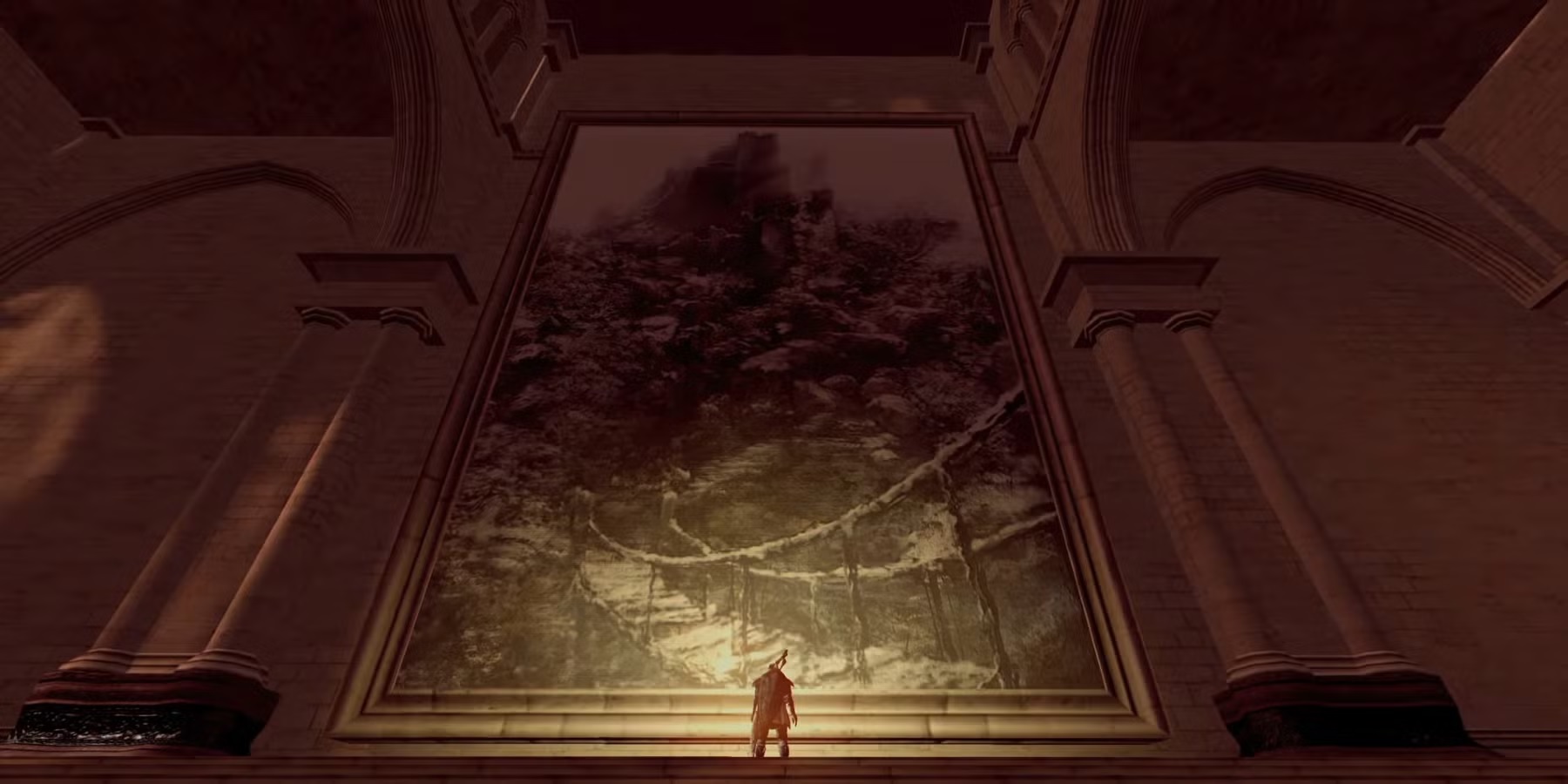
The painting containing the Painted World of Ariamis.
The Painted World of Ariamis, as the name suggests, was created by Ariamis. Painting Guardians were ordered to protect it through generations, however, at some point, the Guardians were not able to recall the reason for doing so.
The Painted World of Ariamis was created as a sanctuary for Crossbreed Priscilla, so that she could be left alone. The key to entering this land is the Peculiar Doll. Once considered an abomination which has no place in this world, Priscilla clutched this doll tightly and was eventually drawn into the lonely, painted world. This abomination was the birth of the Dragon Crossbreed, which is considered a bastard child. She was considered an abomination because the gods of Anor Londo feared her Lifehunt ability, seen as the antithesis of all life and a threat to their immortality.
The Painted World was once a peaceful land with kind inhabitants. It hosts a building similar to an old cathedral, whose annex served as a storage house.
The Painted World of Ariamis has much in connection with Velka, Goddess of Sin. Within it, the Black Cleric Robe can be found, said to be given to pardoners serving Velka. Other items attributed to Velka are scattered throughout the area, unique ones that can either be traded or obtained only in the Painted World: Ring of Sacrifice (sacrificial rite to Velka), Velka's Rapier (used by her pardoner), Vow of Silence (her secret rite). The Dark Ember obtained in the Painted World is no longer known to any living blacksmith in the outside world, as it was long hidden by the church.
Crow Demons were designed as Velka's worshipers, whose bodies warped due to their devotion. They are the only enemies from which Souvenirs of Reprisal can be obtained. It is said to come from guilt-soaked offenders of the Gods, punished by the Blades of the Darkmoon. However, it is dubious if this early developer idea made it through into the final game. Velka oversees a list of the guilty that one day will be judged by Blades of the Darkmoon, and it would be unusual for the goddess to punish Crow Demons for worshiping her.
Dark Souls III
The Painted World of Ariamis likely rotted and was set on fire in order to be restored. This is a usual cycle within painted worlds. The history of Painted World is no longer known in Lothric. It is taught only in the mythology of heretics, passed down just among them, and in ancient tales of hunchbacked heretics. Those heretics are Corvian Storytellers, spreading tales of Painted World among forlorn ones. They are wretched beings with no place to go, just like their followers, Corvians, the unwanted ones possessed by fear. Some of them wield Great Corvian Scythes, visually resembling the one used by the mistress of the Painted World and causing bleeding. It is a reference to Priscilla's scythe rather than Friede's, mistress of the Painted World of Ariandel.
Company Captain Yorshka is speculated to be the daughter of Crossbreed Priscilla.
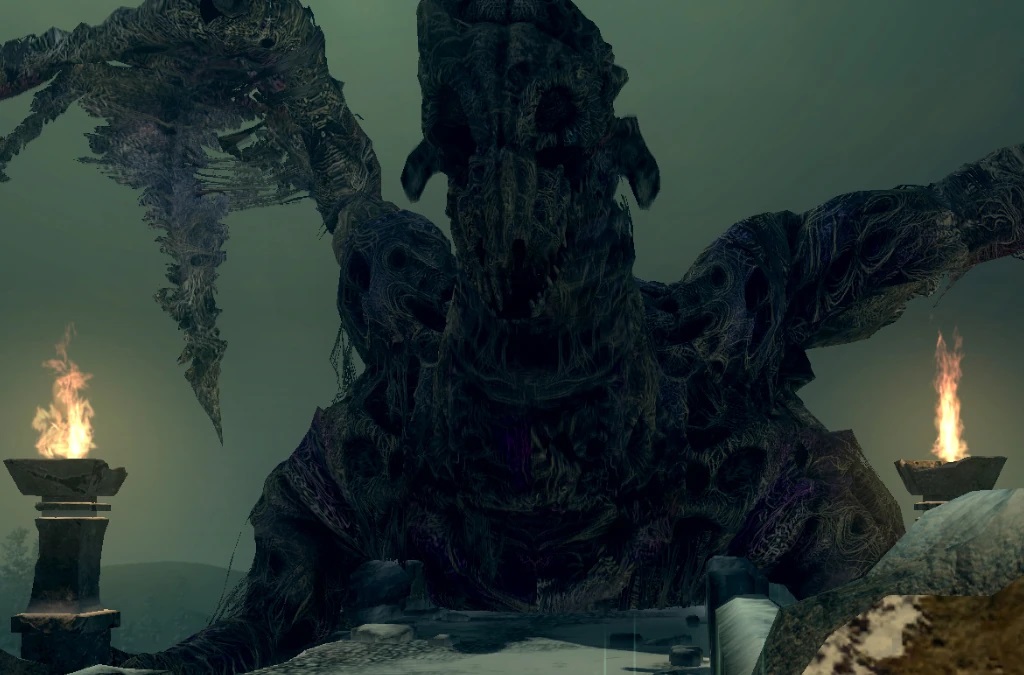
Undead Dragons are the remains of what was once a true dragon. Heavily decomposed, these dormant titans retain little of their former power. They have no eyes, and their wings prove useless. They are prone to bodily ripping themselves in half at the waist; in the Valley of Drakes, the lower half of the Undead Dragon falls into the gorge when it is is awakened. In Ariamis, the Undead Dragon will pull itself forward when disturbed, leaving its lower half behind. In addition to their bite and claw attacks, their mouths can disgorge a Toxic substance.
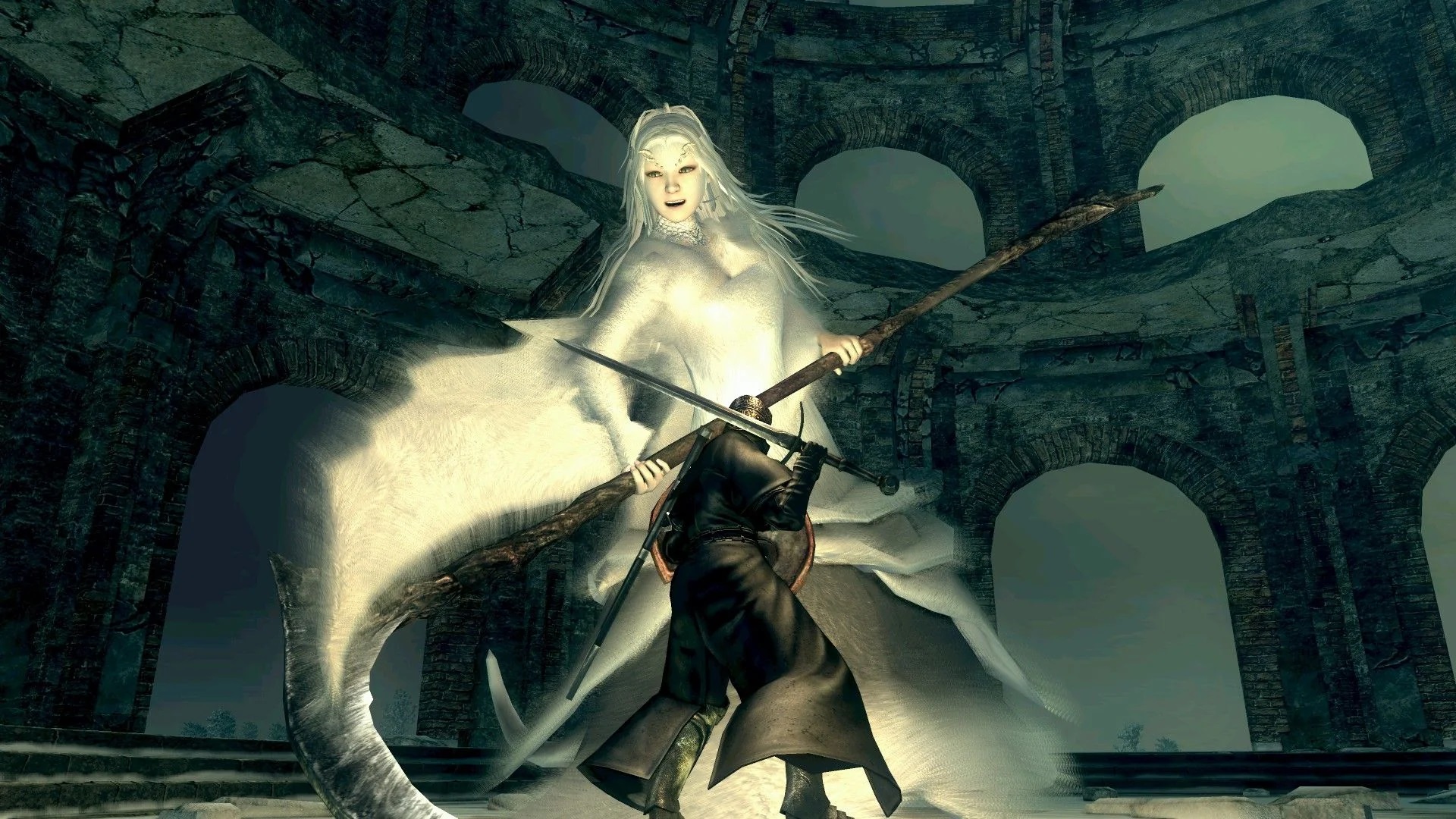
Priscilla is a crossbreed of a dragon—most likely Seath— and an unknown woman or goddess.
She was feared by the gods of Anor Londo and treated as an abomination due to her body being naturally infused with the occult power capable of killing them. She also possessed life-hunting powers, leading her lineage to identify her as "antithetical" to the order and life of the gods.
Her mere existence considered a "taboo", Priscilla was first confined in the Undead Asylum, and eventually banished from the realm of the Gods, and sealed away inside the cold and lonely Painted World, created by Ariamis with the purpose of granting her seclusion. The Painted World was protected by an order of Painting Guardians—such was the perceived threat she posed to the reigning Gods. Anor Londo benefited from the Painted World as a prison for the spurned; it served as a place to seal away dangerous artifacts, abominations, sinners and Hollows.
By the time she meets the Chosen Undead, Priscilla considers herself a guardian of the Painted World, which she characterizes as "peaceful," with "kind" inhabitants. She pities those trapped within the painting, as the outside world has treated them with hate and locked them away, like herself. She is not hostile to outsiders unless provoked, and will only ask them to leave in peace because they don't belong in there; she will also deny anyone interested in her.
Dark Souls III
At some point Priscilla became the "Lady" of the Painted World and its inhabitants, continuing to welcome the forlorn who were led into the cold world by the heretical tales of corvian storytellers. She gifted them great scythes in the image of her own Lifehunt Scythe which would come to symbolize a distant nostalgia for the Painting natives. The humanoid corvians who found refuge in the Painting formed a small village, complete with knights and a library,[where they developed a proficient understanding of the First Flame and the Dark Soul. Whenever their world showed signs of corruption, they used the Flame to "restore" the Painting, to avoid the fate of the stagnating outside world. For this purpose a "Father" was chosen among the corvians, who presided over the Flame in the Painted World to burn it when the time came, and whose successor would prepare the next painting by restoring it.
Priscilla likely became the progenitor of a line of World Painters, the extant one possibly her own daughter, to whom she imparted advanced knowledge on the First Flame and the Dark Soul. The current Painter seemingly has the ability to harness the Flame and the pigment of the Dark Soul to create Painted Worlds.
3 Painted World of Ariamis (Part 2)
It is possible to theorize that Gwyn had a relationship with Priscilla and from their union Gwyndolin was born, the last son of the king of the gods.
- Gwyndolin is the last child of Gwyn but Yorshka, a half-dragon, is his younger sister, confirming that they share a mother. Since both siblings possess draconic traits, their common mother should have possessed draconic traits herself for them to inherit them partially.
- Gwyndolin's proficiency in moon sorceries can be explained by him having inherited the unique magic of Seath's moonlight, a peculiar trait given the lineage of Gwyn otherwise connected to the power of the Sun.
- Gwyndolin's final thoughts of a "white girl", as he was devoured by Aldrich, allow the creation of a miracle that replicates the Lifehunt Scythe of Priscilla; as miracles are tales of the gods, it would mean that Gwyndolin had a special relationship with Priscilla and remembered her before his demise.
- Gwyndolin's legitimacy as a deity came only from the fact that he was the son of King Gwyn, implying that his matrilineage alone would not have had him considered among the deities, as she was not one.
- Gwyndolin being Priscilla's son, as she was hated and feared by the gods, would explain why Gwyn would dress, educate and raise him to be a female, as the king of the gods would not have wanted him to be able to ascend the throne with his dangerous lineage.
- Priscilla's body is biologically infused with occult power, and Velka is capable of manipulating this power to infuse the weapons of her priests.
- As Velka was considered a rogue/heretical deity by the other Gods, it would stand to reason that her offspring would exhibit certain traits of the occult. Velka was also known to enable her priests' experimentation with sorceries that drew on intelligence.
- The Painted World of Ariamis is closely tied to Velka, as many artifacts and enemies found here are related to her, and therefore, it's conceivable that Velka herself commissioned the painting in order to hide Priscilla.
- The structure inhabited by Priscilla resembles an old church, fitting for a half-god. It may also have been intended as a place of worship for Velka. Priscilla would later become the Lady of said world, perhaps inheriting the title from the would-be original owner, Velka. Even if Velka was not herself involved in the creation of the Painting, the tendency of Velka's artifacts and cultists to end up in the Painted World, which welcomed those without a place in the realm of Gods, hints towards some correlation between Velka and Priscilla.
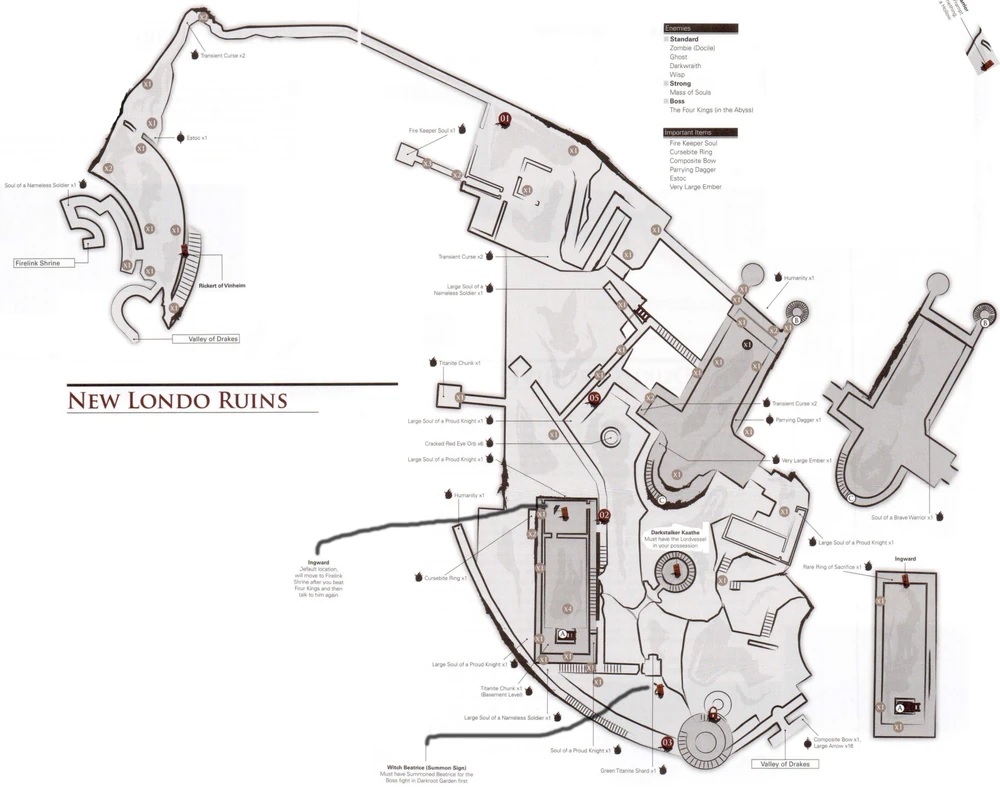
4 New Londo Ruins
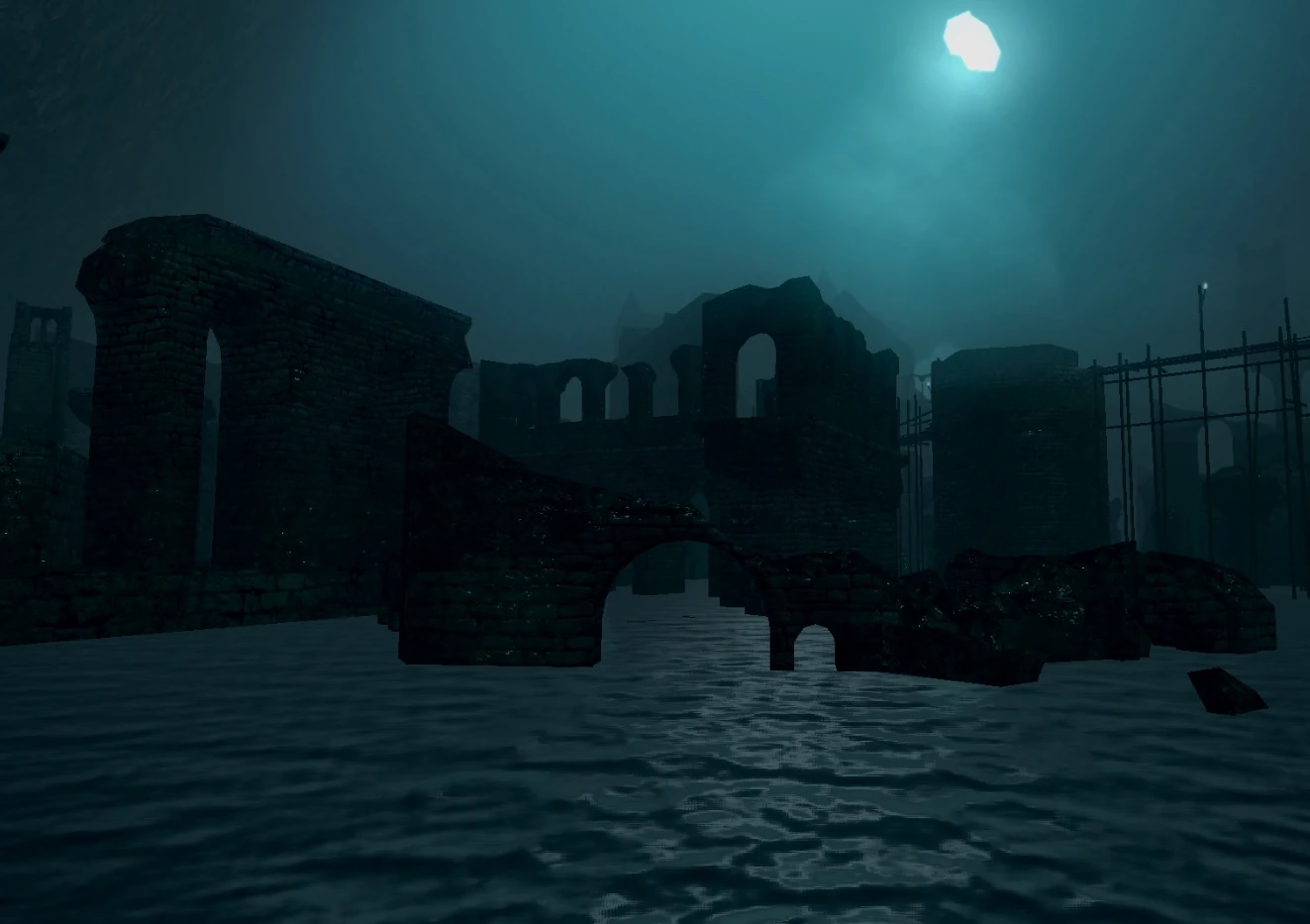
New Londo was a small country of humans close to Anor Londo, the city of the gods. When the Four Kings, the great leaders of the land were recognized for their abilities and foresight, Gwyn, Lord of Sunlight rewarded them with a fragment of his powerful Lord Soul and the title of kings, using his power to bind and hold close to him the powerful humans, as the god also allowed them to build their civilization near his city. Over time their city of humans grew to host countless lives and becoming a robust and flourishing culture. The advanced civilization even managed to develop healing sorceries that reduced bleeding and poisoning, like Remedy, an art unique to New Londo that was practiced by sorcerers called Healers. However, at some point, the First Flame began to fade out, leading to the emergence of the Curse of Undeath but the city continued to exist and function as an Undead city, implying a good governance by the Four Kings who managed to adapt to the change.
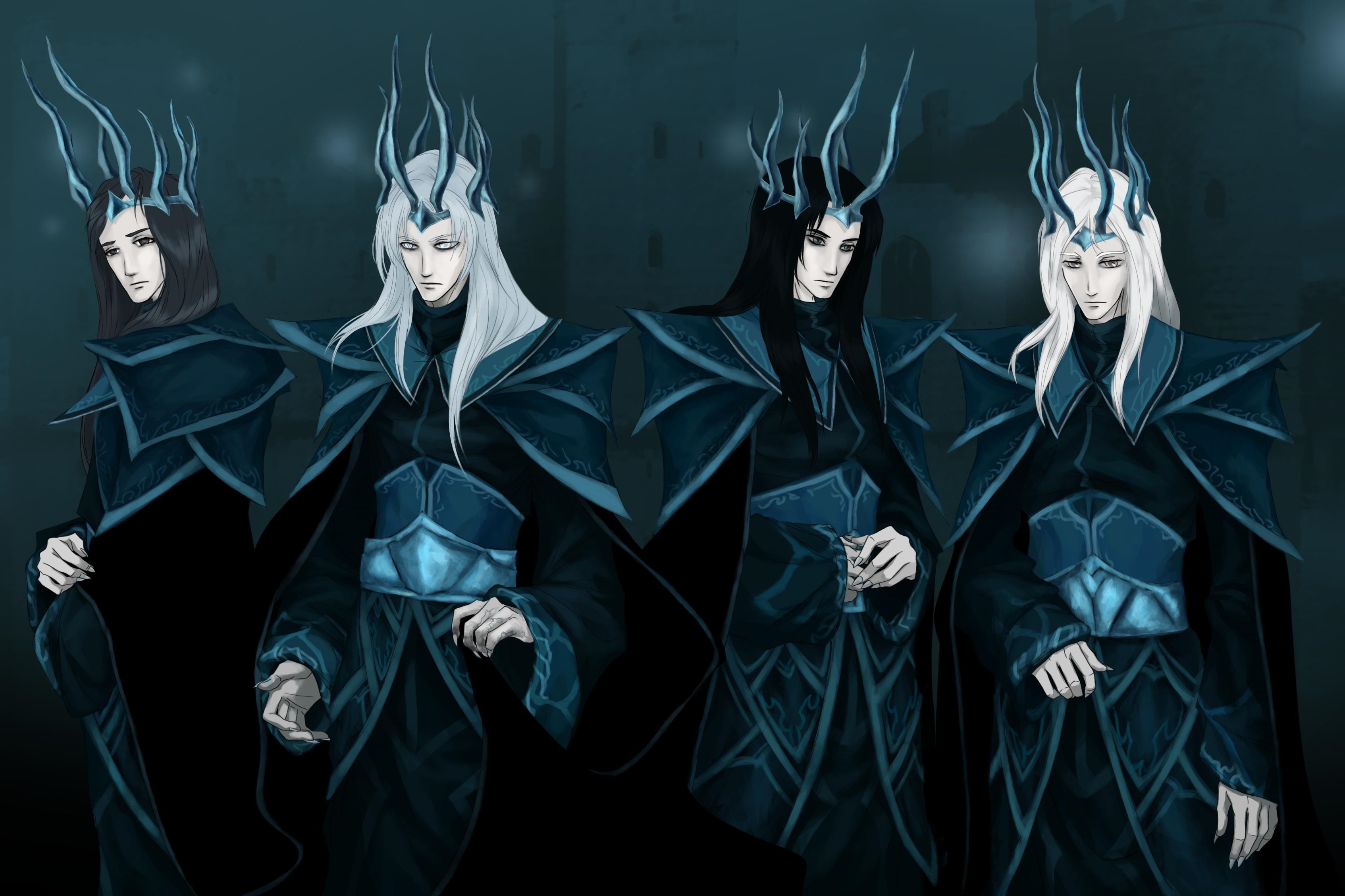
After Gwyn sacrificed himself to link the fading First Flame, the Primordial Serpent Kaathe began searching for a human strong enough to become the Dark Lord capable of leading humans and ushering in an Age of Dark. At some point Kaathe arrived in New Londo and managed to seduce the Four Kings to follow his ideals, teaching them the art of Lifedrain so that they could preserve their humanity even while Undead and so cast off the shackles placed upon them by the gods. But his dark influence did not stop with the kings; in fact, their entire army followed them. The knights of New Londo became Darkwraiths, servants of the Dark who learned the art of Lifedrain and used it to absorb humanity. As the Four Kings' were able to open an Abyss in the center of their city, their very bodies were mutated by their freed Dark Soul and the Darkwraiths' armor transformed too as they began to employ the Red Eye Orbs granted by Kaathe to seek humanity and plunge further into the powers of the Dark.
A nation of humans was now freed from the shackles of the Darksign and not only began to understand the powers of their Dark Soul but had an entire army at their disposal that shared this power. This represented an unparalleled threat to the gods of Anor Londo who branded the Darkwraiths as diabolical enemies of man and of every living thing. For this reason Artorias, one of the Four Knights of Gwyn, was sent to fight the soldiers of New Londo and was given a Silver Pendant to deflect the Dark of the Abyss in its magical forms. However this did not prove sufficient to cross the Abyss of the Four Kings and Artorias was forced to forge a covenant with the "beasts of the Abyss", obtaining a ring that would allow him to cross the Abyss but also cursing his Greatsword. Artorias thus became known as the "Abysswalker" and hunted the Darkwraiths but failed to eliminate the Four Kings and thus eliminate the Abyss of New Londo.
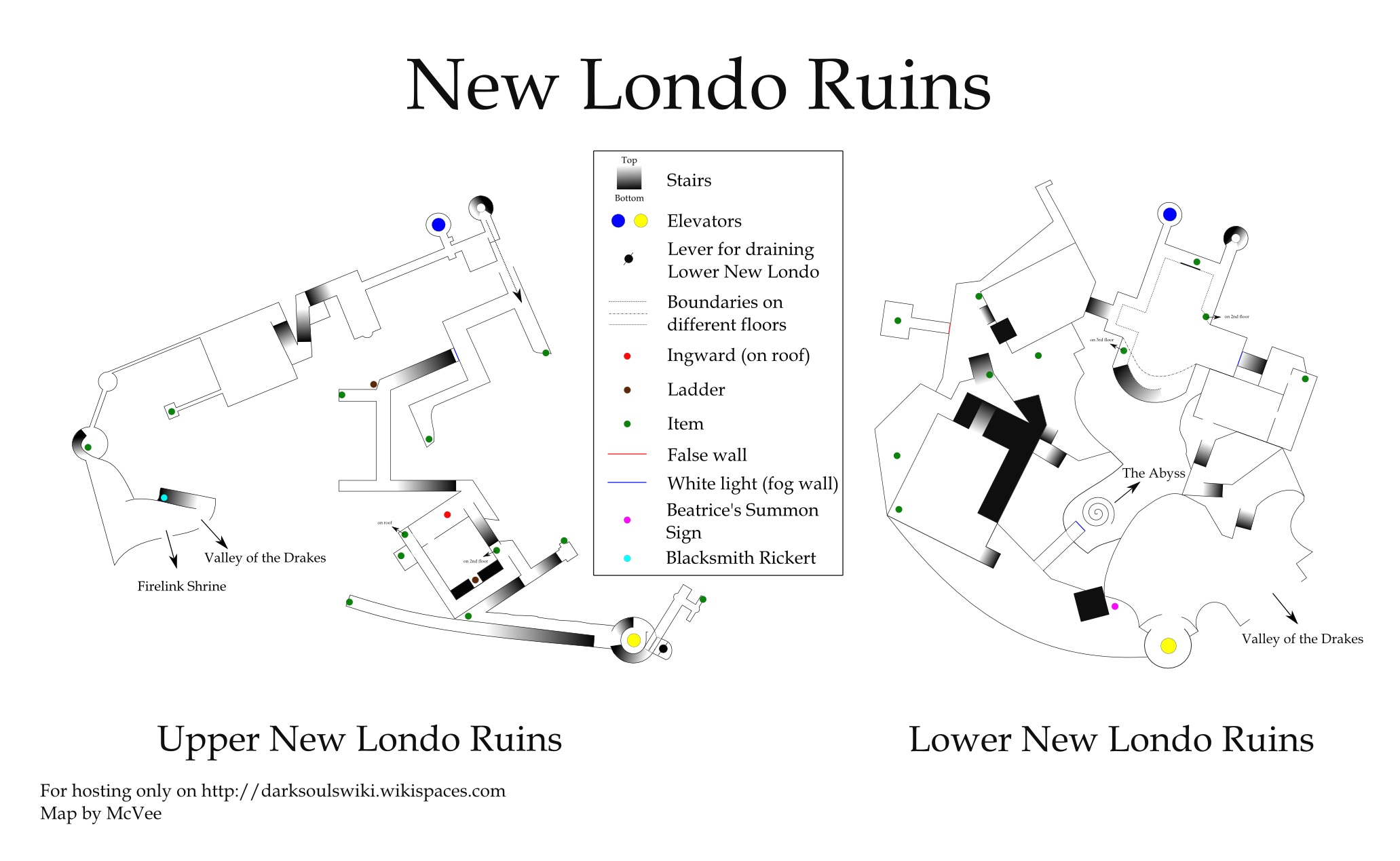
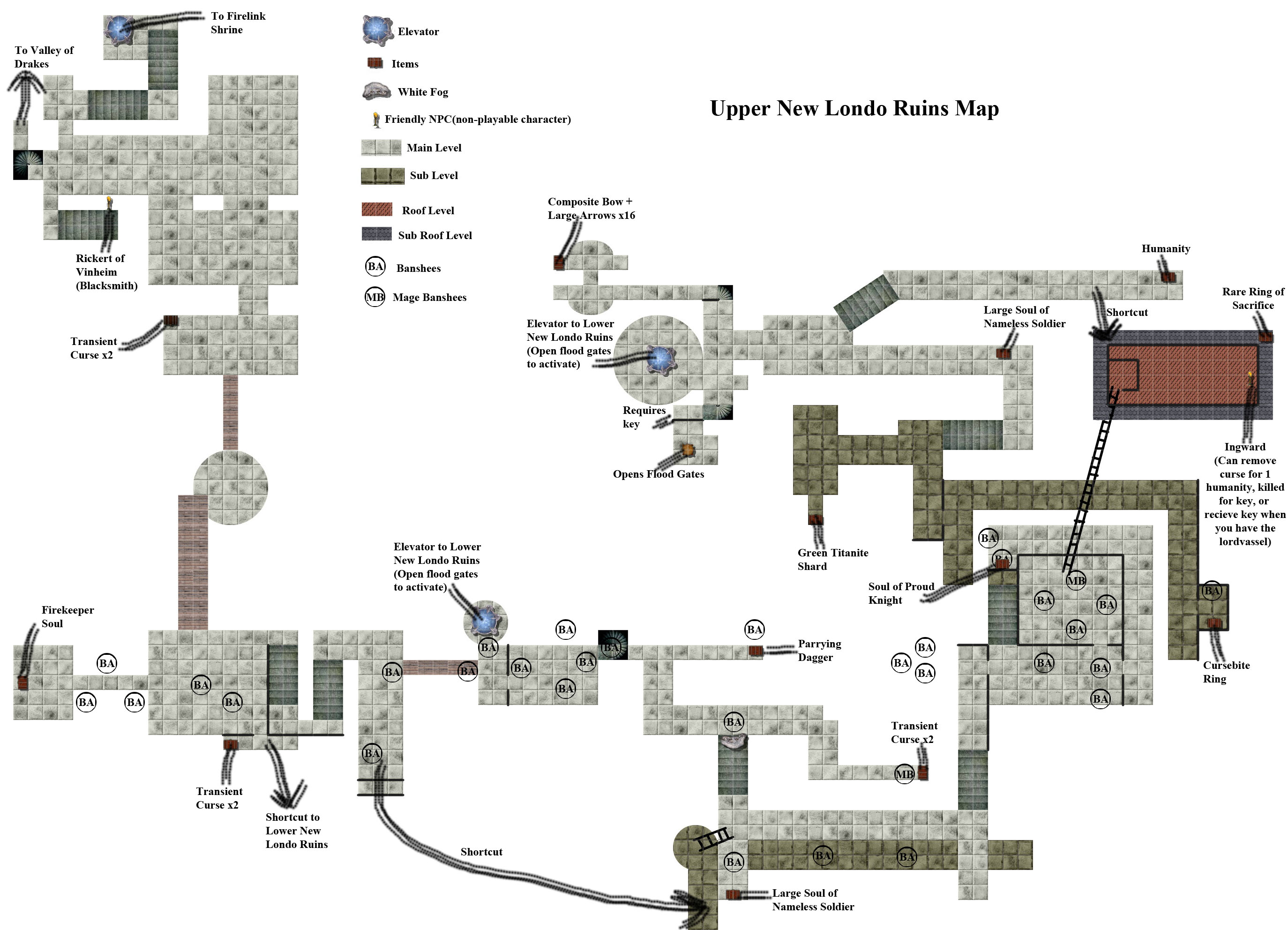
Having failed to dispose of the dark threat, an agonizing and terrible decision was made: flooding the entire land of New Londo despite the realization that countless lives and the entire culture of the country would be lost. For this task, sorcerers were called and the feat was accomplished without even evacuating the city's civilians, sealing away the Four Kings, their Darkwraiths and the entire population with them, the victims were thus cursed] and became Ghosts roaming the ruins of their country, making mincemeat of any being within blade’s reach. The sorcerers who carried out the deed remained on site with the task of becoming guardians of the magic seal and the floodgates built around the city, wearing crimson robes that symbolize their resolve to keep the seal shut forever and their atonement for all who were sacrificed. Over time, however, two of the three sorcerers abandoned New Londo upon tiring of their duties and leaving Ingward alone, to wait for a Chosen Undead strong enough to obtain the Lordvessel and challenge the Four Kings.
Although decades have passed since New Londo was reduced to rubble and submerged, the Four Kings remained alive in their Abyss, while the Darkwraiths continued to wait and patrol the area. When a Chosen Undead was able to ring the Bells of Awakening, overcome the challenges of Sen's Fortress and reach Anor Londo thus being rewarded with the Lordvessel, they would be guided by Kingseeker Frampt to find immense souls to fill the receptacle and link the fading First Flame to succeed Gwyn in his sacrifice. The Undead would thus have proved their strenght to Ingward to open the floodgates of the city and find a way to traverse the Abyss until they reached the Four Kings, challenging and killed them to obtain the fragment of a Lord Soul they still possessed.
Dark Souls II
Although the Four Kings had been defeated, the seal that contained the ruins of New Londo and the water that had submerged it had been removed and as a result the remaining Darkwraiths were free to spread across the rest of the world, continuing to wreak havoc. Although these knights subsumed by dark never reached Drangleic in strength, knowledge of their existence has come to the region through foreign legends as poor souls who chased the art of Lifedrain and were able to freely manipulate the Dark, implying that they attacked the countries around Drangleic.
Despite this, the residuals sins of these knights who had succumbed to the temptations of dark reached Drangleic in the form of Cracked Red Eye Orbs. These artifacts were actively employed by the covenant of the Brotherhood of Blood to invade other locations and times and collect the blood of other Undead. Although this cult followed the same combat and invasion philosophy as the original covenant of the Darkwraiths, it was also centered around the mysterious figure of the god Nahr Alma, God of Blood and encouraged its followers to reject the world and follow a path of constant struggle and bloodshed, indulging in their hedonistic desires for violence to collect blood and offer it as a sacrifice for their god instead of seeking to understand the Dark powers of the humans.
The knowledge of the ancient healing sorceries of New Londo somehow survived and reached Drangleic where they were employed this time through miracles like Caressing Prayer, a text developed only around the kingdom of Vendrick and whose authenticity as a sacred text was even questioned, that was able to purify the body and remove all poison of the caster and those close to them.
Dark Souls III
Although countless centuries had passed since the fall of New Londo to the dark, remnants of the Darkwraiths continued to exist as dark invaders, wearing armor now worn to the point of looking like they may crumble to dust at any moment, and they reached the region of Farron which was converging toward that of Lothric.
By this point the name of New Londo itself had been lost but the Red Eye Orbs rooted in the small country continued to be used. In fact, the followers of Rosaria, Mother of Rebirth, as members of the covenant of Rosaria's Fingers, would employ them to invade other locations and times and collect the Pale Tongues from other Undead and offer them to their speechless goddess.
The ancient miracle of Drangleic times which conveyed the knowledge of the healing sorceries of New Londo, in the times of Lothric is associated with Caitha, Goddess of Tears in the form of the miracle Caressing Tears, the tale of the many deaths surrounding the goddess that was able to cure from bleeding, frostbite and poisoning.
4 The Abyss
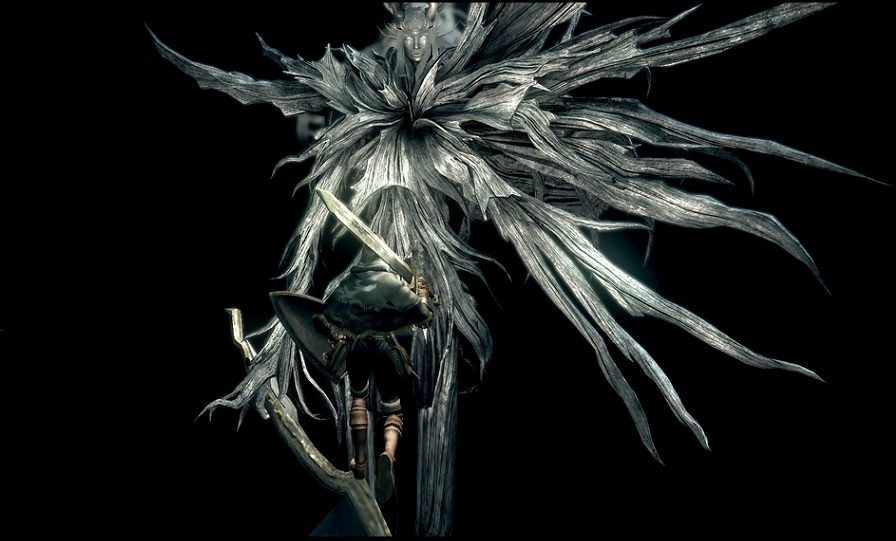
The Abyss is a realm of Dark born from the Dark Soul or its fragments. It's an ecosystem capable of creating life, as generated by one of the core components of the First Flame, and of expanding while slowly absorbing everything in its path; it is uninhabitable to all beings aligned with Fire including the Gods, as they require special equipment or protection to prevent corruption (both in the spiritual and physical sense). In contrast, any beings aligned with or indifferent to the Abyss (such as Humans) are able to roam it with no risk of harm or corruption.
Knight Artorias famously traversed New Londo's Abyss and hunted the Darkwraiths therein. He was protected by the power of a magical ring, which he gained after making a covenant with the beasts there. The ring prevented him from being swallowed by the void, but it led to his sword becoming cursed. In recognition of his actions, he was awarded one of Anor Londo's treasures, a Silver Pendant that allowed him to repel Dark sorceries; eventually he traveled to Oolacile to combat the threat of Manus, the lord of the Abyss. He ultimately failed in his mission he was overtaken by the dark, leaving behind his companion Sif.
In Dark Souls the Abyss is located at the end of the New Londo Ruins. To reach to the Abyss, the floodgates must be lowered and the Covenant of Artorias ring, a reward for killing Great Grey Wolf Sif, must be worn. After climbing down a spiral staircase within a tower, the path will abruptly end, making it necessary to descend into the darkness of the Abyss.
The DLC Artorias of the Abyss allows us to explore a more recent Abyss, despite being located in a past era, deep within the dungeons of Oolacile. (wip)
Dropping into the Abyss will immediately trigger the area boss, the Four Kings, to spawn. After the Four Kings have been defeated, a bonfire will appear and can encounter Darkstalker Kaathe. At this point, the Abyss will cease being hostile, making the Covenant of Artorias ring useless.
As a concept, "Abyss" is the name given to both a force that consumes or corrupts most forms of life, and to the areas in which it dwells; it is tied to the Age of Dark, and also gave birth to a twisted offshoot known as The Deep.
It is recommended not to access the Firelink Altar through the Darkstalker Kaathe. You should wait until the end of your journey, as it is the final area.
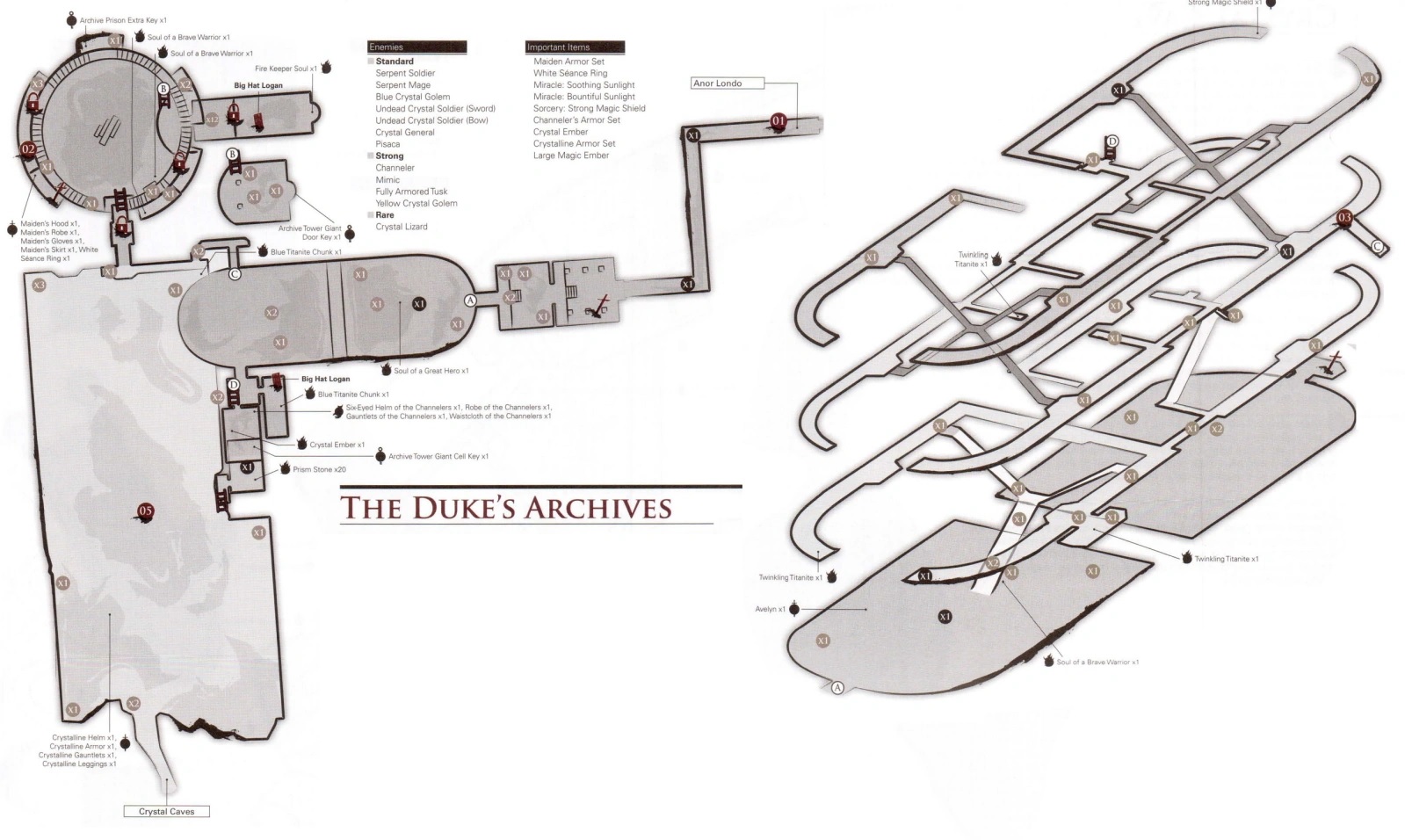
5 The Duke's Archives
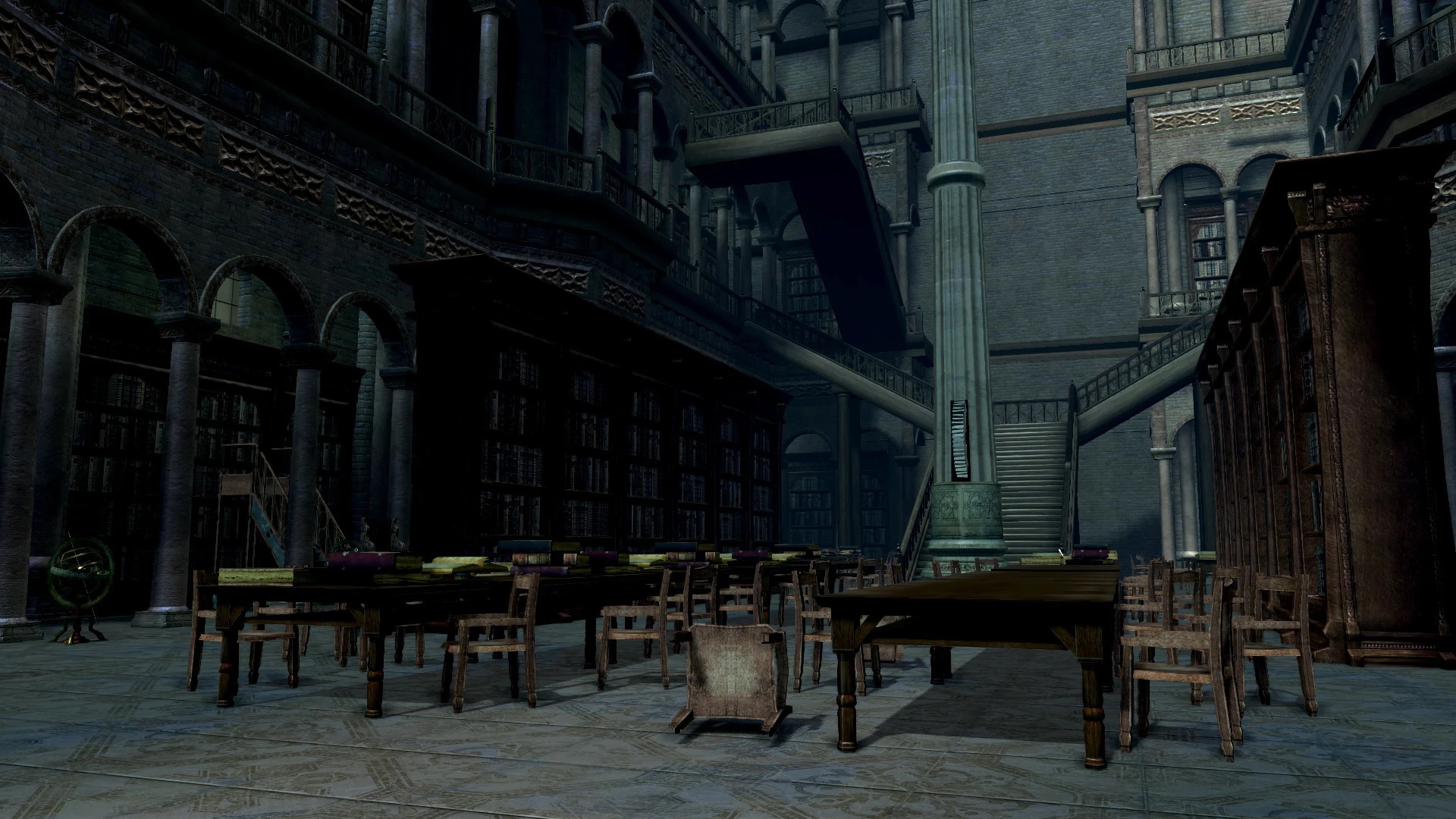
The library is home to Seath the Scaleless, and was granted to Seath by Gwyn, along with a Bequeathed Lord Soul Shard, as a reward for aiding in the birth of the Age of Fire.
It is here that Seath delves into his experiments and studies. The Six-Eyed Channelers found here are servants of Seath, seeking and kidnapping inhabitants of Lordran for his research. The Pisaca are among the results of these experiments.
Archive Tower was turned to a prison; once it had a casual role of storing books. Cell below, now inhabited by Pisacas, once held countless maidens. Currently it is empty, apart from few key persons. Prison guardians are serpent men.
5 Crystal Cave (Part 1)
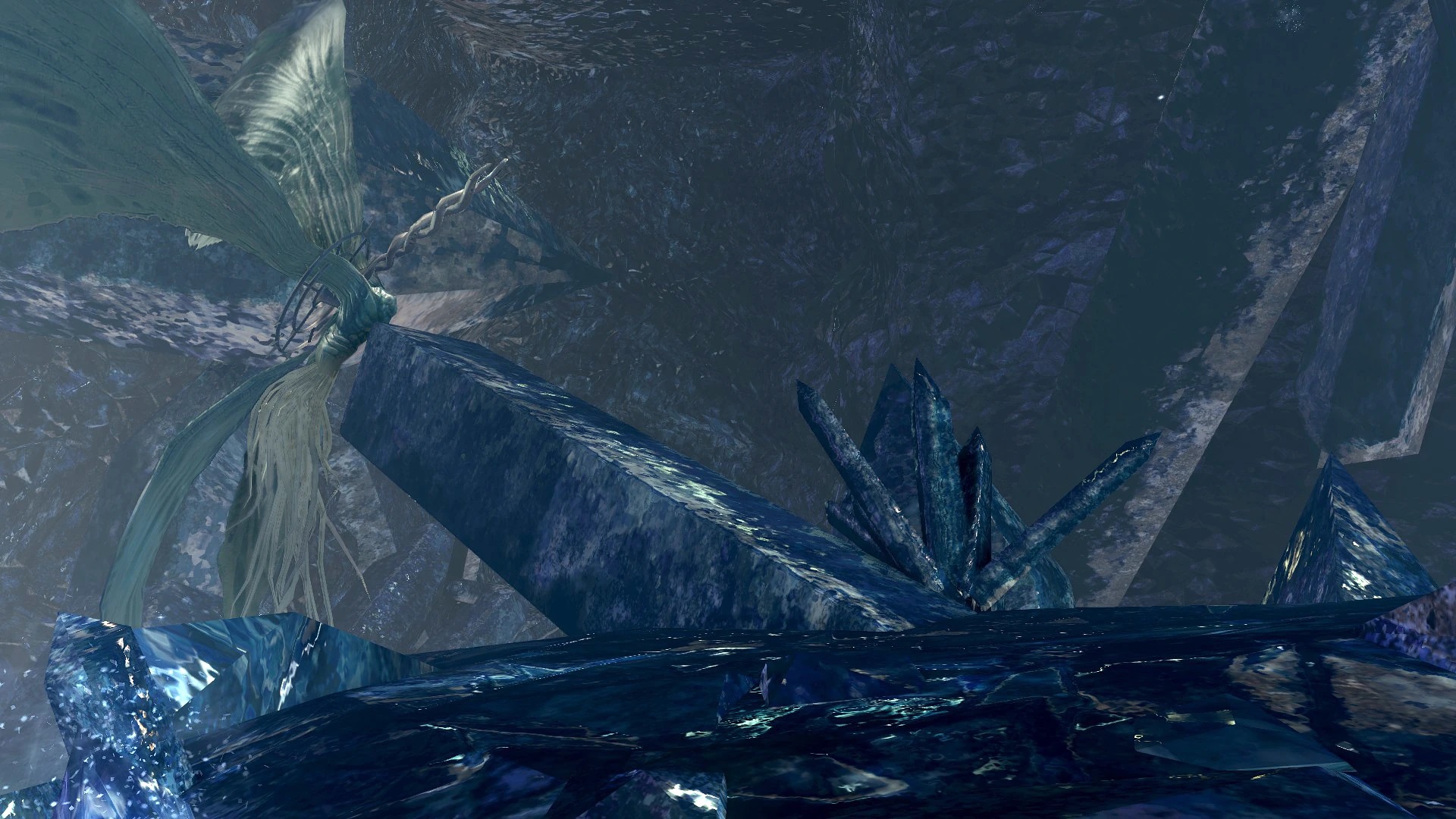
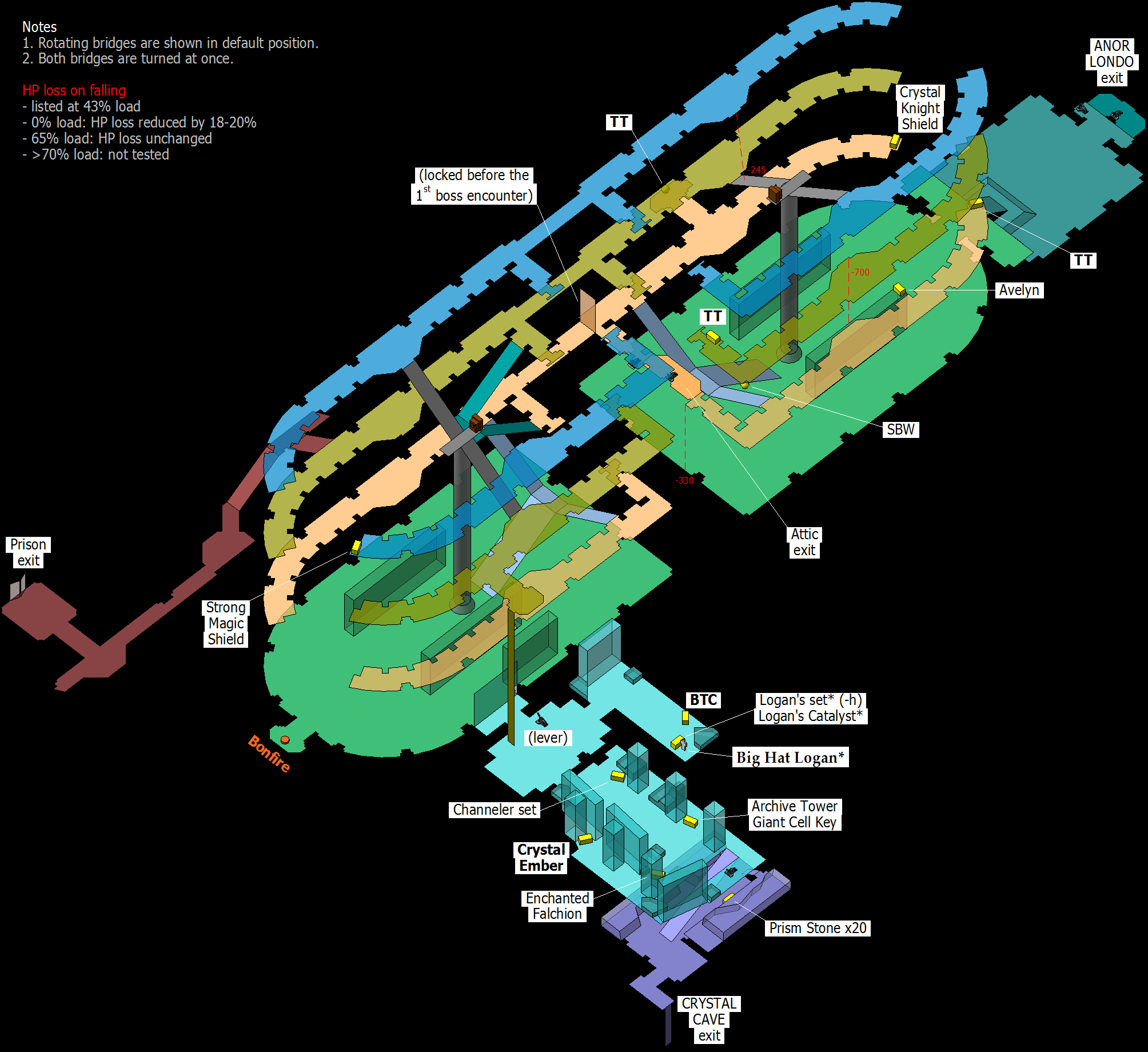
This area is characterized by walkways of which some are invisible. Snowflakes falling from the ceiling and orange guidance signs etched from other worlds can guide the player on these walkways. The player can also shoot arrows at the air, or drop Prism Stones to see if they stick. The enemies may prove to be an annoyance when on narrow crystal walkways. This makes it easy for the player to fall off with or without being hit.
Crystal Cave is a good location for farming Twinkling Titanite because it's a common drop from Giant Clams, especially with raised Item Discovery. Killing Seath first to unlock the bonfire in the boss area just next to the cave with a group of Giant Clams makes for easy farming.
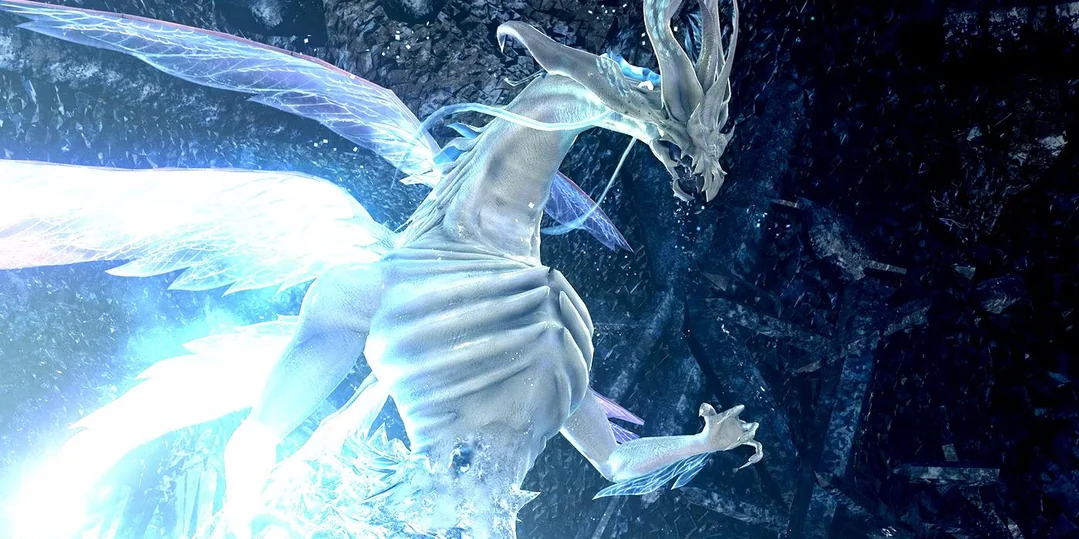
Seath is a descendant of the primordial archdragons who inhabited the world when, before the appearance of the First Flame, the world was composed only of grey rocks.
Seath was born with unique characteristics compared to the original archdragons, lacking the rock scales that made his brethren immortal. In addition, Seath's pale and deformed body was infused with the magical power of moonlight, through the study of which he created weapons that catalyzed it.
At some point, the Four Lords who had found immense Lord Souls and built their civilizations underground emerged to the surface with the intention of waging war against the Dragons and conquering the world for themselves. Seath decided to betray his race to ally with Gwyn, Lord of Sunlight, and help the Lords in the war. He was instrumental in the gods' eventual victory, revealing his brethren's scales to be the source of their immortality, which could be stripped off with the use of lightning. The triumphant Lords would exterminate much of the Ancient Dragons, cementing their rule. Seath would also pillage the Ancient Dragons' sacred treasure, the Primordial Crystal, the centerpiece of his efforts to achieve immortality.
Through their successful alliance against the Everlasting Dragons, Seath became a close friend to the Lord of Sunlight and was amply rewarded for his indispensable contributions to the war. He was wed into Gwyn's family as his son-in-law, inducting him into the nobility of the Gods, and was bestowed the honorific of "Duke". Gwyn further gifted Seath a fragment of his powerful Lord Soul and the Royal Archives, an enormous library towering above Anor Londo, which contained all the knowledge available to the city of the gods, leaving the dragon the freedom to do his own research; in time, the archives became so synonymous with Seath that they became known as "The Duke's Archives" instead.
Seath eventually sired a humanoid hybrid daughter, Shira. Although the mother is never stated explicitly, Shira is both "one whose veins coarse with royal blood", and a "descendant of Gods", making her likely mother Seath's spouse who was a relative of Gwyn. Filianore became the sworn knight and personal handmaiden to Princess Filianore, Gwyn's last daughter, and the two, together with the dragon Darkeater Midir, would be forever sent away to the Ringed City, the hidden city Gwyn gifted to the humans who helped him end the Age of Ancients, so that the three would keep the Dark within at bay. Shira would remain in the Ringed City for the rest of her life, dutifully guarding Filianore over countless ages, although she would always take pride in being Seath's daughter.
Another likely daughter of Seath was Crossbreed Priscilla, a half-dragon hybrid whose dragon attribues are reminiscent of him; as she is outright described as a bastard, she would have been conceived out of wedlock. Priscilla was feared by the other gods and treated as an abomination due to her Lifehunt powers and unnatural origin. Eventually she was drawn away into the cold and lonely Painted World of Ariamis, trapped within a great canvas.
Seath seemingly had little interest in politics or pleasure, choosing to immerse himself in research of the scales of immortality that the ancient dragons possessed but he lacked. His Archives became a magnificent pool of tomes and knowledge, the fruits of Seath's superior wisdom and unsound fixation over achieving the immortality that was denied to him at birth.
Seath's research focused on souls, seeking ways to manipulate them and draw out the power within, mainly through sorcery. Seath, in possession of the Primordial Crystal, noticed the peculiar connection between crystals and souls, and the way in which this element could be used to best catalyze their power, as crystals represented an ideal medium to create a bond between souls and objects. Seath would thus pioneer the Crystal Sorceries, a powerful branch of sorcery. The revelation was the beginning of Seath's obsession with crystals, which became the focus of much of his experiments. He managed to create a Crystal Ember capable of infusing weapons with the power of the crystals and passed this knowledge on to the Giant Blacksmith of the gods.
The pale dragon's experiments were successful in animating Crystal Golems with souls and infusing Undead Soldiers with crystals. To adequately supply his research, the cave that housed his Primordial Crystal was gradually crowded with crystals, nearly overtaking the Archive's inner gardens. Seath also created the soul of the Moonlight Butterflies, mystical creatures that emitted crystallic power and Seath's moonlight as sorceries. Seath also managed to crystallize his own magical power of moonlight, creating a Greatsword that catalyzed it.
As a nobleman on par with the gods, Seath also had personal servants. His Channelers, trained sorcerers that became his eyes, hands, and feet, would reach and see what the dragon could not, and helped him in his research. The Channelers wore outfits representing Seath, with the six eyes on their helms meant to "compensate for Seath's lack of sight"; the nature of his lack of sight, and when he became impaired, are unknown.
At the culmination of his quest, Seath was able to achieve what he had always sought: immortality through the Primordial Crystal. By connecting his body and soul to the powerful crystal, the pale dragon gained insulation from death, so that no mortal blow could affect him and his wounds would close promptly, as long as the crystal was intact. His very breath became a powerful crystal breath that emitted a lethal curse.
Although the white dragon achieved his prized immortality, the arduous process had consumed him. The loneliness within him, the bane of his existence since his conception as a malformed dragon, was only fueled by the countless hours wiled away in solitude seeking his "cure"; the void within him was tragically left unfulfilled. The power and status he had since attained remained hollow, against the envy and resentment he harbored first towards his brethren, and then the world at large. His experiments grew more and more twisted as the inescapable reality of his condition drove him insane. The Archives were soon reduced to a prison housing the abominations of Seath such as the Serpent-men, unwitting jailers of volumes of scientific works, and the Pisaca, serpentine women who were once holy maidens of Gwynevere, before Seath's experiments transformed them. Although Gwyndolin, as the last remaining deity in Anor Londo, did not punish him for this heinous act, Seath was confined to his Archives, declared a forbidden area and demarcated by a divine magical barrier, so that no one could approach the Archives. Meanwhile his Channelers, steadfast in their service of the Duke, continued their travels, kidnapping subjects for his experiments.
5 Crystal Cave (Part 2)
At some point after Gwyn linked the First Flame and Gwyn's firstborn son was dethroned and exiled, nearly all of the other deities abandoned Anor Londo and moved to an unknown location. Seath remained in his Archives, now completely estranged from the world and obsessed with his research.
When a Chosen Undead was able to ring the Bells of Awakening, overcome the challenges of Sen's Fortress and reach Anor Londo thus being rewarded with the Lordvessel, they would be guided by Kingseeker Frampt to find immense souls to fill the receptacle, and link the fading First Flame to succeed Gwyn in his sacrifice. The Chosen Undead would reach the Duke's Archives, where they were initially defeated and imprisoned by the immortal dragon. Managing to escape, the Chosen Undead would cross the dangerous Archives and reach the Crystal Cave where the Primordial Crystal was kept, source of the pale dragon's invulnerability. Seath would soon arrive at the cave to defend his crystal, but following the crystal's destruction would be slain by the Chosen Undead, who gained possession of Seath's fragment of the Lord Soul.
Dark Souls II
In the region and times of Drangleic, Seath's name had been forgotten, merely referred to as an "Old One"; the legend of a pale dragon was nonetheless passed on in various locales, even if each account was fragmentary. His Moonlight Sword that shone like the brilliant rays of the moon and was born from his white being had become a thing of the oldest legends, rarely spoken of. The smithing techniques of Seath that used souls to create artifacts were preserved by a clan of Crow Demons, though they remembered the dragon only as a white grotesque being that existed in the distant past.
Following the death of their creator, multiple moon butterflies survived over the centuries, migrating to Drangleic and mutating into lesser Great Moths and developing poisoning abilities. They remained rare and mysterious creatures that appeared only on full-moon nights in winter, and whose larvae were never once spotted. Other creations of Seath that reached Drangleic included Manscorpion Tark and Scorpioness Najka: Two of Seath's many experiments on humans, the pale dragon's crossbreeding experiments had seemingly cursed their souls into being together. The two were well aware of being the product of Seath's madness and his obsessive attempt to achieve immortality.
The structures of Seath's Crystal Cave endured and "drifted" to settle underground in southern Drangleic, the power of the white dragon lingering on as radiance within the crystals. The crystals infused with the souls of Seath became known as "Brightstones" and the kingdom of Olaphis mined these gems, refining and polishing them to be incorporated into their staves and rings, used as amplifiers for their sorceries.
Centuries after the fall of Olaphis, the territory of the Brightstone mines came under the control of the Duchy of Tseldora. Under the reign of Vendrick, the Duke of Tseldora rediscovered the precious crystals and, starting to extract and sell them again, made a fortune with brightstone. The citizens of Tseldora flourished thanks to the gem trade, and accumulated luxuries as well as knowledge of witchcraft. However, Seath's obsession that radiated from these crystals would bewitch the town inhabitants with a burning desire, insatiated by the prosperity they acquired, always searching for something they lacked.
Eons past his demise, the soul of the Paledrake remanifested in Drangleic, albeit in a lessened form, and possessed a mere spider. Its shape and condition notwithstanding, the obsession within "the Writhing Ruin", as it came to be known, led the spider to doggedly seek out its desires. Namely, it sought its "home" deep inside the mines of Tseldora, the old crystal cave of Seath, and where the petrified corpse of an ancient archdragon was found, and made it into its lair.
The Duke of Tseldora, continuing to mine the brightstone, discovered the stone body of the archdragon, as well as the spider possessed by Seath's soul. He eventually built his hidden chamber among the ruins deep within the mines, amassing a large library and conducting research on sorcery. Since he was an oddball who loved and was fascinated by spiders, the Duke eventually found the one possessed by Seath and decided to take it in as his pet, naming it "Freja" and locking it in a cage in the library where he led his studies. "Freja" eventually escaped from her cage and the numerous Parasite Spiders of its lair began to swarm the town of Tseldora, overrunning it and taking control of the bodies of their inhabitants as their hosts, while the Duke, driven mad, simply remained to gaze at their infestation with satisfaction. The spider haunted by Seath thus returned to the depths of the mines next to the petrified body of the ancient dragon and began to accumulate the souls gathered in the lands of Tseldora, absorbing them from people until they grew immensely. Though Freja was ultimately slain, Tark was doubtful it would be the end of Seath.
Dark Souls 3
By the era of Lothric, Seath was still widely considered the "pale dragon" of legends even by the sorcerers of Vinheim, though his crystal sorceries were all but consigned to legend.
There were some who still upheld Seath's legacy: The Crystal Sages, twin scholars who considered themselves the spiritual successors of the legendary grand sage Logan, came to possess the Crystal Scroll containing the sorceries and research of the pale dragon, which lead to Logan's records of Crystal Sorcery. The two sages were thus able to carry on this branch of sorcery, allowing them to replicate Logan's discoveries that utilize the power of crystals to their fullest as a medium for souls thanks to his "enlightenment" in the Regal Archives of Seath.
At some point the Crystal Sages reached Lothric and became the spiritual guides of the scholars of the Grand Archives. The Crystal Sages introduced to Lothric not only crystal gems but also the heretical belief in the pale dragon Seath and his mad knowledge. The sages would thus continue to work on their research within the Grand Archives, even taking Daughter of Crystal Kriemhild as their pupil, and crafting weapons and casting tools that used the power of crystals to enhance their magical power, representing how the fruits of the lifetime of research had advanced to an impressive level and still followed the works of the pale dragon. The Grand Archives would grow into an enormous structure housing volumes of research on Seath's crystal sorceries.
However, the knowledge within the tomes, said to "[all too easily] wash away its inquirers' anchors of reason", posed a threat to the sanity of the scholars. The profound research into the nature of the soul that once drove Logan into madness was likely contained within the Archives. The "foulness" that permeated the books manifested physically as well, in the form of ghostly and pale limbs that attacked and cursed those who came too close.
In the final years of Lothric's kingdom, King Oceiros, frustrated by continuous failures to find a worthy Champion, turned to the cursed knowledge of the Grand Archives. Here he found the twisted worship of Seath, developing a fascination for the Pale Dragon and the secrets of his moonlight. His newfound devotion was testified by his dragonscale ring, which he claimed protected him from his enemies, and his army's usage of shields decorated with a white dragon.
5 Crystal Cave (Part 3)
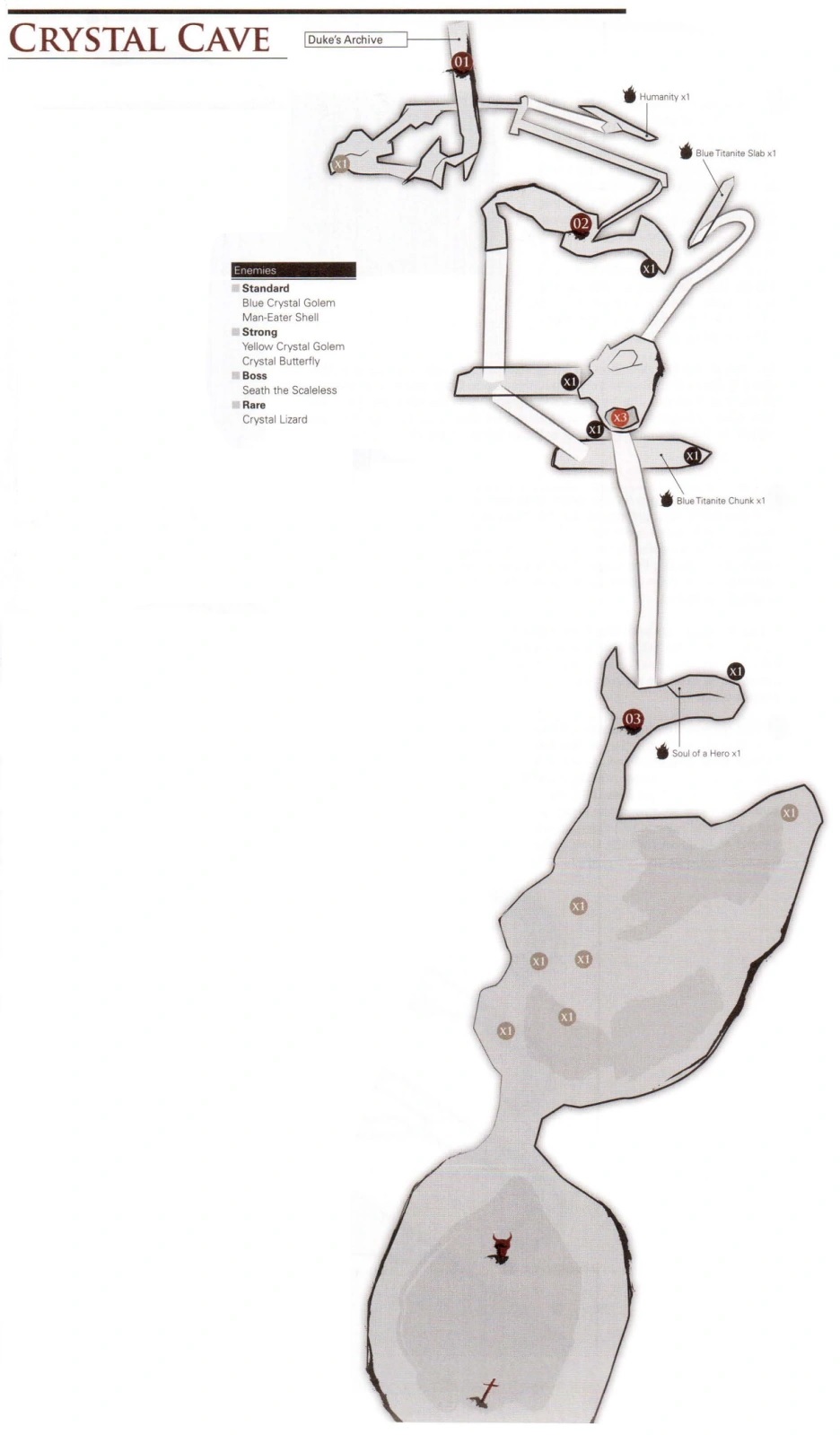
6 Demon Ruins
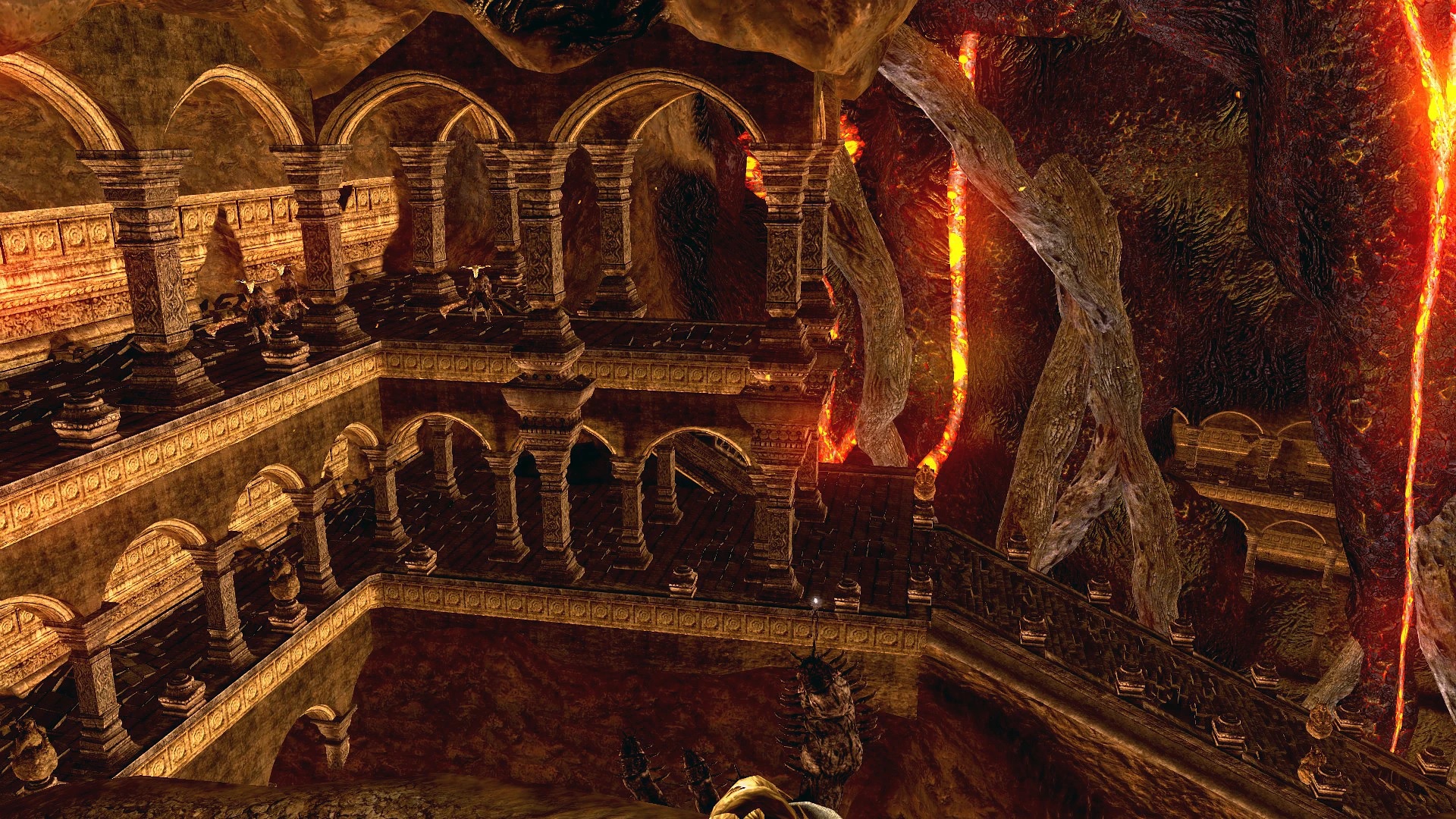
Found shortly after Quelaag's Domain. The Demon Ruins lead to Lost Izalith; however, Lost Izalith cannot be accessed until the player has retrieved the Lordvessel from Anor Londo and placed it in the Firelink Altar.
On arrival, most of the area is flooded with lava until the Ceaseless Discharge is slain. Once the lava is drained, the lower section of the area may be accessed, and it is here that the route to Lost Izalith lies, initially blocked by the Lordvessel-related orange fog gate.
The area just after the Demon Firesage has an elevator that will transport the player back up to the Bell of Awakening in Queelag's Domain.
Ceaseless Discharge is the youngest child and only known son of the Witch of Izalith. However he was born with sores inflamed by the lava flowing in Izalith and so his older sisters, the witches of Izalith, gave him a magical ring to ease his pain.
Around the same time, Izalith was experimenting with her Lord Soul and the power of fire and souls and at a certain point, driven by ambition and arrogance, she tried to create a "First Flame" of her own, using her own Lord Soul as a basis to make a power similar to the primordial force that had brought life into the world. The experiment, however, was not entirely successful because the result was a Flame of Chaos, an unstable power that the witch was unable to control. Izalith herself was initially consumed by it and became a beast of chaos fire along with two of her daughters in the process transforming themselves into a "Bed of Chaos". This creature, fueled by the power of the Flame of Chaos, became a seebed for a new life form: Demons.
Unfortunately, this affected the son of Izalith too and he became the first demon to manifest itself and transformed into Ceaseless Discharge, dropping his ring in the process. The Centipede Demon spawned where it fell. As the first demon, the Flame of Chaos inside his body was still unstable, leaving it to burn him constantly. Izalith and her daughters managed to stabilize the new power they had created and began to generate the first real demons, life forms with stable bodies and capable of controlling the flame of chaos within each of them.
After Izalith lost control over the Flame of Chaos that devoured her city and some of her daughters managed to escape it, Ceaseless Discharge managed to survive the war that the Silver Knights of Gwyn, Lord of Sunlight waged against its kind and he remained to protect the ruins of its home, gazing up at where his remaining sisters live, as the only source of comfort in his pitiful, painful existence is the belief that they are watching over him.
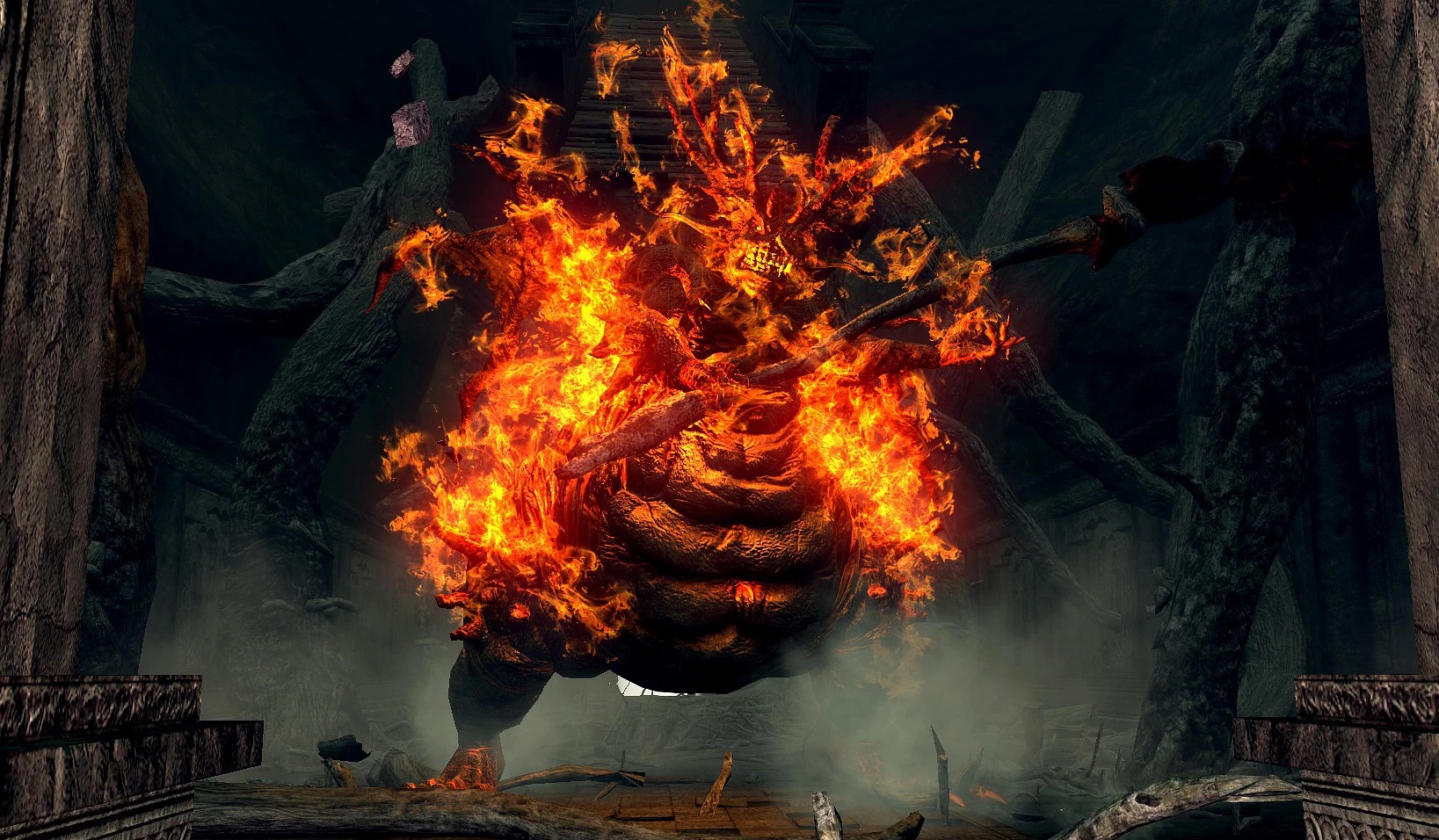
The Firesage Demons were the first generation of demons spawned from the Bed of Chaos, the entity that appeared following the attempt of the Witch of Izalith to make a power similar to the First Flame using her Lord Soul. The attempt was successful and she create the Flame of Chaos but Izalith and her powerful soul became a seedbed for a new lifeform: the mother and source of all demons. While the very first demon, Ceaseless Discharge, was a monstrous and unstable mutation of a son of Izalith while her newly created Flame of Chaos was still unstable, the Firesage Demon is one of the demons that were generated after Izalith and her daughters managed to stabilize their new flame, thus gaining a more defined body and control over the power of chaos inside its body. These new creatures learned to coexist with the already present society of Izalith, becoming "demon priests" of the Flame of Chaos and Izalith and even going as far as to learn the primordial flame sorceries developed by the Lord and her daughters. After Izalith lost control over the Flame of Chaos that devoured her city, this Demon Firesage managed to survive the war that the Silver Knights of Gwyn, Lord of Sunlight waged against its kind and it remained to protected its domain inside the ruins of its home, still wielding its Demon's Catalyst and retaining the knowledge of the now lost flame sorceries.
The Chosen Undead encountered the Demon Firesage in the Demon Ruins, after they had placed the Lordvessel at the Firelink Altar, in their mission to destroy the Bed of Chaos and obtain the Lord Soul of Izalith contained within it. They proceeded to fight and slay the demon in combat thus gaining access to the ruins of Lost Izalith.
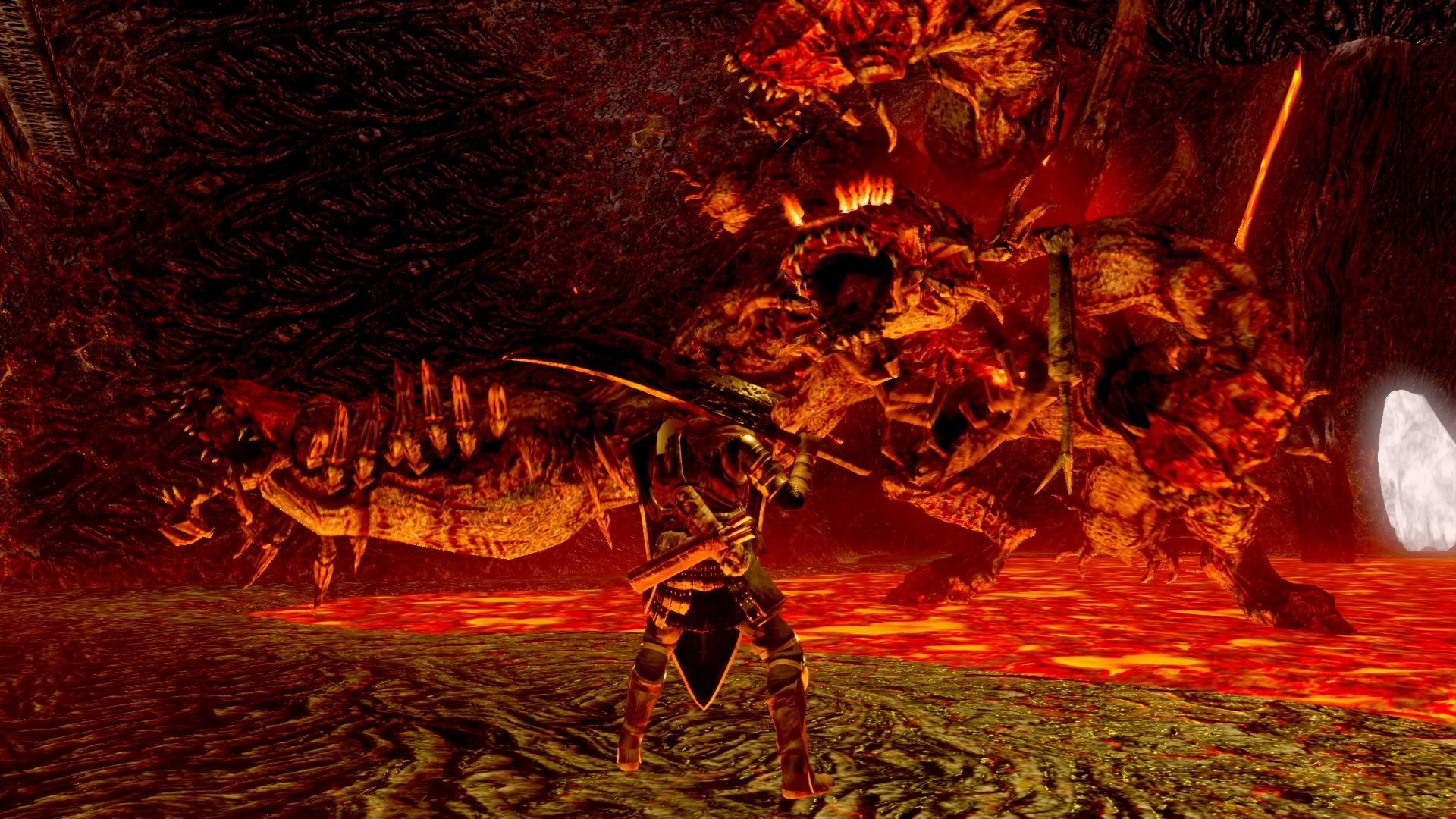
Ceaseless Discharge, the only son of the Witch of Izalith, was given the Orange Charred Ring by his sisters in an effort to presumably lessen the pain of his lava sores. However, he mistakenly dropped it due to his clumsiness. The Centipede Demon consequently emerged from the very spot it landed, likely after the creation of the Flame of Chaos by Ceaseless' own mother.
The Chosen Undead encountered the Centipede Demon in the Demon Ruins and slayed the monstrosity in battle, acquiring the Orange Charred Ring in the process. The Ashen One later came across the corpse of the Centipede Demon, as they journeyed through the Smouldering Lake on their quest.
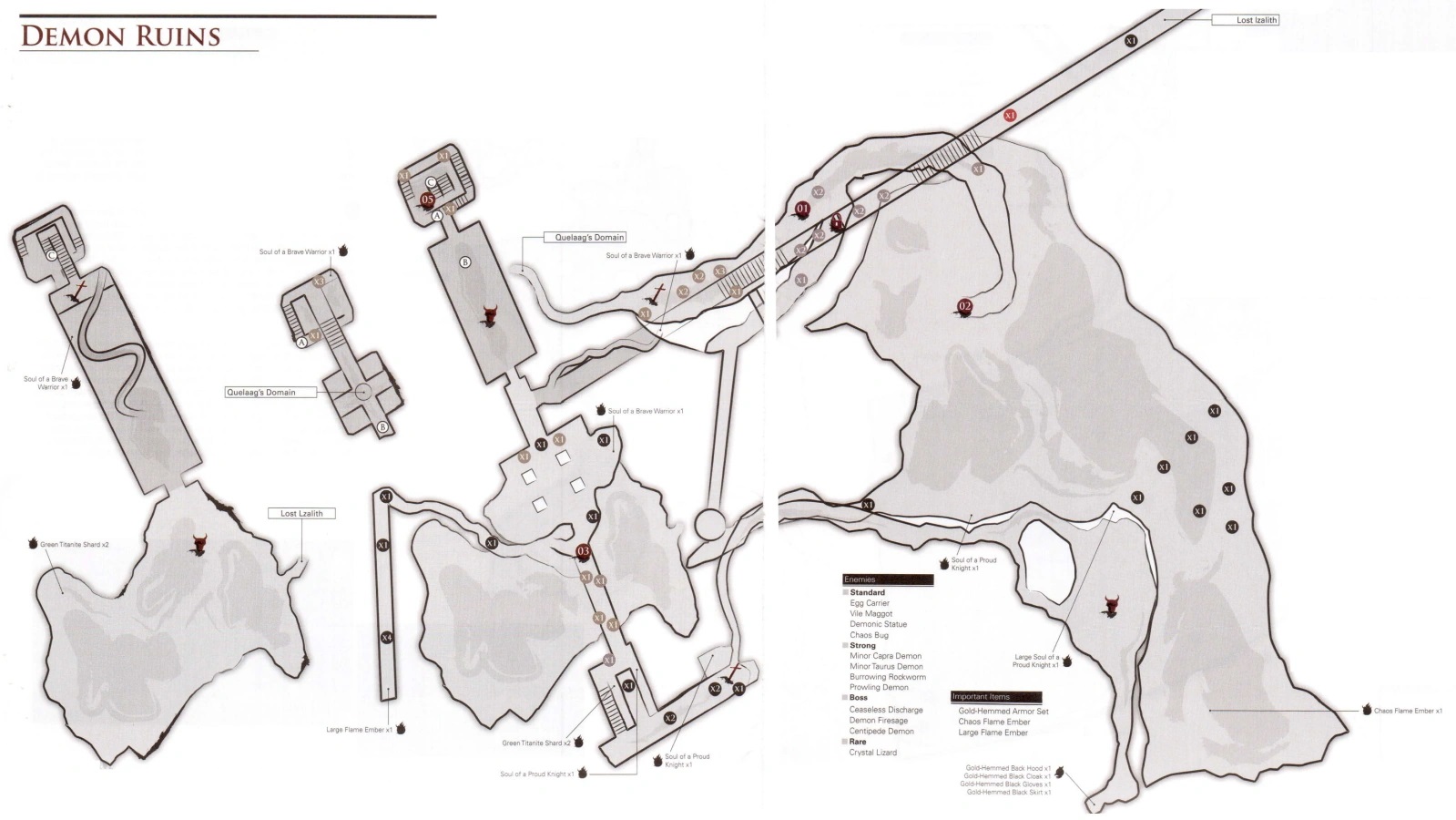
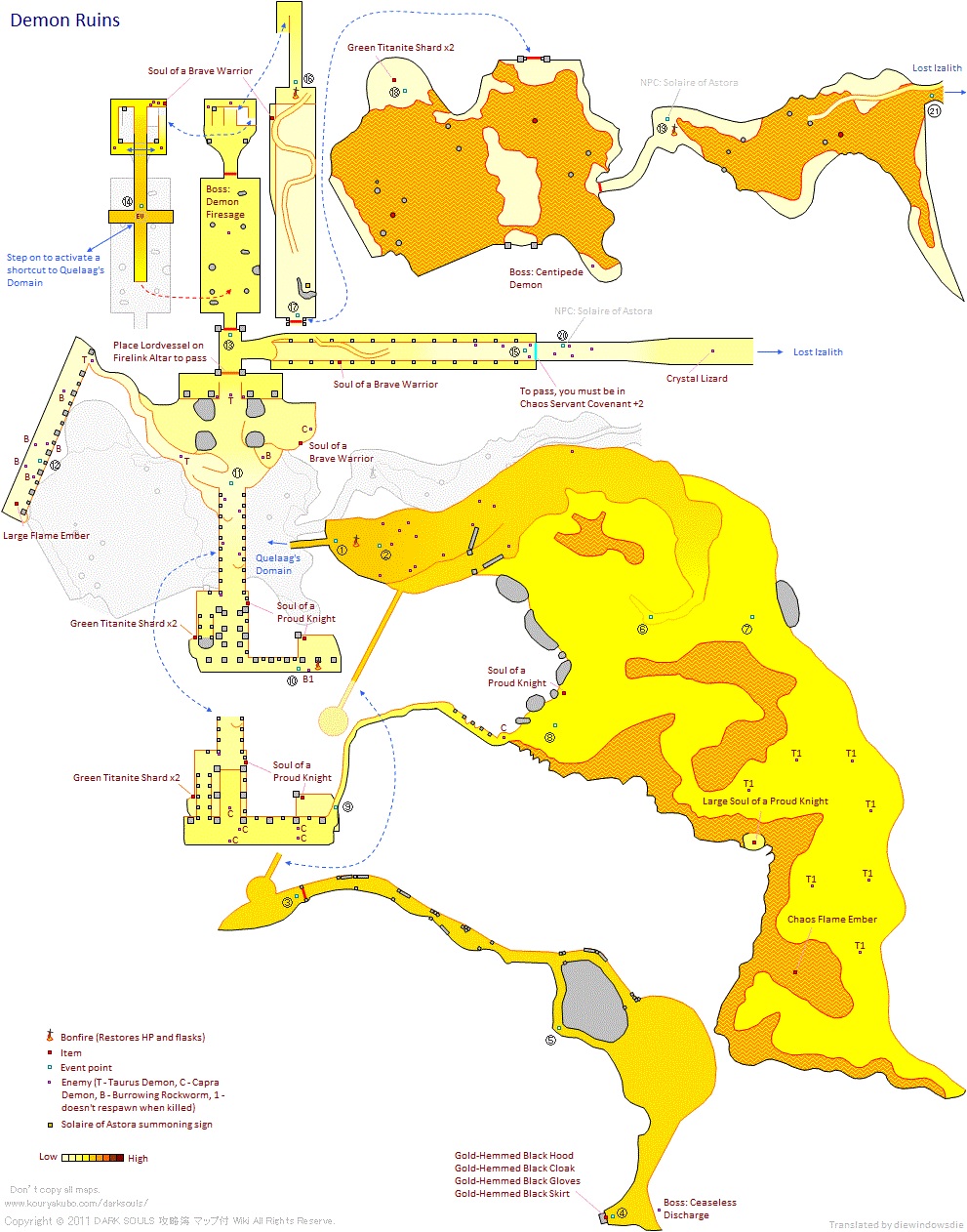
6 Lost Izalith
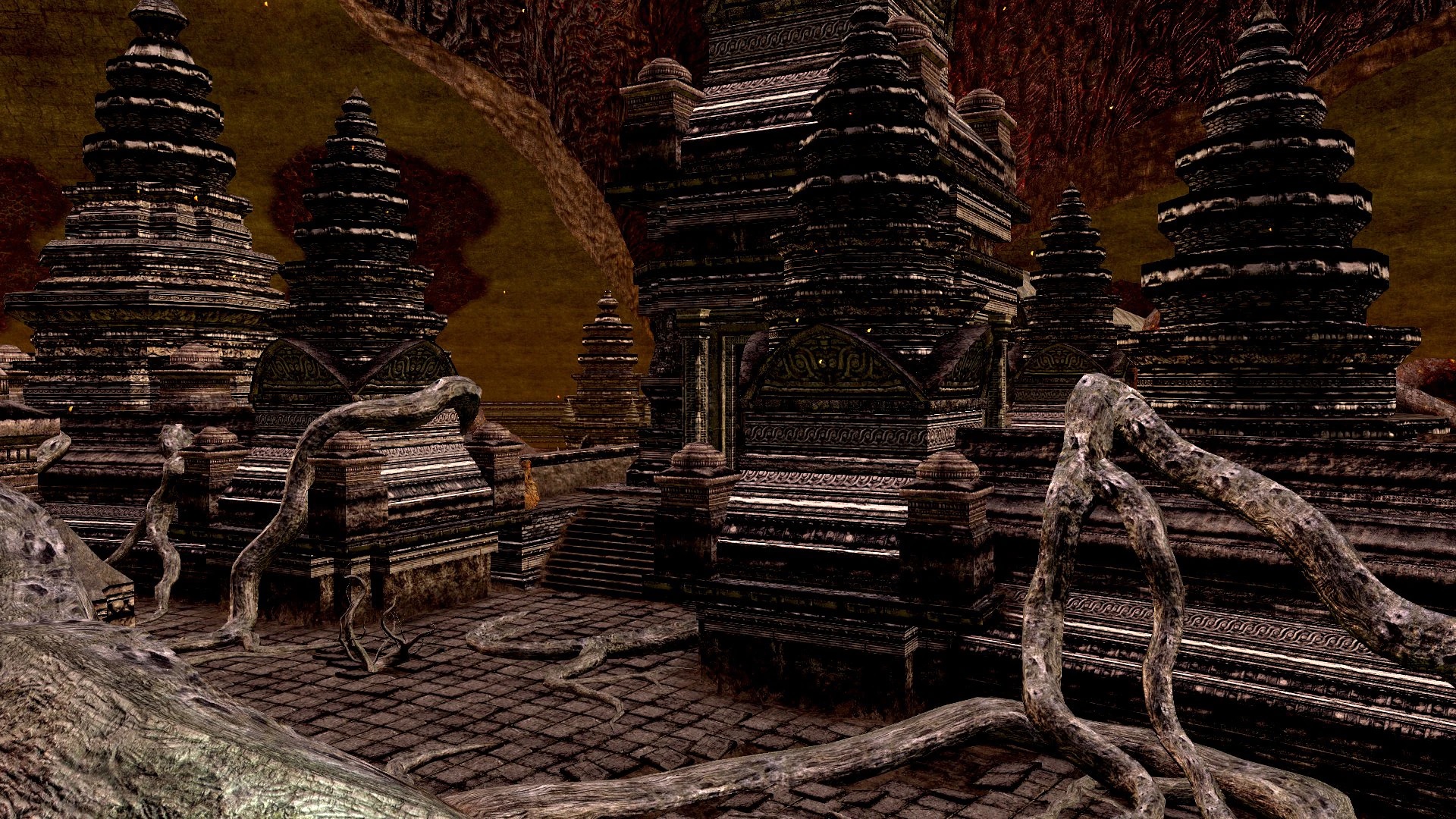
Izalith was once the domain of the Witch of Izalith, and was seemingly a great and booming city. However, when The Witch attempted to recreate the First Flame from her own Lord Soul, she failed to control it and was transformed into the Bed of Chaos. Izalith was subsequently overrun by the demons born from the Bed of Chaos. The demons fought against Gwyn, Lord of Sunlight and his knights, were defeated, and after hearing Quelaag's cut dialogue, were apparently punished by being contained to their fallen city.
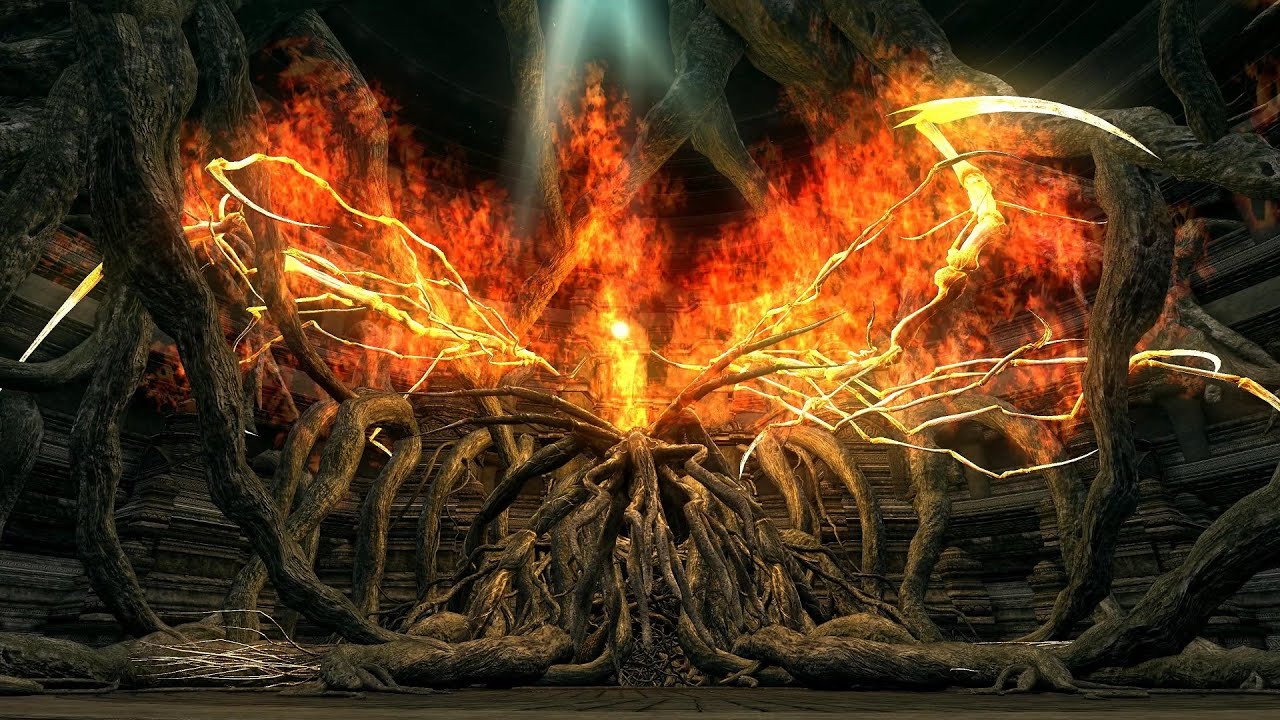
Bed of Chaos Lore in main article: Witch of Izalith[darksouls.fandom.com]
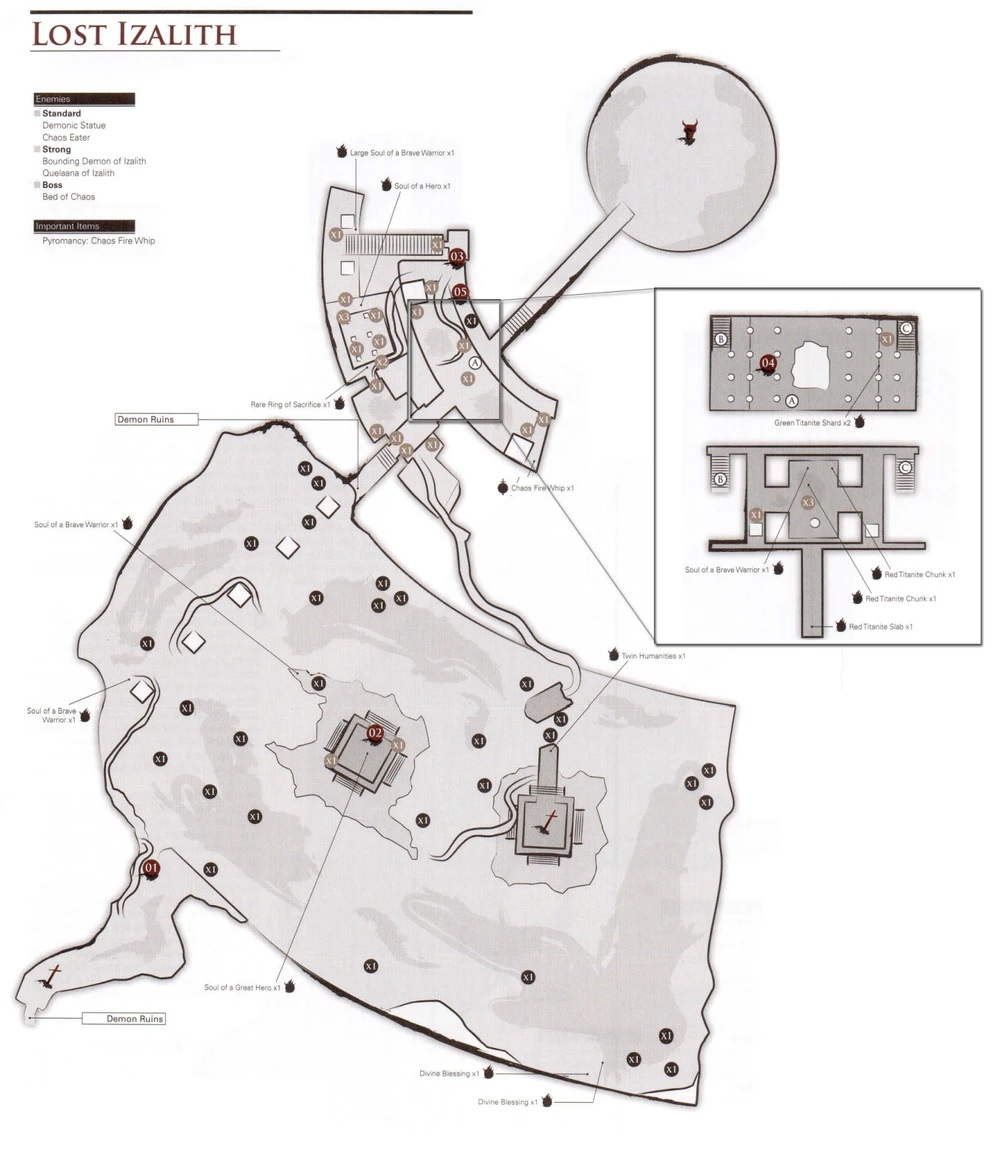
7 The Catacombs
The Catacombs is an underground area filled with Skeletons, Necromancers and Wisps. To progress through the area, several switches must be activated to open doors and to retract spike traps. Necromancers, a non-respawning enemy, hide in the shadows of many areas and will continue to resurrect nearby Skeletons until they draw their last breath. Alternatively, using a Divine weapon will prevent Skeletons from reanimating without the need to first dispatch the Necromancers.
Little to nothing is known about Vamos. No other character acknowledges his existence, let alone his past, as far as anyone knows. Aside from his antisocial remarks, the only information that can be gleaned of his previous life is the Royal Helm he possesses, which is hinted to belong to an ancient royal line.
The Pinwheels were servants of Gravelord Nito. They were taught necromancy by the Gravelord, and imitated his form by becoming a composition of three bodies, which wore the masks of a father, a mother and a child. They were also pyromancers, and operated mainly within the Catacombs.
At some point one of them stole the Rite of Kindling from Nito, a ritual that enabled Undead to collect even more Estus from bonfires through further kindling. Whether this means that he stole an actual item or that he uncovered the secret to imitate the process, therefore "stealing" the technique, is unknown.
The thief then taught necromancy to a group of undead, and with them took over the Catacombs. The other Pinwheels took refuge in Nito's domain, while the Necromancers and the thief Pinwheel continued studying necromancy and reigned over the Catacombs, employing the area's skeletons as their army.
7 Tomb of the Giants (Part 1)
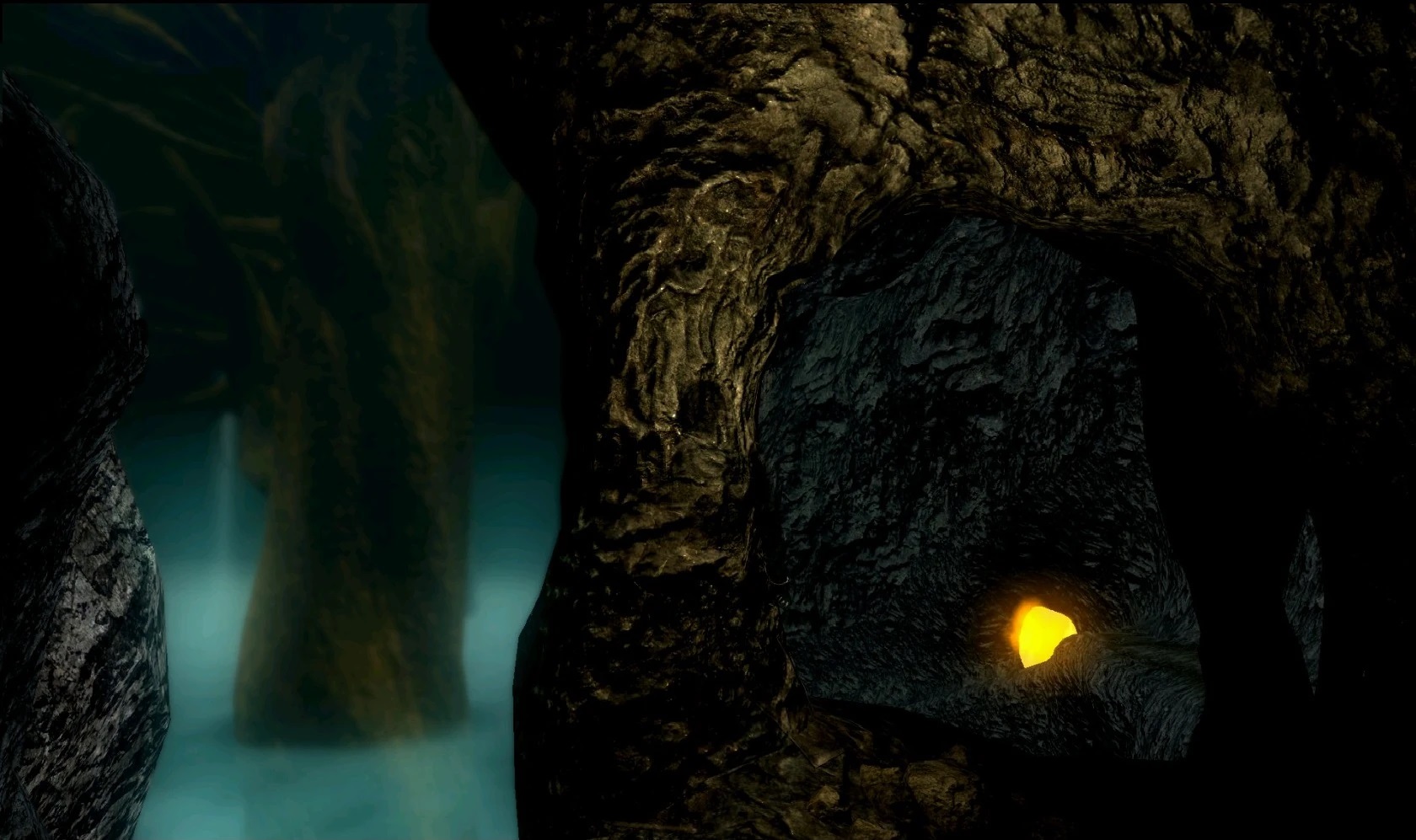
The Tomb of the Giants can be accessed through The Catacombs, after defeating Pinwheel and climbing two hidden ladders out of his room.
Much of the Tomb of the Giants is pitch-black, making it particularly difficult for players to traverse without a light source such as the Sorcery Cast Light, the Sunlight Maggot helmet, or the offhand item Skull Lantern.
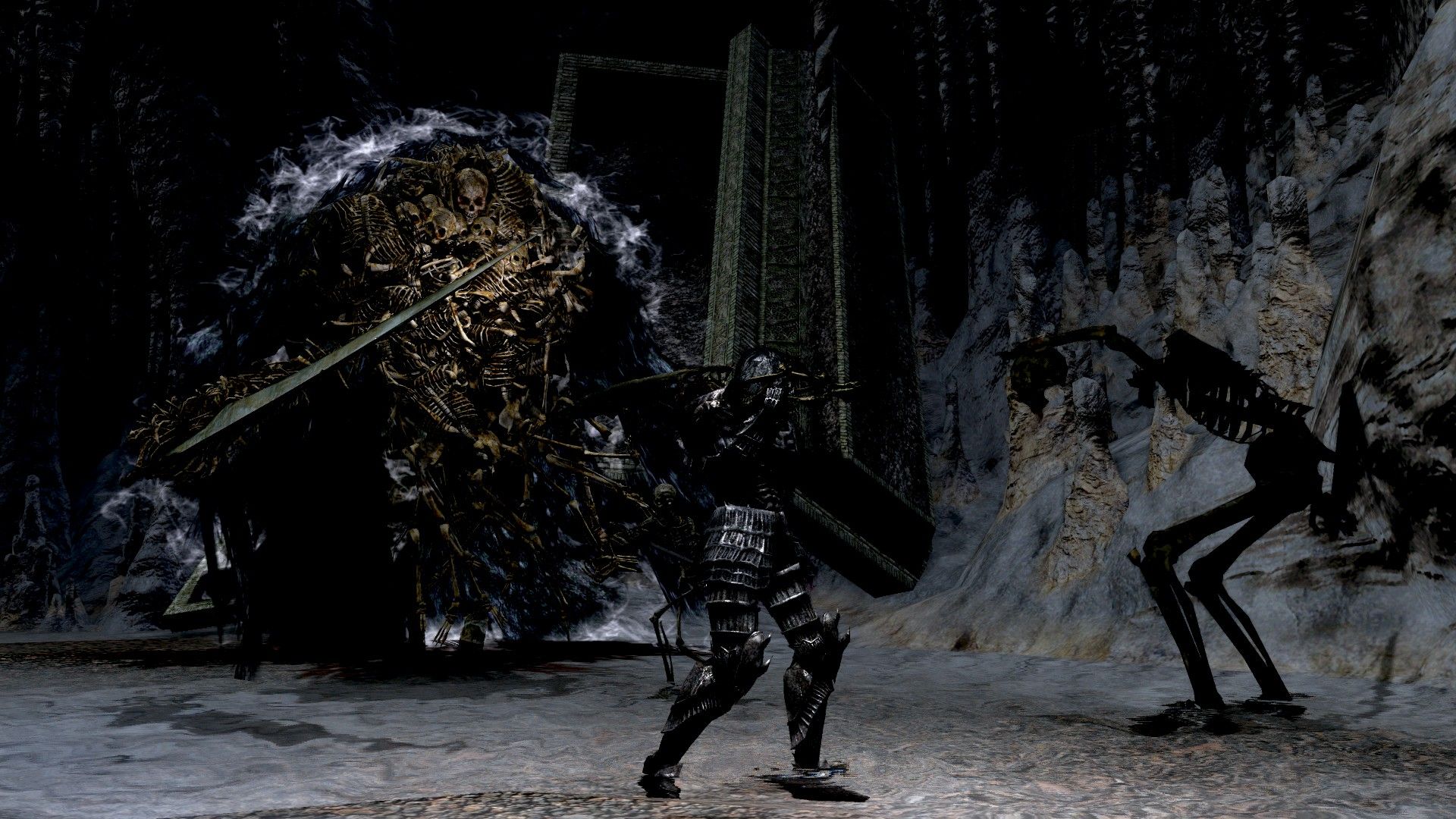
Nito is one of the primordial humanoid creatures that appeared underground after the First Flame appeared, which brought "disparity": heat and cold, life and death, light and dark. He was one of those who found the four Lord Souls, sources of immense power, together with Gwyn, Lord of Sunlight, the Witch of Izalith and the Furtive Pygmy.
At some point Nito would die, but, thanks to the power of his soul, was able to come back to life with necromancy, becoming a living mass of conjoined skeletons, earning the title "first of the dead" ("dead" meant as a new species of skeletal creatures, not the first deceased being). Nito learned to harness the power of his Lord Soul to produce a dark power capable of bringing death to every living being, and he infused it in his Gravelord Sword, crafted from the bones of the fallen and exuding his miasma of death as a toxin lethal for any living being.
He would then ally himself with the other Lords; Gwyn, Izalith, and the Furtive Pygmy, and take part in their war against the Dragons. While Gwyn peeled the scales of the dragons with his lightning bolts and fought them together with his Silver Knights, and Izalith and her witches weaved great firestorms, destroying the archtrees and burning the dragons, Nito unleashed his miasma of death, rotting the archtrees and infecting the dragons. And so, after a long struggle, Nito and the Lords emerged victorious, exterminating most of the archdragons and conquering the world.
After the war, while Gwyn developed his civilization of Anor Londo and Izalith that of her namesake city, Nito returned to the depths of the Catacombs, an immense necropolis, to slumber within the Tomb of the Giants, an even deeper place that housed the skeletons of enormous and bestial creatures, and turned the caverns into his domain of light-devouring death. In addition, the deceased members of the race of the Gods of Anor Londo and their priests also rested in the Tombs of the Giants, implying how Nito continued to collaborate with Gwyn by offering the Lord his domain to bury his people and servants. Nito would thus take on the role of administering the death of all manner of beings, giving up much of his Lord Soul into propagating death, earning him the title "Gravelord".
However, Nito did not carry out the task in complete solitude. At some point after the emergence of the Undead connected to the fading of the First Flame, Nito took measures to deal with the beings that defied the death he oversaw. To this end he created the Fenito, beings capable of weaving death, and tasked them with watching over the dead, entrusting them with his weapon Darkdrift. Their philosophy was that death is equitable and accepting; that everyone will one day be welcomed by her embrace.They viewed life as suffering, and braved the uncertainty that death may not resolve the pain of living; they only knew that death was all there was after life, and that everyone—even Undead—would have to face it, one way or another. Nito also created the Milfanito, women who had little concept of self, and taught them to sing, making them enchanting singers with the task of comforting the undead, as those bound by death and darkness. They lived only to sing and would continue to do so until they no longer could. He enlisted some brave humans who had visited his tomb and wished to serve him, becoming part of the covenant of the Gravelord Servants. Wielding their Gravelord Swords infused with a lethal toxin, their task was to employ the Eyes of Death to spread disaster across time and space, causing hostile spirits to invade victims, thus bringing ruin upon the world and allowing the Eyes of Death to multiply and continue to spread calamity. As Nito continued to oversee death in the world, he would accept proof of his servants' successes in the form of new Eyes of Death, rewarding them with his miracles capable of summoning magical copies of his Gravelord Sword. For his closest servants he granted a stronger miracle, a tribute to the ruin they had thus far wrought upon worlds. He would also teach his corpse art to a bunch of followers who imitated his form by becoming beings made of three humans merged together.
At one point Nito created a ritual capable of further bolstering bonfires using Kindlings, which allowed Undead to collect more Estus from them, but the cost would be an humanity, a fragment of their Dark Soul. The ritual was employed by clerics of the Way of White, and the Undead can imitate the process in the same manner by consuming their Humanity at bonfires. The connection implies Nito being involved in the religious system of the gods who were looking for a "chosen one" among the Undead, one capable of linking the First Flame and following Gwyn in his sacrifice.
At a certain point, several followers in possession of occult powers descended into the Catacombs and attempted to steal Nito's mortal power to use it in a plot to kill the gods, but perished inside his dark domain before they could achieve their goal.
At some point, one of the "Pinwheels" managed to steal Nito's Rite of Kindling and part of his power, using them to continue studying necromancy and to reign over the Catacombs along Necromancers who learned his arts and employed the area's skeletons as an army.
When a Chosen Undead was able to ring the Bells of Awakening, overcome the challenges of Sen's Fortress and reach Anor Londo, being rewarded with the Lordvessel, they would be guided by Kingseeker Frampt to find immense souls to fill the receptacle and link the fading First Flame to succeed Gwyn in his sacrifice. The Undead would thus have delved into the Catacombs until they reached the sarcophagus in which Nito rested. Here they challenged and killed him to obtain what remained of his Lord Soul.
Dark Souls II
Eons after Nito's death to a Chosen Undead, the Fenito and Milfanito continued to serve their purpose and carried out the will of the "Great Dead One", arriving in Drangleic where they positioned themselves to manage the Undead Crypt, a place of rest for the "living" where those afflicted by the curse of Undeath could only pray to one day gain entrance. As centuries went by, countless dead came there to rest in peace cradled by the comfort of darkness; regardless of class, rank or status, the Fenito made sure they all remained dead, employing miracles that put mindless Hollows down for their eternal rest, and pyromancies to create a gentle flame to heal and comfort the Hollows. The Fenitos thus became the Grave Wardens who were charged with watching over the Crypt and its slumbering dead, making sure that they were not awoken, readily burying whoever dared disturb their rest. Their silverblack equipment was soaked and imbued with the power of the darkness that enveloped the crypt. The Milfanito also helped with their task, singing to comfort the deceased who rested in Undead Crypt. The marshlands before the Crypt also became the home of the Brightbugs, a tiny bug that produced light and was said to soothe the dead. These creatures were born from the corpse of Nito, and danced to the song of the Milfanito.
7 Tomb of the Giants (Part 2)
There was no shortage of intruders seeking salvation or power within the Undead Crypt. A party of cleric knights would try to conquer the Crypt, only to be defeated by the Grave Wardens; for their sin the Wardens postponed their deaths, forcing them to serve as crypt sentries, and left their leaders to wander aimlessly in the depths of darkness. Another party of imperious knights attempted to conquer the crypt: These knights too were defeated, and turned into crypt guardians, being denied their eternal restful slumber.
At one point, the Leydia Witches reached the Undead Crypt. A group adept at magic and able to use miracles, pyromancy, sorcery and even hexes with their special staves, these witches were worshippers of Galib, the God of Disease. The witches were welcomed into the crypt, where they ended up residing beside the Fenito, collaborating in their tasks and sharing their power of death. However, sometime later, the Leydia Witches grew conceited, and began to manipulate the onset and curing of disease, making themselves the effective gatekeepers of the crypt. Their misuse of death and their failure to treat it with the proper respect invoked the ire of the Fenito, who branded them as transgressors, blasphemers and traitors and hunted them down, denying them a peaceful death and slaughtering most of them.
By the era of Drangleic, long after his Lord Soul had been used to link the First Flame, Nito's very name was lost. Those few in the region who still remembered his existence referred to him as "Great Dead One". However, some remnants of his soul manifested again in Drangleic, continuing to exert their influence on the region (the remnants of Nito's soul possessed the Rotten).
At some point, a butcher came into contact with the soul of Nito deep inside the Black Gulch. The mass of dark power transformed his body and he became a creature formed by a huge mass of hollows fused together known as the Rotten. It kept writhing deep within the Gutter, embracing the abominations that fell deep inside the Gulch and creating a sanctuary for all things rotten or tossed away. He would keep producing the Poison Statue Clusters, artifacts that released the deadly toxin that covered the tunnels of the Black Gulch.
Theories
It is possible that The Catacombs give a picture of Nito's past.
The statues in the Catacombs engraved with the mask of the mother and the mask of the child have a contraption which makes spears burst out the child's face; that could either rapresent a mother dying of childbirth, a mother having a miscarriage, or a pregnant woman dying alongside her baby. It's therefore possible that Nito lost his own family during his own life. The feminine scream heard when Nito performs the Gravelord Greatsword attack may also be a reference.
It is possible to theorize that Galib, God of Disease is the name that the Leydia Witches used to continue to venerate Nito after his name was lost over the centuries. Galib was connected to diseases, not unlike Nito who was connected to deadly miasmas.
Fenito, creatures created by the Ancient Lord, welcomed the Leydia Witches into the Undead Crypt and shared the power of death with them, implying that there was cultural and ideological common ground between the two to collaborate, at least initially.
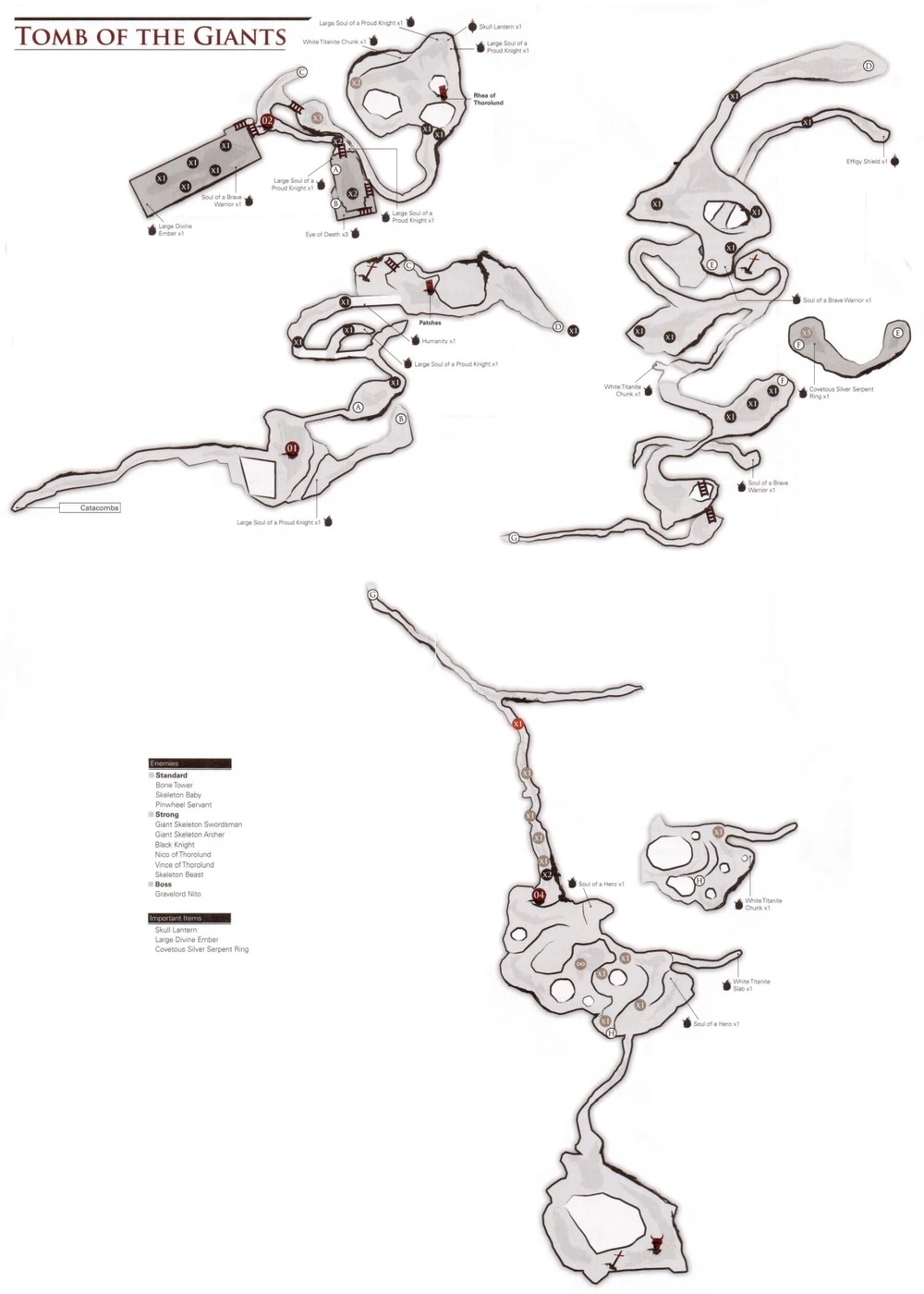
8 Valley of Drakes
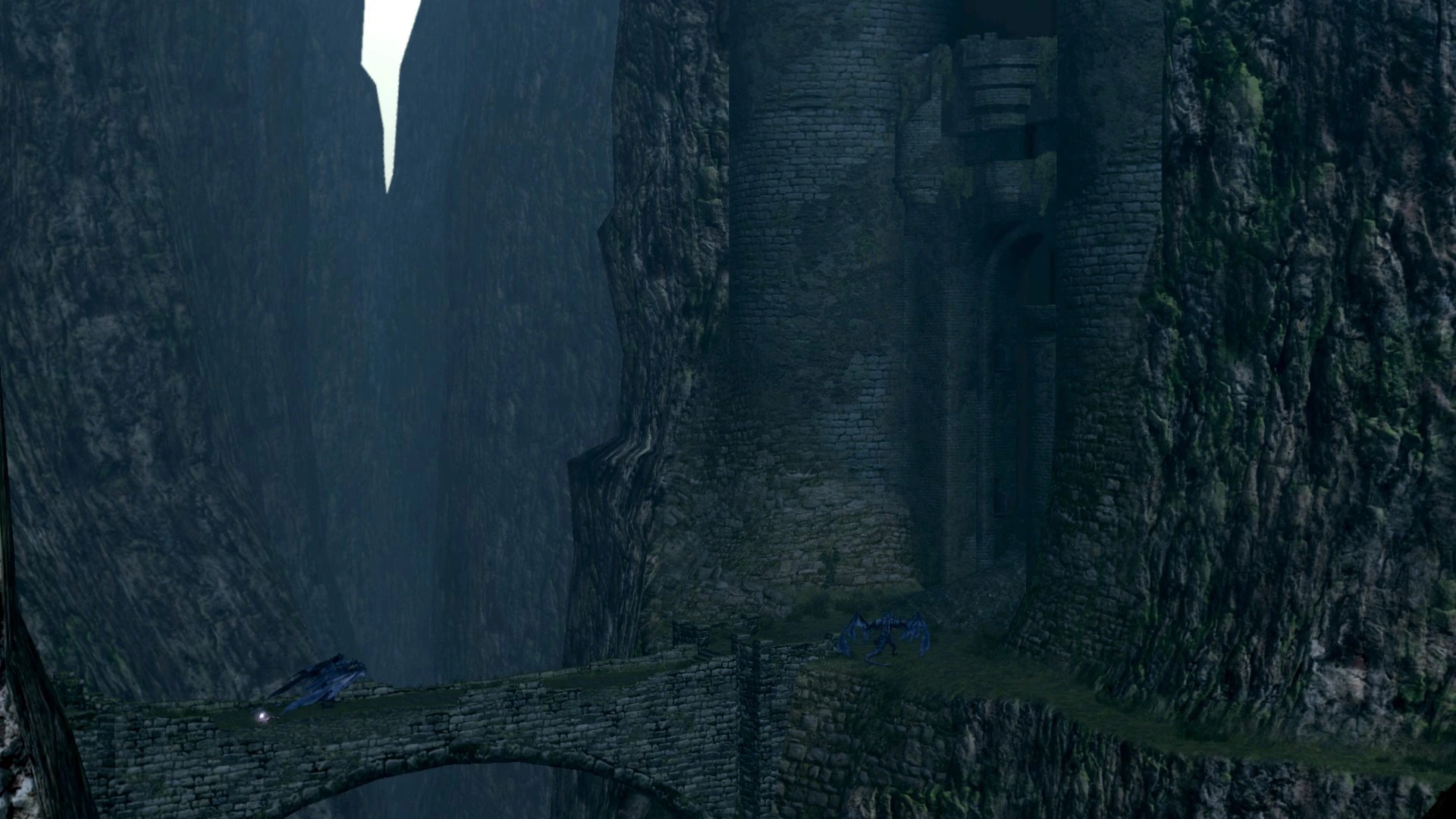
Home to multiple Wyverns and a slumbering Undead Dragon. Players can access the Valley of Drakes early in the game with the Master Key. When New Londo Ruins is drained, the large gate located behind the Wyverns will be opened. If approached from the side nearest to Blighttown, it is possible to avoid the Undead Dragon by hugging the right-hand wall and walking on a ledge which leads to a safe drop just past it.
One Undead Dragon hangs off a cliff in the Valley of the Drakes, and another rests on a bridge in the Painted World of Ariamis.
Undead Dragons are the remains of what was once a true dragon. Heavily decomposed, these dormant titans retain little of their former power. They have no eyes, and their wings prove useless. They are prone to bodily ripping themselves in half at the waist; in the Valley of Drakes, the lower half of the Undead Dragon falls into the gorge when it is is awakened. In Ariamis, the Undead Dragon will pull itself forward when disturbed, leaving its lower half behind. In addition to their bite and claw attacks, their mouths can disgorge a Toxic substance.
After killing the Undead Dragon in the Painted World of Ariamis, its bottom half remains on the bridge, blocking a shortcut to Crossbreed Priscilla. Although one could activate the switch in the sewers to take the long way, performing a jumping attack on the bottom half causes them to stand up, letting one pass underneath.
The Bounding Demons in Lost Izalith closely resemble the bottom halves of Undead Dragons.
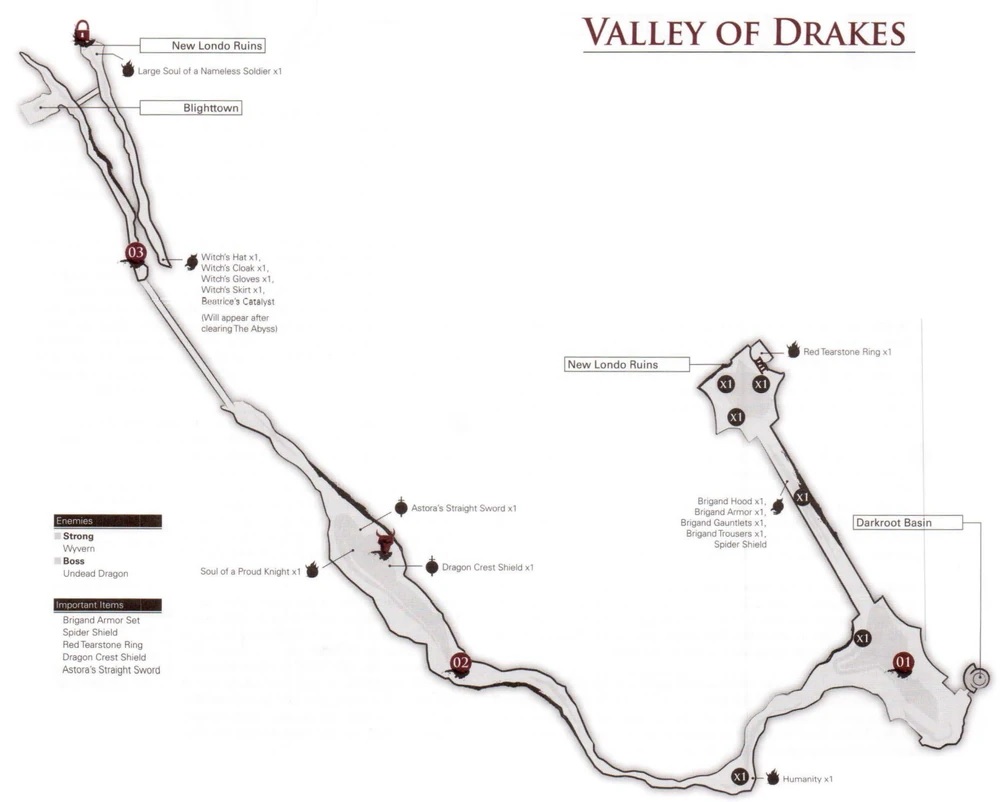
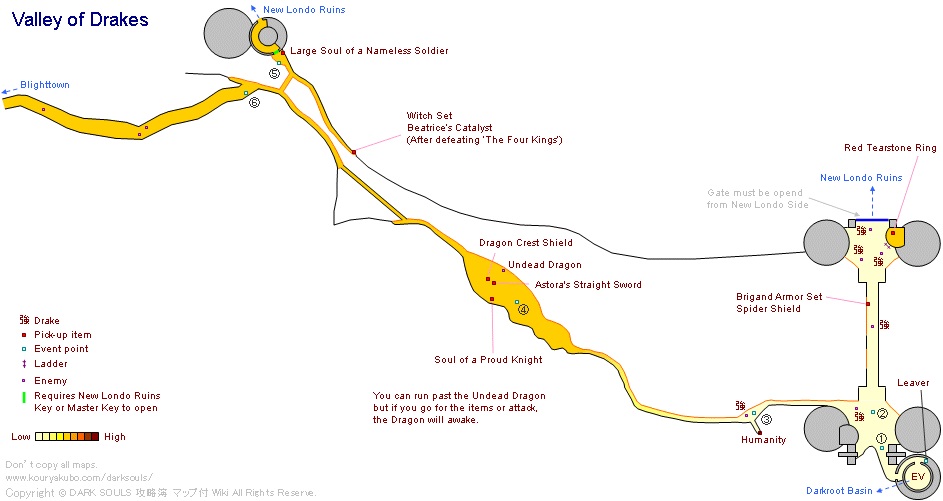
8 Darkroot Basin
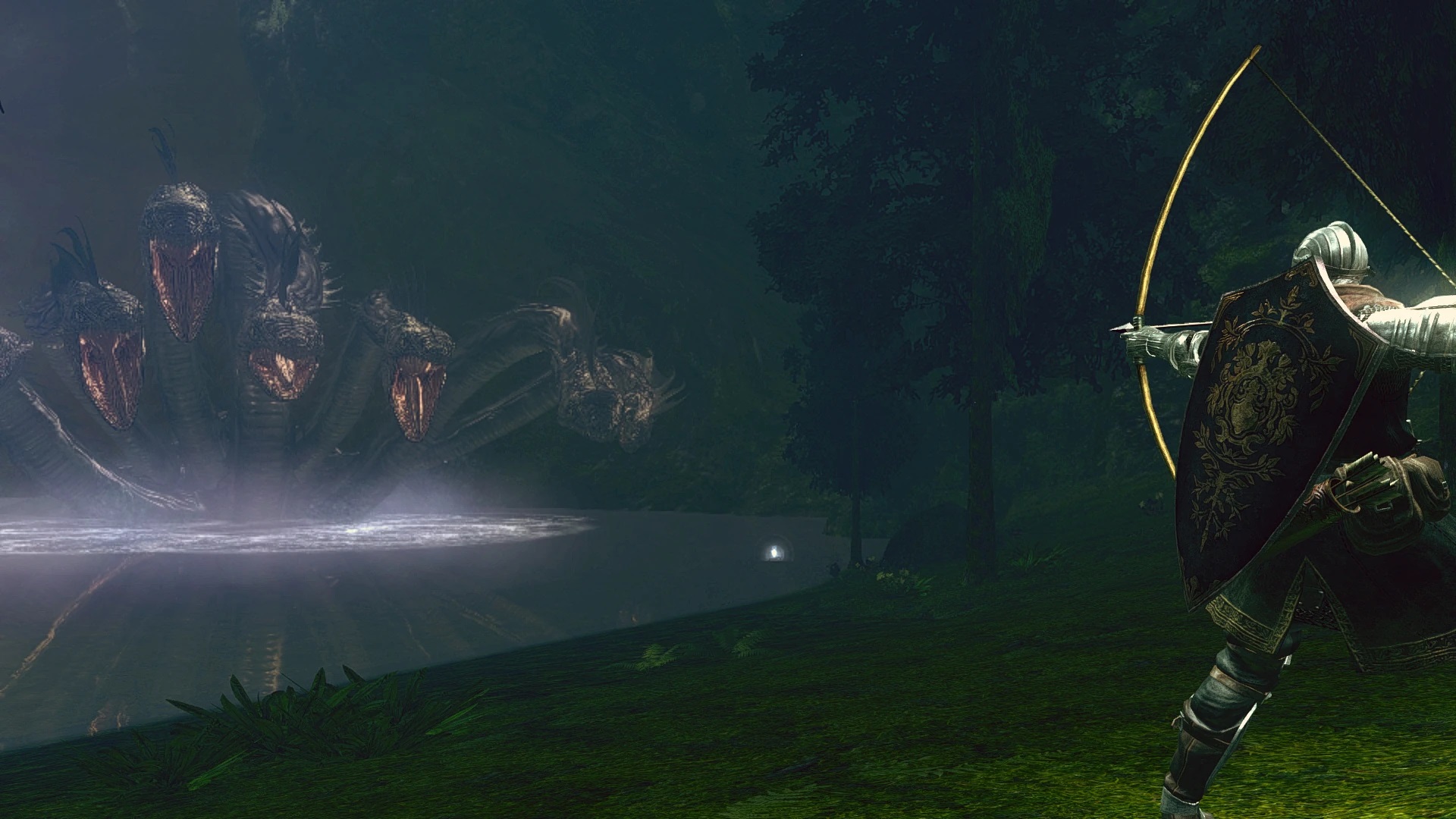
The Darkroot Basin is located right after the Darkroot Garden. It can be accessed via the Undead Burg, the Valley of the Drakes, or by the Darkroot Garden. It can also be accessed from the Darkroot Forest ladder.
The Hydra is a large sea monster with a body similar to a plesiosaur, but with tentacles underneath a shell-like structure and several long necks and heads. Each head can fire blasts of water from a distance or lunge into the ground for a close range attack.
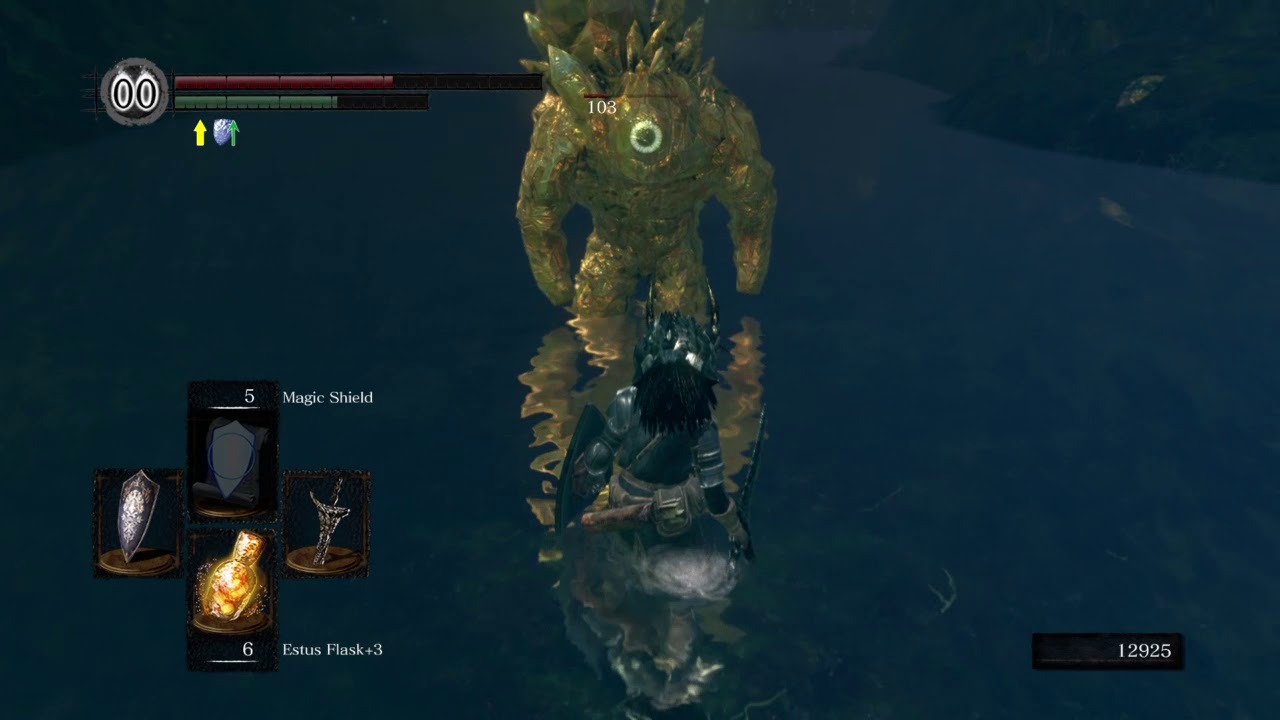
They seem to be serving Seath by imprisoning people within themselves. After defeating the Hydra in Darkroot Basin, a golem can be found at the back of the lake. Killing it will free Dusk of Oolacile.
Notes
In the garden outside The Duke's Archives, a golem can be killed to free Sieglinde of Catarina.
The Golems located in Darkroot Basin and The Duke's Archives act as prisons for Dusk of Oolacile and Sieglinde of Catarina respectively. It is possible to see both women trapped within the large crystals on the golems' backs.
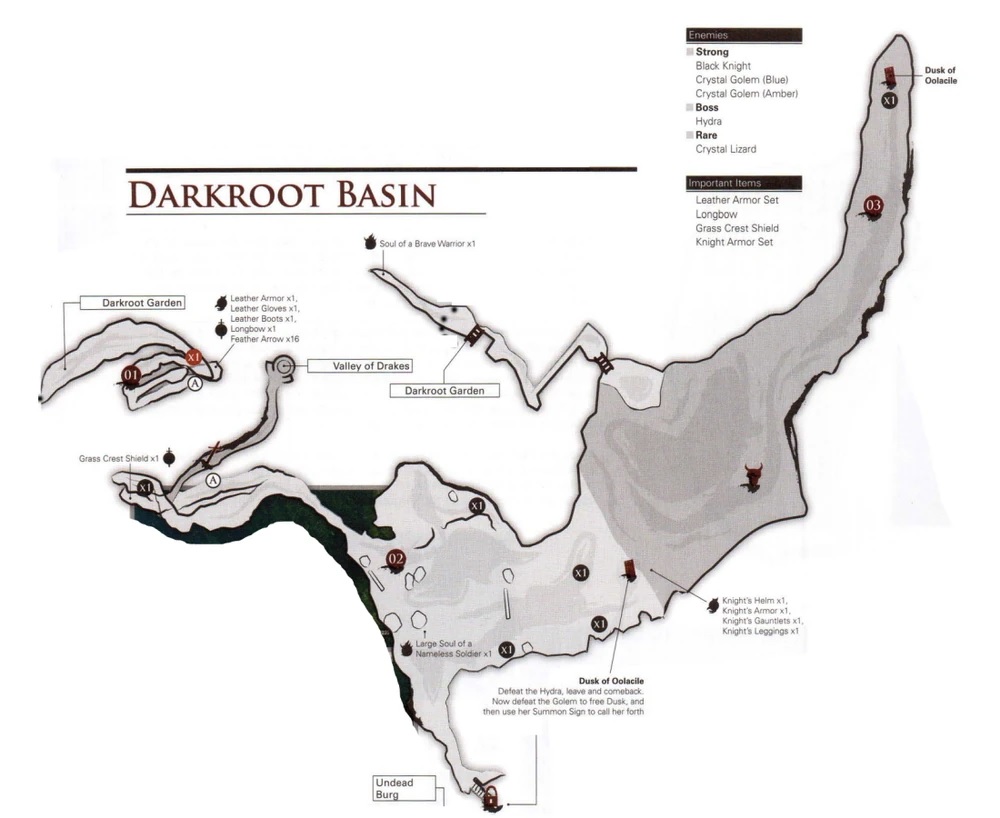
8 Sanctuary Garden & Oolacile Sanctuary
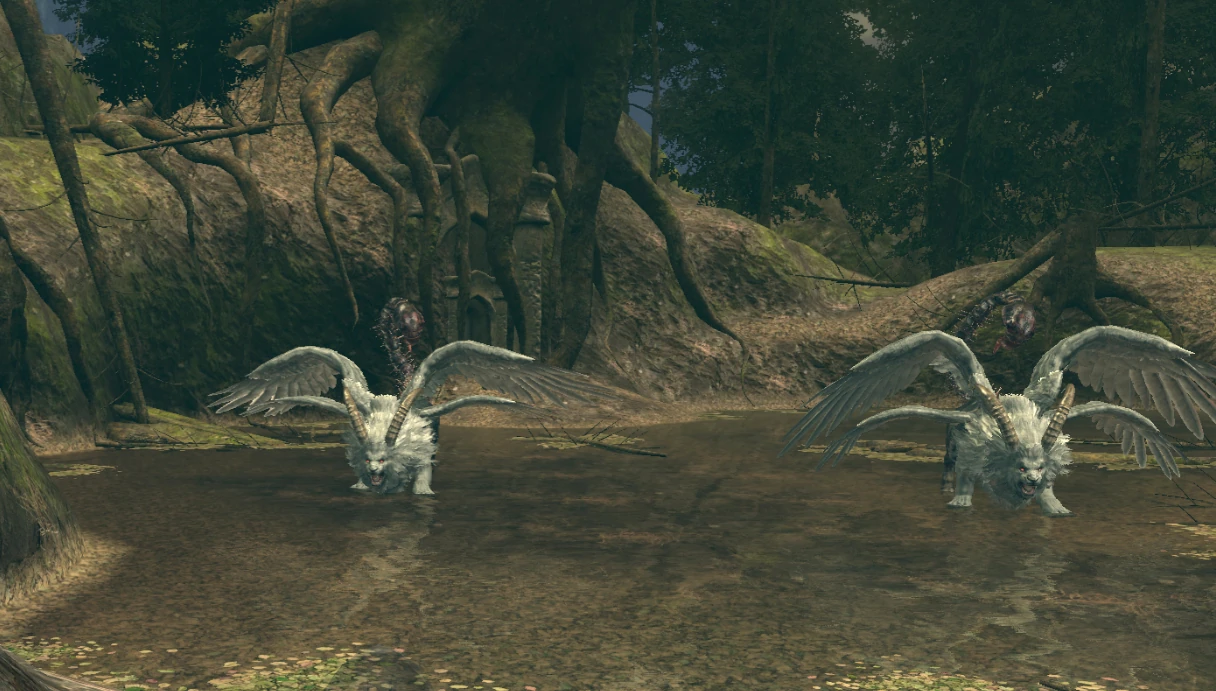
The Sanctuary Garden is part of Oolacile and is the first location which the player travels through in the Artorias of the Abyss DLC. It is home to the Sanctuary Guardian, who is encountered after walking through the first fog wall. It is a relatively small location, as it consists of only two parts: the first bonfire and the boss fight arena.
The Oolacile Sanctuary is the second location which the player travels through in the Artorias of the Abyss DLC. It is home to Elizabeth. A Humanity can be found if the player turns right from the bonfire, on a corpse behind a large gravestone. Elizabeth is found to the left of the bonfire.
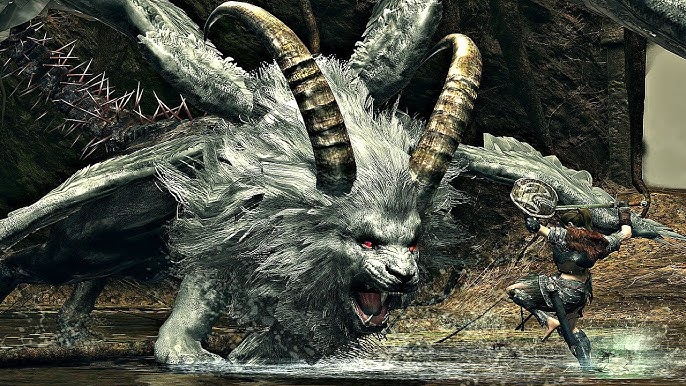
The Sanctuary Guardians are an amalgamation of traits from several animals like lions, goats, scorpions and birds. They were created by the sorcerers of Oolacile, capable of manipulating the forces of nature with knowledge and means that not even the sorcerers of Vinheim were able to replicate, to defend the Sanctuary Garden of their country. Although these creatures were not created by the Bed of Chaos and therefore cannot be defined as demons, the process with which they were obtained, mixing characteristics of different animals thanks to the sorcery of souls and life, makes them very similar to the demons of chaos, produced by the Flame of Chaos created in imitation of the First Flame.
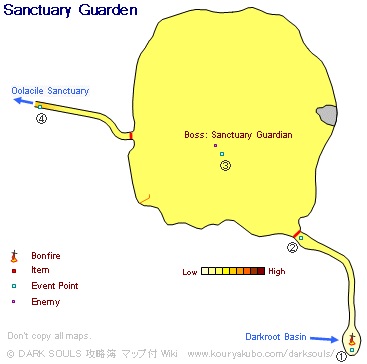
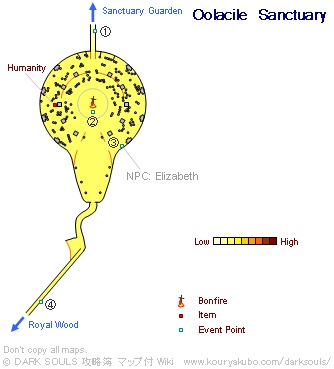
8 Royal Wood
The Royal Wood is part of Oolacile and is slowly being altered by the Abyss. Giant chasms have emerged by the time the Chosen Undead arrives. Remnants of Oolacile's magic can still be utilized in the form of stone elevators.
The Royal Wood is Darkroot Garden long before the time of the Chosen Undead. Many landmarks and features that have held constant can still be observed.
Although technically fought within the Oolacile Township, Knight Artorias acts as the area boss of the Royal Wood for summoning and invasion purposes.
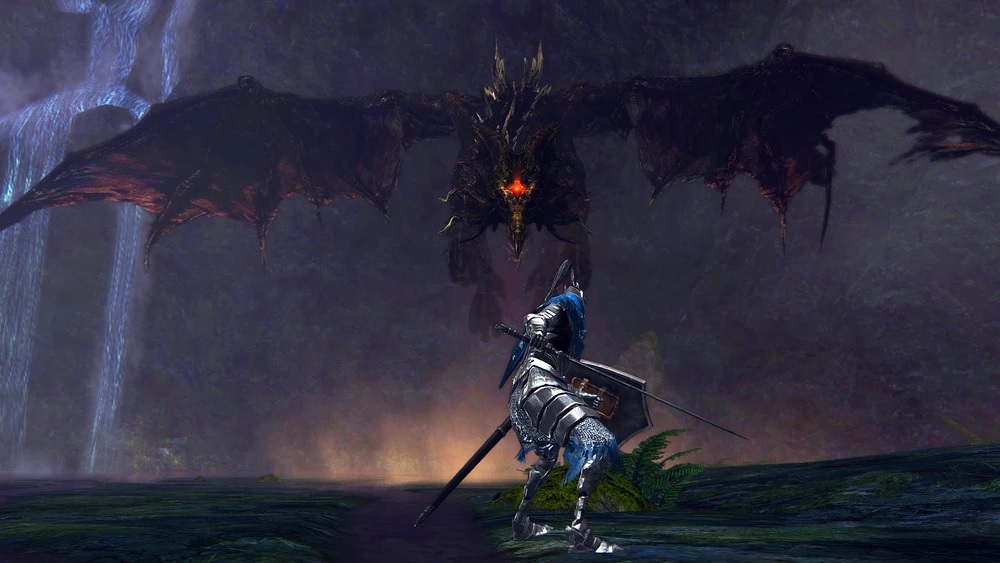
Kalameet is a descendant of the primordial archdragons.
Due to the appearance of "Disparity" and Souls following the ignition of the First Flame that allowed the evolution of life, Kalameet was born with unique characteristics compared to the original archdragons. He possessed a single orange eye, an ability to produce a high frequency noise which made his captured targets twice as vulnerable to damage, and an obsidian hide that made him resistant not only to magic and fire like other dragons, but even lightning which was their primary weakness.
Thanks to his extraordinary strength, Kalameet survived the extermination of the Dragons by the Lords during the war and persevered throughout the Age of Fire. At some point, after Oolacile was corrupted by the Abyss of Manus, the dragon took up residence in the area, where not even the mighty warriors left in Anor Londo dared to provoke his ire.
However, at a certain point, a Chosen Undead who ended up in Oolacile challenged the black dragon and after a legendary battle managed to defeat him. From his tail they formed an Obsidian Greatsword infused with the mystical power of the dragon and with his orange eye they created an enchanted ring that doubled the damaged received by its wearer.
DarkSouls II
Although Kalameet was defeated and killed, a group of knights found his corpse and used his scales to create armor close to the appearance of the dragon, while they used his talons to craft shields[12] and his tail to forge several legendary weapons. As the centuries passed, the Black Dragon was consigned to mere legend, according which he was defeated by a brave warrior in a magnificent battle and that it was his tail that was used to forge these legendary weapons. In the region of Drangleic the name of Kalameet has been long lost and, while the legend of the pale dragon is told in various locales even if each account is fragmentary, the Black Dragon is rarely mentioned; some even say that it is only an an embellishment adopted in later retellings of the story.
Regardless, the Dragon Knights, who wore armor forged from the scales of Kalameet and used weapons created from his tail, persisted, and at some point arrived in Drangleic and settled in the Dragon Shrine. The group of knights would also join the covenant of the Dragon Remnants, apostles who venerated the primordial creatures and desired the perpetuity of their existence, seeking their scales to rise above their limited human existence. This group used the Dragon Eyes to invade the space and time of other knights and challenged them to claim their dragon scales, rewarding the best among them with the stones infused with the powers of the dragons to try to achieve transformation, as well as with the ancient Black Dragon Greatsword forged from Kalameet's tail.
Dark Souls III
Although the calamitous ring created with the eye of Kalameet had no useful power and was merely hazardous, the artifact was passed down for thousands of years as a symbol of dragon worship. Its most fervent adherents even became convinced that the task of preserving it had been bestowed upon them as a sacred duty.
Like many other artifacts and beings connected to the ancient dragons, the ring of Kalameet also ended up at Archdragon Peak, a place where the remnants of the men-serpents and the dragon worshippers had gathered to venerate the primordial beings and attempted to achieve their perfect shape using stones imbued with the power of everlasting dragons. The ring was thus kept in front of the statue of one of those who, in meditation, had managed to partially achieve the draconic transformation.
Theories
It is possible to theorize that at some point Kalameet was corrupted by the Abyss of Manus, as his body shows signs of corruption with his scales that appear covered in a oily substance and his wings that appear consumed. In addition, his flames deal both magic and physical damage just like abyssal sorceries and pyromancies.
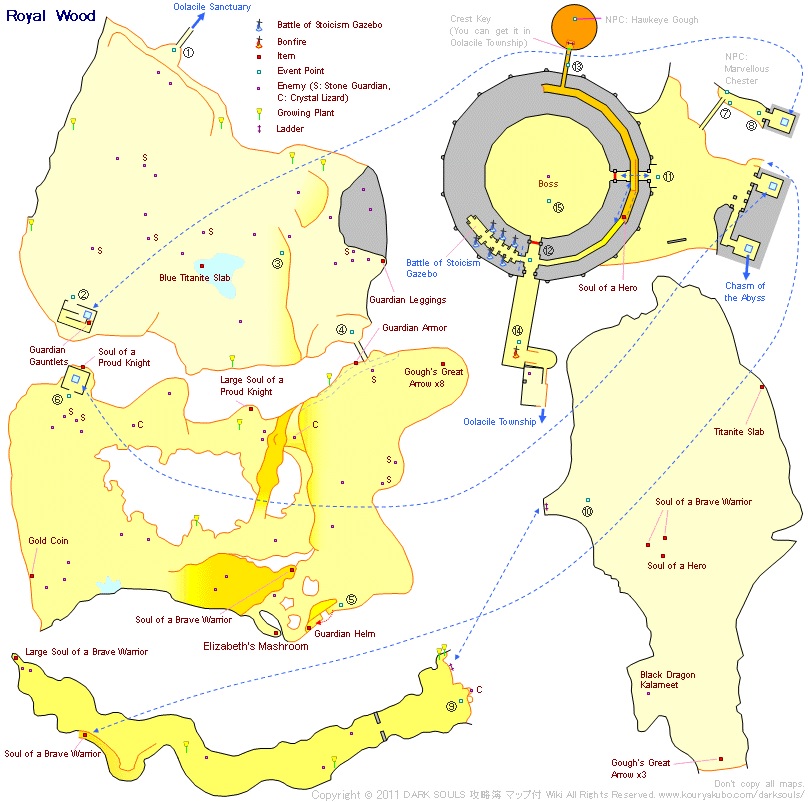
8 Oolacile Township (Part 1)
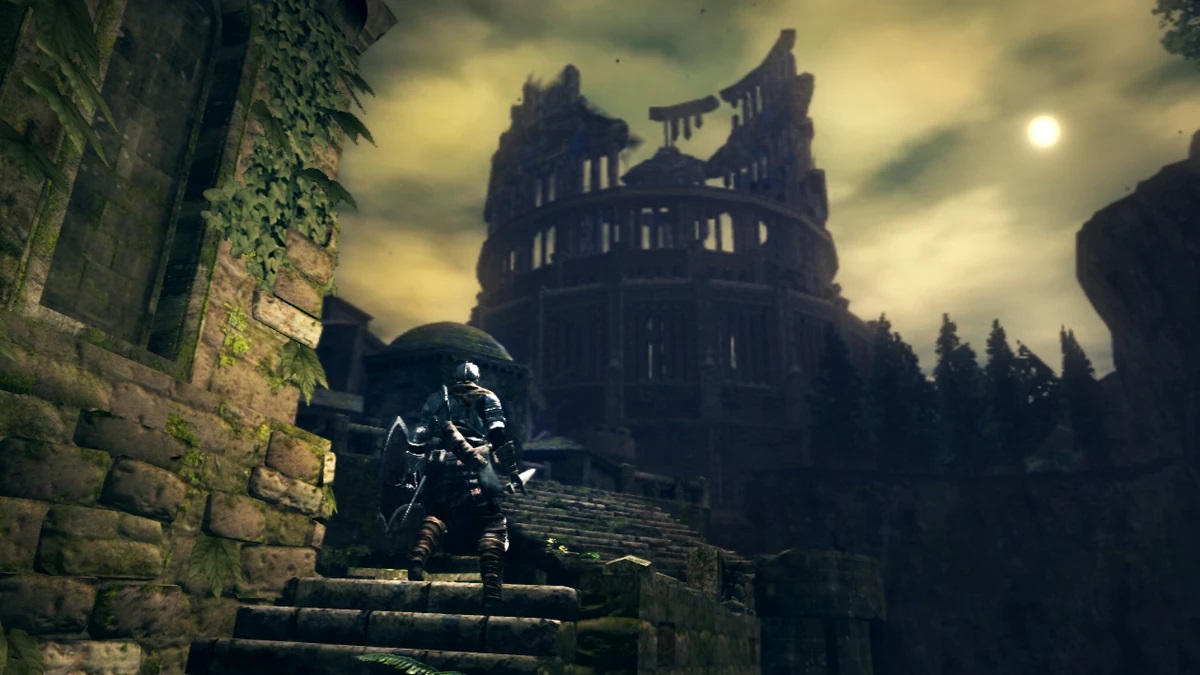
The Oolacile Township is the area found right after the Royal Wood and starts with the coliseum that serves as an arena for the fight with Knight Artorias. It's infested with Bloatheads and Bloathead Sorcerers and can be difficult at first; since the area is mostly made of narrow stairways and their attacks can easily push the player or quickly deplete HP.
Although Knight Artorias is fought here, Manus, Father of the Abyss acts as the area boss for the Oolacile Township, Oolacile Township Dungeon, and the Chasm of the Abyss for summoning and invasion purposes.
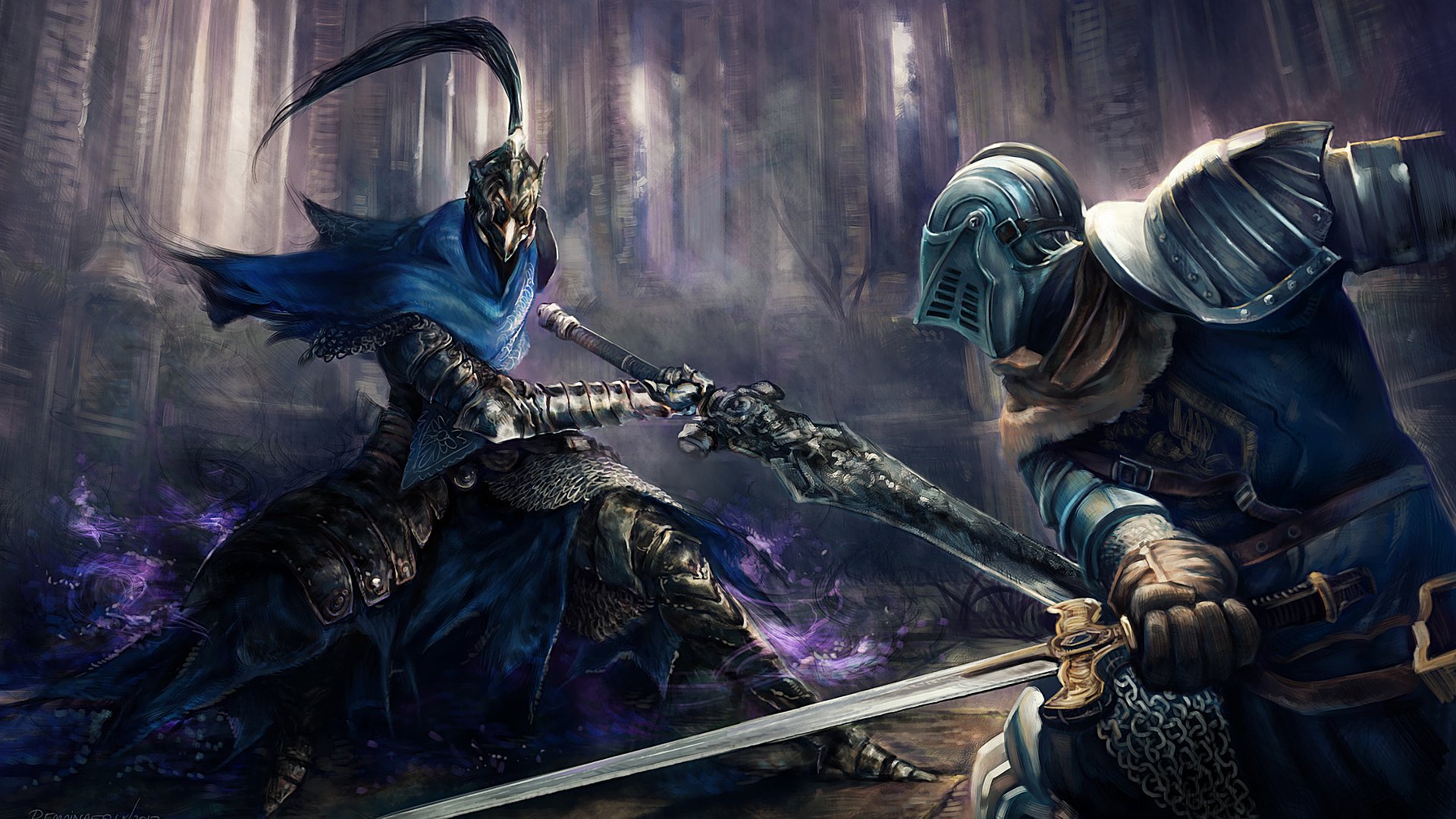
Sir Artorias was among the premier knights at the service of Gwyn, Lord of Sunlight. Thanks to his unmatched skill with a greatsword and his indomitable will, he went on to become part of Gwyn's most trusted warriors, being granted a special soul. Artorias, along with Ornstein, Ciaran and Gough, thus formed the Four Knights of Gwyn; as a symbol of his association with the order, he was bestowed a magical ring with the wolf symbol, which strengthened his poise, making his fighting style with a greatsword more effective.
Artorias wore his distinctive azure-blue tassel armor as a symbol of pride and glory and brandished a greatsword and greatshield. Artorias was also a dear friend of Ciaran, his companion as another Knight of Gwyn. At one point Artorias met Sif, a great grey wolf, with whom he formed a deep bond. Artorias and Sif would brave the battlefields as companions; Sif even learned to fight with Artorias's greatsword, and acquired the power of his soul.
Sometime after Lord Gwyn sacrificed himself to link the fading First Flame, the Primordial Serpent Kaathe began searching for a human strong enough to become the Dark Lord capable of leading humans and usher in an Age of Dark. Kaathe eventually arrived in New Londo and managed to entice the Four Kings, powerful humans who had received a fragment of Gwyn's Lord Soul, into following his ideals, teaching them the art of Lifedrain. The Serpent's dark influence extended to their entire army: The knights of New Londo became Darkwraiths, servants of the Dark who learned the art of Lifedrain and used it to absorb humanity. The Four Kings opened an Abyss in the center of their city, with their Darkwraiths beginning to employ the Red Eye Orbs granted by Kaathe to plunder humanity and expand the reach of the Abyss.
A nation of humans freed from the shackles of the Darksign, in possession of an army empowered by their boundless Dark Soul, represented an unparalleled threat to the gods of Anor Londo, who branded the Darkwraiths diabolical enemies of man and of every living thing. Artorias, as one of the Four Knights of Gwyn, was sent to fight the dark soldiers of New Londo, being granted a Silver Pendant to deflect the Dark of the Abyss he would face. However this did not prove sufficient to cross into the Abyss of the Four Kings, and Artorias was forced to forge a covenant with the "beasts of the Abyss", obtaining a ring that would allow him to cross the Abyss, but also cursed his sword in the process. Artorias thus became known as the "Abysswalker" and hunted the Darkwraiths, but failed to eliminate the Four Kings and close the Abyss of New Londo. Following Artorias's failure, an agonizing and terrible decision was made in order to contain the Abyss: flooding the entirety of New Londo, despite the realization that countless lives would be lost along with its prosperous culture. For this task, sorcerers were called forth and the feat was accomplished without evacuating the city's civilians, sealing away the Four Kings, their Darkwraiths and the entire population with them. The victims were cursed and became Ghosts roaming the ruins of their country.
Kaathe, following his failure with the Four Kings, arrived in Oolacile and manipulated its inhabitants into upturning the grave of Manus, a primordial man with an extraordinary Dark Soul and dark sorcery skills, who had been buried beneath the dungeons of their city, and resurrect him. Awakening to find his precious broken pendant missing, Manus was eventually driven mad and his Dark Soul went wild, transforming him into a dark beast eternally seeking his pendant. His immense mass of humanity out of control led to the manifestation of an Abyss that spread, threatening to devour the entire land. The Dark emanating from Manus not only generated countless Humanity Phantoms with a will of their own but also influenced the residents of Oolacile, making their humanity go wild and horribly mutating their bodies, bloating their head and opening them with cracks lined with innumerable tiny red eyeballs and protruding brain parts.
As the Abyss continued to spread across the land of Oolacile, Knight Artorias arrived to halt its advance and confront Manus, as the Knight of Gwyn already had experience from fighting the Abyss and its creatures in New Londo. However, Artorias's silver pendant was stolen by Oolacile's inhabitants and hidden behind an illusory wall, depriving Artorias of protection against Manus's dark sorceries. Artorias, together with his trusted companion Sif, nevertheless faced Manus, but his strength proved insufficient to defeat the Father of the Abyss. Wounded in the battle, Artorias used his Cleansing Greatshield to form a magic barrier to protect Sif against the Dark. Artorias, his soul corrupted by the Abyss and his armor corroded, was left alone in his fight against the Abyssal creatures of Oolacile.
Manus at one point kidnapped Princess Dusk of Oolacile and imprisoned her deep within the Chasm of the Abyss. His prized pendant eventually came under the possession of a Chosen Undead in the future; Manus, driven by his unrelenting search for his pendant, snatched the Undead from the future and brought them into the old Oolacile. There, the Chosen Undead encountered Knight Artorias, who had retained only the very last vestige of his sanity in the battle against the Abyss, still desperate to put down the corrupted creatures of Oolacile. During the fight that ensued between him and the Chosen Undead, Artorias succumbed to the Abyss entirely, and was finally defeated by the Undead.
Ciaran, who had arrived at the arena where Artorias was corrupted by the Abyss, also requested the Soul of Artorias from the Chosen Undead who had finally put an end to the knight's suffering, with the intention of paying proper respects to her passed dear friend.
The Chosen Undead further journeyed within the Chasm of the Abyss where they finally defeated Manus and put him to rest. While Dusk was rescued in the process, she was driven by Elizabeth into thinking that she was saved by Artorias, preserving the honor and the legacy of the Wolf Knight. Nevertheless, Dusk came to recognize the Chosen Undead's similarity to the fabled knight, and developed doubts of her own as to her true savior.
As centuries passed, the ruins of Oolacile overgrew into the "Darkroot Garden", where the remnants of the ancient Guardians of the city still patrol the area as Stone Knights. Sif survived the battle with Manus thanks to the intervention of the Chosen Undead. The wolf inherited Artorias's divine greatsword and the magical ring that had allowed the knight to cross the Abyss. The wolf settled in the forest where Artorias's tomb had been erected and, wielding his companion's sword in his jaws, continued to fight to guard Artorias's rest, slaughtering the numerous Undead who arrived with the intention of plundering the tomb of the legendary knight.
8 Oolacile Township (Part 2)
In addition, Artorias and Sif had become trusted friends of Alvina, a white Great Feline that had lived for centuries since the early Age of Fire. After Artorias's death, Alvina founded the Forest Hunter covenant, a clan of hunters bound with the aim of protecting the Darkroot Forest where her friend rested and Sif resided from the many adventurers who invaded it to seek the tomb of the legendary knight. Alvina would try to dissuade those who ventured into the region, advising them not to seek Artorias's tomb and that his legends were only fabrications and fairy tales.
Dark Souls III
Artorias's legacy of battling the Abyss lived on through the ages into the days of Lothric. While the name of the "Wolf Knight" was seemingly lost to history, there were many who swore themselves into a new covenant with the goal of fighting Abyss's abominations. These warriors would come to be known as Farron's Undead Legion, The Abyss Watchers. It was said that the Undead Legion vowed to partake of "wolf blood", binding their souls into one that traced its roots to Artorias, the first Abyss Watcher, in an eternal mandate to hold back the tides of the Abyss. They imitated the fighting style of their first master, becoming known for their wild, ferocious style which employed the unusual combination of an ultra-greatsword and a parrying dagger.
The Abyss Watchers established dominion over Farron Keep, the swampland once known as Oolacile or Darkroot Garden. Here they closely guarded what was once the Chasm of the Abyss, the cradle of Manus and a seedbed for Abyssal beasts; these headquarters would also have been in close proximity to Artorias's tomb. The Watchers gained notoriety due to their scorched-earth approach to containing outbreaks of the Abyss, destroying kingdoms at the first sign of exposure. Nonetheless, many would enlist as their followers in a bid to partake of wolf's blood and become part of the Undead Legion.
At the close of a period in the Age of Fire, The Abyss Watchers linked the First Flame, becoming Lords of Cinder. An indefinite amount of time later, the destined Lord of Cinder Prince Lothric refused to link the First Flame, which led to Lords of Cinder from the past being exhumed from their graves, to once again serve as kindling for the Flame. The Abyss Watchers refused to once again sacrifice themselves to the Flame, instead returning to Farron Keep, leaving their throne at Firelink Shrine empty.
At the time of the Ashen One's arrival at Farron Keep, the Abyss Watchers were being corrupted by the Abyss one by one, forcing the remnants to put down their own corrupted brethren, echoing the fate of Artorias. The Ashen One would eventually fell every Abyss Watcher; with none left alive to bear the Blood of the Wolf, their collective soul manifested within a single Watcher, seeking to uphold their duty to the end. This last Watcher too was defeated, and the Soul of the Blood of the Wolf captured.
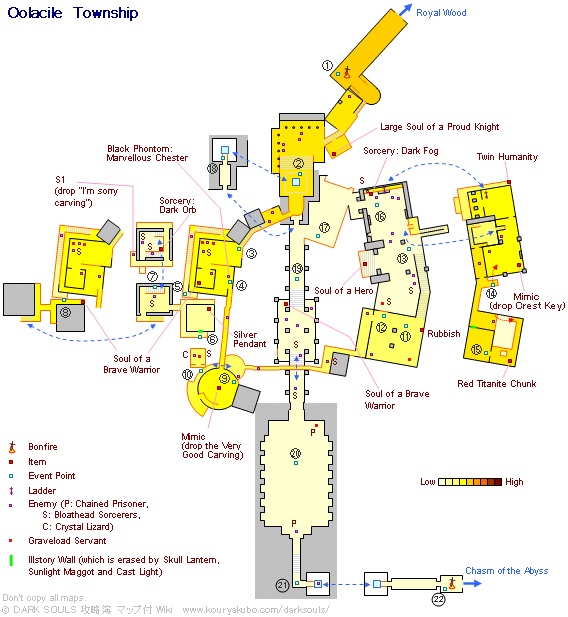
8 Chasm of the Abyss
Located at the lower portion of Oolacile, it is found after the player exits the Oolacile Township Dungeon, and a shortcut to the Royal Wood can be opened via an elevator. In this area, the player will fight Manus, Father of the Abyss, the final boss of the DLC. At the bottom of the chasm, a circle of stones surrounding a grave can be found, alluding to the upturned grave of Primeval Man.
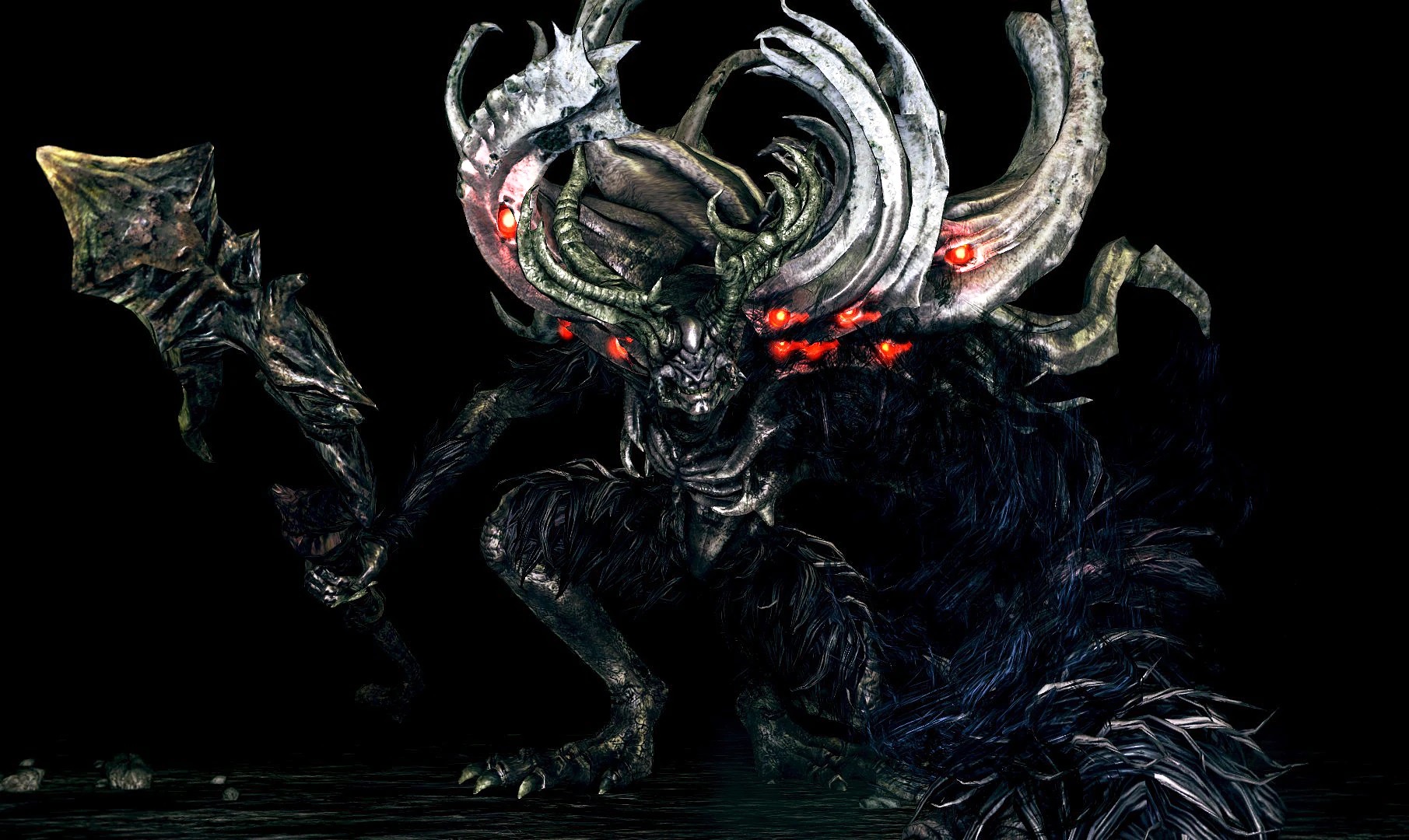
Manus was a primordial human who possessed an extraordinary soul consisting of a viscous, lukewarm lump of gentle humanity, an immense Dark Soul. He was also a sorcerer who used a rough and old wooden catalyst, very crude but large enough to be used as a weapon. His sorceries could grant a fleeting will to the Dark of humanity, induced to relentlessly chase enemies through channeling innate human affinities. Manus also possessed one half of an ancient stone pendant, a precious magical artifact that emanated a distinct, wrenching nostalgia as well as reverence.
Manus was a sorcerer of Oolacile, and after he died, his body was buried in the caverns beneath the city. 200 to 300 years prior to the journey of the Chosen Undead, the Primordial Serpent Kaathe arrived in Oolacile, in search of a potential Dark Lord following the flooding of New Londo. He manipulated the country to upturn the grave of the primordial man, Manus, buried beneath the dungeons of their city and resurrect him. Manus awakened to find his pendant missing, and was eventually driven into a beastly frenzy as his Dark Soul went wild, transforming him into the "Father of the Abyss".
His immense mass of humanity out of control led to the manifestation of an Abyss that spread, threatening to devour the entire land. The Dark emanating from Manus generated countless Humanity Phantoms and seeped among the residents of Oolacile, making their humanity go wild and mutating their bodies, their bloated heads lined with innumerable tiny red eyeballs and brain parts protruding from cracks. Corrupted Oolacile sorcerers discovered abyssal sorceries, more weighty and dealing physical damage instead of magical, since the Dark produced sorceries with a more tangible, "human" presence.
As the Abyss spread across the land of Oolacile, Knight Artorias arrived to halt its advance and confront Manus, as the Knight of Gwyn already had experience with fighting the Abyss and its creatures after the events of New Londo and his hunt for the Darkwraiths, and possessed a Silver Pendant that protected him from the Dark. However, Artorias's pendant was stolen by Oolacile's inhabitants and hidden behind an illusory wall, depriving Artorias of protection against Manus's dark sorceries. Together with his trusted companion Sif, Artorias faced Manus but his strength proved insufficient to defeat him, and he succumbed to the Abyss. Injured in the battle, Artorias used his Cleansing Greatshield to form a magic barrier that protected Sif from the Dark. Now corrupted to his soul by the Abyss and with his armor corroded, Artorias was left to fight alone and hold back the treacherous citizens of Oolacile.
Manus at one point kidnapped Princess Dusk of Oolacile—possibly after her rescue from a Golden Crystal Golem—and imprisoned her deep within the Chasm of the Abyss. In the meantime, his prized pendant came under the possession of Seath the Scaleless and then a Chosen Undead in the future; Manus, driven by his unrelenting search for his pendant, snatched the Undead from the future and brought them into the old Oolacile. There, the Chosen Undead put down the corrupted Knight Artorias and journeyed within the Chasm of the Abyss, where they finally defeated Manus and put him to rest. While Dusk was rescued in the process, she was driven by Elizabeth into thinking that she was saved by Artorias, preserving the legacy of the Wolf Knight. Nevertheless, Dusk came to recognize the Chosen Undead's similarity to the fabled knight, and developed doubts of her own as to her true savior.
Dark Souls II
Although he was killed, the Dark Soul of Manus was so large and powerful that he was reborn in death, and his soul split into miniscule fragments that retained some will. These pieces began to coalesce once again by absorbing other humanities, becoming the incarnations of different emotions of Manus and then human in shape, with their own self-awareness: Elana was the embodiment of Manus' wrath, Alsanna of his fear, Nadalia of his solitude and Nashandra, the tiniest fragment of Manus, the embodiment of his want. These new entities had some recollection of their father and his dark powers and when the Abyss that they called home was dissipated they scattered across the land. To sustain themselves and seek power, they reached Drangleic where in one way or another they came into contact with the holders of magnificent souls, drawn to their awesome strength.
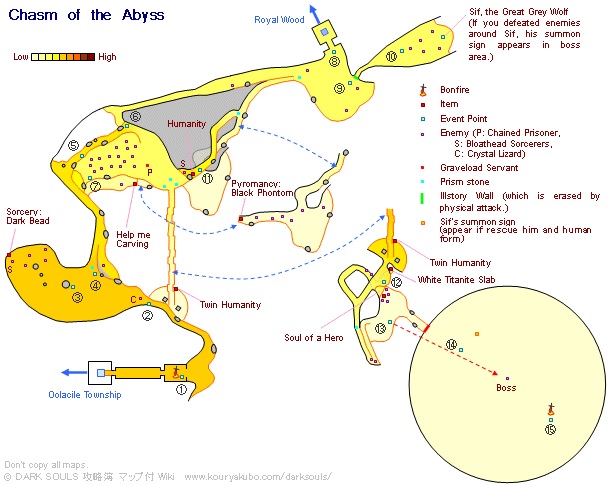
9 Primordial Serpents
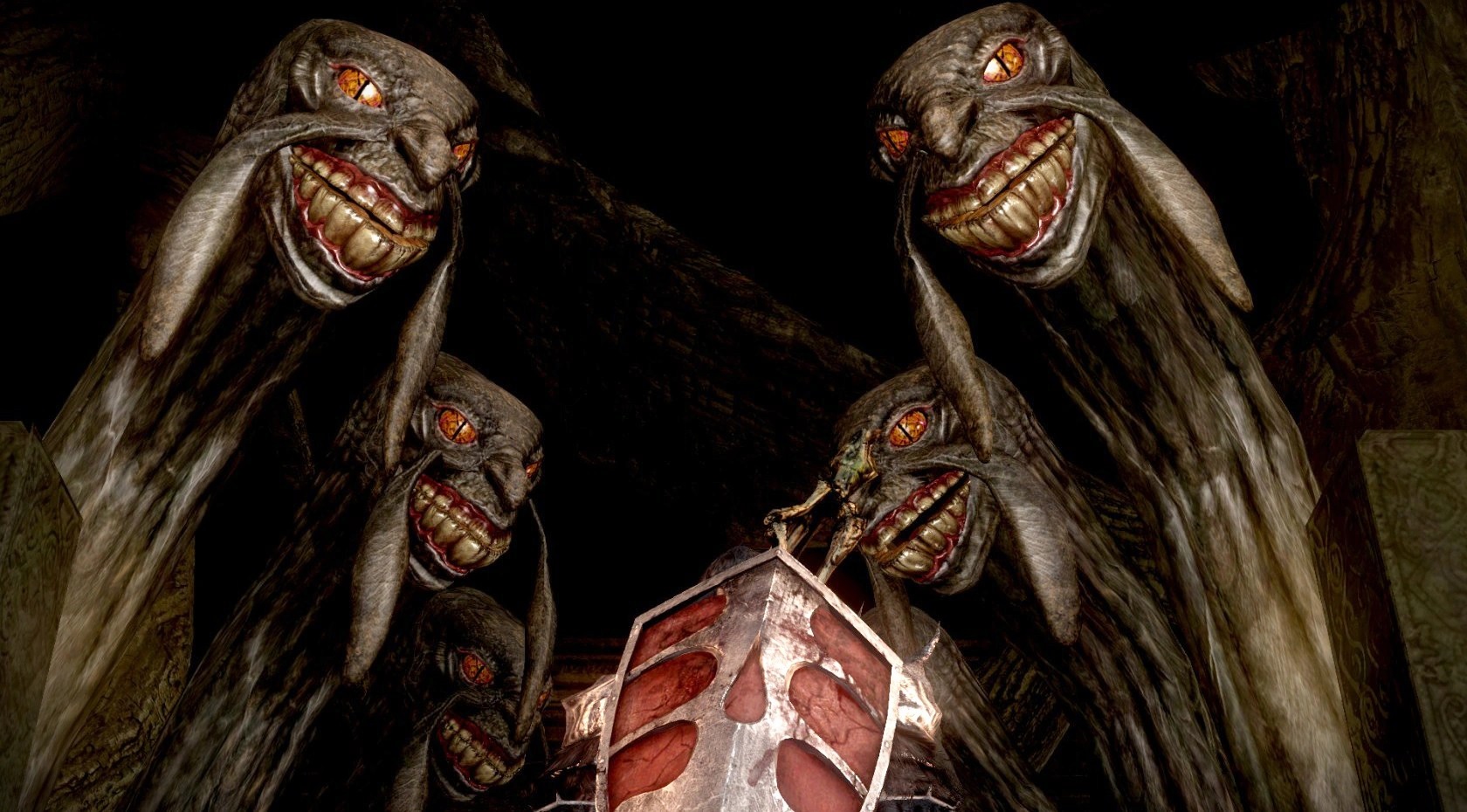
They are undoubtedly ancient creatures whose origins are unknown. It could be speculated that they exist as offshoots of the Everlasting Dragons, born imperfect after the First Flame appeared and brought disparity, allowing them to evolve as living beings. After all, serpents are known to be imperfect dragons. However, their human-like features and interest in the world's political and religious affairs stand out as anomalous among dragonkind, putting into question whether they are truly as tightly connected as initially thought. In-game, it is impossible to kill any serpent, or even to harm them in any significant way, making the nature of their souls and any clear scope of their true identity shrouded in mystery.
It is unknown how many Primordial Serpents exist in the world, though we do get to spot exactly ten when achieving the Dark Lord ending in the original game. All hints seem to suggest that they're few and that most of them don't often reveal themselves to anyone. They seem to possess a vast knowledge of the world, its events and secrets, and their affiliation to any political entity, faith or purpose is often doubtful.
This section of the lore lacks sources and is in need of further expansions and explanations!
There are two named Primordial Serpents in the game: Kingseeker Frampt and Darkstalker Kaathe. Frampt was a friend of Lord Gwyn and is possibly working with Gwyndolin, as Gwyndolin created the illusion of Gwynevere, who beseeches the Chosen Undead listen to Frampt and link the First Flame. Kaathe, conversely, wishes for the Chosen Undead to bring forth an Age of Dark—also referred to as the Age of Man—by leaving the First Flame to die out, and becoming the Dark Lord of mankind.
Kaathe resides in the darkness of the Abyss, but seems to be more involved in the affairs of Lordran than Frampt. Kaathe gave the Four Kings the art of lifedrain and consequently founded the Darkwraith covenant. He also seems to have tricked the residents of Oolacile into uncovering the corpse of Manus, driving him mad in the process. This sparked the spread of the Abyss, transforming the townsfolk into monstrous beings whose humanity has run wild, akin to Manus.
In the ending of Dark Lord, ten additional primordial serpents are seen, whose names are unknown. They appear to want to serve the newly-appointed Dark Lord, and possibly usher in the Age of Dark. An interesting note in this ending is that Kaathe states that both himself and Frampt will serve the Chosen Undead, disregarding any actions the player has taken before reaching this point, like placing the Lordvessel with Frampt instead of Kaathe, which would make the latter refuse to cooperate with the player, and vice-versa.
Frampt and Kaathe represent a peculiar class of characters, in that they are both unreliable sources of information, as far as the Chosen Undead is concerned. Both serpents, presenting themselves as ancient beings, put up a display of simply and selflessly wishing to "elucidate [the player's] fate"; and provide unique information that, while conforming with reality, can be neither confirmed nor refuted by any other source. Kaathe proposes an especially exclusive accounting of the events leading up to the first linking of the Flame, one that includes a fourth Lord and an Age of Dark that fell upon the world once before—the history of Lordran does not attest to either having ever existed. It is ultimately left up to the player to choose which side makes the more credible argument, and whose vision merits consideration at this critical time in the Age of Fire when the status quo hangs in the balance.
Dark Souls II
In the region and times of Drangleic, their influence appears to have faded, at least from Drangleic and the surrounding regions, as their existence and history are not preserved and known to its inhabitants. However, a shield representing two intertwined "serpentine dragons" can be found in Heide. The two creatures are regarded as "watchers of the flow of time" and depicted as in contrast, one painted white and one black, implying that at least in Heide the Primordial Serpents and the conflicting ideologies of Kaathe and Frampt were partly known.
Dark Souls III
In the region and times of Lothric, their influence can still be found in some regions such as Lothric and Londor. Even after possibly hundreds of thousands years after the first linking of the Flame, Frampt (or other serpents affiliated with his ideology) continued to propagate the cult of the linking of the Flame; influencing kingdoms, rulers and simple Undead to continue the tradition started by Gwyn. When the First Flame drifted up to position itself on the nascent kingdom of Lothric, Frampt or other serpents affiliated with his ideology reached the city too. Over time the serpents passed on the culture of linking the Flame to the royal family of Lothric, pushing them to preserve the tradition and actively produce heirs capable of becoming Lords of Cinder. Frampt or his kin were represented in numerous statues, on par with the Three Pillars of Lothric, with elegant clothes and angel wings, showing their central role within the kingdom, considered "divine messengers". Following Prince Lothric's refusal to link the Flame and the disappearance of King Oceiros, the fate of the primordial serpents present in Lothric is unknown.
Even eons past the first linking of the Flame, Kaathe didn't stop trying to bring the Age of Dark. The serpent took into his service what would become the three sisters at the helm of the Sable Church of Londor: Liliane, Yuria and Elfriede. He then directed their efforts to create a realm inhabited by Hollows that could offer salvation to them. Kaathe taught them his dark powers, and Londor carried out experiments aimed at understanding the Darksign and the Dark Soul under his watch. Their goal evolved into usurping the First Flame, tearing it from its Kiln and ensuring that it could be wielded to finally create a new Age of Man. To this end, the Sable Church awaited the arrival of a chosen Unkindled, preparing to assist and guide them to ensure that they succeeded in their goal. However, before he could see his dream of an Age of Dark realized, Kaathe died of unknown causes, leaving the three sisters to continue to lead Londor and await the future Dark Lord.
During the events of Dark Souls III, when the First Flame was almost fading out, their fate or the number of their survivors is unknown.
9 Firelink Altar
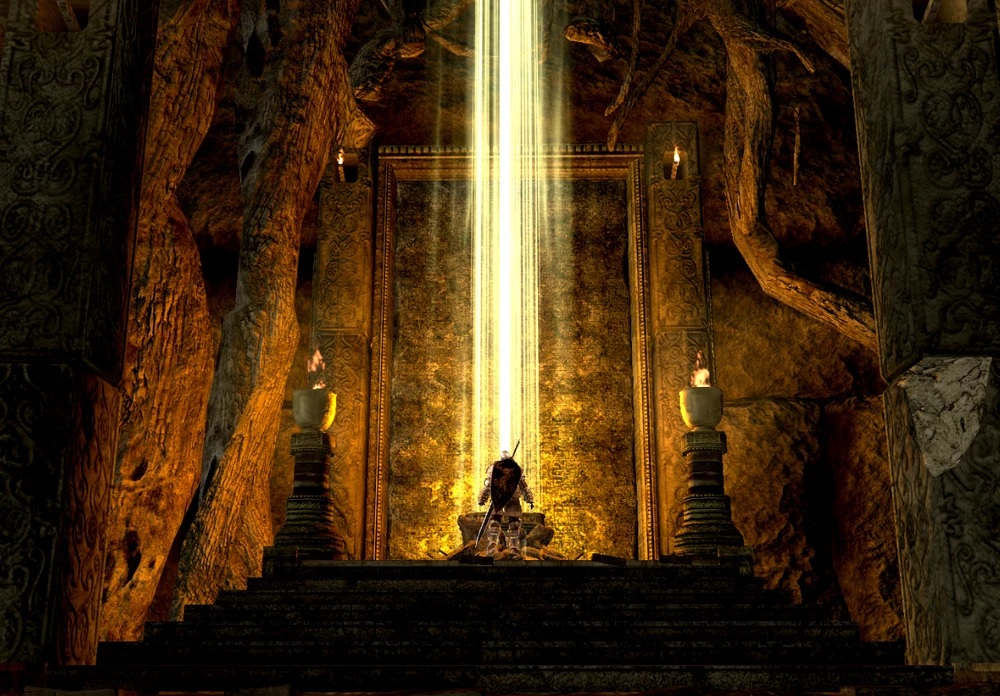
The Firelink Altar can only be accessed via "warping" with either Kingseeker Frampt or Darkstalker Kaathe, or by jumping into Frampt's pit, once the Lordvessel is obtained.
Kingseeker Frampt appears in Firelink Shrine after the player rings both Bells of Awakening, where the pool in front of the decrepit statue used to be.
Darkstalker Kaathe will appear in the Abyss, after defeating the Four Kings, if the player has not already placed the Lordvessel through Kingseeker Frampt.
If the player chooses to aid one of the Primordial Serpents, then they must "entrust their flesh" with one, be swallowed whole, and regurgitated onto a large platform of similar material to the structures in Lost Izalith, surrounded by large roots. Alternatively, if the player chooses to jump into the pit, they will land safely onto the shrine.
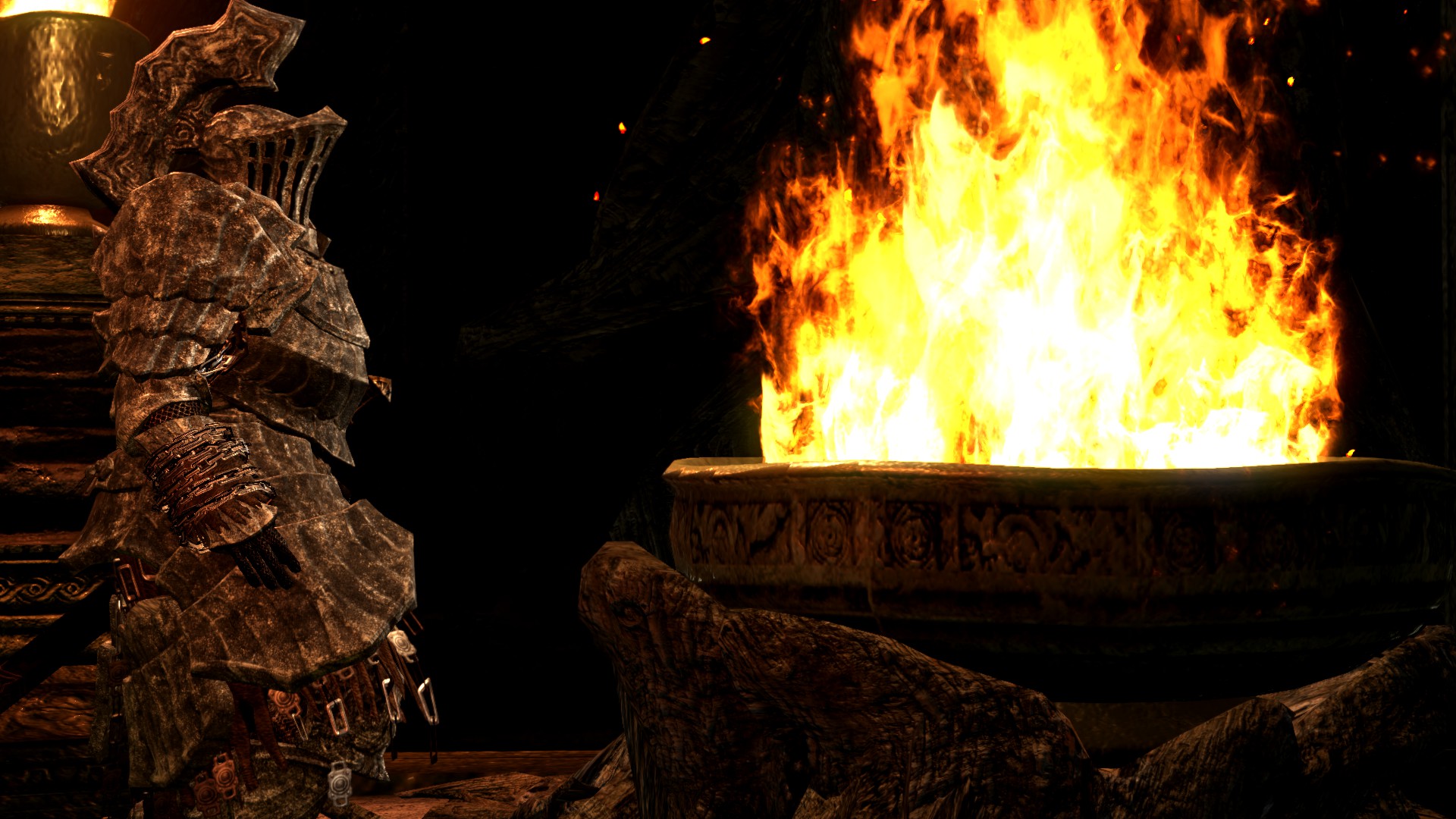
It is here that the player places the Lordvessel on the Altar and fills it with the various Lord Souls in order to access the Kiln of the First Flame to confront Gwyn, Lord of Cinder.
The altar automatically grants players ten Estus Flask uses by itself, twenty when Anastacia has been resurrected, without the requirement of kindling when rested at.
9 Kiln of the First Flame (Part 1)
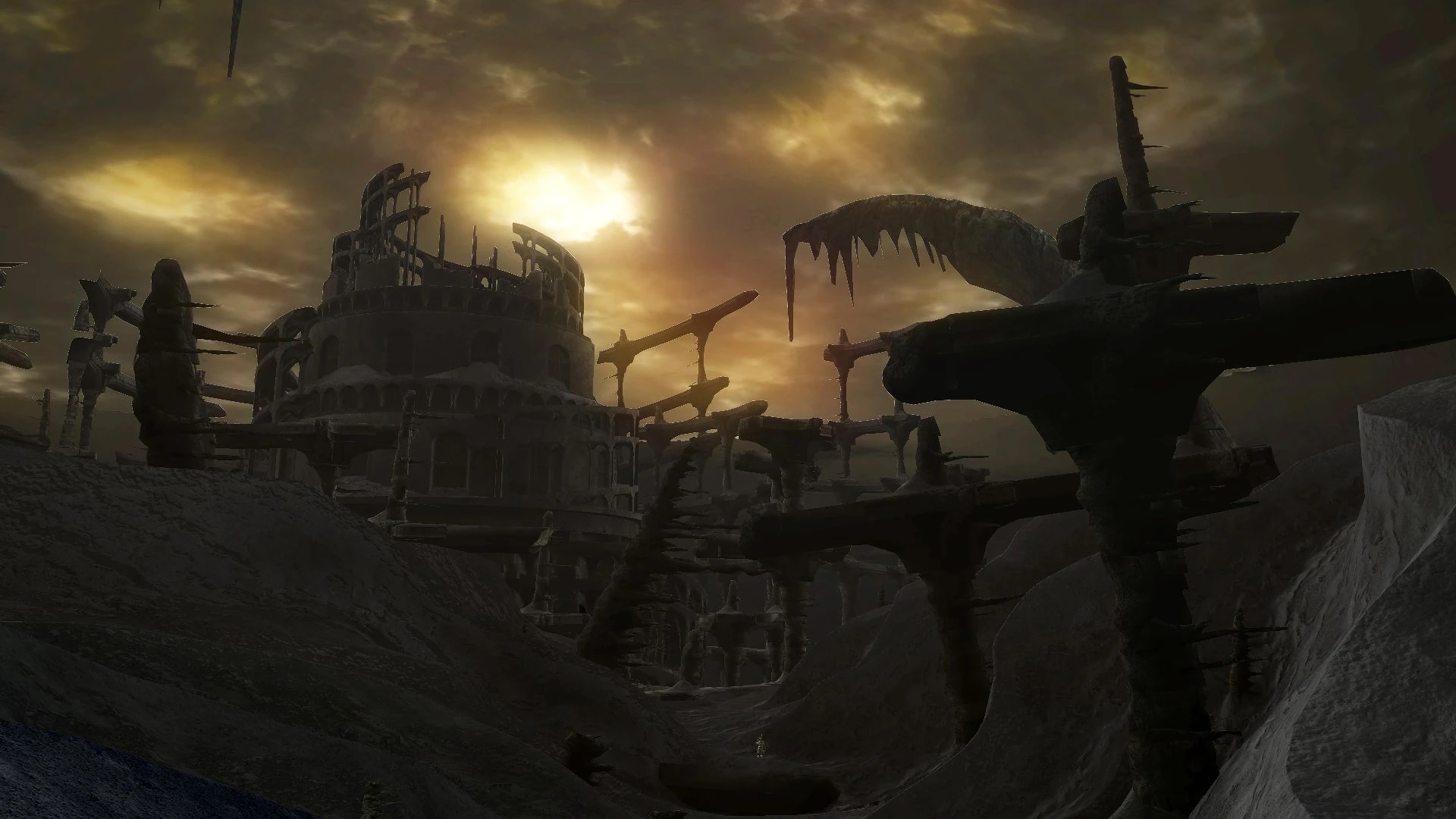
It is the last area in the game. This area is accessed by offering to the Lordvessel the souls of Bed of Chaos, the Four Kings, Gravelord Nito, and Seath the Scaleless in the Firelink Altar.
The Kiln of the First Flame houses the First Flame, where the Lords first found their Lord Souls. At some point, the structure of the Kiln was constructed around the cave where the flame was first discovered, during the Age of Ancients.
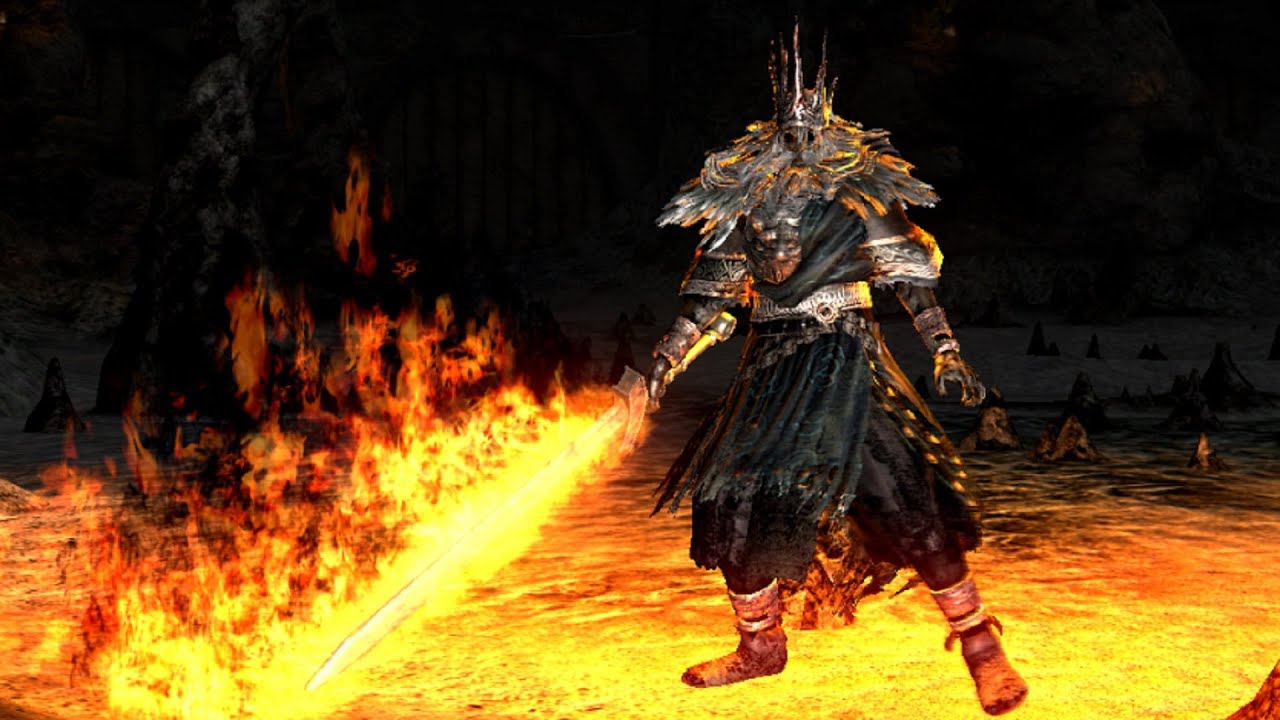
Gwyn is one of the primordial humanoid creatures that appeared underground after the First Flame appeared, bringing life, death and disparity. He was among those who found the four Lord Souls, sources of immense power, together with Gravelord Nito, the Witch of Izalith and the Furtive Pygmy.
With the immense power of his soul, the greatest among all the Lords, Gwyn established an underground civilization, becoming its ruler and forming an army of Silver Knights. At some point Gwyn had a relationship with an unknown woman and from their union were born his firstborn son and his eldest daughter, Gwynevere.
Once his army had been prepared and armed with spears and greatbows that used arrows as big as iron spears, Gwyn went to the surface with the intention of waging war against the Dragons and conquering the world with his Lord allies. The war turned out to be very bloody; for each of the majestic creatures slain, three scores of Gwyn's soldiers perished. The bodies of dragons were harder than stone, and resistant to fire and magic, making their killing difficult. At one point Gwyn was even forced to integrate into his ranks the primordial humans, descendants of the Furtive Pygmy who had found the Dark Soul, and who had developed their own weapons and armor infused with the life-giving power of the Abyss.
The tide would turn in the Lords' favor when Seath, a pale dragon born without the scales of his kind, betrayed the dragons to ally with Gwyn, and pillaged their Primordial Crystal. Seath's lack of scales coupled with his vulnerability provided the Lords with a key piece of information: that the scales of his brethren were the source of their immortality. Gwyn thus used his Great Soul to manipulate the light of the sun, transforming rays of sunlight into lightning, a form of energy capable of penetrating dragon scales. Meeting the dragons in battle, Gwyn used his spears of sunlight to peel apart the dragons' scales, while his knights employed lightning-infused weapons to similar effect. The Witch of Izalith and her daughters weaved great firestorms, destroying the archtrees and burning the dragons; while Nito unleashed a miasma of death, rotting the archtrees and infecting the dragons. Gwyn's eldest son would also take part in the war with his father, killing several dragons with his lightning spears and primordial cross spear. After a long struggle Gwyn and the Lords emerged victorious, exterminating most of the archdragons and conquering the surface world.
Gwyn's victory over the dragons was overshadowed by a problem: the Furtive Pygmy's discovery of the Dark Soul, a special soul which, even when fragmented among its descendants, did not lose its power and continued to generate life through the Abyss. The limitless potential of the Dark Soul contrasted with the Great Lord's limited power, and posed a grave threat to his new dominion. Gwyn skillfully resolved the issue through diplomacy: He gifted the pygmies a magnificent ringed city at the edge of the world, as well as his youngest daughter Filianore as part of their pact. With this clever move Gwyn ensured that the Pygmy Lords and the power of their Dark Soul would be contained within the Ringed City and out of history, whilst making them subjects to his dominion, eliminating from the annals even the contributions of the Ringed Knights during the war against the dragons and the very existence of the Furtive Pygmy. Despite these precautions, Gwyn continued to fear humans and the potential of their soul; so he "marked" their Dark Soul and bodies using the Flame with the Darksign, a literal ring of fire—powered by the First Flame—around the Dark Soul of humans. The fire castrated the powers of humans, making them mortal and incapable of using their natural abilities, consequently assuming a "fleeting form".
Having secured absolute dominion over the world, Gwyn thus began the Age of Fire, a time of prosperity that was characterized by the power of the First Flame and the vision of the Great Lord. Gwyn's clan placed themselves atop the new world order, assuming the role of deities for humans who were their subjects, and Gwyn took the title "god of sunlight". Humans venerated the gods who lived in the city of Anor Londo in the region of Lordran, building an economy and culture around the use of souls, even hunting the descendants of dragons for sport and domesticating some of them. Gwyn left the other two Lords to tend to their own domains: Izalith built her civilization underground where she and her daughters continued to study flame sorcery, and Gravelord Nito remained in the Catacombs to oversee the dead.
Gwyn would also establish the order of his Four Knights, chosen amongst his most trusted warriors, and entrust them with several vital tasks along with their own special souls. Dragonslayer Ornstein was (likely) named captain of the order, with Hawkeye Gough leading the Dragonslayers and Greatarchers, Artorias leading the Knights and Ciaran leading the Lord's Blades, an order of female assassins tasked with eliminating Gwyn's enemies from the shadows.
Gwyn proved himself a skilled ruler, using his power to bind and hold close to him the potential powers of the world. He amply rewarded the betrayal of the dragon Seath and his indispensable contribution to the war, giving him the title of Duke and inducting him into the nobility of the gods through a marriage to one of his daughters. Gwyn also gave him a fragment of his powerful Lord Soul along with the Archives, and left him to his studies near Anor Londo. As for humans, cognizant of the abilities of four of their great leaders, Gwyn bequeathed on them another shard of his powerful Soul, and let them build their civilization of New Londo near the divine capital. Gwyn would also befriend the Primordial Serpent Frampt and convince him of his ideals and vision of the Age of Fire.
At some point, Gwyn would create a powerful miracle able to create an immense mass of souls and transform it into an orb of light, resembling the sun, that could release lightning. The miracle was developed from Gwyn's emotion of either hatred or sorrow but curiously, it would be forbidden by the same God that created it.
Sometime later, Gwyn fathered his lastborn, Dark Sun Gwyndolin, who was born with a strong affinity for moon magic and a "fragile and repulsive appearance", particularly due to the snakes coiled around his lower half. Due to his birth under the "feminine sign of the moon" and its influence that gave him strong moon magic, Gwyn raised him as a female, even making him wear women's clothing and a magic ring which would make Gwyndolin move and act like a girl, leading him to behave like "a sullen brooding goddess".
9 Kiln of the First Flame (Part 2)
At one point, the Witch of Izalith used her Lord Soul in an attempt to replicate the generative properties of the First Flame, resulting in her producing a Flame of Chaos and transforming herself into a Bed of Chaos that began producing Demons. Izalith and her daughters would eventually bring the Flame of Chaos under their control, and learn how to use it, moving from being fire sorcerers to developing pyromancy and creating a new society together with the demons generated by the Bed of Chaos. These developments pushed Gwyn to wage war against the chaos demons, developing weapons and fighting techniques strong enough to face their sizable new enemies and sending his Silver Knights to Izalith, in a war where their armor and weapons were charred black. Gwyn's knights fell short of total victory, unable to exterminate the demons or destroy the Bed of Chaos, and ended up retreating and only managing to banish the demons underground while enslaving some lesser demons who would become servants of the gods.
Although the Age of Fire and the rule of the gods lasted for centuries, at some point the First Flame began to fade. Gwyn understood that if the Flame went out, the Age of Fire would be succeeded by an Age of Dark, a new order of humans led by a Dark Lord. Fearful of this outcome, the god made a drastic decision: In order to maintain the order of Gods, he would sacrifice himself to link the dying Flame and prolong its life. He trusted none but himself to carry out the sacrifice involved; he thus divided the power of his Lord Soul among the members of his clan and handed down the power of the sun to his children, leaving his firstborn son to inherit his titles. Gwyn also tasked his sons and Frampt with shepherding the humans into following his example, linking the Flame generation after generation, to uphold his Age of Fire, each of them becoming Lords through the process.
Now bereft of most of his Lord Soul's power and with only the power of his soul, Gwyn left for the Kiln of the First Flame, the structure built to house and protect it, with only his robes, his mighty greatsword and his powerless crown, accompanied only by a guard of Black Knights. Eventually Gwyn linked the First Flame, prolonging its life but himself being consumed by it, reduced to the empty husk of cinders guarding the core of the Kiln. The inferno of the newly kindled fire melted the surroundings and burned his knights to ashes, leaving them to wander the world as disembodied spirits.
Gwyn's act of linking the First Flame came to be a point of controversy for several figures; namely Kaathe and Aldia would regard Gwyn's sacrifice as having "unnaturally" extended an Age of Fire that was never meant to last, inhibiting the potential of humans in the process. As of the time of the Chosen Undead, one consequence of Kaathe's actions lies beneath Firelink Shrine: the ruins of New Londo, which was captured by the Darkstalker and had to be flooded before the Abyss within could spread to the surface world.
Dark Souls II
Ages past his linking of the First Flame, Gwyn's very name was lost. Even his miracles recounting his battles with lightning spears against the dragons at the start of the Age of Fire do not mention his name, implying that his heritage and culture have been lost to Drangleic. In fact, the only knowledge of a "god of the sun" leading the clan of the gods comes from the miracles that narrate the deeds of his son, who became king and god of the sun after him but was then exiled and deprived of his name.
However in Heide, as the beacon of the culture of Anor Londo in the region, there are several statues representing him, albeit in a distorted form but resembling the characteristics of Gwyn's representations in Lordran. Although portrayed with the head of an eagle, the pose, the sun medallion and the sword still strongly resemble the weapon, robes and symbology of the Lord of Sunlight.
Centuries after Gwyn sacrificed his soul to link the Flame, some remnants of it manifested again in Drangleic, continuing to exert their influence on the region. At some point the Old Iron King came into contact with the soul of Gwyn, which had become "Ichorous Earth" and produced the scorching iron and magma of the Iron Keep. The Old Iron King was thus destroyed by the mass of iron possessed by the soul of Gwyn who then went on to control the remains of the Old Iron King, creating a demonic-looking creature made of melted iron.
Aldia, Scholar of the First Sin at some point learned of Gwyn's existence and his story but not his name, referring to him merely as the "Lord of Light". He understood how Gwyn altered the natural order and began linking the Flame, which extended the Age of Fire against the course of nature, and he expresses his outrage at Gwyn for making men lesser than their original form as the "Lord of Light" banished Dark and all that stemmed from Humanity with the Darksign, defining it as the "First Sin" committed against humans and their nature.
Dark Souls III
The remnants of the will and power of Gwyn, as the first one to ever link the First Flame, would emerge as part of the Soul of Cinder, the deific manifestation of the souls of all those who have linked themselves to the First Flame throughout history, thus creating a hollowed-out entity possessing all the abilities of the previous Champions.
The powers of Gwyn would manifest when the Soul of Cinder was challenged by an aspiring Champion; acting as the Flame's last line of defense within the Kiln, the Soul of Cinder fought to either test the might of one who would link the Flame, or to protect it from a would-be betrayer or usurper.
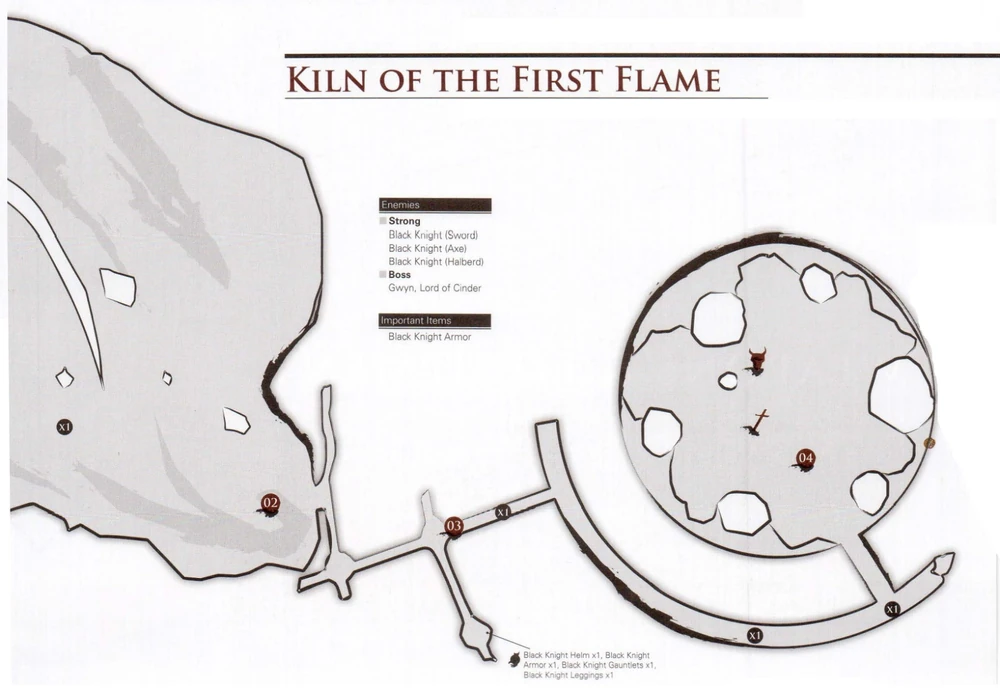
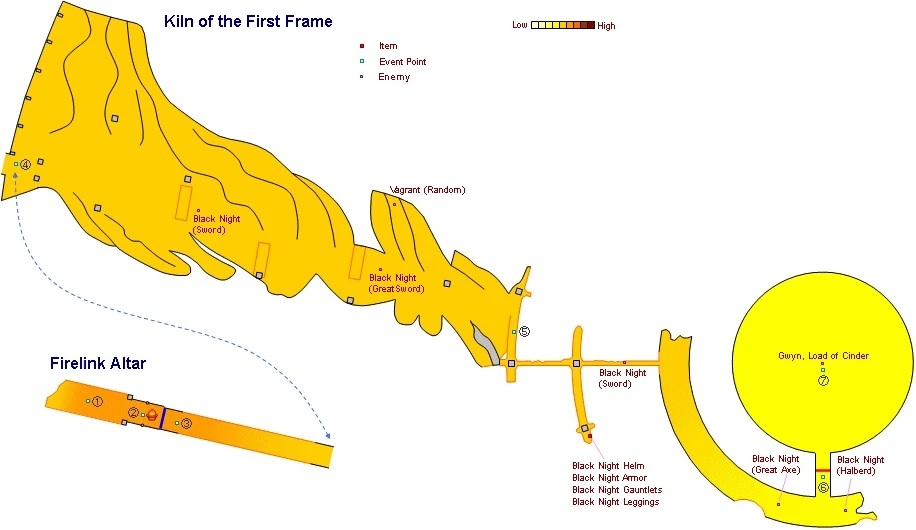
10 Battle of Stoicism
The entrances to the Battle of Stoicism arenas are found in the Battle of Stoicism Gazebo, just before the Oolacile Township. Down the right-hand side of the passage that leads there.
The Battle of Stoicism Gazebo is a location in Dark Souls, available only in the Artorias of the Abyss DLC. Is the smallest area of the entire game and it is located right before the Oolacile Township, after the battle with Knight Artorias. It is a small corridor to the right of the path that leads to the township. Serves only for players to get into the Battle of Stoicism.
Duels
In this mode, two players are chosen to fight each other in an arena. The winner takes a prize.
Team
Similar to Duel mode, in this one, four players are divided into two teams and must defeat the enemy team, the winning team takes the prize.
Deathmatch
In this one, four players must battle against each other, and every player killed grants prizes to all other players alive, the last one standing wins.
- There are a set of rules that are applied to all the three modes of the Battle of Stoicism, listed below:
- No healing items allowed.
- The battle is timed (3 minutes); in the end, the winner dons a great crown.
- The player with the most kills receives a great crown. With equal kills, all players receive tiny crowns (a draw).
- Allies receive credit for every fallen enemy; in Deathmatch, all players except the victim receive credit.
- Win streak resets to zero if the player returns to the gazebo.
There are two types of trap doors, the hosting trap door, and the common trap door. The hosting trap door turns the player standing on it a host, inviting other players that are standing on the common trap doors. More common trap doors become available depending on the mode chosen, each leading to an arena with other players. The players take no damage when the trap door opens.
If the player decides to leave the lobby, there is a special bonfire that teleports them back to the gazebo.
===========================================================
DARK SOULS: THE AGE OF FIRE
"Dark Souls: Age of Fire" is a limited comic book series published by Titan Comics, written by Ryan O'Sullivan. Released in 2018 as a companion to Dark Souls Remastered, it states, "The story and worldview were created exclusively for this comic. Some may differ from the original game," making its status within the games' canon vague.
El prólogo de La Era del Fuego se ambienta en la guerra librada contra los Dragones Eternos que puso fin a la Era de los Antiguos y dio inicio a la Era del Fuego que da título al libro .
It primarily follows the perspective of Arkon, a captain of the Silver Knights, while also depicting larger-scale events. It focuses on Lord Gwyn's military, dealing with the fall of Izalith, the fall of New Londo, and the fallout from Gwyn's ties to the First Flame.
NOTES
Throughout the story, several characters are mentioned. However, since these are figures who appear and are further developed in the following games, I will leave you the links below:
Pygmy Lord[darksouls.fandom.com]
Aldia, Scholar of the First Sin[darksouls.fandom.com]
High Lord Wolnir[darksouls.fandom.com]
===========================================================
GRATITUDE
OTHER GUIDES
https://steamcommunity.com/sharedfiles/filedetails/?id=3012647790
DRAGON BALL XENOVERSE 2 (8)
https://steamcommunity.com/sharedfiles/filedetails/?id=2980876920
PHASMOPHOBIA (6)
https://steamcommunity.com/sharedfiles/filedetails/?id=3233085075
DEAD BY DAYLIGHT (3)
https://steamcommunity.com/sharedfiles/filedetails/?id=3425594431
DARK SOULS (1)
https://steamcommunity.com/sharedfiles/filedetails/?id=3592558874
GREEN HELL (1)
https://steamcommunity.com/sharedfiles/filedetails/?id=3568612640
DEVOUR (1)
https://steamcommunity.com/sharedfiles/filedetails/?id=3692444380
PATH OF EXILE (1)
https://steamcommunity.com/sharedfiles/filedetails/?id=3024121293
- DARK SOULS: REMASTERED 100% Achievement Guide★ 5 (2k)53k views4.5k ♥95 minUpdated 12 Dec, 2020
- 100% Achievement Guide: Dark Souls - Remastered★ 5 (2k)53k views5.5k ♥183 minUpdated 8 May
- Прохождение Dark Souls★ 5 (1k)40k views2.6k ♥66 minRussianUpdated 16 Jan, 2022
- Dark Souls NPC Questlines in Order★ 5 (864)31k views2.2k ♥11 minUpdated 18 Sep, 2023
- Пошаговое получение 100% достижений в DARK SOULS™: REMASTERED★ 5 (1.3k)26k views3k ♥19 minRussianUpdated 26 Nov, 2023
- DARK SOULS™: maps★ 5 (206)25k views541 ♥1 min



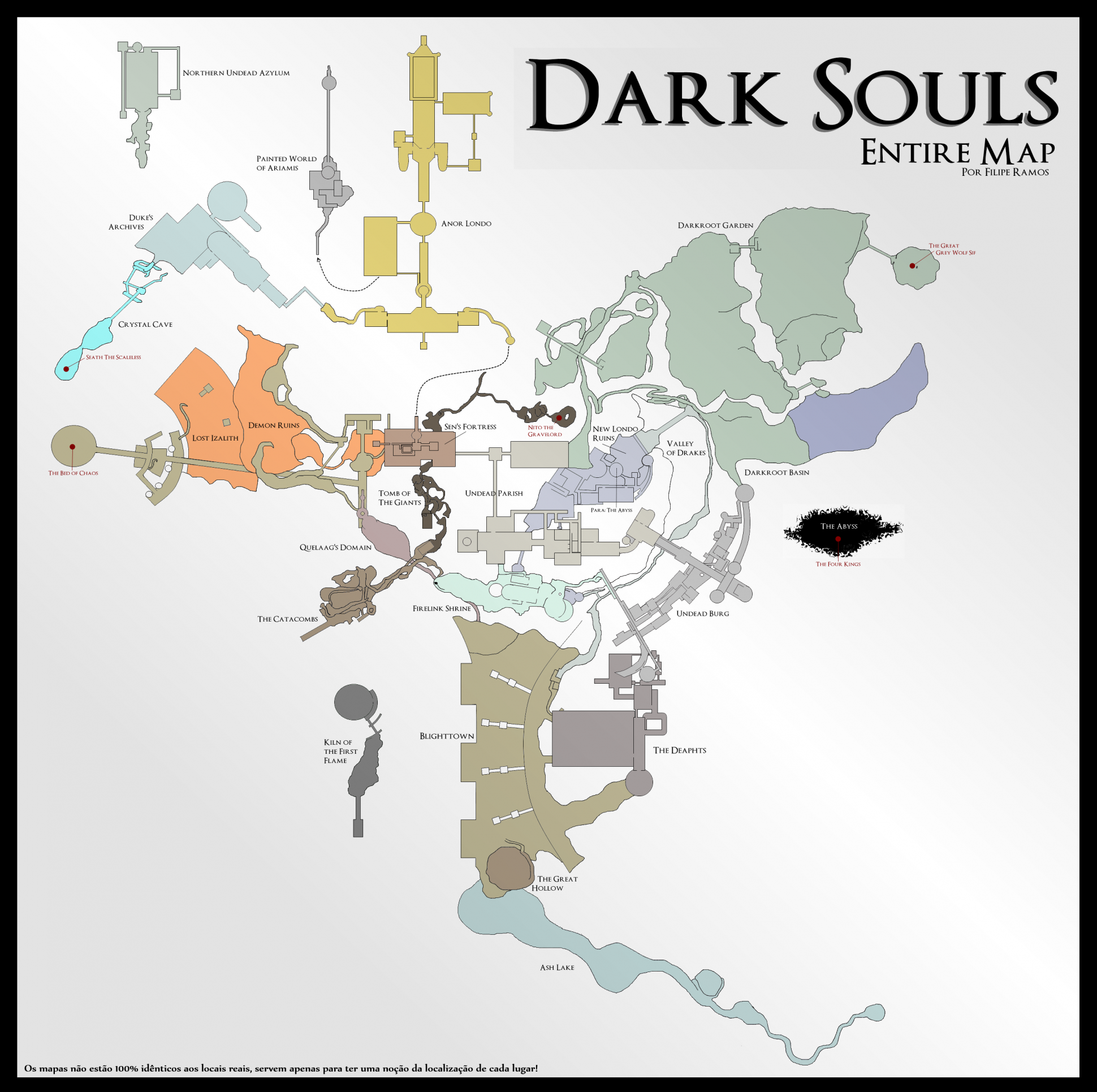
- Upgrading to PremiumTeam Fortress 2★ 5 (20k)1441k views11k ♥6 minUpdated May 11, 2022
- No More Room in Hell Official ManualNo More Room in Hell★ 5 (2.8k)569k views2.1k ♥29 minUpdated Apr 22, 2019
- NMRiH Community Hosting GuidesNo More Room in Hell★ 5 (526)351k views653 ♥1 minUpdated Aug 10, 2022
- ULTIMATE GUIDE FOR GAME DEV TYCOONGame Dev Tycoon★ 5 (5.8k)326k views10k ♥4 minUpdated 23 Jan, 2014
- How to 'Git Gud' Soon™MORDHAU★ 5 (2k)318k views3k ♥68 minUpdated Nov 16, 2024
- Лучшие кооперативные игры SteamPAYDAY 2★ 5 (1.5k)315k views2.1k ♥56 minRussianUpdated Apr 27, 2025




This guide was created by its original author on the Steam Community. Are you the author and want it removed? Request removal.